NOTEN 1 T/M 15 BIJ/”HET AVONDKLOK DRAMA. RUTTE EN VIRUSWAARHEID/RUTTE ALS ”GEVAARLIJKE GEK”, DEEL TWEE/OVER RUTTE, DIE DE WET VERZET”

[1]

PERSMOMENT RUTTE/IS RUTTE EEN GEVAARLIJKE GEK?ASTRID ESSED28 OCTOBER 2020
https://www.astridessed.nl/persmoment-rutte-is-rutte-een-gevaarlijke-gek/

[2]

ZIE OOK NOOT 1

[3]

”ALLAHU AKBAR!  [God is Groot/Arabisch][1]DAT waren de woorden, die ik uitriep, toen op 14 decemberNeerlands premier Rutte eindelijk de switch maakte van GevaarlijkeGek [2] naar een politiek leider met common sense [3]Wat het Coronabeleid betreft, welteverstaan.Om Allahu Akbar uit te roepen, zoals ik heb gedaan, hoef je namelijk geen moslimte zijn [wel gelovig] en ik vind het oprecht jammer, dat deze mooiereligieuze Kreet steeds meer wordt misbruikt door lieden met Boze Bedoelingen [4], waardoor, naar ik mij heb laten vertellen, zelfs echte moslims nubang zijn voor deze Uitroep [5]Maar nu alle Gekheid op een Stokje:
Eindelijk dus verstandige en ter zake doende maatregelen vanPremier Rutte B.V. met als sidekick minister van VolksgezondheidHugo de Jonge [6] met op de achtergrond de inluisteraars vanRIVM en OMT. [7]Het was trouwens RIVM, dat Rutte waarschuwde, snel in actie tekomen, omdat er ander een gevaarlijke situatie dreigde. ”
LOCKDOWN TOT EN MET 19 JANUARI/SOME COMMON SENSEAT LAST/OVER VACCINS, MUTATIES EN ANDERE VERHALENASTRID ESSED4 JANUASRI 2021
https://www.astridessed.nl/lockdown-tot-en-met-19-januari-some-common-sense-at-last-over-vaccins-mutaties-en-andere-verhalen/

[4]

”Overigens worden gevangenen pas op een meerpersoonscel geplaatst als ze ‘gemonitord zijn op coronagerelateerde klachten’. ‘Nieuwe’ gevangenen worden ‘per definitie’ eerst geplaatst in een eenpersoonscel. Er vindt dan een ‘medische intake’ plaats en bij ‘milde klachten wordt een test gedaan’. Die plaatsing op een eenpersoonscel duurt acht dagen. Als er dan geen klachten optreden, kan hij of zij op een meerpersoonscel geplaatst worden”
ADALARM OVER CORONA IN GEVANGENISSEN: VOLLE CELLEN ”ONVERANTWOORD”8 OCTOBER 2020
https://www.ad.nl/politiek/alarm-over-corona-in-gevangenissen-volle-cellen-onverantwoord~aadf360a/

Het is ‘onverantwoord’ om meerpersoonscellen te gebruiken in gevangenissen nu het coronavirus rondwaart in ons land. Dat schrijft de Raad voor Strafrechttoepassing en Jeugdbescherming (RSJ) in een vertrouwelijk advies aan minister Sander Dekker (Rechtsbescherming). 

Het adviesorgaan heeft grote zorgen en zegt zelfs dat het gevangeniswezen momenteel de RIVM-richtlijnen overtreedt.

Zo moeten bajesklanten die klachten vertonen worden geïsoleerd van andere gevangenen. Als de celgenoot géén klachten vertoont, wordt hij wel op een andere cel geplaatst maar niet geïsoleerd, zegt de RSJ. Volgens het adviesorgaan is dat ‘onjuist’ omdat de celgenoten als een ‘huishouden’ zouden moeten worden beschouwd en dus ook die klachtenvrije celgenoot in quarantaine worden geplaatst. De RSJ adviseert daarom het gebruik van meerpersoonscellen ‘voorlopig op te schorten’.

Minister Dekker zegt nog met een reactie op het RSJ-advies te komen, maar stelt dat in gevangenissen celgenoten van personen die klachten ontwikkelen wél apart worden gezet. Tijdelijk stoppen met meerpersoonscellen wil Dekker niet. ,,Het gebruik hiervan vinden wij verantwoord”, laat een woordvoerder weten.

Nieuwe gevangenen

Overigens worden gevangenen pas op een meerpersoonscel geplaatst als ze ‘gemonitord zijn op coronagerelateerde klachten’. ‘Nieuwe’ gevangenen worden ‘per definitie’ eerst geplaatst in een eenpersoonscel. Er vindt dan een ‘medische intake’ plaats en bij ‘milde klachten wordt een test gedaan’. Die plaatsing op een eenpersoonscel duurt acht dagen. Als er dan geen klachten optreden, kan hij of zij op een meerpersoonscel geplaatst worden. Volgens de RSJ zijn er onder gevangenen niettemin ‘gevoelens van onveiligheid, onrust en ongenoegen’ te bespeuren.

Het gevangeniswezen kampte juist met leegstand de afgelopen jaren. Om die reden worden zelfs vier  complexen gesloten. Van de bijna 10.000 cellen die in gebruik zijn, is zo’n 12 procent meerpersoons.

ZORGEN

Volgens SP-Tweede Kamerlid Michiel van Nispen zijn de zorgen terecht. ,,De hele samenleving wordt opgedragen 1,5 meter afstand te houden, maar in de gevangenissen zitten de gedetineerden nog steeds hutjemutje op elkaar. Bijvoorbeeld in meerpersoonscellen. De onafhankelijke toezichthouder op het gevangeniswezen noemt dat onverantwoord, maar de minister slaat dat advies in de wind en gaat er gewoon mee door. Ook wordt er te weinig getest, waardoor mensen soms onnodig lang worden afgezonderd. Ik wil van de minister snel een reactie op dit advies van de RSJ. Dat is in het belang van de veiligheid van mensen die vastzitten én het personeel.”

BESMETTINGEN

Vandaag kwam aan het licht dat het politiecellencomplex aan de Hooghoudtstraat in Groningen voorlopig dicht moet. Vier medewerkers zijn positief getest op het coronavirus en een aantal is nog in afwachting van de testuitslag. Ruim veertig medewerkers die werkzaam zijn bij het Team Arrestantentaken zitten in quarantaine en de GGD is bezig met bron- en contactonderzoek. De arrestanten die in het cellencomplex zaten zijn woensdagavond overgebracht naar andere politiecellen. Om hoeveel mensen het gaat, kon een politiewoordvoerder vanmorgen niet zeggen. Hij voegt eraan toe dat er geen aanwijzingen zijn dat er arrestanten zijn besmet. Maar mochten ze klachten krijgen, dan worden ze net als de medewerkers getest, zegt hij.

EINDE AD BERICHT

[5]

Het is ‘onverantwoord’ om meerpersoonscellen te gebruiken in gevangenissen nu het coronavirus rondwaart in ons land. Dat schrijft de Raad voor Strafrechttoepassing en Jeugdbescherming (RSJ) in een vertrouwelijk advies aan minister Sander Dekker (Rechtsbescherming).

ADALARM OVER CORONA IN GEVANGENISSEN: VOLLE CELLEN ”ONVERANTWOORD”8 OCTOBER 2020
https://www.ad.nl/politiek/alarm-over-corona-in-gevangenissen-volle-cellen-onverantwoord~aadf360a/
ZIE VOOR GEHELE TEKST, NOOT 4

[6]

LIMBURG.NLVOOR IEDEREEN MONDKAPJES, BEHALVE VOOR GEDETINEERDEN7 JANUARI 2021
https://www.1limburg.nl/voor-iedereen-mondkapjes-behalve-voor-gedetineerden

Gedetineerden in de Roermondse gevangenis mogen geen mondkapjes dragen vanwege de veiligheid.

Die uitspraak deed gevangenisdirecteur Arend de Korte donderdagochtend in de L1 Nieuwsshow.

Mondmasker
Volgens De Korte zegt de landelijke regelgeving dat het gezicht niet bedekt mag zijn in het kader van de veiligheid. “Het personeel moet kunnen zien welke emotie bij de gedetineerden leeft. Ook omdat de medewerkers een mondkapje dragen en de anderhalve meter kunnen garanderen, is het niet nodig.” Daarnaast zou het dragen van mondkapjes onder gevangenen alleen maar onrust geven, laat De Korte weten.

Quarantaine in eigen cel
Woensdag kwam naar buiten dat een groot deel van de gedetineerden in de Roermondse gevangenis in quarantaine is geplaatst, nadat drie gevangenen positief werden getest op corona. 84 van de 240 gevangenen zitten nu in quarantaine in hun eigen cel. Van de drie positief geteste gedetineerden ligt er een in het ziekenhuis.

Oorzaak onduidelijk
De oorzaak van de besmetting van de gevangenen is nog niet bekend. De Korte vertelt dat het gevangenispersoneel het enige contact is wat gevangenen hebben. “Dus het bron- en contactonderzoek wat we normaal gesproken doen in de gevangenis is relatief eenvoudig, want gedetineerden hebben geen contact met de buitenwereld. Maar als we heel secuur kijken wie er allemaal werken en wie er in contact is geweest met de besmette gevangenen dan kunnen we dat niet goed achterhalen”, aldus De Korte.

Testen
Preventief testen doet de gevangenis niet. Binnenkomende gevangenen gaan direct acht dagen in quarantaine, laat de gevangenisdirecteur weten. “Als ze geen klachten hebben dan gaan we ervan uit dat de gedetineerden niet besmet zijn. Mochten er wel coronaverschijnselen zijn dan gaan ze direct achter de deur en worden ze getest.”

Lees ook: Onrust in gevangenis Roermond: bewaker besmet met corona

Aangifte
Negentien gevangenen van de penitentiaire inrichting in Heerhugowaard hebben aangifte gedaan tegen hun gevangenisdirecteur, schrijft de Volkskrant. Ze stellen hem verantwoordelijk voor de verspreiding van corona binnen de inrichting. Volgens de aangifte zijn op alle afdelingen in Heerhugowaard gedetineerden de afgelopen maanden besmet geraakt met het coronavirus, op sommige afdelingen zou meer dan driekwart van de gedetineerden besmet zijn. Of de bajesklanten van de penitentiaire inrichting in Roermond aangifte hebben gedaan of nog gaan doen, is onbekend. “Daar heb ik nog geen signalen over ontvangen”, erkent de directeur.

Prikken
Woensdag startte het vaccineren van zorgpersoneel in de acute zorg. Maar wanneer gevangenissen aan de beurt zijn, is nog niet bekend. De Korte: “Er wordt landelijk wel gesproken over een strategie om te kijken hoe we alle gevangenen kunnen gaan vaccineren.”
EINDE BERICHT LIMBURG.NL

[7]

OMROEP BRABANT”MENSONTEREND”, CORONAREGELS LIJKEN NIET TE GELDENVOOR HUISVESTING VAN ARBEIDSMIGRANTEN14 OCTOBER 2020
https://www.omroepbrabant.nl/nieuws/3275988/mensonterend-coronaregels-lijken-niet-te-gelden-voor-huisvesting-van-arbeidsmigranten

De meeste arbeidsmigranten zijn wel op de hoogte van de coronamaatregelen, maar zijn niet bij machte om die goed na te leven. De nieuwe, strenge regels tegen de verspreiding van het coronavirus, lijken op veel plekken in Brabant niet te gelden voor de huisvesting van arbeidsmigranten. Bijvoorbeeld in hotel Friends in Waalwijk waar ze onbeschermd met drie man tegelijk in een klein kamertje moeten overnachten: “Ze snurken ’s nachts over elkaar heen.”

Hotel Friends in Waalwijk gaat nu dicht, maar volgens de FNV is het nog op veel meer plekken foute boel. “Ze hebben de moed opgegeven. Je hebt het maar te accepteren, anders sta je op straat. Mensen delen kamers met vreemden. De ventilatie is slecht, het onderhoud is slecht. De mensen vinden het ook vreselijk om hier te wonen”, zegt FNV-bestuurder Bart Plaatje.

Per 1 november sluit hotel Friends permanent de deuren en verplaatst het uitzendbureau de arbeidsmigranten naar een nieuw pand bij logistiek bedrijf Ingram Micro in Waalwijk. “Het is volstrekt onverantwoord wat er hier in de uitzendbranche gebeurt. Gelukkig zijn we het eens geworden dat het hier zo niet langer kan”, vertelt Plaatje.

De bond is blij dat hotel Friends in elk geval de deuren sluit. “Op 2 november wil ik hier ceremonieel een ketting om de deur komen hangen.” Maar daarmee zijn ze er nog niet: “In deze regio zijn nog veel meer misstanden met huisvesting. In caravans, in stallen, in kelders. Wat hier gebeurt is mensonterend, al helemaal in coronatijd.”

EINDE BERICHT OMROEP BRABANT

”En ik vraag me af: hoe gaat het nu met de woon- en werkomstandigheden van al die arbeidsmigranten die in bijvoorbeeld horroroorden als slachthuizen moeten werken en ik kleine benauwde kamers slapen met z’n allen?

POLDEREN MET CORONA? #DYI #ZeroCovidJOKE KAVIAAR9 FEBRUARI 2021
http://www.jokekaviaar.nl/Polderen_met_corona_DIY_ZeroCovid.html

[8]

”De gedetineerden melden verder aan Rijnmond dat de gesloten afdelingen I, F en H worden genoemd die vallen onder Sectie 1. Ze zeggen beiden niet op te kijken van de besmettingen, omdat er geen mondkapjes werden gedragen.”
RIJNMOND.NLRUIM 140 VREEMDELINGEN IN QUARANTAINE INDETENTIECENTRUM ROTTERDAM 
https://www.rijnmond.nl/nieuws/200200/Ruim-140-vreemdelingen-in-quarantaine-in-Detentiecentrum-Rotterdam

In Detentiecentrum Rotterdam bij Rotterdam The Hague Airport zitten sinds vrijdag 142 mensen in quarantaine. Twee gedetineerden zijn positief getest op corona. Daarom zijn drie volledige afdelingen in isolatie gegaan, bevestigt een woordvoerder van het ministerie van Justitie.

In het centrum zitten vreemdelingen in afwachting van hun uitzetting. Volgens twee gedetineerden zijn er ook bewaarders besmet met corona, maar de woordvoerder van Justitie zegt daar niets over te kunnen zeggen.

De gedetineerden melden verder aan Rijnmond dat de gesloten afdelingen I, F en H worden genoemd die vallen onder Sectie 1. Ze zeggen beiden niet op te kijken van de besmettingen, omdat er geen mondkapjes werden gedragen.

De quarantaine geldt voor tien dagen. Volgens de gedetineerden hebben ze vrijdag per brief te horen gekregen wat dit voor ze betekent: ze moeten tien dagen in hun cel blijven en worden één uur per dag gelucht.

EINDE BERICHT RIJNMOND.NL

ACHTER DE DEUR IN GRENSGEVANGENIS: DIT IS PAS LOCKDOWN!JOKE KAVIAAR19 OCTOBER 2020
http://www.jokekaviaar.nl/Achter_de_deur_in_grensgevangenis-dat_is_pas_lockdown.html

[9]

GROEPSUITZETTING VLUCHTELINGEN NAAR NIGERIA METCHARTERVLUCHT IN TIJDEN VAN CORONA/BRIEFAAN DIRECTIE SCHIPHOL21 DECEMBER 2020
https://www.astridessed.nl/groepsuitzetting-vluchtelingen-naar-nigeria-met-chartervlucht-in-tijden-van-corona-brief-aan-directie-schiphol/

[10]

AVONDKLOK IN NEDERLAND/NEE!/NEE!/NEE!ASTRID ESSED16 JANUARI 2021
https://www.astridessed.nl/avondklok-in-nederland-nee-nee-nee/

ASTRID ESSED OVER DE AVONDKLOK
https://www.astridessed.nl/?s=Avondklok

[11]

VIRUSWAARHEID
https://viruswaarheid.nl/?__cf_chl_jschl_tk__=be08547359eef5ee445047d8ef35f833bc6932ae-1614004415-0-AWRwbcnJvCaYFlCVWAIxweLD5l2_fM04h2Lis5kDUsui–7frdDZ6Xd7C6WrYJ7yG4Ifzuf5MGB2h1Nac3HShX8VkTvULp-9mjOqIPno5NWD9uNX3D-7tndN12SSXb9H9dBJTeI1NQveJQj3fmp2aH9KAbi2TeluMhI65VeNcgZ4mOyRU3-uF4PHZSO0OcQIYogQr8KeJCq4HkGh08kHea3PRCBMMNLmuvYeWwhWuhPm5hyaKSJDJWuJ4M0o9bH6bKbRJfl3Emz-LaTAPjX9U6xUQDtWWZNBx0LZtJktf6aaXAl6My0sbnJ3cTSlgsoAIw

VIRUSWAARHEIDDAGVAARDING AVONDKLOK/DAGVAARDING STAAT DER NEDERLANDEN
https://viruswaarheid.nl/dagvaarding-avondklok/

VIRUSWAARHEID/OVER ONS
https://viruswaarheid.nl/over-ons/

Wie zijn wij?

Willem Engel heeft een wetenschappelijke carrière gemaakt als Bio Farmaceutisch wetenschapper nadat hij in 2001 afstudeerde aan de Universiteit van Leiden.[1] In 2008 verliet hij de wetenschapswereld. Sindsdien geeft hij dansles in zijn eigen studio DA Dance Studio in Rotterdam.

Mr. Jeroen S. Pols is in 2003 afgestudeerd met een specialisatie in het strafrecht. Sindsdien voert hij voornamelijk bestuursrechtelijke en civielrechtelijke procedures. De afgelopen 17 jaar procedeert hij tegen overheden die het niet zo nauw nemen met wet- en regelgeving.

De talrijke procedures rondom de RIEC’s trekken de laatste jaren regelmatig de aandacht. Hierbij ligt de focus van de procedures op de onrechtmatigheid van de integrale aanpak waarbij de samenwerkende overheden op structurele wijze wet- en regelgeving opzij schuiven en burgerrechten schenden.

Wat willen wij?

Wij strijden voor het behoud van een democratische rechtsstaat waarin ook onze kinderen nog de mogelijkheid hebben om zich in vrijheid te ontplooien en een leven te leiden met hun eigen overtuigingen en meningen. Deze vrijheden en grondrechten zijn het afgelopen decennium steeds verder in het gedrang gekomen. De COVID-19-crisis zien wij als een quantum leap in deze zorgwekkende ontwikkeling.

Volgens ons is het voeren van juridische procedures tegen overheden een effectief middel in deze strijd. Wij merken dat veel rechters proberen hun werk goed te doen maar helaas blijkt ook de rechtspraak niet ongevoelig voor de toenemende invloed van de overheid. Gelijk hebben betekent niet gelijk krijgen.

Toch is procederen volgens ons nog steeds een effectief middel. Waarom? Onze beleidsmakers verschuilen zich bij gebrek aan kritische vragen vanuit het parlement, toezichthouders en de media steeds weer achter inconsistente en ongemotiveerde stellingen. In de rechtszaal kan dit niet.

De overheid zal zich op alle door ons naar voren gebrachte argumenten inhoudelijk dienen te verweren. En dit is in de COVID-19-zaak van groot belang: zelfs als onze vorderingen afgewezen worden, is zij gedwongen om zich voor het eerst inhoudelijk te verantwoorden over het door haar gevoerde beleid.

En daarmee leidt deze strijd volgens ons uiteindelijk binnen of buiten de rechtszaal tot een overwinning.

Wat gebeurt er met uw financiële bijdrage?

Op onze website vragen wij om uw financiële ondersteuning. Dank voor het in ons gestelde vertrouwen! Onze werkzaamheden doen wij pro bono en dus onbezoldigd. De grootste kostenposten in juridische procedures zijn meestal de uren die besteed worden aan research en het opstellen van processtukken. Deze expertise hebben wij in eigen huis. De research en het opstellen van de dagvaarding tegen de Nederlandse Staat is inmiddels grotendeels afgerond. Hieraan zijn geen kosten verbonden.

In een civiele procedure bestaat echter de verplichting tot vertegenwoordiging door een advocaat. Dit brengt kosten met zich mee. Wij werken in deze zaak samen met Gerben van de Corput van Lexion Advocaten te Breda. Daarnaast zijn voor deze zaak griffierechten en deurwaarderskosten verschuldigd.

Verder verwachten wij dat er nog parallel procedures gevoerd moeten worden om informatie boven water te krijgen. De regering en het RIVM weigeren belangrijke informatie in verband met de genomen maatregelen te publiceren. Wij verwachten bijvoorbeeld dat op korte termijn het RIVM gedagvaard moet worden om het Pienter Corona-onderzoek gepubliceerd te krijgen.

Indien de financiële middelen dit toelaten, willen wij de uitzending van Weltschmerz met Willem Engel laten ondertitelen in de Duitse en Engelse taal. Deze strijd is immers internationaal. Wij werken ook samen met een Belgische advocaat die daar dezelfde vordering aanhangig maakt. Vanzelfsprekend zal rekening- en verantwoording afgelegd worden over de besteding van uw donatie.

[1] 1996-2001 Bio Farmaceutische wetenschappen aan de Universiteit Leiden (afgestudeerd bij Ubba Tjaden)

2001-2002 Kiadis (Biotech startup, Leiden) (Hubertus Irth)

2002-2003 Microfluidics, Technische universiteit Twente, PhD (promoter Albert van den Berg)

2003-2008 Analytical Bioscience, Universiteit Leiden, PhD (Promoter Thomas Hankemeier)https://research.utwente.nl/en/publications/lab-in-a-cell-a-microfluidic-chip-to-study-a-single-living-cellhttps://pdfs.semanticscholar.org/b7ae/ae1b113cbfe172a4392576777c8430886538.pdfhttp://archief.mareonline.nl/2004/32/englishpages.html

Koek M., Bakels F., Engel W, van den Maagdenberg A., Ferrari M, Coulier L. & Hankemeier T. (2009), Metabolic profiling of ultrasmall sample volumes with GC/MS: from microliter to nanoliter samples, Analytical Chemistry 82(1): 156-62.

PhD thesis was never published offcially, can be sent upon request

EINDE VERKLARING VIRUSWAARHEID

[12]

ZIE NOOT 11

[13]
NOORD HOLLANDS DAGBLADTWEEDE KAMER SPREEKT ZICH UIT TEGEN AVONDKLOK
https://www.noordhollandsdagblad.nl/cnt/dmf20201110_45599129?utm_source=google&utm_medium=organic

De kans dat er in de toekomst een avondklok wordt ingesteld om de verspreiding van het coronavirus tegen te gaan, lijkt klein. Een meerderheid van de Tweede Kamer sprak zich er dinsdag tegen uit.

Het kabinet zei vorige week een avondklok te overwegen voor de regio’s waar de meeste coronabesmettingen plaatshebben. Dat zou geregeld kunnen worden via de wet waarmee in Nederland de noodtoestand kan worden uitgeroepen. Daarbij zou het parlement formeel geen inspraak hebben.

Dit leidde tot stevige kritiek in de Kamer. Niet alleen de oppositie trok fel van leer. D66-voorman Rob Jetten merkte op dat er net een “maandenlange discussie” is geweest over de coronanoodwet, waarmee juist inspraak van de Kamer op de coronamaatregelen is geregeld. “En dan een avondklok willen instellen buiten het parlement om? Dacht het niet!”.

Nu schaart een meerderheid van de Kamer zich dus achter een oproep van Geert Wilders om überhaupt geen avondklok in te voeren. Volgens de PVV-voorman is het niet alleen een “disproportionele vrijheidsbeperkende maatregel”, maar is er ook “volgens het OMT geen medische basis” voor.

EINDE BERICHT NOORD HOLLANDS DAGBLAD

[14]

TWEEDE KAMERMOTIE VAN HET LID WILDERS OVER HET NIET OVERGAAN TOTEEN AVONDKLOK4 NOVEMBER 2020

https://www.tweedekamer.nl/kamerstukken/brieven_regering/detail?id=2020Z20567&did=2020D44154

STEMMINGSUITSLAGAANGENOMEN MET HANDOPSTEKEN

Voor
PVV20
D6619
GroenLinks14
SP14
PvdA9
PvdD4
50PLUS3
DENK3
SGP3
FVD2
Krol1
Van Haga1
Van Kooten-Arissen1

TegenVVD32CDA19ChristenUnie5

[15]
NOSAVONDKLOK GAAT ZATERDAG IN: VANAF 21.00 UUR IN PLAATS VAN 20.30 UUR21 JANUARI 2021
https://nos.nl/artikel/2365383-avondklok-gaat-zaterdag-in-vanaf-21-00-uur-in-plaats-van-20-30-uur.html

De avondklok komt er, maar gaat niet vanaf 20.30 uur, maar vanaf 21.00 uur gelden. Een meerderheid in de Tweede Kamer stemt in met invoering, maar dan moet de avondklok wel een half uur later ingaan dan het kabinet eerder van plan was. Het kabinet is het eens met de aanpassing, zo heeft demissionair minister Grapperhaus van Justitie en Veiligheid in de Tweede Kamer laten weten.

Dit betekent dat mensen met ingang van aanstaande zaterdag vanaf 21.00 uur binnen blijven. De eindtijd van de avondklok blijft 04.30 uur.

Op de website van de Rijksoverheid is vanavond praktische informatie geplaatst over de avondklok. Ook is de eigen verklaring te downloaden. Iedereen die na 21.00 uur op straat moet zijn moet zo’n zelf ingevulde verklaring meenemen. In die verklaring moeten mensen zelf aankruisen om welke reden ze buiten zijn.

Draaglijker

Een meerderheid van de Tweede Kamer regeringspartijen D66, VVD, CDA en ChristenUnie en de oppositiepartijen SP en 50Plus hebben om een later tijdstip gevraagd. De politieke partijen denken dat strenge maatregel voor veel mensen draaglijker is, als hij later begint. “Een later tijdstip kan voor veel gezinnen, kinderen, studenten en werkenden een groot verschil maken”, staat in de motie.

Rutte zei eerder vandaag in het debat dat het misschien “ietsje later” kan dan 20.30 uur, maar niet later dan 21.00 uur. Hij gaat zich niet tegen de wens van de Tweede Kamer verzetten.

Het Kamerdebat over de coronamaatregelen heeft zich vandaag de hele dag toegespitst op de avondklok. Onder meer de PVV, Forum voor Democratie en Denk zijn er fel tegen. Zij vinden de maatregel draconisch en buiten proportie. Rutte benadrukte juist dat de avondklok nu moet worden ingevoerd, omdat het kabinet niet achteraf de conclusie wil trekken dat het te laat heeft ingegrepen. De maatregel wordt vooral genomen vanwege zorgen over de Britse variant van het coronavirus.

Regeringspartij D66 was aanvankelijk tegen de avondklok, maar legt zich nu dus neer bij invoering om 21.00 uur. Fractievoorzitter Jetten zegt dat zijn fractie na lang wikken en wegen tot dit besluit is gekomen.

EINDE BERICHT
Reacties uitgeschakeld voor NOTEN 1 T/M 15 BIJ/”HET AVONDKLOK DRAMA. RUTTE EN VIRUSWAARHEID/RUTTE ALS ”GEVAARLIJKE GEK”, DEEL TWEE/OVER RUTTE, DIE DE WET VERZET”

Opgeslagen onder Divers

Thomas of Lancaster, rebel cousin of king Edward II, from warlord to Saint/Chapter Five

THOMAS OF LANCASTER, REBEL COUSIN OF KING EDWARD II, FROM WARLORD TO SAINT/CHAPTER FIVE

File:Thomas Plantagenet, Earl of Lancaster.jpg

http://www.newworldencyclopedia.org/entry/Thomas_Plantagenet,_2nd_Earl_of_LancasterTHOMAS 2ND EARL OF LANCASTER

Thomas of Lancaster’s main possessions (Maddicott).THOMAS OF LANCASTER’S MAIN POSSESSIONShttps://en.wikipedia.org/wiki/Thomas,_2nd_Earl_of_Lancaster

http://www.newworldencyclopedia.org/entry/Thomas_Plantagenet,_2nd_Earl_of_LancasterTHOMAS 2ND EARL OF LANCASTER

Thomas of Lancaster’s main possessions (Maddicott).THOMAS OF LANCASTER’S MAIN POSSESSIONShttps://en.wikipedia.org/wiki/Thomas,_2nd_Earl_of_Lancaster7626ba0b19e62826ef9090c93b10a11b.jpg

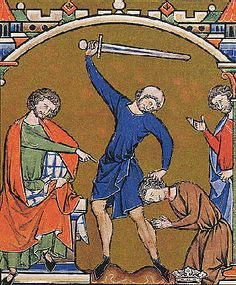
MURDER OF PIERS GAVESTON,INTIMATE FRIEND ANS[POSSIBLE] LOVER OF KING EDWARD II, UNDER THE DIRECT RESPONSIBILITYOF THE EARLS OF LANCASTER, WARWICK, HEREFORD AND ARUNDELMURDER OF PIERS GAVESTON,INTIMATE FRIEND ANS[POSSIBLE] LOVER OF KING EDWARD II, UNDER THE DIRECT RESPONSIBILITYOF THE EARLS OF LANCASTER, WARWICK, HEREFORD AND ARUNDELhttps://themortimersblog.wordpress.com/2017/03/22/a-royal-traitor-the-life-execution-of-thomas-of-lancaster-a-guest-post-by-stephen-spinks/

File:Pontefract Castle.JPG

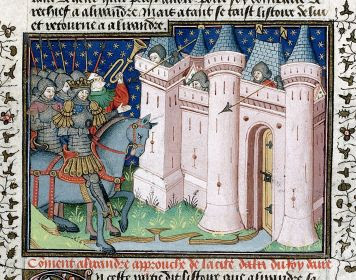
PONTEFRACT CASTLE, THOMAS OF LANCASTER’S FAVOURITECASTLE [INHERITED FROM HIS FATHER IN LAW, HENRY DE LACY, 3TH EARL OFLINCOLN, AT HIS DEATH IN 1311]IN HIS FAVOURITE CASTLE HIS SOCALLED ”TRIAL” TOOKPLACE AND NEAR HIS FAVOURITE CASTLE,  IRONICALLY,  HE WAS EXECUTEDhttps://en.wikipedia.org/wiki/Pontefract_Castle#Historyhttps://en.wikipedia.org/wiki/Pontefract_Castlemanuscript-images-medieval-castles

Edward was twice jeered by Lancaster’s garrison at Pontefract in 1317 & 1320 as he passed from north to south 

EDWARD II WAS TWICE JEERED BY THOMAS OF LANCASTERAND HIS HOUSEHOLD, IN AT PONTEFRACT IN 1317 AND 1320, WHEN HEPASSED FROM NORTH TO SOUTH…..https://themortimersblog.wordpress.com/2017/03/22/a-royal-traitor-the-life-execution-of-thomas-of-lancaster-a-guest-post-by-stephen-spinks/

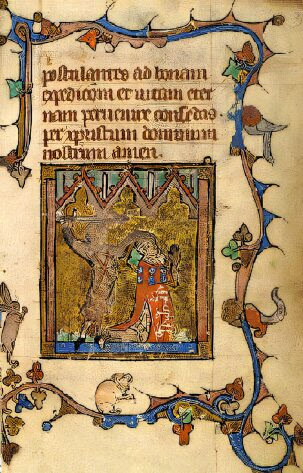
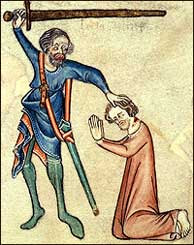
THE EXECUTION OF THOMAS, 2ND EARL OF LANCASTERhttp://www.luminarium.org/encyclopedia/thomasoflancaster.htmThomas, Earl of Lancaster

THE EXECUTION OF THOMAS, 2ND EARL OF LANCASTERhttp://www.englishmonarchs.co.uk/plantagenet_74.html

File:Edmund Crouchback Arms.svg

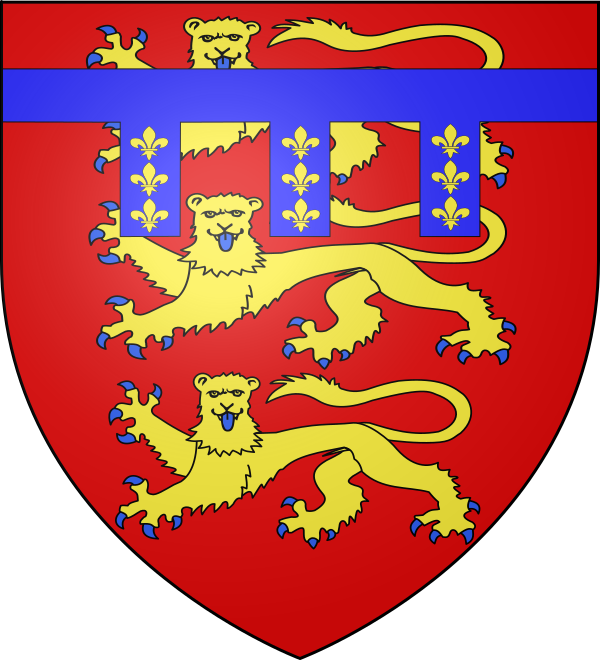
PLANTAGENETCOAT OF ARMS OF EDMUND CROUCHBACK [SON OFKING HENRY III, BROTHER OF KING EDWARD I ANDFATHER OF THOMAS, 2ND EARL OF LANCASTER], THOMAS,EARL OF LANCASTER AND HIS SUCCESSORShttp://www.newworldencyclopedia.org/entry/Thomas_Plantagenet,_2nd_Earl_of_Lancaster

Readers!

In the chapters one, two, three and four we saw, how the initial loyalcousin of king Edward II, fell out with him in a feud/conflict, for political andpersonal reasons and we watched the tragic fate of king’s dear favourite,Piers Gaveston and Thomas of Lancaster’s deadly role in it.

For reasons you’ll read in Chapter Five, Thomas of Lancaster, England”s wealthiest and most powerful man after king Edward II, became the uncrowned king of England
Read furthrer:

CHAPTER FIVE:

CHAPTER FIVE
DANCE FOR POWER
THOMAS OF LANCASTER, THE UNCROWNED KING
1314-1315

A Battle of Bannockburn [1314]
B The Great Famine [1315-1317]
C Lincoln Parliament [1316]/Thomas triumphant
D Three destructive favourites [1315-1318]
E Thomas of Lancaster/Feud with Warenne
F Thomas a peach?/Dangerous incidents
G Pembroke, man of honour/Treaty of Leake [1318]
H Aftermath/The favourites
I After the Treaty of Leake/New danger….

With his good friend and ally the [10th] Earl of Warwick gone, Thomas of Lancaster
not only suffered a personal loss [they were close, since
Warwick had named his son after Thomas [192], but
also it was a political setback.
Warwick was a skilled and clever ruler, while Lancaster,
although tough and forceful in action, was as incompetent as his
cousin Edward II, when it came to ruling, as the story will show…..

From the moment Piers Gaveston was murdered by Thomas and
his accomplices, it was a dance to the death between him
and Edward II, the two most powerful men in the land, yet apart’
from the struggle for power.
For although Edward officially had pardoned Thomas [and others]
for the murder of Gaveston [193],
it was quite clear, that he would never forgive or forget his cousin’s role
in the murder of a man, whom he lhad oved that much.

During  the [unsuccesful] siege of Berwick [in which Thomas of Lancaster
cooperated, for a change, with Edward II], in 1318, Edward was stated to have said::
””When this wretched business is over, we will turn our hands to other matters. For I have not forgotten the wrong that was done to my brother Piers.” [194]

So there was a situation in which two powerful men
competed for the rule of England, both incompetent
rulers, who could not put their own personal feelings above
the general political problems, like the war with the
Scots and internal questions [I’ll refer to the
great Famine between 1315-1317 later]
Disastrous for the country and eventually for
themselves.

THE FUN WAS JUST ABOUT TO BEGIN:

A

BATTLE OF BANNOCKBURN/1314

After a tense and dangerous year [since the murder
of Gaveston in 1312], where civil war threatened in a
moment and eventually there seemed some
de escalation, tensions flew high, again.
Presumably with the aim of strenghtening his position
[a victory on the Scots would enlarge both Kings popularity
as his royal position against the barons], Edward II decided to take a military campaign
against the Scots, who were leaded by the formidable military
commander and King, Robert the Bruce. [195]

And yes, Thomas of Lancaster reacted!

As to be expected, in June 1314, Thomas refused to accompany his cousin to Scotland for the Bannockburn campaign, and sent only four knights and four men-at-arms to fulfil his feudal obligations. [196]

The outcome was disastrous.
England suffered one of the most humiliating defeats
against the Scots, in the battle of Bannockburn [197]
in which the King’s nephew [remember, Gaveston’s
brother in law, who had refused to help him], the
[8th] Earl of Gloucester, was killed in battle, [198]
as Robert de Clifford, 1st Baron de Clifford,
one of the besiegers of Piers Gaveston at
Scarbourough Castle. [199]

To the great credit of the King must be said,
that although a bad military commander, he
fought very bravely and eventually they practically
had to drag
him from the battlefield to prevent the greatest
humiliation: to be captured, as would happen, years
later [in 1356], to the French King John II during
the Hundred Years War with England…. [200]

And figure:
A perhaps yearlong regency for his 2 year old
son [Edward, later Edward III, born in 1312…],
under the leadership of….guess who?
Likely, his cousin Thomas, Earl of Lancaster [King’s
halfbrothers were still too young].

SO:
THIS WAS THE GOLDEN CHANCE FOR THOMAS!

The battle of Bannockburn not only was
a great personal humiliation for Edward II, it
put him entirely at Thomas’ mercy. [201]

Had Edward been victorious, he would
have gained a great prestige and popularity, as
secure borders in the North.
That would have strengthened his position
towards Thomas of Lancaster and the other
opposing barons enormously.

But the painful reality was a humiliating defeat
[and for the Scots a great step in their freedom
fight!]

So Edward needed his cousin Thomas:
Without his help, the borders couldn’t be
defended against the Scottish raids, that now
ravaged English soil. [202]

A nasty position for a King, dependency on
a subject, who was his most powerful
nobleman and enemy.

1315/
THOMAS OF LANCASTER
DE FACTO RULER

In name Edward was the King, but the de facto
ruler was Thomas.
Alas, he proved to be as incompetent ruler
as his cousin Edward and although tough in military
action, he nevertheless was incapable to defend England against the Scottish attacks.

Perhaps it is not fair to reproach him that:
Robert the Bruce was an extraordinary skilled
military leader and the Scots were very motivated
to fight for their freedom [in the meantime ravaging
North England….]

But it IS reproachable, that neither the King nor
Thomas were capable to rise above personal
matters to work together in the State interests.

It was said, that
””Whatever pleases the lord king, the earl’s servants try to upset; and whatever pleases the earl, the king’s servants call treachery…and their lords, by whom the land ought to be defended, are not allowed to rest in harmony.” [203]

B

THE GREAT FAMINE/1315/1317

This disaster lasted from 1315 till 1317:

The first duty of a Medieval Lord [and certainly a King] was to look
to the welfare of the people.
To take care of them.
To feed the poor.
To defend the weak. [204]

When Thomas of Lancaster had sold some of his
precious belongings to feed the poor during that famine,
he should have been a saint already during his life….

That’s a pure joke, of course
Not ONE Lord in that time
would mind about the need of the poor [the chivalric
codes were merely theoretical] or would put it in his
head to sell precious things for the poor.
Besides that, the famine problem was not that simple,
because it was not only merely a question of not
HAVING food, but not capable to PRODUCE it.

The Great Famine started with bad weather in spring 1315. Crop failures lasted through 1316 until the summer harvest in 1317.

It rained heavily and constantly for much of the summer of 1314 and most of 1315 and 1316.
This torrential rain, inevitably, caused flooding; crops rotted away and livestock drowned in the waterlogged fields. So the result was the Great Famine, which is estimated to have killed at least five per cent, and perhaps much more, of the population of England. The rest of northern Europe suffered a similar or higher death toll. [205]

Edward II did his best to handle the crisis, but was not capable
to solve the problem. [206]
Perhaps Thomas of Lancaster took some measures
too, I don’t know.

Of course the famine was a hugh problem, yet it is the task
of rulers to handle wisely and competently.
Both failed, King and cousin, to handle the problems
and of course they didn’t cooperate together, which is
more than just bad ruling.
When famine is concerning, it is a crime against the poor population, which suffered the most.

However, to say to their defence, the situation WAS alarming
and partly they were powerless:
Even the King when visiting St Albans from 10 to 12 August 1315, had difficulties buying bread for himself and his household…….[207]

It is a wonder, that there had been no uprisings or peasants
revolt in that time….

The weather finally improved in 1317, and gradually the famine loosened its dread grip. [208]

Two big disasters and yet the most powerful men in the land couldn’t rise above personal matters and work together…..

A foreboding for all the mess, which was yet to come.

EDWARD II AND THOMAS OF LANCASTER/
TWO IRRESPONSIBLE FOOL RULERS

Just when there were such challenges and a need for strong
leadership, Edward II and his cousin Thomas could
do no better than thwarting each other, to the destruction
of many, including themselves.

For example [to begin with Thomas]:

Although Thomas was chosen as one of the godfathers of Edward and Isabella of France’s second son John of Eltham [209], Thomas’s great-nephew, he failed to attend the boy’s christening, a gross insult to the king and queen. [210]

But honesty obliges me to say, that before the christening solemnity of the second son of the King, Thomas and the King seemed
to have had a serious row in York…..[211]

But yet, try to keep the peace, my Lord Lancaster…..

The King acted no better:

”In April 1318 the Scots took the English town of Berwick which led to a shaky reconciliation between Lancaster and his cousin Edward.
The king, however, had not forgotten, or forgiven the death of Gaveston and was so ”wise” to have said:
When this wretched business is over, we will turn our hands to other matters. For I have not forgotten the wrong that was done to my brother Piers”.[212]

Well, the temporary ”peace” was over and Lancaster [Thomas] left. [213]
Not strange, since the remark of the King was aimed
directly against Lancaster, for his role in the murder of Gaveston.

But since the King had pardoned those involved in the
murder of Gaveston in 1313, [214]
he was obliged to his royal status to hold his word, whatever
his personal feelings and how painful for him as a person.

That’s the honour of a King AND wise ruling.
This remark but showed, that Lancaster was right, not
to trust the King…..

Nor could the King trust Lancaster.
And as will be revealed in the story, there were people
around the king, trusted ”friends”, who played a dirty role
to prevent any reconciliation between the King and
cousin Thomas.[215]

C

1316
LINCOLN PARLIAMENT/THOMAS TRIUMPHANT

The Lincoln parliament of early 1316 – at which Thomas of Lancaster attended,  more than two weeks late – requested of the king’s “dear cousin” that “he might be pleased to be chief of his council, in all the great or weighty matters concerning him [Edward] and his realm,” and Thomas, “for the great love which he bears towards his said lord the king,” agreed. [216]

To cut this shortly
Thomas was appointed to the ”chief place” in the Council
[Chief Councillor]. [217]
Unfortunately, he seemed to take little part in government and
preferred to stay at his favourite residence at Pontefract Castle
[which he had inherited jure uxoris from his father in law,
Henry de Lacy, the 3rd Earl of Lincoln] [218]
That formed a problem, since Edward II and the Council
had to communicate with him ”as though he were an independent
potentate, or another King” [219]
[Hahaha, there was no Internet then/Otherwise they could
have mailed or Facebooked…….”’Dear Cousin”, ”Sire,
my cousin……]

SURPRISE, SURPRISE/ROW WITH COUSIN KING EDWARD II

Edward and Thomas met in York in the summer of 1316 and had a furious row, apparently over Edward’s ongoing reluctance to accept the Ordinances [220], to which Thomas was devoted. [221]

Now I can imagine, that Thomas was irritated:
After all Edward II had agreed with the ordinances in 1311, and
although he was more or less coerced to[222], when a King gives
his word, his subjects have a right to expect, that he holds it.
I refer to the last passage from the coronation oath of the
King [pronounced in French]

”Sire, graunte vous à tenir & garder les loys & les custumes droitureles, les quiels la communaute de vostre roiaume aura esleu, & les defendrez & afforcerez, al honour de DIEU, à vostre poer?”
And his answer and promise
Jeo les graunte & promette.”

[English translation:
Sire, do you grant to be held and observed the just laws and customs that the community of your realm shall determine, and will you, so far as in you lies, defend and strengthen them to the honour of God?

Answer and promise of the King
” I grant and promise them.”] [223]

That means of course, that if the King grants the Ordinances,
he has to hold word.
And as a subject, Thomas of Lancaster had the right
to hold the King accountable to his oath. [224]

On the other hand I can understand the King’s position
too.
He was more or less coerced to those Ordinances, which
assaulted his royal position.
Yet a King is bound to his ”promises”…..

But of course that was not the point here.

After the brutal murder on Gaveston, any conflict
between Edward II and Thomas of Lancaster was in fact
about the King’s need for revenge on his cousin.
Maybe understandable being a private person, but a
King must put the interests of the State first.
And that Edward II was not willing or able
to do.

That was the King’s tragedy, which would led to his downfall.

D

THREE DESTRUCTIVE FAVOURITES
ROGER DAMORY, HUGH AUDLEY AND WILLIAM
MONTECUTE, THREE DESTRUCTIVE FAVOURITES
1315/1318

To make matters worse, the next years [untill the
”reconciliation” treaty of Leake], three friends and
favourites of Edward II, declared enemies of Thomas
of Lancaster, would do their utmost to further arouse
Edward’s hostility towards his cousin Thomas.
Their names were Roger Damory, Hugh Audley and
William Montecute [father of that William Montecute,
close friend of Edward III, who helped him overthrow
the regime of his mother Isabella of France and her lover
Roger Mortimer] [225]
And I am not exaggerating, when saying, that their influence
was destructive, doing everything to enlarge the tensions
in the country.

Roger Damory/Favourite and first disturber of the peace

After having mourned Piers Gaveston for about three years, Edward II had a close companion again [I don’t speculate, whether
their relationship was sexually intimate or not, let the reader
form his or her own opinion] in Roger Damory,
the most important of the three favourites [ancestor of Walt Disney, hahahaha] [226]
That man was one of a kind:

First favourite of the King [about 1315-1319], later ally of the same Thomas of Lancaster he tried to destroy during the time
he was favourite……[227]
Joining the retinue of King’s nephew, the [8th] Earl of Gloucester
[also brother in law of Piers Gaveston, whom Gloucester didn’t help, when he [Gaveston] was in the dungeons of Warwick Castle]
, Damory fought bravely
in the Battle of Bannockburn [1314] and thus attracted the King’s attention.
And so he made a quick career. [228], which especially
seemed to have been characterized by seeking his own advantage
and hinder all reconciliation attempts between Edward II and his] cousin Thomas of Lancaster. [229]
Rightly Pope John XXII wrote to King Edward ” to “remove those friends whose youth and imprudence injure the affairs of the realm.” [230]
By the way, Edward II married Roger Damory to his
niece, Elizabeth de Clare, sister of the [8th] Earl
of Gloucester. [231]

Hugh Audley/Favourite and second disturber of the peace
[only favourite to survive the reign of Edward II  and also
rebel against the King and ally of Thomas of Lancaster
and the Marcher Lords]

Hugh Audley rose in royal favour in 1315 and the relationship
came that close, that Edward II married him to his niece
Margaret de Clare, sister of the [8th] Earl of Gloucester
and dowager countess of Cornwall, widow of Edward II’s
beloved Piers Gaveston [232].
That was a beautiful catch!
Remember, Edward married Roger Damory to his other
niece Elizabeth, sister of Margaret de Clare.

William Montecute/Favourite and third disturber of the peace

William Montecute, father of his namesake William, who
was one of the closesr friends of Edward III [233], rose
into royal favour after 1315 and was a good soldier.
He was appointed steward of the royal household in 1317,
which gave him direct access to the King, so a powerful
position. [234]
He had a reputation as a good soldier. [235]

Alas, he also was a great hindrance in bringing reconciliation
between Edward II and his cousin, Thomas of Lancaster……

THE DESTRUCTIVE TRIUMVIRATE
DANGEROUS THREAT TO THE PEACE
IN THE COUNTRY

Roger Damory, Hugh Audley and William Montecute
had a highly destructive and fatal influence on the
King, intruiging against Thomas of Lancaster at any means
necessary.
The reason I condemn them so harshly is because this
dangerous policy led to further destabilisation of
the situation in the land, which was already torn
apart by the continuing threat of civil war, because of
the enmity between Edward and his cousin Thomas.

And as I see it, the destructive policy came mainly
from those three favourites, not from Thomas of
Lancaster [Thomas is no peach at all, but here he was
certainly not the attacker], who had reason to
feel himself threatened by those three.

For example [list is not complete]

At a meeting of the king’s council at Clarendon in the spring of 1317, the three openly called Thomas a traitor. [236]

That is a very serious accusation, dangerous too.

So understandably, Thomas protested.
He sent letters to the King, to say that “he fears the deadly stratagems of certain persons who thrive under the protection of the royal court…they have already carried off the earl’s wife to his disgrace and shame.” [on the history of his wife I refer later] [237]
That he subsequently [and repeatedly] asked the banishment from
Court of Damory, Audley and Montecute, comes as no suprise
either, since those gentlemen continued to sow discord
and counselled the king to remain hostile to his cousin. [238]

Out of self interest of course, and highly damaging for the
peace in the country.

Edward II, no great champion in knowledge of human nature,
was misled by those three and wrote Thomas, as reaction of
his letters with the request of banishment
””I will avenge the despite done to the earl when I can; I refuse to expel my household; for the abduction of his wife let him seek a remedy in law only.” [239]
By this, the King made things worse.

And Thomas was not alone, but was supported by Pope
John XXII, who wrote the King repeatedly in 1317 and 1318,
warning the King  not to allow any “backbiter or malicious flatterer” to bring about disunity between himself and Thomas, and to send away from court those men who offended the earl. [240]
He advised the King to “remove those friends whose youth and imprudence injure the affairs of the realm. [241]
He also warned  Thomas to “separate himself” from those who displeased Edward and to reject “suggestions of whisperers and double-tongued men.”[242]

The Pope was a real peacemaker!
In addition to the King and his cousin Thomas, he also
wrote to Thomas’ brother, Henry, [later] Earl of Lancaster several times in 1318 as a close kinsman of both the king and Thomas and “bound to pay them reverence and affection,” asking him to promote accord between them “so that the realm may be freed from disturbance” [243]

I don’t know whether Henry tried to mediate, since
it is likely, that he spent the most of that period
in France [perhaps because he wouldn’t be involved
in his brothers’ feud with the King? } [244]

But the machinations of the three favourites were
not done yet:

After several summons of the King to Thomas of
Lancaster to attend council meetings, which he not
attended [not suprisingly, since the three favourites attended,
sometimes armed…][245], the King asked his household and
friends for advice in this situation:
””You see how the earl of Lancaster has not come to parliament. You see how he scorns to obey our commands. How does it seem to you?” [246]
Some advised to arrest or exile Thomas, others, more sensible,
advised to negociate.
After all, although politically isolated now, Thomas of
Lancaster WAS a force of nature, since very powerful by the
possession of his five Earldoms and not to be underestimated,
his private army.

Be as it may, a very dangerous situation threatened:

To cut a long story short:
At the instigation of two cardinalswho had recently arrived in the country – they were with the king at York in September 1318 – a date was finally set for a meeting between Edward and Thomas, although it was postponed.
Edward agreed to take no hostile action against Thomas and his adherents, and Thomas agreed to attend the next parliament, due to be held at Lincoln in January 1318. [247]

At the beginning of October 1317, The King left York to return to London.
Alas, despite his promise a few days earlier not to take action against his cousin, he commanded his men to take up arms and attack him. [248]
Apparently one of Edward’s friends – most likely Roger Damory – had persuaded him that the earl posed a threat to Edward and that he should attack him first.
Fortunately the King informed the earl of Pembroke beforehand what he was intending to do.
He said “I have been told that the earl of Lancaster is lying in ambush, and is diligently preparing to catch us all by surprise.” [249]
Pembroke fortunately managed to convince Edward that this was not in fact the case, and talked the King out of it…..[250]

This unsound situation would continue from 1315 to 1318,
when the man of honour [see the Piers Gaveston story], Lord
Pembroke and the Middle Party intervened and managed to
reach the Treaty of Leake. [251]
But that’s for later

E

FEUD WITH WARENNE

Never a dull moment in the Edward II/Thomas of
Lancaster times.
Not only Edward and his cousin had become
bitter enemies, which included enmity between
Lancaster and the named destructive favourites,
Thomas also had a bitter feud with John de Warenne,
7th Earl of Surrey [one of the besiegers of Piers Gaveston
in Scarbourough Castle].
What the original nature of the hatred of Warenne for Lancaster
was, is not sure:
Probably he blamed Lancaster for his [Warenne’s] inability to secure a divorce [he was unhappily married]. This may be because Lancaster had persuaded the Bishop of Chichester to prosecute Warenne for his adultery [252]

In each case, Warenne retaliated with the abduction
of Lancaster’s wife, Alice de Lacy, with whom he [Lancaster]
was unhappily married. [253]
Whether the abduction took place with or without
the consent of Lady Alice, is not clear.
Lancaster, not a man to forgive an insult, retaliated again
with seizing two castles from Warenne. [254]

At last the King intervened, which led to an uneasy
peace between the two noblemen. [255]

WHAT A FUN!

However, Lancaster also thought, that the three favourites
were behind the abduction [256], which made matters
worse and worse…….

F

THOMAS OF LANCASTER A PEACH?/
FORGET IT/DANGEROUS INCIDENTS
[Jeering at the King/1318/1320/Blocking his way….]

The attentive reader shall have noticed, that I defended
Thomas of Lancaster several times:
Against the unpredictable behaviour of the King
[stating not to attack Lancaster and yet planning
an attack, not holding his word and failing to obey the Ordinances
of 1311] [257]
Against his destructive favourites, who did everything
in their power to prevent a reconciliation between the
King and his cousin Thomas.

But was Thomas then, a peach, only intended to hold
the King to his word?
NOT AT ALL!

The reader has read about his [and others’]  execution
of poor and vain Piers Gaveston.
That’s not ”peach” behaviour, but lawless and ruthless.

The King, on his part, was not ”true to his word”, stating
at one moment not to attack Thomas, and the second
moment attempting to attack him [Thanks to
the Earl of Pembroke, nothing came from that]
Stating to observe the ordinances and then not
to hold his promise.

But to the defence of the King must be said, that Thomas
did, also, his best to stir up the animosity”, which the
King [understandably] harboured because of the tragic
murder on Gaveston:

I already mentioned the absence of Thomas at the
battle of Bannockburn, as his failing to attend the
christening of the Kings second son, John of
Eltham, although he was one of the godfathers. [258]

But it became worse:

BLOCKING THE PATH OF THE KING

During the time of high tension [when the three favourites
accused Thomas of treason, his wife Alice had been abducted]
Edward and Isabella left Nottingham and the failed council meeting on 7 August 1317 [where Thomas didn’t attend, not willing
to meet the King, as long as the three destructive favourites were
not expelled from Court]] , and travelled to York. The most direct route would have taken Edward right through the town, but Thomas had blocked his way by placing armed guards on the roads and bridges south of York,
claiming he had the right to be informed about the
movement of armed men as he was the hereditary Steward
of England…..[259]

Of course the King was furious that a subject had blocked his way!

MORE FUN/
JEERING AT THE KING

Next to blocking the King’s path in his own Kingdom,
one of the worst things subjects can do is, make
a joke of their King, by jeering at him.
And that was precisely what Thomas of Lancaster
did:
1317
”Thomas made matters worse by leading his men out to the top of the castle ditch and jeering at Edward as he and his retinue travelled past. [260]

AND HE DID IT AGAIN!
1320
After the parliament in York ended [which Thomas failed to
attend], Edward II and his wife Isabella of France travelled through Pontefract on their way to London, and Thomas’s retainers once again jeered at the king, and also the queen, from the safety of the castle. [261]

NOT VERY CLEVER, MY LORD THOMAS
Not very clever……

G

PEMBROKE, MAN OF HONOUR/THE MIDDLE
PARTY AND THE TREATY OF LEAKE

Finally a reconciliation
between the two most powerful men, Edward II and his cousin Thomas,
was about to take place.
With special compliments for the Earl of Pembroke, the man of honour, who
had been offended by Gaveston’s abduction since he had given
his word [262].
The same man, who had talked Edward II out of his foolish
and dangerous intention to attack Thomas of Lancaster at his
stronghold at Pontefract [263]

With Pembroke playing an important role,
since April 1318, a group of barons and prelates [the
”Middle Party] [264] had been negotiating with the earl of Lancaster, and trying to persuade Edward and his cousin to overcome their hostility to each other. On 8 June, they came to a preliminary agreement: Edward would uphold the  Ordinances, govern by the counsel of his magnates, and conciliate Thomas, who was threatened with sanctions if he continued to hold armed assemblies [which he indeed had held,
but also the King had permitted armed Lords to his councils]. [265]

On 7 August 1318 the two men exchanged the kiss of peace in a field between Loughborough and Leicester. Edward gave his cousin a fine palfrey “in recognition of his great love” of Thomas. (Hmmmm.) A formal agreement, the Treaty of Leake, was signed in the town of Leake near Loughborough two days later [266]

Thomas of Lancaster demanded [and right he was!] that
Roger Damory, Hugh Audley and William Montacute be sent away from court, the King consented and off they went…..[267]

GOOD RIDDANCE WORKS!

I

THE FAVOURITES/AFTERMATH

Finally the destructive influence of the King’s
three favourites had come to an end!

How fared they?

Roger Damory

From Kings friend to enemy

His influence was over, athough he seemed to have been in the
favour of the king for a while.
At last, he clashed with the new and most destructive favourite
of the King, Hugh Despenser the Younger [268], joined the Marcher
Lords [sworn enemies of the Despensers, father and son and
allies of Thomas of Lancaster] [269]
He fought with the Marcher Lords against the Kings army, was
captured and tried [condemned to the traitor’s death, which was
not executed, happily for him] and died at Tutbury Priory on 12 March 1322, presumably of wounds sustained fighting against the royal army…… [270]

William Montecute

As his co favourites Roger Damory and Hugh Audleu he had
done everything to instigate further animosity between Edward II
and his cousin Thomas of Lancaster.
Therefore he was removed from his post as steward of the royal household and appointed steward of Gascony in november
1318.
He died in Gascony in 1319. [271]

Hugh Audley

Hugh Audley also turned from the friend of the King
to his enemy…..
Hugh fought with the Marcher Lords against the King
[and the Despensers] and later fought at the side of
Thomas of Lancaster [the Marcher Lords were his ally]
in the fatal Battle of Bouroughbridge [272].
He was spared execution thanks to his wife Margaret de
Clare’s pleas [she was the niece of Edward II and widow
of his former lover Piers Gaveston], somehow
survived the reign of Edward II and the regime
of his wife Isabella of France and lover Roger Mortimer [see his life/273]
and died peacefully in november 1347. [274]

He was the only one of Edward II’s favourite to
survive those turbulent times.

J

AFTER THE TREATY OF LEAKE/NEW DANGER

By late 1318, the relationship between Edward II and the earl of Lancaster was relatively good and Pembroke and
the other barons [as the other subjects of the King]
doubtless sighed with relief, because civil war
seemed to be at the end.
And for those, who doubt Thomas:
He actually co-operated with the king and took part in the siege of Berwick in 1319. [275]
But as we shall see:
Nothing lasts forever and the destructive favourites
would soon be replaced by a far more dangerous man:
Hugh Despenser the Younger [276], who would lead the King
to his destruction and his own [Hugh’s]

More about the Despensers and Thomas of Lancaster’s
role in the next chapter.

ASTRID ESSED

NOTES 1-250

NOTES 251-347

Reacties uitgeschakeld voor Thomas of Lancaster, rebel cousin of king Edward II, from warlord to Saint/Chapter Five

Opgeslagen onder Divers

Thomas of Lancaster, rebel cousin of king Edward II/From warlord to Saint/Chapter Four

THOMAS OF LANCASTER, REBEL COUSIN OF KING EDWARD II/FROMWARLORD TO SAINT/CHAPTER FOUR

File:Thomas Plantagenet, Earl of Lancaster.jpg

http://www.newworldencyclopedia.org/entry/Thomas_Plantagenet,_2nd_Earl_of_LancasterTHOMAS 2ND EARL OF LANCASTER

Thomas of Lancaster’s main possessions (Maddicott).THOMAS OF LANCASTER’S MAIN POSSESSIONShttps://en.wikipedia.org/wiki/Thomas,_2nd_Earl_of_Lancaster

http://www.newworldencyclopedia.org/entry/Thomas_Plantagenet,_2nd_Earl_of_LancasterTHOMAS 2ND EARL OF LANCASTER

Thomas of Lancaster’s main possessions (Maddicott).THOMAS OF LANCASTER’S MAIN POSSESSIONShttps://en.wikipedia.org/wiki/Thomas,_2nd_Earl_of_Lancaster7626ba0b19e62826ef9090c93b10a11b.jpg

MURDER OF PIERS GAVESTON,INTIMATE FRIEND ANS[POSSIBLE] LOVER OF KING EDWARD II, UNDER THE DIRECT RESPONSIBILITYOF THE EARLS OF LANCASTER, WARWICK, HEREFORD AND ARUNDELMURDER OF PIERS GAVESTON,INTIMATE FRIEND ANS[POSSIBLE] LOVER OF KING EDWARD II, UNDER THE DIRECT RESPONSIBILITYOF THE EARLS OF LANCASTER, WARWICK, HEREFORD AND ARUNDELhttps://themortimersblog.wordpress.com/2017/03/22/a-royal-traitor-the-life-execution-of-thomas-of-lancaster-a-guest-post-by-stephen-spinks/

File:Pontefract Castle.JPG

PONTEFRACT CASTLE, THOMAS OF LANCASTER’S FAVOURITECASTLE [INHERITED FROM HIS FATHER IN LAW, HENRY DE LACY, 3TH EARL OFLINCOLN, AT HIS DEATH IN 1311]IN HIS FAVOURITE CASTLE HIS SOCALLED ”TRIAL” TOOKPLACE AND NEAR HIS FAVOURITE CASTLE,  IRONICALLY,  HE WAS EXECUTEDhttps://en.wikipedia.org/wiki/Pontefract_Castle#Historyhttps://en.wikipedia.org/wiki/Pontefract_Castlemanuscript-images-medieval-castles

Edward was twice jeered by Lancaster’s garrison at Pontefract in 1317 & 1320 as he passed from north to south 

EDWARD II WAS TWICE JEERED BY THOMAS OF LANCASTERAND HIS HOUSEHOLD, IN AT PONTEFRACT IN 1317 AND 1320, WHEN HEPASSED FROM NORTH TO SOUTH…..https://themortimersblog.wordpress.com/2017/03/22/a-royal-traitor-the-life-execution-of-thomas-of-lancaster-a-guest-post-by-stephen-spinks/

THE EXECUTION OF THOMAS, 2ND EARL OF LANCASTERhttp://www.luminarium.org/encyclopedia/thomasoflancaster.htmThomas, Earl of Lancaster

THE EXECUTION OF THOMAS, 2ND EARL OF LANCASTERhttp://www.englishmonarchs.co.uk/plantagenet_74.html

File:Edmund Crouchback Arms.svg

PLANTAGENETCOAT OF ARMS OF EDMUND CROUCHBACK [SON OFKING HENRY III, BROTHER OF KING EDWARD I ANDFATHER OF THOMAS, 2ND EARL OF LANCASTER], THOMAS,EARL OF LANCASTER AND HIS SUCCESSORShttp://www.newworldencyclopedia.org/entry/Thomas_Plantagenet,_2nd_Earl_of_Lancaster

Dear Readers
Travel with me to 14th century England again……
Recently I sent you chapter one, two and three of my ”book” article ”Thomas of Lancaster, rebel cousin of king Edward II, from warlord to Saint”It inarrates the turbulent lifeof Earl Thomas of Lancaster, cousin of king Edward IIBecause it is extended, I do you the favour of sending my major article to you in chapters
You still remember chapters one, two and three?
https://www.astridessed.nl/thomas-of-lancaster-rebel-cousin-of-king-edward-ii-from-warlord-to-saint-chapter-one/

AND NOW……CHAPTER FOUR!ENJOY AND WATCH CLOSELY, HOW THE DRAMA UNFOLDS……..

CHAPTER FOUR
THOMAS OF LANCASTER AND KING EDWARD II
OUTBURST OF THE CONFLICT/PIERS GAVESTON,
THE ROYAL FAVOURITE

[This is a rather elaborated story about Piers Gaveston,
since he played a large part in the enmity between Thomas
and his cousin Edward II]

It was the tragedy of Piers Gaveston, who set a deep and nearly
invincible enmity between King Edward and his cousin Thomas……

The first indication of tension between Edward II and his
cousin Thomas was his abrupt leave of the Court in 1308, the fact
that he, obviously, witnessed no charters after that day, until
march 1310 AND that the constant flow of grants and favours to him from Edward also ceased. [82]
I don’t know, what the cause of the conflict was.
In each case, it didn’t seem to be referred to Gaveston, since
Lancaster, at first, was on friendly terms with him and remained
loyal, when the barons were pressing for Gaveston’s exile
in the spring of 1308 [83], he later completely turned against
Piers Gaveston.

Before going to that, something about Piers Gaveston
[about whom I will write an article in the future, just wait and
see]
He was a fascinating man.
Intelligent, witty, charming, with martial skills and later proved
to be a skilled military administrator.

Alas……
Too arrogant and provocative, which eventually led to his downfall.

PIERS GAVESTON

Piers Gaveston was an English nobleman from Gascon descent.
His father was a Gascon knight, Arnaud de Gabaston, his mother was
a noble woman,
Claramonde de Marsan [84]. Some sources suggest, that she is burned as
a witch [85], but there is no proof for that.
His father was in the service of King Edward I [Edward II’s father] and Piers
[Gaveston]
seems to have served King Edward likewise. [86]
Anyway, King Edward I was apparently impressed by Gaveston’s conduct and martial skills, and wanted him to serve as a model for his son [the
later Edward II], so he became a member of his household. [87]

FIRST EXILE

To cut a long story short:
Prince Edward and Piers Gaveston grew very fond of each other, probably too fond in the
eyes of the King…..and  fearing the apparent influence
of Piers on the [then] Prince of Wales [88], Edward [II], Piers
Gaveston was banished. [89]
That was the first time.
There were still two times to go…..

RETURN TO ENGLAND

Old King Edward I died on 7 july, 1307 and his son, Edward of
Caernarfon [named after his Welsh birthplace] [90], was now King of England.
One of his first acts was, surprise, surprise…..to recall his favourite
Piers Gaveston from exile.[91]

TROUBLES WITH THE BARONS/FAVOURS FROM THE
KING AND PROVOCATIONS

Very soon this led to great displeasure, to say it mildly under
the greatest part of the nobility, since Edward made him
”Earl of Cornwall” and this title was reserved for the members of
the royal family. [92]
So the great barons felt insulted, not only because of this title,
as for the fact, that compared with them, Piers Gaveston was of relatively
humble origins. ‘[93]

And then that coronation business!

As I wrote, Thomas of Lancaster carried the sword ”Curtana” at
the coronation of Edward II [and his wife Isabella of France], his
brother Henry carried  the royal rod, as were many other members
of high nobility involved in the ceremony. [94]

BUT PIERS GAVESTON STOLE THE SHOW!
While the Earls wore cloth-of-gold, as they were entitled to do in the king’s presence (cloth-of-gold is material shot through with gold thread), Gaveston wore royal purple, of silk, encrusted with jewels. [95]
They were beaten by Piers Gaveston at the tournament at
Wallingford in december 1307, what seemed to have aroused fury. [96]
They were also insulted, that the King married Piers
Gaveston off to his niece Margaret de Clare [97], daughter
of Kings sister Joan of Acre [married Gilbert de Clare, 7th Earl of Gloucester] [98] and sister of the powerful [8th] Earl of Gloucester.
[99]

And then those nicknames!

Perhaps out of self-defence, or merely
for the pleasure of provocation, Piers gave the Earls
and barons all sort of insulting nicknames:

Henry de Lacy, [3rd] Earl of Lincoln, the father in
law of Thomas of Lancaster, was called ”burst belly” [boule
crevee], Thomas of Lancaster himself was called ”the churl”
or ”the fiddler”, the [2nd] Earl of Pembroke [100]
[a man of honour, which will show later] ”Joseph
the Jew” and  the [10th] Earl of Warwick [101], one of Piers”
most bitter enemies, was called ”the Black Dog of Arden.” [102]
Whether Piers really called his brother in law, the [7th] Earl of Gloucester ”whoreson”, is doubtful, since the lady in question,
Gloucester’s mother [as the mother of Piers” wife]
was the sister of the King….[103]

Yet, although annoying [apart of course from
that ”whoreson” what really was serious]
, one should think, that some
teasing, defeat at a tournament and arrogance would
not trigger such a hatred, as especially Thomas of
Lancaster and Guy de Beauchamp, 10th Earl of Warwick
have had for the vain, witty and charming
Piers, who did them, further [unlike the later
favourite, Hugh Despenser the Younger, who was
real powerseeking and dangerous [104] no harm.

But those were high Earls, most of them royal or
else married with royalty and no men to forget insults,
especially from a man, who was, in their eyes, of
”humble origin” [105] and considered to be an adventurer.

And the King did nothing to stop Piers” arrogance.
On the contrary:
He seemed the witty remarks of Piers ”funny”

Seen the King’s great love and emotional dependence
of Piers Gaveston [as shows not only the  numerous
gifts and honours he bestowed at him, as his reaction
on his banishments], some writers assumed they were lovers
and others, not [106]

I can’t look into the Medieval royal bedchamber, of course, but
given Edward’s great emotional need for Piers, that he swore
vengeance after his death [107] as the fact that
he never forgot him [108], it seems likely to me.

ENOUGH IS ENOUGH/YOUR GRACE, BANISH THAT
RASCAL!
SECOND EXILE

No part to play for Thomas of Lancaster
Not yet……..

Tensions rose between at one side the Earls and barons and
at the other side Piers Gaveston [and subsequently, the King]

This led to the second [Piers was already banished firstly
by Edward I, recalled by Edward II] banishment of Piers Gaveston in 1308

I already mentioned the arrogant behaviour of Piers,
the insulting nicknames, the fact that the King married him
off to a member of the royal family [his niece Margaret
de Clare], Piers” showing off at the coronation
of the King [and Isabella, his wife] [109], his beating of
important members of the nobility at the tournament
of Wallingford, the fact, that the King had made him
regent during his absence [his marriage in France, with
Isabella, daughter of King Philip IV] [110]

Reasons enough for the high and mighty Lords to hate Piers.
What I DIDN’T mention [and do now], that the King
refused to see any of his barons unless Piers was also present, and rudely ignored them, talking only to Piers. [111]

The Medieval
chronicle Vita Edwardi Secundi [Latin: Life of Edward the Second]
wrote about Piers” growing arrogance:’
””scornfully rolling his upraised eyes in pride and in abuse, he looked down upon all with pompous and supercilious countenance…indeed the superciliousness which he affected would have been unbearable enough in a king’s son.”

ENOUGH IS ENOUGH, the Earls and barons must have said:
He has to go!

Under pressure of nearly every member of the nobility, the King was forced to banish Gaveston. [112]

Another powerful influence came from the French King, Philip IV
who, apparently offended by the Edward II’s favouritism
of Gaveston and the [intended or not] neglect, at least
at the coronation banquet [113] of his [Philip IV’s] daughter Isabella, and Edward’s wife, supported the barons. [114]

According some sources he said to have sent 40,000 livres to the earls of Lincoln [Thomas of Lancaster’s father
in law] and Pembroke to encourage them to proceed against Gaveston. [115]

Strangely although, at that time Thomas of Lancaster was
still supportive to the King, along with a small minority,
and was not behind the banishment. [116]
However, that would change, dramatically

Well, on 18 may [1308] Edward consented to exile
Piers, which he did grudgedly, but with no choice:
Civil war was treathening [figure, ONE YEAR a King
and already the nobility willing to rise against you…..]
and although he was stripped from his lands [being
Earl of Cornwall], but was allowed to hold the title.
And he was not without an income!
Edward granted Piers £2000 worth of lands in his homeland of Gascony, and another £2000 of English lands for
him and his wife Margaret [who accompanied him
in exiler, although she was not banished, being
the granddaughter of King Edward I and the sister
of the Earl of Gloucester.
Edward also gave him a gift of 1180 marks, about 786 pounds, an enormous sum ![117]

And he was not actually BANISHED from the realm, since
he was appointed Lieutenant General in Ireland, where he
showed [granted] a skilled military administrator and even
beat down a rebellion. [118]

Meanwhile Edward did his utmost to bring Piers back.
Through distribution of patronage and concessions to political demands, he won over several of the earls who had previously been of a hostile disposition. [119]
Henry de Lacy [Earl of Lincoln, Thomas
of Lancaster’s father in law], who was the leader of the baronial opposition due to his age and great wealth, was reconciled with Edward by late summer 1308. Even Warwick, who had been the most unyielding enemies, of Gaveston, was gradually mollified
The excommunication with which Piers was threatened by the
Archbishop of Canterbury should he come
back, was nullified by Pope Clement V. [120].
That was in april 1309.

So the way was free for Piers to return.
Of course it had come with a price:
At the parliament that met at Stamford in July, Edward had to agree to a series of political concessions, The so-called Statute of Stamford was based on a similar document Edward I had consented to in 1300, called the articuli super carta, which was in turn based on Magna Carta.

The ”Statute of Stamford” implied a promiose to redress baronial grievances. [121]

However:
At 27 june 1309, Piers had returned to England.
On 5 August 1309, Gaveston was reinstated with the earldom of Cornwall.

RETURN/AS ARROGANT AS EVER!

BUT SOME PEOPLE NEVER LEARN.

You would expect some modesty, some cautiousness.

But no, Piers Gaveston was as arrogant as ever, perhaps
even worse and the King did nothing to stop him.
He played the old game again, provocating the nobility
and giving them insulting nicknames. [122]

Of course the Earls and barons were furious!
They had enough of it.

The political climate became so hateful that in February 1310, a number of the earls refused to attend parliament as long as Gaveston was present. Gaveston was dismissed, and, when parliament convened, the disaffected barons presented a list of grievances they wanted addressed. On 16 March, the King was forced to appoint a group of men to ordain reforms of the royal household.[This group of so-called Lords Ordainers cons isted of eight earls, seven bishops and six barons.[123]

Among them supporters of the King, like the Earl of Gloucester
[his nephew and brother in law of Piers Gaveston], but also die hard
opponents of Piers Gaveston [and subsequently the King], like
the [10th] Earl of Warwick and Thomas of Lancaster, who was now
neither a friend of the king, nor of Piers Gaveston.
The natural leader of the Ordainers was ”burst belly” [nickname
by Piers Gaveston….], Henry de Lacy, the [3rd] Earl of Lincoln
and father in law of Thomas of Lancaster.
Lincoln had a moderate influence, which, alas, would disappear…..

LORD ORDAINERS

The meaning of the Ordinances, as eventually presented in 1311 [124], was
twofold.
The great Lords wanted to get rid of Piers Gaveston, surely, but I
think, that even when there had been no Gaveston, such as the Ordinances
would have been presented [since Edward II was not the strong leader
his father was], aiming at limiting royal power.

To say it otherwise:
The eternal struggle between centralization and decentralization, as
I have described in part one.

So:

Hatred against Piers Gaveston, the ”Gascon adventurer” and his
influence over the King, combined with adesire for reforms, partly
based on the ideas of Simon de Montfort [125]
Partly [or mainly, as you see it] based on greater influence for
the nobility and a weaker kingship.

With the King doting over Gaveston no difficult task…..

Anyway, to cut a long story short:

When the Lord Ordainers were working on reforms [consisting
diminishing royal power], the King launched a military campaign against
the Scots, but many barons refused to follow him.
Except his nephew [and brother in law of Gaveston] Gloucester, Warenne [126] and of course, Piers Gaveston.
It came to nothing, however, when the Scottish King and leader
Robert the Bruce [127] refused to engage in open battle, or even get involved in negotiations.
In February, Gaveston was sent with an army north from
Roxburgh to Perth, but he failed to track down the Scottish army. [128]

EXIT ”BURST BELLY”/THE COMING OF THOMAS OF LANCASTER

In the meantime it went worse and going to a new tragedy for the
King and Gaveston:
”Burst Belly”, Thomas of Lancaster’s father in law died on 6 february 1311,
which meant the end of the moderate influence in the
baronial opposition against the King.

Thomas of Lancaster, as his heir [now in the possession of five Earldoms,
three from his father and two from his father in law]
became the new leader of the Lords Ordainers and  a hardliner!

With the Ordainers ready to present their programme of reform, Edward had to summon a parliament. In late July he appointed Gaveston Lieutenant of Scotland, and departed for London.
The Bruce still evaded the English successfully, in early August even staging a raid into northern England, and shortly after this Gaveston withdrew to Bamburgh Castle in Northumberland.

When parliament met on 16 August, the King was presented with a set of proposed reforms of the royal household, as well as specific attacks on individuals, including a demand for the renewed exile of Piers Gaveston.
Edward initially offered to agree to the reforms as long as Gaveston was allowed to stay, but the Ordainers refused.

The King eventually had to agree to the Ordinances, which were published on 27 September.
On 3 November, two days after the allotted deadline, Gaveston left England ………..[129]

A triumph for the barons
A deep, personal tragedy for the King.

DETORIATION OF THE RELATIONS
BETWEEN THOMAS OF LANCASTER AND THE KING/
CLASHES

Before continuing with the Piers Gaveston tragedy, some examples of
the detoriation of the relationship between the King and his cousin
Thomas of Lancaster:

In February 1311, Thomas’  father-in-law Henry de Lacy, earl of Lincoln, died, and Thomas inherited his lands by right of his wife Alice. He had to perform homage to Edward II for the lands, but Edward was then on campaign in Scotland. Thomas refused to cross the Tweed to meet the king; Edward refused to return to England. According to the Lanercost chronicle, Thomas threatened to forcibly enter his lands with a hundred knights, at which Edward gave in and met Thomas at Haggerston, on the English side of the river Tweed.
Whatever they felt for each other by then, the men at least managed to conceal any hostility and “saluted each other amicably and exchanged frequent kisses.” [130]

This in fact was a declaraion of war against his King and is
considered to be treason…..

But there is more:

”In June 1314, Thomas refused to accompany his cousin to Scotland for the Bannockburn campaign, and sent only four knights and four men-at-armsto fulfil his feudal obligations.” [131]

Of course the Gaveston tragedy….. [132]

And in 1316, when open war was imminent between those two
most powerful men in England, the following:

Although Thomas was chosen as one of the godfathers of Edward and Isabella of France’s second son John of Eltham [133], Thomas’s great-nephew, he failed to attend the boy’s christening, a gross insult to the king and queen. [134]

But honesty obliges me to say, that before the christening solemnity of the second son of the King, Thomas and the King seemed
to have had a serious row in York…..[135]

Back to Gaveston:

RETURN TO ENGLAND
PIERS GAVESTON GOES HOME……..

You noticed the hatred, the barons felt for Piers Gaveston
Their attempts to get rid of him.
Twice
And this time, his exile was really
meant forever……

And guess who’s coming to visit?

PIERS GAVESTON!
Came back again.

Despite the fact the barons hated him.
Despite the fact that he was to be excommunicated,
whenever he set his foot on English soil again.

If the man was not playing a crazy and reckless game, his return
must have had a pressing need:
I think perhaps he came back for the birth of his
child.
And for him it must have been a wonderful thing,
that at least he saw his child:
At 12 january, Piers’ wife Margaret gave birth to a
daughter, Joan.
Edward seems to have met Piers at Knaresborough on 13 January, [I don’t know when Piers set foot on English soil]
and the two men rushed the seventeen miles to York that same day, likely so Piers could see his wife and baby. [136]

Seen in the light of the tragic events, it’s good to know
that he at least saw his child, before the tragedy befell him……

What then happened was no clever politics
from the King:
He publicly revoked Gaveston”s exile. [137]
So the barons knew that he was back and were now
preparing for civil war, with Thomas of Lancaster
and The Earl of Warwick ahead!
In march Gaveston was excommunicated [138]
and soon he, the King and Queen Isabella were hunted
down by the barons.

Thomas of Lancaster came after them with an army
and Edward fled with his wife and Gaveston, pursued
by his own cousin Thomas! [139]

WHAT A DEGRADING SITUATION!
WHEN A KING MUST TAKE FLIGHT FOR
HIS OWN, ARMED SUBJECTS, HIS RULE
AND KINGSHIP IS BANKRUPT AND AT THAT
MOMENT HE IS, AS A KING, A TOTAL FAILURE!

Edward should have been warned by this, that if he was not
able to restore his authority in short time, this could be
the beginning of the end!

And it was………

How powerful Thomas of Lancaster must have felt.
As if HE were the King…….

It was a dramatic flight, with a dramatic end.
Edward’s desperate attempts to keep
Gaveston safe seem to have gone so far, that he offered
Robert the Bruce [King of the Scots and the great leader
of the rise against the English domination] to acknowledge
him as King in exchange for the protection of Gaveston. [140]
Which the Bruce refused, who seems to have exclaimed
””How shall the king of England keep faith with me, since he does not observe the sworn promises made to his liege men?…No trust can be put in such a fickle man; his promises will not deceive me.”
[141]

I ask my readers:
If the king wanted to go that far to save his favourite, Gaveston,
were they just friends or lovers?
I think, lovers……

SIEGE OF SCARBOROUGH

Meanwhile the barons, under the leadership of
Thomas of Lancaster, were determined ”to get him”
[Gaveston]

Thomas of Lancaster nearly captured the King and his favourite,
when they were in Newcastle and the [2nd] Earl of Pembroke [142]
and the [7th] Earl of Surrey, John de Warenne [143], were given the task to capture Gaveston. [144]

The King and Gaveston split up [probably the King wanted
to get reinforcements to protect Gaveston] [145], the king and
Queen went to York and Gaveston was in Scarbourough Castle.
That was the last time, King Edward would ever see Gaveston…..

Soon Gaveston was besieged by Pembroke, Warenne, Henry de Percy
[1st Baron Percy] [146] and Robert de Clifford [1st Baron de Clifford][147]

ONE MAN OF HONOUR…..

The rest of the story is gruesome, but one
man should get the credits he deserved.
Aymer de Valence, [2nd] Earl of Pembroke.
As written, Gaveston was besieged in Scarborough by
Pembroke, Warenne, with the help of Henry de Percy
and Robert de Clifford.

Gaveston could not held the castle, so he surrendered to the
besiegers.
The terms of the surrender were that Pembroke, Warenne and Percy would take Gaveston to York, where the barons would negotiate with the king. If an agreement could not be reached by 1 August, Gaveston would be allowed to return to Scarborough. The three swore an oath to guarantee his safety.After an initial meeting with the King in York, Gaveston was left in the custody of Pembroke, who escorted him south for safekeeping.

Pembroke [who was the cousin of the late King Edward I, his father
being the halfbrother of Edward I’s father, King Henry III] [148]
did his utmost to behold his word.
When leaving Gaveston in the rectory at Deddington in Oxfordshire
to visit his wife, Gaveston’s bitter enemy and great ally of Thomas of Lancaster, the 10th Earl of Warwick,
found out about Gaveston’s whereabouts, he immediately rode out to capture him. The next morning he appeared at the rectory, where he took Gaveston captive and brought him back to his castle at Warwick.

Pembroke, who was shocked, that he broke his word without
his guilt and found therefore his honour affronted, did his utmost
to bring Gaveston back:
He appealed for justice both to Gaveston’s brother-in-law Gloucester and to the University of Oxford, but to no avail. [149]

SO, THAT’S A MAN OF HONOUR, AN MAN TRUE TO HIS WORD!

He [Pembroke] was so shocked about what happened thereafter, that
he left the baronial opposition and sided from then with King Edward. [150]

AFTERMATH/PIERS GAVESTON GOES HOME…..
DIRTY ROLE TO PLAY FOR THOMAS OF LANCASTER AND
CO

What happened then was dishonourable and criminal:

After putting Gaveston in his dungeons, Warwick sent word
to Thomas of Lancaster, the [4th] Earl of Hereford [married with the
sister of King Edward….] [151] and the [9th] Earl of Arundel [152]

They came to Warwick Castle and in a show trial they condemned poor Gaveston to death [among
else ”for having violated the Ordinances…]
On 19 June, he was taken out on the road towards Kenilworth as far to
a place, Blacklow Hill, which was on the Earl of Lancaster’s land.

There he was beheaded by two Welshmen….. [153]

They at least ”granted” him the ”honour” of
beheading, the nobleman’s death, since he was
the brother in law of the [8th] Earl of Gloucester, the
King’s nephew. [154]

Poor Gaveston, who flew too high and was too vain and
had a too sharp tongue…..

His daughter was just five months old.
She never knew her father [155]

”MY BROTHER PIERS”/AFTERMATH

[My Brother Piers, that was the way King Edward II called
Piers Gaveston…] [156]

If Thomas of Lancaster and [the 10th Earl of] Warwick had thought,
that their unlawful killing of Piers Gaveston would end the  threat of civil war,
they were wrong.
It only made things worse.

Not only the King who [understandably] was beside himself of grief and
rage and swore revenge on Gaveston’s killers [157],
many former adherents of Lancaster and Warwick were
alienated from them, shocked by the  illegality and brutality of
the murder of a man, who was only too arrogant, witty and
avarious, but posed no political threat.[158]
That would be totally different in the case of a later favourite, Hugh Despenser
the Younger, who, with his father, also Hugh, 1st Earl of Winchester,
would pose a real political threat, was powerseeking, greedy and dangerous
in a way, Gaveston never was…….[159]
People would miss Gaveston en wish he were here, in place ofthe  Despensers
…………….

So the brutal killing of Gaveston had the effect of garnering
support for the king and marginalising the rebellious barons.

So, many  turned to the King again, also those
directly  involved with the fight against Gaveston, especially

the Earl of Pembroke, who reproached Warwick to have offended his
honour by abducting Gaveston, when in his [Pembroke’s] custody
[see above] [160]
But also Warenne, the [7th] Earl of Surrey [161], with Pembroke, one of
the bersiegers of Scarbourough Castle [where Gaveston was hiding]
was pushed back into the kings’ camp, unhappy
about Gaveston’s execution. [162]
By the way:
Later, Warenne would become a bitter enemy of Thomas of
Lancaster, who accused him to have played a role in the abduction
of his wife, Alice de Lacy, with whom he was married unhappily…. [163]

But there was more to it:

Since civil war was still on the move, Thomas of Lancaster and his gang
[let’s bring some humour in this sordid story], the Earls of Warwick and Hereford
[who was, remember, King’s brother in law] [164], brought their armies
in Hertfordshire [immediately North of London] [165] and the King,
moving from York [where he had heard the news of the death of Gaveston],
headed for London.

He arrived in Westminster and on 14 July and stayed there for the rest of the month, and made an impassioned public speech at the house of the Dominicans asking the Londoners to defend the city against Piers Gaveston’s killers.
London supported him and closed the gates of the city against the earls of Lancaster, Warwick and Hereford. [166]

KING’S PARDONS

What to do?
That was the question.
Piers Gaveston was brutally murdered, the King wanted
revenge, he went to London, but the murderers of Gaveston
also brought their armies to Hertfordshire [immediately North
of London], although the Londoners closed the gates for them.

Civil war was close to begin, in earnest.

Something had to be done:

There were mediators between the King and the Earls
[Thomas of Lancaster, Guy de Beauchamp, Earl of
Warwick and the Earl of Hereford, brother in law of
the King]
I mention here:

The [8th] Earl of Gloucester, nephew of the King
[who, by the way, had refused to help Gaveston when
imprisoned in Warwick Castle [167]
Lord Clifford [one of the besiegers of Scarbourough,
but further loyal to the King]
Louis, Count of Evreux [168], halfbrother of King Philip
IV [father in law of Edward II], sent by him to mediate.
The Pope [Pope Clement V] [169], sent two
envoys, Arnaud d’Aux, bishop of Poitiers, and Cardinal Arnaud Nouvel.
Another negotiator was Edward II’s first cousin John of Brittany, earl of Richmond, grandson of Henry III [170]

High profile mediators, thus.

Yet a military confrontation threatened throughout the summer and early autumn of 1312.

But, luckily, nothing came from that.

Meanwhile, Edward II must have been consolated in a way
for the grief about Gaveston, when on 13 november 1312,
his first son, the future King Edward III was born [171], which
of course delighted his father [Edward II] and his
mother, Queen Isabella. [172]

Anyway, a treaty was made and sealed in London on 20 December 1312, in the presence of Cardinal Arnaud Nouvel, Arnaud d’Aux, bishop of Poitiers, Louis, count of Evreux, and the earls of Gloucester and Richmond.
It was agreed that the three earls and various barons would make obeisance to Edward II in his great hall at Westminster, “with great humility, on their knees” (oue graunte humilite as genuz/cum magna humilitate flexis genibus) and “humbly beg him to release them from his resentment and rancour, and receive them into his good will.” [173]

The precious goods, belonging to Edward II and Piers Gaveston,
seized by Thomas of Lancaster [174], must be returned
to the King.

On 16 December, four days before the treaty, Edward had granted Lancaster a safe-conduct and permission to use an escort of forty men-at-arms to bring him his possessions.

No action would be taken against Piers’ followers, and the three earls and all their own followers would be pardoned for anything they had done to Piers.

On 16 October 1313 at Westminster, Edward II pardoned the three earls, and more than 350 of their adherents, “of all causes of rancour, anger, distress, actions, obligations, quarrels and accusations, arisen in any manner on account of Piers Gaveston, from the time of our marriage with our dear companion, our very dear lady, Lady Isabella queen of England.”
Over 350 men were pardoned.
[175]

Of course this was only a show, because the King wanted
to take his revenge, but was was not in
the opportunity, since the power of the Earls was too strong.

The drama would continue.

And another dramatic addition:

When Piers Gaveston was murdered and the body
[that was simply ”left behind” at the place of the execution
and later found by a group of Dominican friars
brought the body and embalmed the body],
Piers Gaveston could not be buried in consecrated ground,
since he was excommunicated.
So the King had to wait, until he had secured a papal
absolution for his favourite. [176]
Eventually  when the absolution was given, Piers
Gaveston was burned at Langley Priory [founded
by Edward II]
at 2 or 3 january 1315…… [177]

AFTERMATH

WHAT HAPPENED TO THE KILLERS/BESIEGERS OF GAVESTON?

Readers, although the story writes itself, I think you want
to know in advance, what happened to the killers of
Piers Gaveston.

An overview:

Guy de Beauchamp, the [10th] Earl of Warwick:

As been written, Guy de Beauchamp, that great ally
of Thomas of Lancaster and bitter enemy of Piers
Gaveston, had abducted him [Piers Gaveston] from
the custody of the Earl of Pembroke,
brought him to Warwick Castle, put him in one of his dungeons
and awaited Thomas of Lancaster and the Earls of Hereford
and Arundel.
Gaveston was given a mock trial and put to
death at Blacklow Hill.
Warwick didn’t attend the murder, in contary with the other
three Earls.

After Gaveston’s death, Warwick remained the enemy
of the King [received pardon nevertheless] and refused
to participate in the campaign of Edward II against
the Scots, which resulted in the defeat at Bannockburn. [178]
However, In mid-July Warwick had to withdraw from government to his estates, due to illness.[36]
He died on 12 August 1315. [179]
There were rumours that Edward II had him poisoned,
but there is no proof for that. [180]

In contrary with Thomas Lancaster, he was an intelligent and skilled politician and was undoubtedly greatly missed by him [:Lancaster]

HUMPHREY DE BOHUN, 4TH EARL OF HEREFORD

One of the killers of Piers Gaveston, who attended his
murder was King’s the [4th] Earl of Hereford.
He did fight in the battle of Bannockburn, was taken
prisoner and although he was out of grace after the
murder of Piers Gaveston, was ransomed by Edward
II, obviously on the pleading of his [Edward’s] wife,
Isabella. [181]
Éventually, he joined the second rebellion of Thomas
of Lancaster and was killed in the Battle of Bouroughbridge.
[182]

EDMUND FITZALAN, [9TH] EARL OF ARUNDEL

Together with Thomas of Lancaster and the  Earl of
Hereford, the Earl of Arundel watched the murder of
Piers Gaveston, after [with Warwick, Lancaster and Hereford]
condemning him to death in a mock trial.
However, he turned to the King again in 1313 [and married
his son Richard to the daughter of Hugh Despenser the Younger,
the Kings later favourite].
As result of his loyalty, he was executed in 1326, when
Isabella of France and her [supposed] lover Roger
Mortimer invaded England and deposed Edward II. [183]

AYMER DE VALENCE, 2ND EARL OF PEMBROKE

The Earl of Pembroke was one of the besiegers of Castle
Scarbourough, where Piers Gaveston was hiding.
And he was a man of honour, who gave Gaveston his
word for his safety and was honestly shocked, when
the Earl of Warwick abducted him.
He tried to save Gaveston by appealing for justice
at the University of Oxford and Gaveston’s brother in
law, the Earl of Gloucester, but to no avail. [184]
Being shocked at this violation of his honour,
he sided with the King again [185], tried to prevent
civil war by mediating between the King and Thomas
of Lancaster.
Eventually he came into trouble because the rise
of the Despensers, was sent to an embassy in France
and died there.  [186]

JOHN DE WARENNE, 7TH EARL OF SURREY

With the Earl of Pembroke and others one of the besiegers
of Castle Scarbourough.
However, unhappy with the extrajudicial execution of Piers Gaveston,
he sided with the King again.
Later he had a long lasting feud with Thomas of Lancaster over
his supposed role in the abduction of Lancaster’s wife.
Together with the Earl of Arundel, they were the last Earls, who
remained loyal to Edward II, when his wife Isabella of France
and her [possible] lover Roger Mortimer invaded England.
After the execution of Arundel, he went over to Isabella and
Mortimer.
Eventually he died peacefully in 1345, as one of the few Earls
during the reign of Edward II. [187]

HENRY DE PERCY, 1ST BARON PERCY

Together with Thomas of Lancaster he had pusued the King and Gaveston
on their way north.
Later he was one of the besiegers of Castle Scarbourough, but as Pembroke
and Warenne, not involved in the murder of Gaveston.
Yet out of revenge and being less powerful than the Earls, complicitín the
murder, the King confiscated his lands in 1312 and had him imprisoned.
However:
The earls made Percy’s release a priority in their dnegotiations with the king and he was freed in January 1313. and was formally pardoned,

with the others involved. [188]
He didn’t participate in the Battle of Bannockburn, along with five of the earls and many other nobles refused summonses to this campaign because it had not been sanctioned by parliament, as required by the Ordinances.
In the first half of October 1314 Henry Percy died, aged forty one, of unknown causes. [189]

ROBERT CLIFFORD, 1ST BARON DE CLIFFORD

As Henry Percy, baron de Clifford had pusued the King and
Gaveston on their way North, under the leadership of
Thomas of Lancaster.
He also was one of the besiegers of Castle Scarbourough.
And in contrary with Henry Percy, Thomas of Lancaster,
the Earl of Warwick and many other nobles he DID fight
in the Battle of Bannockburn and was killed. [190]

Who also was killed in the Battle of Bannockburn,
was Gilbert de Clare, the [8th] Earl of Gloucester,
the brother in law of Piers Gaveston, who neither pusued him or
besieged him, but refused to help him when was asked
by the Earl of Pembroke. [191]

AND LAST BUT NOT LEAST/THOMAS, 2ND  OF LANCASTER
What happened to Thomas of Lancaster, how his
illustrious life ended, is yet shrouded in mist……

The story will tell…….

READ FURTHER

ASTRID ESSED

NOTES 1-250

Reacties uitgeschakeld voor Thomas of Lancaster, rebel cousin of king Edward II/From warlord to Saint/Chapter Four

Opgeslagen onder Divers

Thomas of Lancaster, rebel cousin of king Edward II/From warlord to Saint/Chapter Three

THOMAS OF LANCASTER, REBEL COUSIN OF KING EDWARD II/FROMWARLORD TO SAINT/CHAPTER THREE

File:Thomas Plantagenet, Earl of Lancaster.jpg

http://www.newworldencyclopedia.org/entry/Thomas_Plantagenet,_2nd_Earl_of_LancasterTHOMAS 2ND EARL OF LANCASTER

Thomas of Lancaster’s main possessions (Maddicott).THOMAS OF LANCASTER’S MAIN POSSESSIONShttps://en.wikipedia.org/wiki/Thomas,_2nd_Earl_of_Lancaster

http://www.newworldencyclopedia.org/entry/Thomas_Plantagenet,_2nd_Earl_of_LancasterTHOMAS 2ND EARL OF LANCASTER

Thomas of Lancaster’s main possessions (Maddicott).THOMAS OF LANCASTER’S MAIN POSSESSIONShttps://en.wikipedia.org/wiki/Thomas,_2nd_Earl_of_Lancaster7626ba0b19e62826ef9090c93b10a11b.jpg

MURDER OF PIERS GAVESTON,INTIMATE FRIEND ANS[POSSIBLE] LOVER OF KING EDWARD II, UNDER THE DIRECT RESPONSIBILITYOF THE EARLS OF LANCASTER, WARWICK, HEREFORD AND ARUNDELMURDER OF PIERS GAVESTON,INTIMATE FRIEND ANS[POSSIBLE] LOVER OF KING EDWARD II, UNDER THE DIRECT RESPONSIBILITYOF THE EARLS OF LANCASTER, WARWICK, HEREFORD AND ARUNDELhttps://themortimersblog.wordpress.com/2017/03/22/a-royal-traitor-the-life-execution-of-thomas-of-lancaster-a-guest-post-by-stephen-spinks/

PONTEFRACT CASTLE, THOMAS OF LANCASTER’S FAVOURITECASTLE [INHERITED FROM HIS FATHER IN LAW, HENRY DE LACY, 3TH EARL OFLINCOLN, AT HIS DEATH IN 1311]IN HIS FAVOURITE CASTLE HIS SOCALLED ”TRIAL” TOOKPLACE AND NEAR HIS FAVOURITE CASTLE,  IRONICALLY,  HE WAS EXECUTEDhttps://en.wikipedia.org/wiki/Pontefract_Castle#Historyhttps://en.wikipedia.org/wiki/Pontefract_Castlemanuscript-images-medieval-castles

Edward was twice jeered by Lancaster’s garrison at Pontefract in 1317 & 1320 as he passed from north to south 

EDWARD II WAS TWICE JEERED BY THOMAS OF LANCASTERAND HIS HOUSEHOLD, IN AT PONTEFRACT IN 1317 AND 1320, WHEN HEPASSED FROM NORTH TO SOUTH…..https://themortimersblog.wordpress.com/2017/03/22/a-royal-traitor-the-life-execution-of-thomas-of-lancaster-a-guest-post-by-stephen-spinks/

THE EXECUTION OF THOMAS, 2ND EARL OF LANCASTERhttp://www.luminarium.org/encyclopedia/thomasoflancaster.htmThomas, Earl of Lancaster

THE EXECUTION OF THOMAS, 2ND EARL OF LANCASTERhttp://www.englishmonarchs.co.uk/plantagenet_74.html

File:Edmund Crouchback Arms.svg

PLANTAGENETCOAT OF ARMS OF EDMUND CROUCHBACK [SON OFKING HENRY III, BROTHER OF KING EDWARD I ANDFATHER OF THOMAS, 2ND EARL OF LANCASTER], THOMAS,EARL OF LANCASTER AND HIS SUCCESSORShttp://www.newworldencyclopedia.org/entry/Thomas_Plantagenet,_2nd_Earl_of_Lancaster

PLANTAGENETCOAT OF ARMS OF EDMUND CROUCHBACK [SON OFKING HENRY III, BROTHER OF KING EDWARD I ANDFATHER OF THOMAS, 2ND EARL OF LANCASTER], THOMAS,EARL OF LANCASTER AND HIS SUCCESSORShttp://www.newworldencyclopedia.org/entry/Thomas_Plantagenet,_2nd_Earl_of_Lancaster


Dear Readers
Recently I sent you chapter one and two of my ”book” article ”Thomas of Lancaster, rebel cousin of king Edward II, from warlord to Saint”It is a travel to 14th century history of England and narrates the turbulent lifeof Earl Thomas of Lancaster, cousin of king Edward IIBecause it is extended, I do you the favour of sending my major article to you in chapters
So recently the chapters one and two
https://www.astridessed.nl/thomas-of-lancaster-rebel-cousin-of-king-edward-ii-from-warlord-to-saint-chapter-one/

Today, chapter threeENJOY and travel with me to 14 century England……

CHAPTER THREE

CHAPTER THREE
THOMAS OF LANCASTER/CONFLICT WITH HIS COUSIN,
KING EDWARD II
From day one?

No.
Because of the bitter battle between King Edward II and his
cousin, Thomas of Lancaster, there are people, who think,
that they were enemies from the very beginning.
However, that’s not the case.

Originally, Thomas was loyal to Edward and in good terms with him,
also before his accession of King.
For example:
In 1305, Thomas was forced to apologise to Edward for being unable to come and attend him, as he was ill. Edward wrote back to say that he hoped to visit Thomas soon, “to see and to comfort you.” [76]

At Edward’s Edward’s coronation, on 25 february 1308, Thomas carried Curtana,
the sword of St Edward the Confessor [one of the last
Anglo Saxon Kings before William the Conqueror]  [77]
And when you read the rest of the story, it will come as
a surprise to you, that according to some sources,Thomas was not after Kings’ favourite Piers Gaveston [78] from day one, but was initially rather on good terms
with him. [79]
He remained loyal to Edward, when in the spring of 1308, the majority
of the barons were pressing for Piers Gaveston’s exile. [80]

However it seems, that  in november 1308, Thomas suddenly
left the Court, from reasons unknown. [81]

ASTRID ESSED

NOTES 1 -250

Reacties uitgeschakeld voor Thomas of Lancaster, rebel cousin of king Edward II/From warlord to Saint/Chapter Three

Opgeslagen onder Divers

Thomas of Lancaster, rebel cousin of king Edward II/From warlord to Saint/Chapter Two

THOMAS OF LANCASTER, REBEL COUSIN OF KING EDWARD II/FROMWARLORD TO SAINT/CHAPTER TWO

File:Thomas Plantagenet, Earl of Lancaster.jpg

http://www.newworldencyclopedia.org/entry/Thomas_Plantagenet,_2nd_Earl_of_LancasterTHOMAS 2ND EARL OF LANCASTER

Thomas of Lancaster’s main possessions (Maddicott).THOMAS OF LANCASTER’S MAIN POSSESSIONShttps://en.wikipedia.org/wiki/Thomas,_2nd_Earl_of_Lancaster

7626ba0b19e62826ef9090c93b10a11b.jpg

MURDER OF PIERS GAVESTON,INTIMATE FRIEND ANS[POSSIBLE] LOVER OF KING EDWARD II, UNDER THE DIRECT RESPONSIBILITYOF THE EARLS OF LANCASTER, WARWICK, HEREFORD AND ARUNDELMURDER OF PIERS GAVESTON,INTIMATE FRIEND ANS[POSSIBLE] LOVER OF KING EDWARD II, UNDER THE DIRECT RESPONSIBILITYOF THE EARLS OF LANCASTER, WARWICK, HEREFORD AND ARUNDELhttps://themortimersblog.wordpress.com/2017/03/22/a-royal-traitor-the-life-execution-of-thomas-of-lancaster-a-guest-post-by-stephen-spinks/

File:Pontefract Castle.JPG

PONTEFRACT CASTLE, THOMAS OF LANCASTER’S FAVOURITECASTLE [INHERITED FROM HIS FATHER IN LAW, HENRY DE LACY, 3TH EARL OFLINCOLN, AT HIS DEATH IN 1311]IN HIS FAVOURITE CASTLE HIS SOCALLED ”TRIAL” TOOKPLACE AND NEAR HIS FAVOURITE CASTLE,  IRONICALLY,  HE WAS EXECUTEDhttps://en.wikipedia.org/wiki/Pontefract_Castle#Historyhttps://en.wikipedia.org/wiki/Pontefract_Castle

manuscript-images-medieval-castles
Edward was twice jeered by Lancaster’s garrison at Pontefract in 1317 & 1320 as he passed from north to south 

EDWARD II WAS TWICE JEERED BY THOMAS OF LANCASTERAND HIS HOUSEHOLD, IN AT PONTEFRACT IN 1317 AND 1320, WHEN HEPASSED FROM NORTH TO SOUTH…..https://themortimersblog.wordpress.com/2017/03/22/a-royal-traitor-the-life-execution-of-thomas-of-lancaster-a-guest-post-by-stephen-spinks/

Image result for thomas 2nd earl of lancaster

THE EXECUTION OF THOMAS, 2ND EARL OF LANCASTERhttp://www.luminarium.org/encyclopedia/thomasoflancaster.htm

Thomas, Earl of Lancaster

THE EXECUTION OF THOMAS, 2ND EARL OF LANCASTERhttp://www.englishmonarchs.co.uk/plantagenet_74.html

File:Edmund Crouchback Arms.svg

PLANTAGENETCOAT OF ARMS OF EDMUND CROUCHBACK [SON OFKING HENRY III, BROTHER OF KING EDWARD I ANDFATHER OF THOMAS, 2ND EARL OF LANCASTER], THOMAS,EARL OF LANCASTER AND HIS SUCCESSORShttp://www.newworldencyclopedia.org/entry/Thomas_Plantagenet,_2nd_Earl_of_Lancaster


Dear Readers
Recently I sent you chapter one of my ”book” article ”Thomas of Lancaster, rebel cousin of king Edward II, from warlord to Saint”It is a travel to 14th century history of England and narrates the turbulent lifeof Earl Thomas of Lancaster, who was one of the mightiest man of his Time, ,nobleman, warlord and cousin of king Edward II.And the most fascinating question:How does a warlord become a Saint?Read further, then you’ll get the answer…..
Because it is extended, I do you the favour of sending my major article to you in chapters
Recently chapter one
https://www.astridessed.nl/thomas-of-lancaster-rebel-cousin-of-king-edward-ii-from-warlord-to-saint-chapter-one/

Today, chapter twoENJOY and travel with me to 14 century England……

CHAPTER TWO

CHAPTER TWO
BEGINNING OF HIS CAREER/SERVICE UNDER HIS
UNCLE KING EDWARD I

In the beginning there seemed to be no trouble in paradise.
Grandson of King Henry III, nephew of King Edward I, who
probably arranged for him  the splendid marriage with Alice de
Lacy [70], daughter of Henry de Lacy, 3rd Earl of Lincoln [71]
[by the death of his father in law, Henry de Lacy, Thomas was to inherit the
Earldoms of Lincoln and Salisbury, added to the Earldoms
he inherited from his father, Edmund Crouchback [72] namely Lancaster, Leicester and Derby, which made him one of the richest
nobles in the land] [73],
what stood in the way of a splendid career?

And it all seemed going just fine:

On reaching On reaching full age he became hereditary Sheriff of Lancashire, but spent most of the next ten years fighting for Edward I in Scotland, leaving the shrievalty in the care of deputies.[74]
He served his uncle King Edward I, by participating in the battle
of Falkirk in 1298. [75]

ASTRID ESSED

NOTES 1 – 250

Reacties uitgeschakeld voor Thomas of Lancaster, rebel cousin of king Edward II/From warlord to Saint/Chapter Two

Opgeslagen onder Divers

Thomas of Lancaster, rebel cousin of king Edward II/From warlord to Saint/Chapter One

THOMAS OF LANCASTER, REBEL COUSIN OF KING EDWARD II

/FROM WARLORD TO SAINT

File:Thomas Plantagenet, Earl of Lancaster.jpg

http://www.newworldencyclopedia.org/entry/Thomas_Plantagenet,_2nd_Earl_of_LancasterTHOMAS 2ND EARL OF LANCASTER

Thomas of Lancaster’s main possessions (Maddicott).THOMAS OF LANCASTER’S MAIN POSSESSIONShttps://en.wikipedia.org/wiki/Thomas,_2nd_Earl_of_Lancaster

7626ba0b19e62826ef9090c93b10a11b.jpg

MURDER OF PIERS GAVESTON,INTIMATE FRIEND ANS[POSSIBLE] LOVER OF KING EDWARD II, UNDER THE DIRECT RESPONSIBILITYOF THE EARLS OF LANCASTER, WARWICK, HEREFORD AND ARUNDELMURDER OF PIERS GAVESTON,INTIMATE FRIEND ANS[POSSIBLE] LOVER OF KING EDWARD II, UNDER THE DIRECT RESPONSIBILITYOF THE EARLS OF LANCASTER, WARWICK, HEREFORD AND ARUNDELhttps://themortimersblog.wordpress.com/2017/03/22/a-royal-traitor-the-life-execution-of-thomas-of-lancaster-a-guest-post-by-stephen-spinks/

File:Pontefract Castle.JPG

PONTEFRACT CASTLE, THOMAS OF LANCASTER’S FAVOURITECASTLE [INHERITED FROM HIS FATHER IN LAW, HENRY DE LACY, 3TH EARL OFLINCOLN, AT HIS DEATH IN 1311]IN HIS FAVOURITE CASTLE HIS SOCALLED ”TRIAL” TOOKPLACE AND NEAR HIS FAVOURITE CASTLE,  IRONICALLY,  HE WAS EXECUTEDhttps://en.wikipedia.org/wiki/Pontefract_Castle#Historyhttps://en.wikipedia.org/wiki/Pontefract_Castle

manuscript-images-medieval-castles
Edward was twice jeered by Lancaster’s garrison at Pontefract in 1317 & 1320 as he passed from north to south 

EDWARD II WAS TWICE JEERED BY THOMAS OF LANCASTERAND HIS HOUSEHOLD, IN AT PONTEFRACT IN 1317 AND 1320, WHEN HEPASSED FROM NORTH TO SOUTH…..https://themortimersblog.wordpress.com/2017/03/22/a-royal-traitor-the-life-execution-of-thomas-of-lancaster-a-guest-post-by-stephen-spinks/

Image result for thomas 2nd earl of lancaster

THE EXECUTION OF THOMAS, 2ND EARL OF LANCASTERhttp://www.luminarium.org/encyclopedia/thomasoflancaster.htm

Thomas, Earl of Lancaster

THE EXECUTION OF THOMAS, 2ND EARL OF LANCASTERhttp://www.englishmonarchs.co.uk/plantagenet_74.html

File:Edmund Crouchback Arms.svg

PLANTAGENETCOAT OF ARMS OF EDMUND CROUCHBACK [SON OFKING HENRY III, BROTHER OF KING EDWARD I ANDFATHER OF THOMAS, 2ND EARL OF LANCASTER], THOMAS,EARL OF LANCASTER AND HIS SUCCESSORShttp://www.newworldencyclopedia.org/entry/Thomas_Plantagenet,_2nd_Earl_of_Lancaster

Chapter one

Travelling to 14th century Medieval England….

INTRODUCTION:Readers,
This is a fascinating story about
Thomas of Lancaster and the persons
and events that played an important part in his
life in a very turbulent time.
But like
all fascinating stories, it is not told
in two minutes. It is a real longread.

To understand the political situation
in the early fourteenth century, especially
chapter one, four and five are important.
Chapters six describes the outbreak of the
war between Thomas and his cousin
the King, the chapters seven and eight the
dramatic end.
Chapters nine and ten, what happened
thereafter.

And I end with the Epilogue, giving my final opinionabout the life and activitities of Thomas of Lancaster.Read all the Chapters with care and attention and you
will enter the Medieval world…..
As the attentive reader will know, I have editedmy ”Book” before
https://www.astridessed.nl/thomas-of-lancaster-rebel-cousin-of-king-edward-iifrom-warlord-to-saint/

OR
https://www.dewereldmorgen.be/community/thomas-of-lancaster-rebel-cousin-of-king-edward-ii-from-warlord-to-saint/

But to make it easily readable for my readers, who enjoy history like me, I’ll send itto you in different chapters, so for you it is more easy to read and newreaders can wonder, how the story goes on
SO HERE COMES FIRSTCHAPTER ONEThe next chapters you’ll see in the next days
ENJOY!
BEFORE CHAPTER ONE
”When you play the game of thrones, you win or you die.
There is no middle ground”https://en.wikipedia.org/wiki/ You_Win_or_You_Die
How many warlords were proclaimed ”holy” after
their death and were venerated as Saints?
Not many, I presume…..
Read further  and experience the excitement of a turbulent
time, with violent, lawless men, thirsty for power.Come with me…..Today I, your travel companion through the Middle Ages, introduce to you
an extroardinary man, who was a warlord, England’s
de facto ruler for certainly four years,  fighting his cousin
King Edward II for nearly ten years.His name was Thomas, the second Earl of Lancaster [1].
No, NOT to be confused with his younger  brother Henry, third Earl of Lancaster, [2]
one of the ancestors of the House of Lancaster [3], that branch of
the Plantagenet Royal House, which fought
a battle to the death with another Plantagenet branch,
the House of York [4] in the Wars of the Roses. [5]
This was Thomas, second Earl of Lancaster, lesser
known, but in his time, a man of power and absolutely not insignificant.
That’s the reason I write about him, because I feel
people should know more about him.Besides:He intrigues me
Because as I said,  not only he was the de facto ruler in England
for certainly four years, fighting his cousin, King Edward II
for many years and making his own laws.

But again:

How many warlords end up ”holy”, as a Saint?

Follow me, through the chapters of history, containing
power,treason, ambition, passion
deceit, cruelty, but also….chivalry….
CHAPTER ONE

A

IN GENERAL/
FAMILY TIES/HISTORICAL CONFLICTS BETWEEN
KINGS AND BARONS/PERSONAL LIFE/POWER AND WEALTH

FAMILY TIES (1)

Thomas was the first cousin of  King Edward II
[King from 1307-1327] [6], since Thomas’ father, Edmund
Crouchback, the first Earl of Lancaster [7], was the younger brother of King Edward I [8],
,father of Edward II.
But he also was the uncle of Queen Isabella of France [9] [wife
of Edward II and daughter of the French King, Philip IV, the Fair,
the Hammer of the Templars] [10], since he was the half-brother
of her mother, Joan I of Navarre [wife of King Philip IV] [11]

Yes my readers, so complicated were the family relations of the
English nobility, not only because of internarriage
with each other, but also with French nobility [also Spanish,
Flemish and other, but often, French]

To give another example to ”tease” you a little and showing
the complexity of noble family relations:

Edward II had two halfbrothers, Thomas, Earl of
Norfolk [12] and Edmund, Earl of Kent [13], since
his father Edward I remarried after the death of his first wife,
Edward II’s mother, Eleanor of Castile. [14]

But the wife he remarried, was Margaret of France. [15]
the sister of the French
King, Philip IV [the Fair] [16], father of Isabella, future wife
of Edward II
[on the moment Edward I married the lady, Isabella was not
yet married to Edward II]

SO:
The Earls of Norfolk and Kent [halfbrothers of Edward II]
were, of course, the brothers in law of Queen Isabella, but
also her first cousins, since their mother, Queen Margaret of France [17], was
also the sister of Isabella’s  father, King Philip IV, the Fair. [18]

No wonder Papal Dispensation was often needed for noble
marriages! [19]

B

CONFLICT SEEN IN A BROADER LIGHT/ABOUT
CENTRALIZATION AND DECENTRALIZATION

Let’s go to Thomas’ interesting, but turbulent life, in a turbulent
time, which led to the disaster of many, including the King. [20]

As shows the story, Thomas of Lancaster had a major conflict with the
King, was four years long the uncrowned King and  two times
leader of oppositional barons against King’s power, leading two
rebellions against the King. [21]

Now some sources called Thomas lawless, violent and powerseeking. [22]
He may have been all that [I am not going to deny that, on the contrary],
but it is shortsighted to see the conflict only from that personal point of view.

It’s more complicated:

Because this was not only a conflict between two powerful men,
cousins, one the King and the other close to the throne.
No:
Moreover this conflict revealed the eternal struggle between centralization and
decentralization.
Between a King and his feudal lords about who should control
the country.

When the King was a ”strong leader”, like Edward I [23], he held the
nobles in order, when the authority was weaker, the nobles
gained power.
The causes of a weak authority may have differed, but fact was,
that nobility, of course, took advantage of weak leadership.

C

EARLIER CONFLICTS BETWEEN KINGS AND THEIR BARONS [24]

KING JOHN [LACKLAND] AND HIS BARONS

As I wrote, apart from the specific circumstances [see below], the fight
between Edward II and his cousin, Thomas of Lancaster has to be viewed
in a broader light:
The struggle between centralization [the Kings absolute power, ”divine
majesty”] [25]
and decentralization [increasing inluence of his feudal lords, the nobility].

Edward II was not the first King, who had serious conflicts with his barons

As well as his greatgrandfather John Lackland [John, King of England], [26]
as his grandfather, King Henry III [27], clashed with their barons:

Because the times changed:

Were John Lackland’s father, King Henry II [28], as his brother, Richard I
of England [The Lion Heart] [29], kings, who ruled on the basis, that the King was
”above the law” [divine majesty”]
, in the time of John Lackland,
there were contrary opinions expressed about the nature of kingship, and many contemporary writers believed that monarchs should rule in accordance with the custom and the law, and take counsel of the leading members of the realm. [30]

[31]
Now John Lackland was, as a person,  hard to
deal with and increasing troubles were ahead:

He had a serious conflict with Pope Innocentius III [32], which resulted in
an interdict of England [33] and John’s excommunication [34]
King John was  reported nearly to have converted to Islam in order
to get support from Caliph Nasir, asking for help…..[35]

He clashed [almost from the beginning of his reign]
with his barons, wanting to hold on

his ”rights” and claimed an “almost imperial status” for himself as ruler. [36]

This resulted in a number of wars with the barons, leading
to the Magna Charta in 1315, enlarging the power of the barons. [37]

KING HENRY III AND HIS BARONS/SIMON DE
MONTFORT

During the reign of King Henry III [38], son of John Lackland and
grandfather of Edward II, at first peace seemed to be restored with
the barons. [39]

But…..nothing lasts forever!

Henry faced a true crisis with the barons, who rose against him
under the leadership of Henry’s brother in law, Simon de Montfort,
6th Earl of Leicester [40], who had [seen in the light of that
time], radical reform ideas. [41]
He was the de facto ruler of England for less than a year. [42]
and is known to have established a Parliament, with not only
the barons and the knights of the shires [43], but also burgesses
[44] of the major towns. [45]
This parliament is sometimes referred to as the first English parliament and Montfort himself is often termed the founder of the Commons.[46]

At the end, he died in the battle of Evesham in 1265, beaten by
the troops of prince Edward [eldest son of Henry III], the latter King
Edward I [47]

In sofar there is a similarity with Thomas of Lancaster, who also ruled England
[de facto] and seemed to have been influenced by
Simon de Montfort’s ideas. [48]

That being said:
Yet I think, that Thomas, far more than Simon de Montfort,
had a personal power motive to wage war on his cousin Edward II.

Besides I don’t think, that Thomas of Lancaster was interested in more
reforms than greater power for the barons.

D

THOMAS OF LANCASTER, DESCENT AND FAMILY TIES [EXTENDED] (2)

Thomas of Lancaster [c 1278-1322], who became the great adversary of his cousin
King Edward II, was the eldest son of Edmund Crouchback, 1st Earl
of Lancaster [49], who
was the second son of King Henry III [50], and brother of King Edward I. [51]
Thomas’ younger brother was Henry, [later the 3rd Earl of Lancaster] [52], ancestor
of the House of Lancaster.  [53]

SO:
He was the cousin of King Edward II, since his father [Edmund Crouchback] was
the brother of Edward II’s father, King Edward I.

Thomas’ mother was Blanche of Artois [54], daughter of Count
Robert I of Artois [55], who was the son of the French King Louis
VIII [56] and the brother of King Louis IX [also called ”Saint Louis”] [57]
Which made Blanche the niece of King Louis [IX]
”Saint Louis”

SO:
Thomas of Lancaster descended from both English and French royal
Houses, being the grandson of King Henry III and the greatgrandson
of the French King Louis VIII.

A good Medieval curriculum vitae!

But there was more to the story:

When his mother, Blanche of Artois, married his father,
Edmund Crouchback, she was a Dowager Queen, having been
married with King Henry I of Navarre. [58]
From that marriage, a daughter was born, Joan I of Navarre. [59]

And this Joan I of Navarre was the mother of Isabella of
France, the wife of King Edward II.

Thomas was, therefore, the cousin of King Edward II, and
the uncle of Queen Isabella of France!

E
THOMAS OF LANCASTER/PERSONAL LIFE

Thomas of Lancaster was married with Alice de Lacy [60], daughter
and heiress of Henry de Lacy, Earl of Lincoln [61].
Jure uxoris [inheritance by the right of a wife] [62] Thomas had inherited in 1311 the lands of his father in law,
for which he paid homage to King Edward II [quite a story! See below] [63],
which made him rich and powerful, in combination with the lands he had
inherited from his father. [64]
The marriage is assumed to be unhappy [65] and they had no children together.
Although, Thomas fathered, llegitimately, two sons with another woman. [66]

Alice was abducted in 1317 by Richard de St Martin, a knight in the service
of John de Warenne, 7th Earl of Surrey. [67]
This incident caused a feud between Lancaster and Surrey; Lancaster divorced his wife and seized two of Surrey’s castles in retaliation. King Edward then intervened, and the two Earls came to an
uneasy truce.[68]

F

POWER AND WEALTH

Because of his royal position and the inherited lands of his
father and father in law, Thomas was one of the richest and
most powerful men in England.
His annual income was a huge eleven thousand pounds. [69]

Of course it was easy for a that powerful man to raise
an army, when the time was ripe…..

SEE YOU SOON, FOR CHAPTER TWO

ASTRID ESSED

NOTES 1 – 250

Reacties uitgeschakeld voor Thomas of Lancaster, rebel cousin of king Edward II/From warlord to Saint/Chapter One

Opgeslagen onder Divers

[Artikel Peter Storm]/Myanmar: algemene staking! Revolutie?

MYANMAR: ALGEMENE STAKING! REVOLUTIE?

WEBSITE PETER STORM

zaterdag 13 februari 2021

De staatsgreep waarmee de militaire top in Myanmar een halfslachtig democratisch bestuur hardhandig opzij schoof, stuit op indrukwekkend stevige en omvangrijke weerstand. Vrij snel al protest door middel van potten en pannen. Een campagne van burgerlijke ongehoorzaamheid. Demonstraties die doorgingen nadat het bewind waterkanonnen, traangas, rubberen en andere kogels inzette. Het aantal mensen dat deelneemt aan protest en verzet, moet inmiddels in de vele honderdduizenden mensen lopen.

Flinke delen van het openbare leven en het overheidsapparaat liggen stil nu mensen het werk op grote schaal hebben neergelegd. Een algemene staking vormt de ruggengraat van een opstandsbewging die inmiddels trekjes van een heuse revolutie begint te krijgen. Repressie ontbreekt niet. Maar juist die repressie versterkt de ‘nu of nooit!’-verzetshouding die de huidige opstand gebracht heeft waar die nu is. Het is tijd voor een hoogst onvolledig overzicht van wat ik nu al een van de belangrijkste gebeurtenissen van 2021 durf te noemen.

1 februari 2021

De militaire leiding grijpt de macht en schuift het zojuist gekozen parlement opzij met als voorwendsel dat er sprake was van verkiezingsfraude. Regeringsleider Aung San Suu Kyi verdwijnt in gevangenschap, net als veel parlementsleden van haar Nationale Liga voor Democratie NLD. Een generaal wordt de nieuwe machthebber.

2 februari

Potten en pannen weerklonken als geluid van protest in de straten van Yangon, de grootste stad van het land, aangevuld door toeterende automobilisten en fietsers die hun bel lieten klinken.(1) Artsen kondigden een staking aan. Een Facebookpagina van een ‘campagne tot burgerlijke ongehoorzaamheid’’ kreeg al 100.000 Likes.(2)

3 februari

Medisch personeel lanceerde daadwerkelijk een staking, het betrof mensen die werkzaam zijn in 70 ziekenhuizen en dergelijke.(3) Wederom een potten-en-pannen-concert in Yangon. ‘In sommige buurten riepen bewoners en zongen ze democratische protestsongs.(4)

4 februari

Het regime blokkeerde Facebook. Protesten kregen intussen vorm. ‘Ondanks de poging van het leger om online protest het zwijgen op te leggen, en haar grimmige staat van dienst van geweldsgebruik tegen demonstranten, begonnen zich kleine geïmproviseerde protesten te vormen op donderdag.’ Allereerst in de stad Mandalay, waar politie betogers snel belaagde. In Yangon lieten mensen rode ballonnen op, ‘ de kleur die geassocieerd wordt met de partij van Aung San Suu Kyi’. Een andere groep riep: ‘Laat de junta vallen!’ En opnieuw de potten en de pannen.(5) Drie arrestaties van demonstranten in Mandalay. En een bizarre beschuldiging tegen Aung San Suu Kyi: ze zou walkie-talkies het land in hebben gesmokkeld.(6)

5 februari

Docenten en studenten van de Yangon University of Education hielden een protestbijeenkomst. Van de as staf van 256 leden waren er 200 in staking gegaan, zo vertelde een staflid. Docent Honey Twin: ‘We willen het administratieve stelsel stopzetten. We houden nu een vreedzame staking’. Ook van elders in Yangon, aan Dagon University, wordt protest gemeld.(7) Onderwijspersoneel had zich dus zich bij het medisch personeel en haar staking aangesloten.

6 februari

De kleinschalige protesten groeiden uit tot grote demonstraties. Vele duizenden mensen waren op de been in Yangon. Betogers t riepen: “We willen geen militaire dictatuur! We willen democratie!’ In Mandalay voerden artsen en studenten, in Mawlamyine hielden honderd motorrijders een ongetwijfeld luidruchtige demonstratie. En, heel belangwekkend: honderden mensen waren samengestroomd bij een politiebureau in Payathonzu. Naar verluidt waren daar NLD-mensen opgepakt.(8)

Hier is de locatie interessant: de stad ligt in de deelstaat Karen, waar een beweging langdurig verzet tegen het centrale gezag heeft gevoerd. Karen is een van de vele deelstaten waar bevolkingsgroepen wonen die zich in het centrale, op de dominante bevolkingsgroep leunende, gezag weinig tot niet herkennen. Veelal zien mensen daar zowel het leger als ook de NLD als stem van dat centrale gezag. Dat ook in een van die deelstaten mensen opkwamen tegen de staatsgreep van de ene vijand tegen die andere, laat zien hoe breed het verzet al aan het worden was. En hoe ver mensen al kijken. Mensen zien of voelen klaarblijkelijk dat een regime dat Aung San Suu Kyi op kan sluiten,voor mensen die met gegronde redenen heel kritisch tegenover haar staan, een dodelijk gevaar is.

Die breedte bleek ook al uit de omvang die de demonstraties inmiddels hadden gekregen: tienduizenden deelnemers in totaal. ‘Toen de protesten voorbij waren, klonk in veel steden voor de vijfde achtereenvolgende avond een potten- en pannenprotest tegen het militaire regime’.(9) Het internet was intussen van hogerhand stilgelegd maar zou later weer open gaan.

7 februari

Wederom omvangrijke betogingen met wederom tienduizenden deelnemers . De burgerlijke ongehoorzaamheidscampagne ging intussen door, de potten-en-pannenconcerten waren een dagelijks verschijnsel geworden. ‘Een revolutionair lied van de pro-democratiebewging van 1988 werd ook in de hele stad gezongen’(10) Die beweging van 1988 was een opstand tegen het toenmalige militaire bewind van generaal Ne Win. Het leger sloeg die opstand destijds zeer bloedig neer. Mensen zijn dat overduidelijk niet helemaal vergeten. Ze weten ongetwijfeld dat de prijs in mensenlevens wel eens zeer hoog kan zijn als de protestbeweging waaraan ze deelnemen op soortgelijke wijze wordt onderdrukt.

Alleen al in Yangon had de beweging ene indrukwekkende omvang bereikt. ‘In Yangon, de grootste stad van Myanmar, zijn voor de tweede opeenvolgende dag tienduizenden mensen de straat op te gaan om te protesteren tegen de militaire staatsgreep van afgelopen maandag. Ze vroegen om de vrijlating van de gekozen leider Aung San Suu Kyi’, aldus de NOS.(11) Ze vroegen feitelijk natuurlijk om veel meer dan dat. Naast ‘Lang leve moeder Suu’ riepen mensen ook ‘Weg met de militaire dictatuur’. Dat het bewind weggekomen zou zijn met louter de vrijlating van Aung San Suu Kyi, viel toen al te betwijfelen.

8 februari

Dag nummer drie van massademonstraties.(12) Ook protest in de hoofdstad Naypiydaw trouwens, en dat is opmerkelijk. Die hoofdstad is nieuw gebouwd onder een iets eerder militaire bewind. In de stad wonen voornamelijk overheidsfunctionarissen. Protest in uitgerekend dat regeringsbolwerk is een teken aan de wand: zo ver verspreid is de opstandigheid intussen al. In die hoofdstad zetten autoriteiten die dag een waterkanon in tegen demonstranten.

Intussen was het in Yangon erg druk. Daar ‘trokken boeddhistische monniken, samen met studenten, leraren en andere betogers in protestmars door de straten. Ze droegen vlaggen met boeddhistische symbolen. Andere demonstranten droegen de rode banieren van de Nationale Liga voor Democratie (NLD) van Suu Kyi’. De grootste oppositiepartij, zij aan zij met de in Myanmar door velen zeer gerespecteerde boeddhistische geestelijken. Dat die laatsten het protest steunen,is ook veelbetekenend: de generaals willen zich ook maar wat graag als vrome boeddhisten profileren. Boeddhistische oppositie raakt hun legitimiteit en verscheurt de façade van nationale eenheid waar machthebbers zich zo graag achter verschuilen.

Intussen waren actievoerders ook bezig om de strijd te verstevigen. ‘Activisten riepen tot eel algemene staking op maandag op’, meldde Aljazeera.(13) ‘Onze boodschap aan het publiek is dat we het dit militaire regime helemaal af willen schaffen en dat we voor onze bestemming moeten vechten’, aldus verplegende Aye Misan, geciteerd door persbureau Reuters. Dat behelst bepaald meer dan enkel het terugdraaien van de staatsgreep en de vrijlating van Aung San Suu Kyi.

Demonstraties waren er volgens nog steeds hetzelfde Aljazeera-bericht ook in Dawei in het zuiden, en in Myitkyina. Die laatste stad is hoofdstad van de deelstaat Kachen. In die deelstaat woedt een verzetsstrijd tegen het centrale gezag. Mensen hebben daar hele goede reden om n de generaals te verfoeien. Maar mensen zijn er veelal ook niet blij met Suu Kyi, die de generaals in grote lijnen de vrije hand gaf tegenover dit soort verzetsstrijd. Dat mensen nu toch deel nemen aan de protestbeweging, laat zien dat ze verder kijken dan de persoon aan de macht. Ze zien de machtsstructuur, het militaire bewind als zodanig, als vijand. Terecht, uiteraard.

9 februari

Een dag van escalatie. Omvangrijke demonstraties, maar nu ook aanzienlijk staatsgeweld. It Nu.nl: ’Zeker vier mensen zijn dinsdag in Myanmar gewond geraakt tijdens een protest tegen de staatsgreep in het land. Ze zijn in de hoofdstad Nay Pyi Taw neergeschoten door de politie.’ Een van hen is in levensgevaar. In Mandalay arresteerden de autoriteiten dertig mensen. Ook zette politie traangas en waterkanonnen in. Intussen was er ook dat andere, stillere protest: ‘In Myanmar is een grote ongehoorzaamheidactie op gang gekomen. Artsen, verpleegkundigen, docenten en ambtenaren zijn uit onvrede met de coup gestopt met werken. De ambtenaren hopen zo dat het voor de militaire leiding van het land onmogelijk wordt om te regeren’.(14)

Belangrijk, dit begin van algemene staking! Want demonstraties, die kunnen van straat geschoten worden, en we weten dat de het militaire apparaat op dit vlak een tamelijk griezelige staat van dienst heeft. Maar hoe hard je ook schiet, daar krijg je een onwillige bevolking die in staking is gegaan, nog niet gegarandeerd mee aan het werk. Een demonstratiegolf van de huidige omvang kun je een volksopstand noemen. Met een algemene staking erbij kunnen we het over revolutie beginnen te hebben.

Dat straatprotest zelf bleek intussen stevig, zo blijkt uit Aljazeera’s berichtgeving.(15) Betogers gooiden ook met dingen toen ze met waterkanonnen werden belaagd. Interessant is de visie van Soe Aung, mensenrechtenactivist en wonend in Thailand: ‘Ik denk dat zij [de generaals] de demonstranten met verschillende manieren proberen bang te maken, maar de betogers zijn erg vastbesloten. Veel ambtenaren hebben zich bij het protest aangesloten, dus dat is erg bemoedigend.’ Inderdaad! ‘Belangrijker: het zijn niet alleen de studenten en de jonge mensen maar ook de etnische minderheden in meerdere delen van het land. Dus ze gaan niet terugkrabbelen. Ze begrijpen dat, als ze terugkrabbelen, ze voor altijd de slaven van de dictatuur zullen zijn.’ Nu of nooit! Dat is kennelijk een wijdverspreide, en hoogst noodzakelijke, houding in de protestbeweging.

Die protestbeweging trof een grote politiemacht tegenover zich – maar ook die bleek kwetsbaar. ‘OP dinsdag wisselden ongeveer 20 politieagenten van kant op 4 verschillende plekken – in Pathein, Naypyidaw, Myeik en Magway’, aldus berichtgeving in de Guardian.(16) Ook in Naypyidaw, dat regeringsbolwerk, dus!

10 februari

Grote demonstraties, jawel. ‘Naar schatting 100.000 mensen verzamelden zich in de commerciële hoofdstad Yangon, volgens getuigen.’ En opnieuw politiemensen die de kant van de protesten kozen. ‘In Loikaw, de hoofdstad van de staat Kayah, sloten 40 politieagenten zich op woensdag bij betogers aan en hielden een spandoek vast: “Leden van het Myanmar politiekorps (staat Kayah) staan aan de kant van burgers”‘. De protesten groeien, de geüniformeerde staatsmacht blijkt niet overal meer helemaal solide.(17)

Opvallend is de diversiteit van deelnemers, waarover The Guardian bericht.(18) Mensen uit gemarginaliseerde groepen begonnen zich nadrukkelijk te manifesteren. In Yangon was er een groep drag queens onder de demonstranten. Regenboogvlaggen zijn te zien op demonstraties. Dit is extra indrukwekkend als je je realiseert dat nog een anti-sodomie-wet heeft. Die stamt overigens uit de tijd van het koloniale bewind van Groot-Brittannië.

Dan zijn er nog de Rohingya. Dat is een bevolkingsgroep van moslims. Myanmar’s militaire apparaat heeft tegen deze bevolkingsgroep ene campagne van repressie, verdrijving en massamoord gevoerd, en Aung San Suu Kyi hield die militairen de hand boven het hoofd. Veel boeddhistische Myanmarezen gaan helaas mee in het racisme tegen deze mensen, met het idee dat het hier een soort indringers uit Bangladesh betreft, als smoes.

Maar zie! Op een protest in Mawlamyine was een Rohingya-activuist met kameraden aanwezig, voorzien van een eren zichtbare leus: ‘Wij (Rohingya) staan voor democratie’. Hij kreeg ‘geen slechte reacties’, vertelde hij. En hij analyseert: ‘De meerderheid van mensen realiseert zich dat in een nationale crisis deze gemarginaliseerde groepen naar de frontlinie komen… Dat is de geest van de burgers. Ik geloof dat er na de protesten een betere eenheid tussen de meerderheid en de minderheden.’ Hier zien we hoe gezamenlijke strijd tegen onderdrukking solidariteit genereert. Het is een van de inmiddels talloze tekenen dat de situatie revolutionaire trekjes heeft gekregen.

Intussen worden ook de eisen radicaler. ‘De eisen van de betogers gaan nu verder dan het terugdraaien van de staatsgreep. Ze zoeken ook de afschaffing van de grondwet van 2008, opgesteld onder militair toezicht, die de generaals een veto gaf in het parlement en controle over diverse ministeries, en een federale staat in het etnisch diverse Myanmar’. Intussen groeide ook de stakingsbeweging. ‘De staf van de het ministerie van elektriciteit en energie in Naypyidaw, waren onder de laatsten die zich woensdag bij de burgerlijke ongehoorzaamheidsbeweging aansloten’. (19)

De stakingsbeweging breidde zich ook uit buiten overheidsinstellingen. Zeelieden en hun vakbond namen deze dag ook aan de protesten deel en waren in staking gegaan. Dat lees ik in Aljazeera. Daar wordt ook verteld van een groep demonstranten die zich voorbereid hadden op repressie: mensen kwamen ‘met helpen, stofbrillen en gezichtsmaskers in anticipatie op mogelijk traangas en andere methoden. “We moeten voorbereid zijn”, zei een 22-jarige die eenedeel van zijn naam gaf, Aung. “Dis is de revolutie van onze burgers. We denken dat de politie spoedig zou kunnen reageren. Ik hoorde dat er een persoon is neergeschoten in Naypyidaw”’ (20)

11 februari

Weer een dag van demonstraties, maar ook van arrestaties. Het totale aantal was intussen opgelopen, zo maakte AAPW, een organisatie die politieke gevangenen ondersteunt, bekend.‘Een totaal van 220 mensen – van NLD-politici tot activisten, leraren en mensen uit de burgermaatschappij – zijn gearresteerd sinds de militairen de coup pleegden, zei ze [de AAPW, PS], met 200 die zich nog in detentie bevonden.’(21)

‘In de Irrawaddy Delta, het thuisland voor een groot deel van de rijstoogst van Myanmar, bestormde de politie een medische kliniek en hield een arts die de campagne van burgerlijke ongehoorzaamheid steunde aan terwijl die een patiënt aan het behandelen was.’ Zijn vrouw vertelde er over aan persbureau AFP, Aljazeera maakt er 12 februari melding van.(22)

Intussen kregen we ook meer te lezen over wat demonstranten bewoog.(23) Dat gaat om veel meer dan alleen het afzetten van Aung San Suu Kyi. Een jongeman van 23, op 11 februari in Yangon aan het demonstreren met zijn vriendengroep: ‘Ze willen geen budget in het onderwijs steken, en dan sturen ze hun kinderen naar internationale scholen van topniveau’. Sociale ongelijkheid, niet alleen politieke onvrijheid, maakt mensen dus ook boos. De jongeman gaat verder: ‘De militairen ruïneren alles voor iedereen behalve een procent van de bevolking. Ze laten iedereen onopgeleid en arm achter. We zijn bezorgd dat dat onze toekomst is.’

Een demonstrant van 28 jaar, over het gevaar van gewelddadige onderdrukking: ‘Misschien kunnen er 100 of 1000 mensen doodgaan, maar onze hele toekomst hangt van dit moment af. Als we niet winnen, dan zijn we voor altijd slaaf van de militairen.’ Bijna letterlijk wat we eerder lazen van een mensenrechtenactivist.

12 februari

Het regime zegt opeens 23.000 mensen vrij te laten uit haar gevangenissen. Dat gebeurt met de uitgesproken bedoeling dat die vrijgelaten mensen ‘tot fatsoenlijke burgers moeten worden voor de bestwil van het volk en uit menselijkheid en mededogen’, zo staat in een verklaring.(24) Als machthebbers zo beginnen te praten, dan is het zaak om erg goed op te letten. Aljazeera sprak al van een ‘een massale opschoning van de gevangenissen van het land terwijl autoriteiten het onderdrukken van stakende arbeiders opvoeren.’(25) En inderdaad. Al die lege celruimte die ermee vrij komt, daar kun je erg veel demonstranten in wegproppen. Ga er maar van uit dat het regime grootschalige repressie aan het voorbereiden is. Of het die kaart daadwerkelijk uit gaat spelen? En of het er mee weg komt?

Die zelfde dag gingen de protesten volop door, het regime dreigde, het regime arresteerde hier en daar ook mensen.(26) Legerleider/machthebber Min Aung Hlaing vermaande de stakende ambtenaren en dergelijke om weer aan het werk te gaan. ‘Maar honderdduizenden kwamen nog steeds op in over het hele land verspreide manifestaties – de zevende dag van protesten op rij – en eisten dat de generaals van het land de macht opgaven.’

Repressie is er, soms vrij heftige, maar die krijgt soms effectief lik op stuk. ‘Op vrijdag schoot de politie in de havenstad Mawlamyine rubberkogels af op studenten terwijl ze een sit-down protest uit elkaar joeg. Sommige van de demonstranten werden opgenomen in het ziekenhuis, terwijl er negen in hechtenis werden genomen. Ze werden later vrijgelaten nadat een menigte een politiebureau belegerde en hun vrijlating eiste.’

Ik vraag me af hoe het politiebureau er had uitgezien als de arrestanten niet waren vrijgelaten. Dat de politie het daar kennelijk niet op aan liet komen, is tekenend voor de verhoudingen die in Myanmar ontstaan.

13 februari

Aljazeera geeft een soort van tussenstand in een zeer lezenswaardig artikel.(27) Het schetst de kracht die de opstand in Myanmar intussen heeft weten te bereiken, en wijst de stootkracht van het verzet. Het is de moeite waard om er eens flink uit te citeren.

De opening: ‘Een beweging van burgerlijke ongehoorzaamheid begon vrijwel direct en verwierf steun van brede delen van de maatschappij. Treinen zijn tot stilstand gekomen, ziekenhuizen zijn gesloten, en van ministeries in de hoofdstad, Naypyidaw, wordt geloofd dat ze onder spanning sta te midden van massale werkonderbrekingen.’ Dat wijst richting een omvangrijke staking met serieuze effecten. Wie doen er mee? ‘vele duizenden, waaronder verplegenden, dokters, advocaten, ingenieurs, boeren, ambtenaren, fabrieksarbeiders en zelfs sommige politieagenten zijn in staking gegaan of zijn overgelopen in een poging om de nieuwe militaire regering te verlammen.’ Er is een woord voor zoiets. Dat heet een algemene staking. Later in het artikel wordt dat begrip ook gehanteerd.

En de staking raakt de macht en rijkdom van de machthebbers. ‘Ee kopermijn in het noordelijke Sagaing-regio, gezamenlijk eigendom van de militairen en een Chinees bedrijf, heeft haar operaties gestaakt nadat meer dan 2000 arbeiders het werk neerlegden. En honderden ingenieurs en andere leden van de staf die werken voor Mytel, een telecom operator die deels in eigendom is van de militairen, is gestopt met werk.’ Dat is serieus.

Ook fabrieksarbeiders zijn dus gaan staken. ‘Naar schatting 5000 arbeiders in Hlaing Tharyr, een industriele zone in de belangrijke stad Yangon, hebben zich bij de algemene staking aangesloten, zo vertelt een vakbondsorganisator die verzocht om anoniem te blijven aan Aljazeera.’ Dit soort wijdverbreide arbeidersactie is mede mogelijk geworden doordat er in de afgelopen jaren van beperkte democratisering wel degelijk ook enige speelruimte voor vakbonden is gekomen. Die zijn sinds 2011 niet meer verboden, en er is intussen een ‘jonge maar vasthoudende beweging voor arbeidersrechten met jaren van ervaring in het organiseren van stakingen.’ Dat werpt heden ten dage dus vruchten af.

Het artikel wijst ook op boycotactie, en op het overlopen van politiemensen naar de kant van de demonstranten. Die mensen nemen een groot risico. ‘Ik weet dat ik in de gevangenis gestopt wordt met een lange gevangenisstraf als onze strijd voor democratie geen succes behaalt’, aldus politieluitenant Kung Aung Ko Ko, een van deze agenten. Overgelopen politiefunctionarissen zijn dan ook ondergedoken.

Genoemde vakbondsactiviste denkt groot en ambitieus over wat er nu nodig is. Dat past bij de situatie. “Om deze revolutie succesvol te laten zijn is het noodzakelijk dat iedereen meedoet. Arbeiders, studenten, zelfs de politie en de soldaten. Iedereen.’ Dat zij op deze wijze spreekt over revolutie en over een mogelijke overwinning, doet recht aan de situatie die de opstandige bevolking van Myanmar in minder dan twee weken tot stand heeft weten te brengen. De revolutie in Myanmar is nog jong. Ik denk en hoop dat ze haar beste dagen en weken nog voor zich heeft. Er is geen enkele doorslaggevende reden onder de huidige om te denken dat haar overwinning niet mogelijk is.

Noten:

1 ‘The nights of pots and pans are back, on Myanmar’s fearful streets’, The Guardian, 2 februari 2021, https://www.theguardian.com/global-development/2021/feb/02/the-nights-of-pots-and-pans-are-back-on-myanmar-fearful-streets

2 ‘Myanmar coup: Medica to strike as nger at military grows’, BBC, 2 februari, https://www.bbc.com/news/world-asia-55906536

3 Andrew Nachemson, ‘Medics in Myanmar on strike against military amuid COVID-19 crisis’, Aljazeera, 3 februari 2021, https://www.aljazeera.com/news/2021/2/3/medics-in-myanmar-on-strike-against-military-amid-covid-crisis

4 ‘In Pictures: Striking pans to protest Myanmar’s military coup’, Aljazeera, 3 februari 2021, https://www.aljazeera.com/gallery/2021/2/3/in-pictures-striking-pans-in-myanmars-capital-to-protest-coup

5 ‘Myanmar coup: army blocks Facebook access as civil disobedience grows’, The Guardian, 4 februari 2021, https://www.theguardian.com/global-development/2021/feb/04/myanmar-coup-army-blocks-facebook-access-as-civil-disobedience-grows

6 ‘Myanmar military blocks Facebook, social media as pressure grows’, Aljazeera, 4/5 februari 2021, https://www.aljazeera.com/news/2021/2/4/myanmar-military-blocks-facebook-social-media-as-pressure-grows

7 ‘Myanmar teachers join protest as anger gathers pace against coup’, Aljazeera, 5 februari 2021, https://www.aljazeera.com/news/2021/2/5/we-dont-want-this-military-coup-myanmar-teachers-join-protest

8 Rebecca Ratcliffe, ‘ “We cannot accept the coup”: Myanmar protests despite internet blackouit’, The Observer, 6 februari 2021, https://www.theguardian.com/world/2021/feb/06/myanmar-military-shuts-down-internet-as-thousands-protest-against-coup

9 ‘Tienduizenden protesteren tegen staatsgreep in Myanmar’, NOS, 6 februari 2021, https://nos.nl/artikel/2367584-tienduizenden-protesteren-tegen-staatsgreep-in-myanmar.html

10 Rebecca Ratcliffe en een reporter in Yangon, ‘ Myanmar: tens of thousands march against coup in second day’, The Guardian, https://www.theguardian.com/world/2021/feb/07/myanmar-tens-thousands-march-military-coup-second-day

11 ‘Opnieuw massale protesten in Myanmar, internet doet het weer’, https://nos.nl/artikel/2367683-opnieuw-massale-protesten-in-myanmar-internet-doet-het-weer.html

12 ‘Week na coup gaat protest Myanmar door, politie gebruikt waterkanon in hoofdstad’, NOS, 8 februuari 2021, https://nos.nl/artikel/2367777-week-na-coup-gaat-protest-myanmar-door-politie-gebruikt-waterkanon-in-hoofdstad.html

13 ‘Myanmar military warns of ‘action’ as protests grow’, Aljazeera, 8 februari 2021, https://www.aljazeera.com/news/2021/2/8/myanmar-prepares-for-strike-as-opposition-to-coup-intensifies

14 ‘Vier mensen neergeschoten bij protest tegen staatsgreep Myanmar’, Nu.nl, 9 februari 2021, https://www.nu.nl/buitenland/6115401/vier-mensen-neergeschoten-bij-protest-tegen-staatsgreep-myanmar.html

15 ‘Myanmar forces fire rubber bullets, warning shots at protesters’, Aljazeera, 9 februari 2021, https://www.aljazeera.com/news/2021/2/9/myanmar-protesters-defiant-amid-ban-on-large-gatherings

16 ‘Myanmar protesters return to streets in huge numbers amid police defections’, The Guardian, 10 februari 2021, https://www.theguardian.com/world/2021/feb/10/myanmar-protesters-streets-naypyitaw-yangon-police-coup-violence

17 ‘Myanmar protesters return to streets in huge numbers amid police defections’, The Guardian, 10 februari 2021, https://www.theguardian.com/world/2021/feb/10/myanmar-protesters-streets-naypyitaw-yangon-police-coup-violence

18 ‘ “We all know what we’re facing”: divided Myanmar unites against coup’, The Guardian, 10 februari 2021, https://www.theguardian.com/world/2021/feb/10/we-all-know-what-were-facing-divided-myanmar-unites-against-coup

19 ‘Myanmar protesters return to streets in huge numbers amid police defections’, The Guardian, 10 februari 2021, https://www.theguardian.com/world/2021/feb/10/myanmar-protesters-streets-naypyitaw-yangon-police-coup-violence

20 Andrew Nachemson, ‘ Myanmar’s youth look to future – not past – as they battle copup’, Aljazeera, 11 februari 2021, https://www.aljazeera.com/news/2021/2/11/myanmars-protesters-look-to-future-not-past-as-they-battle-coup

21 ‘New arrests in Myanmar, as US moves to sanction coup leaders’, Aljazeera, 11 februari 2021, https://www.aljazeera.com/news/2021/2/11/new-arrests-in-myanmar-as-us-moves-to-sanction-coup-leaders

22 ‘Myanmar under pressure at UN as rage against coup simmers’, Aljazeera, 13 februari 2021, https://www.aljazeera.com/news/2021/2/13/myanmar-under-pressure-at-un-as-anti-coup-protests-rage

23 Andrew Nachemson, ‘ Myanmar’s youth look to future – not past – as they battle copup’, Aljazeera, 11 februari 2021, https://www.aljazeera.com/news/2021/2/11/myanmars-protesters-look-to-future-not-past-as-they-battle-coup

24 ‘Militaire regime Myanmar scheldt straffen van duizende gevangenen kwijt’. NOS, 12 februari 2021, https://nos.nl/artikel/2368326-militaire-regime-myanmar-scheldt-straffen-van-duizenden-gevangenen-kwijt.html

25 ‘Myanmar under pressure at UN as rage against coup simmers’, Aljazeera, 13 februari 2021, https://www.aljazeera.com/news/2021/2/13/myanmar-under-pressure-at-un-as-anti-coup-protests-rage

26 ‘Myanmar uder pressure at UN as rage against coup simmers’, Aljazeera, 13 d februari 2021, https://www.aljazeera.com/news/2021/2/13/myanmar-under-pressure-at-un-as-anti-coup-protests-rage

27 ‘How Myanmar’s popular uprising aims to topple military rulers’, Aljazeera, 13 februari 2021, https://www.aljazeera.com/news/2021/2/13/how-myanmars-popular-uprising-aims-to-topple-the-junta

Peter Storm

Reacties uitgeschakeld voor [Artikel Peter Storm]/Myanmar: algemene staking! Revolutie?

Opgeslagen onder Divers

[Artikel Peter Storm]/Myanmar: opstand tegen staatsgreep

MYANMAR: OPSTAND TEGEN STAATSGREEP
WEBSITE PETER STORM

woensdag 10 februari 2021

Een longread. Ik heb overwogen het verhaal op te splitsen en er een serie van te maken, Ik zie daar van af gezien het hoge tempo van de huidige ontwikkelingen De tweede helft van het artikel dreigt anders minstens 36 uur achter de zich snel opeenvolgende feiten aan de hobbelen. Wie de voorgeschiedenis wel best vindt of voor later wil bewaren, kan natuurlijk meteen doorgaan naar het tussenkopje ‘Staatsgreep’, of meteen naar ‘Opstand!’

Februari 2021, de eerste week: militaire top pleegt staatsgreep in Myanmar. Beginnetjes van protest, verzet, burgerlijke ongehoorzaamheid, stakingen. Februari 2021, tweede week: bevolking is opstand tegen het militaire bewind in Myanmar. Omvangrijke demonstraties en stakingsactie, oproerpolitie schiet met waterkanonnen, rubberkogels en met scherp. De opstand is nu al geweldig bemoedigend. En de opstand is bepaald niet kansloos ook. Ook niet nu het bewind intussen met steeds grover geweld reageert op het verzet.

Op 1 februari bleek de legerleiding van het Zuidoost-Aziatische land Myanmar een staatsgreep te hebben gepleegd. Daarmee zette ze het nieuw gekozen parlement opzij en maakte een hardhandig einde aan het toch al halfslachtige democratische bestuur dat de laatste jaren min of meer functioneerde. De legerleiding verschool zich achter verkiezingsfraude. Bewijs daarvoor werd niet geleverd. Het had er vooral veel van weg dat de militaire top niet kon uitstaan dat Aung San Suu Kiy en haar partij de NLD bij de verkiezingen van november 2020 een overwinning had behaald en de aan de legertop verbonden oppositie maar een handjevol zetels had behaald. De militaire leiders ‘vonden Aung San Suu Kyi door haar enorme populariteit misschien toch te machtig worden’, aldus Ole Chavannes, door de NOS ons als ‘Myanmar-kenner’ geïntroduceerd.(1) Het zou best eens kunnen. Maar wellicht is er meer aan de hand. Hoe zit het eigenlijk met die militairen in Myanmar, en met de recente democratische episode waar die militairen nu een gewelddadig eind aan proberen te maken?

Wat geschiedenis

Myanmar kent militaire regimes sinds 1962, toen het leger met een staatsgreep een einde maakte aan een opeenvolging van burgerregeringen die het toen nog Birma geheten land sinds de onafhankelijkheid van 1947 bestuurden. Machthebber werd generaal Ne Win. Zijn bewind verordonneerde de Birmese Weg naar het Socialisme: de staat trok de economie aan zich, officieren bestuurden de staat. Het was een soort stalinisme, maar zo karikaturaal dat min of meer serieuze stalinisten – preciezer: maoïsten – er een guerrilla-oorlog tegen begonnen, die overigens niet geweldig ver is gekomen. Natuurlijk had het met socialisme niets te maken: de officieren vormden feitelijk een ondernemersklasse en zogen de bevolking uit. De economie liep op laat-stalinistische wijze vast op haar eigen inefficiëntie. Het isolement waarin het regime het land had gebracht, hielp ook niet erg mee.

In 1988 was de getergde bevolking het zat. Studenten, en vervolgens ook anderen, begonnen te demonstreren voor politieke en economische hervormingen. De eisen gingen in de richting van een liberaal-democratisch bestel: meer vrijheid, verkiezingen, democratisch bestuur, een rechtsstaat, dat soort zaken. Maar voor die beperkte vormen van vrijheid ontbrandde een hele radicale strijd. Massademonstraties dag na dag, stakingen van overheidspersoneel, vorming van comités die het bestuur hier en daar overnamen. Feitelijk woedde er in 1988 maandenlang een revolutie die hele radicale vormen van bevrijding binnen bereik begon te brengen. Heeft er al eens iemand een mooie kroniek of bruikbare radicale analyse aan deze episode van vrijheidsstrijd gewijd?

Het regime reageerde zoals militaire regimes plegen te regeren op protesten: snoeiharde repressie. Aanvankelijk brak die de weerstand niet. Maar op 18 september richtte het leger een bloedbad aan. “orde’ heerste sindsdien weer in Rangoon, zoals het huidige Yangun toen nog werd aangeduid, in Mandalay en waar ook in Birma. Pardon, in Myanmar, wantrond die tijd veranderde het regime de naam van het land.

Het regime deed nog meer. Ne Win verdween naar de achtergrond in een soort staatsgreep binnen het bewind. En het bewind beloofde vrije verkiezingen! Dat kwam mooi uit, want in 1988 keerde Aung San Suu Kyi terug uit een soort ballingschap. Zij was de dochter van de politicus die mede aan de wieg stond van de Birmese onafhankelijkheid, een man die kort na die onafhankelijkheid was vermoord. Ze werd al snel het gezicht van de oppositie. Maar voor zover Aung San Suu Kyi protesten aanvuurde, waren die van het principieel geweldloze soort. Heel mooi, maar met alleen Gandhi in de hand kom je tegenover soldaten die gericht schieten, en met scherp, niet zo heel erg ver.

Zij en haar partij, de Nationale Liga voor Democratie NLD, zetten vooral in op de verkiezingen. Met dat lokaas leek er voor vrijheidslievende mensen al snel geen reden meer om de straat op te gaan. Waarom nog het risico nemen voor meer democratie als je binnenkort een democratische regering kunt kiezen? De democratische beloftes va het regime, plus de gretigheid waarmee Aung San Suu Kyi er op in ging, zorgden voor rust op de straten en maakten een snelle herleving van de opstand – toch al bloedlink na de repressiegolf – extra onwaarschijnlijk. Rust en orde heersten in de straten, de orde van de militairen, de rust van de vrije verkiezingen in aantocht. De manoeuvre werkte helaas.

In 1990 vonden de verkiezingen plaats. Aung San Suu Kyi en de NLD behalen een grote overwinning. De militaire top legt de uitslag naast zich neer. In plaats van een positie aan het hoofd van een democratische regering kreeg de NLD-leidster huisarrest. De militaire leiding bleef het land besturen als een grote openluchtgevangenis, met militairen als gevangenbewaarders en generaals als gevangenisdirectie. Binnen die openluchtgevangenis ontbrak het aan daadwerkelijke cellencomplexen uiteraard niet.

Protest was er, verzet ook. Protest van NLD-aanhangers in de stad. Verzet vanuit diverse bevolkingsgroepen die een guerrilla voerden tegen het centrale gezag. Myanmar was namelijk een staat met daarbinnen tal van nationaliteiten. De grootste bevolkingsgroep die zich met Birma als natie identificeerde, was boeddhistisch. Maar er waren kleinere bevolkingsgroepen, vaak met een andere godsdienst. De Karen bijvoorbeeld waren christenen. Zij vormden een van de bevolkingsgroepen vanwaaruit verzetsstrijd plaats vond. De Rohingya, die we later nog tegenkomen, zijn moslims.

Noch het protest van bijvoorbeeld de Karen, nog de keurige protesten van de NLD-mensen, vormden voor het bewind een serieuze bedreiging, De generaals heersten, hadden de socialistische pretenties gedumpt, en waren in zaken gegaan. Tegelijk profileerden generaals zich ook graag als vrome boeddhisten. Ze leken hun B.V. Myanmar redelijk op orde te hebben, maar dat was toch niet helemaal het geval.

In de eerste plaats was de reputatie van het bewind erg beroerd, vanwege de onvrijheid en de systematische schendingen van mensenrechten. Aung San Suu Kyi was wereldwijd bekend als vrijheidsicoon. De Nobelprijs voor de Vrede, die ze in 1989 al had gekregen, was daarbij behulpzaam. De slechte reputatie van het bewind hielp niet bepaald om bijvoorbeeld toeristen naar het land te krijgen. Ook Westerse ondernemers aarzelden, niet omdat zij de hardhandig afgedwongen arbeidsrust niet waardeerden, maar wel omdat zij bang waren voor reputatieschade. Een land dat zich van dit soort afwegingen weinig aan trok, was China, dat in 1989 met haar democratische protestbeweging had gedaan wat Myanmar in 1988 had gepresteerd. China en Myanmar ontwikkelden economisch vrij nauwe banden. Maar dat zette de onafhankelijkheid van de Myanmarese staat weer onder druk.

Voordat deze afwegingen tot een koerswijziging leidden, nam de straat haar rol weer op. In augustus 2007 begonnen demonstraties tegen een verhoging van de brandprijzen. Al snel escaleerde die tot een nieuwe volksopstand, met boeddhistische monniken in een symbolische hoofdrol. Die stellingname van monniken raakte de legitimatie van het regime, en raakte tegelijk ook een gevoelige snaar bij de boeddhistische stadsbevolking. Die juichten de optochten van monniken op de straten toe. Maar het deel van de boeddhistische geestelijkheid dat protesteerde, profileerde zichzelf als leiding van de protesten, en de rest van de bevolking eerder als supporters dan als gelijkwaardige deelnemers. Toen de boeddhistische generaals de stap zetten om boeddhistische monniken hardhandig te onderdrukken, stond de rest van de volksbeweging – die veelal huizenhoog tegen de monniken opkeek – feitelijk met lege handen. Wederom kwam het militaire bewind als overwinnaar uit de bus, mede dankzij de geschetste zwakke plekken in de protestbeweging. Opstanden die niet tot het uiterste gaan, die niet de actieve deelname van heel haar sociale basis aanvuurt maar een groot deel ervan als achterban in de achterhoede laat lopen, zulke opstanden leggen het af tegen een vastberaden bewind dat bereid is om het vuur op vreedzame demonstranten te laten openen.

Een beetje democratie

De generaals zullen opgelucht adem hebben gehaald. Tegelijk zaten ze nog steeds in dat isolement. Voor een winstgevende, concurrerende economie hebben zelfs de meest corrupte generaals toch graag investeerders over de vloer. En die bleven nog steeds grotendeels weg. Het bewind besloot tot een heel voorzichtige democratische opening, om te beginnen met een nieuwe grondwet. Die werd er in 2008 met een referendum doorgejast, en garandeerde bij verkiezingen sowieso 25 procent van de zetels in het belangrijkste parlementaire lichaam aan de militairen. Veel stelde dat nog niet voor. Tegelijk werd de repressie gaandeweg minder, en kwamen er ook gesprekken met opstandsbewegingen tegen het centrale gezag. Intussen vonden in de industriële zones her en der stakingen plaats van textielarbeiders. Er rommelde iets. De generaals zullen zich gerealiseerd hebben dat een volgend 1988 of 2007 wel eens iets minder goed voor ze kon aflopen. Waar onderdrukking te riskant wordt, daar wil inkapseling via bescheiden concessies wel eens uitkomst bieden. Ook dat soort afwegingen zal de heersers richting democratisering hebben getrokken.

Doorslaggevend was waarschijnlijk Westerse druk. Die had twee redenen. Enerzijds worden Westerse politici graag gezien als voorstanders van vrijheid en democratie. Mensenrechten zijn dus een propagandawapen. Door Myanmar ermee om de oren te slaan kon een Obama of ene Blair aan kiezers in eigen land dus populariteitspunten scoren. Het kostte niets, want zaken doen met Myanmar deden ze toch al weinig.

De tweede reden is complexer, en wellicht nog cynischer. Westerse mogendheden houden op een bepaalde manier werkelijk van democratie! Dat komt omdat de multinationale ondernemingen waar ze steun aan verlenen, op een zeer specifieke wijze baat hebben bij democratisch bestuur, in vergelijking althans met het soort dictatuur dat Myanmar was. Zo’n dictatuur is corrupt en gesloten. Die corruptie, daar is voor multinationale ondernemers best mee te leven. Het kost iets, maar je krijgt er wat voor terug. Maar in dictaturen neemt corruptie de vorm aan van een zodanig soort vriendjespolitiek, dat de meeste multinationale ondernemers buiten spel staan, De generaals van Myanmar bevoordeelden zichzelf, elkaar en familieleden. General Motors, Philips en hoe ze maar mogen heten, hebben in zo’n structuur het nakijken. Wat zulke ondernemers dus willen, is een eerlijk speelveld waarin ook zij aan de concurrentiestrijd mee kunnen doen. Ze willen niet door corrupte generaals of partijbazen buiten de deur gehouden worden.

Welnu, de ondernemersbehoefte aan een eerlijk speelveld, faire concurrentieverhoudingen, vertaalt zich politiek in de norm van de ‘rechtsstaat’, met electorale democratie en al. Een rechtsstaat, zodat je oneerlijke concurrentie kunt aanvechten. Een meer onafhankelijke media, zodat corruptie en vriendjespolitiek blootgelegd en aangeklaagd kunnen worden. Concurrerende politici en politieke groeperingen – en dus vrije verkiezingen – zodat geen vaste kliek van machthebbers permanent iedere buitenstaander buiten spel blijft zetten. Daarin is de verheven retoriek over rechtsstaat, vrijheid en democratie geworteld. Op een bepaalde manier menen Westerse staatshoofden en regeringsleiders deze retoriek nog ook. Het is een bloemrijke formulering van het soort openheid voor multinationale ondernemingen wiens boodschappers die regeringsleiders in en staatshoofden in zekere zin zijn.

De machthebbers in Myanmar zullen zich gerealiseerd hebben dat ze democratie moesten aanbieden om multinationale ondernemingen binnen te halen, Dus boden ze, heel voorzichtig maar gaandeweg iets voortvarender, democratie aan. Natuurlijk hielden ze hun repressie-apparaat intact. Natuurlijk waakten ze voor hun eigen belangen. Maar er kwamen wel degelijk min of meer vrije verkiezingen, die in 2016 de NLD een grote meerderheid bezorgden, waarna Aung San Suu Kyi regeringsleidster werd in een voor haar gecreëerde positie als Staatsraad. De maatschappij ontdooide. De angst die diep in de vezels van mensen was gaan zitten, werd gaandeweg minder.

Terreur tegen Rohingya

Intussen waren de generaals echter niet alleen kersverse democraten. Het waren altijd ook nog Myanmar-nationalisten. Datzelfde gold voor Aung San Suu Kyi. Aanzienlijke delen van de bevolking voelde zich daar nogal ongemakkelijk bij, met goede reden. Zo waren er de Rohingya in het westen van Myanmar. Geen boeddhisten maar moslims – en dus voor boeddhistische nationalisten bij voorbaat verdacht. Vanuit de Rohingya kwam een activistische, deels gewapende beweging op. Die voerde op vrij kleine schaal verzetsdaden uit, vooral maar niet uitsluitend tegen militaire posten en dergelijke. Dat werd het voorwendsel voor het leger om de Rohingya-bevolking grootschalig aan te vallen, te verdrijven en hier aan daar rechtstreeks uit te moorden. Dat was in 2016-2017. ‘Minstens 6700 Rohingya, waaronder op zijn minst 730 kinderen jonger dan vijf jaar, zijn gedood in de maand nadat het geweld uitbrak. Volgens de medische liefdadigheidsorganisatie Medicins Sans Frontieres (MSF) Amnesty International zegt dat de militairen van Myanmar ook Rohingya vrouwen en kinderen hebben misbruikt en verkracht’. In Rakhine, de provincie waar de Rohingya wonen, zijn nu nog 500.000 van hen. Meer dan 600.000 Rohingya zijn gevlucht naar Bangladesh, al is ‘verdreven’ misschien een beter woord.(2)

De smoes was dat de Rohingya geen ‘echte’ Myanmarezen waren, maar immigranten die eigenlijk niet in Myanmar thuishoorden. Achter de massamoorden en de verdrijving zat een soortgelijke dynamiek als achter de Armeense genocide die de Turkse staat doorvoerde, en de genocide op Tutsi’s in Rwanda in 1995. Ook daar was gewapend verzet vanuit organisaties binnen deze bevolkingsgroep het voorwendsel om de bevolkingsgroep als zodanig van de aardbodem of minstens van het grondgebied van de staat – te doen verdwijnen. De anti-Rohingya-campagne was tegelijk een manier van de machthebbers om zich als echte nationalisten te profileren.

Wat deed intussen de winnares van de Nobelprijs van de vrede. Aung San Suu Kyi? Zij praatte de repressie in grote lijnen goed, en steunde daarmee de generaals. Ook zij had een reputatie te verliezen als Myanmar-nationalist. Ze koos ervoor om op dit thema geen ruzie met de generaals te zoeken. Ze maakte zich daarmee feitelijk medeplichtig aan de genocidale politiek van die generaals. Dat kostte haar een groot deel van haar reputatie bij mensenrechtensupporters buiten Myanmar.

Maar in Myanmar zelf waren nogal wat mensen het met de vijandige politiek jegens de Rohinya niet zo oneens. Nationalisme verbond een groot deel van de bevolking met zowel Aung San Suu Kyi als met de generaals, die achter de schermen nog steeds machtig waren. De vrijheidsliefde van deze bevolking strekte zich bepaald niet automatisch uit tot erkenning van de rechten en vrijheden van alle, ook niet-boeddhistische, bevolkingsgroepen. Rohingya vonden te weinig gehoor in Myanmar buiten hun eigen vervolgde gemeenschap.

Relatieve uitzondering: de punk-gemeenschap die ook Myanmar rijk is. ‘“Deze is voor Wirathu – kijk eens wat je hebt gedaan”, schreeuwt de leadzanger, verwijzend naar een van Myanmar’s meest prominente nationalisten, voordat hij zich stort in een song over religieus geweld’, zo lezen we al op 2015 op Aljazeera, in een reportage over hoe punks tegen de opgeklopte anti-moslim-haat stelling namen.(3) Wirathu, een boeddhistische monnik en een felle anti-Rohingya, nationalist, was gangmaker van die haat. In 2015 nam de regering wetgeving aan die moslims – en dus Rohingya ook – onder druk zette en in een soort uitzonderingspositie plaatste. Wirathu en zijn organisatie hadden deze wetgeving bepleit. Helemaal onweersproken bleef het anti-Rohingya-chauvinisme gelukkig niet, en van de meer extreme uitingen distantieerde het regime zich soms ook. Wirathu viel in ongenade en werd uiteindelijk gearresteerd, maar dat was vooral omdat hij de militairen aanmoedigde om Aung San Suu Kyi af te zetten.(4) Aan de repressieve houding die staat, militairen en Aung San Suu Kyi tegenover de Rohingya innamen, veranderde weinig.

Staatsgreep

Er gonsde meer in de maatschappij dan een kritische punkscene in Yangon, de belangrijkste stad. Er was een vrij radicale studentenbeweging. Nu en dan waren er ook stakingen van fabrieksarbeiders. In 2019 was er zelfs een serieuze stakingsgolf(5). Het was allemaal redelijk pril. Maar wat begon als een opportunistische democratische wending van bovenaf, werd van onderop wel degelijk benut om meer ruimte te zoeken voor een rechtstreekse strijd, voor lotsverbetering en meer vrijheid, en hier en daar ook tegen giftig nationalisme. Of ‘democratie’ het passende woord is, mag je je afvragen. De militaire leiding oefende nog steeds veel invloed uit, en had ook nogal wat economische belangen. Maar vrijere maatschappelijke verhoudingen en stemmingen hadden wortel geschoten. De angst was niet meer als vanouds, en dat was wel degelijk een verbetering. Al snel zou blijken hoe bedreigd die vrijheid nog altijd was.

In november 2020 waren er verkiezingen in Myanmar. Er was een oppositie die aan de militairen was gelieerd. En er was de nog steeds populaire NLD, met Aung San Suu Kyi als aanvoerster. Als de militairen gedacht hadden dat de meeste mensen genoeg op haar en haar regeringspartij waren uitgekeken om hun stem eens aan de pro-militaire oppositie te geven, vergisten die militairen zich. De NLD won tamelijk overweldigend. De legerleiding riep ‘Fraude!’ maar kwam niet met bewijs. Eind januari hintte Zaw Min Tun, generaal en militair woordvoerder: ‘We zeggen niet dat de Tatmadaw de macht zal grijpen; maar we sluiten het ook niet uit.’. Die Tatmadaw, dat was dus het militaire apparaat in Myanmar, dat duidelijk genoeg had van een rol als door breed gesteunde burgerpolitici enigszins opzij geduwde indirecte machthebber. De Tatmadaw zocht kennelijk zekerheid en ongebreidelde macht. Overigens kwamen na deze griezelige hint geruststellende woorden. De hint bleek echter vooruit te wijzen naar de realiteit: enkele dagen later was de militaire staatsgreep een feit.

Nervositeit vanwege de kracht en populariteit van de NLD en haar aanvoerster speelde als motief voor de staatsgreep een rol. Ik denk dat er nog een factor was. De militaire machthebbers hadden de democratische opening gelanceerd om economische redenen, om onder Westerse druk uit te komen zodat bedrijven in Myanmar wilden investeren en de economie tot bloei zou komen. Dat was maar matig gelukt, en de verontwaardiging over de vervolging van de Rohingya dreigde opnieuw tot Westerse druk op Myanmar te leiden. Daarmee werd de democratie, bezien vanuit de machthebbers, enigszins overbodig. Aangezien Democratie draagt ook het gevaar in zich draagt uit de hand te lopen – als de de bevolking democratische beloftes op haar eigen manier serieus gaat nemen en zelfstandige vrijheidsdrang gaat ontplooien. Een riskante democratie, die ook nog eens niet de door de machthebbers beoogde economische voordelen oplevert waarom ze was ingevoerd, die kun je net zo goed weer afdanken, of minstens drastisch in staatsveiliger richting verbouwen.

De staatsgreep werd beklonken met arrestaties van veel NLD-politici, waaronder Aung San Suu Kyi zelf. De president werd afgezet, de vicepresident werd president en droeg de macht meteen over aan legerleider Min Aung Hlaing (7). Kort na de staatsgreep maakte de nieuwe/oude machthebbers hun plannen bekend: een jaar noodtoestand, gevolgd door nieuwe verkiezingen. Je mag aannemen dat de militaire top de zaak wel zo zou organiseren dat die verkiezingen een militair wenselijke uitslag zouden krijgen. Anders hadden ze zich net zo goed bij de huidige verkiezingsuitslag neer kunnen leggen.

Opstand!

De eerste 24 uur na de staatsgreep gebeurde er vrij weinig spectaculairs. Zou er een grootschalige repressiegolf op touw worden gezet, met massa-arrestaties? Zou er protest komen? En hoe zouden de kersverse dictatuur daar op reageren? Wie zich ook maar een beetje verdiept heeft in de opstanden van 1988 en 2007 en het staatsgeweld dat machthebbers ontketenden, realiseerde zich hoe griezelig de situatie was en nog kon worden. De bevolking va Myanmar had gegronde reden voor grote bezorgdheid en angst. Al snel bleek dat heel veel mensen zich niet door die angst lieten verlammen. De bereidheid om voor vrijheid te vechten en aanzienlijke risico’s te nemen, brak door de angst heen en bracht mensen in beweging.

Al binnen 48 uur weerklonk er protestgeluid: mensen in de grootste stad Yangun maakten lawaai met potten, pannen, ratels en dergelijke, tien minuten lang. Al snel gebeurde er meer. ‘Een docentenfederatie riep op tot de vrijlating van vastgezette politici en studentenleiders. Yangon Youth Network kondigde een campagne voor burgerlijke ongehoorzaamheid aan, en artsen in Mandalay weigerden te werken onder de militaire junta’.(8) Dat meldde de Guardian op 2 februari. De BBC voegde toe: ‘Jeugd- en studentengroepen riepen ook op tot een campagne van burgerlijke ongehoorzaamheid, en een Facebook-groep voor de campagne verwierf 100.000 Likes. Artsen die werkten in regeringsziekenhuizen zeiden dat ze het werk vanaf woensdag neer zouden leggen om te pushen voor de vrijlating van mevrouw Suu Kyi.’ Een anestesiologist had zelfs uit protest ontslag genomen.(9) Andrew Nachemson, op 3 februari in Aljazeera: ‘Frontline gezondheidswerkers van meer dan 70 medische eenheden en ziekenhuizen in het land kondigden een staking aan vanaf woensdag en weigerden om om te werken voor het militaire bewind’. Een arts keek verder dan de eigen beroepsgroep: ‘Hoewel wij, de medische werkers, de beweging op gang hebben gebracht, willen we dat andere departementen van de overheid ook meedoen. Als meer departementen betrokken worden bij de burgerlijke ongehoorzaamheidscampagne, dan hebben we het gevoel dat het regeringsapparaat ophoudt te bewegen.’(10)

Op donderdag 4 februari vonden er al kleine straatprotesten plaats in Mandalay en in Yangun. In Mandalay verdreef de politie de betogers en arresteerde vier mensen, In Yangon riepen mensen ‘Laat de junta vallen!’ ‘Ze hieven hun hand in het drievingerige groet, het gebaar dat gebruikt wordt door Thaise pro-democratie-betogers’.(11) Op 5 februari namen docenten deel aan de strijd: ‘honderden docenten en studenten verzamelden zich voor campusgebouwen van de Yangon University of Education in Yangun’, aldus Aljazeera op die dag.(12) ‘Een lid van de staf schatte dat 200 van de staf van 246 op de univeriteit zich bij het protest aansloten.’ Deelnemers maakten hun positie glashelder: ‘We willen deze militaire staatsgreep die op onwettige wijze onze gekozen regering de macht greep uit handen van onze gekozen regering.’ Dat is nog keurig rechtsstatelijk democratisch. Maar kijk hoe strijdbaar ze zich opstellen: ‘We gaan niet langer met ze werken. We willen dat de staatsgreep mislukt.’ Deze mensen zijn het stadium van protesteren en vragen voorbij en hebben het terrein van de directe actie welbewust betreden. Het bewind sloot intussen de toegang tot allerlei sociale media maar af, het standaardrecept van regimes die nerveus worden van protesterende mensen.

Op 6 februari bleek de protestgolf aanzienlijk gegroeid, met duizenden demonstranten in Yangun. “het zou gaan om het grootste protest sinds de militairen de controle in het land overnamen’, aldus Nu.nl bij een illustratief videofilmpje(13). De NOS: ‘In Myanmar hebben tienduizenden gedemonstreerd tegen de staatsgreep van het leger, begin deze week.’ Het bericht gaf mooie details: In de grootste stad Yangun riepen demonstranten leuzen tegen de militaire dictatuur en voor democratie. Van de mensen langs de kant kregen ze water en eten aangereikt. Automobilisten gaven blijk van hun steun door op hu claxon te drukken en de betogers met drie vingers te begroeten.’ Het bericht meldde ook demonstraties in Mandalay, en in de hoofdstad Naypyidaw.(14) Dat laatste is best opmerkelijk: die hoofdstad is nieuw gebouwd in opdracht van militaire machthebbers. Er wonen vooral regeringsbureaucraten. Dat ook daar mensen protesteren, is geen gunstig teken voor het staatsgezag.

Zondag 7 februari, soortgelijke taferelen.(15) Yangun, wederom vele duizenden mensen. Elders: honderd betogers Mawlamyine aan de kust, en ook een protestbijeenkomst in Mandalay. Maar ook dit: ‘Een andere menigte van honderden mensen bracht de nacht door buiten een politiebureau in de stad Payathonzu in de staat Karen in het zuidoosten, waar gedacht werd dat plaatselijke NLD-wetgevers waren gearresteerd.’ Actie in Karen: dat betekent dat ook buiten de steden en regio waar de grootste bevolkingsgroep woont, protest op gang komt. Ook dat is gunstig: zo blijft de volksopstand, want daarvan was intussen sprake, staatspogingen tot verdeel en heers makkelijker voor.

Ajjazeera heeft ook interessante informatie over de protesten van 7 februari.(16) In Yangon zijn maar liefst drie demonstraties geweest. Over een ervan lezen we: ‘duizenden mensen – waaronder fabrieksarbeiders en studenten prominent aanwezig waren – marcheerden op zaterdag een hoofdstraat door terwijl ze riepen: “Military dictator. fail, fail. Democracy, win, win” ‘ Die leus vertaal ik niet, die is duidelijk zat. Verder: ‘Nog eens duizenden waren de straat op gegaan in de tweede stad van Myanmar, Mandalay, en in haar door de militairen gebouwde hoofdstad Naypyidaw, thuis voor de overheidsbureaucraten van het land, waar demonstranten anti-staatsgreepleuzen scandeerden en om de vrijlating van Aung San Suu Kyi riepen.’ In Myawaddy vielen politieagenten demonstranten aan en namen ze onder vuur, het is niet duidelijk waarmee precies.

Zo ging het maar verder. Maandag 8 februari: de NOS sprak van ‘vele duizenden demonstranten’ in het land.(17) Het militaire bewind voerde intussen de repressie op. ‘In de hoofdstad Naypyidaw is korte tijd een waterkanon ingezet tegen demonstranten.’ Veel demonstranten weer in Yangun. Daar ‘ trokken boeddhistische monniken samen met studenten, leraren en andere betogers in protestmars door de straten.’ Een oproep tot algemene staking vond verspreiding. ‘Tot de staking is opgeroepen door onder anderen de bekende activist Min Ko Naing, een van de leiders van de protestbeweging tegen de toenmalige dictatuur die in 1988 begon.’ Een stem vanuit een eerdere protestgeneratie dus. Zo worden vonken en vlammen doorgegeven. En dat de regering nu al een waterkanon in de hoofdstad, dat gloednieuwe regeringsbolwerk, meende nodig te hebben was een erkenning van de kracht die de opstand intussen heeft bereikt.

Aljazeera berichtte tevens over protesten elders, niet alleen in Yangun en Naypyidaw. In Dawei bijvoorbeeld, maar ook in Myitkyina.(8) Dat is de hoofdstad van Kachin, ook een deelstaat waar een van de minderheidsgroepen woont die met gegronde reden het centrale gezag – van de generaals, maar toen ze regeerde ook van Aung San Suu Kyi – wantrouwden. Dat wantrouwen zal niet weg zijn, maar hoe ze ook tegen de NLD-aanvoerster aan kijken, de afwijzing van de dictatuur hebben ze gemeen met haar aanhang. Dit is geen NLD-protest op zich, al is duidelijk dat die NLD en Aung San Suu Kyi nog altijd veel steun genieten onder de bevolking. Dit is veel meer. Dit is een opstand van de bevolking van Myanmar in haar veelvormigheid tegen haar militaire onderdrukkers. Bij het bericht van Aljazeera staat trouwens een landkaartje met stippen op plaatsen waar op 7 februari protest heeft plaatsgevonden. Ik tel minstens 70 van die stippen, van het uiterste zuiden tot ver in het noorden van het land.

Op dindag 9 februari escaleerde de onderdrukking, het bewind had intussen een samenscholingsverbod afgekondigd: samen komen met meer dan vijf personen was verboden. Mensen gingen evengoed de straat op en demonstreerden. In de hoofdstad Naypyidaw zette de politie eerst een waterkanon in, en opende vervolgens het vuur nadat demonstranten terug waren gaan vechten. ‘Ze vuurden eerst twee keer waarschuwingsschoten in de lucht, toen vuurden ze [op betogers] met rubber kogels”, aldus citeert persbureau AFP een bewoner. Aljazeera, waaruit ik hier put, meldt ook de arrestatie van twee actievoerders in Mandalay en de inzet van een waterkanon in Bago.(19) Intussen spreekt de NOS van politie die in Mandalay ‘wild om zich heen slaat’ en van ‘ waarschuwingsschoten’. ‘Er zouden meer dan twintig mensen gearresteerd zijn’. Het bericht spreekt over gewonden . ‘Online circuleren berichten over schietpartijen en doden onder demonstranten, maar die zijn onbevestigd.’

Dat doet inmiddels denken aan de 2007, en zelfs aan het bloedbad dat het militaire regime in 1988 aanrichtte om de revolutie neer te slaan. Gaat die tragedie zich herhalen? De repressie begint in die richting te wijzen. Maar er staan zaken tegenover die een minder ongunstige afloop minstens denkbaar maken.

Allereerst reist het nieuws nu nog sneller, en kunnen ook actievoerders veel vlugger communiceren. Het is minder eenvoudig om een opstand in bloedbad te verzuipen zonder dat daar onmiddellijk reacties op komen waar het bewind echt last van kan hebben, en vooral zonder dat de opstand verder wordt aangewakkerd. In 1988 hoefde het bewind geen internet stil te leggen en geen sociale media te blokkeren. Nu wel, en dat laat zwakte zien, geen kracht. In de tweede plaats kennen mensen hun vijand: precies de soort repressie waarmee het bewind in 1988 optrad, is een extra motief om alles op alles te zetten om de militaire dictatuur te verslaan. In de derde plaats zijn er in de nu abrupt afgebroken tijd van halfslachtige democratisering sociale netwerken en bewegingen opgekomen die niet zo heel makkelijk meer opgerold kunnen worden.

In de vierde en niet bepaald laatste plaats: er zijn inmiddels beginnetjes van een arbeidersbeweging die haar laatste woord tegenover haar onderdrukkers bepaald nog niet heeft gesproken. Demonstranten kan het leger van de straat schieten. Maar als de oproepen tot een algemene staking werkelijk aanslaan, is het bewind met lege straten nog steeds niet uit de problemen. Die algemene staking is er nog niet, maar er zijn wel degelijk mensen die deze kant op bewegen. De BBC schrijft over het protest van maandag 7 februari:(20) ‘Tienduizenden kwamen maandag bijeen in de hoofdstad Naypyitaw voor de staking, met andere steden zoals Mandalay en Yangun die ook melding maken van aanzienlijke aantallen, aldus BBC Burmese. De betogers omvatten leraren, advocaten, bankpersoneelsleden en overheidsarbeiders’. Dat is het slag betogers dat we de eerste dagen al zagen.

Maar dan dit: ‘Online zijn er oproepen geweest aan arbeiders om niet naar het werk te gaan. “Dit is een werkdag maar we gaan niet naar het werk, al worden onze salarissen gekort”, zei een betoger, de 28-jarige Hnin Thazin, arbeider in een kledingfabriek, tegen persbureau AFP’. ‘We’ gaan niet naar het werk. Dat is al meer dan ‘ik ga niet naar het werk’. Zoiets wijst op iets van collectieve stakingsactie, en dat is een hoopvol teken. Het is veel en veel te vroeg om de opstand in Myanmar als verloren te beschouwen. Het is intussen wel de hoogste tijd om tot concrete daden van solidariteit met de dappere demonstranten in dat door dictatuur getergde land te komen.

Noten:

1 Lambert Teuwissen, ‘“Leger Myanmar voelt zich bedreigd door populariteit Aung San Suu Kyi”’, NOS, 1 februari 2021, https://nos.nl/artikel/2366929-leger-myanmar-voelt-zich-bedreigd-door-populariteit-aung-san-suu-kyi.html

2 ‘Myanmar Rohingya: What you need to know about the ctrisis’, BBC, 23 januari 2020, https://www.bbc.com/news/world-asia-41566561 De genocidale vervolging van de Rohingya is een afzonderlijk artikel meer dan waard.

3 Hanna Hindstrom, ‘Myanmar’s punk rockers challenge anti-Muslim rhetoric’, Aljazeera, 3 november 2015, https://www.aljazeera.com/features/2015/11/3/myanmars-punk-rockers-challenge-anti-muslim-rhetoric

4 ‘Ashin Wirathu’, wikipedia.orghttps://en.wikipedia.org/wiki/Ashin_Wirathu gecheckt op 10 februari 2021

5 Kevin Lin en Michael Haack, ‘Myanmar’s Labor Movement Is Central to the Fight Against Authoritarianism – An interview with Ma Moe Sandar Myint– ’, Jacobin, 3 februari 2021, https://www.jacobinmag.com/2021/02/myanmar-labor-movement-authoritarianism-coup

6 ‘Leger Myanmar klaagt over verkiezingsfraude en wil coup niet uitsluiten’, NOS, 30 januari 2021, https://nos.nl/artikel/2366576-leger-myanmar-klaagt-over-verkiezingsfraude-en-wil-coup-niet-uitsluiten.html

7 ‘Myanmar coup: who are the military figures running the country?’ The Guardian, 2 februari 2021, https://www.theguardian.com/world/2021/feb/02/myanmar-coup-who-are-the-military-figures-running-the-country

8 ‘The night of pots and pans are back, on Myanmar’s fearful street’, The Guardian, 2 februari 2021, https://www.theguardian.com/global-development/2021/feb/02/the-nights-of-pots-and-pans-are-back-on-myanmar-fearful-streets

9 ‘Myanmar coup: Medics to strike as anger at military grows’, BBC, 2 februari 2021, https://www.bbc.com/news/world-asia-55906536

10 Andres Nachemson, ‘Medics in Myanmar on strike against military amid COVID -19 crisis’, Aljazeera, 3 februari 2021, https://www.aljazeera.com/news/2021/2/3/medics-in-myanmar-on-strike-against-military-amid-covid-crisis

11 ‘Myanmar coup: Army blocks Facebook access as civil disobedience grows’, The Guardian, 4 februari 2021, https://www.theguardian.com/global-development/2021/feb/04/myanmar-coup-army-blocks-facebook-access-as-civil-disobedience-grows

12 ‘Myanmar teachers join protests as anger gathers pace against coup’, Aljazeera, 5 februari 2021, https://www.aljazeera.com/news/2021/2/5/we-dont-want-this-military-coup-myanmar-teachers-join-protest

13 ‘Duizenden Myanmarezen de straat op tegen staatsgreep’, Nu.nl, 6 februari 2021, https://www.nu.nl/285728/video/duizenden-myanmarezen-de-straat-op-tegen-staatsgreep.html

14 ‘Tienduizenden protesteren tegen staatsgreep in Myanmar’, NOS, 6 februari 2021, https://nos.nl/artikel/2367584-tienduizenden-protesteren-tegen-staatsgreep-in-myanmar.html

15 Rebecca Ratcliffe, ‘“We cannot accept the coup” Myanmar protests despite internet blackout’, The Guardian, 7 februari 2021, https://www.theguardian.com/world/2021/feb/06/myanmar-military-shuts-down-internet-as-thousands-protest-against-coup

16 ‘Tens of thousands protest Myanmar coup, internet blackout eased’, Aljazeera, 7 februari 2021, https://www.aljazeera.com/news/2021/2/7/near-total-internet-shutdown-in-myanmar-as-coup-protests-spread

17 ‘Week na coup gaat protest door, politie gebruikt waterkanon in hoofdstad’, https://nos.nl/artikel/2367777-week-na-coup-gaat-protest-myanmar-door-politie-gebruikt-waterkanon-in-hoofdstad.html

18 ‘Myanmar military warns of “action” as protests grow’, Aljazeera, 8 februari 2021, https://www.aljazeera.com/news/2021/2/8/myanmar-prepares-for-strike-as-opposition-to-coup-intensifies

19 ‘Myanmar forces fire rubber bullets, warning shots at protesters’, Aljazeera, 9 februari 2021, https://www.aljazeera.com/news/2021/2/9/myanmar-protesters-defiant-amid-ban-on-large-gatherings

20 ‘Myanmar coup leader defends action amid mass protests’, BBC, maandag 8 februari 2021/dinsdag 9 februari 2021, https://www.bbc.com/news/world-asia-55975746

Peter Storm

Reacties uitgeschakeld voor [Artikel Peter Storm]/Myanmar: opstand tegen staatsgreep

Opgeslagen onder Divers

Mediterranean sea boat refugees/Solidarity with the families of the 91 people who disappeared at sea


Source: Frontex

Source: Frontex
https://www.astridessed.nl/mediterranean-sea-boat-refugees-solidarity-with-the-families-of-the-91-people-who-disappeared-at-sea/

MEDITERRANEAN SEA BOAT REFUGEES/SOLIDARITY WITH THE FAMILIES OF THE 91 PEOPLEWHO DISAPPEARED AT SEA

One year ago, on 9 February 2020, at 04.09 AM, the Alarm Phone was called by a group of 91 people who were in distress on a deflating black rubber boat off Garabulli, Libya. They were in panic, but they managed to clearly communicate their GPS coordinates, which Alarm Phone immediately relayed to the Italian and Maltese authorities, as well as to the so-called Libyan coastguard.

At 05.35h CET, the people in distress called the Alarm Phone for the last time. Contact with the boat was lost ever since.

The so-called Libyan coastguard, financed and trained by Italian and European authorities in their efforts to delegate border controls and border violence, told Alarm Phone that they had no intention to search and rescue the people in distress “because the detention centers were full”. 

That day, another boat was rescued to Malta, and many hoped this was the boat that had alerted Alarm Phone. However, it quickly became clear that this was a second boat in distress: a white rather than a black boat, with 82 instead of 91 people on board. 

Due to the silence by authorities on the fate of the black rubber boat, as well as of most boats in distress in the Central Mediterranean Sea, the Alarm Phone as well as relatives and friends of people in distress, often have to rely on fragmented information and try to match crucial – although minimal – details to understand what happened to people in distress. 

The days that followed 9 February 2020 clearly revealed that the 91 people were nowhere to be found. There was no trace of them on land, and nothing indicating they were still at sea. 

One month later, we wrote an open letter to all authorities asking about what happened on that day and what they have done to search and rescue the people in distress. We did not receive any answer from any of them.

Only ten months later, when we sent another request to all authorities in December 2020, Frontex responded – clearly the result of increased pressures on the EU border agency and investigations into its participation in push-backs which has prompted international attention and condemnation.  

The picture shared by Frontex, taken on 9 February 2020, shows a deflated rubber boat in a position near the one reported by the 91 people in distress. However, no human remains are visible in the picture.

Throughout the past year, families and friends of the 91 people who were on board the black rubber boat contacted Alarm Phone as well as European authorities in their search for their loved ones, but nobody could give them answers. 

Thanks to these collective efforts and self-organisation by the families, mostly in Darfur, a list of  missing people was created, showing 62 names and many pictures, giving a name, a face, a smile to many of those who European authorities made disappear at sea. 

Without bodies being found, and without clear answers, it is impossible for their families to know their fate and to have closure. 

Reacties uitgeschakeld voor Mediterranean sea boat refugees/Solidarity with the families of the 91 people who disappeared at sea

Opgeslagen onder Divers

Middellandse Zee bootvluchtelingen/Herdenking 91 mensen, die een jaar geleden omkwamen op zee

Source: Frontex
https://www.astridessed.nl/middellandse-zee-bootvluchtelingen-herdenking-91-mensen-die-een-jaar-geleden-omkwamen-op-zee/

HERDENKING 91 MENSEN, DIE EEN JAAR GELEDEN OMKWAMENOP ZEE
https://alarmphone.org/en/2021/02/09/herdenkingsactie-91-mensen/

Eén jaar geleden, op 9 februari 2020, om 04.09 uur ’s ochtends, werd de Alarm Phone gebeld door een groep van 91 mensen in nood op een leeglopend zwart rubber bootje vlakbij Garabulli, Libië. Ondanks de paniek wisten ze duidelijk hun GPS coördinaten door te geven. De Alarm Phone heeft vervolgens onmiddelijk contact opgenomen met de Italiaanse en Maltese autoriteiten en de zogenaamde Libische kustwacht.

Om 05.35 belden de mensen de Alarm Phone voor de laatste keer. Hierna is het niet meer gelukt contact te krijgen met de boot.

De door Italie en EU gefinancierde en getrainde zogenaamde Libische kustwacht vertelde de Alarm Phone geen enkele intentie te hebben de mensen in nood te zoeken en te redden, “omdat de detentiecentra vol zitten”.

Op dezelfde dag werd er een boot gered bij Malta, en velen hoopten dat dit de boot was die de Alarm Phone had gebeld. Het werd echter al snel duidelijk dat dit een tweede boot in nood was: een witte boot in plaats van een zwarte, met aan boord 82 mensen in plaats van 91.

Door het zwijgen van de autoriteiten over het lot van deze zwarte rubber boot, en vele andere boten in nood op de Middellandse Zee, zijn de Alarm Phone en vrienden en familie van mensen in nood vaak afhankelijk van gefragmenteerde informatie, en moeten zij proberen de weinige – maar belangrijke – details met elkaar te verbinden om te begrijpen wat er is gebeurd met mensen in nood.De dagen na 9 februari 2020 werd overduidelijk dat de 91 mensen kwijt waren. Er was geen enkel spoor van hen aan land, en niets wees erop dat ze zich nog op zee bevonden.

Een maand laten schreven wij een open brief aan de autoriteiten, waarin gevraagd werd wat er die dag is gebeurd en wat de autoriteiten ondernomen hebben om de mensen te zoeken en te redden. We kregen geen antwoord.

Tien maanden later, in december 2020, kregen we na een herhaald verzoek aan de autoriteiten antwoord van Frontex. Deze reactie was duidelijk het resultaat van toegenomen druk op de Europese grenswacht Frontex en onderzoeken naar haar deelname in push-backs naar Turkije, die internationale aandacht en veroordeling teweeg heeft gebracht.

De foto die door Frontex werd gedeeld, genomen op 9 februari 2020, laat een leeggelopen rubber bootje zien vlakbij de locatie die werd doorgegeven door de 91 mensen in nood. Er zijn echter geen lichamen te zien op de foto.

Familie en vrienden van de 91 mensen aan boord van het zwarte rubber bootje hebben het afgelopen jaar herhaaldelijk contact gezocht met de Alarm Phone en Europese autoriteiten in de zoektocht naar hun dierbaren, maar niemand kon hen antwoorden geven.

Dankzij zelforganisatie van de families, voornamelijk in Darfur, is het gelukt een lijst te maken met 62 namen en veel foto’s, die een naam, een gezicht, een glimlach geven aan een deel van de mensen die de Europese autoriteiten hebben laten verdwijnen op zee.

Zonder gevonden lichamen, en zonder duidelijke antwoorden, is het voor de families onmogelijk te weten wat het lot van hun dierbaren is geweest en onmogelijk het proces te kunnen afsluiten.

Reacties uitgeschakeld voor Middellandse Zee bootvluchtelingen/Herdenking 91 mensen, die een jaar geleden omkwamen op zee

Opgeslagen onder Divers