Kandidaat-Kamerlid Kauthar Bouchallikht van GroenLinks heeft haar excuses aangeboden voor een foto uit 2014 waarop ze bij een demonstratie te zien is waarbij antisemitische leuzen worden meegedragen. Dat doet ze op Twitter.
GeenStijl publiceerde de foto dinsdag. Ze is daarop te zien bij een protest waarbij Israël wordt vergeleken met nazi-Duitsland. Bouchallikht zegt nu dat ze als 20-jarige student een verkeerde inschatting maakte en direct weg had moeten gaan.
De GroenLinks-kandidaat ging naar eigen zeggen naar de demonstratie om op te komen tegen onrecht en geweld in de Gazastrook. Maar ter plekke waren ook vlaggen met hakenkruizen te zien, die op last van de burgemeester werden verwijderd, voordat de demonstratie kon beginnen. Bouchallikht noemt dat een terecht besluit. Ze zegt dat de foto van zichzelf “ongelooflijk pijnlijk” is.
“De vergelijking tussen Israël en Nazi Duitsland is walgelijk. Ik verafschuw antisemitisme, het gaat in tegen alles waar ik voor sta.”
Eerder in opspraak
Een woordvoerder van GroenLinks laat weten dat nu Bouchallikht zo “ondubbelzinnig afstand neemt” het verder geen gevolgen heeft voor haar positie als nummer 9 op de lijst voor de Tweede Kamerverkiezingen.
Bouchallikht en GroenLinks waren in november dagenlang in opspraak. Bouchallikht is behalve GroenLinks-kandidaat ook vicevoorzitter van de islamitische jongerenorganisatie Femyso, die in verband wordt gebracht met de Moslimbroederschap. Dat zij deze functie bekleedt, stond niet in de biografie die werd verstrekt door GroenLinks. Klaver zei uiteindelijk dat het wel bekend was bij de partij, en dat de partij achter de keuze voor haar blijft staan.EINDE NOS BERICHT
1/ De foto van mij op een demonstratie in 2014 is ongelooflijk pijnlijk.
De vergelijking tussen Israël en Nazi Duitsland is walgelijk. Ik verafschuw antisemitisme, het gaat in tegen alles waar ik voor sta.
Er zal en mag geen moslima met een hoofddoek in de Tweede Kamer en daarom blijft Domrechts zoeken naar “bewijs” dat GroenLinks-kandidaat Kauthar Bouchallikht niet deugt. Dat ze van de Moslimbroederschap zou zijn, is al wel duizend keer overtuigend weerlegd, maar bij GeenStijl hebben ze weer wat nieuws gevonden: Bouchallikht liep in 2014 mee op een demonstratie tegen Israel, waar ook een spandoek met een hakenkruis was gesignaleerd, waarop Israël met Nazi-Duitsland werd vergeleken.
Op demonstraties tegen Israëlische mensenrechtenschendingen lopen altijd een paar onverlaten antisemitische leuzen te schreeuwen, en daar omheen lopen altijd journalisten die specifiek dáár naar op zoek zijn, met het doel iedereen die op die demonstratie meeliep, te brandmerken als antisemiet en het doel dáárvan is weer om alle kritiek op Israël te verstommen. Mede om die reden loop ik nooit mee met een demonstratie (een keer als verslaggever, en verdomd als er niet ook een paar in het zwart geklede, gemaskerde relschoppers opdoken), maar we gaan het een 20-jarige student haar naïviteit niet kwalijk nemen, zeker niet omdat haar motivatie om mee te doen legitiem en zuiver was.
Gewoon gezellig
Maar Bouchallikht draagt een hoofddoek, en dus moet ze kapot. Dus kopt de NOS dat Bouchallikht meeliep met een “antisemitisch protest”. Ik schreef al, de publieke omroep heeft echt een tyfushekel aan allochtonen die niet gewoon gezellig meedoen met de boze witte Nederlanders. Wie schetst mijn verbazing als de Voormalige Nazikrant genuanceerder bericht dan de NOS, door te schrijven dat Bouchallikht meeliep op een ‘demonstratie waar antisemitische leuzen werden meegedragen’.
Vergelijkingen van Israël met Nazi-Duitsland zijn stuitend, maar tot niet zo heel lang geleden niet zo ongewoon. Ik herinner me heel specifiek een column in De Telegraaf, van de in de jaren tachtig razend populaire Leo Derksen, die zoiets schreef als “de slachtoffers blijken voorbeeldige leerlingen van hun beulen”. Dat was naar aanleiding van een filmpje in het NOS Journaal, waarop te zien was hoe Israëlische soldaten een Palestijnse jongen tegen een rots drukten en zijn botten braken door er met een grote steen op te slaan. Ik heb nog gegoogeld om te zien of die bewuste column van Derksen toevallig ergens online staat, maar zonder succes.
Inktspotprijs
De door iedereen bewierookte cartoonist Willem Holtrop, overlevende van de slachtpartij door islamisten bij Charlie Hebdo, won in 2007 de Inktspotprijs met een cartoon waarop Gaza werd verbeeld als een Israëlisch concentratiekamp. “Dit werk toont lef”, zei juryvoorzitter Staf Depla.
Vergelijkingen van Israël met Nazi-Duitsland waren nooit een probleem. Totdat niet-witte mensen ermee begonnen. Ik vroeg Ronny Naftaniel eens naar die cartoon van Holtrop, toen hij drukte maakte over de BDS-acties, en over iemand die de Israëlische nederzettingen met Nazi-concentratiekampen vergeleek.
Krekels.
EINDE ARTIKEL
[129] ” En jawel, weer op de kilometers ver uitgerolde tenen van de joodse gemeenschap getrapt. Echt hee, als jullie er toch een stukkie afsnijden namens Jahwe, overweeg die lange tenen eens in plaats van de piemols. De joden, bij monde van de directeur van de Stichting Joods Maatschappelijk Werk Hans Vuijsje, zijn dus beledigd………….”De joodse gemeenschap is weliswaar machtig en rijk, waarvoor hulde, maar beslist niet zielig. De shoah is niet langer een onschendbaar thema, concludeert Vuijsje misnoegd, en dat zuigt want daar gaat je slachtoffer-troefkaart. Wen er maar aan, Vuijsje. Niets is onschendbaar, maar dat maakt je nog niet kwetsbaar, als groep. Wat kwetsbaar maakt, is blijven leunen op een decennia oud trauma waar iedereen steeds minder bij stilstaat…….”
Uitbrakkend van het Oranjespeeltje voor monarchistisch klapvee glijdt Nederland steevast de meimaand in met gezeik rondom de respectorgie die dient los te barsten op 4 mei. Of dooie moffen wel of niet meetellen, of een scholier wel of niet een gedicht mag voorlezen over een oom die best lief maar helaas wel van de SS was. Dat werk. Een wedstrijdje deugen, repsect in competitieverband. Dat de mensen die die oorlog daadwerkelijk hebben meegemaakt bijna op zijn mag de pret niet drukken, subsidiespons Comité 4 en 5 Mei houdt haar nering bloeiend door de te herdenken groep gestaag uit te breiden met bijvoorbeeld de doden van recentere conflicten. En jawel, weer op de kilometers ver uitgerolde tenen van de joodse gemeenschap getrapt. Echt hee, als jullie er toch een stukkie afsnijden namens Jahwe, overweeg die lange tenen eens in plaats van de piemols. De joden, bij monde van de directeur van de Stichting Joods Maatschappelijk Werk Hans Vuijsje, zijn dus beledigd. Want er wordt maar lukraak herdacht, die twee minuten stilte zijn zo onderhand voor iedereen en z’n moeder en de ware slachtoffers, de joden, hangen er maar een beetje bij. Mooi man, assertief slachtofferschap. Drie redenen voert Vuijsje aan voor wat hij ziet als toegenomen antisemitsme. Want dat is het he, andere doden óók herdenken is hetzelfde als jodenhaat, dat we niet denken dat we zomaar even allerlei post-1945 lijken erbij kunnen frommelen. Joden voelen zich onveilig en gediscrimineerd. Redenen? Drie stuks. 1: De verruwing van de samenleving. Zomaar al die vrije meningen, bah. “Je zegt wat je denkt en je doet wat je zegt” is hartstikke kwetsend. Bovendien weet iedereen dat je spreekkoren over de geuzennaam van Ajax serieus dient te nemen. 2: Ook het atheïsme is schuldig aan kwetsen en antisemitsme. Een kritische houding jegens religie, dat mág dus helemaal niet. Obscure gebruiken zoals ritueel slachten, besnijden en een tovervriendje in je hoofd hebben mogen we niet zomaar obscuur noemen. Dat verdient kritiekloos respect. Derde en laatste punt: stampvoetend dreinen om aa-haandacht! Het holocaustmelken begint zo onderhand, in de zevende generatie na dato, wel erg veel op slachtofferschap by proxy te lijken. De joodse gemeenschap is weliswaar machtig en rijk, waarvoor hulde, maar beslist niet zielig. De shoah is niet langer een onschendbaar thema, concludeert Vuijsje misnoegd, en dat zuigt want daar gaat je slachtoffer-troefkaart. Wen er maar aan, Vuijsje. Niets is onschendbaar, maar dat maakt je nog niet kwetsbaar, als groep. Wat kwetsbaar maakt, is blijven leunen op een decennia oud trauma waar iedereen steeds minder bij stilstaat. Wat kwetsbaar maakt, is rechten ontlenen aan een groot onrecht wat je is aangedaan. Wat kwetsbaar maakt is kritiekloos die o zo erge holocaust laten verEndemolliseren door ijdele beroepsslachtoffers, maar niet de kern van het probleem benoemen. Want waar joden zich écht onveilig door voelen? De moslimjeugd in de grote steden. Dat weet Vuijsje ook maar die, zo hebben we net gezien, is tegen benoemen, tegen religie op de korrel nemen en tegen kwetsen dus die houdt braaf zijn mond en noemt in zijn hele betoog geen één keer de basis van het antisemitisme anno 2013. Als dit de manier is waarop de joden in het geweer komen tegen antisemitisme mogen ze blij zijn met de benoemende, geen respect voor religie hebbende, alle doden zonder aanzien des persoons herdenkende mensen. Mensen die wél snappen dat politiek correct zijn tegen mensen die jou dood willen een even absurde als gevaarlijke strategie is. Een heel opiniestuk over antisemitisme anno 2013 volblaffen zonder het grootste probleem te benoemen, het is nu al de 4 & 5 mei gotspe van het jaar. Alsof je cartoonisten arresterende censuurliefhebbers als Ernst Hirsch Ballin vraagt de 5 mei lezing over vrijheid te verzorgen! Oh wacht… EINDE STUK GEEN STIJL [130] CENTRUM INFORMATIE EN DOCUMENTATIE ISRAEL[CIDI] https://www.cidi.nl/ ASTRID ESSED OVER HET CIDI
https://www.astridessed.nl/?s=Cidi
Reacties uitgeschakeld voor Noten 126 t/m 130 bij ”EXTREEM-RECHTSE HETZE TEGEN KAUTHAR BOUCHALLIKHT EN DE SLAPHEID VANM LINKS”
”Als lid van Femyso heeft Bouchallikht ook een workshop gegeven voor de conservatief-Turkse organisatie Milli Görüs. Over die club zegt ze: ‘Ik heb daar zelf niets mee. Zolang zij onze principes onderschrijven, komen we daar namens FEMYSO langs. Maar hoe Milli Görüs bijvoorbeeld bijeenkomsten organiseert, mannen en vrouwen apart, dat vind ik niks.’ Als GroenLinkser zou ze er dan ook niet meer langsgaan, zegt ze.” DE KANTTEKENINGBOUCHALLIKHT: IK HEB NIKS MET CLUBS ALS MOSLIMBROEDERSCHAPEN MILLI GORUS23 NOVEMBER 2020 https://dekanttekening.nl/nieuws/bouchallikht-ik-heb-niks-met-clubs-als-moslimbroederschap-en-milli-gorus/
De Nederlandse Islamitische Federatie (NIF) en moskee-organisatie Milli Görüs Nederland zijn zeer teleurgesteld over de uitlatingen van Kauthar Bouchallikht, kandidaat voor GroenLinks bij de verkiezingen voor de Tweede Kamer in maart.
De uitspraken van Bouchallikht dragen volgens beide organisaties bij aan de demonisering van de moslimgemeenschap. Bouchallikht nam maandag in een interview in Trouw afstand van bepaalde standpunten van Milli Görüs en van de moslimbroederschap.
Bouchallikht is klimaatactivist en staat negende op de kandidatenlijst. Ze kwam daarna onder een vergrootglas te liggen door haar werk als vicevoorzitter van Femyso, een koepel voor verschillende islamitische jongerenbewegingen in Europa. Deze organisatie wordt door sommige deskundigen in verband gebracht met de uiterst conservatieve en omstreden moslimbroederschap. Bouchallikht zegt in Trouw dat ze zelf ‘nooit iets heeft gemerkt van enige verbondenheid met de moslimbroederschap. Ik wil ook niets te maken hebben met dat gedachtengoed’.
Ook geeft ze aan dat ze ‘als GroenLinkser niet zou langsgaan bij een van de bijeenkomsten van Milli Görüs’. Ze gaf daar wel een presentatie over teambuilding, maar ‘heel nadrukkelijk als bestuurslid van Femyso’. Bouchallikth benadrukt opnieuw de normen en waarden van GroenLinks volledig te onderschrijven. ‘Ik sta zelf voor radicale gelijkwaardigheid. Het maakt mij niet uit wat iemands gender, seksuele geaardheid of kleur is.’
Voor de bus gegooid
De islamitische organisaties zeggen het ook ‘ten zeerste te betreuren dat mevrouw Bouchallikht in deze casus een islamitische organisatie, geworteld in de Nederlandse samenleving, voor de bus gooit om haar positie binnen de partij te verstevigen.’ Tegelijk hopen ze dat ze straks ‘zal bijdragen aan de emancipatie van moslims door moslimorganisaties te betrekken in plaats van uit te sluiten.’
GroenLinks-leider Jesse Klaver verdedigt de positie van Bouchallikht volop en prijst haar als ‘activist die strijdt voor gelijkwaardigheid en opkomt voor alle groepen die in de verdrukking komen. Helaas is dit de realiteit voor veel jonge moslims in Nederland. Zij moeten voortdurend hun loyaliteit bewijzen en laten zien waar ze staan. Als je ook nog eens vrouw bent, wordt die bewijslast nog zwaarder. Het is tijd dat daar verandering in komt,’ schrijft hij op de site.
Met de uitleg die Bouchallikht in het interview geeft, is de kwestie voor de partij afgedaan, zegt een woordvoerder maandag.
EINDE BERICHT HET PAROOL
HET PAROOLMOET ONZE JEUGD DOOR DE HOEPEL VAN JESSE KLAVER SPRINGEN?27 JANUARI 2021
Dat kandidaat-Kamerlid voor GroenLinks Kauthar Bouchallikht vorig jaar aan de Moslimbroederschap werd gelinkt, raakte ook Milli Görüs. De Turks-Nederlandse organisatie is er nog niet klaar mee.
Heel slecht idee om training te geven bij Milli Görüs, zei GroenLinksleider Jesse Klaver dit najaar over de
workshops van kandidaat-Kamerlid Kauthar Bouchallikht bij de jongerenafdeling van de Turks-Nederlandse organisatie. “Als GroenLinkser zou ik er niet langs gaan,” zei Bouchallikht schuldbewust in Trouw.
In een persbericht sprak Milli Görüs van het voor de bus gooien van de organisatie. Daarna werd het stil. Maar voor Milli Görüs is de zaak niet afgedaan.
“Wij zitten met vragen,” zegt Ömer Karaca (31), ex-voorzitter van de studentenvereniging en woordvoerder van Milli Görüs Noord-Nederland, in het eerste interview van de organisatie sinds de ophef. Bouchallikht gaf in 2019 training over teambuilding. Dat deed zij als bestuurder van Femyso, volgens verschillende onderzoekers de jongerentak van de Moslimbroederschap (een organisatie die islamisering van de samenleving zou nastreven). “Ik heb nooit een Moslimbroeder ontmoet,” zegt Karaca. “Ik vraag me af of ze wel bestaan in Europa.”
Had u aanwijzingen dat Bouchallikht het gedachtegoed van Milli Görüs verwerpt?
“Nee. Ik snap haar ook niet als ze zegt: ik was daar met Femyso-pet, niet met GroenLinks-pet. Hoe gaat ze daar uitkomen? Het gaat ons om emancipatie van moslims. Via trainingen, liefdadigheid. We stimuleren jongeren mee te doen in de samenleving en hun kritisch denkvermogen te verbeteren. Binnenkort starten we een traject over politieke participatie.”
Milli Görüs geldt als (ultra)conservatief. Terecht?
“Absoluut niet. Die omschrijving belemmert ons. Wij zijn een sociaalmaatschappelijke organisatie met religieus karakter en dragen een steentje bij aan de samenleving. Ons uitgangspunt is: de beste onder jullie is degene die de mensheid dient. Door bijvoorbeeld jongeren bij te staan die depressief zijn door de coronacrisis. We kunnen vertrouwenspersonen uit ons netwerk inschakelen.”
“In december bezorgden we een kleine verrassing aan huis, als actie tegen vereenzaming. We staan midden in de samenleving. Als je dan te horen krijgt dat Milli Görüs een foute club is, schrikt dat mensen af.”
Jullie standpunten over abortus, de verhouding man-vrouw en lhbti-rechten dragen bij aan het etiket van een conservatieve club waar GroenLinks niets te zoeken heeft.
“Wij zitten op veel thema’s op één lijn met GroenLinks. Maar stel: je hebt verschil van inzicht. Moet je dan niet praten in plaats van deuren sluiten en de ander diskwalificeren? In een pluriforme samenleving praat je toch over meningsverschillen? Anders sluit je elkaar uit van dialoog en een inclusieve samenleving. Terwijl het verkiezingsprogramma van GroenLinks zeventien keer over inclusiviteit spreekt.”
“Klaver zegt terecht dat moslimjongeren door een hoepel moeten springen om te bewijzen dat ze erbij horen. Maar hoe zit het met onze jongeren na Klavers uitspraak over Milli Görüs? Moeten die ook door Klavers hoepel springen?”
Volgens Milli Görüs is de islam integraal onderdeel van de samenleving. Wat betekent dat?
“Volgens ons heeft Nederland een joods-christelijke-islamitische traditie. Moslimburgers vormen een onlosmakelijk deel van de samenleving, en niet pas sinds de jaren 60. Tijdens de kolonisatie van het huidige Indonesië was Nederland het grootste islamitische land. De vraag is: zien we de islam als iets vreemds, of accepteren we die als onderdeel van onze maatschappij?”
Duitse inlichtingendiensten waarschuwen dat Milli Görüs’ gedachtegoed wringt met de rechtsstaat.
“Milli Görüs in Frankrijk, België en Duitsland doet hetzelfde als wij. Neem ons programma voor jongeren met taalachterstand, wat is daar problematisch aan? Landelijk bepalen we onze eigen nuances, maar in beginsel is de leidraad overal: dienstbaarheid jegens de samenleving.”
Volgens onderzoekers kan het benadrukken van de islamitische identiteit van jongeren ten koste gaan van hun band met Nederland.
“Die twee conflicteren niet. Ik ben er trots op Nederlandse moslim te zijn. Mijn identiteit bestaat mede uit mijn band met Milli Görüs. Volgens onderzoek van onze uitvaarttak wil meer dan de helft van de jongeren in Nederland en niet in Turkije begraven worden. Hoezo geen band met Nederland?”
Zorgen van de VVD over Milli Görüs hangen samen met jongerenreizen naar Turkije van 2014 tot 2016, waarbij een omstreden imam werd bezocht.
“Daar zijn we mee gestopt. We hadden het misschien anders moeten doen of niet moeten doen, maar daar hebben we destijds op gereageerd.”
De Nationaal Coördinator Terrorismebestrijding en Veiligheid (NCTV) waarschuwt dat Turkse Nederlanders sneller in aanraking kunnen komen met radicale ideeën door de opmars van islamisten in Turkije. Ook Milli Görüs heeft hiermee te maken, aldus de NCTV.
“Wij zien onze toekomst in Nederland. Met eigen instituten, eigen moskeeën. Die runnen we op eigen kracht.”
“Ik krijg meer vragen over invloed van Turkije dan over de steen door de ruit in de Westermoskee vorige maand en de effecten op moskeegangers. Dat was niet zomaar een vernieling; de dader bracht de Hitlergroet. Ik zeg niet dat er causaal verband is tussen negatieve uitspraken van politici over moslims en moskeevernielingen, maar dat sluiten wij zeker niet uit. Het heeft in zekere zin invloed. Dat geldt ook voor beweringen over de Moslimbroederschap.”
“Achteloos met termen strooien leidt tot een onveilige samenleving. Ik reik de hand in het bijzonder naar GroenLinks voor een gesprek over een inclusieve samenleving. Ik zou de heer Klaver willen vragen: vallen jongeren van Milli Görüs binnen of buiten deze inclusieve samenleving?”
Vijftig Milli Görüsmoskeeën
Milli Görüs is na Diyanet (het Turkse directoraat voor Godsdienstzaken) de grootste islamitische organisatie in Nederland. Het heeft volgens eigen zeggen een achterban van 15.000 Turkse Nederlanders. Zo’n 50 van de 475 Nederlandse moskeeën zijn aangesloten, waarvan vier in Amsterdam, met de Westermoskee als bekendste. Milli Görüsmoskeeën zijn vaak brede sociaal-culturele centra. Jongeren krijgen er koranles.
De organisatie stamt uit Turkije. De regerende AKP komt voort uit partijen gelieerd aan Milli Görüs, dat oorspronkelijk het Westen als vijandig afschilderde. In 1996 brak de Europese tak met de moederorganisatie. Milli Görüs Nederland wordt sindsdien aangestuurd vanuit het Europese hoofdkwartier in Keulen. Inmiddels is de koers buiten Turkije volgens veel kenners pro-Europeser. Maar Duitse inlichtingendiensten menen dat de ideologie wringt met de rechtsstaat. Semiha Sözeri, die komende maand aan de UvA promoveert op onder meer onderzoek naar moskeeonderwijs door Turks-Nederlandse organisaties, spreekt van ‘een conservatieve islamitische organisatie’. “Bij bijvoorbeeld duurzaamheid zie ik parallellen met GroenLinks. Bij lhbtq-rechten vertoont Milli Görüs eerder trekken van conservatieve christenen.”
“Ik heb nooit waargenomen dat zaken worden gedoceerd die op gespannen voet staan met de rechtsstaat,” zegt Sözeri, docent aan de Universiteit Utrecht. “Mensen worden aangemoedigd mee te doen met de samenleving met behoud van islamitische identiteit.”
Sözeri vindt Diyanets invloed veel problematischer. “Dat bestiert veel meer moskeeën en staat onder direct gezag van de religieuze Turkse attaché. Milli Görüs is onafhankelijk van de Turkse staat. Het doel van Diyanet is loyale Turkse onderdanen te creëren. Milli Görüs benadrukt alleen behoud van de Turks-islamitische identiteit. De lessen zijn beïnvloed door het Nederlands onderwijssysteem. Dat duidt op een positievere houding jegens Nederland.”
Heel slecht idee om training te geven bij Milli Görüs, zei GroenLinksleider Jesse Klaver dit najaar over de workshops van kandidaat-Kamerlid Kauthar Bouchallikht bij de jongerenafdeling van de Turks-Nederlandse organisatie. “Als GroenLinkser zou ik er niet langs gaan,” zei Bouchallikht schuldbewust in Trouw.
In een persbericht sprak Milli Görüs van het voor de bus gooien van de organisatie. Daarna werd het stil. Maar voor Milli Görüs is de zaak niet afgedaan.
“Wij zitten met vragen,” zegt Ömer Karaca (31), ex-voorzitter van de studentenvereniging en woordvoerder van Milli Görüs Noord-Nederland, in het eerste interview van de organisatie sinds de ophef. Bouchallikht gaf in 2019 training over teambuilding. Dat deed zij als bestuurder van Femyso, volgens verschillende onderzoekers de jongerentak van de Moslimbroederschap (een organisatie die islamisering van de samenleving zou nastreven). “Ik heb nooit een Moslimbroeder ontmoet,” zegt Karaca. “Ik vraag me af of ze wel bestaan in Europa.”
Had u aanwijzingen dat Bouchallikht het gedachtegoed van Milli Görüs verwerpt?
“Nee. Ik snap haar ook niet als ze zegt: ik was daar met Femyso-pet, niet met GroenLinks-pet. Hoe gaat ze daar uitkomen? Het gaat ons om emancipatie van moslims. Via trainingen, liefdadigheid. We stimuleren jongeren mee te doen in de samenleving en hun kritisch denkvermogen te verbeteren. Binnenkort starten we een traject over politieke participatie.”
Milli Görüs geldt als (ultra)conservatief. Terecht?
“Absoluut niet. Die omschrijving belemmert ons. Wij zijn een sociaalmaatschappelijke organisatie met religieus karakter en dragen een steentje bij aan de samenleving. Ons uitgangspunt is: de beste onder jullie is degene die de mensheid dient. Door bijvoorbeeld jongeren bij te staan die depressief zijn door de coronacrisis. We kunnen vertrouwenspersonen uit ons netwerk inschakelen.”
“In december bezorgden we een kleine verrassing aan huis, als actie tegen vereenzaming. We staan midden in de samenleving. Als je dan te horen krijgt dat Milli Görüs een foute club is, schrikt dat mensen af.”
Jullie standpunten over abortus, de verhouding man-vrouw en lhbti-rechten dragen bij aan het etiket van een conservatieve club waar GroenLinks niets te zoeken heeft.
“Wij zitten op veel thema’s op één lijn met GroenLinks. Maar stel: je hebt verschil van inzicht. Moet je dan niet praten in plaats van deuren sluiten en de ander diskwalificeren? In een pluriforme samenleving praat je toch over meningsverschillen? Anders sluit je elkaar uit van dialoog en een inclusieve samenleving. Terwijl het verkiezingsprogramma van GroenLinks zeventien keer over inclusiviteit spreekt.”
“Klaver zegt terecht dat moslimjongeren door een hoepel moeten springen om te bewijzen dat ze erbij horen. Maar hoe zit het met onze jongeren na Klavers uitspraak over Milli Görüs? Moeten die ook door Klavers hoepel springen?”
Volgens Milli Görüs is de islam integraal onderdeel van de samenleving. Wat betekent dat?
“Volgens ons heeft Nederland een joods-christelijke-islamitische traditie. Moslimburgers vormen een onlosmakelijk deel van de samenleving, en niet pas sinds de jaren 60. Tijdens de kolonisatie van het huidige Indonesië was Nederland het grootste islamitische land. De vraag is: zien we de islam als iets vreemds, of accepteren we die als onderdeel van onze maatschappij?”
Duitse inlichtingendiensten waarschuwen dat Milli Görüs’ gedachtegoed wringt met de rechtsstaat.
“Milli Görüs in Frankrijk, België en Duitsland doet hetzelfde als wij. Neem ons programma voor jongeren met taalachterstand, wat is daar problematisch aan? Landelijk bepalen we onze eigen nuances, maar in beginsel is de leidraad overal: dienstbaarheid jegens de samenleving.”
Volgens onderzoekers kan het benadrukken van de islamitische identiteit van jongeren ten koste gaan van hun band met Nederland.
“Die twee conflicteren niet. Ik ben er trots op Nederlandse moslim te zijn. Mijn identiteit bestaat mede uit mijn band met Milli Görüs. Volgens onderzoek van onze uitvaarttak wil meer dan de helft van de jongeren in Nederland en niet in Turkije begraven worden. Hoezo geen band met Nederland?”
Onlangs nam de veelbesproken Kamerkandidaat Kauthar Bouchallikht afstand van de Moslimbroederschap en Milli Görüs, twee conservatief-islamitische organisaties die de afgelopen weken werden gelinkt aan haar naam. De timing en wijze waarop kunnen op kritiek rekenen vanuit islamitische hoek. ‘Wanneer een moslim bij de gevestigde orde wil horen, dan moet diegene in een keurslijf passen waarin klaarblijkelijk afstand moet worden genomen van de moslimidentiteit.’
De naam ‘Kauthar’ is na ‘Jesse’ misschien al de bekendste op de kandidatenlijst van GroenLinks. Na de bekendmaking van haar negende plek verscheen een artikel van oud-journalist Carel Brendel, die opmerkte dat Bouchallikht tot 1 december vicevoorzitter was van moslimjongerenorganisatie FEMYSO. Volgens Brendel is dat de jeugdorganisatie van de Moslimbroederschap, die ‘islamitisch separatisme’ zou bevorderen en ‘op de langere termijn mogelijk gevaarlijker voor de democratie kan zijn dan het salafisme’.
De Telegraaf nam het bericht over, waarna andere media volgden. Het activistische klimaatplatform Code Rood, een goede bekende van klimaatvoorvechter Bouchallikht, lanceerde een tegencampagne. ‘Het is pijnlijk om te zien dat gevestigde media hier kritiekloos in mee lijken te gaan en zo steun verlenen aan de intimidatiecampagnes. Zo noemde de NOS in haar artikel over Bouchallikht Carel Brendel, die een lange staat van dienst heeft als het gaat om het bedenken van islamofobe complottheorieën. Op deze manier probeert extreemrechts linkse activisten, mensen van kleur, vrouwen en moslims te intimideren en monddood te maken’, staat in een verklaring die door 120 organisaties werd ondertekend.
Naast antiracismebewegingen als Kick Out Zwarte Piet en belangenorganisaties voor de LHBTQ+-gemeenschap zetten verschillende moslimorganisaties hun handtekening. Ook de Nederlandse moslimvrouwenorganisatie Al Nisa ondertekende de verklaring. ‘Het is fantastisch dat iemand met een zichtbare moslimidentiteit – de hijab – op zo’n prominente plek komt te staan op de kandidatenlijst van GroenLinks’, aldus voorzitter Esmaa Alariachi. ‘Dat is een politieke partij die al veel langer bestaat dan de nieuwe partijen die in eerste instantie zijn opgericht om meer diversiteit en inclusie te realiseren.’
Alariachi stelt zich kritisch op tegenover het trekken van het vermeende verband van FEMYSO met de Moslimbroederschap. Volgens haar krijgen moslimorganisaties vaker te maken met stempels als ‘terroristisch’, ‘radicaal’ of ‘extremistisch’ om onterechte verdachtmakingen te onderbouwen. ‘Als ze geen lid was van FEMYSO, dan waren ze wel gekomen met een andere islamitische club, gewoon om haar aan de schandpaal te nagelen. Iedereen is onschuldig totdat het tegendeel is bewezen. Maar als moslim ben je schuldig, en je krijgt geen kans om je onschuld te bewijzen’, meent Alariachi. Het zijn verdachtmakingen die de media bereiken en vervolgens door andere media worden herhaald, gaat zij verder. ‘Door dergelijke aantijgingen is Kauthar niet meer nummer 9 op de kandidatenlijst van GroenLinks, maar de moslimvrouw met hoofddoek die banden heeft met moslimorganisaties die ‘mogelijk’ extremistisch of radicaal zijn.’
Zelf ondertekende Alariachi namens Al Nisa de verklaring van Code Rood om, naar eigen zeggen, ‘het patroon van karaktermoord en verdachtmakingen op minderheidsgroepen in Nederland, zoals de moslimvrouw, te doorbreken’. Maar niet veel later gaf Bouchallikht een interview aan Trouw waarin ze zich, volgens Al Nisa en andere moslimorganisaties, een keurslijf zou laten aanmeten die bepaalde conservatieve moslimorganisaties in het verdachtenbankje duwt.
Afstand nemen
In het interview benadrukte Bouchallikht nooit iets gemerkt te hebben van enige verbondenheid met de Moslimbroederschap. Ze zei ook niets te maken willen hebben met hun gedachtengoed en juist te staan voor ‘radicale gelijkwaardigheid’.
Vorig jaar gaf het kandidaat-Kamerlid vanuit haar bestuursfunctie bij FEMYSO nog een workshop bij de Studenten Unie Nederland, een organisatie gelieerd aan de conservatieve Turks-islamitische beweging Milli Görüs. Carel Brendel noemt Milli Görüs ‘de ideologisch met de Moslimbroeders verwante fundamentalistische Turkse moskeevereniging’. Bouchallikht gaf in het interview aan dat ook zij niets heeft met deze van oorsprong Turkse organisatie en het apart zetten van mannen en vrouwen, zoals gebruikelijk is bij de bijeenkomsten van Milli Görüs. Daarom zegt zij deze organisatie als GroenLinkser niet meer te bezoeken.
In een reactie op het Trouw-interview lieten Milli Görüs en de daaraan gelieerde Nederlandse Islamitische Federatie weten de uitlatingen van Bouchallikht ‘zeer teleurstellend’ te vinden. De organisaties voelen zich ‘voor de bus gegooid’ om ‘haar positie binnen de partij te verstevigen’. Milli Görüs zegt debatavonden te organiseren met politieke partijen, waarbij ook GroenLinks soms zou meedoen. Dat Bouchallikht afstand neemt van Milli Görüs zou daarom niet stroken met de lijn van haar partijgenoten.
Al Nisa-voorzitter Esmaa Alariachi begrijpt de teleurstelling van Milli Görüs. Zelf had zij de uitlatingen van Bouchallikht in het Trouw-interview niet verwacht. ‘Als Nederlandse moslimvrouwenorganisatie richt Al Nisa zich voornamelijk op vrouwen. Zo zijn mannen niet welkom op onze bijeenkomsten en activiteiten. Dat zou betekenen dat Kauthar als GroenLinkser ook niet langs zal gaan bij Al Nisa’, zegt zij. Wel laat Alariachi weten dat Al Nisa nog steeds volledig achter de steunverklaring aan Bouchallikht staat.
GroenLinks-partijleider Jesse Klaver nam tegen de NOS, net als Bouchallikht zelf, nadrukkelijk afstand van Milli Görüs: ‘Ik vind het een heel slecht idee om trainingen te geven bij dat soort organisaties’. Daarmee sluit hij veel moslims buiten, merkt Alariachi. ‘Wanneer een moslim bij de gevestigde orde wil horen, dan moet diegene in een keurslijf passen waarin klaarblijkelijk afstand moet worden genomen van de moslimidentiteit’, zegt zij. ‘Als de moslim niet in dat keurslijf past, dan moet diegene erg hard zijn best doen om anderen daar wel van te overtuigen. Ik zie het als een uiting van islamofobie. En ook dat wil ik graag doorbreken. Als ik Kauthars interview in de Trouw lees, dan lijkt het alsof ze zich in dat keurslijf laat duwen.’
Ook de Islamitische Studentenvereniging Amsterdam vraagt zich, onder het mom van ‘een eenheid vormen als gemeenschap’, af in hoeverre politieke participatie van moslims gesteund dient te worden wanneer zij ‘islamitische normen en waarden (gedeeltelijk) aan de kant schuiven’. Dit staat in een aankondiging van de studentenvereniging, die eind november een besloten online discussie voor haar leden organiseerde over politieke participatie en behoud van de eigen identiteit.
We vroegen GroenLinks hoe zij kijkt naar de kritische reacties vanuit islamitische hoek op het optreden van GroenLinks en Bouchallikht. ‘Wat Kauthar tegen de betreffende journalist van Trouw heeft gezegd is dat ze, vanuit haar rol als GroenLinks-Tweede Kamerlid, geen workshop Teambuilding zou geven aan de Studenten Unie Nederland’, aldus een woordvoerder. ‘Niets meer, en niets minder.’ De woordvoerder laat verder weten de reactie van Milli Görüs en de steunverklaring van Code Rood te hebben gezien, maar wil hier op dit moment niet verder op reageren.
Makkelijk doelwit
Publieke verdachtmakingen van ambitieuze moslims zullen volgens Al Nisa-voorzitter Alariachi afnemen wanneer meer Nederlandse moslimvrouwen hun intrede maken in de politiek. ‘In België, waar veel mensen zich uitspreken tegen de hijab, is er een moslimvrouw met hoofddoek parlementslid geworden. Daar zou Nederland van kunnen leren’, vindt zij.
Dat meer moslimvrouwen hun positie zullen claimen in de Nederlandse samenleving ziet Alariachi dan ook als onvermijdelijk. ‘Als we ieder jaar een soortgelijke situatie meemaken – denk maar aan het wel of niet toestaan van een hijab bij de politie en, recentelijker, het boerkaverbod – dan komen we niet verder. Moslimvrouwen zijn een easy target. Maar niet voor lang. Ze bijten van zich af, ze praten terug, hun intelligentie overwint het – en daar kan niemand meer omheen.’
· Ik had nog enige sympathie voor dat GroenLinks mevrouwtje. Maar na haar uitspraken in Trouw ben ik er wel klaar mee.Als je nú al de handdoek in de ring gooit en al je principes overboord gooit voor een mooi plekje op de lijst en een vet Kamersalaris ben je geen knip voor je neus waard.Wat is dat met die moslims die er alles aan doen om “erbij te horen”? #fail WIKIPEDIAARNOUD VAN DOORN https://en.wikipedia.org/wiki/Arnoud_van_Doorn
Nou, daar is de lakmoesproef voor GroenLinks-kandidaat #9 Kauthar Bouchallikht (dossier, eerste interview na 12 dagen stilte). Turkse pro-Erdogan clubs Milli Görüs en Nederlandse Islamitische Federatie openen de aanval op (de Marokkaanse, en dat is relevant in het tribale drijfzand) Kauthar. Zij waagde het in bovenstaande interview afgelopen zondag namelijk in milde bewoordingen afstand te nemen van de geslachts-segregatie bij Milli Görüs-evenementen.
“De uitlating van mevrouw Bouchallikht is zeer teleurstellend en werkt willens en wetens aan de demonisering van de moslimgemeenschap in Nederland, in het bijzonder Milli Görüş. Mevrouw Bouchallikht weet als geen ander dat moslims, waaronder de jongerentak van Milli Görüş, door verschillende hoepels moeten springen om te bewijzen dat zij participeren in de samenleving. Wij betreuren het ook ten zeerste dat mevrouw Bouchallikht in deze casus een islamitische organisatie, geworteld in de Nederlandse samenleving, voor de bus gooit om haar positie binnen de partij te verstevigen en aanvullend daarop aangeeft als ‘GroenLinkser niet zou langsgaan bij een van de bijeenkomsten van Milli Görüş’. (…) Wij betreuren dan ook de ingeslagen weg van mevrouw Bouchallikht.”
We verwachten dat Kauthar dapper stand houdt onder druk van deze beschimping. Écht interessant wordt het eigenlijk pas als Marokkaanse moskee-verenigingen zich gaan roeren. Gehele brandbrief na de breek.
De afgelopen week is onze medestrijder in de beweging voor klimaatrechtvaardigheid, Kauthar Bouchallikht, door rechts onder vuur genomen. Wij steunen Bouchallikht en kennen haar als een toegewijde activist en bevlogen idealist. De campagne tegen Bouchallikht is niet gestoeld op standpunten van haar zelf, maar bestaat geheel uit guilty by association. Dit is niet de eerste keer en onderdeel van een vast patroon.
We zien de afgelopen maanden steeds vaker hoe onderdrukte groepen en delen van links onder vuur worden genomen. De dynamiek hierachter is steevast hetzelfde: een rechtsradicale ‘speurneus’ doet aantijgingen aan het adres van een links persoon, dit wordt vervolgens groter gemaakt op social media door een netwerk van extreemrechtse media, politici en trollen en komt vervolgens ook bij gevestigde media terecht.
Een dergelijk patroon zagen we ook in de rechtszaak rond de racistische aanvallen op journalist Clarice Gargard. Na de door rechts veroorzaakte ophef werd de Officier van Justitie zelfs van deze zaak afgehaald, omdat deze zich in haar vrije tijd tegen discriminatie inzet – wie tegen discriminatie is, is volgens extreemrechts namelijk per definitie ‘niet neutraal’. Afgelopen weken werden ook FNV-bestuurders Demirtas, Boufangacha en Jong aangevallen omdat ze zich tegen racisme durven uit te spreken.
Het is pijnlijk om te zien dat gevestigde media hier kritiekloos in mee lijken te gaan en zo steun verlenen aan de intimidatiecampagnes. Zo noemde de NOS in haar artikel over Bouchallikht, Carel Brendel, die een lange staat van dienst heeft als het gaat om het bedenken van islamofobe complottheorieën, een ‘publicist’. Volgens het Algemeen Dagblad is het twitteraccount Vizier op Links, dat adressen publiceert van linkse mensen, een ‘activistisch platform’.
Op deze manier probeert extreemrechts linkse activisten, mensen van kleur, vrouwen en moslims te intimideren en monddood te maken. En het blijft niet bij (social) mediageweld. Dezelfde kanalen delen nu informatie over de protesten van Kick-Out Zwarte Piet en roepen hun volgers op om te komen. Afgelopen zondag nog maakten honderden hooligans met geweld het protest van KOZP in Maastricht onmogelijk. Deze dynamiek wordt steeds dreigender.
Wij schrijven deze verklaring omdat we ons realiseren dat als wij nu niet zij-aan-zij staan met de slachtoffers van dit soort campagnes, wij straks zelf aan de beurt zullen zijn. Solidariteit is altijd een van de kernwaardes van de progressieve beweging geweest. Het is ook de enige manier waarop we de strijd tegen de klimaatcrisis en racisme aan kunnen gaan.
Attente lezers, altijd leuk. Zes jaar terug monteerde de Staatsomroep de hakenkruizen weg uit de televisierepo van deze Palliedemo Hamasvergadering op het Haagse Spuiplein, maar het internet vergeet niets. Foto pronkt nog bij TeleBakkertje op z’n tijdlijn, als ook in DIT TOPIC uit 2014 op de GeenStijl. Een welbekende sheikwatchende lezer herkende er FEMYSO-meisje Kauthar Bouchallikht (met de -th van de thijd van theedrinken is the laath) in en alerteerde ons op dit historische Haagsche kiekje met hakenkruizen, Hamashobbyisten en “””antizionistische””” uitingen. Dat feitendossier over de #9 van de kieslijst groeit en groeit, maar Jesse zwijgt en zwijgt..
Wie zich echt de kerstballen uit de blauwe spar wil lachen: die hoogblonde jongeman ⬆ extreemlinks van de #9 van GroenLinks op deze AD-foto is Thomas van Beersum, ooit een gun toting revolutionary die lichtgetinte agenten aan het huilen maakte op de Filipijnen, thans een volgevreten televisiester, bekend van reclames van de Postcodeloterij en het Grootkapitaal. En laten we Thomas’ lijntje naar de Moslimbroeders & Hamas ook niet vergeten. Dit jaar zou hij zelfs in een musical acteren, maar ja. Kerona. Alleen de Heilige Geest van Ome George ontbreekt nog in dit kerstverhaal maar verder is de groenlinkse ster van Khautar Plaatsdelicth wel echt lekker rijzende, hè? UPDATE: Ontkennen is er na deze aankondiging ook niet echt meer bij, niet?
EINDE GEEN STIJL STUK [110]
”Als scholier stond Kauthar al in de modder op het Museumplein, ‘spijbelend’ voor een landelijke staking die ze mee had georganiseerd. Vanuit die kritische energie sloot ze zich aan bij de klimaatbeweging, met het besef dat de klimaatcrisis ongelijkheid vergroot. Ze ziet hoe belangrijk klimaatrechtvaardigheid is voor een gelijkwaardige samenleving.”’ GROEN LINKSKAUTHAR BOUCHALLIKHTNummer 9 https://groenlinks.nl/kandidatenlijst/kauthar-bouchallikht
VOORDACHT COMMISSIE Met Kauthar haalt GroenLinks een icoon uit de nieuwe klimaatgeneratie naar Den Haag. Een indrukwekkende nieuwkomer met lef op plek negen. De commissie vond in Kauthar een verbindende, stabiele en charmante idealist met lef. Kauthar brengt weloverwogen activisme en praktische doelen bij elkaar met een frisse kijk op klimaatongelijkheid. Deze jonge publiciste maakte indruk op de commissie met haar inspirerende verhaal, haar zorgvuldige antwoorden en haar scherpe kijk op de link tussen groen en links. Kauthar heeft een relevant groen netwerk, slimme ideeën en overtuigingskracht. De commissie ziet in Kauthar een groot en wijs talent.
BIOGRAFIE Als scholier stond Kauthar al in de modder op het Museumplein, ‘spijbelend’ voor een landelijke staking die ze mee had georganiseerd. Vanuit die kritische energie sloot ze zich aan bij de klimaatbeweging, met het besef dat de klimaatcrisis ongelijkheid vergroot. Ze ziet hoe belangrijk klimaatrechtvaardigheid is voor een gelijkwaardige samenleving.Gewonnen strijd tegen de ene vorm van onrecht of uitsluiting is uiteindelijk winst voor iedereen. In haar werk staat dat centraal. Zo was ze campaigner voor de Klimaatmars , georganiseerd door De Goede Zaak, De Woonbond, FNV, Greenpeace, Milieudefensie en Oxfam Novib. Ook coördineerde ze de Klimaatstaking van de coalitie met Code Rood, Earthstrike Nederland, FossielVrij NL, Fridays for Future en Teachers for Climate NL. Kauthar werkt verder als publicist, modereert, adviseert en geeft trainingen. Ze is geselecteerd voor de Duurzame Jonge 100 en was voorzitter van stichting Groene Moslims.Haar expertise reikt van klimaat tot racisme en verder, intersectionaliteit is voor haar wat alles verbindt.
[Geen Stijl Verslaggever]:”Dagenlang wilden ze bij Groen Links niet of nauwelijks reagerenop de vermeende banden, die de nummer 9 op hun kieslijstzou hebben met de Moslimbroederschap of althans de Stichting waarvoor ze werkt.Vandaag hebben we bijna drie uur zitten wachten op Yasser, ik bedoelJesse Klaver en eindelijk hebben we dan een reactie, nou ja, Machiel de Graaf,die mag ook nog wat zeggen. [Geen Stijl Verslaggever tegen Machiel de Graaf, PVV Tweede Kamerlid][0.23]”Wat is dat voor cluppie, dat Femyso, kent u dat?” [Machiel de Graaf, PVV Tweede Kamerlid]: [0.24-1.04]]”Ja,. dat is een onderdeel van de Moslimbroederschap, dat is eeninternationale organisatie, die je eigenlijk kan kenschetsen als…hoe zal ik hetzeggen,,,,,jihandisten zonder haast….”[Geen Stijl Verslaggever]:”Jihadisten zonder haast?”[Machiel de Graaf, PVV Tweede Kamerlid]:”Ja,,,,,” Geen Stijl Verslaggever]:Maar ook zonder geweld, volgens mij….”[Machiel de Graaf, PVV Tweede Kamerlid]:”Ehhhhhh, dat ligt er een beetje aan, omdat de Moslimbroederschap eenorganisatie is, die niet, ja bij de Kamer van Koophandel staat ingeschrevenis dat natuurlijk ook heel moeilijk te achterhalen waar ze zich mee bezighouden.Gelukkig is er iemand, Carel Brendel, die dat heel goed doet en al jarenboekstaaft hij alles wat er met de Moslimbroederschap in verband komt endan zie je wel, dat er natuurlijk banden zijn met Hamas, er zijn bandenmet Erdogan, ja en dan kom je in een internationaal netwerk terecht,waar natuurlijk wel hier en daar geweld wordt gebruikt. ” [1.04][Geen Stijl verslaggever tegen Jesse Klaver, fractievoorzitter Groen Links]:”Dat Femyso, ja, u zij gaven zelf op de website ook aan, dat zij geen bandenhadden met de Moslimbroederschap, maar dat blijkt toch van wel”[Jesse Klaver, fractievoorzitter Groen Links]: [1.11]”Wat is uw vraag?”[Geen Stijl verslaggever tegen Jesse Klaver, fractievoorzitter Groen Links]:”Nou, maar hoezo?Dan sta je toch ook te liegen, dan klopt dat verhaal toch niet….” [Jesse Klaver, fractievoorzitter Groen Links]:”Kijk….er wordt gezegd, dat……het is niet de jongerenorganisatie van deMoslimbroederschap….ik ga niet verder in op …..weet u…..” [Geen Stijl verslaggever tegen Jesse Klaver, fractievoorzitter Groen Links]:”Ja maar…als er nou zoveel onderzoeken zijn he…onderzoek van de GeorgeWashington Universiteit, Binnenlandse Zaken van Duitsland .Inlichtingendienst van Duitsland, van de Duitsers weten we, dat ze heel grundlich zijn….”[Jesse Klaver, fractievoorzitter Groen Links]: ”Ik ga…..ik….u kunt mij van alles vragen over Femyso, ik ga daar…ik kanu daar geen antwoord op verschaffen….”[Geen Stijl verslaggever tegen Jesse Klaver, fractievoorzitter Groen Links]:”Hoezo niet?”[Jesse Klaver, fractievoorzitter Groen Links]: ”Omdat ik hier niet sta om Femyso te verdedigen en dat ga ik ook nooit doen, ook omdat ik weet, dat er inderdaad ook organisaties bij zittenwaar ik helemaal niks mee heb en die ik echt verre van mij werp Waar u mij namelijk naar wil vragen, wat heel goed is, is naar Kauthar…”[Geen Stijl verslaggever tegen Jesse Klaver, fractievoorzitter Groen Links]: ”Ja!” [Jesse Klaver, fractievoorzitter Groen Links]: ”….En hoe wij naar Kauthar kijken en waarom zij bij ons op delijst staat en waar zij voor staat…..”[Geen Stijl verslaggever tegen Jesse Klaver, fractievoorzitter Groen Links]: ”Maar je krijgt een kleur, als je dus dat soort dingen doet…..”[Jesse Klaver, fractievoorzitter Groen Links]: ”Je krijgt een kleur als je dat soort dingen doet, dat klopt.Maar dan kijk ik naar wie iemand is en wat iemand doet en alsik dan zie, dat zij volledig alle programmapunten van Groen Linksonderschrijft, als ik zie dat zij…. wat zij doet voor de klimaatbeweging,als ik zie hoe zij gelooft in vrijheid en emancipatie, dat is waar u mijnaar mag vragen, want als daar twijfel over bestaat, dan hebben we een probleem”[Geen Stijl verslaggever tegen Jesse Klaver, fractievoorzitter Groen Links]: ”Nou, ik kan mij voorstellen, dat die twijfel rijst op het moment, datje banden hebt met de Moslimbroederschap……”[Jesse Klaver, fractievoorzitter Groen Links]: ”Nee, ze is bestuurslid geweest bij Femyso,……” [Geen Stijl verslaggever tegen Jesse Klaver, fractievoorzitter Groen Links]: ”,,,,,,,ja……organisatie…….” [Jesse Klaver, fractievoorzitter Groen Links]: ”Nee…..van die organisatie wordt gezegd, dat er banden zijn met deMoslimbroederschap……”[Geen Stijl verslaggever tegen Jesse Klaver, fractievoorzitter Groen Links]: ”….banden zou……”[Jesse Klaver, fractievoorzitter Groen Links]: ”Ik ga verder niet in of op welke wijze dan ook Femyso verdedigen, daarheb ik helemaal geen trek in en die organisatie….er zijn allerlei zakenwaar ik helemaal niks mee moet hebben…..”[Geen Stijl verslaggever tegen Jesse Klaver, fractievoorzitter Groen Links]: ”Maar dat is toch heel gek….!” [Jesse Klaver, fractievoorzitter Groen Links]: ”Als u mij vraagt naar Kauthar….” [Geen Stijl verslaggever tegen Jesse Klaver, fractievoorzitter Groen Links]: ”Ja…..” [Jesse Klaver, fractievoorzitter Groen Links]: ”Dan zeg ik, ze is een hele progressieve jonge vrouw, die eh….bij Groen Linksop de lijst staat.” [Geen Stijl verslaggever tegen Jesse Klaver, fractievoorzitter Groen Links]:”Hardstikke goed voor haar, maar als zij in een bestuur zit, van Femyso, waarvan meerdere onderzoeken aantonen, dat die banden hebben metde Moslimbroederschap, waarvan zelfs gedacht wordt, dat haar vader deMoslimbroederschap in Nederland heeft opgericht, de Nederlandse tak daarvan,dan kun je je afvragen, of je daar niet je twijfels moet stellen bij iemand met deoprechtheid ervan, die u allemaal zo mooi beschrijft.”[Jesse Klaver, fractievoorzitter Groen Links]: ”Allereerst:Ik ga niet informeren wat uw ouders hebben gedaan en wat dat zegt over wie u bent.Dat lijkt me heel verstandig, dat we mensen beoordelen naar wie ze zelf zijn.Femyso is een koepelorganisatie, er zitten allerlei organisaties bij, ookallerlei verschrikkelijk conservatieve clubs, waar ik niks mee moet hebben,dus die ga ik ook op geen enkele wijze verdedigen.Waar u mij naar mag vragen, is naar Kauthar….”[Geen Stijl verslaggever tegen Jesse Klaver, fractievoorzitter Groen Links]: ”Ja….?”[Jesse Klaver, fractievoorzitter Groen Links]: ”En wie zij is en waar zij voor staat en dat heb ik zojuist gedaan en datdoe ik nu weer….” [Geen Stijl verslaggever tegen Jesse Klaver, fractievoorzitter Groen Links]: ”Maar…..” [Jesse Klaver, fractievoorzitter Groen Links]: ”Het is een progressieve vrouw en dat is wat ik erover te zeggen heb” [Geen Stijl verslaggever tegen Jesse Klaver, fractievoorzitter Groen Links]: ”Ja, maar goed. Als iemand dus dat soort dingen, dus trainingen geven bijMilli Gorus, in het bestuur zit van een organisatie waarvan onderzoeken aantonen, dat die nauwe banden hebben met de Moslimbroederschap,dan tekent dat zo’n vrouw ook, dan is dat ook de persoon, die zij is.U zegt ze werp het ver van me, ja dat is wel makkelijk om dat nu tezeggen….”[Jesse Klaver, fractievoorzitter Groen Links]: ”Ja, datzegt u dat dat makkelijk is……., dat doet ze en daarmee zegt ze ”ikheb daar niks mee” …zij heeft, zij is een jonge vrouw met die groene enlinkse idealen, ze heeft bij deze clubs gezeten, dus ik snap ook nog, zeheeft bij Femyso gezeten, dus ik snap ook dat de vragen rijzen.Het enige is, als zij vervolgens zegt ”ik heb daar niks mee, ik werp het verre van me”, ja dan …..”[Geen Stijl verslaggever tegen Jesse Klaver, fractievoorzitter Groen Links]: ”Ja ja ja, dat is altijd wel heel makkelijk, dat zou ik ook zeggen, want hetis ook altijd zo….”[Jesse Klaver, fractievoorzitter Groen Links] :”Ja maar…” [Geen Stijl verslaggever tegen Jesse Klaver, fractievoorzitter Groen Links]: ”,,,,,Mensen, die bij de Moslimbroederschap hebben gezeten of zittendie gaan dat….die lopen daar niet mee te koop….. ” [Jesse Klaver, fractievoorzitter Groen Links] : ”Maar waarom zou je dat zeggen, waarom zou je dat zeggenAls je kijkt naar wat ze de afgelopen jaren heeft gedaan..eh…..”[Geen Stijl verslaggever tegen Jesse Klaver, fractievoorzitter Groen Links]: ”Dat is toch makkelijk waarom je dat zou zeggen, omdat je je plekjenummer 9 wilt bewaren.” [Jesse Klaver, fractievoorzitter Groen Links] : ”Ach….waarom zou je anders bij Groen Links gaan zitten, dan kan jebeter op een andere manier, bij andere partijen…ze zit bij Groen Links he,van alle partijen, die je had kunnen kiezen, had je misschien wel, had je dan…..”[Geen Stijl verslaggever tegen Jesse Klaver, fractievoorzitter Groen Links]: ”…bij Denk gaan…zitten….?”[Jesse Klaver, fractievoorzitter Groen Links] : ”Per definitie bij Groen Links…..nee, want ze is een Groen Linkser…” [Machiel de Graaf, PVV Tweede Kamerlid]: [4.56]”Als je zo hoog in de boom hebt gezeten bij Femyso, waarvan echtwel bewezen is, dat het een onderdeel is van die Moslimbroederschap, danis het natuurlijk niet echt geloofwaardig en ja, wij van WC eend, bevelen WC eend aan, zo moet je die boodschap eigenlijk zien.” [5.10] [Geen Stijl verslaggever tegen Jesse Klaver, fractievoorzitter Groen Links]: ”Dan nog kan zij toch ook een agenda hebben, misschien wel een dubbeleagenda, rijst bij u dan geen enkele twijfel ….vraag dan…..op haar blauwe ofdonkere ogen of wat dan ook….?”[Jesse Klaver, fractievoorzitter Groen Links] ”Wij hebben haar gevraagd, wij hebben gekeken naar wie zij is en wijzien bij haar, nogmaals, dat ze voor emancipatie staat, voor vrijheid,die groene en linkse idealen deelt en zij heeft zelf aangegeven, datze de ideeen van de Moslimbroederschap verre van zich werpt, dat zeer niks mee te maken heeft en als u dan zegt ”vertrouwen we dat?”Ja”[Geen Stijl verslaggever tegen Jesse Klaver, fractievoorzitter Groen Links]: ”Okay. Maar werkt het dan zo, dat u het gewoon….”[Jesse Klaver, fractievoorzitter Groen Links]:”’Laatste vraag, dan moet ik echt….gaan…..”[Geen Stijl verslaggever tegen Jesse Klaver, fractievoorzitter Groen Links]: ”Maar doet u daar dan ook onderzoek naar of is het gewoon, kom, deze”mevrouw Bouchallikht, is het zo”, ”nee, dat werpen we verre van” en wegaan weer verder, of doet u daar verder onderzoek naar.”[Jesse Klaver, fractievoorzitter Groen Links]: ”Daar hebben we…de kandidatencommissie heeft hiernaar gekeken,ik heb u zojuist verteld, toen deze organisatie we wisten, dat ze hiervice voorzitter van is, hebben ze ook gekeken, wie is deze club, metwie werken ze samen, nou, dan kom je erachter, dat dit een organisatieis, die samenwerkt met de Europese Unie, die daar subsidie krijgen, om je ervan te vergewissen, dat dit niet een of andere organisatie is, dieniet via de officiele kanalen werkt.Nou, dat is geenszins het geval.Naar al dit soort zaken is onderzoek gedaan en daar moeten we het voor numee doen.”[Geen Stijl verslaggever tegen Jesse Klaver, fractievoorzitter Groen Links]: ”Ja, die drie onderzoeken, die bekende, Washington, Duitsland, BinnenlandseZaken, Inlichtingendienst Duitsland, dat legt u dan naast u, zeg maar.”[Jesse Klaver, fractievoorzitter Groen Links]:”Nee, wij hebben gekeken naar wat deze organisatie is, met wie ze of zemet de Europese Commissie samenwerken, hoe dat samenloopt,en vervolgens en dan tot echt slot, dan heb ik het wel echt twintig keer gezegd,hebben we gekeken naar wie zij is, dus ik ga Femyso op geen enkelewijze verdedigen, maar Kauthar wel”[Geen Stijl verslaggever tegen Jesse Klaver, fractievoorzitter Groen Links]: ”Okay, succes”[Jesse Klaver, fractievoorzitter Groen Links]:”Dank je wel” [6.46][Machiel de Graaf, PVV Tweede Kamerlid]: [6.46-7.43]” Het is natuurlijk ook geen garantie, dat als iets met deEuropese Unie samenwerkt, dat dat dan een goede organisatie is.Misschien is dat dan wel juist een bewijs voor het feit, dat het geen goedeorganisatie is, als ze met de Europese Unie samenwerkt.Dus wat de heer Klaver daar doet is met zijn vingers in zijn orenheel hard roepen van eh ”geen probleem, doorrennen en dan maar iemandvertrouwen op de mooie kleur van zijn of haar ogen, maar we weten natuurlijkeerder, hoe dat bij de PvdA gegaan is.De PvdA heeft natuurlijk Denk gebaard, PvdA en Groen Links samenhebben NIDA gebaard, ja, dus dan, als je je partij kapot wil hebben, danzul je toch dit soort strapatzen moeten uithalen.We weten, dat het intellect bij Groen Links niet heel dik gezaaid is, dus ikvraag me af, of het nou een doelbewuste actie is om de Moslimbroederschaphier een voet aan de grond te geven in de Tweede Kamer, in het hart van onzeparlementaire democratie, of dat het nou echt van herhaalde onnozelheid is van een marxistische, communistische club, die natuurlijk wederom nietheeft geleerd van de geschiedenis.”[Geen Stijl Verslaggever tegen Machiel de Graaf, PVV Tweede Kamerlid] ”Nee, vind je dat zelf niet heel vergezocht?”[Machiel de Graaf, PVV Tweede Kamerlid]:”Nee.” [Geen Stijl Verslaggever tegen Machiel de Graaf, PVV Tweede Kamerlid] ”Nee, mag, maar dat vroeg ik me af.” [Machiel de Graaf, PVV Tweede Kamerlid]: ”Nee, dat is realistisch” [7.43] EINDE YOUTUBE FILMPJE [113]
More than 14 million people, roughly half of them Jews and the other half Palestinians, live between the Jordan River and the Mediterranean Sea under a single rule. The common perception in public, political, legal and media discourse is that two separate regimes operate side by side in this area, separated by the Green Line. One regime, inside the borders of the sovereign State of Israel, is a permanent democracy with a population of about nine million, all Israeli citizens. The other regime, in the territories Israel took over in 1967, whose final status is supposed to be determined in future negotiations, is a temporary military occupation imposed on some five million Palestinian subjects.Over time, the distinction between the two regimes has grown divorced from reality. This state of affairs has existed for more than 50 years – twice as long as the State of Israel existed without it. Hundreds of thousands of Jewish settlers now reside in permanent settlements east of the Green Line, living as though they were west of it. East Jerusalem has been officially annexed to Israel’s sovereign territory, and the West Bank has been annexed in practice. Most importantly, the distinction obfuscates the fact that the entire area between the Mediterranean Sea and the Jordan River is organized under a single principle: advancing and cementing the supremacy of one group – Jews – over another – Palestinians. All this leads to the conclusion that these are not two parallel regimes that simply happen to uphold the same principle. There is one regime governing the entire area and the people living in it, based on a single organizing principle.When B’Tselem was founded in 1989, we limited our mandate to the West Bank (including East Jerusalem) and the Gaza Strip, and refrained from addressing human rights inside the State of Israel established in 1948 or from taking a comprehensive approach to the entire area between the Jordan River and the Mediterranean Sea. Yet the situation has changed. The regime’s organizing principle has gained visibility in recent years, as evidenced by the Basic Law: Israel – the Nation State of the Jewish People passed in 2018, or open talk of formally annexing parts of the West Bank in 2020. Taken together with the facts described above, this means that what happens in the Occupied Territories can no longer be treated as separate from the reality in the entire area under Israel’s control. The terms we have used in recent years to describe the situation – such as “prolonged occupation” or a “one-state reality” – are no longer adequate. To continue effectively fighting human rights violations, it is essential to examine and define the regime that governs the entire area.This paper analyzes how the Israeli regime works to advance its goals in the entire area under its control. We do not provide a historical review or an evaluation of the Palestinian and Jewish national movements, or of the former South Africa regime. While these are important questions, they are beyond the purview of a human rights organization. Rather, this document presents the principles that guide the regime, demonstrates how it implements them and points to the conclusion that emerges from all of this as to how the regime should be defined and what that means for human rights. DIVIDE, SEPARATE, RULEIn the entire area between the Mediterranean Sea and the Jordan River, the Israeli regime implements laws, practices and state violence designed to cement the supremacy of one group – Jews – over another – Palestinians. A key method in pursuing this goal is engineering space differently for each group.Jewish citizens live as though the entire area were a single space (excluding the Gaza Strip). The Green Line means next to nothing for them: whether they live west of it, within Israel’s sovereign territory, or east of it, in settlements not formally annexed to Israel, is irrelevant to their rights or status.Where Palestinians live, on the other hand, is crucial. The Israeli regime has divided the area into several units that it defines and governs differently, according Palestinians different rights in each. This division is relevant to Palestinians only. The geographic space, which is contiguous for Jews, is a fragmented mosaic for Palestinians:Palestinians who live on land defined in 1948 as Israeli sovereign territory (sometimes called Arab-Israelis) are Israeli citizens and make up 17% of the state’s citizenry. While this status affords them many rights, they do not enjoy the same rights as Jewish citizens by either law or practice – as detailed further in this paper. Roughly 350,000 Palestinians live in East Jerusalem, which consists of some 70,000 dunams [1 dunam = 1,000 square meters] that Israel annexed to its sovereign territory in 1967. They are defined as permanent residents of Israel a status that allows them to live and work in Israel without needing special permits, to receive social benefits and health insurance, and to vote in municipal elections. Yet permanent residency, unlike citizenship, may be revoked at any time, at the complete discretion of the Minister of the Interior. In certain circumstances, it can also expire. Although Israel never formally annexed the West Bank, it treats the territory as its own. More than 2.6 million Palestinian subjects live in the West Bank, in dozens of disconnected enclaves, under rigid military rule and without political rights. In about 40% of the territory, Israel has transferred some civilian powers to the Palestinian Authority (PA). However, the PA is still subordinate to Israel and can only exercise its limited powers with Israel’s consent. The Gaza Strip is home to about two million Palestinians, also denied political rights. In 2005, Israel withdrew its forces from the Gaza Strip, dismantled the settlements it built there and abdicated any responsibility for the fate of the Palestinian population. After the Hamas takeover in 2007, Israel imposed a blockade on the Gaza Strip that is still in place. Throughout all of these years, Israel has continued to control nearly every aspect of life in Gaza from outside.Israel accords Palestinians a different package of rights in every one of these units – all of which are inferior compared to the rights afforded to Jewish citizens. The goal of Jewish supremacy is advanced differently in every unit, and the resulting forms of injustice differ: the lived experience of Palestinians in blockaded Gaza is unlike that of Palestinian subjects in the West Bank, permanent residents in East Jerusalem or Palestinian citizens within sovereign Israeli territory. Yet these are variations on the fact that all Palestinians living under Israeli rule are treated as inferior in rights and status to Jews who live in the very same area.Detailed below are four major methods the Israeli regime uses to advance Jewish supremacy. Two are implemented similarly throughout the entire area: restricting migration by non-Jews and taking over Palestinian land to build Jewish-only communities, while relegating Palestinians to small enclaves. The other two are implemented primarily in the Occupied Territories: draconian restrictions on the movement of non-citizen Palestinians and denial of their political rights. Control over these aspects of life lies entirely in Israel’s hands: in the entire area, Israel has sole power over the population registry, land allocation, voter rolls and the right (or denial thereof) to travel within, enter or exit any part of the area. A. IMMIGRATION-FOR JEWS ONLYAny Jew in the world and his or her children, grandchildren and spouses are entitled to immigrate to Israel at any time and receive Israeli citizenship, with all of its associated rights. They receive this status even if they choose to live in a West Bank settlement not formally annexed to Israel’s sovereign territory.In contrast, non-Jews have no right to legal status in Israeli-controlled areas. Granting status is at the almost complete discretion of officials – the Minister of the Interior (within sovereign Israel) or the military commander (in the Occupied Territories). Despite this official distinction, the organizing principle remains the same: Palestinians living in other countries cannot immigrate to the area between the Mediterranean Sea and the Jordan River, even if they, their parents or their grandparents were born and lived there. The only way Palestinians can immigrate to areas controlled by Israel is by marrying a Palestinian who already lives there – as citizen, resident or subject – as well as meeting a series of conditions and receiving Israeli approval..Israel not only hampers Palestinian immigration but also impedes Palestinian relocation between the units, if the move – in the perception of the regime – would upgrade their status. For instance, Palestinian citizens of Israel or residents of East Jerusalem can easily relocate to the West Bank (although they risk their rights and status in doing so). Palestinians in the Occupied Territories cannot obtain Israeli citizenship and relocate to Israeli sovereign territory, except for in very rare instances, which depend on the approval of Israeli officials.Israel’s policy on family unification illustrates this principle. For years, the regime has placed numerous obstacles before families in which each spouse lives in a different geographical unit. Over time, this has impeded and often prevented Palestinians marrying a Palestinian in another unit from acquiring status in that unit. As a result of this policy, tens of thousands of families have been unable to live together. When one spouse is a resident of the Gaza Strip , Israel allows the family to live there together, but if the other spouse is a resident of the West Bank, Israel demands they relocate permanently to Gaza. In 2003, the Knesset passed a Temporary Order (still in force) banning the issuance of Israeli citizenship or permanent residency to Palestinians from the Occupied Territories who marry Israelis – unlike citizens of other countries. In exceptional cases approved by the Minister of the Interior, Palestinians from the West Bank who marry Israelis may be granted status in Israel – yet it is only temporary and does not entitle them to social benefits.’Israel also undermines the right of Palestinians in the Occupied Territories – including East Jerusalem – to continue living where they were born. Since 1967, Israel has revoked the status of some 250,000 Palestinians in the West Bank (East Jerusalem included) and the Gaza Strip, in some cases on the grounds they had lived abroad for more than three years. This includes thousands of East Jerusalem residents who moved mere miles east of their homes to parts of the West Bank that are not officially annexed. All these individuals were robbed of the right to return to their homes and families, where they were born and raised.
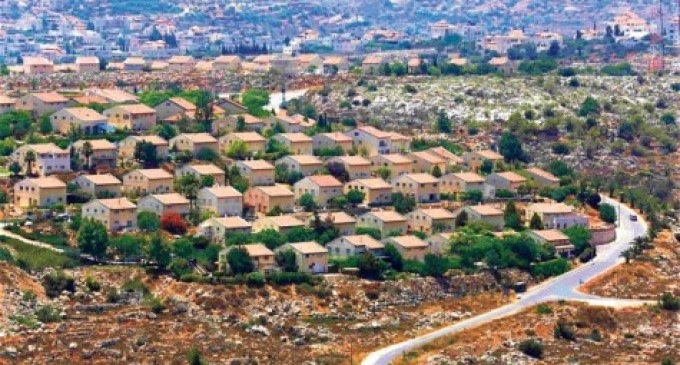
B TAKING OVER LANDS FOR JEWS WHILE CROWDING PALESTINIANS IN ENCLAVES Israel practices a policy of “Judaizing” the area, based on the mindset that land is a resource meant almost exclusively to benefit the Jewish public. Land is used to develop and expand existing Jewish communities and build new ones, while Palestinians are dispossessed and corralled into small, crowded enclaves. This policy has been practiced with respect to land within sovereign Israeli territory since 1948 and applied to Palestinians in the Occupied Territories since 1967. In 2018, the underlying principle was entrenched in Basic Law: Israel – the Nation State of the Jewish People, which stipulates that “the State considers the development of Jewish settlements a national value and will take action to encourage and promote the establishment and reinforcment of such settlements.”Inside its sovereign territory, Israel has enacted discriminatory laws, most notably the Absentee Property Law , allowing it to expropriate vast tracts of Palestinian-owned land, including millions of dunams in communities whose residents were expelled or fled in 1948 and were barred from returning. Israel has also significantly reduced the areas designated for Palestinian local councils and communities, which now have access to less than 3% of the country’s total area. Most of the designated land is already saturated with construction. As a result, more than 90% of land in Israel’s sovereign territory is now under state control.Israel has used this land to build hundreds of communities for Jewish citizens – yet not a single one for Palestinian citizens. The exception is a handful of towns and villages built to concentrate the Bedouin population , which has been stripped of most of its proprietary rights. Most of the land on which Bedouins used to live has been expropriated and registered as state land. Many Bedouin communities have been defined as ‘unrecognized’ and their residents as ‘invaders.’ On land historically occupied by Bedouins, Israel has built Jewish-only communities.The Israeli regime severely restricts construction and development in the little remaining land in Palestinian communities within its sovereign territory. It also refrains from preparing master plans that reflect the population’s needs, and keeps these communities’ areas of jurisdiction virtually unchanged despite population growth. The result is small, crowded enclaves where residents have no choice but to build without permits .Israel has also passed a law allowing communities with admission committees, numbering hundreds throughout the country, to reject Palestinian applicants on grounds of “cultural incompatibility.” This effectively prevents Palestinian citizens from living in communities designated for Jews. Officially, any Israeli citizen can live in any of the country’s cities ; in practice, only 10% of Palestinian citizens do. Even then, they are usually relegated to separate neighborhoods due to lack of educational, religious and other services, the prohibitive cost of purchasing a home in other parts of the city, or discriminatory practices in land and home sales.The regime has used the same organizing principle in the West Bank since 1967 (including East Jerusalem). Hundreds of thousands of dunams, including farmland and pastureland, have been taken from Palestinian subjects on various pretexts and used, among other things, to establish and expand settlements, including residential neighborhoods, farmland and industrial zones. All settlements are closed military zones that Palestinians are forbidden from entering without a permit. So far, Israel has established more than 280 settlements in the West Bank (East Jerusalem included), which are now home to more than 600,000 Jews. More land has been taken to build hundreds of kilometers of bypass roads for settlers. Israel has instituted a separate planning system for Palestinians in the West Bank, chiefly designed to prevent construction and development. Large swathes of land are unavailable for construction, having been declared state land, a firing zone, a nature reserve or a national park. The authorities also refrain from drafting adequate master plans reflecting the present and future needs of Palestinian communities in what little land has been spared. The separate planning system centers on demolishing structures built without permits – here, too, for lack of choice. All this has trapped Palestinians in dozens of densely-populated enclaves, with development outside them – whether for residential or public use, including infrastructure – almost completely banned.
C RESTRICTION OF PALESTINIAN’S FREEDOMOF MOVEMENTIsrael allows its Jewish and Palestinian citizens and residents to travel freely throughout the area. Exceptions are the prohibition on entering the Gaza Strip, which it defines “hostile territory,” and the (mostly formal) prohibition on entering areas ostensibly under PA responsibility (Area A). In rare cases, Palestinian citizens or residents are permitted to enter Gaza.Israeli citizens can also leave and reenter the country at any time. In contrast, residents of East Jerusalem do not hold Israeli passports and lengthy absence can result in revocation of status.Israel routinely restricts the movement of Palestinians in the Occupied Territories and generally forbids them from moving between the units. Palestinians from the West Bank who wish to enter Israel, East Jerusalem or the Gaza Strip must apply to the Israeli authorities. In the Gaza Strip, which has been blockaded since 2007, the entire population is imprisoned as Israel forbids almost any movement in or out – except in rare cases it defines humanitarian. Palestinians who wish to leave Gaza or Palestinians from other units who wish to enter it must also submit a special application for a permit to the Israeli authorities. The permits are issued sparingly and can only be obtained through a strict, arbitrary mechanism, or permit regime , which lacks transparency and clear rules. Israel treats every permit issued to a Palestinian as an act of grace rather than the fulfillment of a vested right.In the West Bank, Israel controls all the routes between the Palestinian enclaves. This allows the military to set up flying checkpoints, close off access points to villages, block roads and stop passage through checkpoints at will. Furthermore, Israel built the Separation Barrier within the West Bank and designated Palestinian land, including farmland, trapped between the barrier and the Green Line as “the seam zone .” Palestinians in the West Bank are barred from entering this zone, subject to the same permit regime.Palestinians in the Occupied Territories also need Israeli permission to go abroad. As a rule, Israel does not allow them to use Ben Gurion International Airport, which lies inside its sovereign territory. Palestinians from the West Bank must fly through Jordan’s international airport – but can only do so if Israel allows them to cross the border into Jordan. Every year, Israel denies thousands of requests to cross this border, with no explanation. Palestinians from Gaza must go through Egyptian-controlled Rafah Crossing – provided it is open, the Egyptian authorities let them through, and they can undertake the long journey through Egyptian territory. In rare exceptions, Israel allows Gazans to travel through its sovereign territory in an escorted shuttle, in order to reach the West Bank and from there continue to Jordan and on to their destination.
D. DENIAL OF PALESTINIAN’S RIGHT TO POLITICAL PARTICIPATIONLike their Jewish counterparts, Palestinian citizens of Israel can take political action to further their interests, including voting and running for office. They can elect representatives, establish parties or join existing ones. That said, Palestinian elected officials are continually vilified – a sentiment propagated by key political figures – and the right of Palestinian citizens to political participation is under constant attack .The roughly five million Palestinians who live in the Occupied Territories cannot participate in the political system that governs their lives and determines their futures. Theoretically, most Palestinians are eligible to vote in the PA elections. Yet as the PA’s powers are limited, even if elections were held regularly (the last were in 2006), the Israeli regime would still rule Palestinians’ lives, as it retains major aspects of governance in the Occupied Territories. This includes control over immigration, the population registry, planning and land policies, water, communication infrastructure, import and export, and military control over land, sea and air space.In East Jerusalem, Palestinians are caught between a rock and a hard place. As permanent residents of Israel, they can vote in municipal elections but not for parliament. On the other hand, Israel makes it difficult for them to participate in PA elections.Political participation encompasses more than voting or running for office. Israel also denies Palestinians political rights such as freedom of speech and freedom of association. These rights enable individuals to critique regimes, protest policies, form associations to advance their ideas and generally work to promote social and political change.A slew of legislation, such as the boycott law and the Nakba law, has limited Israelis’ freedom to criticize policies relating to Palestinians throughout the area. Palestinians in the Occupied Territories face even harsher restrictions : they are not allowed to demonstrate; many associations have been banned; and almost any political statement is considered incitement. These restrictions are assiduously enforced by the military courts, which have imprisoned hundreds of thousands of Palestinians and are a key mechanism upholding the occupation. In East Jerusalem, Israel works to prevent any social, cultural or political activity associated in any way with the PA.The division of space also hampers a unified Palestinian struggle against Israeli policy. The variation in laws, procedures and rights among the geographical units and the draconian movement restrictions have separated the Palestinians into distinct groups. This fragmentation not only helps Israel promote Jewish supremacy, but also thwarts criticism and resistance. NO TO APARTHEID: THAT IS OUR STRUGGLEThe Israeli regime, which controls all the territory between the Jordan River and the Mediterranean Sea, seeks to advance and cement Jewish supremacy throughout the entire area. To that end, it has divided the area into several units, each with a different set of rights for Palestinians – always inferior to the rights of Jews. As part of this policy, Palestinians are denied many rights, including the right to self-determination.This policy is advanced in several ways. Israel demographically engineers the space through laws and orders that allow any Jew in the world or their relatives to obtain Israeli citizenship, but almost completely deny Palestinians this possibility. It has physically engineered the entire area by taking over of millions of dunams of land and establishing Jewish-only communities, while driving Palestinians into small enclaves. Movement is engineered through restrictions on Palestinian subjects, and political engineering excludes millions of Palestinians from participating in the processes that determine their lives and futures while holding them under military occupation.A regime that uses laws, practices and organized violence to cement the supremacy of one group over another is an apartheid regime. Israeli apartheid, which promotes the supremacy of Jews over Palestinians, was not born in one day or of a single speech. It is a process that has gradually grown more institutionalized and explicit, with mechanisms introduced over time in law and practice to promote Jewish supremacy. These accumulated measures, their pervasiveness in legislation and political practice, and the public and judicial support they receive – all form the basis for our conclusion that the bar for labeling the Israeli regime as apartheid has been met.If this regime has developed over many years, why release this paper in 2021? What has changed? Recent years have seen a rise in the motivation and willingness of Israeli officials and institutions to enshrine Jewish supremacy in law and openly state their intentions. The enactment of Basic Law: Israel – the Nation State of the Jewish People and the declared plan to formally annex parts of the West Bank have shattered the façade Israel worked for years to maintain.The Nation State basic law, enacted in 2018, enshrines the Jewish people’s right to self-determination to the exclusion of all others. It establishes that distinguishing Jews in Israel (and throughout the world) from non-Jews is fundamental and legitimate. Based on this distinction, the law permits institutionalized discrimination in favor of Jews in settlement, housing, land development, citizenship, language and culture. It is true that the Israeli regime largely followed these principles before. Yet Jewish supremacy has now been enshrined in basic law, making it a binding constitutional principle – unlike ordinary law or practices by authorities, which can be challenged. This signals to all state institutions that they not only can, but must, promote Jewish supremacy in the entire area under Israeli control.Israel’s plan to formally annex parts of the West Bank also bridges the gap between the official status of the Occupied Territories, which is accompanied by empty rhetoric about negotiation of its future, and the fact that Israel actually annexed most of the West Bank long ago. Israel did not follow through on its declarations of formal annexation after July 2020, and various officials have released contradicting statements regarding the plan since. Regardless of how and when Israel advances formal annexation of one kind or another, its intention to achieve permanent control over the entire area has already been openly declared by the state’s highest officials.The Israeli regime’s rationale, and the measures used to implement it, are reminiscent of the South African regime that sought to preserve the supremacy of white citizens, in part through partitioning the population into classes and sub-classes and ascribing different rights to each. There are, of course, differences between the regimes. For instance, the division in South Africa was based on race and skin color, while in Israel it is based on nationality and ethnicity. Segregation in South Africa was also manifested in public space, in the form of a policed, formal, public separation between people based on skin color – a degree of visibility that Israel usually avoids. Yet in public discourse and in international law, apartheid does not mean an exact copy of the former South African regime. No regime will ever be identical. ‘Apartheid’ has long been an independent term, entrenched in international conventions, referring to a regime’s organizing principle: systematically promoting the dominance of one group over another and working to cement it.The Israeli regime does not have to declare itself an apartheid regime to be defined as such, nor is it relevant that representatives of the state broadly proclaim it a democracy. What defines apartheid is not statements but practice. While South Africa declared itself an apartheid regime in 1948, it is unreasonable to expect other states to follow suit given the historical repercussions. The response of most countries to South Africa’s apartheid is likelier to deter countries from admitting to implementing a similar regime. It is also clear that what was possible in 1948 is no longer possible today, both legally and in terms of public opinion.As painful as it may be to look reality in the eye, it is more painful to live under a boot. The harsh reality described here may deteriorate further if new practices are introduced – with or without accompanying legislation. Nevertheless, people created this regime and people can make it worse – or work to replace it. That hope is the driving force behind this position paper. How can people fight injustice if it is unnamed? Apartheid is the organizing principle, yet recognizing this does not mean giving up. On the contrary: it is a call for change.Fighting for a future based on human rights, liberty and justice is especially crucial now. There are various political paths to a just future here, between the Jordan River and the Mediterranean Sea, but all of us must first choose to say no to apartheid.
[117] ”1391, or 63%, of the 2,202 Palestinians killed by Israeli security forces in Operation “Protective Edge” did not take part in the hostilities. Of these, 526 – a quarter of all Palestinians killed in the operation – were children under eighteen years of age”BTSELEM.ORG50 DAYS: MORE THAN 500 CHILDREN: FACTS AND FIGURES ON FATALITIES IN GAZA, SUMMER 2014https://www.btselem.org/press_releases/20160720_fatalities_in_gaza_conflict_2014
”Het volgt op scherpe wereldwijde kritiek op de Israëlische beschieting van een VN-school in Gaza. De Verenigde Staten reageerden buitengewoon scherp op de tweede raketaanval in een week op een VN-school in de Gaza-strook. Een woordvoerder van het Amerikaanse ministerie van Buitenlandse Zaken zegt ‘geschokt’ te zijn door de ‘schandelijke beschieting van de VN-school’………. ”Eerder op de dag had de secretaris-generaal van de Verenigde Naties, Ban Ki-moon, al zijn afschuw uitgesproken over de beschieting van de VN-school in Rafah waar zo’n 3.000 Palestijnse vluchtelingen verbleven. Zeker tien mensen werden gedood toen een raket insloeg bij de ingang van de school, aldus medische bronnen in Gaza.”TIJD.BE”HUMANITAIR” BESTAND IN GAZAhttps://www.tijd.be/nieuws/politiek_economie_internationaal/VS_halen_uit_naar_Israel/9530325.html NOSBAN BOOS NA BESCHIETING VN SCHOOL3 AUGUSTUS 2014 VN-chef Ban Ki-moon heeft in ongekend felle bewoordingen uitgehaald naar Israël. De beschieting van een school in Gaza, vanmorgen, noemde hij “een morele wandaad, een misdaad”.”Dit is weer een grove schending van de internationale wetgeving. Het is duidelijk dat beide partijen Palestijnse burgers, VN-medewerkers en VN-gebouwen moeten beschermen.”Bij de raketbeschieting door Israël op de school, waar vluchtelingen in verbleven, vielen tien doden. Ook raakten tientallen mensen gewond.OnderzoekBan eist dat het incident snel wordt onderzocht en de verantwoordelijken worden gestraft. Een VN-woordvoerder zegt dat er 33 keer is gezegd dat de school door de VN gebruikt werd, de laatste keer een uur voor de aanval.Afgelopen woensdag werd ook al een school getroffen die diende als schuilplek, daarbij kwamen zestien mensen om het leven.De VS spreekt eveneens schande van de aanval. In een verklaring zegt een woordvoerder geschokt te zijn. “Het vermoeden dat er militanten dichtbij verscholen zitten, rechtvaardigt niet dat er zulke risico’s worden genomen met het leven van onschuldige burgers.” EINDE NOS BERICHT ”We explicitly and loudly condemned the direct shelling of the Al Aqsa hospital on July 21st that killed at least four people”INTERNATIONAL RED CROSSNO WONDER GAZANS ARE ANGRY.THE RED CROSS CAN’T PROTECT THEM25 JULI 2014 https://www.icrc.org/en/doc/resources/documents/article/editorial/07-24-gaza-israel-palestine-maio.htm
25-07-2014 ArticleThree ICRC vehicles are leaving Shujaia. They have rescued 11 people from the rubble but the intense combat has forced them back. As they depart an angry crowd of Palestinians attacks the vehicles with stones and sticks. “You are useless,” the crowd shouts. “You must protect us.”But we cannot. The anger is unpleasant and misplaced, but understandable. We do our utmost, risking the lives of our staff to rescue who we can, but we cannot end the conflict. As ever, humanitarian organisations are a sticking plaster, not the solution.If your home in Gaza was being shelled, who would you call in desperation? On the night Israel’s ground offensive began intense fire struck north-east Gaza. The emergency services, including our partners at the Palestinian Red Crescent (PRCS), were overloaded. Many Gazans tried to telephone us. Our office switchboard couldn’t cope. In the dark violent hours of the night we could not send ambulances or restore the water supply or treat the injured dying of their wounds. Isolated and terrified, with nowhere to flee and no help in sight, the anger of Palestinian families grew.Two nights later in Shujaia hundreds more families went through the same ordeal. Again ICRC staff and PRCS volunteers could do little. With no guarantees of safety it would have been folly to attempt a rescue. In the daylight a temporary ceasefire was agreed, at our request. It was quickly broken, but nevertheless several dozen injured were brought from their ruined homes to hospitals and hundreds took advantage of our presence on the spot to flee. It was little and late. No wonder the helpless families have accused us of callous disregard. When your one faint hope of help is snuffed out the intensity of disappointment is all the deeper.Other accusations have been levelled.We were charged with collaborating with the Israeli Defence Forces in the destruction of Wafa hospital. In truth, we sought to protect the hospital through our dialogue with both sides. When combat came perilously close we intervened to win time for a possible last-resort evacuation of gravely ill patients, many on life support.We are upbraided for not taking sides and refusing to apportion blame. Given our strict political neutrality it is usual that we get criticised by all sides at different times. But the ICRC is not silent in the face of clear breaches of international law. We explicitly and loudly condemned the direct shelling of the Al Aqsa hospital on July 21st that killed at least four people. We clearly denounce the indiscriminate rocketing of Israel. We stated categorically that even in the midst of warfare, people must be able to receive medical care in safety.We are horrified at the death toll. We have repeatedly called for both sides to protect and spare civilians. We have warned of the need to protect Gaza’s perilously fragile water supply – many residents of the densely populated area are now without water, at the height of the scorching hot Mediterranean summer. Today our priority is the civilians, in Beit Hanoun and many other places all over Gaza. We are calling on all sides, based on the humanitarian imperatives of the situation, to ensure that their combat operations be conducted in accordance with the fundamental principles of international laws protecting civilians. But will our pleas for restraint, and the constant efforts of nearly 140 staff and more than 400 PRCS teams to rescue civilians and restock hospitals, be enough to quell the anger of grieving families? We hope so but we understand that it might not.We do ask one thing: understand the limits of our role and look to the politicians to end this deadly, miserable conflict. Jacques de MaioHead of Delegation ICRC Israel and Occupied Territories
Het is 1 juli 2014. Na een korte, maar rustige nacht gaat mijn wekker. Met een half oog check ik Facebook op mijn telefoon, en dan schrik ik wakker. Gaza had geen rustige nacht. In Gaza zijn sommigen vanochtend niet wakker geworden. Platgebombardeerd. Onschuldig.Mijn broertje staat met zijn rugtas te wachten om naar school te gaan. Ik kijk hem aan, en denk aan alle moeders die hun kind vanochtend niet levend in de armen hebben kunnen sluiten. Ik druk een kus op zijn hoofd. Mijn hart bloedt.Inmiddels zijn we meer dan een week verder. De misère blijft aanhouden. Bombardementen. Raketten. Rotzooi. De beelden die me bereiken lijken op elkaar, maar ze zijn toch niet dezelfde. Het verdriet en effect is elke keer uniek, evenals het achterliggende verhaal dat steeds op zichzelf staat. Menselijk en pijnlijk. Moeders die met hun kind in de armen staan. Tranen druppelen op het levenloze gezicht. Een laatste afscheid. Een verloofde die voor het laatst het gezicht van haar geliefde liefkoost. Ze zouden het huwelijksbootje instappen. Samen. Hij is een andere reis begonnen. Een jongetje dat kijkt naar een hoop puin. Dat waren zijn wortels, daar was hij geboren. De herinneringen zijn begraven onder brokstukken. Ik bekijk de foto’s, ik lees de verhalen. Ze raken me. Ik probeer iets te doen. En dan zie ik een andere foto. Deze bevat geen bloed en verdriet. Integendeel. Op de foto zie je mensen op klapstoeltjes, die wat versnaperingen naar binnenwerken. Deze groep heeft overdag wat lekkers te koelen gezet, de stoelen uit de schuur gehaald en ’s avonds meegesleept naar een specifiek punt. Voor het beste uitzicht. Gezellig. Kijken hoe Gaza wordt platgebombardeerd. Luisteren naar raketten die het gehuil van kinderen overstemmen. Het gehuil dat de harten van deze groep sowieso niet bereikt. Daar is het te gezellig voor, daar op die bergtop.Ik zag deze foto. Het raakte me. Ik besefte dat ik misschien ook wel eens toekijk. Niet vanaf een berg, maar van achter mijn beeldscherm. Als er mensen zijn waar ik me niet mee wil identificeren, dan is het wel dit groepje op deze bergtop. Laten we niet toekijken. Laten we vooral menselijk blijven. Wij wel. Doen wat we kunnen doen. Jij weet het beste waartoe je in staat bent om te helpen, doe dat. Kijk niet toe. Anders zijn we geen haar beter dan die mensen op de berg.Wát we kunnen doen? Het verrichten van smeekbeden, doneren van geld, creëren van meer bewustwording en meelopen met de demonstratie op 12 juli. Wees er ook bij en neem anderen mee. Ik ben er ook, met op mijn schouders een keffiyeh. Zeg je me gedag als je me ziet? De vredesgroet, in welke taal dan ook. Want vrede, dat is wat we willen.Salaam.
DEN HAAG – Op het Spuiplein in Den Haag doen zaterdagmiddag duizenden mensen mee aan een manifestatie tegen het Palestijnenbeleid van Israël. De protestbijeenkomst is georganiseerd door het Nederlands Palestina Komitee en enkele andere organisaties. De actievoerders lopen eerst naar het Vredespaleis en dan naar het Centraal Station.De demonstratie is vooral gericht tegen de Israëlische aanvallen op de Gazastrook. Bij bombardementen zijn al meer dan 100 doden gevallen. De Palestijnse ambassadeur in Nederland zei in een toespraak dat de bezetting door Israël nu echt snel moet stoppen. ‘Bedankt dat jullie opstaan tegen de bezetting. Het zijn moeilijke weken voor de Palestijnen. Er liggen kinderen onder het puin.’Hij richtte zich direct tot de Israëlische premier Benjamin Netanyahu. ‘We doen deze oproep vanuit de internationale hoofdstad van het recht. Meneer Netanyahu, u kunt deze oorlog beëindigen. Geef ons onze waardigheid en onafhankelijkheid terug. Vrede komt door gerechtigheid, niet door onderdrukking.’Kritiek op Nederlandse mediaSprekers op het podium uitten veel kritiek op de Nederlandse media. Die zouden te veel de Israëlische kant en het Israëlische lijden benadrukken en te weinig oog hebben voor het lot van de Palestijnen. Rond half 5 verlieten de mensen het Spuiplein en begonnen ze aan de demonstratieve optocht door de stad, langs het Vredespaleis. De organisatie riep hen op ‘om zich niet te laten provoceren’ door raddraaiers.Sommige demonstranten in Den Haag dragen borden met een hakenkruis. Op die borden staan de Israëlische vlag en een hakenkruis naast elkaar afgebeeld, met het teken = ertussen. De organisatie doet een dringend beroep op betogers om die vlaggen weg te halen, omdat verder demonstreren anders mogelijk wordt verboden. Veel mensen hebben het hakenkruis bord ingeleverd.Wilders wil dat de demonstratie verboden wordtPVV-leider Geert Wilders vindt het ‘ongelooflijk’ dat de politie en burgemeester van de stad dit tot nu toe toestaan. ‘Is Nederland gek geworden?’, liet Wilders weten. Hij vindt dat de demonstratie moet worden verboden en dat ‘het tuig met die jihadvlaggen en vlaggen met hakenkruis’ moet worden gearresteerd.De ME bewaakt de ambassade van Israel, aan het Haagse Buitenhof.
DEN HAAG – Op het Spuiplein in Den Haag zijn zaterdag duizenden mensen samengekomen voor een manifestatie tegen het Palestijnenbeleid van Israël. Sommige demonstranten droegen borden met een hakenkruis.De organisatie riep de betogers vanaf het podium op om die vlaggen weg te halen. ‘Anders mogen we niet verder demonstreren.’ PVV-leider Geert Wilders vindt het ‘ongelooflijk’ dat de politie en burgemeester van de stad dit tot nu toe toestaan.’Is Nederland gek geworden?’, liet Wilders weten. Hij vindt dat de demonstratie moet worden verboden en dat ‘het tuig met die jihadvlaggen en vlaggen met hakenkruis’ moet worden gearresteerd. De borden met hakenkruizen zijn inmiddels ingeleverd.OrganisatieDe protestbijeenkomst is georganiseerd door het Nederlands Palestina Komitee en andere organisaties. De menigte loopt aan het eind van de middag naar het centraal station van Den Haag.
Attente lezers, altijd leuk. Zes jaar terug monteerde de Staatsomroep de hakenkruizen weg uit de televisierepo van deze Palliedemo Hamasvergadering op het Haagse Spuiplein, maar het internet vergeet niets. Foto pronkt nog bij TeleBakkertje op z’n tijdlijn, als ook in DIT TOPIC uit 2014 op de GeenStijl. Een welbekende sheikwatchende lezer herkende er FEMYSO-meisje Kauthar Bouchallikht (met de -th van de thijd van theedrinken is the laath) in en alerteerde ons op dit historische Haagsche kiekje met hakenkruizen, Hamashobbyisten en “””antizionistische””” uitingen. Dat feitendossier over de #9 van de kieslijst groeit en groeit, maar Jesse zwijgt en zwijgt..
Wie zich echt de kerstballen uit de blauwe spar wil lachen: die hoogblonde jongeman ⬆ extreemlinks van de #9 van GroenLinks op deze AD-foto is Thomas van Beersum, ooit een gun toting revolutionary die lichtgetinte agenten aan het huilen maakte op de Filipijnen, thans een volgevreten televisiester, bekend van reclames van de Postcodeloterij en het Grootkapitaal. En laten we Thomas’ lijntje naar de Moslimbroeders & Hamas ook niet vergeten. Dit jaar zou hij zelfs in een musical acteren, maar ja. Kerona. Alleen de Heilige Geest van Ome George ontbreekt nog in dit kerstverhaal maar verder is de groenlinkse ster van Khautar Plaatsdelicth wel echt lekker rijzende, hè? UPDATE: Ontkennen is er na deze aankondiging ook niet echt meer bij, niet?
AMSTERDAM – De demonstratie tegen het geweld van Israël in de bezette Palestijnse gebieden is zaterdagmiddag in Amsterdam uit de hand gelopen. Een paar honderd jongeren veroorzaakten onrust en opstootjes met de mobiele eenheid.De mobiele eenheid in Amsterdam is zaterdag rond .00 uur begonnen met het schoonvegen van een gedeelte van de Dam, rond het monument. De ME probeert met paarden, te voet en met bussen een paar honderd raddraaiers uit elkaar te jagen. De politie heeft tot nu toe negen arrestaties verricht.Aan het einde van de demonstratie verzamelden de betogers zich op de Dam. De raddraaiers stonden rond het monument op de Dam en gooiden met stenen, flessen en stokken naar de ME.ChargesBij charges van politie te paard vielen een paard en zijn ruiter om. Ook sneuvelden ruiten van hotel Krasnapolsky. De demonstranten hebben het ook voorzien op journalisten. Een fotograaf kreeg een paar rake klappen.Demonstranten hebben van een joodse man zijn keppeltje afgepakt. Tijdens de tocht gooiden demonstranten met stenen. Ook is er een molotovcocktail naar discotheek iT gegooid en zijn fietsen vertrap. Een ruit van een kledingwinkel aan het Rokin is gesneuveld.Winkeliers lieten hun rolluiken zakken. De politie heeft een demonstrant gearresteerd voor het stichten van een brandje.SpandoekenDemonstranten droegen spandoeken met teksten als ‘Bush en Sharon grootste terroristen’ en de Palestijnse vlag. Zij riepen leuzen als ‘Allah is groot’ en ‘Sharon, Hiltler’. Sommigen hebben een ‘Arabieren-sjaal’ over hun hoofd gebonden. Anderen dragen bivakmutsen.Aan de andere kant van de Dam, bij het paleis, is het officiële gedeelte van de demonstratie tegen het geweld van Israël in de bezette Palestijnse gebieden afgesloten. Volgens de organisatie liepen er ongeveer 30.000 mensen mee, de politie houdt het op .000OrganisatieHet platform ‘Stop de oorlog tegen de Palestijnen’ heeft deze landelijke demonstratie georganiseerd en roept onder meer op tot de terugtrekking van het Israëlische leger uit Gaza en de Westoever. Het platform benadrukt dat het altijd een vreedzame demonstratie voor ogen heeft gehad.Onder meer Nederlands Palestina Komitee, GroenLinks en het Landelijk Netwerk Marokkaanse Organisatie in Nederland steunen de actie. Steun komt ook van Hayo Meijer van ‘Een ander Joods geluid’ en Michal Sabtay van de joodse organisatie ‘Vrouwen in het Zwart’.Andere Europese stedenIn verscheidene Europese steden zijn zaterdag tienduizenden mensen de straat opgegaan om hun steun te betuigen aan het Palestijnse volk. In tegenstelling tot in Amsterdam verliepen de meeste betogingen zonder incidenten.In Groot-Brittannië liepen tussen de 10.000 en 15.000 mensen mee in een vreedzame betoging in Londen. In Duitsland gingen ongeveer 30.000 mensen de straat op. In Berlijn verzamelden zich 11.000 mensen op de Alexanderplatz. Verder waren er betogingen in onder meer Frankfurt en Düsseldorf. In Frankrijk gingen pro-Palestijnse actievoerders de straat op in onder meer Rennes, Saint-Etienne en Bordeaux.Een van de grootste betogingen was in de Corsicaanse stad Ajaccio. In Istanbul, de grootste stad van Turkije, sprak voorman Recai Kutan van de Islamitische Partij de duizenden demonstranten toe. Hij zei dat hij niets had tegen het joodse volk, maar wel tegen het Israëlische leiderschap en dan vooral tegen premier Sharon.EINDE NU.NL BERICHT TERUGBLIK OP ENKELE ASPECTEN UIT DE POLITIEK-MILITAIRE CARRIERE VAN DE ISRAELISCHE PREMIERSHARONASTRID ESSEDhttps://www.astridessed.nl/2006terugblik-op-enkele-aspecten-uit-de-politiek-militaire-carriere-van-de-israelische-premier-sharon/ OF https://www.uitpers.be/terugblik-op-enkele-aspecten-van-de-politiek-militaire-carrire-van-de-israelische-premier-sharon/
GROENE AMSTERDAMMERMAROKKAANS VERDRIET13 APRIL 2002https://www.groene.nl/artikel/marokkaans-verdriet Terwijl Israëlische tanks door Palestijnse steden en dorpen razen, sussen de elites van de joodse, Palestijnse en islamitische gemeenschappen in Nederland de gemoederen. Maar hebben zij greep op hun achterban? Vooral onder Marokkanen is de woede groot «De verbittering groeit met de dag. We willen graag redelijk blijven, maar vertel me: hoe kunnen we ons aanpassen aan een politiek die weigert op te treden tegen mensenrechtenschendingen? Hoe langer de strijd duurt, hoe meer onrust we verwachten binnen de Marokkaanse gemeenschap. De woede is enorm.»Jamal Ftieh, voorzitter van het Komitee Marokkaanse Arbeiders in Nederland (KMAN) klinkt eerder wanhopig dan boos. Samen met het Nederlandse Palestina Komitee (NPK) organiseerde hij enkele wakes en demonstraties tegen het Israëlische geweld in de Palestijnse gebieden. Komende zaterdag vindt wederom een demonstratie plaats, op de Dam in Amsterdam. Ftieh mikt op minstens tienduizend mensen. Het zou hem niet verbazen als het merendeel van de deelnemers uit vooral Marokkaanse hoek (de grootste moslimgemeenschap in Nederland) niet alleen verdrietig is, maar ook boos en gefrustreerd.Jamal Ftieh: «Er is geen enkel begrip voor de lakse houding van het Westen en van de Nederlandse regering. De Europese Unie wordt door Sharon geschoffeerd, maar er gebeurt nog steeds niets. Waarom wordt het associatieverdrag van Israël met de Unie niet opgezegd? Waarom koopt Nederland nog steeds wapens van Israël? Er zou toch op z’n minst een handelsboycot kunnen worden ingesteld? En waarom wordt er niet nagedacht over een gewapende interventie? Als het misgaat in Koeweit is het Westen er wél als de kippen bij. Steeds weer worden er allerlei smoesjes uit de kast gehaald om niets te hoeven doen. Heeft Melkert een keer een goed idee met het willen terugroepen van de Nederlandse ambassadeur, dan zegt minister Van Aartsen dat Israël een te gevoelig onderwerp is voor dat soort uitspraken. Over ons mag je alles zeggen. We zijn ‹kut-Marokkanen›, we worden crimineel genoemd. Maar proberen een beetje met ons mee te leven, ho maar. Wij voelen ons burgers van dit land, maar er wordt niet naar ons geluisterd.»Tienduizend demonstranten op de Dam, het lijkt een hoge schatting. Maar misschien is men geïnspireerd geraakt door wat afgelopen zondag gebeurde in Rabat. Volgens politieschattingen begaven meer dan twee miljoen mensen zich op weg om hun steun voor en medeleven met de Palestijnen uit te spreken die worden belaagd door Israëlische tanks. Het was de grootste protestmars uit de Marokkaanse geschiedenis. Voorheen was zoiets in Marokko onmogelijk, maar het bewind van de jonge koning Mohammed VI is een stuk liberaler dan dat van wijlen zijn vader. Hoge politici, onder wie de premier en vakbondsleiders, liepen mee in de voorste gelederen van de reusachtige stoet. Na de demonstratie maakte koning Mohammed VI bekend dat het nationale feest waarmee hij op 12 april zijn huwelijk had willen vieren, zal worden uitgesteld uit piëteit met de Palestijnse bevolking.De demonstratie werd live uitgezonden op de Marokkaanse tv-zender rtm, via de kabel te ontvangen in grote delen van Nederland. De journaliste die het evenement van seconde tot seconde versloeg, werd steeds emotioneler naarmate de mensenstroom aanzwol. «Zo betuigen we het Palestijnse volk ons medeleven», snikte ze haast in de microfoon. «Jullie kinderen zijn onze kinderen, en ze lijden. Palestijnen, wees sterk! Palestina zal er komen, hoe dan ook.» De menigte tilde poppen omhoog die symbool moesten staan voor «de kinderen die het leven laten in de strijd tegen het machti ge militaire apparaat van Israël». Er werden leuzen gescandeerd als: «Gaza is de grootste gevangenis ter wereld, Sharon moet weg.» Antisemitische leuzen werden niet gehoord — een deel van de Marokkaans-joodse gemeenschap demonstreerde mee. Er werd ook niet gerefereerd aan de Palestijnse zelfmoordaanslagen gericht tegen ongewapende Israëlische burgers en hún kinderen. «Daar wordt in de Arabische wereld heel anders over gedacht dan in Nederland», zegt een Nederlands-Marokkaanse die de protestmars volgde vanachter haar Amsterdamse tv-toestel. «Er is wanhoop, er is een bezetting, en er zijn niet genoeg wapens om daartegen te vechten. Wat kun je anders uitrichten tegen de machtige Israëli’s? Dat is de redenering die veel mensen in de Arabische wereld volgen, óók in Marokko.»Als er íets leeft onder de Marokkanen, ook die in Nederland, is het de ongelijke strijd in de Gazastrook en op de Westelijke Jordaanoever. Maar de media hebben nauwelijks oog voor het verdriet. Welgeteld één Nederlandse kwaliteitskrant maakte een dag later (kort) gewag van de demonstratie die Marokko op z’n kop zette.«De Palestijnse zaak is ook onze zaak», zegt Jamal Ftieh. De verdeeldheid van de Marokkaanse gemeenschap in Nederland, waarvan tweederde uit Berbers bestaat, verdwijnt volgens hem als sneeuw voor de zon zodra de Palestijnen ter sprake komen. «We hebben daarover allemaal dezelfde sympathieën. Sympathieën die óók leven in niet-Arabische landen als Indonesië en Iran. Het geweld is niet alleen gericht tegen de Palestijnen. Israël heeft ook ander Arabisch gebied ingenomen. De Sheba-vallei in Zuid-Libanon en de Golan Hoogvlakte zijn van Arabieren gestolen.»Het kman organiseerde al eerder een demonstratie op de Dam. Afgelopen zaterdag kwamen daar ongeveer honderd mensen opdagen. Maar dat was vóór de protesten in Rabat. Niet alle Marokkanen in Nederland voelen zich echter geroepen om te gaan demonstreren. «Met die demonstraties weet je het nooit», zegt een Marokkaanse jongen. «Als het uit de hand loopt omdat een paar jongens willen vechten, krijgen we een nóg slechtere naam. Daar wil ik niet tussen staan. Ik blijf thuis.»Zaterdag bleef het rustig op de Dam, tot teleurstelling van het handjevol journalisten dat op de demonstratie afkwam. «Als het niet uit de hand loopt, publiceren ze er niet over. Wat ons betreft kunnen journalisten voortaan wegblijven.» Volgens Ftieh heeft de organisatie een uitstekende ordedienst die zaterdag wist te voorkomen dat de sfeer te grimmig werd. «We willen rustig en kalm demonstreren. Op de Dam was een klein groepje jongens dat leuzen riep die volgens ons niet door de beugel konden. We hebben ze daarop aangesproken, en toen hielden ze ermee op.»Ook in Libanon, Egypte, Syrië, de Ver enigde Arabische Emiraten en Indonesië werd het afgelopen weekeinde massaal gedemonstreerd tegen het Israëlische optreden. Zelfs in het centrum van New York dromden Arabische demonstranten samen. In Parijs gingen een kleine twintigduizend mensen de straat op. In Frankrijk en België liepen protesten vorige week uit op vechtpartijen tussen pro-Israëlische en pro-Palestijnse demonstranten. In beide landen werden synagogen met brandbommen bestookt. In Berlijn werden twee joodse jongemannen gemolesteerd en een joodse begraafplaats met nazi-symbolen onteerd.In Nederland deed zich slechts één incident voor. Maar dat was nu net tegengesteld aan wat in de lijn der verwachting lag gezien de anti-joodse acties elders in Europa. Afgelopen weekeinde deden vier activisten van het Nederlandse Palestina Komitee aangifte wegens belediging en bedreiging door een groep van ongeveer dertig pro-Israëlieten onder wie de orthodoxe rabbijn R. Evers. Tijdens het uitdelen van flyers bij een supermarkt in de Amsterdamse Beethovenstraat zouden de NPK-activisten onheus zijn bejegend. «We werden voor nazi’s uitgemaakt en ze zeiden dat we niet in hun buurt pro-Palestijnse vredesactiviteiten mochten verrichten. Mensen die pamfletten van ons aannamen, moesten het ook ontgelden. Verder hebben ze geduwd», verklaarde activist Cees Mittendorf tegenover het ANP. Volgens rabbijn Evers was er slechts sprake van een discussie zonder enige fysieke inbreng.Dergelijk gekissebis is tekenend voor het niveau waarop heden confrontaties plaatsvinden tussen voor- en tegenstanders van het Israëlische optreden tegen de Palestijnen. Bij het begin van de tweede intifada, anderhalf jaar geleden, ging het er feller aan toe. Toen liep een demonstratie voor het Amerikaanse consulaat in Amsterdam uit de hand en werden leuzen gehoord als: «Hamas, Hamas, alle joden aan het gas.» Bezoekers van een synagoge werden bekogeld; Nederlandse joden voelden zich geïntimideerd. Na de aanslagen van 11 september was het de moslimgemeenschap die werd aangevallen door migrantofobe Nederlanders. Maar nu lijkt het rustig, terwijl elders in Europa de spanningen oplopen.Ronny Naftaniel, directeur van het Centrum voor Informatie en Documentatie over Israël (Cidi) verwacht dat ernstige incidenten in Nederland zullen uitblijven: «In Frankrijk zijn de tegenstellingen zeer groot. Hier zijn de contacten tussen de joodse en Arabische gemeenschap veel beter. Ook van moslimzijde wordt de mensen flink ingepeperd dat het rustig moet blijven.» Wel heeft het Cidi brieven gestuurd aan de politie met het verzoek pro-Palestijnse demonstraties nauwlettend te volgen. «We hebben gevraagd tolken in te zetten en in te grijpen wanneer onwettige leuzen worden gescandeerd.»Bij het kman overheerst echter het wantrouwen. Als Jamal Ftieh refereert aan het Beethovenstraat-incident heeft hij het over «een commando onder leiding van Evers, die nu zijn ware gezicht heeft laten zien». Met antisemitisme heeft die felheid niets te maken, zegt hij. «We richten ons tegen de politiek van de staat Israël. We demonstreren voor de rechten van het Palestijnse volk. Niet tegen de joden. Ik ben geen antisemiet. Ik ben toch zélf ook een semiet? In Marokko wonen veel joden, en ze hebben ook hoge posities. Ze steunden de demonstratie in Rabat. Ook hier in Nederland krijgen we steun van joden die het verschrikkelijk vinden wat Sharon aanricht. Ik ben wél een overtuigd antizionist. Kijk eens goed naar de vlag van Israël: twee blauwe strepen met daartussen de davidsster. Die strepen staan voor de Nijl in Egypte en de Eufraat in Irak. Al het gebied tussen die twee rivieren in handen krijgen is de zionistische droom. Wij strijden tegen die expansionistische aanspraken.»Ronny Naftaniel is even uit het veld geslagen als hem de woorden van Ftieh worden voorgelegd: «Dit is heel ernstig. De blauwe balken hebben met expansie niks te maken. Ze staan symbool voor het joodse gebedskleed. Waar háált hij het vandaan! Ik denk dat hij dit soort dingen hoort op Arabische zenders. Het kman was vroeger zeer anti-joods. Ik dacht dat die tijden achter ons lagen. Ftieh kan wel zeggen dat hij geen antisemiet is, maar dit klinkt niet best.» Volgens Naftaniel is het «nu eenmaal» zo dat een kleine groep Nederlandse moslims «rottige boekjes» leest, fel antizionistisch is en op de rand van het antisemitisme balanceert.Na de incidenten bij het uitbreken van de tweede intifada troffen de elites van de joodse en de moslimgemeenschap in Nederland maatregelen. Er werd gezocht naar een dialoog en de contacten werden aangehaald. Daarom zal het rustig blijven in Nederland, weet Ahmed Aboutaleb, directeur van Forum, Instituut voor Multiculturele Ontwikkeling: «Joden en moslims zijn zeer betrokken bij wat er nu in het Midden-Oosten gebeurt. Er is veel woede. Maar we blijven praten. En het helpt om te zien dat lang niet alle joden achter het Israëlische beleid staan.» Volgens een recente opiniepeiling van RTL Nieuws staat een meerderheid van de Nederlandse bevolking achter Israël. Maar er is ook kritiek. Niet alleen vanuit organisaties als Een ander joods geluid. Ook het Cidi meent dat slechts een Israëlische terugtrekking uit de Palestijnse gebieden en het oprichten van een levensvatbare, met respect bejegende Palestijnse staat een einde kan maken aan het bloed vergieten.Onlangs werd een Nederlandse Coalitie voor de Vrede gesmeed op initiatief van onder anderen oud-PvdA-kamerlid Judith Belinfante, Ronny Naftaniel en Ahmed Aboutaleb. Voor het eerst deden de joodse, Palestijnse en islamitische gemeenschappen gezamenlijk een oproep aan zowel de Israëlische premier Ariel Sharon als PLO-voorzitter Yasser Arafat om het bloedvergieten te stoppen en vrede te sluiten. In een petitie aan de Israëlische en Palestijnse diplomatieke vertegenwoordigers, ondertekend door meer dan zeshonderd prominente Nederlanders van uiteenlopende afkomst, wordt benadrukt dat de Israëlische nederzettingenpolitiek beëindigd moet worden en de VN-resoluties gerespecteerd waarin het Israëlische leger wordt gesommeerd zich uit Gaza en van de Westelijke Jordaanoever terug te trekken.«De Coalitie voor de Vrede is de trait d’union tussen onze gemeenschappen», zegt Aboutaleb. Volgens hem werken dergelijke initiatieven: «Het is winst wanneer je elkaar niet vijandig bejegent, en na een scherpe discussie gezamenlijk nog even een kopje koffie gaat drinken. Zo creëer je een multiculturele samenleving waar ik trots op kan zijn.»Maar voordat het wantrouwen in met name de Marokkaanse gemeenschap verdwijnt, moet er nog veel gebeuren, realiseert Aboutaleb zich. «De Marokkanen verkeren de laatste tijd in de hoek waar de klappen vallen. En als we ons verzetten tegen de kritiek, dan betichten mensen als Sylvain Ephimenco ons onmiddellijk van slachtofferdenken. De afgelopen tijd is er in de media aandacht besteed aan joodse jongeren uit Nederland die hebben besloten terug te gaan om voor hun land te vechten. Die items werden op een objectieve, rustige manier gebracht. Er werd met geen woord gerept over de grenzen tussen integratie en kiezen voor je eigen volk. Maar ik geef je op een briefje dat als het jonge Palestijnen betrof de toonzetting veel ruwer zou zijn geweest en het integratievraagstuk meteen weer op de voorgrond was geplaatst.»Dat in de moslimgemeenschap nog niet iedereen toe is aan dialoog ondervond Ahmed Aboutaleb afgelopen weekend. In een Arabischtalige radio-uitzending van de NPS werd hem verweten dat hij geen partij had gekozen tegen Israël. «Ik probeer me juist te ontworstelen aan de schuldvraag en alleen te zeggen: stop de waanzin.»«Een oer-Hollands poldermodel» noemt Mohammed Sini, voorzitter van de Stuurgroep Islam en Burgerschap, de Coalitie voor Vrede. Ook hij stond aan de basis ervan. Sini is sceptisch over de kansen om de lager opgeleide Marokkanen, Turken en andere mensen te bereiken die zich bij het conflict betrokken voelen: «Demonstreren is een groot democratisch goed. Daar moet absoluut gebruik van worden gemaakt. Maar het houdt wel risico’s in. Als de boel uit de hand loopt, worden we weer jaren teruggezet. En actievoeren werkt alleen als het begrip van twee kanten komt. Nederlandse media zouden veel meer oog kunnen hebben voor wat het conflict teweeg heeft gebracht, voor de emoties in onze gemeenschappen.»Het idee dat het Westen met twee maten meet en partij trekt voor Israël is wijdverbreid onder de Marokkanen in Nederland, meent Paolo de Mas. Hij is als sociaal geo graaf en Marokko-expert verbonden aan het Instituut voor Migratie en Etnische Studies in Amsterdam. «Er is een ondergrond van wantrouwen.» Voor antisemitisme is De Mas niet bang. «Marokko heeft een eeuwenoude geschiedenis van joodse aanwezigheid. Marokkaanse joden hebben de Israëlische ambassadeur te verstaan gegeven dat ze de militaire acties absoluut verwerpen.»Ook al stelt Ronny Naftaniel dat er bij zijn weten geen joodse tegendemonstraties staan gepland, De Mas zal niet verbaasd zijn als de protestactie komende zaterdag minder vlekkeloos verloopt dan gehoopt. «Bij een grootschalige optocht is de kans groot dat er jongens zijn die rellen willen schoppen. En zie die maar eens in de hand te houden. Ik noem dat het Molukken-effect. Vergis je niet. De emoties zijn enorm. Dat wordt in Nederland flink onderschat. De demonstratie in Rabat is de maatlat van de frustratie, en de demonstratie in Amsterdam komende zaterdag wordt de lakmoesproef.» EINDE ARTIKEL GROENE AMSTERDAMMER GROENE AMSTERDAMMEREEN DWINGENDE LOTSVERBONDENHEIDMOHAMMED BENZAKOUR4 MEI 2002https://www.groene.nl/artikel/een-dwingende-lotsverbondenheid Door de uitzichtloosheid en wanhoop die de weinig rooskleurige maatschappelijke situatie van veel Marokkanen met zich meebrengt, voelen velen van hen zich sterk verwant met de Palestijnen. Dat, en niet antisemitisme, droeg onlangs bij tot gewelddadigheden tijdens de pro-Palestijnse demonstratie, meent Mohammed Benzakour. In de dagen na de pro-Palestina-demonstratie is mediabreed met de vinger gewezen naar een kleine groep relschoppers. Deze relschoppers dorsten onder meer een Israëlische vlag te verbranden, zouden grossieren in nazi-leuzen en droegen spandoeken met teksten als «hakenkruis=davidsster» en «Sharon=Hitler». Puur antisemitisme, zo werd geroepen in de media.Interessanter dan de vraag hoe de media opereren, is waar dat anti-joodse sentiment bij met name Marokkanen vandaan komt, en of dat sentiment wel als antisemitisch kan worden aangemerkt. Allereerst is het nogal ironisch dat het bij uitstek Marokkanen zijn die zich joodonvriendelijk gedrag aanmeten. Marokko staat al eeuwenlang te boek als een van de meest joodvriendelijke landen ter wereld waar de joodse gemeenschap grote privileges en vrijheden kent. Bij de begrafenis van Koning Hassan II verbaasde het dan ook niemand dat de Israëlische delegatie de grootste en de zwaarste was. Daarentegen was het wel weer Marokko waar een historisch aantal van, volgens de Marokkaanse staatstelevisie, meer dan twee miljoen (!) mensen de straat op ging uit piëteit met de Palestijnen.En nu hier te lande.De met hakenkruisen getooide relschoppers op de Dam deden feitelijk niets anders dan wat we al decennialang zien in voetbalstadions en tijdens optochten van clubs als cp’86: het zich bedienen van (losgeslagen) symbolentaal om de tegenstander in te wrijven hoe vijandig hij is. Of in het geval van de demonstranten: hoe mensonterend de situatie in Palestina eigenlijk is. Je zou dat retoriek kunnen noemen, en wel van het soort dat in abstracto weinig verschilt van de retoriek waarvan het joodse volksdeel zich placht te bedienen; de afgelopen tijd hebben we kunnen zien hoe praktisch elke kritiek op Sharons bloedbaden pavloviaans wordt beantwoord met de bekende dooddoener genaamd «antisemitisme» (daarbij overigens gemakshalve voorbijgaand aan het verschil tussen semitisme, zionisme en racisme, maar dat terzijde). Deze emotionele maar tamelijk paranoïde vereenzelviging met Israël en zijn politiek (die rechtstreeks verwijst naar de holocaust) wurgt iedere poging tot discussie die tot wederzijds begrip zou moeten leiden.Het is extra frustrerend, omdat juist bij dit delicate onderwerp woorden jammerlijk te kort lijken te schieten. Immers, woorden zijn slechts klanktekens voor begrippen en begrippen zijn min of meer gedefinieerde hiëroglyfen voor dikwijls terugkerende en samengaande gevoelens en gevoelsgroepen. Om elkaar te begrijpen is het vaak niet voldoende dat je dezelfde woorden gebruikt; je moet ze ook voor dezelfde klassen van innerlijke gebeurtenissen gebruiken, je moet je ervaringen tenslotte gemeen hebben. En als die gemeenschappelijke ervaring ontbreekt, wordt het knap lastig. Niettemin waag ik een poging.H?t tentoongespreide gedrag van de relschoppers (dat ik liever anti-joods dan antisemitisch noem, daar het niet is gericht op het wezen van het jood-zijn maar indirect het gevolg is van joodse daden) vindt zijn oorsprong niet direct in de gewelddadige bezettingspolitiek van Israël, maar vloeit voort uit een reeds langer bestaand, breed gedragen en diep ervaren onbehagen. Een onbehagen dat zijn wortels vindt in de eigen, weinig rooskleurige sociaal-maatschappelijke status quo; werkloosheid, discriminatie, marginalisering, mediavijandigheid, vernedering, zondebok, paternalisme, verwaarlozing — een cumulatie van wantoestanden die de poort opent voor recalcitrant en provocatief gedrag.Wie dieper speurt dan de oppervlakte van de krantenverslagen kan merken dat voor de gemiddelde Marokkaanse betoger de volgende eenvoudige, zij het foute, formule geldt: het Palestijnse volk en ik zijn één. Het Palestijnse volk wordt aangevallen, dus ik word aangevallen, de Palestijnen zijn anti-joods dus ik ben het ook. Volgens deze redenering komt elke militaire aanval op de Palestijnen, gerechtigd of niet, neer op de hoofden van de mensen die emotioneel begaan zijn met het lot van het Palestijnse volk, en dat zijn er veel.Hoe ogenschijnlijk angstwekkend ook, deze situatie is voor de Nederlandse samenleving veel minder gevaarlijk dan ze wordt voorgesteld. Het echte gevaar zit hem veeleer in het onbegrip voor die redenering.Allereerst betrof het anti-joodse gedrag tijdens de betoging in Amsterdam een specifieke categorie Marokkaanse jongelui: de problematische, dezelfde categorie die zich maatschappelijk in een gemarginaliseerde positie ziet. Deze jongens hebben nauwelijks een identiteit en voor zover ze die bezitten, ervaren ze die in het Buitenstaanderschap, dat hen bindt vanwege wederzijdse gevoelens van defaitisme. En omdat het Palestijnse verzet bij uitstek een strijd is die wordt gevoerd vanuit diepe gevoelens van vernedering, frustratie en uitzichtloosheid (de Palestijnen hebben niets meer te verliezen, enkel nog hun leven) is het vooral hun eigen uitzichtloosheid en wanhoop die hen verwantschap doet voelen met de Palestijnen.In deze fatalistische mengeling van wanhoop en onmacht schuilt een dwingende lotsverbondenheid die tegelijkertijd de achtergrond vormt van waarom zoveel Marokkaanse randgroepjongeren een onverholen bewondering koesteren voor de Palestijnse strijd — die in hun ogen onverzettelijk en moedig is en wordt geleverd tegen élke prijs, ook die van het eigen leven. Wat de Marokkaanse jongelui zien, kortom, is de kleine herder David die met gevaar voor eigen leven een steen slingert naar de Filistijnse reus Goliath — o ironie!Strikt genomen koesteren deze jongeren nauwelijks politieke of filosofische bewustwording (of althans een simplistische), maar ze engageren zich, zoals gezegd, instinctief, psychologisch met een volk in wie zij zichzelf herkennen maar met wie zij enkel via het beeldscherm in contact komen. Je zou bijna kunnen stellen dat ze eigenlijk voor zichzelf, om hun eigen noodlot schreeuwen.Na afloop van de demonstratie stond ik op de Dam, en dat oudtestamentische beeld van David-Goliath zag ik tastbaar voor mijn ogen gestalte krijgen. De ME, pontificaal en tot de tanden toe bewapend met machinegeweren en gummiknuppels, tegenover een groepje jongelui dat niets anders bezat dan bijeengesprokkelde keien en stokken. Dat zinderende beeld keert vrijwel elke avond terug op tv: een oppermachtig Israëlisch leger tegenover een schare armlastige, stenengooiende Palestijnen. De betogers voelden die dichotomie haarfijn aan. De leuze «Wij zijn allen Palestijnen» stond bijna op hun voorhoofd gegrift.Deze identificatie, die verder gaat dan alleen een gemeenschappelijke taal en godsdienst, is misschien wel irrationeel maar daarom niet onbegrijpelijk. Bovendien gaat ze nóg verder. Want ook op het vlak van de fysionomie bestaat een niet geheel toevallige verwantschap. Immers, de uiterlijke kenmerken van een Palestijnse stenengooier uit Ramallah verschillen in bijna niets van die van een gemiddelde Marokkaan uit Amsterdam-West. De jongeren zien op tv dat in Ramallah iemand wordt doodgeschoten die exact hetzelfde zwarte kroezige haar heeft als zijzelf, hetzelfde gelaat, dezelfde ogen, wenkbrauwen, mimiek, postuur, alles — het had zijn broer, nee, het had hijzelf kunnen zijn!Hoe bizar ook, de oorlog tegen de Palestijnen wordt door Marokkanen (en Arabieren overal) allang niet meer beschouwd als een oorlog over territorium, over een lap grond. Zij ervaren deze als een vuile en ongelijkwaardige vorm van neokolonialisme, die uitsluitend tot doel heeft het systematisch en moedwillig vernederen van het Palestijnse en daarmee het volledige islamitisch-Arabische volk. Het verdelgen van honderd jaar oude olijfboomgaarden, het mishandelen van zwangere vrouwen, Westoever-bewoners als slaven gebruiken in het arbeidsproces, het martelen van kinderen, of zoals recentelijk de wijze waarop de Israëlische overheid aan de internationale media het voedselpakket voor de belegerde Arafat naar buiten toe bracht: een gedetailleerde lijst, compleet tot en met het laatste sardienblikje. En waarover de ongediplomeerde komediant Michael Stein bij Barend & Van Dorp kon opmerken dat het ontbreken van honing, Arafats favoriete voedsel, een «misdaad tegen de menselijkheid» was. De boodschap van Israël was en is duidelijk: zie jullie leider, die is zelfs voor voedsel afhankelijk van ons, hij eet uit onze handen. En dat is precies wat de Marokkanen voelen: de Israëliërs willen van de Palestijnen een kudde makke schapen maken, die grazen wat hen wordt toegeworpen.Ik ken Marokkanen die spontaan beginnen te vloeken en te spugen als Sharon op tv verschijnt, ik ken Marokkanen die elke foto waarop een keppeltje of pijpenkrul prijkt in stukken scheuren of vertrappen. Is dit antisemitisme? Nee, het is een geïnternaliseerde en bijna invoelbare inleving met het Palestijnse leed en gevoelens van vernedering die al 35 jaar voortduren en die dag in, dag uit op tv zijn te zien. Het zijn déze beelden die zij kennen, en niet de beelden van concentratiekampen en gaskamers. Zij beschouwen hierom het Palestijnse verzet als een voorbeeldige strijd die als inzet heeft het behoud van trots en menselijke waardigheid, met als geestdriftig motto: het is beter te sterven met opgeheven hoofd dan te sterven als een lafaard.Het is die geestdrift die ik terugvond in de demonstratie op de Dam. Sceptici zijn geneigd te denken dat de betogers zich die geestdrift lieten aanpraten, dat we met «propaganda» te maken hadden. Maar het was anders: die geestdrift werd niet aangepraat, die geestdrift was empathie, identificatie. Identificatie die vele betogers als eervol en positief ervoeren. Natuurlijk, er liepen ook vele autochtone Nederlanders mee, Turken, ook joden, niet alleen die van Een Ander Joods Geluid. Maar hoewel hun solidariteit met het Palestijnse volk oprecht en sympathiek was, behelsde het een ander, veel minder virulent zinderen. Dat verschil in virulentie is verdere studie waard.EINDE ARTIKEL GROENE AMSTERDAMMER[124] JOOP.NLWAAROM IK NIET OP GROEN LINKS ZAL STEMMENMEINDERT FENNEMA https://joop.bnnvara.nl/opinies/waarom-ik-niet-op-groenlinks-zal-stemmen
Over Kauthar Bouchallikht en de vergroening van GroenLinksBeste Jesse,Foto: ANP, Niels Wenstedt. Anti-racismedemonstratie in 2019Toen ik Kauthar Bouchallikht op plaats 9 zag staan van de kandidatenlijst van GroenLinks schrok ik toch even. Niet vanwege haar naam, maar vanwege haar hoofddoekje. Niet dat ik iets tegen hoofddoekjes heb, mijn moeder droeg er ook één als het regende. Maar als een jonge vrouw zich met een hoofddoekje op de pasfoto laat zetten geeft zij daarmee aan dat zij de beginselen van de islam omarmt. Dat zijn de mijne niet, en zeker niet op het gebiedvan de man-vrouw verhoudingen. Ik zou vijftig jaar geleden ook vreemd heb opgekeken als de partij waar ik toen op stemde een geüniformeerde non op de kandidatenlijst had geplaatst. Maar goed, tijden veranderen en ik was blij te vernemen dat Bouchallikht zich inzet voor duurzaamheid. Zij werd in een zoomsessie aangeprezen als een groene activiste.En toen kwam het bericht – van Carel Brendel – dat zij behalve GroenLinks-kandidaat voor de Tweede Kamer ook ondervoorzitter was van FEMYSO, een jongerenorganisatie die stevige banden onderhoudt met de Moslimbroederschap en Milli Görüs. FEMYSO wordt beschouwd als de jeugdorganisatie van de Moslimbroederschap. Ik schrok: want ik ben al geen aanhanger van de islamitische beginselen, maar zeker niet van de Moslimbroederschap of Milli Görüs. Bouchallikht blijkt dus ook groen te zijn in de betekenis die men daar in het Midden-Oosten aan geeft.Maar het zou nog erger worden: op 11 november reageerde jij met de mededeling dat Kauthar Bouchallikht de beginselen van de Moslimbroederschap niet aanhangt en dat het feit dat zij bestuurslid is van de Federatie van Moslim Jongerenorganisaties nog niet betekent dat zij de beginselen van die organisaties deelt. Toen brak mijn klomp.Maar het zou nóg erger worden: je vroeg je openlijk af of er ook zulke kritische vragen gesteld zouden zijn als het een ‘blanke man van 56 met een bolhoed’ betrof’. De suggestie is niet meer te missen: als je tegen de kandidatuur van Kauthar Bouchallikht bent, dan ben je een racist. En op 15 november verklaarde jij: ‘Er is een jonge generatie die tegelijkertijd moslim, klimaatactivist, feminist, LHBTIQ+’er, Nederlander, en nog veel meer kan zijn. Al deze identiteiten zijn met elkaar verbonden.’ Dat wist ik nog niet, maar ik vraag me wel af: HOE DAN? Intussen heeft Kauthar zich wel schielijk uit het bestuur van de FEMYSO teruggetrokken.Op Joop neemt de leider van de Rotterdamse partij NIDA het voor haar op: “Waarom moet een moslim van GroenLinks zo nadrukkelijk afstand nemen van Milli Gorus of van de moslimbroederschap? Van welk gedachtegoed? Volgens de NOS streeft de moslimbroederschap naar ‘een democratische samenleving gebaseerd op islamitische principes’. Is dat zo eng of gevaarlijk? Moet een moslim daar afstand van nemen? Dan zeg ik: ik ben een moslimbroeder! En dan? (…)”. Hij vervolgt: “FEMYSO nam het begin deze maand in een open brief het nog op voor hun samenwerkingspartner CCIF, een onlangs door Macron verboden anti-islamofobie organisatie. En dan?” En dan niks. De leider van NIDA mag van mij van alles vinden, maar ik zal niet op hem stemmen.Mijn ervaring met religieuze organisaties is dat zij over het algemeen minder vrijzinnig zijn dan ikzelf en ook minder tolerant. Dat geldt voor de Rooms-Katholieke Kerk, het geldt voor de Gereformeerde Kerk en het geldt ook voor de jeugdorganisatie van de Moslimbroederschap. Bestuursleden van FEMYSO of NIDA mogen van mij meedoen aan de Tweede Kamer verkiezingen, maar ik zal niet op ze stemmen.Sterker nog, ik stem ook niet op een partij waarvan de politiek leider (dat ben jij Jesse!) suggereert dat ik een racist, seksist of islamofoob ben omdat ik mij in de Tweede Kamer niet door een bestuurslid van FEMYSO wil laten vertegenwoordigen. Zelfs niet als zij lesbisch zou zijn.Ik stem daarom in maart volgend jaar voor het eerst in 30 jaar niet op GroenLinks. Ik overweeg mijn stem te geven aan Kadija Arib, niet omdat zij twee paspoorten heeft of omdat ze in het Rifgebergte geboren is of misschien LHBTIQ+’er is, maar omdat zij seculier links is en bovendien een verdomd goeie voorzitter van de Tweede Kamer!Het ga je goed! EINDE STUK MEINDERT FENNEMANRCANTISEMITISME DEUGT NOOIT https://www.nrc.nl/nieuws/2020/12/16/kauthar-bouchallikht-antisemitisme-deugt-nooit-a4023996 Kauthar Bouchallikht, kandidaat-lid voor Tweede Kamer namens GroenLinks, liep in 2014 mee met een protest tegen de Israëlische politiek en het geweld in Gaza. Ik had de pech een soortgelijke demonstratie in de binnenstad van Amsterdam tegen te komen. „Hamas, Hamas, Joden aan het gas”, riep een uitzinnige menigte. Mensen liepen met borden die Israël gelijkstelden aan nazi-Duitsland. Er waren vlaggen met hakenkruizen en nazisymbolen. Het was schokkend. Antisemitisme is er altijd geweest, zeker in de linkse beweging, waar Joden lang werden verward met kapitalisme en misdadige roofzucht. Het gaat om een twintigste-eeuwse variant van eeuwenoude vooroordelen die hebben geleid tot vervolging en volkerenmoord. Bouchallikht betuigde op Twitter spijt dat ze heeft meegelopen met de antisemitische horde. Dat zal ze zeker allemaal moeten zeggen, wil ze politiek carrière kunnen maken. Ze „baalt” maar ze biedt geen openbare excuses aan. Dat zou wel moeten. En er blijven vragen: Bouchallikht werkt samen met Femyso, een internationale organisatie die een islamistische politiek voorstaat. Partijleider Jesse Klaver houdt vol dat haar positie op de kieslijst niet ter discussie staat, want ze is niet langer voorzitter van die organisatie. Is dat genoeg?Dit is geen aanval van een rechts persoon tegen GroenLinks, dat durft niemand over mij na alle jaren feminisme te beweren. Wel stoort mij dat recent een aantal jongeren van het FVD in opspraak zijn geraakt omdat ze antisemitisch gedachtengoed uitdroegen. Ze zijn terecht collectief door de openbaarheid veroordeeld. Maar een ‘balend’ beoogd Kamerlid van GroenLinks is in opspraak en ze blijft op de kieslijst. Ik mag er niet aan denken dat zo iemand ooit bijvoorbeeld minister wordt. Bij racistische, homofobe en antisemitische publieke uitingen doet het er niet toe of iemand links of rechts is. Ik wil dit beoogd Kamerlid vragen of zij publiek stelling durft te nemen tegen de autoritaire en gewelddadige leiding van Hamas in Gaza. En of zij zich publiekelijk wil verzetten tegen dit soort vermenging van antisemitisme met anti-Israël politiek. Pas bij een bevredigend antwoord zal ik gerust zijn.Selma Leydesdorff EINDE ARTIKEL[125] ZIE NOOT 98
Reacties uitgeschakeld voor Noten 101 t/m 125 bij ”EXTREEM-RECHTSE HETZE TEGEN KAUTHAR BOUCHALLIKHT EN DE SLAPHEID VAN LINKS
[83] 5.23-5.45 [Jesse Klaver, fractievoorzitter Groen Links] ”Wij hebben haar gevraagd, wij hebben gekeken naar wie zij is en wijzien bij haar, nogmaals, dat ze voor emancipatie staat, voor vrijheid,die groene en linkse idealen deelt en zij heeft zelf aangegeven, datze de ideeen van de Moslimbroederschap verre van zich werpt, dat zeer niks mee te maken heeft en als u dan zegt ”vertrouwen we dat?”Ja”[Geen Stijl verslaggever tegen Jesse Klaver, fractievoorzitter Groen Links]: ”Okay. Maar werkt het dan zo, dat u het gewoon….”[Jesse Klaver, fractievoorzitter Groen Links]:”Laatste vraag, dan moet ik echt….gaan…..” ……..
‘Nee, wij hebben gekeken naar wat deze organisatie is, met wie ze of zemet de Europese Commissie samenwerken, hoe dat samenloopt,en vervolgens en dan tot echt slot, dan heb ik het wel echt twintig keer gezegd,hebben we gekeken naar wie zij is, dus ik ga Femyso op geen enkelewijze verdedigen, maar Kauthar wel” 6.31-6.44 YOUTUBE.COMGEEN STIJL [GSTV]GROEN LINKS REAGEERT OP AFFILIATIE BROEDERSCHAP TK#9KAUTHAR BOUCHALLIKHT17 NOVEMBER 2020 https://www.youtube.com/watch?v=_fiXcvbz-f4 ZIE VOOR GEHELE INTERVIEW NOOT 24
[84]
Ik ga…..ik….u kunt mij van alles vragen over Femyso, ik ga daar…ik kanu daar geen antwoord op verschaffen….”[Geen Stijl verslaggever tegen Jesse Klaver, fractievoorzitter Groen Links]:”Hoezo niet?”[Jesse Klaver, fractievoorzitter Groen Links]: ”Omdat ik hier niet sta om Femyso te verdedigen en dat ga ik ook nooit doen…..”………”[Jesse Klaver, fractievoorzitter Groen Links]: ”Ik ga verder niet in of op welke wijze dan ook Femyso verdedigen, daarheb ik helemaal geen trek in en die organisatie….er zijn allerlei zakenwaar ik helemaal niks mee moet hebben…..” YOUTUBE.COMGEEN STIJL [GSTV]GROEN LINKS REAGEERT OP AFFILIATIE BROEDERSCHAP TK#9KAUTHAR BOUCHALLIKHT17 NOVEMBER 2020 https://www.youtube.com/watch?v=_fiXcvbz-f4
[85] [Geen Stijl verslaggever tegen Jesse Klaver, fractievoorzitter Groen Links]: ”Maar doet u daar dan ook onderzoek naar of is het gewoon, kom, deze”mevrouw Bouchallikht, is het zo”, ”nee, dat werpen we verre van” en wegaan weer verder, of doet u daar verder onderzoek naar.”[Jesse Klaver, fractievoorzitter Groen Links]: ”Daar hebben we…de kandidatencommissie heeft hiernaar gekeken,ik heb u zojuist verteld, toen deze organisatie we wisten, dat ze hiervice voorzitter van is, hebben ze ook gekeken, wie is deze club, metwie werken ze samen, nou, dan kom je erachter, dat dit een organisatieis, die samenwerkt met de Europese Unie, die daar subsidie krijgen, om je ervan te vergewissen, dat dit niet een of andere organisatie is, dieniet via de officiele kanalen werkt.Nou, dat is geenszins het geval.Naar al dit soort zaken is onderzoek gedaan en daar moeten we het voor numee doen.” YOUTUBE.COMGEEN STIJL [GSTV]GROEN LINKS REAGEERT OP AFFILIATIE BROEDERSCHAP TK#9KAUTHAR BOUCHALLIKHT17 NOVEMBER 2020 https://www.youtube.com/watch?v=_fiXcvbz-f4
[86]
[Machiel de Graaf, PVV Tweede Kamerlid]: [4.56]”Als je zo hoog in de boom hebt gezeten bij Femyso, waarvan echtwel bewezen is, dat het een onderdeel is van die Moslimbroederschap, danis het natuurlijk niet echt geloofwaardig en ja, wij van WC eend, bevelen WC eend aan, zo moet je die boodschap eigenlijk zien.” [5.10] YOUTUBE.COMGEEN STIJL [GSTV]GROEN LINKS REAGEERT OP AFFILIATIE BROEDERSCHAP TK#9KAUTHAR BOUCHALLIKHT17 NOVEMBER 2020 https://www.youtube.com/watch?v=_fiXcvbz-f4
Klimaatactivist Kauthar Bouchallikht prijkt hoog op de Kamerlijst van GroenLinks. Een vermeende connectie met de Moslimbroederschap werpt echter een schaduw over haar politieke entree. Ik snap wat GroenLinks in haar ziet. Als ze een ruimte betreedt, krijg je meteen een prettige indruk.” Jurjen van den Bergh, directeur van burgerbeweging De Goede Zaak en voormalig spindoctor van GroenLinks , heeft louter positieve ervaringen met Bouchallikht. Zij hielp bij de Klimaatmars in Amsterdam waar in maart vorig jaar tienduizenden mensen aan deelnamen. Ze viel ook GroenLinks op, waardoor ze op plaats negen kwam op de kandidatenlijst voor de Kamerverkiezingen. Van den Bergh omschrijft haar als ‘een verbinder’ en ‘een nieuwsgierige activiste’.
Kauthar – ‘met de -th van think’, zoals ze zichzelf omschrijft op sociale media – Bouchallikht is pas 26, maar heeft al een forse staat van dienst als activist. Op haar 17de was ze als bestuurslid van scholierenvakbond Laks medeorganisator van een demonstratie van 15.000 scholieren, die op het Museumplein betoogden tegen de ‘ophokplicht’ (scholieren moesten minimaal 1040 uur per jaar doorbrengen in een leslokaal).
Journalistiek
Na haar studie publiek management rolde ze de journalistiek in. Ze werkte bij De Correspondent, het magazine OneWorld en onlineplatform Nieuw Wij. Bij dat platform trok ze op met onderzoeksjournalist Zoë Papaikonomou, met wie ze nu een boek schrijft over diversiteit en inclusie. ,,Kauthar is vooral bezig met duurzaamheid en gelijkwaardigheid.‘’
Bouchallikht houdt zich dezer dagen schuil. GroenLinks wimpelt interviewverzoeken af. Op Twitter heeft ze wel gereageerd op de beschuldiging dat ze actief is voor de Moslimbroederschap. Ze ontkent en stelt het gedachtegoed te verwerpen: ‘Ik wist dat zulke verdachtmakingen zouden komen toen ik me kandideerde voor GroenLinks. Elke keer weer dezelfde tactiek: guilty by association.’
Jongerenclubs
De zaak kwam vorige week aan het rollen door onderzoeksjournalist Carel Brendel, die schreef over haar vicevoorzitterschap van Femyso. Deze in Brussel gevestigde parapluorganisatie van 33 islamitische jongerenclubs uit twintig Europese landen krijgt Europese subsidie. Tegelijkertijd beschouwen deskundigen Femyso als jongerentak van de Moslimbroederschap. Femyso ontkent dat steevast.
Duitse inlichtingendiensten spreken van een ‘dubbele strategie’, waarbij sprake is van beïnvloeding van instellingen door Moslimbroeders, zonder dat dit direct herleidbaar is. Volgens de autoriteiten in de deelstaat Baden-Württemberg fungeert Femyso als kweekvijver voor leidinggevende posities in de Europese Moslimbroederschap.
Er zijn uiteenlopende inschattingen van het risico dat de Europese Moslimbroederschap vormt. Volgens sommigen is het slechts een belangenbehartiger van de moslimgemeenschap, die jongeren stimuleert langs democratische weg hun positie te bevechten. Anderen spreken van een wolf in schaapskleren, die streeft naar het islamiseren van het Westen.
Femyso is met name actief als bestrijder van islamofobie. Toen de Franse regering na de onthoofding van Samuel Paty een verbod aankondigde op het Collectief tegen Islamofobie (CCIF), noemde Femyso dat ‘ronduit opportunistisch’. Vorige week volgde een open brief aan president Macron, die zou aanzetten tot haat. ‘We weten in Europa allemaal heel goed de verschrikkelijke grootschalige consequenties die kunnen voortkomen uit het onder vuur nemen van een religieuze minderheid.’
Bouchallikht maakt er geen geheim van dat ze zich door de islam laat inspireren. Opkomen voor gelijkheid en duurzaamheid is in lijn is met de islam, zei ze vorig jaar in weekblad De Kanttekening. Het verkiezingsprogramma van GroenLinks, met progressieve stokpaardjes als een ‘ambitieus lhbtq-emancipatiebeleid’ en een abortuspil, onderschrijft Bouchallikht volgens ingewijden ‘voor 100 procent’.
Milli Görüs
De workshops die ze bijna een jaar geleden namens Femyso gaf in Gelderland vonden plaats in conservatieve kring: een tweedaags kamp van de studentenafdeling van de Turkse religieuze organisatie Milli Görüs. Jongens en meisjes zaten gescheiden. Andere sprekers waren een politicus van de islamitische partij Nida en een geschiedenisdocent van het islamitische Cornelius Haga Lyceum.
,,Een heel slecht idee om daar training te geven”, zei GroenLinks-leider Jesse Klaver er dinsdag over. Tegelijkertijd zei hij pal achter Bouchallikht te staan. ,,Zij is het boegbeeld van de groene beweging.” Volgens hem wordt zij nu zo kritisch benaderd omdat ze moslima is. Dat zegt ook Papaikonomou: ,,Helaas blijft het voor veel Nederlanders moeilijk te accepteren dat de islam onderdeel is van onze samenleving. De islam en moslims gelden als bedreigingen en worden zonder pardon verdacht gemaakt.”
GroenLinks-kandidaat Kauthar Bouchallikht neemt afstand van elke suggestie dat zij iets te maken heeft met de Moslimbroederschap. ‘Ik heb zelf nooit iets gemerkt van enige verbondenheid. Ik wil ook niets te maken hebben met dat gedachtegoed. Ik sta voor radicale gelijkwaardigheid.’
Dat zegt Bouchallikht (26), negende op de GroenLinks-kieslijst voor de Tweede Kamer, in een interview met Trouw. Daarin reageert ze voor het eerst publiekelijk op de vragen die in de afgelopen weken rezen over haar kandidatuur. Die hebben te maken met haar vice-voorzitterschap van Femyso, een koepelorganisatie van 33 islamitische jongerenclubs uit twintig Europese landen.
Hoewel die organisatie samenwerkt met de Europese Commissie en subsidie krijgt van de Europese Unie, brengen onderzoekers Femyso ook al jaren in verband met de Moslimbroederschap. Die laatste politiek-islamitische organisatie werd ooit opgericht in Egypte met het doel om daar de islamitische wetgeving te introduceren, en opereert inmiddels in vele landen.
De broederschap heeft verschillende gezichten. Naast een gematigde stroming die democratie nastreeft staat een conservatieve stroming die de islamisering zo ver mogelijk wil doorvoeren. De organisatie doet veel aan onderwijs, zorg en naastenliefde maar streeft in de eerste plaats politieke doelen na. In de Arabische wereld is dat het vestigen van een islamitische staat. Mensen die verbonden zijn met de broederschap, worden geacht daarmee niet te koop te lopen. Dat maakt de aard en de omvang van de broederschap in veel landen lastig te definiëren.
GroenLinks verzweeg Bouchallikhts bestuursfunctie bij Femyso in eerste instantie toen haar kandidatuur bekend werd gemaakt. De partij prees haar ‘relevant groen netwerk, slimme ideeën en overtuigingskracht’ maar liet Femyso onvermeld. Toen van buiten vragen kwamen, onder meer van de publicist Carel Brendel, over de verenigbaarheid van Femyso met de progressieve en emancipatoire agenda van GroenLinks, benadrukte partijleider Jesse Klaver dat Bouchallikht het partijprogramma volledig onderschrijft.
Andere activiteiten zijn daaraan ondergeschikt, vindt hij. ‘Wij wisten dat zij deze functie had. Ik ga Femyso niet verdedigen, maar de Europese Commissie werkt met ze samen en ze krijgen Europese subsidie.’
De kandidatencommissie kwam vooral bij Bouchallikht uit vanwege haar klimaatstandpunten. ‘Zij is het boegbeeld van de groene beweging’, aldus Klaver. Bouchallikht is onder meer voorzitter van de Stichting Groene Moslims. Ook viel ze als tiener al op als bestuurslid van scholierenorganisatie Laks.
De link tussen Femyso en de Moslimbroederschap wordt vooral gelegd omdat enkele jeugdorganisaties die onder Femyso vallen nadrukkelijk banden met de broederschap onderhouden. Bouchallikth benadrukt echter dat ze dit ‘nooit is tegengekomen’ in haar werk daar. ‘Femyso is een legitieme organisatie. Het is ook niet zo dat wij als bestuur van Femyso het gedachtegoed onderschrijven van alle organisaties die onder ons vallen. Het is andersom. Zij moeten onderschrijven waar Femyso voor staat. Wat ons bindt, is dat we moslims zijn en mee willen doen in het democratische proces. Ik sta zelf voor radicale gelijkwaardigheid. Het maakt mij niet uit wat iemands gender, seksuele geaardheid of kleur is.’
Ook de Duitse jongerentak van Milli Görüs is verbonden aan Femyso. Die organisatie is in Nederland ook niet onomstreden, ze zou de integratie tegenwerken, en staat bij de inlichtingendiensten in enkele Duitse deelstaten zelfs te boek als staatsgevaarlijk. Bouchallikht gaf er vorig jaar een workshop. Dat paste in haar takenpakket, benadrukt zij in Trouw (‘Zolang zij onze principes onderschrijven, komen we daar namens Femyso langs’) maar als GroenLinks-kandidaat zal ze het niet meer doen. ‘Hoe Milli Görüs bijvoorbeeld bijeenkomsten organiseert, mannen en vrouwen apart, dat vind ik niks. Als GroenLinkser zou ik niet langsgaan.’
‘Het probleem begint al bij de basale vraag: Wat is de Moslimbroederschap?’
Behoort de islamitische jongerenorganisatie Femyso tot het netwerk van de Moslimbroederschap? Lorenzo Vidino, kenner van de Europese vertakkingen van de Broederschap, kent geen twijfel. ‘Femyso is altijd het oefenterrein geweest van jonge, veelbelovende activisten uit het Broederschap-milieu. Je krijgt een paar jaar workshops, je bekwaamt je in activisme. Het is een opstapje.’
Vidino bestudeert de Moslimbroederschap al twintig jaar, eerder voor onder andere Harvard, tegenwoordig als directeur van het Program on Extremism van de George Washington University. In februari getuigde hij in de Tweede Kamer over de buitenlandse financiering van moskeeën.
Waar wil de Europese tak van de broederschap? ‘Niet een islamitische staat stichten, zoals sommige critici beweren’, aldus Vidino. ‘Dat geldt in de Arabische wereld, niet in Europa. Ze willen twee dingen. Ten eerste hun politieke en religieuze opvattingen verspreiden onder de moslims in de diaspora. Ten tweede willen ze de poortwachters zijn van de moslimgemeenschap voor de westerse gevestigde orde. De gematigde, betrouwbare partners, die de sleutels tot de moslimgemeenschap in handen krijgen, mede dankzij een zekere naïviteit van de regering en de media.’
Toch is ook veel onduidelijk. Wat geldt voor de Moslimbroederschap in de Arabische wereld, gaat voor de beweging in de westerse diaspora nog meer op: er hangt een levensgroot vraagteken boven. Onduidelijkheid bestaat over aard en reikwijdte van de organisatie, vooral als gevolg van de geheimhouding die de Broederschap zelf betracht.
Dat zegt Vidino in een paper dat hij schreef voor de Konrad Adenauer Stiftung. ‘Weinig aspecten van de Broederschap zijn duidelijk en onbetwist. Problemen ontstaan al bij de basale vraag: wat is de Moslimbroederschap? Zijn mensen ‘lid van’ of ‘verbonden met’ de organisatie? Terwijl sommige critici die banden overdrijven, worden ze door de betrokken activisten in alle toonaarden ontkend.’
Voor onderzoekers is het moeilijk de muren van geheimzinnigheid te slechten. ‘Niemand zal ooit toegeven lid te zijn van de Moslimbroederschap. Als dat het criterium zou zijn, zou je tot de conclusie komen dat de Broederschap helemaal niet bestaat.’
En dat is geenszins het geval. De Moslimbroederschap heeft een afdeling in vrijwel alle Europese landen. Volgens Vidino zijn dat kleine groepen, misschien duizend leden in Frankrijk en Groot-Brittannië, en hooguit 150 in Nederland. ‘Deze groepen hebben buitenproportioneel veel invloed. Ze zijn slim en goed opgeleid. Het is de elite van de moslimgemeenschappen. Bovendien hebben ze geld. Met die twee dingen samen hebben ze een stap voor op andere moslimgroepen.’
De kerngroep in elk Europees land heeft tal van organisaties opgericht, op terreinen als onderwijs, liefdadigheid, media en financiën. ‘Die vormen de openbare structuur van de Broederschap. Banden met de kern worden ontkend. Voor mijn laatste boek interviewde ik ex-leden van de Broederschap. Een omschreef het als een ‘winkel voor’ en een ‘winkel achter’. Leiders van de voorwinkel komen ook in de achterwinkel.’
Veel leden van de openlijke organisaties zijn geen lid van de Broederschap. Gewone leden weten zelfs lang niet altijd van de connectie af. ‘Het hangt af van de mate van betrokkenheid en naïviteit. Vooral in de liefdadigheid zitten veel goedbedoelende mensen. Maar degenen in leidende posities, ook bij Femyso, kennen die banden zeker wel.’
Femyso wordt beschouwd als de jongerenafdeling van de federatie FIOE. Beide koepelorganisaties behoren tot de pan-Europese tak van het netwerk. De bij de koepels aangesloten organisaties horen in elk land tot wat Vidino ‘de openbare structuur’ noemt.
‘Femyso is overduidelijk een entiteit van de Moslimbroederschap. Als ze dat ontkennen, hebben ze echter technisch gezien gelijk. Formeel zijn ze onafhankelijk. Maar al die organisaties hebben overlappende besturen. Ik kijk graag naar statuten. Wie is voorzitter, wie penningmeester? Het zijn steeds dezelfde mensen.’ (Rob Vreeken)
Klimaatactivist Kauthar Bouchallikht prijkt hoog op de Kamerlijst van GroenLinks. Een vermeende connectie met de Moslimbroederschap werpt echter een schaduw over haar politieke entree.
,Ik snap wat GroenLinks in haar ziet. Als ze een ruimte betreedt, krijg je meteen een prettige indruk.” Jurjen van den Bergh, directeur van burgerbeweging De Goede Zaak en voormalig spindoctor van GroenLinks , heeft louter positieve ervaringen met Bouchallikht. Zij hielp bij de Klimaatmars in Amsterdam waar in maart vorig jaar tienduizenden mensen aan deelnamen. Ze viel ook GroenLinks op, waardoor ze op plaats negen kwam op de kandidatenlijst voor de Kamerverkiezingen. Van den Bergh omschrijft haar als ‘een verbinder’ en ‘een nieuwsgierige activiste’.
Kauthar – ‘met de -th van think’, zoals ze zichzelf omschrijft op sociale media – Bouchallikht is pas 26, maar heeft al een forse staat van dienst als activist. Op haar 17de was ze als bestuurslid van scholierenvakbond Laks medeorganisator van een demonstratie van 15.000 scholieren, die op het Museumplein betoogden tegen de ‘ophokplicht’ (scholieren moesten minimaal 1040 uur per jaar doorbrengen in een leslokaal).
Journalistiek
Na haar studie publiek management rolde ze de journalistiek in. Ze werkte bij De Correspondent, het magazine OneWorld en onlineplatform Nieuw Wij. Bij dat platform trok ze op met onderzoeksjournalist Zoë Papaikonomou, met wie ze nu een boek schrijft over diversiteit en inclusie. ,,Kauthar is vooral bezig met duurzaamheid en gelijkwaardigheid.‘’
Bouchallikht houdt zich dezer dagen schuil. GroenLinks wimpelt interviewverzoeken af. Op Twitter heeft ze wel gereageerd op de beschuldiging dat ze actief is voor de Moslimbroederschap. Ze ontkent en stelt het gedachtegoed te verwerpen: ‘Ik wist dat zulke verdachtmakingen zouden komen toen ik me kandideerde voor GroenLinks. Elke keer weer dezelfde tactiek: guilty by association.’
Jongerenclubs
De zaak kwam vorige week aan het rollen door onderzoeksjournalist Carel Brendel, die schreef over haar vicevoorzitterschap van Femyso. Deze in Brussel gevestigde parapluorganisatie van 33 islamitische jongerenclubs uit twintig Europese landen krijgt Europese subsidie. Tegelijkertijd beschouwen deskundigen Femyso als jongerentak van de Moslimbroederschap. Femyso ontkent dat steevast.
Duitse inlichtingendiensten spreken van een ‘dubbele strategie’, waarbij sprake is van beïnvloeding van instellingen door Moslimbroeders, zonder dat dit direct herleidbaar is. Volgens de autoriteiten in de deelstaat Baden-Württemberg fungeert Femyso als kweekvijver voor leidinggevende posities in de Europese Moslimbroederschap.
Bouchallikht houdt zich dezer dagen schuil. GroenLinks wimpelt interviewverzoeken af. Op Twitter heeft ze wel gereageerd op de beschuldiging dat ze actief is voor de Moslimbroederschap. Ze ontkent en stelt het gedachtegoed te verwerpen: ‘Ik wist dat zulke verdachtmakingen zouden komen toen ik me kandideerde voor GroenLinks. Elke keer weer dezelfde tactiek: guilty by association.’
Jongerenclubs
De zaak kwam vorige week aan het rollen door onderzoeksjournalist Carel Brendel, die schreef over haar vicevoorzitterschap van Femyso. Deze in Brussel gevestigde parapluorganisatie van 33 islamitische jongerenclubs uit twintig Europese landen krijgt Europese subsidie. Tegelijkertijd beschouwen deskundigen Femyso als jongerentak van de Moslimbroederschap. Femyso ontkent dat steevast.
Duitse inlichtingendiensten spreken van een ‘dubbele strategie’, waarbij sprake is van beïnvloeding van instellingen door Moslimbroeders, zonder dat dit direct herleidbaar is. Volgens de autoriteiten in de deelstaat Baden-Württemberg fungeert Femyso als kweekvijver voor leidinggevende posities in de Europese Moslimbroederschap.
Er zijn uiteenlopende inschattingen van het risico dat de Europese Moslimbroederschap vormt. Volgens sommigen is het slechts een belangenbehartiger van de moslimgemeenschap, die jongeren stimuleert langs democratische weg hun positie te bevechten. Anderen spreken van een wolf in schaapskleren, die streeft naar het islamiseren van het Westen.
Femyso is met name actief als bestrijder van islamofobie. Toen de Franse regering na de onthoofding van Samuel Paty een verbod aankondigde op het Collectief tegen Islamofobie (CCIF), noemde Femyso dat ‘ronduit opportunistisch’. Vorige week volgde een open brief aan president Macron, die zou aanzetten tot haat. ‘We weten in Europa allemaal heel goed de verschrikkelijke grootschalige consequenties die kunnen voortkomen uit het onder vuur nemen van een religieuze minderheid.’
Bouchallikht maakt er geen geheim van dat ze zich door de islam laat inspireren. Opkomen voor gelijkheid en duurzaamheid is in lijn is met de islam, zei ze vorig jaar in weekblad De Kanttekening. Het verkiezingsprogramma van GroenLinks, met progressieve stokpaardjes als een ‘ambitieus lhbtq-emancipatiebeleid’ en een abortuspil, onderschrijft Bouchallikht volgens ingewijden ‘voor 100 procent’.
Milli Görüs
De workshops die ze bijna een jaar geleden namens Femyso gaf in Gelderland vonden plaats in conservatieve kring: een tweedaags kamp van de studentenafdeling van de Turkse religieuze organisatie Milli Görüs. Jongens en meisjes zaten gescheiden. Andere sprekers waren een politicus van de islamitische partij Nida en een geschiedenisdocent van het islamitische Cornelius Haga Lyceum.
,,Een heel slecht idee om daar training te geven”, zei GroenLinks-leider Jesse Klaver er dinsdag over. Tegelijkertijd zei hij pal achter Bouchallikht te staan. ,,Zij is het boegbeeld van de groene beweging.” Volgens hem wordt zij nu zo kritisch benaderd omdat ze moslima is. Dat zegt ook Papaikonomou: ,,Helaas blijft het voor veel Nederlanders moeilijk te accepteren dat de islam onderdeel is van onze samenleving. De islam en moslims gelden als bedreigingen en worden zonder pardon verdacht gemaakt.”
GroenLinks-leider Klaver blijft achter de keuze voor kandidaat-Kamerlid Kauthar Bouchallikht staan. Zij staat nummer 9 op de kandidatenlijst voor de verkiezingen van 17 maart. Op de vraag of Klaver zijn hand voor haar in het vuur durft te steken zegt hij: “Ze staat op de lijst. Ja.”
Over Bouchallikht wordt al dagenlang in de media gepubliceerd omdat zij vicevoorzitter is van de islamitische jongerenorganisatie Femyso. Femyso wordt door bepaalde bronnen en onderzoekers al enkele jaren in verband gebracht met de Moslimbroederschap. Dat zij deze functie bekleedt stond niet in de biografie die werd verstrekt door GroenLinks.
Klaver zegt daarover: “Wij wisten dat zij deze functie had. Ik ga Femyso niet verdedigen, maar de Europese Commissie werkt met ze samen en ze krijgen Europese subsidie.” Het ging de kandidatencommissie om de klimaatstandpunten van Bouchallikht, zegt Klaver. “Zij is het boegbeeld van de groene beweging.”
Moslimbroederschap
Aanjager van de kritiek op de bestuursfunctie van Bouchallikht is de publicist Carel Brendel. Hij schrijft op 12 november in zijn blog dat Femyso “de studenten- en jongerenorganisatie van de Moslimbroederschap in Europa is”. Hij verwijst daarbij naar diverse openbare bronnen.
Brendel en andere media stellen vragen aan GroenLinks over de kandidatuur en de standpunten van Bouchallikht, maar krijgen geen of slechts onvolledig antwoord. Ook wordt er verwezen naar de tweet van Bouchallikht van 12 november.
Zij zegt in haar tweet: “Het doet me pijn om hierop te moeten reageren, maar ik wist dat dit soort verdachtmakingen zouden gebeuren toen ik me kandideerde voor GroenLinks. Elke keer weer dezelfde tactiek: guilty by association.”
Zij verklaart niet bij de Moslimbroederschap te horen maar wel bij GroenLinks. Verder verwijst zij naar een verklaring uit 2019 van Femyso, waarin de moslimorganisatie ontkent banden te hebben met de Mosimbroederschap. De organisatie zegt dat die beschuldigingen van extreemrechts komen om de organisatie te ondermijnen.
Bouchallikht krijgt veel bijval en steunbetuigingen, onder andere van Denk-Kamerlid Kuzu en lijsttrekker Sylvana Simons van Bij1. De Telegraaf en Geenstijl publiceren ondertussen verschillende kritische artikelen waarin ook de zwijgzaamheid van GroenLinks aan de kaak wordt gesteld.
Wat is de Moslimbroederschap?
De partij werd opgericht in Egypte in de jaren ’20 door Hassan al-Banna. De Moslimbroederschap streeft naar een samenleving gebaseerd op islamitische principes. In de jaren 40 boden zij vreedzaam en gewapend verzet tegen de Britse overheersing.
De partij is inmiddels actief in 82 landen en heeft een controversieel imago. Onder meer al-Qaida en Hamas komen voort uit dezelfde ideologie die de Moslimbroederschap aanhangt. Maar er is ook een politieke tak die geweldloos opereert, zoals in Tunesië, waar de partij na de revolutie van 2011 in een coalitie zat met een seculiere partij.
Klaver verstuurt op 13 november via de site van GroenLinks een verklaring waarin hij het opneemt voor “Kauthar en alle andere jongeren van Nederland”. Hij zegt verder: “Precies twee dagen heeft Kauthar Bouchallikht kunnen genieten van haar plek op de kandidatenlijst van GroenLinks. Daarna kwam de eerste aanval en het zal zeker niet de laatste zijn.”
Op 14 november twittert Klaver: “Mensen die heel lang niet op plekken van macht zaten, komen daar nu wel. Vrouwen, jongeren, mensen van kleur, met welke achtergrond dan ook. Samen zijn wij het nieuwe Nederland, waar ruimte is om te zijn wie je bent. Het is allang tijd. Dus Geert Wilders & co: wen er maar aan.”
En op 15 november geeft Klaver via de site van GroenLinks opnieuw een verklaring uit. “Haar bestuursfunctie bij Femyso was bekend bij de kandidatencommissie van GroenLinks en staat ook gewoon op haar cv en website”, zegt hij.
Onvoldoende antwoord
Verschillende media vinden deze verklaringen onvoldoende. Omdat er vragen van verschillende media open staan, en er verzoeken blijven komen voor interviews met Klaver en Bouchallikht, besluit Klaver vandaag toch de pers te woord te staan.
Klaver zegt dat de kandidatencommissie de achtergrond van Bouchallikht heeft gecheckt. “Is zij geschikt voor deze lijst? ‘Ja’, heeft de kandidatencommissie geoordeeld. En daar ben ik het mee eens”, zegt de partijleider.
Waarom de maatschappelijk relevante vrijwilligersfunctie niet in de kandidatenbiografie over de nummer 9 van GroenLinks stond, is nog niet duidelijk. GroenLinks laat weten dat Bouchallikht een eigen moment kiest om nader op de situatie te reageren.
Update van de redactie:
De kop van dit artikel was eerst: Klaver staat nog steeds achter omstreden kandidaat Bouchallikht. Het woord omstreden is uit de kop gehaald, omdat het een te eenzijdige weergave is van het nieuws.
In een eerdere versie van dit artikel stond ook incomplete informatie over de Moslimbroederschap in een kader. Dit is later aangepast en aangevuld.
Het is goed dat oude, witte mannen als Meindert Fennema afzwaaien en jonge, idealistische vrouwen de partij komen versterken.
Beste Jesse,
Omdat Kauthar Bouchallikht op de kandidatenlijst van GroenLinks staat, zal Meindert Fennema geen GroenLinks stemmen, zo schreef hij op Joop.nl. Ik zou daar niet wakker van liggen. Fennema geeft blijk van een tunnelvisie en laat zien dat hij nuances over religie en godsdienst niet begrijpt. Ook weigert hij in te zien dat de beschuldigingen richting Bouchallikht zijn gebaseerd op suggesties. Als inderdaad oude witte mannen als Fennema vertrekken, en jonge idealistische vrouwen zich beschikbaar stellen, doet GroenLinks precies waar het ooit voor is opgericht: de wereld veranderen.
Ten eerste schrijft Fennema dit: “Als een jonge vrouw zich met een hoofddoekje op de pasfoto laat zetten geeft zij daarmee aan dat zij de beginselen van de islam omarmt. Dat zijn de mijne niet, en zeker niet op het gebied van de man-vrouw verhoudingen.” Fennema spreekt hier over ‘de islam’. Dat is natuurlijk een gotspe. De Islam bestaat niet. Wel zijn er talloze moslims die ieder op hun eigen wijze vorm geven aan hun geloof. Lees bijvoorbeeld eens dit artikel dat Bouchallikht zelf schreef over feminisme en islam.
Vervolgens gaat het over het bericht van Carel Brendel dat Bouchallikht ondervoorzitter was van FEMYSO. Dit is een organisatie van moslimstudenten, gesubsidieerd door de EU en een officieel gesprekspartner van de Europese Commissie. Natuurlijk bestaan er in de moslimwereld of christenwereld allerlei dwarsverbanden, en zijn er linken te leggen met conservatieve bewegingen. Maar dit is nog geen reden Bouchallikht af te serveren.
Laat ik een voorbeeld geven. Zelf ben ik als linkse en vrijzinnige christen actief lid van de Protestantse Kerk in Nederland en overigens ook van GroenLinks. Binnen de Protestantse Kerk is één predikant die onbeschaamd Forum voor Democratie steunt, terwijl die partij weer banden heeft met fanatieke antisemieten. Ik zou dus als lid van de Protestantse Kerk zomaar een antisemiet kunnen zijn, maar ben dat allerminst – hoewel ik (om het sommigen nóg moeilijker te maken) wel zeer kritisch ben over de huidige politiek van Israël. Ook is er binnen mijn Protestantse Kerk een stroming waar vrouwen geen functie als predikant of kerkelijk bestuurslid kunnen vervullen en waar SGP gestemd wordt. Zelf hoor ik echter bij de andere, grotere stroming binnen de Protestantse Kerk waar dit juist wel kan. Enfin, door te associëren en generaliseren kun je iemand makkelijk verdacht maken, zeker als iemand moslima is.
Door flink te associëren kun je karaktermoord op iemand plegen, zonder dat iemand zijn of haar eigen verhaal heeft kunnen vertellen. Bovendien: het stoppen van Bouchallikht bij FEMYSO was al gepland voordat ze de nationale haatcampagne over zich heen kreeg; haar termijn zit er per 1 december gewoon op. Dat zij zich “schielijk uit het bestuur van de FEMYSO heeft teruggetrokken” is daarom een uiterst valse suggestie.
Wat Meindert Fennema doet is mensen vastpinnen op een gestolde, vermeende groepsidentiteit. Een moslima met een hoofddoek zou niet progressief kunnen zijn. Sterker nog: iedereen die niet zo zuiver seculier en areligieus is als Fennema, past niet bij GroenLinks. Precies van dit ouderwetse denken moet GroenLinks afscheid nemen en daarom is het goed dat oude, witte mannen als Fennema afzwaaien en jonge, idealistische vrouwen de partij komen versterken.
Ten slotte: ik begrijp dat veel mensen het moeilijk vinden om in te zien dat Kauthar Bouchallikht zowel moslima is als actief GroenLinkser. Kritische vragen mogen er zijn. En die mogen (moeten) ook beantwoord worden. Ik hoop daarom dat Bouchallikht, na alle laster die zij over zich heen heeft gekregen, nu ook een podium krijgt in dagbladen en op televisie (zonder hijgerige en xenofobe pitbulls tegenover haar) om in alle rust uit te leggen wat haar drijft en beweegt.
Ik heb alle vertrouwen dat Bouchallikht dit verhaal goed voor het voetlicht kan brengen. GroenLinks is immers een partij waar mensen vanuit diverse tradities en inspiratiebronnen willen werken aan een groene, sociale en vrijzinnige maatschappij. Voorbij elke vorm van religieuze of seculiere zelfgenoegzaamheid. EINDE ARTIKEL JOOP
De afgelopen dagen wordt GroenLinks-kandidaat-Kamerlid Kauthar Bouchallikht door bloggers en twitteraars in verband gebracht met de moslimbroederschap, omdat zij naast haar andere werkzaamheden als klimaatactivist tot 1 december ook vice-voorzitter is van de Federation of European Muslim Youth and Student Organizations (FEMYSO).
Haar bestuursfunctie bij FEMYSO was bekend bij de kandidatencommissie van GroenLinks en staat ook gewoon op haar cv en website. Het gaat hier niet om de jongerenorganisatie van de moslimbroederschap zoals wordt beweerd, maar een koepelorganisatie van allerlei verschillende nationale studenten/jongeren moslimorganisaties in Europa, die subsidie ontvangt van de EU en gesprekspartner is van de Europese Commissie.
INTERSECTIONELE FEMINIST VOOR GELIJKWAARDIGHEID
Kauthar is GroenLinks de afgelopen jaren opgevallen als klimaatactivist. Zij was onder andere organisator van de Klimaatmars in Amsterdam en de grote Klimaatdemonstratie in Den Haag. We hebben haar leren kennen als een intersectionele activist die strijdt voor gelijkwaardigheid en opkomt voor alle groepen die in de verdrukking komen.
“Ik sta voor vrijheid en democratie”
Kauthar Bouchallikht: “Voor eens en voor altijd: ik ben geen lid van de moslimbroederschap en heb niets met hun gedachtegoed. Ik sta voor vrijheid en democratie en tegen uitsluiting en onderdrukking. En ik sta helemaal achter het programma van GroenLinks. Net als alle andere kandidaten op onze lijst. Zullen we het dan nu hebben over hoe we Nederland samen eerlijker, socialer en groener gaan maken?”
Jesse Klaver: “Helaas is dit de realiteit voor veel jonge moslims in Nederland. Zij moeten voortdurend hun loyaliteit bewijzen en laten zien waar ze staan. Als je ook nog eens vrouw bent, wordt die bewijslast nog zwaarder. Het is tijd dat daar verandering in komt. Vrouwen, jongeren, mensen van kleur, mensen met welke achtergrond dan ook. Samen zijn wij het nieuwe Nederland.”
Kauthar Bouchallikht, kandidaat-Kamerlid voor GroenLinks, wil niets te maken hebben met het gedachtengoed van de Moslimbroederschap. In een interview met dagblad Trouw zegt ze als vicevoorzitter van Femyso ook nooit iets gemerkt te hebben van enige verbondenheid van die organisatie met de Moslimbroederschap.
Bouchallikht benadrukt in het interview dat ze staat voor ‘radicale gelijkwaardigheid’. Ze is voorstander van het homohuwelijk en het recht op abortus. “Het maakt mij niet uit wat iemands gender, seksuele geaardheid of kleur is.”
Er kwam de afgelopen weken kritiek op de kandidatuur van Bouchallikht, omdat Femyso een verlengstuk zou zijn van de Moslimbroederschap. Bouchallikht bestrijdt dat. Femyso is volgens haar een “legitieme organisatie”, waarin “allemaal verschillende moslims met verschillende opvattingen” zitten.
Namens Femyso gaf Bouchallikht een workshop bij Milli Görüs. “Zolang zij onze principes onderschrijven, komen we daar namens Femyso langs”, stelt Bouchallikht. “Maar hoe Milli Görüs bijvoorbeeld bijeenkomsten organiseert, mannen en vrouwen apart, dat vind ik niks.” Als GroenLinkser zal ze dan ook niet meer bij Milli Görüs langsgaan.
Meer dan honderd organisaties hebben een steunverklaring ondertekend.
Van Queers4Climate tot feministische groepen tot Kick Out Zwarte Piet.
Omdat die mensen mij kennen en weten dat onze strijd tegen onrecht met elkaar verbonden is.
[90] [Jesse Klaver, fractievoorzitter Groen Links]: ”Daar hebben we…de kandidatencommissie heeft hiernaar gekeken,ik heb u zojuist verteld, toen deze organisatie we wisten, dat ze hiervice voorzitter van is, hebben ze ook gekeken, wie is deze club, metwie werken ze samen, nou, dan kom je erachter, dat dit een organisatieis, die samenwerkt met de Europese Unie, die daar subsidie krijgen, om je ervan te vergewissen, dat dit niet een of andere organisatie is, dieniet via de officiele kanalen werkt.Nou, dat is geenszins het geval.Naar al dit soort zaken is onderzoek gedaan en daar moeten we het voor numee doen.”
De afgelopen dagen wordt GroenLinks-kandidaat-Kamerlid Kauthar Bouchallikht door bloggers en twitteraars in verband gebracht met de moslimbroederschap, omdat zij naast haar andere werkzaamheden als klimaatactivist tot 1 december ook vice-voorzitter is van de Federation of European Muslim Youth and Student Organizations (FEMYSO).
Haar bestuursfunctie bij FEMYSO was bekend bij de kandidatencommissie van GroenLinks en staat ook gewoon op haar cv en website. Het gaat hier niet om de jongerenorganisatie van de moslimbroederschap zoals wordt beweerd, maar een koepelorganisatie van allerlei verschillende nationale studenten/jongeren moslimorganisaties in Europa, die subsidie ontvangt van de EU en gesprekspartner is van de Europese Commissie.
INTERSECTIONELE FEMINIST VOOR GELIJKWAARDIGHEID
Kauthar is GroenLinks de afgelopen jaren opgevallen als klimaatactivist. Zij was onder andere organisator van de Klimaatmars in Amsterdam en de grote Klimaatdemonstratie in Den Haag. We hebben haar leren kennen als een intersectionele activist die strijdt voor gelijkwaardigheid en opkomt voor alle groepen die in de verdrukking komen.
“Ik sta voor vrijheid en democratie”
Kauthar Bouchallikht: “Voor eens en voor altijd: ik ben geen lid van de moslimbroederschap en heb niets met hun gedachtegoed. Ik sta voor vrijheid en democratie en tegen uitsluiting en onderdrukking. En ik sta helemaal achter het programma van GroenLinks. Net als alle andere kandidaten op onze lijst. Zullen we het dan nu hebben over hoe we Nederland samen eerlijker, socialer en groener gaan maken?”
Jesse Klaver: “Helaas is dit de realiteit voor veel jonge moslims in Nederland. Zij moeten voortdurend hun loyaliteit bewijzen en laten zien waar ze staan. Als je ook nog eens vrouw bent, wordt die bewijslast nog zwaarder. Het is tijd dat daar verandering in komt. Vrouwen, jongeren, mensen van kleur, mensen met welke achtergrond dan ook. Samen zijn wij het nieuwe Nederland.”
Nieuwkomer op de Kamerlijst van GroenLinks Kauthar Bouchallikht kwam de afgelopen weken in opspraak omdat ze banden zou hebben met conservatief islamitische stromingen. Daar is niets van waar, stelt de 26-jarige politicus.
“Ik sta voor radicale gelijkwaardigheid,” zegt Bouchallikht maandag in een interview met Trouw. “Het maakt mij niet uit wat iemands gender, seksuele geaardheid of kleur is.” Het is het eerste interview dat ze geeft sinds de kritiek.
Bouchallikht staat op de negende plek van de kandidatenlijst van GroenLinks voor de komende Tweede Kamerverkiezingen. Op haar zeventiende kwam de politicus in haar al naar boven: toen organiseerde ze als bestuurslid van scholierenorganisatie Laks een demonstratie van 15.000 kinderen op het Museumplein.
Maar op haar CV staat ook dat ze tot 1 december van dit jaar vicevoorzitter is van Femyso, een koepelorganisatie waar meerdere islamitische jongerenbewegingen onder vallen. Deze functie werd niet vermeld door de kandidatencommissie van GroenLinks, maar bleek wel reden tot opspraak.
Moslimbroederschap
Volgens deskundigen is Femyso namelijk een verlengstuk van de omstreden, conservatieve Moslimbroederschap. Deze link is eerder al gelegd door een terreurdeskundige tijdens een hoorzitting in de Kamer. Ook Duitse inlichtingendiensten leggen het verband, vanwege de conservatieve Duitse jongerentak Milli Görüs.
Bouchallikht zegt tegen Trouw deze geluiden niet te herkennen. “Ik heb zelf ook nooit iets gemerkt van enige verbondenheid met de Moslimbroederschap. Ik wil ook niets te maken hebben met dat gedachtengoed.”
Bovendien is het volgens haar niet zo dat Femyso het gedachtegoed onderkent van alle verbonden organisaties. “Het is andersom. Zij moeten onderschrijven waar Femyso voor staat. Wat ons bindt, is dat we moslims zijn en mee willen doen in het democratische proces.”
Ze benadrukt dat ze bij GroenLinks hoort, en dat dát haar gedachtegoed representeert. Van het homohuwelijk tot het recht op abortus.
Reactie GroenLinks
Zowel Bouchallikht als GroenLinks-leider Jesse Klaver reageerden op de ophef via een verklaring vanuit de partij. ‘Precies twee dagen heeft Bouchallikht kunnen genieten van haar plek op de kandidatenlijst van GroenLinks,’ stelt Klaver. ‘Daarna kwam de eerste aanval en het zal zeker niet de laatste zijn.’
Klaver roept op mensen niet te reduceren tot één identiteit. ‘Er is een jonge generatie die tegelijkertijd moslim, klimaatactivist, feminist, LHBTIQ+’er, Nederlander, en nog veel meer kan zijn. Al deze identiteiten zijn met elkaar verbonden. Zij maken hen tot wie zij zijn: Nederlanders met ontelbare identiteiten.’
We, the undersigned, reject the racist, Islamophobic attacks against Bouchallikht, a progressive MP candidate in the Netherlands.
Kauthar Bouchallikht, a green and social justice activist, is standing as a candidate for the GroenLinks (Green Left) party in the Netherlands in the upcoming parliamentary elections. Bouchallikht is facing relentless racist and baseless attacks as a Muslim woman of colour standing on a radical platform. Claims of extremism levied against her originated from far-right online platforms which have since been uncritically repeated by politicians and mainstream media.
This is no irregular occurrence, but an all too familiar pattern that people of colour and Muslims are subjected to on an ongoing basis by resurgent and emboldened bigotry, xenophobia and racism across the world. The economic forces responsible for driving catastrophic environmental destruction are the very same that give rise to such hate.
Our fight for climate justice must be one that tears down the structures of discrimination and injustice in order to build an equitable, beautiful and safe world for all. And this necessitates that we let our voices be heard in support of those who face prejudice and hate while fighting for all forms of social justice.
Solidarity, especially across borders, has always been one of the core values of the progressive movement. It is also the only way we can tackle the climate crisis and racism.
We the undersigned stand in solidarity with Kauthar Bouchallikht:
Natalie Bennett, Green Party, House of Lords Jenny Jones, Green Party, House of Lords Paul Murphy TD (Member of Parliament in Ireland), RISE Kevin Courtney, NEU General Secretary Fatima Ibrahim, Co Executive Director, Green New Deal UK Asad Rehman, Co-convenor Global Green New Deal Project UK Youth Climate Coalition Professor Paul Gilroy Gargi Bhattacharya, Professor of Sociology\ Salma Yaqoob, founder & president Birmingham Stop The War Coalition Professor Bill Bowring, European Lawyers for Democracy and Human Rights Jules Carey, Bindmans LLP Rachel Harger, Bindmans LLP Farhana Patel, Bindmans LLP Jessie Brennan, Bindmans LLP Joshua Virasami, Organiser, Black Lives Matter UK Hilary Wainwright, Transnational Institute and Red Pepper Magazine Lowkey Karrim Jalali, Fossil Free Southwark Alex Brent, GMB for a Green New Deal Jo Macey, GMB GND James Ritchie, GMB for a Green New Deal Declan Owens, Solicitor, GMB for a Green New Deal Sam Mason, Trade Unionist, GMB for GND Thomas Englert, MOC Bruxelles Seb Ordonez, Wretched of the Earth Liam Kennedy, Researcher, Communication Workers Union Jake Woodier, Editor, Red Pepper Magazine Malia Bouattia, Editor, Red Pepper Magazine Ewa Jasiewicz, writer and union organiser Yasser Louati, Head of the Justice and Liberties For all Committee (CJL) Ananya Wilson, South Asia Solidarity Group Kimon Daltas, Editor, Red Pepper Magazine Siobhan McGuirk, Postdoctoral Researcher, Goldsmiths University Rhian E. Jones, Tribune and New Socialist Gerry Hart, Red Pepper Magazine Clare Hymer, Novara Media Maz Saleem, Education for Peace Ken Loach, film director Shabbir Lakha, Stop the War Shelly Asquith, Stop the War Sohail Daulatzai, writer/filmmaker (University of California, Irvine) Nisha Kapoor, Associate Professor, University of Warwick Paul O’Connell, Reader in Law SOAS University of London Remi Joseph-Salisbury, Presidential Fellow, University of Manchester Jamie Woodcock, Senior Lecturer, The Open University Patricia McManus, Senior Lecturer, University of Brighton; Branch Secretary Falmer UCU Tom Mills, lecturer, Aston University Hannah Elsisi, Research Fellow, University of Cambridge John Narayan, King’s College London Ashok Kumar, Lecturer, Birkbeck University Tanzil Chowdhury, Lecturer, QMUL Malcolm James, University of Sussex Sharri Plonski, Lecturer, QMUL Ruth Fletcher, Senior Lecturer, QMUL Waqas Tufail, Senior Lecturer, Leeds Beckett University Hannah Schling, Postdoctoral Research Fellow, QMUL Waseem Yaqoob, Lecturer, QMUL Isobel Roele, Lecturer, QMUL Thomas Cowan, Postdoctoral Fellow, UCL Leon Sealey-Huggins, climate justice scholar, University of Warwick Alice Swift, climate justice activist in Reclaim the Power UK and Ende Gelände Germany and scholar at the University of Manchester Nimer Sultany, Reader in Law SOAS University of London Leila Ullrich, Lecturer in Law, QMUL Ioana Cerasella Chis, doctoral researcher & trade union activist, University of Birmingham Arshad Isakjee, Lecturer in Geography, University of Liverpool Rhiannon Lockley, lecturer and UCU branch secretary, Birmingham City University Mairead Enright, Reader in Law, Birmingham Law School Marianna Karakoulaki, Doctoral Researcher at University of Birmingham & Journalist Nathan Critch, Doctoral Researcher and trade unionist, University of Birmingham Luke Beesley, PhD student at University of Brighton Bradley Ward, Doctoral Researcher, GTA, and trade union activist at University of Birmingham Hannah Boast, Assistant Professor, University College Dublin Joseph Ward, University of Birmingham Niall Gallen, Doctoral Researcher, University of Birmingham Amelia Horgan, PhD candidate, University of Essex, and UCU rep Jack Carter, Psychological Practitioner, University of Birmingham and UCU rep Elio Di Muccio, Doctoral Researcher, University of Birmingham, HE Chair, West Midlands UCU Jordan Osserman, Postdoctoral Researcher, Birkbeck (University of London), UCU member and #CoronaContract organiser Christopher Featherstone, PhD student, University of Birmingham. David Bailey, Senior Lecturer, University of Birmingham Kai Heron, Editor at ROAR Magazine Harriet Carroll, Research fellow & trade union activist Anttoni J. Numminen, student & journalist, Aimee Le, Associate Lecturer, University of Exeter, #CoronaContract Joseph Baker, PhD Student, University of Birmingham James Brackley, Lecturer in Accounting, University of Birmingham Lydia Hughes, Editor Notes From Below Bee Hughes, Lecturer LJMU, Chair LJMU UCU Alison Dingle, University of Birmingham Unison Womens Officer Cynthia Spencer, University of Bath (retired) and trade union activist Migration and Asylum Justice Forum (MAJF); Tyne and Wear, England Dave Muritu, Unite member Kaeshelle Cooke, Journalist (University of Bath / Goldsmiths College) Mike Finn, Director of Liberal Arts, University of Exeter Robyn Orfitelli, Lecturer, University of Sheffield Cristina Fernández Recasens, Catalan Language and Culture Teaching Fellow & postdoctoral researcher, University of Birmingham Ellen Clifford, Disabled People Against Cuts Tom Cutterham, Senior Lecturer, University of Birmingham Gráinne Charlton, Research Associate, University of Birmingham Mike Moore, Branch Secretary, University of Birmingham UNISON Sandy Nicoll, Branch Secretary, SOAS UNISON Mark Adcock, University of Leeds Branch
Kauthar Bouchallikht, kandidaat-Kamerlid voor GroenLinks, wil niets te maken hebben met het gedachtengoed van de Moslimbroederschap. In een interview met dagblad Trouw zegt ze als vicevoorzitter van Femyso ook nooit iets gemerkt te hebben van enige verbondenheid van die organisatie met de Moslimbroederschap.
Bouchallikht benadrukt in het interview dat ze staat voor ‘radicale gelijkwaardigheid’. Ze is voorstander van het homohuwelijk en het recht op abortus. “Het maakt mij niet uit wat iemands gender, seksuele geaardheid of kleur is.”
Er kwam de afgelopen weken kritiek op de kandidatuur van Bouchallikht, omdat Femyso een verlengstuk zou zijn van de Moslimbroederschap. Bouchallikht bestrijdt dat. Femyso is volgens haar een “legitieme organisatie”, waarin “allemaal verschillende moslims met verschillende opvattingen” zitten.
Namens Femyso gaf Bouchallikht een workshop bij Milli Görüs. “Zolang zij onze principes onderschrijven, komen we daar namens Femyso langs”, stelt Bouchallikht. “Maar hoe Milli Görüs bijvoorbeeld bijeenkomsten organiseert, mannen en vrouwen apart, dat vind ik niks.” Als GroenLinkser zal ze dan ook niet meer bij Milli Görüs langsgaan.
Meer dan honderd organisaties hebben een steunverklaring ondertekend.
Van Queers4Climate tot feministische groepen tot Kick Out Zwarte Piet.
Omdat die mensen mij kennen en weten dat onze strijd tegen onrecht met elkaar verbonden is.
”Als lid van Femyso heeft Bouchallikht ook een workshop gegeven voor de conservatief-Turkse organisatie Milli Görüs. Over die club zegt ze: ‘Ik heb daar zelf niets mee. Zolang zij onze principes onderschrijven, komen we daar namens FEMYSO langs. Maar hoe Milli Görüs bijvoorbeeld bijeenkomsten organiseert, mannen en vrouwen apart, dat vind ik niks.’ Als GroenLinkser zou ze er dan ook niet meer langsgaan, zegt ze.” DE KANTTEKENINGBOUCHALLIKHT: IK HEB NIKS MET CLUBS ALS MOSLIMBROEDERSCHAPEN MILLI GORUS23 NOVEMBER 2020 https://dekanttekening.nl/nieuws/bouchallikht-ik-heb-niks-met-clubs-als-moslimbroederschap-en-milli-gorus/
Kauthar Bouchallikht staat ferm achter haar betrokkenheid bij de veelbesproken islamitische jongerenorganisatie FEMYSO. Wel zal ze als GroenLinkser geen evenementen bezoeken van de conservatief-Turkse stichting Milli Görüs, een van de bij FEMYSO aangesloten organisaties. Dat zegt ze in gesprek met Trouw.
De 26-jarige Bouchallikht staat op plaats negen van de concept-kandidatenlijst voor de komende Tweede Kamerverkiezingen. Tot december is ze vicevoorzitter van FEMYSO, een islamitische studentenorganisatie die volgens sommige deskundigen banden heeft met de Moslimbroederschap.
In dagblad Trouw reageert Bouchallikht voor het eerst uitgebreid op de ontstane ophef. Ze verdedigt in het interview haar lidmaatschap van de studentenorganisatie FEMYSO.
‘FEMYSO is een legitieme organisatie’, zegt ze. ‘Ik sta zelf voor radicale gelijkwaardigheid. Het maakt mij niet uit wat iemands gender, seksuele geaardheid of kleur is. Ik heb zelf ook nooit iets gemerkt van enige verbondenheid met de Moslimbroederschap. Ik wil ook niets te maken hebben met dat gedachtengoed.’
Als lid van Femyso heeft Bouchallikht ook een workshop gegeven voor de conservatief-Turkse organisatie Milli Görüs. Over die club zegt ze: ‘Ik heb daar zelf niets mee. Zolang zij onze principes onderschrijven, komen we daar namens FEMYSO langs. Maar hoe Milli Görüs bijvoorbeeld bijeenkomsten organiseert, mannen en vrouwen apart, dat vind ik niks.’ Als GroenLinkser zou ze er dan ook niet meer langsgaan, zegt ze.
Bouchallikht vond de controverse over haar kandidatuur heftig, maar is blij met alle steun die ze van linkse en islamitische organisaties heeft gekregen. ‘Meer dan honderd organisaties hebben een publieke steunverklaring ondertekend. Van Queers for Climate, tot feministische organisaties tot Kick Out Zwarte Piet. Omdat die mensen mij kennen en weten dat onze strijd tegen onrecht met elkaar verbonden is.’
UPDATE: In een reactie laat Milli Görüs weten de uitlatingen van Bouchallikht ‘zeer teleurstellend’ te vinden en zich ‘voor de bus gegooid’ te voelen door de GroenLinks-kandidaat. Ze ‘werkt willens en wetens aan de demonisering van de moslimgemeenschap in Nederland’, schrijft Milli Görüs in een persbericht. Volgens Milli Görüs komen politici van GroenLinks zelf wel eens langs bij sprekersavonden van Milli Görüs. ‘Dat mevrouw Bouchallikht kiest om afstand te houden van onze moskeeën strookt dan ook weer neit in de lijn van haar partijgenoten.’
NIETS TEGEN KUIFJE, ZITTEN BEST AARDIGE VERHALEN BIJMaar omdat Geen Stijl en co zich lopen aan te stellen, alsofzij de Redders der Natie zijn, is deze vergelijking gemaakt.
Reacties uitgeschakeld voor Noten 81 t/m 100 bij ”EXTREEM-RECHTSE HETZE TEGEN KAUTHAR BOUCHALLIKHT EN DE SLAPHEID VAN LINKS
”3. Reaffirms the legitimacy of the peoples’ struggle for liberation form colonial and foreign domination and alien subjugation by all available means, including armed struggle;”
UN GENERAL ASSEMBLY RESOLUTION 324629 NOVEMBER 1974Importance of the universal realization of the right of peoples to self determination and of the speedy granting of independence to colonial countries and peoples for the effective guarantee and observance of human rights
Reaffirming its faith in resolution 11514 (XV) of 14 December 1960, containing the Declaration on the Granting of Independence to Colonial Countries and Peoples, and resolution 2621 (XXV) of 12 October 1970, containing the programme of action for the full implementation of that Declaration,
Recalling, inter alia, its resolutions 2588 B (XXIV) of 15 December 1969, 2787 (XXVI) of 6 December (XXXVII) of 13 December 1972, 2963 E 2 November 1973 and 3070 (XVIII) of 30 November 1973, and the relevant resolutions of the Security Council,
Noting with appreciation the reports of the Secretary-General, 1/
Noting with satisfaction the assurances given by the Government of Portugal that it will fulfil its obligations under the Charter of the United Nations and comply with United Nations resolutions relevant to the right of the peoples under Portuguese administration to self-determination and independence,
Indignant at the continued repression and the inhuman and degrading treatment inflicted on peoples still under colonial and foreign domination and alien subjugation, especially on individuals detained or imprisoned as a result of their struggle for self-determination and independence,
Reaffirming that the independence of Southern Rhodesia should not be negotiated with the illegal regime but with the authentic and recognized representatives of the Rhodesian people,
Mindful of its responsibility to evolve all possible measures which will enable oppressed peoples to attain independence and self-determination, and in this regard deploring the obstructive attitude of certain Member states,
Recognizing the imperative need to put an early end to colonial and foreign domination and alien subjugation,
1. Reaffirms the inalienable right of all peoples under colonial rule, foreign domination and alien subjugation to self-determination, freedom and independence in conformity with General Assembly resolution 1514 (XV) and other relevant resolutions of the United Nations;
2. Renews its call to all States to recognize the right to self-determination and independence of all peoples subject to colonial and foreign domination and alien subjugation and to offer them moral, material and other forms of assistance in their struggle to exercise fully their inalienable right to self-determination and independence;
3. Reaffirms the legitimacy of the peoples’ struggle for liberation form colonial and foreign domination and alien subjugation by all available means, including armed struggle;
4. Demands full respect for the basic human rights of all individuals detained or imprisoned as a result of their struggle for self-determination and independence, and strict respect for article 5 of the Universals declaration of Human Rights under which no one shall be subjected to torture or to cruel, inhuman or degrading treatment, and their immediate release;
5. Welcomes the recognition by the Government of Portugal of the right of all the peoples under its colonial administration to self-determination and independence, and the initiatives already taken in this regard;
6. Urges the Government of Portugal to continue to ensure that the process of decolonizations, which will enable peoples still under its colonial administration to achieve self-determination and independence, is accomplished without delay;
7. Strongly condemns all Governments which do not recognize the right to self-determination and independence of peoples under colonial and foreign domination and alien subjugation, notably the peoples of Africa and the Palestinian people;
8. Further strongly condemns the policies of those members of the Northern Atlantic Treaty Organization and those countries whose military, economic, sporting or political relations with the racist regimes of southern Africa and elsewhere encourage these regimes to persist in their suppression of the aspirations of peoples for self-determination and independence;
9. Calls upon those countries to reconsider their policies and to sever all links with the racist regimes of south Africa and Southern Rhodesia;
10. Renews its appreciation to Governments, United Nations agencies and intergovernmental and non-governmental organizations for their efforts in extending various forms of assistance to peoples in dependent Territories and appeals to them to increase such assistance;
11. Requests the Secretary-General to continue to assist the specialized agencies and other organizations within the United Nations system in working out measures for the provision of increased international assistance to the peoples of colonial Territories;
12. Requests the Secretary-General to submit a report on the implementation of the present resolution to the General Assembly at its thirtieth session.
More than 14 million people, roughly half of them Jews and the other half Palestinians, live between the Jordan River and the Mediterranean Sea under a single rule. The common perception in public, political, legal and media discourse is that two separate regimes operate side by side in this area, separated by the Green Line. One regime, inside the borders of the sovereign State of Israel, is a permanent democracy with a population of about nine million, all Israeli citizens. The other regime, in the territories Israel took over in 1967, whose final status is supposed to be determined in future negotiations, is a temporary military occupation imposed on some five million Palestinian subjects.
Over time, the distinction between the two regimes has grown divorced from reality. This state of affairs has existed for more than 50 years – twice as long as the State of Israel existed without it. Hundreds of thousands of Jewish settlers now reside in permanent settlements east of the Green Line, living as though they were west of it. East Jerusalem has been officially annexed to Israel’s sovereign territory, and the West Bank has been annexed in practice. Most importantly, the distinction obfuscates the fact that the entire area between the Mediterranean Sea and the Jordan River is organized under a single principle: advancing and cementing the supremacy of one group – Jews – over another – Palestinians. All this leads to the conclusion that these are not two parallel regimes that simply happen to uphold the same principle. There is one regime governing the entire area and the people living in it, based on a single organizing principle.
When B’Tselem was founded in 1989, we limited our mandate to the West Bank (including East Jerusalem) and the Gaza Strip, and refrained from addressing human rights inside the State of Israel established in 1948 or from taking a comprehensive approach to the entire area between the Jordan River and the Mediterranean Sea. Yet the situation has changed. The regime’s organizing principle has gained visibility in recent years, as evidenced by the Basic Law: Israel – the Nation State of the Jewish People passed in 2018, or open talk of formally annexing parts of the West Bank in 2020. Taken together with the facts described above, this means that what happens in the Occupied Territories can no longer be treated as separate from the reality in the entire area under Israel’s control. The terms we have used in recent years to describe the situation – such as “prolonged occupation” or a “one-state reality” – are no longer adequate. To continue effectively fighting human rights violations, it is essential to examine and define the regime that governs the entire area.
This paper analyzes how the Israeli regime works to advance its goals in the entire area under its control. We do not provide a historical review or an evaluation of the Palestinian and Jewish national movements, or of the former South Africa regime. While these are important questions, they are beyond the purview of a human rights organization. Rather, this document presents the principles that guide the regime, demonstrates how it implements them and points to the conclusion that emerges from all of this as to how the regime should be defined and what that means for human rights.
n the entire area between the Mediterranean Sea and the Jordan River, the Israeli regime implements laws, practices and state violence designed to cement the supremacy of one group – Jews – over another – Palestinians. A key method in pursuing this goal is engineering space differently for each group.
Jewish citizens live as though the entire area were a single space (excluding the Gaza Strip). The Green Line means next to nothing for them: whether they live west of it, within Israel’s sovereign territory, or east of it, in settlements not formally annexed to Israel, is irrelevant to their rights or status.
Where Palestinians live, on the other hand, is crucial. The Israeli regime has divided the area into several units that it defines and governs differently, according Palestinians different rights in each. This division is relevant to Palestinians only. The geographic space, which is contiguous for Jews, is a fragmented mosaic for Palestinians:
Palestinians who live on land defined in 1948 as Israeli sovereign territory (sometimes called Arab-Israelis) are Israeli citizens and make up 17% of the state’s citizenry. While this status affords them many rights, they do not enjoy the same rights as Jewish citizens by either law or practice – as detailed further in this paper.
Roughly 350,000 Palestinians live in East Jerusalem, which consists of some 70,000 dunams [1 dunam = 1,000 square meters] that Israel annexed to its sovereign territory in 1967. They are defined as permanent residents of Israel a status that allows them to live and work in Israel without needing special permits, to receive social benefits and health insurance, and to vote in municipal elections. Yet permanent residency, unlike citizenship, may be revoked at any time, at the complete discretion of the Minister of the Interior. In certain circumstances, it can also expire.
Although Israel never formally annexed the West Bank, it treats the territory as its own. More than 2.6 million Palestinian subjects live in the West Bank, in dozens of disconnected enclaves, under rigid military rule and without political rights. In about 40% of the territory, Israel has transferred some civilian powers to the Palestinian Authority (PA). However, the PA is still subordinate to Israel and can only exercise its limited powers with Israel’s consent.
The Gaza Strip is home to about two million Palestinians, also denied political rights. In 2005, Israel withdrew its forces from the Gaza Strip, dismantled the settlements it built there and abdicated any responsibility for the fate of the Palestinian population. After the Hamas takeover in 2007, Israel imposed a blockade on the Gaza Strip that is still in place. Throughout all of these years, Israel has continued to control nearly every aspect of life in Gaza from outside.
Israel accords Palestinians a different package of rights in every one of these units – all of which are inferior compared to the rights afforded to Jewish citizens. The goal of Jewish supremacy is advanced differently in every unit, and the resulting forms of injustice differ: the lived experience of Palestinians in blockaded Gaza is unlike that of Palestinian subjects in the West Bank, permanent residents in East Jerusalem or Palestinian citizens within sovereign Israeli territory. Yet these are variations on the fact that all Palestinians living under Israeli rule are treated as inferior in rights and status to Jews who live in the very same area.
Detailed below are four major methods the Israeli regime uses to advance Jewish supremacy. Two are implemented similarly throughout the entire area: restricting migration by non-Jews and taking over Palestinian land to build Jewish-only communities, while relegating Palestinians to small enclaves. The other two are implemented primarily in the Occupied Territories: draconian restrictions on the movement of non-citizen Palestinians and denial of their political rights. Control over these aspects of life lies entirely in Israel’s hands: in the entire area, Israel has sole power over the population registry, land allocation, voter rolls and the right (or denial thereof) to travel within, enter or exit any part of the area.
A. Immigration – for Jews only:
Any Jew in the world and his or her children, grandchildren and spouses are entitled to immigrate to Israel at any time and receive Israeli citizenship, with all of its associated rights. They receive this status even if they choose to live in a West Bank settlement not formally annexed to Israel’s sovereign territory.
In contrast, non-Jews have no right to legal status in Israeli-controlled areas. Granting status is at the almost complete discretion of officials – the Minister of the Interior (within sovereign Israel) or the military commander (in the Occupied Territories). Despite this official distinction, the organizing principle remains the same: Palestinians living in other countries cannot immigrate to the area between the Mediterranean Sea and the Jordan River, even if they, their parents or their grandparents were born and lived there. The only way Palestinians can immigrate to areas controlled by Israel is by marrying a Palestinian who already lives there – as citizen, resident or subject – as well as meeting a series of conditions and receiving Israeli approval..
Israel not only hampers Palestinian immigration but also impedes Palestinian relocation between the units, if the move – in the perception of the regime – would upgrade their status. For instance, Palestinian citizens of Israel or residents of East Jerusalem can easily relocate to the West Bank (although they risk their rights and status in doing so). Palestinians in the Occupied Territories cannot obtain Israeli citizenship and relocate to Israeli sovereign territory, except for in very rare instances, which depend on the approval of Israeli officials.
Israel’s policy on family unification illustrates this principle. For years, the regime has placed numerous obstacles before families in which each spouse lives in a different geographical unit. Over time, this has impeded and often prevented Palestinians marrying a Palestinian in another unit from acquiring status in that unit. As a result of this policy, tens of thousands of families have been unable to live together. When one spouse is a resident of the Gaza Strip , Israel allows the family to live there together, but if the other spouse is a resident of the West Bank, Israel demands they relocate permanently to Gaza. In 2003, the Knesset passed a Temporary Order (still in force) banning the issuance of Israeli citizenship or permanent residency to Palestinians from the Occupied Territories who marry Israelis – unlike citizens of other countries. In exceptional cases approved by the Minister of the Interior, Palestinians from the West Bank who marry Israelis may be granted status in Israel – yet it is only temporary and does not entitle them to social benefits.
Israel also undermines the right of Palestinians in the Occupied Territories – including East Jerusalem – to continue living where they were born. Since 1967, Israel has revoked the status of some 250,000 Palestinians in the West Bank (East Jerusalem included) and the Gaza Strip, in some cases on the grounds they had lived abroad for more than three years. This includes thousands of East Jerusalem residents who moved mere miles east of their homes to parts of the West Bank that are not officially annexed. All these individuals were robbed of the right to return to their homes and families, where they were born and raised.
B. Taking over land for Jews while crowding Palestinians in enclaves:
Israel practices a policy of “Judaizing” the area, based on the mindset that land is a resource meant almost exclusively to benefit the Jewish public. Land is used to develop and expand existing Jewish communities and build new ones, while Palestinians are dispossessed and corralled into small, crowded enclaves. This policy has been practiced with respect to land within sovereign Israeli territory since 1948 and applied to Palestinians in the Occupied Territories since 1967. In 2018, the underlying principle was entrenched in Basic Law: Israel – the Nation State of the Jewish People, which stipulates that “the State considers the development of Jewish settlements a national value and will take action to encourage and promote the establishment and reinforcment of such settlements.”
Inside its sovereign territory, Israel has enacted discriminatory laws, most notably the Absentee Property Law , allowing it to expropriate vast tracts of Palestinian-owned land, including millions of dunams in communities whose residents were expelled or fled in 1948 and were barred from returning. Israel has also significantly reduced the areas designated for Palestinian local councils and communities, which now have access to less than 3% of the country’s total area. Most of the designated land is already saturated with construction. As a result, more than 90% of land in Israel’s sovereign territory is now under state control.
Israel has used this land to build hundreds of communities for Jewish citizens – yet not a single one for Palestinian citizens. The exception is a handful of towns and villages built to concentrate the Bedouin population , which has been stripped of most of its proprietary rights. Most of the land on which Bedouins used to live has been expropriated and registered as state land. Many Bedouin communities have been defined as ‘unrecognized’ and their residents as ‘invaders.’ On land historically occupied by Bedouins, Israel has built Jewish-only communities.
The Israeli regime severely restricts construction and development in the little remaining land in Palestinian communities within its sovereign territory. It also refrains from preparing master plans that reflect the population’s needs, and keeps these communities’ areas of jurisdiction virtually unchanged despite population growth. The result is small, crowded enclaves where residents have no choice but to build without permits .
Israel has also passed a law allowing communities with admission committees, numbering hundreds throughout the country, to reject Palestinian applicants on grounds of “cultural incompatibility.” This effectively prevents Palestinian citizens from living in communities designated for Jews. Officially, any Israeli citizen can live in any of the country’s cities ; in practice, only 10% of Palestinian citizens do. Even then, they are usually relegated to separate neighborhoods due to lack of educational, religious and other services, the prohibitive cost of purchasing a home in other parts of the city, or discriminatory practices in land and home sales.
The regime has used the same organizing principle in the West Bank since 1967 (including East Jerusalem). Hundreds of thousands of dunams, including farmland and pastureland, have been taken from Palestinian subjects on various pretexts and used, among other things, to establish and expand settlements, including residential neighborhoods, farmland and industrial zones. All settlements are closed military zones that Palestinians are forbidden from entering without a permit. So far, Israel has established more than 280 settlements in the West Bank (East Jerusalem included), which are now home to more than 600,000 Jews. More land has been taken to build hundreds of kilometers of bypass roads for settlers.
Israel has instituted a separate planning system for Palestinians in the West Bank, chiefly designed to prevent construction and development. Large swathes of land are unavailable for construction, having been declared state land, a firing zone, a nature reserve or a national park. The authorities also refrain from drafting adequate master plans reflecting the present and future needs of Palestinian communities in what little land has been spared. The separate planning system centers on demolishing structures built without permits – here, too, for lack of choice. All this has trapped Palestinians in dozens of densely-populated enclaves, with development outside them – whether for residential or public use, including infrastructure – almost completely banned.
C. Restriction of Palestinians’ freedom of movement
Israel allows its Jewish and Palestinian citizens and residents to travel freely throughout the area. Exceptions are the prohibition on entering the Gaza Strip, which it defines “hostile territory,” and the (mostly formal) prohibition on entering areas ostensibly under PA responsibility (Area A). In rare cases, Palestinian citizens or residents are permitted to enter Gaza.
Israeli citizens can also leave and reenter the country at any time. In contrast, residents of East Jerusalem do not hold Israeli passports and lengthy absence can result in revocation of status.
Israel routinely restricts the movement of Palestinians in the Occupied Territories and generally forbids them from moving between the units. Palestinians from the West Bank who wish to enter Israel, East Jerusalem or the Gaza Strip must apply to the Israeli authorities. In the Gaza Strip, which has been blockaded since 2007, the entire population is imprisoned as Israel forbids almost any movement in or out – except in rare cases it defines humanitarian. Palestinians who wish to leave Gaza or Palestinians from other units who wish to enter it must also submit a special application for a permit to the Israeli authorities. The permits are issued sparingly and can only be obtained through a strict, arbitrary mechanism, or permit regime , which lacks transparency and clear rules. Israel treats every permit issued to a Palestinian as an act of grace rather than the fulfillment of a vested right.
In the West Bank, Israel controls all the routes between the Palestinian enclaves. This allows the military to set up flying checkpoints, close off access points to villages, block roads and stop passage through checkpoints at will. Furthermore, Israel built the Separation Barrier within the West Bank and designated Palestinian land, including farmland, trapped between the barrier and the Green Line as “the seam zone .” Palestinians in the West Bank are barred from entering this zone, subject to the same permit regime.
Palestinians in the Occupied Territories also need Israeli permission to go abroad. As a rule, Israel does not allow them to use Ben Gurion International Airport, which lies inside its sovereign territory. Palestinians from the West Bank must fly through Jordan’s international airport – but can only do so if Israel allows them to cross the border into Jordan. Every year, Israel denies thousands of requests to cross this border, with no explanation. Palestinians from Gaza must go through Egyptian-controlled Rafah Crossing – provided it is open, the Egyptian authorities let them through, and they can undertake the long journey through Egyptian territory. In rare exceptions, Israel allows Gazans to travel through its sovereign territory in an escorted shuttle, in order to reach the West Bank and from there continue to Jordan and on to their destination.
D. Denial of Palestinians’ right to political participation
Like their Jewish counterparts, Palestinian citizens of Israel can take political action to further their interests, including voting and running for office. They can elect representatives, establish parties or join existing ones. That said, Palestinian elected officials are continually vilified – a sentiment propagated by key political figures – and the right of Palestinian citizens to political participation is under constant attack .
The roughly five million Palestinians who live in the Occupied Territories cannot participate in the political system that governs their lives and determines their futures. Theoretically, most Palestinians are eligible to vote in the PA elections. Yet as the PA’s powers are limited, even if elections were held regularly (the last were in 2006), the Israeli regime would still rule Palestinians’ lives, as it retains major aspects of governance in the Occupied Territories. This includes control over immigration, the population registry, planning and land policies, water, communication infrastructure, import and export, and military control over land, sea and air space.
In East Jerusalem, Palestinians are caught between a rock and a hard place. As permanent residents of Israel, they can vote in municipal elections but not for parliament. On the other hand, Israel makes it difficult for them to participate in PA elections.
Political participation encompasses more than voting or running for office. Israel also denies Palestinians political rights such as freedom of speech and freedom of association. These rights enable individuals to critique regimes, protest policies, form associations to advance their ideas and generally work to promote social and political change.
A slew of legislation, such as the boycott law and the Nakba law, has limited Israelis’ freedom to criticize policies relating to Palestinians throughout the area. Palestinians in the Occupied Territories face even harsher restrictions : they are not allowed to demonstrate; many associations have been banned; and almost any political statement is considered incitement. These restrictions are assiduously enforced by the military courts, which have imprisoned hundreds of thousands of Palestinians and are a key mechanism upholding the occupation. In East Jerusalem, Israel works to prevent any social, cultural or political activity associated in any way with the PA.
The division of space also hampers a unified Palestinian struggle against Israeli policy. The variation in laws, procedures and rights among the geographical units and the draconian movement restrictions have separated the Palestinians into distinct groups. This fragmentation not only helps Israel promote Jewish supremacy, but also thwarts criticism and resistance.
No to apartheid: That is our struggle
The Israeli regime, which controls all the territory between the Jordan River and the Mediterranean Sea, seeks to advance and cement Jewish supremacy throughout the entire area. To that end, it has divided the area into several units, each with a different set of rights for Palestinians – always inferior to the rights of Jews. As part of this policy, Palestinians are denied many rights, including the right to self-determination.
This policy is advanced in several ways. Israel demographically engineers the space through laws and orders that allow any Jew in the world or their relatives to obtain Israeli citizenship, but almost completely deny Palestinians this possibility. It has physically engineered the entire area by taking over of millions of dunams of land and establishing Jewish-only communities, while driving Palestinians into small enclaves. Movement is engineered through restrictions on Palestinian subjects, and political engineering excludes millions of Palestinians from participating in the processes that determine their lives and futures while holding them under military occupation.
A regime that uses laws, practices and organized violence to cement the supremacy of one group over another is an apartheid regime. Israeli apartheid, which promotes the supremacy of Jews over Palestinians, was not born in one day or of a single speech. It is a process that has gradually grown more institutionalized and explicit, with mechanisms introduced over time in law and practice to promote Jewish supremacy. These accumulated measures, their pervasiveness in legislation and political practice, and the public and judicial support they receive – all form the basis for our conclusion that the bar for labeling the Israeli regime as apartheid has been met.
If this regime has developed over many years, why release this paper in 2021? What has changed? Recent years have seen a rise in the motivation and willingness of Israeli officials and institutions to enshrine Jewish supremacy in law and openly state their intentions. The enactment of Basic Law: Israel – the Nation State of the Jewish People and the declared plan to formally annex parts of the West Bank have shattered the façade Israel worked for years to maintain.
The Nation State basic law, enacted in 2018, enshrines the Jewish people’s right to self-determination to the exclusion of all others. It establishes that distinguishing Jews in Israel (and throughout the world) from non-Jews is fundamental and legitimate. Based on this distinction, the law permits institutionalized discrimination in favor of Jews in settlement, housing, land development, citizenship, language and culture. It is true that the Israeli regime largely followed these principles before. Yet Jewish supremacy has now been enshrined in basic law, making it a binding constitutional principle – unlike ordinary law or practices by authorities, which can be challenged. This signals to all state institutions that they not only can, but must, promote Jewish supremacy in the entire area under Israeli control.
Israel’s plan to formally annex parts of the West Bank also bridges the gap between the official status of the Occupied Territories, which is accompanied by empty rhetoric about negotiation of its future, and the fact that Israel actually annexed most of the West Bank long ago. Israel did not follow through on its declarations of formal annexation after July 2020, and various officials have released contradicting statements regarding the plan since. Regardless of how and when Israel advances formal annexation of one kind or another, its intention to achieve permanent control over the entire area has already been openly declared by the state’s highest officials.
The Israeli regime’s rationale, and the measures used to implement it, are reminiscent of the South African regime that sought to preserve the supremacy of white citizens, in part through partitioning the population into classes and sub-classes and ascribing different rights to each. There are, of course, differences between the regimes. For instance, the division in South Africa was based on race and skin color, while in Israel it is based on nationality and ethnicity. Segregation in South Africa was also manifested in public space, in the form of a policed, formal, public separation between people based on skin color – a degree of visibility that Israel usually avoids. Yet in public discourse and in international law, apartheid does not mean an exact copy of the former South African regime. No regime will ever be identical. ‘Apartheid’ has long been an independent term, entrenched in international conventions, referring to a regime’s organizing principle: systematically promoting the dominance of one group over another and working to cement it.
The Israeli regime does not have to declare itself an apartheid regime to be defined as such, nor is it relevant that representatives of the state broadly proclaim it a democracy. What defines apartheid is not statements but practice. While South Africa declared itself an apartheid regime in 1948, it is unreasonable to expect other states to follow suit given the historical repercussions. The response of most countries to South Africa’s apartheid is likelier to deter countries from admitting to implementing a similar regime. It is also clear that what was possible in 1948 is no longer possible today, both legally and in terms of public opinion.
As painful as it may be to look reality in the eye, it is more painful to live under a boot. The harsh reality described here may deteriorate further if new practices are introduced – with or without accompanying legislation. Nevertheless, people created this regime and people can make it worse – or work to replace it. That hope is the driving force behind this position paper. How can people fight injustice if it is unnamed? Apartheid is the organizing principle, yet recognizing this does not mean giving up. On the contrary: it is a call for change.
Fighting for a future based on human rights, liberty and justice is especially crucial now. There are various political paths to a just future here, between the Jordan River and the Mediterranean Sea, but all of us must first choose to say no to apartheid.
Today, 5 February 2021, Pre-Trial Chamber I of the International Criminal Court (“ICC” or “Court”) decided, by majority, that the Court’s territorial jurisdiction in the Situation in Palestine, a State party to the ICC Rome Statute, extends to the territories occupied by Israel since 1967, namely Gaza and the West Bank, including East Jerusalem.
On 20 December 2019, the ICC Prosecutor announced the conclusion of the preliminary examination of the Situation in Palestine. The Prosecutor determined that all the statutory criteria under the Rome Statute for the opening of an investigation have been met. A decision on opening the investigation in this situation is in the remit of the ICC Prosecutor. On 22 January 2020, the Prosecutor seized the Chamber under article 19(3) of the Rome Statute, requesting a ruling only on the scope of the Court’s territorial jurisdiction in the Situation in the State of Palestine.
In today’s decision, Pre-Trial Chamber I recalled that the ICC is not constitutionally competent to determine matters of statehood that would bind the international community. By ruling on the territorial scope of its jurisdiction, the Chamber is neither adjudicating a border dispute under international law nor prejudging the question of any future borders. The Chamber’s ruling is for the sole purpose of defining the Court’s territorial jurisdiction.
Pre-Trial Chamber I examined the Prosecutor’s request as well as the submissions of other States, organisations and scholars who participated as amicus curiae and groups of victims. The Chamber held that, in accordance with the ordinary meaning given to its terms in their context and in the light of the object and purpose of the Statute, the reference to ‘[t]he State on the territory of which the conduct in question occurred’ in article 12(2)(a) of the Statute must be interpreted as a reference to a State Party to the Rome Statute. The Chamber found that, regardless of its status under general international law, Palestine’s accession to the Statute followed the correct and ordinary procedure and that the Chamber has no authority to challenge and review the outcome of the accession procedure conducted by the Assembly of States Parties. Palestine has thus agreed to subject itself to the terms of the ICC Rome Statute and has the right to be treated as any other State Party for the matters related to the implementation of the Statute.
Pre-Trial Chamber I noted that, among similarly worded resolutions, the General Assembly of the United Nations in Resolution 67/19 “[reaffirmed] the right of the Palestinian people to self-determination and to independence in their State of Palestine on the Palestinian territory occupied since 1967“. On this basis, the majority, composed of Judge Reine Adélaïde Sophie Alapini-Gansou and Judge Marc Perrin de Brichambaut, found that the Court’s territorial jurisdiction in the Situation in Palestine extends to the territories occupied by Israel since 1967, namely Gaza and the West Bank, including East Jerusalem.
In addition, the Chamber found, by majority, that the arguments regarding the Oslo Agreements, and its clauses limiting the scope of Palestinian jurisdiction, are not pertinent to the resolution of the issue of the Court’s territorial jurisdiction in Palestine. Such matters and other further questions on jurisdiction may be examined when and if the Prosecutor submits an application for the issuance of a warrant of arrest or summons to appear.
Judge Marc Perrin de Brichambaut appended a partly separate opinion on the reasons for which article 19(3) of the Statute is applicable in the present situation. JudgePéter Kovács, Presiding Judge, appended a partly dissenting opinion, in which he disagrees on the fact that Palestine qualifies as ‘[t]he State on the territory of which the conduct in question occurred’ for the purposes of article 12(2)(a) of the Statute, and that the Court’s territorial jurisdiction in the Situation in Palestine extends – in a quasi-automatic manner and without any restrictions – to the territories occupied by Israel since 1967, namely Gaza and the West Bank, including East Jerusalem.
Het Strafhof oordeelt dat het rechtsmacht heeft in bezet Palestijns gebied. Daarmee is de laatste hindernis voor een onderzoek naar oorlogsmisdaden genomen.
Het Internationaal Strafhof heeft jurisdictie over door Israël bezet Palestijns gebied. Tot dat oordeel komt een speciale Kamer van het in Den Haag gevestigde hof. Daarmee is de weg vrij voor een officieel onderzoek naar Israëlische en Palestijnse oorlogsmisdaden in het gebied, na een voortraject dat ruim zes jaar heeft geduurd.
Traag vooronderzoek
Op 16 januari 2015 stelde hoofdaanklaagster Fatou Bensouda een verkennend onderzoek in naar de zogenoemde ‘situatie in Palestina’. Daarin werd beoordeeld of er voldoende reden bestond voor het instellen van een officieel onderzoek. Mede vanwege politieke druk en tegenwerking van vooral Israël en de VS duurde de verkenning veel langer dan gebruikelijk. Op 10 december 2019 bood The Rights Forum Bensouda namens een internationale coalitie van 203 organisaties een dringende oproep aan om ‘zonder verder uitstel’ over te gaan tot een officieel onderzoek.
Toeval of niet, nog diezelfde maand maakte Bensouda bekend dat er voldoende basis was voor zo’n onderzoek. Ze was van oordeel ‘dat er oorlogsmisdaden zijn of worden begaan op de Westelijke Jordaanoever, inclusief Oost-Jeruzalem, en in de Gazastrook’.
Bensouda maakte één voorbehoud: ze wilde zekerheid over de rechtsmacht van het Strafhof in de bezette gebieden. Zelf kende ze geen twijfel, maar Israël en zijn bondgenoten stelden dat het hof die macht niet bezit. Door de speciale Pre-Trial Chamber om een juridisch oordeel te vragen, wilde Bensouda voorkomen dat haar onderzoek achteraf op dit punt voor een rechter kan worden aangevochten. Nu er zekerheid is over de rechtsmacht kan haar onderzoek van start.
Overwinning voor gerechtigheid
The Rights Forum is verheugd over de bekendmaking, waarmee het hof vrijdag vriend en vijand verraste. Nu is het zaak dat Bensouda voortvarend te werk gaat en het recht zijn beloop krijgt, zegt directeur Gerard Jonkman:
Oorlogsmisdaden mogen niet onbestraft blijven. Dat ze plaatsvinden is rampzalig. Om voortzetting en herhaling te voorkomen is het cruciaal dat daders ter verantwoording worden geroepen en worden berecht. En dat de slachtoffers van de misdaden, in dit geval voornamelijk Palestijnen, maar ook Israëli’s, genoegdoening krijgen. Het bestrijden van oorlogsmisdaden en andere schendingen van het internationaal recht moet een absolute prioriteit zijn van de internationale gemeenschap als geheel en van de individuele staten die er deel van uitmaken.
De Palestijnse Autoriteit zegde Bensouda alle medewerking toe. In een persbericht sprak minister Riad Malki van Buitenlandse Zaken zijn waardering uit voor het hof, dat niet is gebogen voor de ‘vijandigheid en intimidatie’ die het te verduren heeft gekregen, maar trouw is gebleven ‘aan het principe van criminele aansprakelijkheid’. Na ‘tientallen jaren van pijn en lijden’ gloort er voor de Palestijnen hoop op gerechtigheid, aldus Malki:
Finally and after decades of agony and suffering, the Palestinian people’s inherent right to seek justice and accountability will be within reach and justice can be denied no longer.
De Palestijnse premier Mohammad Shtayyeh sprak van ‘een overwinning voor gerechtigheid, menselijkheid en vrijheid’. Een overwinning ook ‘voor het hof zelf’, dat de rug recht had gehouden. En een overwinning voor de slachtoffers van de betreffende misdaden, die nu eindelijk uitzicht op genoegdoening hebben. Shtayyeh deed een beroep op het hof om tempo te maken.
Israël verbolgen
Israël reageerde op de gebruikelijke wijze: verbolgen en agressief. Het dwarsbomen van het onderzoek was een topprioriteit van de regering-Netanyahu. Premier Benjamin Netanyahu en minister van Buitenlandse Zaken Gabi Ashkenazi spraken eensgezind schande van het besluit en bezwoeren ‘onze burgers en militairen met alle mogelijke middelen te zullen blijven beschermen tegen gerechtelijke vervolging’. Beiden beseffen dat zij persoonlijk verantwoordelijk kunnen worden gehouden. Met name Netanyahu, die aanstaande maandag bij de rechtbank in Jeruzalem moet verschijnen voor het vervolg van de drie strafzaken tegen hem, heeft reden zich zorgen te maken.
Netanyahu en Ashkenazi stapelden het ene verwijt op het andere: het hof zou ‘Palestijns terrorisme belonen’ en negeren dat Israël een ‘sterke democratische regering heeft die de rechtsorde hoog in het vaandel voert’. Het oordeel van het hof zou op politieke gronden tot stand zijn gekomen en het hof zou zich schuldig maken aan ‘politieke exploitatie van de internationale rechtsorde’.
Eerder beschuldigde Netanyahu het hof al van antisemitisme, zoals hij en zijn bondgenoten bijna alle kritiek op de staat Israël tot antisemitisme bestempelen. Ook deed hij een beroep op de internationale gemeenschap om sancties te treffen, niet alleen tegen het Strafhof als zodanig, ook tegen het personeel, ‘tegen functionarissen, tegen aanklagers, alles’. Die roep werd verhoord door Donald Trump, die al verbolgen was over het besluit van het hof onderzoek in te stellen naar oorlogsmisdaden in Afghanistan, waarbij mogelijk Amerikaanse militairen betrokken zijn. De regering-Biden heeft aangekondigd de door Trump getroffen sancties ‘grondig tegen het licht’ te zullen houden.
EINDE VERKLARING THE RIGHTS FORUM
[67]
”The parties to a conflict must at all times distinguish between the civilian population and combatants in order to spare the civilian population and civilian property. Neither the civilian population as a whole nor individual civilians may be attacked.”
The parties to a conflict must at all times distinguish between the civilian population and combatants in order to spare the civilian population and civilian property. Neither the civilian population as a whole nor individual civilians may be attacked.
Attacks may be made solely against military objectives. People who do not or can no longer take part in the hostilities are entitled to respect for their lives and for their physical and mental integrity. Such people must in all circumstances be protected and treated with humanity, without any unfavorable distinction whatever.
It is forbidden to kill or wound an adversary who surrenders for who can no longer take part in the fighting.
Neither the parties to the conflict nor members of their armed forces have an unlimited right to choose methods and means of warfare. It is forbidden to use weapons or methods of warfare that are likely to cause unnecessary losses or excessive suffering.
The wounded and sick must be collected and cared for by the party to the conflict which has them in its power. Medical personnel and medical establishments, transports and equipment must be spared.
The red cross or red crescent on a white background is the distinctive sign indicating that such persons and objects must be respected.
Captured combatants and civiliansmust be protected against all acts of violence who find themselves under the authority of the adverse party are entitled to respect for their lives, their dignity, their personal rights and their political, religious and other convictions. They or reprisal. They are entitled to exchange news with their families and receive aid. They must enjoy basic judicial guarantees.
[68]
”’Wat is dat voor cluppie, dat Femyso, kent u dat?”[Machiel de Graaf, PVV Tweede Kamerlid]: [0.24-1.04]]”Ja,. dat is een onderdeel van de Moslimbroederschap, dat is eeninternationale organisatie, die je eigenlijk kan kenschetsen als…hoe zal ik hetzeggen,,,,,jihandisten zonder haast….”[Geen Stijl Verslaggever]:”Jihadisten zonder haast?”[Machiel de Graaf, PVV Tweede Kamerlid]:”Ja,,,,,” Geen Stijl Verslaggever]:Maar ook zonder geweld, volgens mij….”[Machiel de Graaf, PVV Tweede Kamerlid]:”Ehhhhhh, dat ligt er een beetje aan, omdat de Moslimbroederschap eenorganisatie is, die niet, ja bij de Kamer van Koophandel staat ingeschrevenis dat natuurlijk ook heel moeilijk te achterhalen waar ze zich mee bezighouden.Gelukkig is er iemand, Carel Brendel, die dat heel goed doet en al jarenboekstaaft hij alles wat er met de Moslimbroederschap in verband komt endan zie je wel, dat er natuurlijk banden zijn met Hamas, er zijn bandenmet Erdogan, ja en dan kom je in een internationaal netwerk terecht,waar natuurlijk wel hier en daar geweld wordt gebruikt. ” [1.04]” YOUTUBE.COMGEEN STIJL [GSTV]GROEN LINKS REAGEERT OP AFFILIATIE BROEDERSCHAP TK#9KAUTHAR BOUCHALLIKHT https://www.youtube.com/watch?v=_fiXcvbz-f4
[69] ZIE NOOT 68
[70]
De Moslimbroederschap vormt op dit moment geen directe dreiging voor de democratische rechtsorde of de nationale veiligheid van ons land. Wel zouden de activiteiten op lange termijn een risico kunnen vormen. De AIVD concludeert dat na onderzoek naar deze beweging. ALGEMENE INLICHTINGEN EN VEILIGHEIDSDIENSTGEEN DIRECTE DREIGING VANUIT MOSLIMBROEDERSCHAP IN NEDERLAND12 APRIL 2011 https://www.aivd.nl/actueel/nieuws/2011/04/12/geen-directe-dreiging-vanuit-moslimbroederschap-in-nederland
ZIE OOK NOOT 47 ”De AIVD verricht onderzoek naar radicaliseringstendensen in Nederland. Binnen dit onderzoek is er aandacht voor radicale en ultraorthodoxe islamitische bewegingen die in potentie een bedreiging kunnen vormen voor de Nederlandse rechtsorde. In dat kader heeft de AIVD onderzoek gedaan naar de Moslimbroederschap in Nederland. In deze brief worden op basis van dat onderzoek de conclusies beschreven inzake de mogelijke dreiging die van deze beweging uitgaat ten aanzien van de democratische rechtsorde in Nederland. De Commissie voor de Inlichtingen- en Veiligheidsdiensten zal vertrouwelijk meer in detail worden geïnformeerd………”De AIVD heeft geconstateerd dat de Egyptische Moslimbroederschap weinig invloed heeft op de beweging in Nederland. De Nederlandse Moslimbroeders streven naar de herislamisering van de moslimgemeenschap waarbij de islam leidend moet zijn in het dagelijks leven van de moslims. Zij richten zich daarbij vooral op het verspreiden van het religieuze gedachtegoed van de Moslimbroederschap en het vergroten van haar invloedssfeer. De Moslimbroeders in Nederland stellen zich gematigd op en streven een betere positie voor moslims in Nederland na. In hun discours zijn begrippen als integratie, democratie, burgerzin nadrukkelijk aanwezig.’ PARLEMENTAIRE MONITOR
”De Moslimbroederschap kan op termijn een risico voor de democratische rechtsorde in Nederland vormen. Hiervoor zijn vier redenen:
Het streven van de Moslimbroederschap om de islam leidend te laten zijn in alle aspecten van het leven van moslims kan bijdragen aan een voedingsbodem voor (onverdraagzaam) isolationisme en polarisatie.
Door het veiligheidsbewuste en heimelijke optreden van de Nederlandse Moslimbroeders kan niet uitgesloten worden dat er naast de geconstateerde intenties andere doelstellingen bestaan die strijdig kunnen zijn met de democratische rechtsorde in Nederland.
De Nederlandse Moslimbroeders proberen invloed te verwerven in het maatschappelijk middenveld. Als zij ook gaan deelnemen aan politieke besluitvorming zonder open te zijn over hun signatuur en daarmee hun belangen en bedoelingen, kan dit tot een onwenselijke situatie leiden.
Ze beschikken over een breed internationaal netwerk en ruime financiële middelen.
[GEEN STIJL IN GESPREK MET MACHIEL DE GRAAFM TWEEDE KAMERLIDPVV/MACHIEL DE GRAAF] We weten, dat het intellect bij Groen Links niet heel dik gezaaid is, dus ikvraag me af, of het nou een doelbewuste actie is om de Moslimbroederschaphier een voet aan de grond te geven in de Tweede Kamer, in het hart van onzeparlementaire democratie, of dat het nou echt van herhaalde onnozelheid is van een marxistische, communistische club, die natuurlijk wederom nietheeft geleerd van de geschiedenis.”[Geen Stijl Verslaggever tegen Machiel de Graaf, PVV Tweede Kamerlid] ”Nee, vind je dat zelf niet heel vergezocht?”[Machiel de Graaf, PVV Tweede Kamerlid]:”Nee.” [Geen Stijl Verslaggever tegen Machiel de Graaf, PVV Tweede Kamerlid] ”Nee, mag, maar dat vroeg ik me af.” [Machiel de Graaf, PVV Tweede Kamerlid]: ”Nee, dat is realistisch” [7.43]” YOUTUBE.COMGEEN STIJL [GSTV]GROEN LINKS REAGEERT OP AFFILIATIE BROEDERSCHAP TK#9KAUTHAR BOUCHALLIKHT17 NOVEMBER 2020 https://www.youtube.com/watch?v=_fiXcvbz-f4 De kandidatencommissie van GroenLinks heeft een hoge, verkiesbare plaats bij de komende Tweede-Kamerverkiezingen toegekend aan Kauthar Bouchallikht, die vice-voorzitter is van de jongeren- en studentenorganisatie van de Europese Moslimbroeders. De juichende biografie maakt geen melding van deze opvallende activiteit.”
Precies twee dagen heeft Kauthar Bouchallikht kunnen genieten van haar plek op de kandidatenlijst van GroenLinks. Daarna kwam de eerste aanval en het zal zeker niet de laatste zijn.
Helaas is dit de realiteit voor veel jonge moslims in Nederland. Zij moeten voortdurend hun loyaliteit bewijzen en laten zien waar ze staan. Als je ook nog eens vrouw bent, wordt die bewijslast nog zwaarder. Ik wil dit zeggen: mensen reduceren tot één identiteit doet hen geen recht. Er is een jonge generatie die tegelijkertijd moslim, klimaatactivist, feminist, LHBTIQ+’er, Nederlander, en nog veel meer kan zijn. Al deze identiteiten zijn met elkaar verbonden. Zij maken hen tot wie zij zijn: Nederlanders met ontelbare identiteiten.
De positieve verandering die gaande is in ons land maakt sommigen bang. Mensen die heel lang niet op plekken van macht hebben gezeten, komen daar nu wel. Vrouwen, jongeren, mensen van kleur, mensen met welke achtergrond dan ook. Samen zijn wij het nieuwe Nederland. Het was hier allang tijd voor. Dus iedereen die hier moeite mee heeft: wen er maar aan.
Ik vind het ontzettend belangrijk om dit statement te maken. Niet alleen voor Kauthar. Zij heeft het lef getoond om haar hoofd boven het maaiveld uit te steken. Daar heb ik veel bewondering voor. Dit statement is ook belangrijk voor al die andere jongeren in Nederland die twijfelen of ze hun dromen kunnen najagen of gewoon mogen zijn wie ze willen zijn. Voor al die jongeren herhaal ik de boodschap die mijn moeder mij lang geleden gaf. Laat je angst om te falen los en alles is mogelijk. En ik voeg daaraan toe: wees niet bang, je staat er niet alleen voor. We’ve got your back!
– Jesse
EINDE BOODSCHAP JESSE KLAVER
[78]
ZIE NOOT 77
[79]
ZIE NOOT 77
[80]GEEN STIJLIN AFWACHTING VERBLIJVEN WEWAAROM WEIGEREN @ GROEN LINKS EN @ JESSE KLAVERINHOUDELIJK TE REAGEREN OP MOSLIMBROEDERSCHAP-AFFILIATIE TK KANDIDAAT #9 KAUTHAR BOUCHALLIKHT?14 NOVEMBER 2020 https://www.geenstijl.nl/5156328/in-afwachting-verblijven-we/
Okay jongens, even een overzicht van deze waanzin.
Afgelopen week werd Kauthar Bouchallikth, “met de -th van think”, gepresenteerd als kandidaat #9 op de Tweede Kamerlijst van GroenLinks. Dat lijkt ons over de hele linie zeer welverdiend, want ze heeft een imposant CV en lijkt simpelweg heel goed in wat ze doet.
GroenLinks somt op Khautars kandidatenpagina haar vele bestuursfuncties en activiteiten op. GroenLinks verzuimt echter te melden dat Khautar óók vice-voorzitter van de Forum of European Muslim Youth and Students Organisations (FEMSYO) is, in de functie van Head of Member Organisation Relations, zoals hier op FEMYSO’s website te zien is. Khautar meldt dit zelf ook gewoon op haar eigen website.
Vervolgens ontstond de controverse. Carel Brendel wees erop dat FEMYSO de jeugdorganisatie van de Moslimbroederschap is. Vanuit de overheid en AIVD is er al bijna 10 jaar lang consensus over de aard en intenties van de Moslimbroederschap. Het enige dat sinds deze briefing uit 2011 door toenmalig minister van Binnenlandse Zaken Donner is veranderd, is dat de organisatie in gewicht en invloed gegroeid is. De briefing concludeert:
“De AIVD heeft in het onderzoek naar de Moslimbroederschap in Nederland geconstateerd dat de activiteiten van de beweging op de lange termijn een risico zouden kunnen vormen voor de democratische rechtsorde in Nederland. (…) Ten eerste is het voorstelbaar dat het streven van de Moslimbroeders om de islam leidend te laten zijn in alle aspecten van het leven van moslims op lange termijn kan bijdragen aan een voedingsbodem voor (onverdraagzaam) isolationisme en polarisatie. (…) Ten tweede kan door het veiligheidsbewuste en heimelijke optreden van de Nederlandse Moslimbroeders niet uitgesloten worden dat er naast de geconstateerde intenties andere doelstellingen bestaan die strijdig kunnen zijn met de democratische rechtsorde in Nederland. (…) Ten derde is geconstateerd dat Nederlandse Moslimbroeders invloed trachten te verwerven in het maatschappelijk middenveld. Indien Moslimbroeders hierbij deelnemen aan of invloed uitoefenen op politieke besluitvorming zonder hun signatuur en daarmee hun belangen en intenties kenbaar te maken, kan dit tot een onwenselijke situatie leiden.”
Kauthars ontkenning Gezien dit ondermijnende oogmerk van de Moslimbroederschap is het dus erg begrijpelijk dat Kauthar zich haastte om zich van de Moslimbroederschap te distantiëren. Ze verwees daarbij naar deze tekst van FEMYSO, waarin de beschuldiging wordt afgedaan met dat FEMYSO “has faced repeated attacks by far-right and other groups accusing the organisation of having links with the Muslim Brotherhood. FEMYSO categorically denies these false and malicious allegations which are designed solely to undermine our organisation.”
De tekst en Kauthar zelf, gaan echter niet inhoudelijk in op de veelheid aan bevindingen die het tegendeel aantonen. Die bevindingen zetten we hier gister onder elkaar. Het betreft een overzicht op de website van Moslimbroederschap-koepelorganisatie Council of European Muslims (CEM, voorheen Federation of Islamic Organisations Europe, FIOE) zelf, rapporten door Duitse ministeries en veiligheidsdiensten, een CEM-bestuurslid dat FEMYSO op 22 oktober jl. nog vermeldde als een van de “other actors” van CEMs corona-aanpak, getuigenissen van ex-CEM-leden en een onderzoek door Georgetown University. De meest rokende smoking gun van allemaal, namelijk die FIOE-website die FEMYSO in 2004 zelf als een van hun zes centrale organisaties noemde, hier (mirror) en opklikbaar onderstaand.
Al die bevindingen concluderen dat FEMYSO wel degelijk de Europese jeugdtak van de Moslimbroederschap is.
Jesse Klavers volledig holle reactie Jesse Klaver koos er gister in zijn reactie echter voor klakkeloos de FEMYSO-lijn over te nemen, en de bevinding dat FEMYSO de Europese jeugdtak van de Moslimbroederschap is af te doen als xenofobische laster. *In werkelijk niets ging hij inhoudelijk in op de bevindingen.* Klaver:
“Precies twee dagen heeft Kauthar Bouchallikht kunnen genieten van haar plek op de kandidatenlijst van GroenLinks. Daarna kwam de eerste aanval en het zal zeker niet de laatste zijn. Helaas is dit de realiteit voor veel jonge moslims in Nederland. Zij moeten voortdurend hun loyaliteit bewijzen en laten zien waar ze staan. (…) Ik vind het ontzettend belangrijk om dit statement te maken. Niet alleen voor Kauthar. Zij heeft het lef getoond om haar hoofd boven het maaiveld uit te steken. Daar heb ik veel bewondering voor. (…) En ik voeg daaraan toe: wees niet bang, je staat er niet alleen voor. We’ve got your back!”
Ja, luister maat. Zo werkt dit niet. Er is maar één aantijging aan Kauthars adres, en dat is dat zij bestuurslid is van een organisatie die aantoonbaar aan de Moslimbroederschap gelieerd is, en de Moslimbroederschap op zijn beurt weer unaniem erkend is als ‘een mogelijk risico voor de Democratische rechtsorde in Nederland’.
Dat is een probleem. En dat wisten jullie van te voren, want GroenLinks koos er bewust voor Kauthars FEMYSO-bestuursfunctie niet te vermelden op de GroenLinks-kandidatenpagina, terwijl het wel gewoon prominent op haar persoonlijke website vermeld staat.
Klakkeloos het verweer van de verdachte organisatie zelf overnemen is partijleider- Tweede Kamer- en 14 zetels-onwaardig. GroenLinks heeft geen andere keus dan inhoudelijk op de kwestie in te gaan, want dit gaat niet weg. In afwachting van uw reactie verblijven we.
EINDE ARTIKEL GEEN STIJL
Reacties uitgeschakeld voor Noten 61 t/m 80 bij ”EXTREEM-RECHTSE HETZE TEGEN KAUTHAR BOUCHALLIKHT EN DE SLAPHEID VAN LINKS
Verslaggever:Meneer Azarkan, goedemiddag, mag ik u even wat vragen….Farid Azarkan [Denk]NeenVerslaggever vervolgt:Naar aanleiding van de heer Wilders: ”Is er een Marokkanenprobleem?”Farid Azarkan [Denk]:’Eh…..’Ik denk zeker in het hoofd van Geert”
”Dagenlang wilden ze bij Groen Links niet of nauwelijks reagerenop de vermeende banden, die de nummer 9 op hun kieslijstzou hebben met de Moslimbroederschap of althans de Stichting waarvoor ze werkt.” GEHELE GEEN STIJL INTERVIEW MET JESSE KLAVER[GROEN LINKS]
[Geen Stijl Verslaggever]:”Dagenlang wilden ze bij Groen Links niet of nauwelijks reagerenop de vermeende banden, die de nummer 9 op hun kieslijstzou hebben met de Moslimbroederschap of althans de Stichting waarvoor ze werkt.Vandaag hebben we bijna drie uur zitten wachten op Yasser, ik bedoelJesse Klaver en eindelijk hebben we dan een reactie, nou ja, Machiel de Graaf,die mag ook nog wat zeggen. [Geen Stijl Verslaggever tegen Machiel de Graaf, PVV Tweede Kamerlid][0.23]”Wat is dat voor cluppie, dat Femyso, kent u dat?” [Machiel de Graaf, PVV Tweede Kamerlid]: [0.24-1.04]]”Ja,. dat is een onderdeel van de Moslimbroederschap, dat is eeninternationale organisatie, die je eigenlijk kan kenschetsen als…hoe zal ik hetzeggen,,,,,jihandisten zonder haast….”[Geen Stijl Verslaggever]:”Jihadisten zonder haast?”[Machiel de Graaf, PVV Tweede Kamerlid]:”Ja,,,,,” Geen Stijl Verslaggever]:Maar ook zonder geweld, volgens mij….”[Machiel de Graaf, PVV Tweede Kamerlid]:”Ehhhhhh, dat ligt er een beetje aan, omdat de Moslimbroederschap eenorganisatie is, die niet, ja bij de Kamer van Koophandel staat ingeschrevenis dat natuurlijk ook heel moeilijk te achterhalen waar ze zich mee bezighouden.Gelukkig is er iemand, Carel Brendel, die dat heel goed doet en al jarenboekstaaft hij alles wat er met de Moslimbroederschap in verband komt endan zie je wel, dat er natuurlijk banden zijn met Hamas, er zijn bandenmet Erdogan, ja en dan kom je in een internationaal netwerk terecht,waar natuurlijk wel hier en daar geweld wordt gebruikt. ” [1.04][Geen Stijl verslaggever tegen Jesse Klaver, fractievoorzitter Groen Links]:”Dat Femyso, ja, u zij gaven zelf op de website ook aan, dat zij geen bandenhadden met de Moslimbroederschap, maar dat blijkt toch van wel”[Jesse Klaver, fractievoorzitter Groen Links]: [1.11]”Wat is uw vraag?”[Geen Stijl verslaggever tegen Jesse Klaver, fractievoorzitter Groen Links]:”Nou, maar hoezo?Dan sta je toch ook te liegen, dan klopt dat verhaal toch niet….” [Jesse Klaver, fractievoorzitter Groen Links]:”Kijk….er wordt gezegd, dat……het is niet de jongerenorganisatie van deMoslimbroederschap….ik ga niet verder in op …..weet u…..” [Geen Stijl verslaggever tegen Jesse Klaver, fractievoorzitter Groen Links]:”Ja maar…als er nou zoveel onderzoeken zijn he…onderzoek van de GeorgeWashington Universiteit, Binnenlandse Zaken van Duitsland .Inlichtingendienst van Duitsland, van de Duitsers weten we, dat ze heel grundlich zijn….”[Jesse Klaver, fractievoorzitter Groen Links]: ”Ik ga…..ik….u kunt mij van alles vragen over Femyso, ik ga daar…ik kanu daar geen antwoord op verschaffen….”[Geen Stijl verslaggever tegen Jesse Klaver, fractievoorzitter Groen Links]:”Hoezo niet?”[Jesse Klaver, fractievoorzitter Groen Links]: ”Omdat ik hier niet sta om Femyso te verdedigen en dat ga ik ook nooit doen, ook omdat ik weet, dat er inderdaad ook organisaties bij zittenwaar ik helemaal niks mee heb en die ik echt verre van mij werp Waar u mij namelijk naar wil vragen, wat heel goed is, is naar Kauthar…”[Geen Stijl verslaggever tegen Jesse Klaver, fractievoorzitter Groen Links]: ”Ja!” [Jesse Klaver, fractievoorzitter Groen Links]: ”….En hoe wij naar Kauthar kijken en waarom zij bij ons op delijst staat en waar zij voor staat…..”[Geen Stijl verslaggever tegen Jesse Klaver, fractievoorzitter Groen Links]: ”Maar je krijgt een kleur, als je dus dat soort dingen doet…..”[Jesse Klaver, fractievoorzitter Groen Links]: ”Je krijgt een kleur als je dat soort dingen doet, dat klopt.Maar dan kijk ik naar wie iemand is en wat iemand doet en alsik dan zie, dat zij volledig alle programmapunten van Groen Linksonderschrijft, als ik zie dat zij…. wat zij doet voor de klimaatbeweging,als ik zie hoe zij gelooft in vrijheid en emancipatie, dat is waar u mijnaar mag vragen, want als daar twijfel over bestaat, dan hebben we een probleem”[Geen Stijl verslaggever tegen Jesse Klaver, fractievoorzitter Groen Links]: ”Nou, ik kan mij voorstellen, dat die twijfel rijst op het moment, datje banden hebt met de Moslimbroederschap……”[Jesse Klaver, fractievoorzitter Groen Links]: ”Nee, ze is bestuurslid geweest bij Femyso,……” [Geen Stijl verslaggever tegen Jesse Klaver, fractievoorzitter Groen Links]: ”,,,,,,,ja……organisatie…….” [Jesse Klaver, fractievoorzitter Groen Links]: ”Nee…..van die organisatie wordt gezegd, dat er banden zijn met deMoslimbroederschap……”[Geen Stijl verslaggever tegen Jesse Klaver, fractievoorzitter Groen Links]: ”….banden zou……”[Jesse Klaver, fractievoorzitter Groen Links]: ”Ik ga verder niet in of op welke wijze dan ook Femyso verdedigen, daarheb ik helemaal geen trek in en die organisatie….er zijn allerlei zakenwaar ik helemaal niks mee moet hebben…..”[Geen Stijl verslaggever tegen Jesse Klaver, fractievoorzitter Groen Links]: ”Maar dat is toch heel gek….!” [Jesse Klaver, fractievoorzitter Groen Links]: ”Als u mij vraagt naar Kauthar….” [Geen Stijl verslaggever tegen Jesse Klaver, fractievoorzitter Groen Links]: ”Ja…..” [Jesse Klaver, fractievoorzitter Groen Links]: ”Dan zeg ik, ze is een hele progressieve jonge vrouw, die eh….bij Groen Linksop de lijst staat.” [Geen Stijl verslaggever tegen Jesse Klaver, fractievoorzitter Groen Links]:”Hardstikke goed voor haar, maar als zij in een bestuur zit, van Femyso, waarvan meerdere onderzoeken aantonen, dat die banden hebben metde Moslimbroederschap, waarvan zelfs gedacht wordt, dat haar vader deMoslimbroederschap in Nederland heeft opgericht, de Nederlandse tak daarvan,dan kun je je afvragen, of je daar niet je twijfels moet stellen bij iemand met deoprechtheid ervan, die u allemaal zo mooi beschrijft.”[Jesse Klaver, fractievoorzitter Groen Links]: ”Allereerst:Ik ga niet informeren wat uw ouders hebben gedaan en wat dat zegt over wie u bent.Dat lijkt me heel verstandig, dat we mensen beoordelen naar wie ze zelf zijn.Femyso is een koepelorganisatie, er zitten allerlei organisaties bij, ookallerlei verschrikkelijk conservatieve clubs, waar ik niks mee moet hebben,dus die ga ik ook op geen enkele wijze verdedigen.Waar u mij naar mag vragen, is naar Kauthar….”[Geen Stijl verslaggever tegen Jesse Klaver, fractievoorzitter Groen Links]: ”Ja….?”[Jesse Klaver, fractievoorzitter Groen Links]: ”En wie zij is en waar zij voor staat en dat heb ik zojuist gedaan en datdoe ik nu weer….” [Geen Stijl verslaggever tegen Jesse Klaver, fractievoorzitter Groen Links]: ”Maar…..” [Jesse Klaver, fractievoorzitter Groen Links]: ”Het is een progressieve vrouw en dat is wat ik erover te zeggen heb” [Geen Stijl verslaggever tegen Jesse Klaver, fractievoorzitter Groen Links]: ”Ja, maar goed. Als iemand dus dat soort dingen, dus trainingen geven bijMilli Gorus, in het bestuur zit van een organisatie waarvan onderzoeken aantonen, dat die nauwe banden hebben met de Moslimbroederschap,dan tekent dat zo’n vrouw ook, dan is dat ook de persoon, die zij is.U zegt ze werp het ver van me, ja dat is wel makkelijk om dat nu tezeggen….”[Jesse Klaver, fractievoorzitter Groen Links]: ”Ja, datzegt u dat dat makkelijk is……., dat doet ze en daarmee zegt ze ”ikheb daar niks mee” …zij heeft, zij is een jonge vrouw met die groene enlinkse idealen, ze heeft bij deze clubs gezeten, dus ik snap ook nog, zeheeft bij Femyso gezeten, dus ik snap ook dat de vragen rijzen.Het enige is, als zij vervolgens zegt ”ik heb daar niks mee, ik werp het verre van me”, ja dan …..”[Geen Stijl verslaggever tegen Jesse Klaver, fractievoorzitter Groen Links]: ”Ja ja ja, dat is altijd wel heel makkelijk, dat zou ik ook zeggen, want hetis ook altijd zo….”[Jesse Klaver, fractievoorzitter Groen Links] :”Ja maar…” [Geen Stijl verslaggever tegen Jesse Klaver, fractievoorzitter Groen Links]: ”,,,,,Mensen, die bij de Moslimbroederschap hebben gezeten of zittendie gaan dat….die lopen daar niet mee te koop….. ” [Jesse Klaver, fractievoorzitter Groen Links] : ”Maar waarom zou je dat zeggen, waarom zou je dat zeggenAls je kijkt naar wat ze de afgelopen jaren heeft gedaan..eh…..”[Geen Stijl verslaggever tegen Jesse Klaver, fractievoorzitter Groen Links]: ”Dat is toch makkelijk waarom je dat zou zeggen, omdat je je plekjenummer 9 wilt bewaren.” [Jesse Klaver, fractievoorzitter Groen Links] : ”Ach….waarom zou je anders bij Groen Links gaan zitten, dan kan jebeter op een andere manier, bij andere partijen…ze zit bij Groen Links he,van alle partijen, die je had kunnen kiezen, had je misschien wel, had je dan…..”[Geen Stijl verslaggever tegen Jesse Klaver, fractievoorzitter Groen Links]: ”…bij Denk gaan…zitten….?”[Jesse Klaver, fractievoorzitter Groen Links] : ”Per definitie bij Groen Links…..nee, want ze is een Groen Linkser…” [Machiel de Graaf, PVV Tweede Kamerlid]: [4.56]”Als je zo hoog in de boom hebt gezeten bij Femyso, waarvan echtwel bewezen is, dat het een onderdeel is van die Moslimbroederschap, danis het natuurlijk niet echt geloofwaardig en ja, wij van WC eend, bevelen WC eend aan, zo moet je die boodschap eigenlijk zien.” [5.10] [Geen Stijl verslaggever tegen Jesse Klaver, fractievoorzitter Groen Links]: ”Dan nog kan zij toch ook een agenda hebben, misschien wel een dubbeleagenda, rijst bij u dan geen enkele twijfel ….vraag dan…..op haar blauwe ofdonkere ogen of wat dan ook….?”[Jesse Klaver, fractievoorzitter Groen Links] ”Wij hebben haar gevraagd, wij hebben gekeken naar wie zij is en wijzien bij haar, nogmaals, dat ze voor emancipatie staat, voor vrijheid,die groene en linkse idealen deelt en zij heeft zelf aangegeven, datze de ideeen van de Moslimbroederschap verre van zich werpt, dat zeer niks mee te maken heeft en als u dan zegt ”vertrouwen we dat?”Ja”[Geen Stijl verslaggever tegen Jesse Klaver, fractievoorzitter Groen Links]: ”Okay. Maar werkt het dan zo, dat u het gewoon….”[Jesse Klaver, fractievoorzitter Groen Links]:”….gaan…..”[Geen Stijl verslaggever tegen Jesse Klaver, fractievoorzitter Groen Links]: ”Maar doet u daar dan ook onderzoek naar of is het gewoon, kom, deze”mevrouw Bouchallikht, is het zo”, ”nee, dat werpen we verre van” en wegaan weer verder, of doet u daar verder onderzoek naar.”[Jesse Klaver, fractievoorzitter Groen Links]: ”Daar hebben we…de kandidatencommissie heeft hiernaar gekeken,ik heb u zojuist verteld, toen deze organisatie we wisten, dat ze hiervice voorzitter van is, hebben ze ook gekeken, wie is deze club, metwie werken ze samen, nou, dan kom je erachter, dat dit een organisatieis, die samenwerkt met de Europese Unie, die daar subsidie krijgen, om je ervan te vergewissen, dat dit niet een of andere organisatie is, dieniet via de officiele kanalen werkt.Nou, dat is geenszins het geval.Naar al dit soort zaken is onderzoek gedaan en daar moeten we het voor numee doen.”[Geen Stijl verslaggever tegen Jesse Klaver, fractievoorzitter Groen Links]: ”Ja, die drie onderzoeken, die bekende, Washington, Duitsland, BinnenlandseZaken, Inlichtingendienst Duitsland, dat legt u dan naast u, zeg maar.”[Jesse Klaver, fractievoorzitter Groen Links]:”Nee, wij hebben gekeken naar wat deze organisatie is, met wie ze of zemet de Europese Commissie samenwerken, hoe dat samenloopt,en vervolgens en dan tot echt slot, dan heb ik het wel echt twintig keer gezegd,hebben we gekeken naar wie zij is, dus ik ga Femyso op geen enkelewijze verdedigen, maar Kauthar wel”[Geen Stijl verslaggever tegen Jesse Klaver, fractievoorzitter Groen Links]: ”Okay, succes”[Jesse Klaver, fractievoorzitter Groen Links]:”Dank je wel” [6.46][Machiel de Graaf, PVV Tweede Kamerlid]: [6.46-7.43]” Het is natuurlijk ook geen garantie, dat als iets met deEuropese Unie samenwerkt, dat dat dan een goede organisatie is.Misschien is dat dan wel juist een bewijs voor het feit, dat het geen goedeorganisatie is, als ze met de Europese Unie samenwerkt.Dus wat de heer Klaver daar doet is met zijn vingers in zijn orenheel hard roepen van eh ”geen probleem, doorrennen en dan maar iemandvertrouwen op de mooie kleur van zijn of haar ogen, maar we weten natuurlijkeerder, hoe dat bij de PvdA gegaan is.De PvdA heeft natuurlijk Denk gebaard, PvdA en Groen Links samenhebben NIDA gebaard, ja, dus dan, als je je partij kapot wil hebben, danzul je toch dit soort strapatzen moeten uithalen.We weten, dat het intellect bij Groen Links niet heel dik gezaaid is, dus ikvraag me af, of het nou een doelbewuste actie is om de Moslimbroederschaphier een voet aan de grond te geven in de Tweede Kamer, in het hart van onzeparlementaire democratie, of dat het nou echt van herhaalde onnozelheid is van een marxistische, communistische club, die natuurlijk wederom nietheeft geleerd van de geschiedenis.”[Geen Stijl Verslaggever tegen Machiel de Graaf, PVV Tweede Kamerlid] ”Nee, vind je dat zelf niet heel vergezocht?”[Machiel de Graaf, PVV Tweede Kamerlid]:”Nee.” [Geen Stijl Verslaggever tegen Machiel de Graaf, PVV Tweede Kamerlid] ”Nee, mag, maar dat vroeg ik me af.” [Machiel de Graaf, PVV Tweede Kamerlid]: ”Nee, dat is realistisch” [7.43] EINDE YOUTUBE FILMPJE
[34] OPMERKING MACHIEL DE GRAAF [PVV] AANHET EINDE VAN HET GEEN STIJL INTERVIEWMET JESSE KLAVER: ‘We weten, dat het intellect bij Groen Links niet heel dik gezaaid is, dus ikvraag me af, of het nou een doelbewuste actie is om de Moslimbroederschaphier een voet aan de grond te geven in de Tweede Kamer, in het hart van onzeparlementaire democratie, of dat het nou echt van herhaalde onnozelheid is van een marxistische, communistische club, die natuurlijk wederom nietheeft geleerd van de geschiedenis”
ZIE VOOR GEHELE GEEN STIJL INTERVIEW EN UITSPRAKENMACHIEL DE GRAAF [Geen Stijl Verslaggever tegen Machiel de Graaf, PVV Tweede Kamerlid][0.23]”Wat is dat voor cluppie, dat Femyso, kent u dat?” [Machiel de Graaf, PVV Tweede Kamerlid]: [0.24-1.04]]”Ja,. dat is een onderdeel van de Moslimbroederschap, dat is eeninternationale organisatie, die je eigenlijk kan kenschetsen als…hoe zal ik hetzeggen,,,,,jihandisten zonder haast….”[Geen Stijl Verslaggever]:”Jihadisten zonder haast?”[Machiel de Graaf, PVV Tweede Kamerlid]:”Ja,,,,,” Geen Stijl Verslaggever]:Maar ook zonder geweld, volgens mij….”[Machiel de Graaf, PVV Tweede Kamerlid]:”Ehhhhhh, dat ligt er een beetje aan, omdat de Moslimbroederschap eenorganisatie is, die niet, ja bij de Kamer van Koophandel staat ingeschrevenis dat natuurlijk ook heel moeilijk te achterhalen waar ze zich mee bezighouden.Gelukkig is er iemand, Carel Brendel, die dat heel goed doet en al jarenboekstaaft hij alles wat er met de Moslimbroederschap in verband komt endan zie je wel, dat er natuurlijk banden zijn met Hamas, er zijn bandenmet Erdogan, ja en dan kom je in een internationaal netwerk terecht,waar natuurlijk wel hier en daar geweld wordt gebruikt. ” [1.04]…….”[Machiel de Graaf, PVV Tweede Kamerlid]: [6.46-7.43]” Het is natuurlijk ook geen garantie, dat als iets met deEuropese Unie samenwerkt, dat dat dan een goede organisatie is.Misschien is dat dan wel juist een bewijs voor het feit, dat het geen goedeorganisatie is, als ze met de Europese Unie samenwerkt.Dus wat de heer Klaver daar doet is met zijn vingers in zijn orenheel hard roepen van eh ”geen probleem, doorrennen en dan maar iemandvertrouwen op de mooie kleur van zijn of haar ogen, maar we weten natuurlijkeerder, hoe dat bij de PvdA gegaan is.De PvdA heeft natuurlijk Denk gebaard, PvdA en Groen Links samenhebben NIDA gebaard, ja, dus dan, als je je partij kapot wil hebben, danzul je toch dit soort strapatzen moeten uithalen.We weten, dat het intellect bij Groen Links niet heel dik gezaaid is, dus ikvraag me af, of het nou een doelbewuste actie is om de Moslimbroederschaphier een voet aan de grond te geven in de Tweede Kamer, in het hart van onzeparlementaire democratie, of dat het nou echt van herhaalde onnozelheid is van een marxistische, communistische club, die natuurlijk wederom nietheeft geleerd van de geschiedenis.”[Geen Stijl Verslaggever tegen Machiel de Graaf, PVV Tweede Kamerlid] ”Nee, vind je dat zelf niet heel vergezocht?”[Machiel de Graaf, PVV Tweede Kamerlid]:”Nee.” [Geen Stijl Verslaggever tegen Machiel de Graaf, PVV Tweede Kamerlid] ”Nee, mag, maar dat vroeg ik me af.” [Machiel de Graaf, PVV Tweede Kamerlid]: ”Nee, dat is realistisch” [7.43]” YOUTUBE.COMGEEN STIJL [GSTV]GROEN LINKS REAGEERT OP AFFILIATIE BROEDERSCHAP TK#9KAUTHAR BOUCHALLIKHT17 NOVEMBER 2020 https://www.youtube.com/watch?v=_fiXcvbz-f4
ZIE VOOR TEKST GEHELE GEEN STIJL INTERVIESW, NOOT 24 [38]
”De PvdA heeft natuurlijk Denk gebaard, PvdA en Groen Links samenhebben NIDA gebaard, ja, dus dan, als je je partij kapot wil hebben, danzul je toch dit soort strapatzen moeten uithalen.We weten, dat het intellect bij Groen Links niet heel dik gezaaid is, dus ikvraag me af, of het nou een doelbewuste actie is om de Moslimbroederschaphier een voet aan de grond te geven in de Tweede Kamer, in het hart van onzeparlementaire democratie, of dat het nou echt van herhaalde onnozelheid is van een marxistische, communistische club, die natuurlijk wederom nietheeft geleerd van de geschiedenis.” YOUTUBE.COMGEEN STIJL [GSTV]GROEN LINKS REAGEERT OP AFFILIATIE BROEDERSCHAP TK#9KAUTHAR BOUCHALLIKHT17 NOVEMBER 2020 https://www.youtube.com/watch?v=_fiXcvbz-f4
ZIE VOOR DE REST VAN HET INTERVIEW METUITSPRAKEN MACHIEL DE GRAAF, NOOT 37
[39]
ZIE NOTEN 11 EN 15
[40] VERDER: Bestuurservaring: Landelijk Aktie Komite Scholieren, de faculteitsraad van de Universiteit Utrecht, Forum of EuropeanMuslim Youth and Students Organisations en stichting GroeneMoslims WEBSITE KAUTHAR BOUCHALLIKHT https://kauthar.info/
”De door mij aangehaalde onderzoeken baseren zich op de band tussen FEMYSO en de Federation of Islamic Organisations in Europe (FIOE), die tegenwoordig Council of European Muslims (CEM) heet. Over de FIOE kan ik kort zijn. Ik citeer uit een brief van 11 april 2011 van minister Donner van Binnenlandse Zaken. “Zowel uit wetenschappelijke publicaties als uit andere informatie die de AIVD ter beschikking staat blijkt dat de Federation of Islamic Organisations Europe (FIOE) gezien kan worden als de koepelorganisatie van de Moslimbroederschap in Europa. De FIOE heeft een sturende rol binnen de Europese Moslimbroederschap en bepaalt het centrale beleid, dat lokaal wordt uitgevoerd door nationale federaties.” ……… PARLEMENTAIRE MONITOR
”De AIVD verricht onderzoek naar radicaliseringstendensen in Nederland. Binnen dit onderzoek is er aandacht voor radicale en ultraorthodoxe islamitische bewegingen die in potentie een bedreiging kunnen vormen voor de Nederlandse rechtsorde. In dat kader heeft de AIVD onderzoek gedaan naar de Moslimbroederschap in Nederland. In deze brief worden op basis van dat onderzoek de conclusies beschreven inzake de mogelijke dreiging die van deze beweging uitgaat ten aanzien van de democratische rechtsorde in Nederland. De Commissie voor de Inlichtingen- en Veiligheidsdiensten zal vertrouwelijk meer in detail worden geïnformeerd………”De AIVD heeft geconstateerd dat de Egyptische Moslimbroederschap weinig invloed heeft op de beweging in Nederland. De Nederlandse Moslimbroeders streven naar de herislamisering van de moslimgemeenschap waarbij de islam leidend moet zijn in het dagelijks leven van de moslims. Zij richten zich daarbij vooral op het verspreiden van het religieuze gedachtegoed van de Moslimbroederschap en het vergroten van haar invloedssfeer. De Moslimbroeders in Nederland stellen zich gematigd op en streven een betere positie voor moslims in Nederland na. In hun discours zijn begrippen als integratie, democratie, burgerzin nadrukkelijk aanwezig.’ PARLEMENTAIRE MONITOR
De Moslimbroederschap vormt op dit moment geen directe dreiging voor de democratische rechtsorde of de nationale veiligheid van ons land. Wel zouden de activiteiten op lange termijn een risico kunnen vormen. De AIVD concludeert dat na onderzoek naar deze beweging.
De bevindingen van de AIVD zijn door minister Donner van Binnenlandse Zaken en Koninkrijksrelaties in een brief naar de Tweede Kamer gestuurd.
De AIVD komt tot de conclusie dat de Moslimbroederschap momenteel geen directe dreiging vormt voor Nederland. Die conclusie trekt de AIVD op basis van het volgende:
De AIVD schat in dat het aantal actieve moslimbroeders in Nederland zich beperkt tot enkele tientallen.
De beweging heeft een beperkte invloed op de moslimgemeenschap en het maatschappelijk middenveld.
De AIVD heeft geen aanwijzingen dat de onderkende doelstellingen en activiteiten van de Moslimbroederschap strijdig zijn met de democratische rechtsorde in Nederland.
De AIVD schat in dat de weerstand in Nederland dermate hoog is, dat het onwaarschijnlijk is dat de beweging eventueel verhulde doelstellingen in Nederland kan realiseren.
De Moslimbroederschap kan op termijn een risico voor de democratische rechtsorde in Nederland vormen. Hiervoor zijn vier redenen:
Het streven van de Moslimbroederschap om de islam leidend te laten zijn in alle aspecten van het leven van moslims kan bijdragen aan een voedingsbodem voor (onverdraagzaam) isolationisme en polarisatie.
Door het veiligheidsbewuste en heimelijke optreden van de Nederlandse Moslimbroeders kan niet uitgesloten worden dat er naast de geconstateerde intenties andere doelstellingen bestaan die strijdig kunnen zijn met de democratische rechtsorde in Nederland.
De Nederlandse Moslimbroeders proberen invloed te verwerven in het maatschappelijk middenveld. Als zij ook gaan deelnemen aan politieke besluitvorming zonder open te zijn over hun signatuur en daarmee hun belangen en bedoelingen, kan dit tot een onwenselijke situatie leiden.
Ze beschikken over een breed internationaal netwerk en ruime financiële middelen.
De AIVD verricht onderzoek naar radicaliseringstendensen in Nederland. Binnen dit onderzoek is er aandacht voor radicale en (ultra-)orthodoxe islamitische bewegingen die in potentie een bedreiging vormen voor de Nederlandse rechtsorde. In dat kader heeft de AIVD onderzoek gedaan naar de Moslimbroederschap in Nederland. De dienst is zich bewust van de tegengestelde beelden die er zijn over de Moslimbroederschap. Aan de ene kant is er het beeld van een beweging die bewust een misleidende strategie voert. Aan de andere kant leeft het idee dat de Moslimbroederschap oprecht een gematigde koers volgt en zich nog verder zal hervormen.
De Moslimbroederschap is een van oorsprong Egyptische, maar nu een internationale islamitische beweging die in het Midden-Oosten politieke aspiraties heeft. De Moslimbroederschap heeft tegenwoordig vertakkingen in vrijwel alle Europese landen. En dus ook in Nederland.
De Moslimbroederschap in Nederland streeft naar herislamisering van de moslimgemeenschap waarbij de islam leidend moet zijn in het dagelijks leven van moslims. Zij richten zich daarbij vooral op het verspreiden van het religieuze gedachtegoed van de Moslimbroederschap en het vergroten van de invloedssfeer. Zij streven een betere positie voor moslims in Nederland na.
Het overkwam de voormalige Amerikaanse president Barack Obama al eens, net als diverse Amerikaanse congresleden en sommige Nederlandse imams. En laatst gebeurde het ook de Westlandse leerlingen die een petitie begonnen om lange broeken te mogen dragen bij de gymles. Ze werden in een column van Zihni Özdil in NRC in verband gebracht met ‘moslimbroederachtige clubs’.
Vanwaar die terugkerende beschuldigingen van banden met de Moslimbroederschap? In de nieuwe bundel ‘Wie is er bang voor religie?’ legt islamoloog Joas Wagemakers van de Universiteit Utrecht uit hoe rond deze organisatie een samenzweringstheorie is ontstaan. Volgens deze theorie streven de leden stiekem naar wereldwijde dominantie en zijn ze verbonden met radicale groepen als Al-Qaida en IS. “Grotendeels flauwekul”, zegt Wagemakers. “In de eerste plaats zijn ze juist niet radicaal. Daarom moet Al-Qaida ook niets van ze hebben. Ook de bewering dat ze naar wereldwijde dominantie streven, klopt niet.”
De angst voor de Moslimbroederschap is nauw verbonden met samenzweringstheorieën over de islam in het algemeen, zegt Wagemakers: “Je hoort weleens: ‘De islam wil overheersen, als ze eenmaal in de meerderheid zijn, dan…’. Als weerwoord kun je dan altijd zeggen: kijk nou eens gewoon naar de moslims om je heen, die doen toch niemand kwaad? Die zijn toch gewoon bezig hun leven te leven, hun boterham te verdienen? Over de Moslimbroederschap kun je dat niet zeggen. Zij begeeft zich natuurlijk expliciet op politiek terrein.”
Een sportgroep
Hassan al-Banna richtte de Moslimbroederschap in 1928 op als een islamitisch antwoord op het probleem van de Britse kolonisering van Egypte. Hij riep in zijn geschriften op om in actie te komen en voor de islam te kiezen. Daar begint de verwarring, zegt Wagemakers. “Want over wat voor islam heeft hij het dan precies? Nou, dat is heel breed. Hij sprak van ‘een salafistische oproep’, ‘een soennitisch pad’ en ‘een soefistische waarheid’. Hij heeft de Moslimbroederschap zowel ‘een sportgroep’, ‘een politieke organisatie’ als ‘een sociaal idee’ genoemd. Een weinig strak omlijnde ideologie dus. Niet het soort standpunten van een club die de wereld één manier van denken zou willen opleggen.”
In Jordanië heeft Wagemakers de leider van de Jordaanse tak van de Moslimbroederschap geïnterviewd. “Ik had een hele vragenlijst voor hem: hoe denken jullie over dit vers, en hoe interpreteren jullie dit en dit vers? Als islamoloog heb ik me veel beziggehouden met salafisme, een stroming waarin men heel uitgetekende ideeën heeft over de manier waarop je islamitisch zou moeten zijn. Vandaar dat ik benieuwd was naar de kijk van de Moslimbroederschap op allerlei doctrines en geloofsvoorstellingen. Op een gegeven moment zuchtte die man en zei hij: ‘Joh, daar houden wij ons helemaal niet mee bezig. De islam die wij beijveren is een algemene islam.’ Hun ideologie is dus nog altijd weinig gedetailleerd.”
Hoe kon dan het idee ontstaan dat de Moslimbroederschap die wel heeft?
“Samenzweringstheorieën moet je zien als pogingen van slecht geïnformeerde mensen om eenvoudige verklaringen te zoeken voor complexe verschijnselen. En vaak schrijven complotdenkers daarbij negatieve motieven toe aan invloedrijke personen. Met de mogelijkheid dat bepaalde ontwikkelingen voortkomen uit onwetendheid of uit incompetentie houden ze geen rekening. Overal zit een plan achter, denkt men. Maar als je iets meer weet van een organisatie als de Moslimbroederschap, dan weet je dat ze vaak juist haar uiterste best moet doen om de ontwikkelingen in de wereld bij te houden, in plaats van dat ze er met een vooropgezet plan zelf vorm aan geeft. Als de leden een samenzwering zouden vormen, dan bakken ze er wel heel weinig van.
“Ik ben heel vaak langs geweest op het hoofdkwartier in Amman. De sfeer daar is er een van gewoon een paar mannen die Al Jazeera zitten te kijken. Natuurlijk streeft de Moslimbroederschap beleidsveranderingen na, maar dat er een wereldwijde agenda achter zit, dat is gewoon niet het geval. Onderling zijn ze enorm verdeeld. Ze zijn immers over het hele Midden-Oosten verspreid: er is behalve een Egyptische en een Jordaanse ook een Syrische en een Palestijnse tak. Ook binnen die landen zijn discussies over allerlei kwesties.
“In Egypte heb je een enorme generatiekloof, in Syrië is er al decennia verdeeldheid tussen de afdeling in Damascus en die in Aleppo, en in Jordanië heeft een conflict zelfs tot een splitsing geleid. Daar heb je nu behalve de gewone Moslimbroederschap ook een alternatieve Moslimbroederschap. De manier waarop die verschillende takken zich tot elkaar verhouden, kun je het beste vergelijken met de christen-democratische partijen in Europa: er is een sterke ideologische verwantschap, maar Balkenende liep absoluut niet aan de leiband van Merkel.
“Wat natuurlijk meespeelt, is dat er in het verleden wel figuren binnen de Moslimbroederschap zijn geradicaliseerd. Dat kwam destijds ook doordat ze in Egyptische gevangenissen zijn gemarteld. Uit hun midden is een denker als Said Qutb (1906-1966) voortgekomen, die veel verder ging dan andere Moslimbroeders, en die de leiders van de staat tot afvalligen verklaarde, waartegen je de jihad moest voeren.
“Anderen binnen de Moslimbroederschap bestreden dit idee juist fel. En die gematigde figuren kregen in de loop van de tijd de overhand. Qutbs radicale ideeën leefden wel voort, maar dan bij radicale groepen als Al-Qaida.”
De Moslimbroederschap houdt zich helemaal niet bezig met terrorisme, zegt u. Toch bestempelde de Amerikaanse regering de organisatie vorig jaar bijna als terroristisch. Hoe kan dat?
“Hamas, de Palestijnse tak van de Moslimbroederschap, heeft expliciet geweld gebruikt tegen Israël en aanslagen gepleegd. Dat argument wordt altijd gebruikt om te zeggen: ‘Kijk, de Moslimbroederschap is voor terrorisme’. Vraag je dit aan hen zelf, dan zeggen ze: ‘Nee, we zijn helemaal niet voor terrorisme’. We zijn voor de Palestijnse strijd, en
we zien dat als een legitieme, gerechtvaardigde verdedigingsstrijd tegen een staat die Palestijns grondgebied bezet. Bovendien fungeert deze tak volledig autonoom.
“Door die ingewikkelde Palestijnse kwestie is het natuurlijk moeilijk vol te houden dat de Moslimbroederschap honderd procent tegen terrorisme is. Maar andere aanslagen waarbij burgerlevens verloren zijn gegaan, zoals die van 11 september 2001 en veel andere – die wijzen ze allemaal hartgrondig af.”
Hoe conservatief is de Moslimbroederschap precies?
“Haar ideeën over vrouwenrechten, vrijheid van meningsuiting en de rechten van minderheden zijn zeker conservatief te noemen. Het recht om afvallig te zijn en lelijke dingen te zeggen over islam, daar zijn ze vaak fel tegen. Zo heeft Qaradawi, een van de invloedrijkste geestelijken van de Moslimbroederschap, gezegd dat Salman Rushdie moet worden gedood. Dat is natuurlijk heel controversieel.
“Wel zijn ze, als het gaat om staatsvorming en democratie, in hun overtuigingen meer en meer richting democratie gegaan. Een groot aantal Moslimbroeders accepteert democratie gewoon als een middel om het land te runnen. Eerst zeiden ze dat er een islamitische staat moest komen. Nu accepteren ze de huidige staten als voldongen feit en willen ze daaraan vasthouden.
“Dit geldt echter niet voor iedereen binnen de Moslimbroederschap. Er zijn ook mensen bij die democratie geheel of gedeeltelijk afwijzen, maar deze mensen zijn daar vaak erg open over. Het betekent dus niet dat je meteen alle Moslimbroeders moet wantrouwen die zeggen dat ze wél in democratie geloven.
“Hun oorspronkelijke probleem met democratie ging om de rol van het volk in het landsbestuur. Geleerden vroegen zich af: komt de wil van het volk wel overeen met de sharia, met wat God heeft voorgeschreven? En als de sharia bepalend is voor de wetgeving, wat heeft het volk dan nog te zeggen? Het draaide erop uit dat ze democratie afwezen als een westers, ongelovig, onislamitisch systeem.
“Zij wilden shura – een principe van onderlinge consultatie, dat ze ontlenen aan de Koran. Shura was dus goed en democratie fout. Het gewicht binnen de Moslimbroederschap is geleidelijk verschoven naar de overtuiging dat shura en democratie min of meer hetzelfde zijn. En als laatste stap zegt men: we gaan gewoon voor democratie, en de shura ligt daarin besloten. De uitkomst hiervan is dat de rol van het volk is vergroot. Daarbij wordt de sharia nu minder gezien als een verzameling van regels, en kijkt men meer naar de richtinggevende principes daarachter, zoals rechtvaardigheid en vrijheid. Iemand als Qaradawi houdt ook vaak niet vast aan de letter, maar duikt in de teksten om te achterhalen wat de geest van de wet is. Waarom zijn die teksten zo geschreven en hoe is de geest ervan toe te passen in het hier en nu? Zo kunnen moslims de sharia voor een groot deel hervormen.”
Waar is dit complotdenken ergens begonnen?
“Op de achtergrond spelen hier allerlei oude politieke tegenstellingen een rol, wat het lastig maakt om er iets over te zeggen. Neem het idee dat de islam hand in hand gaat met geweld – een gedachte die een lange geschiedenis heeft in de westerse literatuur. De Profeet werd hier eeuwen geleden al als een door de duivel geïnspireerde gek beschreven. Grote namen als Luther en Voltaire hebben aan dat beeld bijgedragen. De Koran werd inferieur aan de Bijbel genoemd, en heel vaak werd de nadruk gelegd op het seksleven van Mohammed. Dat hij negen vrouwen had, was een teken dat de islam wel
een op seks beluste godsdienst moest zijn. Romans en films zitten vol met zulke stereotypen: magische, betoverende sjeiks, die zich met vrouwen omringden en hun tegenstanders letterlijk een kopje kleiner maakten met rijk met edelstenen bezette kromzwaarden.
“Thema’s als agressie, irrationaliteit en seksualiteit komen heel vaak terug. Het was Edward Said die in zijn beroemde boek ‘Oriëntalisten’ analyseerde dat koloniale machthebbers zulke ideeën ook gebruikten om hun eigen daden te legitimeren. Zo van: die Arabieren zijn zo agressief, dom en irrationeel, ja, dan was het toch wel de taak van de Britten en Fransen om de leiding van die hele regio over te nemen.”
“Ik denk weleens dat mensen die zo’n gewelddadig beeld van de islam hebben, ergens ook wel weten of aanvoelen dat dit niet klopt, en vervolgens diezelfde ideeën verschuiven naar een kleinere groep moslims zoals salafisten, of de Moslimbroederschap. De veralgemenisering zit er dus nog steeds wel in, maar op beperktere schaal.
“Let wel, als je over IS zegt dat het een gewelddadige groepering is, dan is dat correct. Maar zeg je dit over de Moslimbroederschap, dan is dat dus ongenuanceerd.”
Joas Wagemakers en Lucien van Liere (red.), Wie is er bang voor religie? Waarom kennis van religie belangrijk is. € 25,-, 312 blz., Uitgeverij Parthenon.
EINDE ARTIKEL TROUW
[49]
”[Geen Stijl verslaggever tegen Jesse Klaver, fractievoorzitter Groen Links]: ”Maar doet u daar dan ook onderzoek naar of is het gewoon, kom, deze”mevrouw Bouchallikht, is het zo”, ”nee, dat werpen we verre van” en wegaan weer verder, of doet u daar verder onderzoek naar.”[Jesse Klaver, fractievoorzitter Groen Links]: ”Daar hebben we…de kandidatencommissie heeft hiernaar gekeken,ik heb u zojuist verteld, toen deze organisatie we wisten, dat ze hiervice voorzitter van is, hebben ze ook gekeken, wie is deze club, metwie werken ze samen, nou, dan kom je erachter, dat dit een organisatieis, die samenwerkt met de Europese Unie, die daar subsidie krijgen, om je ervan te vergewissen, dat dit niet een of andere organisatie is, dieniet via de officiele kanalen werkt.Nou, dat is geenszins het geval.Naar al dit soort zaken is onderzoek gedaan en daar moeten we het voor numee doen.” YOUTUBE.COMGEEN STIJL [GSTV]GROEN LINKS REAGEERT OP AFFILIATIE BROEDERSCHAP TK#9KAUTHAR BOUCHALLIKHT https://www.youtube.com/watch?v=_fiXcvbz-f4
[50]
FEMYSO/HISTORY
https://femyso.org/history/
THE FIRST MEETING
The first meeting between Muslim youth organisations across Europe took place in Sweden in 1995, when the Foreign Ministry of Sweden in co-operation with the Swedish Muslim Youth organisation SUM (Sveriges Unga Muslimer), organised an international conference titled ‘Islam in Europe’. The participants at this conference felt the need to establish better communication between the organisations and undertake steps towards greater co-operation and co-ordination. JMF (Jeunes Musulmans de France), YMUK (Young Muslims UK) and SUM (Sveriges Unga Muslimer) were given the responsibility to further develop this idea. In June 1996 a meeting was held in Leicester (UK) with the support of the Islamic Foundation (UK) where thirty-five participants attended this meeting representing nineteen youth and student organisations from eleven countries across Europe. This meeting created strong bonds between those present and resulted in the official launch of the Forum of European Muslim Youth and Student Organisations (FEMYSO).
THE LAUNCH
After an intensive consultation process to develop the statutes and all other necessary documents, FEMYSO was registered as an international Non-Governmental Organisations (NGO) in Brussels, the capital of Belgium in the heart of Europe. Since then, FEMYSO has had an office in Brussels close to the headquarters of the European Commission and the European Parliament.
TODAY
FEMYSO has become the de facto voice of Muslim Youth in Europe and is regularly consulted on issues pertaining to Muslim Youth. It has developed useful links with the European Parliament, the European Commission, the Council of Europe, the Organisation for Security and Co-operation in Europe (OSCE), the United Nations and a host of other significant organisations at the European and international level.
MISSION
To be an exemplary European institution, bringing together Muslim youth to network and exchange ideas, developing them to achieve their full potential and working closely with its member organisations as well as other partners to build a better Europe for all.
VISION
To be the leading voice for European Muslim youth, developing and empowering them, and working to build a diverse, cohesive and vibrant Europe.
”Initially, as a Pan-Islamic, religious, and social movement, it preached Islam in Egypt, taught the illiterate, and set up hospitals and business enterprises.”
Muslim Brotherhood, Arabic al-Ikhwān al-Muslimūn, religiopolitical organization founded in 1928 at Ismailia, Egypt, by Hassan al-Banna. Islamist in orientation, it advocated a return to the Qurʾān and the Hadith as guidelines for a healthy modern Islamic society. The Brotherhood spread rapidly throughout Egypt, Sudan, Syria, Palestine, Lebanon, and North Africa. Although figures of Brotherhood membership are variable, it is estimated that at its height in the late 1940s it may have had some 500,000 members.
Early Activism And Militancy
Initially centred on religious and educational programs, the Muslim Brotherhood was seen as providing much-needed social services, and in the 1930s its membership grew swiftly. In the late 1930s the Brotherhood began to politicize its outlook, and, as an opponent of Egypt’s ruling Wafd party, during World War II it organized popular protests against the government. An armed branch organized in the early 1940s was subsequently linked to a number of violent
acts, including bombings and political assassinations, and it appears that the armed element of the group began to escape Hassan al-Banna’s control. The Brotherhood responded to the government’s attempts to dissolve the group by assassinating Prime Minister Maḥmūd Fahmī al-Nuqrāshī in December 1948. Hassan al-Banna himself was assassinated shortly thereafter; many believe his death was at the behest of the government.
With the advent of the revolutionary regime in Egypt in 1952, the Brotherhood retreated underground. An attemptto assassinate Egyptian Pres. Gamal Abdel Nasser in Alexandria on October 26, 1954, led to the Muslim Brotherhood’s forcible suppression. Six of its leaders were tried and executed for treason, and many others were imprisoned. Among those imprisoned was writer Sayyid Quṭb, who authored a number of books during the course of his imprisonment; among these works was Signposts in the Road, which would become a template for modern Sunni militancy. Although he was released from prison in 1964, he was arrested again the following year and executed shortly thereafter. In the 1960s and ’70s the Brotherhood’s activities remained largely clandestine; also in the 1970s the organization officially renounced violence.
In the 1980s the Muslim Brotherhood experienced a renewal as part of the general upsurge of religious activity in Islamic countries. The Brotherhood’s new adherents aimed to reorganize society and government according to Islamic doctrines, and they were vehemently anti-Western. An uprising by the Brotherhood in the Syrian city of Ḥamāh in February 1982 was crushed by the government of Ḥafiz al-Assad at a cost of perhaps 25,000 lives. The Brotherhood revived in Egypt and Jordan in the same period, and, beginning in the late 1980s, it emerged to compete in legislative elections in those countries. In Egypt the participation of the Muslim Brotherhood in parliamentary elections there in the 1980s was followed by its boycott of the elections of 1990, when it joined most of the country’s opposition in protesting electoral strictures. Although the group itself remained formally banned, in the 2000 elections Brotherhood supporters running as independent candidates were able to win 17 seats, making it the largest opposition bloc in the parliament. In 2005, again running as independents, the Brotherhood and its supporters captured 88 seats in spite of efforts by Pres.
Hosni Mubarak’s administration to restrict voting in the group’s strongholds. Its unexpected success in 2005 was met with additional restrictions and arrests, and the Brotherhood opted to boycott the 2008 local elections. In the 2010 parliamentary elections the Mubarak administration continued to restrict the Muslim Brotherhood by arresting members and barring voters in areas where the organization had strong support. After Mubarak’s National Democratic Party won 209 out of 211 seats in the first round of voting, effectively eliminating the Muslim Brotherhood from the parliament, the organization boycotted the second round.
Uprising And Electoral Success
In January 2011 a nonreligious youth protest movementagainst the Mubarak regime appeared in Egypt. After hesitating briefly, the Muslim Brotherhood’s senior leadership endorsed the movement and called on its members to participate in demonstrations. The protests soon forced Mubarak to step down as president in February, clearing the way for the Muslim Brotherhood’s open participation in Egyptian politics. Brotherhood leaders outlined a cautious political strategy for the group, stating that they would not seek a majority in the legislature or nominate a candidate for president. In May, however, a senior member of the Muslim Brotherhood, Abdel-Moneim Abul-Fotouh, announced his intention to run for president; he was later expelled from the organization.
In late April 2011 the Muslim Brotherhood founded a political party called the Freedom and Justice Party and applied for official recognition from the Egyptian interim government. Leaders of the Freedom and Justice Party stated that the party’s policies would be grounded in Islamic principles but that the party, whose members included women and Christians, would be nonconfessional. The party received official recognition in June, allowing it to enter candidates in upcoming elections. The Freedom and Justice Party soon achieved considerable success, winning about 47 percent of seats in elections held between November 2011
and January 2012 for the People’s Assembly, the lower house of the Egyptian parliament. The ultraconservative Islamist Nūr Party came in second with around 30 percent of the seats. The strong results for Freedom and Justice and Nūr allowed Islamists to dominate the selection process for the 100-member Constituent Assembly, a body tasked with writing a new constitution.
The issue of fielding a presidential candidate arose again in March 2012 when the Muslim Brotherhood announced thatKhairat al-Shater, a businessman and senior member of the organization, would run for president as the nominee of the Freedom and Justice Party, thus contradicting earlier assurances that the organization would not seek the presidency in 2012. In April 2012 Shater, who had been imprisoned under the Mubarak regime in 2008 for funding the Muslim Brotherhood, was disqualified from running by Egypt’s election commission under a rule banning candidates with prior criminal convictions. Mohammed Morsi, the head of the Freedom and Justice Party, entered the race as Shater’s replacement.
Morsi won the largest total in the first round of voting in May and defeated Ahmed Shafiq, a former prime minister under Mubarak, in a runoff held on June 16 and 17. Exuberance over Morsi’s victory was tempered by the ongoing outcry over the June 14 ruling by the Egyptian Supreme Constitutional Court calling for the dissolution of the Muslim Brotherhood-led People’s Assembly on the grounds that legislative elections held between November 2011 and January 2012 failed to follow procedures requiring that one-third of the seats be reserved for independent candidates. The Islamist-dominated Constituent Assembly remained intact.
On November 30, 2012, the Constituent Assembly approved a draft constitution written by Islamists without the input of boycotting Christian and secularist members. Morsi called for a referendum on the draft to be held on December 15. Critics accused Morsi of using his power to force through a constitution favourable to the Muslim Brotherhood; crowds demanding Morsi’s ouster gathered at the presidential palace and ransacked several Muslim Brotherhood offices. The draft constitution was approved by voters and took effect in late December, but anti-Morsi protests continued.
Morsi’s administration faced increasingly vocal opposition in 2013, led by activists who accused the incumbents of inaction regarding Egypt’s weak economy, failing public services, and deteriorating security situation. A massive protest calling for Morsi’s resignation was held on June 30, 2013, the first anniversary of his inauguration.
On July 1 the head of the Egyptian Armed Forces, Gen. Abdel Fattah al-Sisi, issued an ultimatum declaring that the military would intervene if Morsi was unable to placate the protesters. Morsi responded by offering negotiations with the opposition but refused to step down. On July 3 the military made good on its ultimatum, suspending the constitution, removing Morsi from the presidency, and appointing a new transitional administration. Morsi and several other Muslim Brotherhood figures were placed under arrest, and television stations associated with the Muslim Brotherhood were shut down.
Return To Suppression
While Morsi’s opponents celebrated, enraged supporters of the Muslim Brotherhood took to the streets to denounce the removal of a democratically elected leader. Its leaders likewise boycotted the transitional political process, citing it as illegitimate. Tensions erupted into violence on July 8, 2013, when Egyptian security forces opened fire on a crowd of Muslim Brotherhood supporters outside a military base in Cairo, killing at least 50 people and wounding hundreds more. Facing continued opposition, Sisi asked Egyptians to take to the streets on July 26 to support a military effort “to confront violence and terrorism.” On July 26 hundreds of thousands of Egyptians heeded his call. An attack from security forces the next day killed nearly 100 protesters rallying in support of the Muslim Brotherhood.
The government implemented a broad crackdown on the Muslim Brotherhood as an organization. Aside from continued arrests of its leaders and members, which had begun with Morsi’s own detention at his ouster, its media outlets were shut down. Violence escalated on August 14 when Egyptian security forces launched raids to clear Muslim Brotherhood sit-ins in Cairo, including outside the Rabaa al-Adawiya Mosque, killing more than 1,000 over a period of several days. In the aftermath, Egyptian authorities declared a state of emergency, an action widely perceived as a return to policies of the Mubarak era. In September 2013 a Cairo court formally restored the Mubarak-era ban on the Muslim Brotherhood, freezing the activities of the group and all its affiliated organizations. Later that year the Muslim Brotherhood was officially designated a terrorist organization; Egypt was the second country to do so at the time. The designation came a day after the government blamed the organization for a suicide bombing outside a police station. The Muslim Brotherhood condemned the attack and denied any involvement, however, while responsibility was claimed by a group affiliated with al-Qaeda.
Throughout the crackdown, people accused of supporting the Muslim Brotherhood were rounded up and convicted for a variety of crimes in the aftermath of Morsi’s removal, often in mass trials. In one such mass trial in the spring of 2014, 683 death sentences were passed, including against persons tried in absentia. Leaders of the Muslim Brotherhood also received life sentences in multiple trials.
EINDE ARTIKEL ENCYCLOPAEDIA BRITANNICA
[59]
”The Brotherhood’s English-language website describes its principles as including firstly the introduction of the Islamic Sharia as “the basis for controlling the affairs of state and society” and secondly, working to unify “Islamic countries and states, mainly among the Arab states, and liberate them from foreign imperialism“”
[60]”’De AIVD verricht onderzoek naar radicaliseringstendensen in Nederland. Binnen dit onderzoek is er aandacht voor radicale en ultraorthodoxe islamitische bewegingen die in potentie een bedreiging kunnen vormen voor de Nederlandse rechtsorde. In dat kader heeft de AIVD onderzoek gedaan naar de Moslimbroederschap in Nederland. In deze brief worden op basis van dat onderzoek de conclusies beschreven inzake de mogelijke dreiging die van deze beweging uitgaat ten aanzien van de democratische rechtsorde in Nederland. De Commissie voor de Inlichtingen- en Veiligheidsdiensten zal vertrouwelijk meer in detail worden geïnformeerd………”De AIVD heeft geconstateerd dat de Egyptische Moslimbroederschap weinig invloed heeft op de beweging in Nederland. De Nederlandse Moslimbroeders streven naar de herislamisering van de moslimgemeenschap waarbij de islam leidend moet zijn in het dagelijks leven van de moslims. Zij richten zich daarbij vooral op het verspreiden van het religieuze gedachtegoed van de Moslimbroederschap en het vergroten van haar invloedssfeer. De Moslimbroeders in Nederland stellen zich gematigd op en streven een betere positie voor moslims in Nederland na. In hun discours zijn begrippen als integratie, democratie, burgerzin nadrukkelijk aanwezig.’
De leden van de PVV-fractie lazen enkele weken geleden de waarschuwing van de minister van Buitenlandse Zaken van de Verenigde Arabische Emiraten, dhr. Zayed, voor het gevaar van de aanwezigheid van moslimterroristen. (…) De leden van de PVV-fractie geven deze waarschuwing al jaren. Vindt u het niet ironisch dat deze waarschuwing juist uit een islamitisch land moet komen? Wat gaat u doen met deze waarschuwing? Bent u bereid om de in Nederland en in het Nederlandse kabinet geldende politieke correctheid en onwetendheid overboord te gooien? (PVV)Deelt u de conclusie dat islamitische terreur niet voorbehouden is aan een deel van de islam maar een basis kan vinden in alle islamitische stromingen? Dus in de islam. Nu dit overleg schriftelijk is, verwachten de leden van de PVV-fractie een uitgebreid en met bronnen onderbouwd antwoord. (PVV)”ANTWOORD MINISTER GRAPPERHAUSNeen, ik deel de conclusie niet dat het islamistisch terrorisme een basis kan vinden in alle islamitische stromingen. Terrorisme is niet direct gerelateerd of inherent aan islam als geloof en godsdienst. En niet alle islamitische stromingen legitimeren geweldsgebruik en terrorisme om hun doelen te bereiken.Islam is een geloof dat gebaseerd is op een aantal theologische en dogmatische uitgangspunten en de daarmee verbonden praktijken en gedragingen. Islam staat ook voor een geheel aan normen en waarden dat grotendeels in de koran en de Traditie besloten ligt of daaruit kan worden afgeleid. Islam kent een grote diversiteit aan geestelijke, filosofische, juridische en politieke stromingen. De wijze waarop deze godsdienst wordt gepraktiseerd is verschillend in verschillende landen en cultuurgebieden. In de wetenschappelijke bestudering van de islam wordt een onderscheid gemaakt tussen islam en islamisme. Islamisme vormt een theocratische politiek project gericht op de oprichting van een islamitische staat en de inrichting van een maatschappelijke orde waarin de regels van de Sharia worden toegepast. Islamisten zien islam daarom niet als religie maar als een politieke ideologie die betrekking heeft op alle aspecten van de samenleving.Het islamisme kent wederom een grote variatie aan stromingen die streven naar de verwezenlijking van het genoemd theocratisch project met gewelddadige en niet-gewelddadige middelen. Zo streven Moslimbroeders en politiek-salafisten hun politieke idealen te bereiken door middel van prediking (Dawa) , sociaal-culturele activiteiten en participatie in politieke processen middels politieke partijen en politiek activisme. De niet-gewelddadige islamistische groepen zoals Moslimbroeders en politiek-salafisten hebben zich tot nu toe niet gecommitteerd aan democratische waarden. Zij nemen deel aan het democratisch proces niet om het verder te versterken maar eerder om het te ondermijnen. Terwijl jihadisten gewelddadige middelen en terrorisme inzetten. In deze specifieke context kan er gesproken worden van islamistisch terrorisme.’MINISTERIE VAN JUSTITIE EN VEILIGHEIDBRIEF AAN DE TWEEDE KAMERSCHRIFTELIJK OVERLEG TERRORISME2 NOVEMBER 2020file:///C:/Users/Essed/Downloads/tk-schriftelijk-overleg-terrorisme.pdf MET DANK AAN OUDE VIJAND CAREL BRENDEL, DOOR WIE IK DIT DOCUMENTOP HET SPOOR KWAMGEBRUIK JE VIJANDEN! ARTIKEL CAREL BRENDELBEDENKT MINISTER GRAPPERHAUSNU OOK AL ISLAMOFOBE COMPLOTTHEORIEEN?CAREL BRENDEL25 NOVEMBER 2020http://www.carelbrendel.nl/2020/11/25/bedenkt-minister-grapperhaus-nu-ook-al-islamofobe-complottheorieen/ “Zo streven Moslimbroeders en politiek-salafisten hun politieke idealen te bereiken door middel van prediking (Dawa) , sociaal-culturele activiteiten en participatie in politieke processen middels politieke partijen en politiek activisme. De niet-gewelddadige islamistische groepen zoals Moslimbroeders en politiek-salafisten hebben zich tot nu toe niet gecommitteerd aan democratische waarden. Zij nemen deel aan het democratisch proces niet om het verder te versterken maar eerder om het te ondermijnen.”Het zal u misschien verrassen, maar bovenstaand citaat komt niet van mijn website. Het valt namelijk te lezen in een op 2 november 2020 gepubliceerd verslag met antwoorden van minister van Justitie en Veiligheid Ferd Grapperhaus op Kamervragen die een maand eerder waren gesteld tijdens een overleg over terrorisme (Kamerstuk 29754-539).Grapperhaus wijst daarin de PVV-suggestie af dat islamitische terreur een basis kan vinden in alle islamitische stromingen. De trouwe lezers van mijn blog weten dat ik net als de minister een duidelijk onderscheid maak tussen islam als religie en de politieke stroming van het islamisme, ofwel de politieke islam. Wel heeft Grapperhaus duidelijke bedenkingen bij het streven van Moslimbroeders en politiek-salafisten. Grapperhaus: “Zij nemen deel aan het democratisch proces niet om het verder te versterken maar eerder om het te ondermijnen.”Ik heb een verzoek aan GroenLinks-leider Jesse Klaver. Wilt u voortaan eerst de Kamerstukken lezen voor u vragenstellers over de kandidatuur van uw nummer 9 Kauthar Bouchallikht wegzet als “rechtse bloggers”? En wilt u voortaan twee keer nadenken voordat u met een enthousiaste tweet reageert op een verklaring waarin ik wordt weggezet als iemand “die een lange staat van dienst heeft als het gaat om het bedenken van islamofobe complottheorieën.”?Hieronder volgt de passage uit het Kamerverslag waarnaar ik verwijs.De leden van de PVV-fractie lazen enkele weken geleden de waarschuwing van de minister van Buitenlandse Zaken van de Verenigde Arabische Emiraten, dhr. Zayed, voor het gevaar van de aanwezigheid van moslimterroristen. (…) De leden van de PVV-fractie geven deze waarschuwing al jaren. Vindt u het niet ironisch dat deze waarschuwing juist uit een islamitisch land moet komen? Wat gaat u doen met deze waarschuwing? Bent u bereid om de in Nederland en in het Nederlandse kabinet geldende politieke correctheid en onwetendheid overboord te gooien? (PVV) Deelt u de conclusie dat islamitische terreur niet voorbehouden is aan een deel van de islam maar een basis kan vinden in alle islamitische stromingen? Dus in de islam. Nu dit overleg schriftelijk is, verwachten de leden van de PVV-fractie een uitgebreid en met bronnen onderbouwd antwoord. (PVV)Neen, ik deel de conclusie niet dat het islamistisch terrorisme een basis kan vinden in alle islamitische stromingen. Terrorisme is niet direct gerelateerd of inherent aan islam als geloof en godsdienst. En niet alle islamitische stromingen legitimeren geweldsgebruik en terrorisme om hun doelen te bereiken.Islam is een geloof dat gebaseerd is op een aantal theologische en dogmatische uitgangspunten en de daarmee verbonden praktijken en gedragingen. Islam staat ook voor een geheel aan normen en waarden dat grotendeels in de koran en de Traditie besloten ligt of daaruit kan worden afgeleid. Islam kent een grote diversiteit aan geestelijke, filosofische, juridische en politieke stromingen. De wijze waarop deze godsdienst wordt gepraktiseerd is verschillend in verschillende landen en cultuurgebieden. In de wetenschappelijke bestudering van de islam wordt een onderscheid gemaakt tussen islam en islamisme. Islamisme vormt een theocratische politiek project gericht op de oprichting van een islamitische staat en de inrichting van een maatschappelijke orde waarin de regels van de Sharia worden toegepast. Islamisten zien islam daarom niet als religie maar als een politieke ideologie die betrekking heeft op alle aspecten van de samenleving.Het islamisme kent wederom een grote variatie aan stromingen die streven naar de verwezenlijking van het genoemd theocratisch project met gewelddadige en niet-gewelddadige middelen. Zo streven Moslimbroeders en politiek-salafisten hun politieke idealen te bereiken door middel van prediking (Dawa) , sociaal-culturele activiteiten en participatie in politieke processen middels politieke partijen en politiek activisme. De niet-gewelddadige islamistische groepen zoals Moslimbroeders en politiek-salafisten hebben zich tot nu toe niet gecommitteerd aan democratische waarden. Zij nemen deel aan het democratisch proces niet om het verder te versterken maar eerder om het te ondermijnen. Terwijl jihadisten gewelddadige middelen en terrorisme inzetten. In deze specifieke context kan er gesproken worden van islamistisch terrorisme.EINDE ARTIKEL CAREL BRENDEL
Reacties uitgeschakeld voor Noten 31 t/m 60 bij ”EXTREEM-RECHTSE HETZE TEGEN KAUTHAR BOUCHALLIKHT EN DE SLAPHEID VAN LINKS
”Weten jullie, hoe de Europese literatuur begint?” vroeg hij, nadathij op het eerste college de presentielijst had laten rondgaan.”Met een twist.”De hele Europese literatuur komt voort uit een ruzie.”En dan pakte hij zijn exemplaar van de Ilias en las de groep de eersteregels voor.”Goddelijke Muze, bezing ons de ongenadige wrok van Achilles….Zing vanaf het begin, toen twist tot vijanden maakte Agamemnon,de koning van het volk en de grote Achilles.En waarover twistten ze, die twee heftige, vervaarlijke zielen?Het is zo primitief als een kroeggevecht.Ze twisten over een vrouw.Een meisje eigenlijk nog.Een meisje, dat haar vader is ontstolen.Een meisje, dat geschaakt is in een oorlog”Vertaald uit het Engels PHILIP ROTH, THE HUMAN STAIN https://www.amazon.com/Human-Stain-American-Trilogy/dp/0375726349
[6] ‘Myrmidons……my brothers of the sword. I’d rather fight beside you than any army of thousands. Let no man forget how menacing we are. We are lions! Do you know what’s there, waiting, beyond that beach? Immortality! Take it! It’s yours!”
3.55-4.21ACHILLES:’Myrmidons……my brothers of the sword. I’d rather fight beside you than any army of thousands. Let no man forget how menacing we are. We are lions! Do you know what’s there, waiting, beyond that beach? Immortality! Take it! It’s yours!”
Met Kauthar haalt GroenLinks een icoon uit de nieuwe klimaatgeneratie naar Den Haag. Een indrukwekkende nieuwkomer met lef op plek negen. De commissie vond in Kauthar een verbindende, stabiele en charmante idealist met lef. Kauthar brengt weloverwogen activisme en praktische doelen bij elkaar met een frisse kijk op klimaatongelijkheid. Deze jonge publiciste maakte indruk op de commissie met haar inspirerende verhaal, haar zorgvuldige antwoorden en haar scherpe kijk op de link tussen groen en links. Kauthar heeft een relevant groen netwerk, slimme ideeën en overtuigingskracht. De commissie ziet in Kauthar een groot en wijs talent.
BIOGRAFIE
Als scholier stond Kauthar al in de modder op het Museumplein, ‘spijbelend’ voor een landelijke staking die ze mee had georganiseerd. Vanuit die kritische energie sloot ze zich aan bij de klimaatbeweging, met het besef dat de klimaatcrisis ongelijkheid vergroot. Ze ziet hoe belangrijk klimaatrechtvaardigheid is voor een gelijkwaardige samenleving.
Gewonnen strijd tegen de ene vorm van onrecht of uitsluiting is uiteindelijk winst voor iedereen. In haar werk staat dat centraal. Zo was ze campaigner voor de Klimaatmars , georganiseerd door De Goede Zaak, De Woonbond, FNV, Greenpeace, Milieudefensie en Oxfam Novib. Ook coördineerde ze de Klimaatstaking van de coalitie met Code Rood, Earthstrike Nederland, FossielVrij NL, Fridays for Future en Teachers for Climate NL.
Kauthar werkt verder als publicist, modereert, adviseert en geeft trainingen. Ze is geselecteerd voor de Duurzame Jonge 100 en was voorzitter van stichting Groene Moslims.
Haar expertise reikt van klimaat tot racisme en verder, intersectionaliteit is voor haar wat alles verbindt.
Bouchallikht werd in 1994 geboren in Amsterdam. Ze studeerde Publiek Management aan de Universiteit Utrecht waar ze in 2016 haar Master behaalde.[2] Als scholier was ze bestuurslid bij LAKS en zat in de faculteitsraad van de Universiteit Utrecht, bestuurslid en later voorzitter van stichting Groene Moslims en vicevoorzitter van Forum of European Muslim Youth and Students Organisations (FEMYSO).[3][4]
Ze was campaigner voor de Klimaatmars (georganiseerd door De Goede Zaak, De Woonbond, FNV, Greenpeace, Milieudefensie enOxfam Novib} en coördineerde de Klimaatstaking van de coalitie met Code Rood, Earthstrike Nederland, FossielVrij NL, Fridays for Future en Teachers for Climate NL. Ze was als redacteur verbonden aan Sociale Trends voor OneWorld en Nieuw Wij. Ze publiceert in de media zoals Wij Blijven Hier, Joop en Het Parool, De Nieuwe Maan en De Correspondent. Ze zat in de Denktank van het Stimuleringsfonds voor de Journalistiek (2018-2019) en BKB Academie (2019-2020).[5]
Bouchallikht werd in 2020 door de politieke partij GroenLinks voorgedragen voor plaats 9[6] bij de komende Tweede-Kamerverkiezingen 2021. Kort nadat bekend werd dat Bouchallikht Kandidaat-Kamerlid was verschenen in de media (CarelBrendel.nl en GeenStijl) berichten dat GroenLinks in haar biografie had verzwegen dat ze vice-voorzitter van Forum of European Muslim Youth and Students Organisations (FEMYSO) was geweest, een organisatie gelieerd aan de Moslimbroederschap.[7][8] Ze bleek ook een training te hebben verzorgd bij de Turks-nationalistische organisatie Milli Görüs, waar mannen en vrouwen gescheiden moesten zitten.[9]
Via Twitter bood Bouchallikht op 8 december 2020 haar excuses aan voor een foto uit 2014 waarop ze bij een demonstratie te zien is waarbij antisemitische leuzen[10] werden meegedragen.[11][12]
Op 11 december berichtte media dat Bouchallikht op Facebook de stelling “Wie de staat Israël niet met terreurleger Islamitische Staat durft gelijk te stellen, zoals GL-leider Jesse Klaver, is een ’schurk of laf’.” had geliked.[13][14] De stelling uit 2018 ging over een beëindigde samenwerking in de gemeenteraad van Rotterdam tussen GroenLinks en de islamitische partij NIDA.
Dezelfde week kwam naar buiten dat Bouchallikht vrijwilligster is geweest voor Islamic Relief, een organisatie die banden zou onderhouden met de Moslimbroederschap. [15][16][17][18]
Vanuit de partij GroenLinks zelf heerst er ook kritiek op de kandidatuur van Bouchallikht. Voormalig GroenLinks-Kamerlid Zihni Özdil zegde vanwege de affaire rondom Kauthar Bouchallikht in december 2020 het lidmaatschap van zijn partij op.[19] Partijprominent Meindert Fennema gaf aan bij de verkiezingen van 2021 niet op zijn partij te stemmen vanwege Bouchallikht.[20]
De Arabische nieuwszender Al Jazeera plaatste op 24 december 2020 een solidariteitsbesteuning voor Bouchallikht. In de betuiging werd uitgegaan van islamofobie en racisme rond de kanditatuur van Bouchallikht.[21]
”[Geen Stijl Verslaggever tegen Machiel de Graaf, PVV Tweede Kamerlid][0.23]”Wat is dat voor cluppie, dat Femyso, kent u dat?” [Machiel de Graaf, PVV Tweede Kamerlid]: [0.24-1.04]]”Ja,. dat is een onderdeel van de Moslimbroederschap, dat is eeninternationale organisatie, die je eigenlijk kan kenschetsen als…hoe zal ik hetzeggen,,,,,jihandisten zonder haast….”[Geen Stijl Verslaggever]:”Jihadisten zonder haast?”[Machiel de Graaf, PVV Tweede Kamerlid]:”Ja,,,,,” Geen Stijl Verslaggever]:Maar ook zonder geweld, volgens mij….”[Machiel de Graaf, PVV Tweede Kamerlid]:”Ehhhhhh, dat ligt er een beetje aan, omdat de Moslimbroederschap eenorganisatie is, die niet, ja bij de Kamer van Koophandel staat ingeschrevenis dat natuurlijk ook heel moeilijk te achterhalen waar ze zich mee bezighouden.Gelukkig is er iemand, Carel Brendel, die dat heel goed doet en al jarenboekstaaft hij alles wat er met de Moslimbroederschap in verband komt endan zie je wel, dat er natuurlijk banden zijn met Hamas, er zijn bandenmet Erdogan, ja en dan kom je in een internationaal netwerk terecht,waar natuurlijk wel hier en daar geweld wordt gebruikt. ” [1.04]” YOUTUBE.COMGEEN STIJL [GSTV]GROEN LINKS REAGEERT OP AFFILIATIE BROEDERSCHAP TK#9KAUTHAR BOUCHALLIKHT https://www.youtube.com/watch?v=_fiXcvbz-f4
”In de Tweede Kamer is het tot een harde aanvaring gekomen tussen de PVV en andere fracties. PVV-Kamerlid De Graaf gebruikte zijn spreektijd in een debat over integratie voor het opsommen van redenen waarom Nederland beter af zou zijn zonder islam en zonder moslims. Andere fracties vonden hem regelmatig te ver gaan.”
……
……
””De scholen zien een lawine aan kinderen tegemoet die vernoemd zijn naar Mohammed. De Nederlandse eigenheid, identiteit en cultuur worden via immigratie en de baarmoeder om zeep geholpen.”
In de Tweede Kamer is het tot een harde aanvaring gekomen tussen de PVV en andere fracties. PVV-Kamerlid De Graaf gebruikte zijn spreektijd in een debat over integratie voor het opsommen van redenen waarom Nederland beter af zou zijn zonder islam en zonder moslims. Andere fracties vonden hem regelmatig te ver gaan.
PVV-Kamerlid De Graaf: “Moslims veranderen niet, assimileren niet, integreren niet. Nee, ze verbouwen op onze kosten Nederland tot hun eigen huis, met al die moskeeën.” De PVV is bang dat Nederland “volledig wordt geïslamiseerd” en wijst de PvdA aan als ‘schuldige’ partij.
De PvdA moet zich schamen dat de partij heeft voorgesteld de Palestijnse staat te erkennen, vindt De Graaf. “Het gaat te ver om de PvdA een antisemitische partij te noemen, maar het lijkt er wel op dat ze steeds meer tegemoet willen komen aan de antisemitische opvattingen van hun moslimkiezers.”
“Voorzitter, dit kan niet wat hier gezegd wordt in deze zaal”, reageerde PvdA-Kamerlid Vermeij. “Ik vraag aan de heer De Graaf om hier afstand van te nemen!” Tijdens deze discussie riep PVV-Kamerlid Bosma iets vanuit zijn bankje, waarop de voorzitter zei: “Meneer Bosma, als u iets te melden heeft, er is een microfoon.” De Graaf nam geen afstand van zijn uitspraak.
Baarmoeder
De Graaf vervolgde zijn betoog. “Ons staat in Nederland een demografische ramp te wachten. Een ongewenste culturele omwenteling die zijn weerga niet kent, via de vervanging van de bevolking.” Eerder maakte De Graaf een opmerking over het aantal geboortes en dat dat volgens hem bij “moslims een stuk hoger ligt dan bij Nederlanders”.
Volgens De Graaf is de naam Mohammed (en afgeleiden daarvan) de op één na populairste naam in Nederland. “Niet alleen in de bezette gebieden in de grote steden, dat geldt voor heel Nederland.”
“De scholen zien een lawine aan kinderen tegemoet die vernoemd zijn naar Mohammed. De Nederlandse eigenheid, identiteit en cultuur worden via immigratie en de baarmoeder om zeep geholpen. Diverse islamitische leiders zeiden dat letterlijk, zoals Kadhafi.”
“Ballen tonen”
Kamerlid Schouten van de ChristenUnie onderbrak De Graaf tegen het eind van zijn betoog: “Ik heb nu een half uur naar de tirade van de heer De Graaf geluisterd. Hij loopt heel stoer allerlei dingen te roepen, ik weet niet wat voor woorden ik daaraan moet geven, maar dan moet ‘ie ook ballen tonen en roepen dat ‘ie die mensen het land uit wil hebben. Maar dat durft hij niet.”
De Graaf reageerde door te zeggen dat wat hem betreft iedereen mag meedoen die wil meedoen, maar dat van mensen met een dubbele nationaliteit het Nederlandse paspoort moet worden afgepakt na een strafbaar feit.
Schouten en SP-Kamerlid Karabulut gaven aan dat zij vooral geshockeerd waren door de opmerking over de baarmoeder. “Ik ben onwel geworden door de uitspraken over de baarmoeder en de aanvallen op alle kindjes die hier geboren en getogen zijn.” De Graaf: “O ja, heel zielig.”
Geen islam in Nederland
D66-Kamerlid Van Weyenberg wilde weten of de PVV met het betoog wil zeggen dat je in Nederland in alles mag geloven behalve de islam. “Het is een gevaarlijke totalitaire ideologie. Als de heer Van Weyenberg met een stukje aluminiumfolie onder zijn capuchon op zijn hoofd wil blijven lopen, D66’ers zijn nogal bang voor aardstralen, dan moet hij dat doen.”
Toen Van Weyenberg zijn vraag herhaalde zei De Graaf: “Inderdaad, wij willen geen islam in Nederland.”
Ondervoorzitter Arib, die het debat leidde, zegt dat zij de gang van zaken tijdens het debat op verzoek van de meerderheid zal bespreken in het Presidium van de Tweede Kamer.
UPDATE: Met Twitter-reactie van Kauthar Bouchallikht
De kandidatencommissie van GroenLinks heeft een hoge, verkiesbare plaats bij de komende Tweede-Kamerverkiezingen toegekend aan Kauthar Bouchallikht, die vice-voorzitter is van de jongeren- en studentenorganisatie van de Europese Moslimbroeders. De juichende biografie maakt geen melding van deze opvallende activiteit.
“Met Kauthar haalt GroenLinks een icoon uit de nieuwe klimaatgeneratie naar Den Haag. Een indrukwekkende nieuwkomer met lef op plek negen. De commissie vond in Kauthar een verbindende, stabiele en charmante idealist met lef. Kauthar brengt weloverwogen activisme en praktische doelen bij elkaar met een frisse kijk op klimaatongelijkheid. Deze jonge publiciste maakte indruk op de commissie met haar inspirerende verhaal, haar zorgvuldige antwoorden en haar scherpe kijk op de link tussen groen en links. Kauthar heeft een relevant groen netwerk, slimme ideeën en overtuigingskracht. De commissie ziet in Kauthar een groot en wijs talent.”
Lovende woorden schieten tekort in de voordracht waarmee de kandidatencommissie van GroenLinks Kauthar Bouchallikht heeft voorgedragen voor plaats 9 bij de komende Tweede Kamer-verkiezingen. De GroenLinks-biografie roemt haar talent als organisator van een landelijke scholierenstaking, haar rol als campaigner van de Klimaatmars, en als coördinator van de Klimaatstaking. Bouchallikht werkt daarnaast als publicist (OneWorld, NieuwWij, Wij Blijven Hier! en De Correspondent). Ze is voorzitter van stichting Groene Moslims, die het milieubewustzijn van moslimconsumenten bevordert en ondernemers aanzet tot duurzaam consumeren en maatschappelijk verantwoord ondernemen.
“Als Bouchallikht wordt gekozen, zou zij het eerste Kamerlid zijn dat een hoofdbedekking draagt, een unicum voor Tweede Kamer,” commentarieerde De Moslimkrant.
Hoewel Bouchallikht de bewuste functie wel vermeldt op haar persoonlijke website, ontbreekt een opmerkelijke bezigheid in het door GroenLinks verstrekte overzicht. Het boegbeeld van de nieuwe klimaatgeneratie is namelijk vice-voorzitter en “head of member organisations relations” van FEMYSO, het Forum of European Muslim Youth and Student Organisations. Waarom GroenLinks en/of Bouchallikht deze activiteit niet in de kandidatenbio hebben opgenomen, is niet duidelijk.
Het gaat om belangrijke informatie over de kandidaat, want FEMYSO is namelijk de studenten- en jongerenorganisatie van de Moslimbroederschap in Europa. In een rapport (pdf) over de Federation of Islamic Organisations in Europe (FIOE), de koepelorganisatie van de Europese Moslimbroeders, noemt onderzoeker Steven Merley FEMYSO als een van de “central institutions” van deze beweging. De leider van het eerste uur was Ibrahim el-Zayat, een kopstuk van zowel de Europese als de Duitse Moslimbroeders.
Lorenzo Vidino, expert op het gebied van de Moslimbroeders in het Westen, beschrijft in zijn recente boek “The Closed Circle” FEMYSO als “the Brotherhood’s pan-European youth organisation”. Volgens Vidino zijn FEMYSO en FIOE bijzonder succesvol in hun lobbywerk bij de Europese instellingen in Brussel. Merley berichtte onlangs op zijn nieuwe website nog over een recente door FEMYSO georganiseerde bijeenkomst waar Europarlementariërs werden bijgepraat over “islamofobie”.
De FIOE heeft haar naam gewijzigd en heet tegenwoordig Council of European Muslims (CEM), maar de band met FEMYSO blijft stevig. FEMYSO-voorzitter Abdelrahman Rizk nam vorige maand deel aan een virtuele conferentie van Moslimbroeders uit de Verenigde Staten, Europa en andere Westerse landen. De Belgische CEM-functionaris Karim Chemlal prees daar FEMYSO als een van de “actors from our circles” die meehielp aan bewustwording rond de Corona-crisis, net als de European Council for Fatwa and Research (ECFR) en de Council of European Imams, die eveneens creaties van de FIOE/CEM zijn.
De leden van FEMYSO, waarmee Bouchallikht contact onderhoudt, zijn vrijwel allemaal jeugdorganisaties van de Moslimbroederschap. Het gaat onder anderen om de Britse studentenfederatie FOSIS, Etudiants Musulmans de France, Muslimische Jugend in Deutschland, de Jongerenorganisatie van Milli Görüs, en Sveriges Unge Muslimer. FEMYSO staat ook bekend als kweekvijver waar de tweede generatie Moslimbroeders bestuurlijke ervaring kan opdoen. Bekende voorbeelden zijn Intissar Kherigi (dochter van de Tunesische sjeik Rachid Ghannouchi), Hajar al-Khaddo (dochter van de voormalige baas van de Rotterdamse Essalam Moskee) en Youssef Himmat, zoon van een van de grondleggers van de Duitse Moslimbroederschap. Het jongste voorbeeld is Fatima Halawa, dochter van de Ierse imam Hussein Halawa, de secretaris-generaal van de Europese fatwaraad ECFR. Nederlandse FEMYSO-leden zijn Studentenvereniging Mashriq en de Moslim Studenten Associatie (MSA), die zich bij de oprichting liet adviseren door de Amerikaanse Moslimbroeder en voormalige studentenleider Altaif Husain.
Uit de Facebook-pagina van FEMYSO blijkt dat GroenLinks-kandidaat Bouchallikht al in 2016 en 2017 als bestuurslid fungeerde. Op 22 oktober 2019 meldde FEMYSO in een Facebook-bericht (overgenomen door moederorganisatie CEM), dat Bouchallikht in het bestuur was teruggekeerd als “head of member organisations relations”. Kort daarna organiseerde ze namens FEMYSO een trainingskamp voor studenten van Milli Görüs, de ideologisch met de Moslimbroeders verwante fundamentalistische Turkse moskeevereniging.
Net als in voorgaande blogs benadruk ik dat de Moslimbroeders zich volgens de meeste kenners niet bezighouden met terrorisme in het Westen, aanslagen hier veroordelen en hun doeleinden langs legale weg proberen te bereiken. Desalniettemin wordt de Moslimbroederschap door velen gezien als een problematische politiek-religieuze beweging, die “islamitisch separatisme” zou bevorderen (aldus de Franse president Emmanuel Macron) en op de langere termijn mogelijk gevaarlijker voor de democratie kan zijn dan het salafisme (zo rapporteerde de Verfassungsschutz in de Duitse deelstaat Nordrhein-Westfalen.
Door het FEMYSO-vice-voorzitterschap van Bouchallikht niet te vermelden, heeft de GroenLinks-commissie voor de leden – en straks mogelijk de kiezers – relevante informatie over een prominente Tweede-Kamer-kandidaat weggelaten.
PS: De vraag waarom GroenLinks geen melding maakt van Bouchallikht’s lidmaatschap van het FEMYSO-bestuur heb ik vanmorgen voorgelegd aan woordvoerders van Kamerfractie en partijbestuur. Tot dusver heb ik geen antwoord ontvangen.
UPDATE: Kauthar Bouchallikht ontkent lidmaatschap Moslimbroeders en verwijst naar FEMYSO-verklaring die serieuze onderzoekers als extreem-rechts bestempelt.
De persafdelingen van GroenLinks hebben nog niets van zich laten horen, maar Kauthar Bouchallikht heeft aan het einde van de middag op Twitter gereageerd. Zij zegt: “Ik hoor niet bij de Moslimbroederschap of wat dan ook. Ik zit bij GroenLinks. En ik ben ontzettend trots op mijn voordracht voor plek 9 van de kamerlijst. FEMYSO heeft deze valse beschuldigingen al vaker naar de prullenbak verwezen.”
In haar tweet verwijst Bouchallikht naar een FEMYSO-verklaring uit maart 2019 als antwoord op “valse beschuldigingen over banden met de Moslimbroederschap”. Volgens FEMYSO komen de beschuldigingen van “uiterst rechts en andere groepen” en zijn de kwaadaardige aanvallen alleen maar “bedoeld om de organisatie te ondermijnen”.
Mijn blog onderbouw ik overigens met het onderzoek van twee experts, die totaal niets met rechts extremisme te maken. Lorenzo Vidino is een gezaghebbende onderzoeker, terrorismedeskundige van de George Washington Universiteit in Washington, die de afgelopen jaren werd geraadpleegd door onder meer Het Parool, het Algemeen Dagblad en de Volkskrant. Steven Merley van de Global Daily Muslim Brotherhood Watch, tevenwoordig Global Influence Operations Report, volgt de Moslimbroederschap al bijna 20 jaar. Hij baseert zijn berichten op nieuws uit de mainstream media en op wat organisaties van Moslimbroeders zelf op websites en social media bekend maken. De conclusies over FEMYSO uit zijn rapport (pdf) uit 2008 baseert hij bijvoorbeeld op een bericht van de Federation of Islamic Organisations in Europe (FIOE) uit 2004, waarin FEMYSO werd genoemd als een van zijn “central organisations”.
De oprichtende verenigingen uit de jaren 90 vormen nog steeds de ruggengraat van FEMYSO. Achtereenvolgende ministers van Binnenlandse Zaken hebben trouwens bevestigd dat de FIOE de koepel is van de Europese Moslimbroeders. Hierboven kunt u lezen dat FIOE-functionaris Karim Chemlal FEMYSO nog steeds als onderdeel van zijn beweging beschouwt.
Gemakkelijker dan het weerleggen van feiten is het echter voor FEMYSO om de aandragers van de feiten weg te zetten als extreem-rechtse islamofoben.
Mijn blog van gisteren over de GroenLinks-kandidatuur van Kauthar Bouchallikht, vice-voorzitter van FEMYSO, de jongeren- en studentenorganisatie van de Europese Moslimbroeders, is niet onopgemerkt gebleven. De kandidate en haar partijgenoten verkeren echter nog steeds in de ontkenningsfase (zie de update van mijn blog). Het zijn valse beschuldigingen, zegt Bouchallikht. Ze wordt bijgevallen door het Amsterdamse GroenLinks-kopstuk Rutger Groot Wassink, die twittert over “valse verdachtmakingen en laster”.
Wat er precies niet klopt aan mijn blog, maakte de Amsterdamse wethouder niet duidelijk. Ook de verklaring van FEMYSO, waar Bouchallikht naar verwees, gaat niet in op de inhoud. Misschien heeft het desondanks zin om enkele vragen over de zaak te stellen, en te proberen een antwoord te vinden.
Allereerst, klopt het dat Bouchallikht bestuurslid is van FEMYSO? Dat is de enige vraag waarop het antwoord door niemand wordt betwist. Het staat op haar persoonlijke website. Ze staat ook vermeld bij FEMYSO zelf.
De door mij aangehaalde onderzoeken baseren zich op de band tussen FEMYSO en de Federation of Islamic Organisations in Europe (FIOE), die tegenwoordig Council of European Muslims (CEM) heet. Over de FIOE kan ik kort zijn. Ik citeer uit een brief van 11 april 2011 van minister Donner van Binnenlandse Zaken. “Zowel uit wetenschappelijke publicaties als uit andere informatie die de AIVD ter beschikking staat blijkt dat de Federation of Islamic Organisations Europe (FIOE) gezien kan worden als de koepelorganisatie van de Moslimbroederschap in Europa. De FIOE heeft een sturende rol binnen de Europese Moslimbroederschap en bepaalt het centrale beleid, dat lokaal wordt uitgevoerd door nationale federaties.”
De belangrijkste vraag is dus: Is FEMYSO onderdeel van of nauw gelieerd met de FIOE? Uit de door mij aangehaalde bronnen blijkt dat dit het geval is. Onderzoeker Steven Merley rapporteerde (pdf) over een FIOE-bericht uit 2004, waarin de FIOE zelf FEMYSO omschreef als een van haar “central institutions”. Dat deze omschrijving nog steeds actueel is bleek vorige maand uit een door mij aangehaalde bijdrage van de Belgische FIOE/CEM-functionaris Karim Chemlal aan een door de CEM en de United States Council of Muslim Organizations (USCMO), de koepelorganisatie van de Amerikaanse Moslimbroeders, gezamenlijk gehouden virtuele conferentie.
De FIOE zegt dus zelf dat FEMYSO met haar is verbonden. Een groot deel van de aangesloten lid-organisaties bestaat uit jongeren- en of studentenbewegingen van FIOE-leden. De eerste FEMYSO-voorzitter was de vooraanstaande Duitse Moslimbroeder Ibrahim el-Zayat. Kinderen van bekende Europese Moslimbroeders hebben bestuursfuncties bij FEMYSO vervuld. GroenLinks kan wel op Twitter verkondigen dat “wij trots op onze nummer 9” zijn, maar wellicht kan het partijbestuur zich beter in de feiten verdiepen.
Ik zal GroenLinks nog een beetje helpen. Allereerst zijn er de getuigenissen van voormalige Moslimbroeders. Zoals de Belgische bekeerling en islamoloog Michaël Privot, die zonder wrok deze beweging verliet en het boek “Quand j’étais Frère Musulman” (Toen ik Moslimbroeder was) schreef. Hij beschrijft daarin ook zijn optreden als vice-voorzitter van FEMYSO en zijn ontmoetingen met FIOE-leiders als El-Zayat en Ahmed al-Rawi.
De Fransman Mohamed Louizi is eveneens een insider maar hij is minder positief over zijn jaren als kaderlid van de Moslimbroeders in de regio-Lille. In interviews noemt hij uitdrukkelijk FIOE en FEMYSO als onderdeel van de Europese Moslimbroederschap.
Een derde ex-Moslimbroeder die zijn kennis met de buitenwereld deelde is de Zweed Pierre Durrani. Hij was in 1995 als lid van Sveriges Unga Muslimer (Zweedse Jonge Moslims) aanwezig bij de door de Zweedse regering gesubsidieerde conferentie, waar diverse FIOE-jeugdafdelingen aanwezig waren en de basis werd gelegd voor FEMYSO. Zijn ervaringen zijn na te lezen in The Closed Circle van de gerespecteerde onderzoeker Lorenzo Vidino. De Zweedse Jonge Moslims en de andere bij de FIOE aangesloten oprichters zijn nog steeds lid van FEMYSO.
FEMYSO en FIOE worden ook duidelijk aan de Moslimbroeders gekoppeld door de Bundeszentrale für Politische Bildung, een politiek vormingscentrum van het Duitse Ministerie van Binnenlandse Zaken, en in rapporten van de Verfassungsschutz, de Duitse geheime dienst, bijvoorbeeld een verslag over 2018 (pdf) van de Verfassungsschutz in Baden-Würtemberg. Citaat: “Dachorganisation für die Jugendarbeit der MB (Moslimbroeders, CB) ist das Forum of European Muslim Youth and Student Organisations (FEMYSO).”
Zo kan ik nog wel even doorgaan, maar ik vrees dat Rutger Groot Wassink ook na het vermelden van dertig serieuze bronnen zal blijven roepen dat het allemaal valse verdachtmakingen en laster is.
The first meeting between Muslim youth organisations across Europe took place in Sweden in 1995, when the Foreign Ministry of Sweden in co-operation with the Swedish Muslim Youth organisation SUM (Sveriges Unga Muslimer), organised an international conference titled ‘Islam in Europe’. The participants at this conference felt the need to establish better communication between the organisations and undertake steps towards greater co-operation and co-ordination. JMF (Jeunes Musulmans de France), YMUK (Young Muslims UK) and SUM (Sveriges Unga Muslimer) were given the responsibility to further develop this idea. In June 1996 a meeting was held in Leicester (UK) with the support of the Islamic Foundation (UK) where thirty-five participants attended this meeting representing nineteen youth and student organisations from eleven countries across Europe. This meeting created strong bonds between those present and resulted in the official launch of the Forum of European Muslim Youth and Student Organisations (FEMYSO).
THE LAUNCH
After an intensive consultation process to develop the statutes and all other necessary documents, FEMYSO was registered as an international Non-Governmental Organisations (NGO) in Brussels, the capital of Belgium in the heart of Europe. Since then, FEMYSO has had an office in Brussels close to the headquarters of the European Commission and the European Parliament.
TODAY
FEMYSO has become the de facto voice of Muslim Youth in Europe and is regularly consulted on issues pertaining to Muslim Youth. It has developed useful links with the European Parliament, the European Commission, the Council of Europe, the Organisation for Security and Co-operation in Europe (OSCE), the United Nations and a host of other significant organisations at the European and international level.
MISSION
To be an exemplary European institution, bringing together Muslim youth to network and exchange ideas, developing them to achieve their full potential and working closely with its member organisations as well as other partners to build a better Europe for all.
VISION
To be the leading voice for European Muslim youth, developing and empowering them, and working to build a diverse, cohesive and vibrant Europe.
Domrechts heeft twee redenen om Bouchallikht “orthodox” te noemen: moslimjager Carel Brendel beweerde in een blog dat de islamitische jongerenclub waar ze bestuurder van is geweest, het Forum of Muslim Youth and Student Organisations (FEMYSO) banden heeft met de Moslimbroederschap. Daarnaast circuleert er een foto waarop ze voor een klas staat waar de mannen en vrouwen gescheiden van elkaar zitten. Achter haar een scherm met daarop een islamitische tekst. Eigenlijk zijn het slechts aanleidingen. Eigenlijk is ook die vermeende orthodoxie slechts een aanleiding. De ware reden is, dat maakte Wierd Duk meteen duidelijk toen bekend werd dat Bouchallikht op de kieslijst stond, dat zij een hoofddoek draagt. Dát is de oorzaak van alle stennis die Domrechts schopt. Die hoofddoek, meer niet.”
FRONTAAL NAAKT
HET GAAT NIEMAND EEN FUCK AAN HOE KAUTHAR BOUCHALLIKHT
De partij met zin in de toekomst heeft nu 14 zetels en peilt gemiddeld tussen de 13 en 15. Dus op #9 kom je die Kamer waarschijnlijk wel binnen meid, alvast van harte en welverdiend. Nogal imposant namelijk, @Kauthar Bouchallikhts CV op de GroenLinks-website. “Zo was ze campaigner voor de Klimaatmars , georganiseerd door De Goede Zaak, De Woonbond, FNV, Greenpeace, Milieudefensie en Oxfam Novib. Ook coördineerde ze de Klimaatstaking van de coalitie met Code Rood, Earthstrike Nederland, FossielVrij NL, Fridays for Future en Teachers for Climate NL. Kauthar werkt verder als publicist, modereert, adviseert en geeft trainingen. Ze is geselecteerd voor de Duurzame Jonge 100 en was voorzitter van stichting Groene Moslims.”
Echter, er mist wel één wapenfeit op de website van GroenLinks. Carel Brendel wijst erop dat “Hoewel Bouchallikht de bewuste functie wel vermeldt op haar persoonlijke website, ontbreekt een opmerkelijke bezigheid in het door GroenLinks verstrekte overzicht. Het boegbeeld van de nieuwe klimaatgeneratie is namelijk vice-voorzitter en “head of member organisations relations” van FEMYSO, het Forum of European Muslim Youth and Student Organisations. Waarom GroenLinks en/of Bouchallikht deze activiteit niet in de kandidatenbio hebben opgenomen, is niet duidelijk.” Ook in 2016 en 2017 bekleedde ze bestuursfuncties bij FEMYSO en in 2019 keerde ze opnieuw terug.
Ja, kijk, FEMYSO is natuurlijk niet een of andere islamitische breiclub. Het is de jeugdtak van de Moslimbroederschap en daarmee eigenlijk een soort JFVD van de politieke islam. De moslimbroederschap is zelf geen terroristische organisatie. Maar zoals Brendel schrijft, wordt de club wel “door velen gezien als een problematische politiek-religieuze beweging, die “islamitisch separatisme” zou bevorderen (aldus de Franse president Emmanuel Macron) en op de langere termijn mogelijk gevaarlijker voor de democratie kan zijn dan het salafisme (zo rapporteerde de Verfassungsschutz in de Duitse deelstaat Nordrhein-Westfalen).” Meer mooie achtergrond over de club in dit interview hier met onderzoeker Lorenzo Vidino, auteur van The New Muslim Brotherhood in the West.
Kortom, toch wel een akelige smet op wat straks het eerste parlementslid met hoofddoekje is. Onderstaand time-coded Bouchallikhts verschijning tijdens de presentatie van de kamerlijst twee dagen terug.
UPDATE: Bouchallikht reageert onderstaand. Welles, ontmoet nietes. Maar het is natuurlijk welles (draadje) en onderstaande verklaring is ontoereikend.
EINDE GEEN STIJL BERICHT ”Over Bouchallikht wordt al dagenlang in de media gepubliceerd omdat zij vicevoorzitter is van de islamitische jongerenorganisatie Femyso. Femyso wordt door bepaalde bronnen en onderzoekers al enkele jaren in verband gebracht met de Moslimbroederschap. Dat zij deze functie bekleedt stond niet in de biografie die werd verstrekt door GroenLinks.”
GroenLinks-leider Klaver blijft achter de keuze voor kandidaat-Kamerlid Kauthar Bouchallikht staan. Zij staat nummer 9 op de kandidatenlijst voor de verkiezingen van 17 maart. Op de vraag of Klaver zijn hand voor haar in het vuur durft te steken zegt hij: “Ze staat op de lijst. Ja.”
Over Bouchallikht wordt al dagenlang in de media gepubliceerd omdat zij vicevoorzitter is van de islamitische jongerenorganisatie Femyso. Femyso wordt door bepaalde bronnen en onderzoekers al enkele jaren in verband gebracht met de Moslimbroederschap. Dat zij deze functie bekleedt stond niet in de biografie die werd verstrekt door GroenLinks.
Klaver zegt daarover: “Wij wisten dat zij deze functie had. Ik ga Femyso niet verdedigen, maar de Europese Commissie werkt met ze samen en ze krijgen Europese subsidie.” Het ging de kandidatencommissie om de klimaatstandpunten van Bouchallikht, zegt Klaver. “Zij is het boegbeeld van de groene beweging.”
Moslimbroederschap
Aanjager van de kritiek op de bestuursfunctie van Bouchallikht is de publicist Carel Brendel. Hij schrijft op 12 november in zijn blog dat Femyso “de studenten- en jongerenorganisatie van de Moslimbroederschap in Europa is”. Hij verwijst daarbij naar diverse openbare bronnen.
Brendel en andere media stellen vragen aan GroenLinks over de kandidatuur en de standpunten van Bouchallikht, maar krijgen geen of slechts onvolledig antwoord. Ook wordt er verwezen naar de tweet van Bouchallikht van 12 november.
Zij zegt in haar tweet: “Het doet me pijn om hierop te moeten reageren, maar ik wist dat dit soort verdachtmakingen zouden gebeuren toen ik me kandideerde voor GroenLinks. Elke keer weer dezelfde tactiek: guilty by association.”
Zij verklaart niet bij de Moslimbroederschap te horen maar wel bij GroenLinks. Verder verwijst zij naar een verklaring uit 2019 van Femyso, waarin de moslimorganisatie ontkent banden te hebben met de Mosimbroederschap. De organisatie zegt dat die beschuldigingen van extreemrechts komen om de organisatie te ondermijnen.
Bouchallikht krijgt veel bijval en steunbetuigingen, onder andere van Denk-Kamerlid Kuzu en lijsttrekker Sylvana Simons van Bij1. De Telegraaf en Geenstijl publiceren ondertussen verschillende kritische artikelen waarin ook de zwijgzaamheid van GroenLinks aan de kaak wordt gesteld.
Wat is de Moslimbroederschap?
De partij werd opgericht in Egypte in de jaren ’20 door Hassan al-Banna. De Moslimbroederschap streeft naar een samenleving gebaseerd op islamitische principes. In de jaren 40 boden zij vreedzaam en gewapend verzet tegen de Britse overheersing.
De partij is inmiddels actief in 82 landen en heeft een controversieel imago. Onder meer al-Qaida en Hamas komen voort uit dezelfde ideologie die de Moslimbroederschap aanhangt. Maar er is ook een politieke tak die geweldloos opereert, zoals in Tunesië, waar de partij na de revolutie van 2011 in een coalitie zat met een seculiere partij.
Klaver verstuurt op 13 november via de site van GroenLinks een verklaring waarin hij het opneemt voor “Kauthar en alle andere jongeren van Nederland”. Hij zegt verder: “Precies twee dagen heeft Kauthar Bouchallikht kunnen genieten van haar plek op de kandidatenlijst van GroenLinks. Daarna kwam de eerste aanval en het zal zeker niet de laatste zijn.”
Op 14 november twittert Klaver: “Mensen die heel lang niet op plekken van macht zaten, komen daar nu wel. Vrouwen, jongeren, mensen van kleur, met welke achtergrond dan ook. Samen zijn wij het nieuwe Nederland, waar ruimte is om te zijn wie je bent. Het is allang tijd. Dus Geert Wilders & co: wen er maar aan.”
En op 15 november geeft Klaver via de site van GroenLinks opnieuw een verklaring uit. “Haar bestuursfunctie bij Femyso was bekend bij de kandidatencommissie van GroenLinks en staat ook gewoon op haar cv en website”, zegt hij.
Onvoldoende antwoord
Verschillende media vinden deze verklaringen onvoldoende. Omdat er vragen van verschillende media open staan, en er verzoeken blijven komen voor interviews met Klaver en Bouchallikht, besluit Klaver vandaag toch de pers te woord te staan.
Klaver zegt dat de kandidatencommissie de achtergrond van Bouchallikht heeft gecheckt. “Is zij geschikt voor deze lijst? ‘Ja’, heeft de kandidatencommissie geoordeeld. En daar ben ik het mee eens”, zegt de partijleider.
Waarom de maatschappelijk relevante vrijwilligersfunctie niet in de kandidatenbiografie over de nummer 9 van GroenLinks stond, is nog niet duidelijk. GroenLinks laat weten dat Bouchallikht een eigen moment kiest om nader op de situatie te reageren.
De partij met zin in de toekomst heeft nu 14 zetels en peilt gemiddeld tussen de 13 en 15. Dus op #9 kom je die Kamer waarschijnlijk wel binnen meid, alvast van harte en welverdiend. Nogal imposant namelijk, @Kauthar Bouchallikhts CV op de GroenLinks-website. “Zo was ze campaigner voor de Klimaatmars , georganiseerd door De Goede Zaak, De Woonbond, FNV, Greenpeace, Milieudefensie en Oxfam Novib. Ook coördineerde ze de Klimaatstaking van de coalitie met Code Rood, Earthstrike Nederland, FossielVrij NL, Fridays for Future en Teachers for Climate NL. Kauthar werkt verder als publicist, modereert, adviseert en geeft trainingen. Ze is geselecteerd voor de Duurzame Jonge 100 en was voorzitter van stichting Groene Moslims.”
Echter, er mist wel één wapenfeit op de website van GroenLinks. Carel Brendel wijst erop dat “Hoewel Bouchallikht de bewuste functie wel vermeldt op haar persoonlijke website, ontbreekt een opmerkelijke bezigheid in het door GroenLinks verstrekte overzicht. Het boegbeeld van de nieuwe klimaatgeneratie is namelijk vice-voorzitter en “head of member organisations relations” van FEMYSO, het Forum of European Muslim Youth and Student Organisations. Waarom GroenLinks en/of Bouchallikht deze activiteit niet in de kandidatenbio hebben opgenomen, is niet duidelijk.” Ook in 2016 en 2017 bekleedde ze bestuursfuncties bij FEMYSO en in 2019 keerde ze opnieuw terug.
Ja, kijk, FEMYSO is natuurlijk niet een of andere islamitische breiclub. Het is de jeugdtak van de Moslimbroederschap en daarmee eigenlijk een soort JFVD van de politieke islam. De moslimbroederschap is zelf geen terroristische organisatie. Maar zoals Brendel schrijft, wordt de club wel “door velen gezien als een problematische politiek-religieuze beweging, die “islamitisch separatisme” zou bevorderen (aldus de Franse president Emmanuel Macron) en op de langere termijn mogelijk gevaarlijker voor de democratie kan zijn dan het salafisme (zo rapporteerde de Verfassungsschutz in de Duitse deelstaat Nordrhein-Westfalen).” Meer mooie achtergrond over de club in dit interview hier met onderzoeker Lorenzo Vidino, auteur van The New Muslim Brotherhood in the West.
Kortom, toch wel een akelige smet op wat straks het eerste parlementslid met hoofddoekje is. Onderstaand time-coded Bouchallikhts verschijning tijdens de presentatie van de kamerlijst twee dagen terug.
UPDATE: Bouchallikht reageert onderstaand. Welles, ontmoet nietes. Maar het is natuurlijk welles (draadje) en onderstaande verklaring is ontoereikend.
EINDE GEEN STIJL BERICHT
[17]
Verslaggever:Meneer Azarkan, goedemiddag, mag ik u even wat vragen….Farid Azarkan [Denk]NeenVerslaggever vervolgt:Naar aanleiding van de heer Wilders: ”Is er een Marokkanenprobleem?”Farid Azarkan [Denk]:’Eh…..’Ik denk zeker in het hoofd van Geert”
The foot soldiers of a particular organization are people who seemunimportant and who do not have a high position but who do a large amount of very important and often very boring work.
[Geen Stijl Verslaggever]:”Dagenlang wilden ze bij Groen Links niet of nauwelijks reagerenop de vermeende banden, die de nummer 9 op hun kieslijstzou hebben met de Moslimbroederschap of althans de Stichting waarvoor ze werkt.Vandaag hebben we bijna drie uur zitten wachten op Yasser, ik bedoelJesse Klaver en eindelijk hebben we dan een reactie, nou ja, Machiel de Graaf,die mag ook nog wat zeggen. [Geen Stijl Verslaggever tegen Machiel de Graaf, PVV Tweede Kamerlid][0.23]”Wat is dat voor cluppie, dat Femyso, kent u dat?” [Machiel de Graaf, PVV Tweede Kamerlid]: [0.24-1.04]]”Ja,. dat is een onderdeel van de Moslimbroederschap, dat is eeninternationale organisatie, die je eigenlijk kan kenschetsen als…hoe zal ik hetzeggen,,,,,jihandisten zonder haast….”[Geen Stijl Verslaggever]:”Jihadisten zonder haast?”[Machiel de Graaf, PVV Tweede Kamerlid]:”Ja,,,,,” Geen Stijl Verslaggever]:Maar ook zonder geweld, volgens mij….”[Machiel de Graaf, PVV Tweede Kamerlid]:”Ehhhhhh, dat ligt er een beetje aan, omdat de Moslimbroederschap eenorganisatie is, die niet, ja bij de Kamer van Koophandel staat ingeschrevenis dat natuurlijk ook heel moeilijk te achterhalen waar ze zich mee bezighouden.Gelukkig is er iemand, Carel Brendel, die dat heel goed doet en al jarenboekstaaft hij alles wat er met de Moslimbroederschap in verband komt endan zie je wel, dat er natuurlijk banden zijn met Hamas, er zijn bandenmet Erdogan, ja en dan kom je in een internationaal netwerk terecht,waar natuurlijk wel hier en daar geweld wordt gebruikt. ” [1.04][Geen Stijl verslaggever tegen Jesse Klaver, fractievoorzitter Groen Links]:”Dat Femyso, ja, u zij gaven zelf op de website ook aan, dat zij geen bandenhadden met de Moslimbroederschap, maar dat blijkt toch van wel”[Jesse Klaver, fractievoorzitter Groen Links]: [1.11]”Wat is uw vraag?”[Geen Stijl verslaggever tegen Jesse Klaver, fractievoorzitter Groen Links]:”Nou, maar hoezo?Dan sta je toch ook te liegen, dan klopt dat verhaal toch niet….” [Jesse Klaver, fractievoorzitter Groen Links]:”Kijk….er wordt gezegd, dat……het is niet de jongerenorganisatie van deMoslimbroederschap….ik ga niet verder in op …..weet u…..” [Geen Stijl verslaggever tegen Jesse Klaver, fractievoorzitter Groen Links]:”Ja maar…als er nou zoveel onderzoeken zijn he…onderzoek van de GeorgeWashington Universiteit, Binnenlandse Zaken van Duitsland .Inlichtingendienst van Duitsland, van de Duitsers weten we, dat ze heel grundlich zijn….”[Jesse Klaver, fractievoorzitter Groen Links]: ”Ik ga…..ik….u kunt mij van alles vragen over Femyso, ik ga daar…ik kanu daar geen antwoord op verschaffen….”[Geen Stijl verslaggever tegen Jesse Klaver, fractievoorzitter Groen Links]:”Hoezo niet?”[Jesse Klaver, fractievoorzitter Groen Links]: ”Omdat ik hier niet sta om Femyso te verdedigen en dat ga ik ook nooit doen, ook omdat ik weet, dat er inderdaad ook organisaties bij zittenwaar ik helemaal niks mee heb en die ik echt verre van mij werp Waar u mij namelijk naar wil vragen, wat heel goed is, is naar Kauthar…”[Geen Stijl verslaggever tegen Jesse Klaver, fractievoorzitter Groen Links]: ”Ja!” [Jesse Klaver, fractievoorzitter Groen Links]: ”….En hoe wij naar Kauthar kijken en waarom zij bij ons op delijst staat en waar zij voor staat…..”[Geen Stijl verslaggever tegen Jesse Klaver, fractievoorzitter Groen Links]: ”Maar je krijgt een kleur, als je dus dat soort dingen doet…..”[Jesse Klaver, fractievoorzitter Groen Links]: ”Je krijgt een kleur als je dat soort dingen doet, dat klopt.Maar dan kijk ik naar wie iemand is en wat iemand doet en alsik dan zie, dat zij volledig alle programmapunten van Groen Linksonderschrijft, als ik zie dat zij…. wat zij doet voor de klimaatbeweging,als ik zie hoe zij gelooft in vrijheid en emancipatie, dat is waar u mijnaar mag vragen, want als daar twijfel over bestaat, dan hebben we een probleem”[Geen Stijl verslaggever tegen Jesse Klaver, fractievoorzitter Groen Links]: ”Nou, ik kan mij voorstellen, dat die twijfel rijst op het moment, datje banden hebt met de Moslimbroederschap……”[Jesse Klaver, fractievoorzitter Groen Links]: ”Nee, ze is bestuurslid geweest bij Femyso,……” [Geen Stijl verslaggever tegen Jesse Klaver, fractievoorzitter Groen Links]: ”,,,,,,,ja……organisatie…….” [Jesse Klaver, fractievoorzitter Groen Links]: ”Nee…..van die organisatie wordt gezegd, dat er banden zijn met deMoslimbroederschap……”[Geen Stijl verslaggever tegen Jesse Klaver, fractievoorzitter Groen Links]: ”….banden zou……”[Jesse Klaver, fractievoorzitter Groen Links]: ”Ik ga verder niet in of op welke wijze dan ook Femyso verdedigen, daarheb ik helemaal geen trek in en die organisatie….er zijn allerlei zakenwaar ik helemaal niks mee moet hebben…..”[Geen Stijl verslaggever tegen Jesse Klaver, fractievoorzitter Groen Links]: ”Maar dat is toch heel gek….!” [Jesse Klaver, fractievoorzitter Groen Links]: ”Als u mij vraagt naar Kauthar….” [Geen Stijl verslaggever tegen Jesse Klaver, fractievoorzitter Groen Links]: ”Ja…..” [Jesse Klaver, fractievoorzitter Groen Links]: ”Dan zeg ik, ze is een hele progressieve jonge vrouw, die eh….bij Groen Linksop de lijst staat.” [Geen Stijl verslaggever tegen Jesse Klaver, fractievoorzitter Groen Links]:”Hardstikke goed voor haar, maar als zij in een bestuur zit, van Femyso, waarvan meerdere onderzoeken aantonen, dat die banden hebben metde Moslimbroederschap, waarvan zelfs gedacht wordt, dat haar vader deMoslimbroederschap in Nederland heeft opgericht, de Nederlandse tak daarvan,dan kun je je afvragen, of je daar niet je twijfels moet stellen bij iemand met deoprechtheid ervan, die u allemaal zo mooi beschrijft.”[Jesse Klaver, fractievoorzitter Groen Links]: ”Allereerst:Ik ga niet informeren wat uw ouders hebben gedaan en wat dat zegt over wie u bent.Dat lijkt me heel verstandig, dat we mensen beoordelen naar wie ze zelf zijn.Femyso is een koepelorganisatie, er zitten allerlei organisaties bij, ookallerlei verschrikkelijk conservatieve clubs, waar ik niks mee moet hebben,dus die ga ik ook op geen enkele wijze verdedigen.Waar u mij naar mag vragen, is naar Kauthar….”[Geen Stijl verslaggever tegen Jesse Klaver, fractievoorzitter Groen Links]: ”Ja….?”[Jesse Klaver, fractievoorzitter Groen Links]: ”En wie zij is en waar zij voor staat en dat heb ik zojuist gedaan en datdoe ik nu weer….” [Geen Stijl verslaggever tegen Jesse Klaver, fractievoorzitter Groen Links]: ”Maar…..” [Jesse Klaver, fractievoorzitter Groen Links]: ”Het is een progressieve vrouw en dat is wat ik erover te zeggen heb” [Geen Stijl verslaggever tegen Jesse Klaver, fractievoorzitter Groen Links]: ”Ja, maar goed. Als iemand dus dat soort dingen, dus trainingen geven bijMilli Gorus, in het bestuur zit van een organisatie waarvan onderzoeken aantonen, dat die nauwe banden hebben met de Moslimbroederschap,dan tekent dat zo’n vrouw ook, dan is dat ook de persoon, die zij is.U zegt ze werp het ver van me, ja dat is wel makkelijk om dat nu tezeggen….”[Jesse Klaver, fractievoorzitter Groen Links]: ”Ja, datzegt u dat dat makkelijk is……., dat doet ze en daarmee zegt ze ”ikheb daar niks mee” …zij heeft, zij is een jonge vrouw met die groene enlinkse idealen, ze heeft bij deze clubs gezeten, dus ik snap ook nog, zeheeft bij Femyso gezeten, dus ik snap ook dat de vragen rijzen.Het enige is, als zij vervolgens zegt ”ik heb daar niks mee, ik werp het verre van me”, ja dan …..”[Geen Stijl verslaggever tegen Jesse Klaver, fractievoorzitter Groen Links]: ”Ja ja ja, dat is altijd wel heel makkelijk, dat zou ik ook zeggen, want hetis ook altijd zo….”[Jesse Klaver, fractievoorzitter Groen Links] :”Ja maar…” [Geen Stijl verslaggever tegen Jesse Klaver, fractievoorzitter Groen Links]: ”,,,,,Mensen, die bij de Moslimbroederschap hebben gezeten of zittendie gaan dat….die lopen daar niet mee te koop….. ” [Jesse Klaver, fractievoorzitter Groen Links] : ”Maar waarom zou je dat zeggen, waarom zou je dat zeggenAls je kijkt naar wat ze de afgelopen jaren heeft gedaan..eh…..”[Geen Stijl verslaggever tegen Jesse Klaver, fractievoorzitter Groen Links]: ”Dat is toch makkelijk waarom je dat zou zeggen, omdat je je plekjenummer 9 wilt bewaren.” [Jesse Klaver, fractievoorzitter Groen Links] : ”Ach….waarom zou je anders bij Groen Links gaan zitten, dan kan jebeter op een andere manier, bij andere partijen…ze zit bij Groen Links he,van alle partijen, die je had kunnen kiezen, had je misschien wel, had je dan…..”[Geen Stijl verslaggever tegen Jesse Klaver, fractievoorzitter Groen Links]: ”…bij Denk gaan…zitten….?”[Jesse Klaver, fractievoorzitter Groen Links] : ”Per definitie bij Groen Links…..nee, want ze is een Groen Linkser…” [Machiel de Graaf, PVV Tweede Kamerlid]: [4.56]”Als je zo hoog in de boom hebt gezeten bij Femyso, waarvan echtwel bewezen is, dat het een onderdeel is van die Moslimbroederschap, danis het natuurlijk niet echt geloofwaardig en ja, wij van WC eend, bevelen WC eend aan, zo moet je die boodschap eigenlijk zien.” [5.10] [Geen Stijl verslaggever tegen Jesse Klaver, fractievoorzitter Groen Links]: ”Dan nog kan zij toch ook een agenda hebben, misschien wel een dubbeleagenda, rijst bij u dan geen enkele twijfel ….vraag dan…..op haar blauwe ofdonkere ogen of wat dan ook….?”[Jesse Klaver, fractievoorzitter Groen Links] ”Wij hebben haar gevraagd, wij hebben gekeken naar wie zij is en wijzien bij haar, nogmaals, dat ze voor emancipatie staat, voor vrijheid,die groene en linkse idealen deelt en zij heeft zelf aangegeven, datze de ideeen van de Moslimbroederschap verre van zich werpt, dat zeer niks mee te maken heeft en als u dan zegt ”vertrouwen we dat?”Ja”[Geen Stijl verslaggever tegen Jesse Klaver, fractievoorzitter Groen Links]: ”Okay. Maar werkt het dan zo, dat u het gewoon….”[Jesse Klaver, fractievoorzitter Groen Links]:”’Laatste vraag, dan moet ik echt….gaan…..”[Geen Stijl verslaggever tegen Jesse Klaver, fractievoorzitter Groen Links]: ”Maar doet u daar dan ook onderzoek naar of is het gewoon, kom, deze”mevrouw Bouchallikht, is het zo”, ”nee, dat werpen we verre van” en wegaan weer verder, of doet u daar verder onderzoek naar.”[Jesse Klaver, fractievoorzitter Groen Links]: ”Daar hebben we…de kandidatencommissie heeft hiernaar gekeken,ik heb u zojuist verteld, toen deze organisatie we wisten, dat ze hiervice voorzitter van is, hebben ze ook gekeken, wie is deze club, metwie werken ze samen, nou, dan kom je erachter, dat dit een organisatieis, die samenwerkt met de Europese Unie, die daar subsidie krijgen, om je ervan te vergewissen, dat dit niet een of andere organisatie is, dieniet via de officiele kanalen werkt.Nou, dat is geenszins het geval.Naar al dit soort zaken is onderzoek gedaan en daar moeten we het voor numee doen.”[Geen Stijl verslaggever tegen Jesse Klaver, fractievoorzitter Groen Links]: ”Ja, die drie onderzoeken, die bekende, Washington, Duitsland, BinnenlandseZaken, Inlichtingendienst Duitsland, dat legt u dan naast u, zeg maar.”[Jesse Klaver, fractievoorzitter Groen Links]:”Nee, wij hebben gekeken naar wat deze organisatie is, met wie ze of zemet de Europese Commissie samenwerken, hoe dat samenloopt,en vervolgens en dan tot echt slot, dan heb ik het wel echt twintig keer gezegd,hebben we gekeken naar wie zij is, dus ik ga Femyso op geen enkelewijze verdedigen, maar Kauthar wel”[Geen Stijl verslaggever tegen Jesse Klaver, fractievoorzitter Groen Links]: ”Okay, succes”[Jesse Klaver, fractievoorzitter Groen Links]:”Dank je wel” [6.46][Machiel de Graaf, PVV Tweede Kamerlid]: [6.46-7.43]” Het is natuurlijk ook geen garantie, dat als iets met deEuropese Unie samenwerkt, dat dat dan een goede organisatie is.Misschien is dat dan wel juist een bewijs voor het feit, dat het geen goedeorganisatie is, als ze met de Europese Unie samenwerkt.Dus wat de heer Klaver daar doet is met zijn vingers in zijn orenheel hard roepen van eh ”geen probleem, doorrennen en dan maar iemandvertrouwen op de mooie kleur van zijn of haar ogen, maar we weten natuurlijkeerder, hoe dat bij de PvdA gegaan is.De PvdA heeft natuurlijk Denk gebaard, PvdA en Groen Links samenhebben NIDA gebaard, ja, dus dan, als je je partij kapot wil hebben, danzul je toch dit soort strapatzen moeten uithalen.We weten, dat het intellect bij Groen Links niet heel dik gezaaid is, dus ikvraag me af, of het nou een doelbewuste actie is om de Moslimbroederschaphier een voet aan de grond te geven in de Tweede Kamer, in het hart van onzeparlementaire democratie, of dat het nou echt van herhaalde onnozelheid is van een marxistische, communistische club, die natuurlijk wederom nietheeft geleerd van de geschiedenis.”[Geen Stijl Verslaggever tegen Machiel de Graaf, PVV Tweede Kamerlid] ”Nee, vind je dat zelf niet heel vergezocht?”[Machiel de Graaf, PVV Tweede Kamerlid]:”Nee.” [Geen Stijl Verslaggever tegen Machiel de Graaf, PVV Tweede Kamerlid] ”Nee, mag, maar dat vroeg ik me af.” [Machiel de Graaf, PVV Tweede Kamerlid]: ”Nee, dat is realistisch” [7.43] EINDE YOUTUBE FILMPJE
[25]
GEEN STIJL INTERVIEW MET JESSE KLAVERGEDEELTE GESPREK MET MACHIEL DE GRAAF [PVV] YOUTUBE.COMGEEN STIJL [GSTV]GROEN LINKS REAGEERT OP AFFILIATIE BROEDERSCHAP TK#9KAUTHAR BOUCHALLIKHT17 NOVEMBER 2020 https://www.youtube.com/watch?v=_fiXcvbz-f4
[Geen Stijl Verslaggever]:”Dagenlang wilden ze bij Groen Links niet of nauwelijks reagerenop de vermeende banden, die de nummer 9 op hun kieslijstzou hebben met de Moslimbroederschap of althans de Stichting waarvoor ze werkt.Vandaag hebben we bijna drie uur zitten wachten op Yasser, ik bedoelJesse Klaver en eindelijk hebben we dan een reactie, nou ja, Machiel de Graaf,die mag ook nog wat zeggen. [Geen Stijl Verslaggever tegen Machiel de Graaf, PVV Tweede Kamerlid][0.23]”Wat is dat voor cluppie, dat Femyso, kent u dat?” [Machiel de Graaf, PVV Tweede Kamerlid]: [0.24-1.04]]”Ja,. dat is een onderdeel van de Moslimbroederschap, dat is eeninternationale organisatie, die je eigenlijk kan kenschetsen als…hoe zal ik hetzeggen,,,,,jihandisten zonder haast….”[Geen Stijl Verslaggever]:”Jihadisten zonder haast?”[Machiel de Graaf, PVV Tweede Kamerlid]:”Ja,,,,,” Geen Stijl Verslaggever]:Maar ook zonder geweld, volgens mij….”[Machiel de Graaf, PVV Tweede Kamerlid]:”Ehhhhhh, dat ligt er een beetje aan, omdat de Moslimbroederschap eenorganisatie is, die niet, ja bij de Kamer van Koophandel staat ingeschrevenis dat natuurlijk ook heel moeilijk te achterhalen waar ze zich mee bezighouden.Gelukkig is er iemand, Carel Brendel, die dat heel goed doet en al jarenboekstaaft hij alles wat er met de Moslimbroederschap in verband komt endan zie je wel, dat er natuurlijk banden zijn met Hamas, er zijn bandenmet Erdogan, ja en dan kom je in een internationaal netwerk terecht,waar natuurlijk wel hier en daar geweld wordt gebruikt. ” [1.04][DAARNA DOOR MET JESSE KLAVER/NU WEER MACHIEL DE GRAAF]”[Machiel de Graaf, PVV Tweede Kamerlid]: [6.46-7.43]” Het is natuurlijk ook geen garantie, dat als iets met deEuropese Unie samenwerkt, dat dat dan een goede organisatie is.Misschien is dat dan wel juist een bewijs voor het feit, dat het geen goedeorganisatie is, als ze met de Europese Unie samenwerkt.Dus wat de heer Klaver daar doet is met zijn vingers in zijn orenheel hard roepen van eh ”geen probleem, doorrennen en dan maar iemandvertrouwen op de mooie kleur van zijn of haar ogen, maar we weten natuurlijkeerder, hoe dat bij de PvdA gegaan is.De PvdA heeft natuurlijk Denk gebaard, PvdA en Groen Links samenhebben NIDA gebaard, ja, dus dan, als je je partij kapot wil hebben, danzul je toch dit soort strapatzen moeten uithalen.We weten, dat het intellect bij Groen Links niet heel dik gezaaid is, dus ikvraag me af, of het nou een doelbewuste actie is om de Moslimbroederschaphier een voet aan de grond te geven in de Tweede Kamer, in het hart van onzeparlementaire democratie, of dat het nou echt van herhaalde onnozelheid is van een marxistische, communistische club, die natuurlijk wederom nietheeft geleerd van de geschiedenis.”[Geen Stijl Verslaggever tegen Machiel de Graaf, PVV Tweede Kamerlid] ”Nee, vind je dat zelf niet heel vergezocht?”[Machiel de Graaf, PVV Tweede Kamerlid]:”Nee.” [Geen Stijl Verslaggever tegen Machiel de Graaf, PVV Tweede Kamerlid] ”Nee, mag, maar dat vroeg ik me af.” [Machiel de Graaf, PVV Tweede Kamerlid]: ”Nee, dat is realistisch” [7.43] EINDE YOUTUBE FILMPJE
[27] ””De scholen zien een lawine aan kinderen tegemoet die vernoemd zijn naar Mohammed. De Nederlandse eigenheid, identiteit en cultuur worden via immigratie en de baarmoeder om zeep geholpen.”
[28] [Geen Stijl Verslaggever tegen Machiel de Graaf, PVV Tweede Kamerlid][0.23]”Wat is dat voor cluppie, dat Femyso, kent u dat?” [Machiel de Graaf, PVV Tweede Kamerlid]: [0.24-1.04]]”Ja,. dat is een onderdeel van de Moslimbroederschap, dat is eeninternationale organisatie, die je eigenlijk kan kenschetsen als…hoe zal ik hetzeggen,,,,,jihandisten zonder haast….”[Geen Stijl Verslaggever]:”Jihadisten zonder haast?”[Machiel de Graaf, PVV Tweede Kamerlid]:”Ja,,,,,” Geen Stijl Verslaggever]:Maar ook zonder geweld, volgens mij….”[Machiel de Graaf, PVV Tweede Kamerlid]:”Ehhhhhh, dat ligt er een beetje aan, omdat de Moslimbroederschap eenorganisatie is, die niet, ja bij de Kamer van Koophandel staat ingeschrevenis dat natuurlijk ook heel moeilijk te achterhalen waar ze zich mee bezighouden.Gelukkig is er iemand, Carel Brendel, die dat heel goed doet en al jarenboekstaaft hij alles wat er met de Moslimbroederschap in verband komt endan zie je wel, dat er natuurlijk banden zijn met Hamas, er zijn bandenmet Erdogan, ja en dan kom je in een internationaal netwerk terecht,waar natuurlijk wel hier en daar geweld wordt gebruikt. ” [1.04] GEEN STIJL INTERVIEW MET JESSE KLAVERGEEN STIJL OOK IN GESPREK MET MACHIELDE GRAAF [PVV] YOUTUBE.COMGEEN STIJL [GSTV]GROEN LINKS REAGEERT OP AFFILIATIE BROEDERSCHAP TK#9KAUTHAR BOUCHALLIKHT17 NOVEMBER 2020 https://www.youtube.com/watch?v=_fiXcvbz-f4 [29]
Verslaggever:Meneer Azarkan, goedemiddag, mag ik u even wat vragen….Farid Azarkan [Denk]NeenVerslaggever vervolgt:Naar aanleiding van de heer Wilders: ”Is er een Marokkanenprobleem?”Farid Azarkan [Denk]:’Eh…..’Ik denk zeker in het hoofd van Geert”
PLANTAGENETCOAT OF ARMS OF EDMUND CROUCHBACK [SON OFKING HENRY III, BROTHER OF KING EDWARD I ANDFATHER OF THOMAS, 2ND EARL OF LANCASTER], THOMAS,EARL OF LANCASTER AND HIS SUCCESSORShttp://www.newworldencyclopedia.org/entry/Thomas_Plantagenet,_2nd_Earl_of_LancasterVENERATION CULTUS OF THOMAS, EARL OF LANCASTER”SAINT THOMAS” [THOMAS THE MARTYR]PICTURE BELOW:
Readers!Only yesterday I sent to you Chapter Nine of my ”Book” articleabout Earl Thomas of Lancaster, cousin of king EdwardYou know the drama story of course, situated in the first half of14th century England:It is all about the fight for Power between king Edward II and his not sodear cousin, Thomas, the 2nd Earl of Lancaster, initially loyal to his royalcousin king Edward, then fell out with him for various personal and politicalreasons, engaged him in open battle and finally was executed.AND…..what was extraordinary bizarre, since the man wasn’t ”Holy” at all,was declared a Saint in the twenties of the 14th century, although not officiallyby Holy Church. SEE HERE THE FORMER CHAPTERS I SENT TO YOU: ONE
The King had won the Fight for Power, but did he really win?
How did it really end?
Today I introduce Five Persons, who played a major role in
the later, destructive, Events:
THE COUSIN [KING EDWARD II]
THE KING’S SPOUSE [QUEEN ISABELLA OF FRANCE]
THE ARCH ENEMIES [THE FAVOURITES OF THE KING [THE DESPENSERS, FATHER AND SON, WHO PARTLY CAUSED THE TROUBLE IN THE DESPENSER WARS AND ONE OF THE MOTORS BEHIND EARL THOMAS’ EXECUTION]
THE ALLY [ROGER MORTIMER, LATER THE 1ST EARL OF MARCH,
ALLY OF THOMAS IN THE DESPENSER WARS, WHO WOULD PLAY A
PARTICULAR IMPORTANT ROLE]
THE BROTHER [EARL THOMAS’ YOUNGER BROTHER HENRY,
WHO KEPT HIMSELF LOW PROFILE, BUT NEVER FORGOT OR
FORGAVE THE EXECUTION OF HIS BROTHER THOMAS]
READ FURTHER IN THIS AMAZING STORY AND SEE FOR YOURSELF,
WHO REALLY WON…….
CHAPTER TEN AFTERMATH
WHAT HAPPENED TO THE MAJOR PLAYERS IN THIS DRAMA
I
King Edward II
II
The Despensers
III
Roger Mortimer
IV
Queen Isabella
V
Henry of Lancaster
The unfair trial and execution of Thomas of Lancaster was not the end of the story: On the contrary: It would cast its shadows over the years to come.
With the champion of the Ordinances [588] dead, the way was paved for a new and horrific Era in English history:: The tyranny……[589] In may 1322, two months after the execution of Thomas of Lancaster, the Ordinances were revoked [590], which gave King Edward II and his favourites the Despensers all the space they needed, without considering law and justice.
This had started with the execution and unfair trial of Thomas of Lancaster, who was the first Earl to be executed since Waltheof [1076!],[591] , following more Contrariants, also after unfair trials or simply executed, twenty or 22 in total [592], in one case even the horrible traitor’s death.[593] Prisons were filled with Contrariants, others were exiled and some even being forced to ”acknowledge” that they owed large debts to the king in return for a pardon. [594] Pure maffialike extortion…..
Even their wives and children were imprisoned, although they had nothing to to with the Despenser war rebellion, often suffering harsh prison. [595] But to be fair: In case of Lady Badlesmere, who had refused Queen Isabella admittance to Leeds Castle , while on pilgrimage and whose castle was besieged by the King in retaliation [596]: She was imprisoned ”only” for a year and released seven months after the brutal execution [traitor’s death] of her husband in april 1322. [597]
ANYWAY:
Hell broke loose in those years of total arbitrariness and injustice in which the Despensers did as they pleased, always backed by a consenting King, as though they had hypnotised him…..
But as this dramatic story will reveal, soon those, who imposed death penalty on Thomas of Lancaster,
pursued his and the Marcher Lord’s followers without mercy, bringing injustice and terror in the land, would learn, that the very lawliness business they had created, would blow up in their faces……. [598]
Let’s have a close look at how fared the mayor players in this drama:
I
KING EDWARD II
If the King had thought that he ”had it all”, by executing his cousin Thomas of Lancaster and crushing his opposition and that of the Marcher Lords, he would be tragically mistaken. Because now Lancaster gone and the opposition against Edward II’s destructive reign [remember, those favourites!] destroyed, there was no one from restraining him [Edward II], to run fast in the direction of his own downfall. And holding the Despensers at his side, would prove desastrous for both the King and the Despensers, although it must have seemed otherwise in 1322.
Opposition not dead and buried:
At first not all opposition was dead and buried: From 1323, Edward II had to deal with the veneration cult of Saint Thomas [Edward II’s executed cousin Thomas of Lancaster] [599], which was not only disconcerting for him and the Despensers, but also an utterance of protest against his reign, that grew to be more unpopular day by day. Who were behind the ”reports” about the miracles at the tomb [or place of execution] of Thomas of Lancaster, was unclear: Perhaps just popular tales, but perhaps Thomas’ brother, Henry of Lancaster [600], who, harmless as he looked [not participating in his brother’s rebellions] would prove to be a very danger for Edward II and the Despensers……
Another blow to Edward II was the spectacular escape from the Tower of London, of leader Marcher Lord, Roger Mortimer in august 1323 [one of the few successful escapes from the Tower] [601]. Mortimer fled to France, what would prove desastrous for Edward II…..
Also, other Contrariants fled to France [602], where they formed a circle of resistance against the Edward II/Despenser regime…
1 Growing opposition against the regime Edward II/Despensers:
But the remaining Contrariant’s opposition [later led from France] is one thing. More dangerous, at the moment, was the growing resistance against the avariciousness and maffia like practices of the Despensers [603], with the blessing of the King. People,not only his magnates, but also lower born, got more and more fed up with the bad rule, the injustice and King’s favouritism towards the Despensers, who ruled in Edward’s name as if they were the King. But that was not enough: King Edward, champion in making enemies in those days [which proved to be tragic], even managed to estrange a part of the higher clergy from him, driving some of them right in the arms of the Contrariants inspired resistance. [604] I mention the Bishops Adam Orleton, bishop of Hereford, John Droxford, bishop of Bath and Wells, Henry Burghersh, bishop of Lincoln, John Statford, bishop of Winchester Stratford, John Hothum, bishop of Ely and William Airmyn, bishop of Norwich [605]
Not a clever chess player, King Edward II…….
2 Tensions with France:
As if the problems at home were not enough [606], to make things worse [poor King Edward II……], in 1324 Edward II quarreled
big time [607] with his brother in law, [his wife Isabella’s brother], King Charles IV [608] They had a serious row over Gascony [the land in France, the Plantagenet Kings had inherited via their ancestor Eleanor of Aquitaine. For that land they had to do homage for the French King for their lands, the French King being their liegelord in France, but that homage always was a source for tension between England and France] [609] Edward also had to pay homage for Ponthieu, which was his inheritance from his mother, Eleanor of Castile, countess of Ponthieu in her own right. [610] ANYWAY WAR BROKE OUT OVER THE QUESTION GASCONY. [611] This war had far reaching consequences for the relation between Edward II and his wife Isabella, the sister of Charles IV.
Because Edward II did a ”great thing” …….. During the war, ordered the arrest of any French persons in England and seized Isabella’s lands, on the basis that she was of French origin……[612]
Given the fact, that those measures were unfair anyway, since the French in England, nor the Queen, were NOT responsible for the measures of the French King, it was utterly unfair to Isabella, who, until now, had been a loyal Queen to Edward. Her life was not made much easier, by this, added to the fact, that favourite Hugh Despenser was [seemingly] the TOP priority for Edward and the Despensers did not allow ANYONE alone with the King, even not his wife……[613]
But back to the war: At a certain moment, it was agreed, that negociations would take place between Edward II and Charles IV.
To perform them, Edward II sent his wife Isabella, sister of Charles IV, to France [which proved to be desastrous later] [614] who started the negociations late march 1325. She did the best she could, but it proved to be difficult.
Charles IV insisted, that Edward II came to France to pay homage for Gascony and Ponthieu. And don’t underestimate it: That homage thing was very serious: When one failed, the lands were forfeited to the liege lord, in this case, Charles IV. [615] So homage was necessary.
Now Edward II had a huge problem. He could not leave England like that, since the growing unrest in the country, stemming from the unpopularity of the Edward II/Despenser rule. But that was not the only worry of Edward II.
One can safely say, that at that moment [apart from his children], Hugh Despenser the Younger perhaps was the most important person in Edward’s life. He depended strongly upon him, both political and emotional. Now there was a clear chance, that without Edward II’s protection, Hugh and his father risked to be killed in an uprising.
But taking Hugh with him to France was no option either, since Hugh was hated there because of his piracy [during his banishment during the Despenser War] and risked to be arrested. [616]
So it was an enormous dilemma for Edward, which he tried to solve by sending his son Edward of Windsor [ [the later Edward III, whom his father had made duke of Aquitaine and count of Ponthieu] to pay homage in his father’s place.
Was that a wise decision? NO Because now the successor to the throne was out of his father’s control and under the influence of his mother Isabella [he was 12 years old], who had an agenda of her own…..
Yet Edward II had no other options……
Because when nether he nor his son would pay homage, his lands would be forfeited, as I have pointed out above.
3 Isabella in France/Refusal to return to England
Well, Edward of Windsor, the 12 year old son of Edward II, payed homage in september 1325 [617], but then the mess really began. Because apparently Edward II expected his wife and son to come back to England and Isabella refused, pointing out, that she wanted Hugh Despenser removed from Court. Out in the open she accused her husband from supposedly having a romantic and sexual relationship with Hugh. In France she held a speech, stating ”’”I feel that marriage is a joining together of man and woman, maintaining the undivided habit of life, and that someone has come between my husband and myself trying to break this bond; I protest that I will not return until this intruder is removed, but discarding my marriage garment, shall assume the robes of widowhood and mourning until I am avenged of this Pharisee.” [618] She made quite a show by dressing like a widow, since Hugh Despenser had come beteen her and her husband. [619]
Her refusal to return to her husband was, of course, a scandal in those Medieval times.
Some sources suggest, that the intention of her speech was, that she wanted to save her marriage and to go back to her husband, when he would send Despenser away, while others say, that she knew quite well, that the King would refuse and that she used it as a pretext to side with his enemies and depose him.
Now I can’t read Queen Isabella’s mind [no one can], but I think that whatever her intentions, she could have known that Edward would never send Despenser away….
Anyway, whatever Isabella wanted, felt or planned, Edward made it perfectly clear, that sending Hugh away would NEVER going to happen. [620]
AND THEN IT BECAME QUITE A SHOW BETWEEN EDWARD AND ISABELLA, HAHAHA
Learning, that his wife refused to come back [since HE refused to send his favourite Hugh Despenser away], Edward began to write a series of letters, to the Pope and King Charles IV of France, urging his concern about his wife’s absence, but to no avail. [621] Charles IV protected his sister, replying: ‘The queen has come of her will, and may freely return if she so wishes. But if she prefers to remain in these parts, she is my sister, and I will not detain her.’ [622] [Wikipedia mentions not ”detain” but ”expel”] [623]
Edward II, in reaction of Isabella’s refusal return to him , cut off her expenses in mid-November 1325, and, short of funds, the queen was forced to borrow 1000 Paris livres from Charles IV on 31 December. [624]
Edward II wrote his last-ever letter to Isabella on 1 December 1325, ordering her home and claiming that he was suffering badly from her ‘so very long absence’. This letter contained [certainly to the annoyment of Isabella!] endlessly long justifications for Hugh Despenser the Younger’s behaviour. [625] Edward wrote simulateous letters to his son Edward of Windsor, Charles IV and numerous French magnates and bishops. [626]
Edward defended Hugh Despenser also before before the parliament which began at Westminster – the last one he ever held – on 18 November 1325. [627]
If there were tabloids in those days, what a sensational stories they could have written. HAHAHAHAHA
Contrariants, with a vengeance!/Roger Mortimer
We have met Roger Mortimer already, the powerful Marcher Lord and ally of Thomas of Lancaster in the Despenser war, imprisoned in the Tower and escaped in 1323, fled to France. [628]
Probably between october 1325 and february 1326, Isabella associated herself with Roger Mortimer. [629]
In and around february 1326 , that Edward II complained that his queen was ‘adopting the counsel’ of Roger Mortimer and his allies on the Continent [630] [meaning other English noblemen and knights who had joined the 1321/22 Contrariant rebellion against the king and the Despensers and who fled the country after the Contrariant defeat at the battle of Boroughbridge on 16 March 1322, where Thomas of Lancaster was captured and the Earl of Hereford was killed in battle] Of course it was obvious, that taken from Edward II’s and medieval point of view, this act of Isabella was treason and he was right to complain.
There is often suggested, that she already had associated herself with him in England and even helped him escape from the Tower. Possible, I don’t know
What I DO know is, that they associated in France and would stay allies until the end. Were they lovers, as is usually assumed? [631] Probably: In each case, they were very closely associated, but of course there is no proof for a romance, as there is no proof for the romantic relationship of Edward II with Hugh Despenser, [although Edward II with Hugh Despenser seems seems yet more probable, since the intense need of Edward for this guy, defending him against all odds….]
Be as it may, Isabella associated herself with Roger and other Contariants as Sir William Trussel [632], a die hard ally of Thomas of Lancaster and soon her environment became a circle for the resistance against the Edward II Despensers rule.
Invasion:
To cut a long story short. The ”Court” of Isabella became a centre of the resistance against the Edward II/Despenser rule, including King’s own halfbrother, the Earl of Kent [633]: In order to do that, they had to invade England. So Isabella and Roger went to Hainault [part of modern Belgium], where her son Edward of Windsor [the later Edward III] was bethroted to the daughter of the Count of Hainault with as a ”dowry”, ships, mercenaries and cash to invade England. [634] Which they did on september 1326. Alas for King Edward II, they were received with great approval and his support crumbled almost immediately. One of the main causes was the joining with the rebels [Isabella and Roger] of Henry of Lancaster, brother of the executed Thomas of Lancaster [at the moment of the invasion, Henry was only Earl of Leicester] [635], he was, to put it mildly, certainly no friend of the Despensers. The cause of that may be clear: The Despensers were the main force behind the execution of his brother Thomas, although not the only ones. [636] Also [must be very painful for the King], King’s other halfbrother [and full brother of the Earl of Kent] abandoned the King and joined the rebels.
Almost deserted by everybody [with special thanks to the Despenser’s evil councils, although it was Edward II’s choice to favourite them], the King and the Despensers fled London, westwards with the King. Despenser the Elder tried to defend Bristol, but had to surrender himself. [637]
After a mock trial [a parody of that of Thomas of Lancaster]
he was condemned to be hanged, drawn and quatered [horrible!] on the orders of Roger Mortimer, Queen Isabella, Henry of Lancaster and others. [638]
The King and Hugh Despenser [his great favourite],
fled west and tried to sail to Lundy, a small island off the Devon coast, but failed, because of the weather [639] and were captured at South Wales by the forces of Henry
of Lancaster. [640]
The King went to Kenilworth, the castle of Henry of Lancaster, who was ordered to hold him in custody and treated him very courteously, according to his royal rank [641]
But poor Hugh Despenser was treated totally otherwise:
After a horribly humiliating journey to Hereford, where Queen Isabella and Roger Mortimer were waiting for him. Actually, Queen Isabella wanted him to be executed in London [because of course he was a fair trial], but since he tried to starve himself to death [poor man], she was afraid he would not make London. Therefore his ”trial” in Hereford with his horrible execution, to be hanged, drawn and quarted” This gruesome execution took place on 24 november 1326. [642]
Deposition
I can imagine the immense grief Edward II must have felt: First the execution of Hugh’s father, Hugh Despenser the Elder [643] and a month later the execution of his favourite Hugh, whom he had defended unconditionally, whatever the consequences. It must have been devastating to him.
As if that were not enough, he had to face an immense humiliation, his deposition as a King. For us, modern people, it’s hard to understand what pain he must have been through. Because deposing a King was unprecendented in English history [as far as we know], the Kingship was divine [644] and was supposed to end with the death of the King. But of course the new de facto rulers, Isabella and Mortimer, had this huge problem. Edward II was still King in name, but beaten, powerless and imprisoned. So to execute power de jure [645], they had to get rid of him as a King. So the whole thing was orchestrated. Adam Orleton, the Bishop of Hereford, strong supporter of Isabella and Mortimer, since the King had alienated him by his unfunded accusations of siding with the Contraraints [646], made a series of public allegations about Edward’s conduct as king, and in January 1327 a parliament convened at Westminster at which the question of Edward’s future was raised Edward II refused to attend the gathering;[647]
To cut a long story short: After consent of the leading barons and the clergy, in january 1327 a representative delegation of barons, clergy and knights was sent to Kenilworth to speak to the King. Probably under thtreat [the story is told, that if he were to resign as monarch, his son Prince Edward would succeed him, but if he failed to do so, his son might be disinherited as well, and the crown given to an alternative candidate] , the King abdicated. [648] His reign was formally ended, when Sir William Trussell, a strong adherer of Thomas of Lancaster, representing the kingdom as a whole, withdrew his homage. [649]
Edward of Windsor, son of Edward II, was the new King. He crowned in february, 1327 as King Edward III. [650] Henry of Lancaster, his father’s cousin, was appointed as ”chief advisor” of King Edward III. [651]
His father was the first English King, who was deposed.
Edward II From Kenilworth to Berkeley Castle
During his custody under his cousin Henry of Lancaster [brother of Thomas of Lancaster] he was treated with all honour, due to a King. But, doubtless to the regret of Edward II, this was not going to last, since there were a number of plots to free him. Therefore the new rulers [his son Edward III was only King in name] probably for security reasons, removed Edward from his cousin Henry to another location, Berkeley Castle. [652] Whereas Edward enjoyed an honourable treatment at his cousin Henry’s Castle, it is not clear, what treatment he got in Berkeley Castle.
His custodians were Thomas Berkeley [son in law of Roger Mortimer] [653] and his [Thomas’] brother in law, John Maltravers, who sided with the Marcher Lords in the Despenser War and fought at the side of Thomas of Lancaster in the last decisive battle, the Battle of Boroughbridge., after which he fled abroad, to return to England with Queen Isabella and Roger Mortimer in 1326. [654]
Now I have not the faintest idea, what treatment Edward II got in Berkeley Castle. According to some sources he was often mistreated [655], other sources doubt it. [656]
Well, perhaps he was not mistreated, but I have an idea, that his treatment was totally different than at his cousin Henry’s Castle, since he was surrounded by his enemies.
For whatever grudge Henry -probably- held against Edward II because of the execution of his brother Thomas, being his royal cousin he must have had a thorough respect of monarchy and after all, he was a less hardliner than his brother and almost certainly no enemy of Edward [in contrary with his brother], at least not before the execution of his brother.
With Berkeley and Maltravers, I think it was another matter….
For Isabella and Roger Mortimer their problems were not over, since new plots arose to free former King Edward II. What happened then in Berkeley Castle is not clear, but at 23 September Edward III was informed that his father had died at Berkeley Castle during the night of 21 September. [657]
Generally accepted by fourtheenth century chroniclers was that Edward II died indeed in Berkeley Castle at 21 september, some wrote that he was murdered, while there were chroniclers who thought that he died from natural causes. [658] However, a majority, as the most historians, are in agreement, that he probably was murdered, [659], what is quite a logical assumption, since a natural death seemed to be too ”convenient” dor the de facto rulers and it was clear, that Edward formed a security risk and a source of fear.
Because:
What as the adherents of Edward succeeded in their attempts to free him and he was restored to power again, revoked his abdication and doubtless would take mercilessly revenge on those, who executed the Despensers? Exactly, Isabella and her ally/favourite and likely lover, Roger Mortimer!
About the possible murder of Edward II a horrifying story circulated, which was lontime widely believed, that he was murdered by a ”red hot poker” [see for details under note 660] But now it is commonly believed by historians as a complete invention. [661]
DIDN’T EDWARD II DIE IN BERKELEY CASTLE, BUT MUCH LATER
Now obviously, in the Middle Ages and in our times, celebrity stories are celebrity stories and tend to be fantastic [however it CAN be the truth] Fantastic tales about contemporary as historical celebrities, like Kings, who were not the sons of their fathers, however fancied [662], change of babies or children [663], etc, etc, are from all times and places and will always excite people.
So it would seem a matter of time when a story rose, that Edward II not died at Berkeley at all, but somehow escaped [or was freed], went abroad and lived long after that. But there is a minority of historians, who believe this seemingly fantastic story and support it with evidence, they have found. However, it is not convincing to me yet, but under note 664 I present to you some articles. Judge for yourself.
But no matter how and when he died and whether he was murdered or not, to me, Edward II was a tragic character, who was emotionally dependent on men, yet had to marry to secure the line of succession. And his deep feelings towards men, sexually or not, which explained his dangerous and silly favouritism, led to his downfall. I am not saying here that he had no feelings at all for Isabella. There are plenty occasions where he proved his respect and affection for her. [665] But I am nearly convinced, that his deepest feelings were not for her, as he clearly showed in his loves for Piers Gaveston and especially Hugh Despenser, whom he refused to send away from him, despite Isabella’s pleas.
That absolute loyalty to his favourites was his weakness, but makes him sympathetic in my eyes [only that aspect, NOT his clear vindictiveness and merciless conduct, especially after the Despenser War], as his affinities for common people, and his generosity. [666]
An inadequate [to put it mildly] military leader and ruler. But also a man, capable of great loves.
A pity, that he ended so tragically, whether murdered or died at Berkeley, whether escaped and died faraway, losing his dearest friend Hugh, without ever seeing his children again and never knowing his grandchildren……
II
THE DESPENSERS
Now about the Despensers, who were [not to exclude of course the King’s own responsibility!] the main persons, responsible for Edward II”s and tragically also their own downfall:
HUGH DESPENSER THE ELDER
One thing I must say to the defence of Hugh Despenser the Elder: He is one of the rare magnates, who were loyal to Edward II from start to finish, [667] in contrary with his son Hugh, who in his early years had followed the political line of his maternal uncle, Guy de Beauchamp, the 10th Earl Warwick, one of the executioners of Piers Gaveston. of Warwick, one of the executioners of Piers Gaveston…… [668] YEAH Rather surprisingly, seen in the light of the 1320’s…….. Loyal to Edward I and serving him on numerous cases on battles [669], Hugh Despenser the Elder was likewise to his son and successor, Edward II. As a reward for Despenser’s loyal service and to settle a debt, Edward I owed him, he [Edward I] married his granddaughter Eleanor de Clare [669] to Despenser’s son, Hugh, the later favourite of Edward II. [671]
Despenser the Elder was by the way one of the few barons, who remainedloyal to Edward during the controversy regarding Piers Gaveston. So Despenser became Edward’s loyal servant and chief administrator after the execution [by the barons] of Piers Gaveston. [672]
And there ends the credit I give to Hugh Despenser the Elder: It has been said over and over again: Hugh the Elder and his son were nearly abnormally avarious and it was one great show of landgrabbing, extortioning and imprisoning people [in order to get their lands from them] and further misuse of power. They even managed to give no one access to the King [especially in the 1320’s, when they were at the top of their power], unless one of them attended. [673] Even Queen Isabella was victim to that dangerous nonsense. [674] It comes as no surprise that they became the most hated men in England! [675]
That show all began, when Hugh’s son, also ”Hugh” was appointed as royal chamberlain in 1317 and somehow managed to charm his way to the top. [676] Because of their avariciousness and their violation of the rights of the Marcher Lords and Despenser’s robbing of his own brothers in law [the husbands of his sisters in law], the former favourites of the King [Roger d’Amory and Hugh de Audley] [677], The Despenser war started, with the King, his adherents and the Despensers at one side and the Marcher Lords and King’s turbulent cousin Thomas of Lancaster at the other side. [678] The Despensers were initially exiled [the demand of the Marcher Lords and Thomas of Lancaster], but later revoked. The King was successful, the Marcher Lords surrendered, his cousin Thomas of Lancaster and approximately nineteen or twenty two adherents were executed in 1322. [679] Those executions were preceded by either mock trials or no trial at all. In the case of Thomas of Lancaster, a mock trial took place in his own, favourite Castle of Pontefract with as ”judges”, his cousin King Edward II, of course the Despensers and others [ the earls of Kent, Pembroke, Richmond, Surrey, Arundel, the Scottish earls of Angus and Atholl and the justice Robert Malberthorpe] [680]
The Ordinances [curbing the royal power], to which Thomas of Lancaster had given his heart, were revoked in may 1322 and nothing stood in the way of the reign of terror, Edward II and the Despensers established. [681] And in 1322, Despenser the Elder was created Earl of Winchester. [682]
Eventually, due to tensions with France, Queen Isabella [who had suffered by the King’s favouritism of Despenser the Younger] left for France as a mediator between Edward II and her brother, Charles IV. [683] She did not come back, associated herself with Roger Mortimer [the most powerful Marcher Lord and ally of Thomas of Lancaster, who, Mortimer I mean, had escaped from the Tower of London]. They invaded England in 1326, captured the King and Hugh Despenser the Younger and put an end to that terror regime. [684]
That’s the history. Before capturing the King however, Hugh Despenser the Elder, who tried to defend Bristol, surrendered Bristol Castle to Isabella and Mortimer.
He was given a mock trial by Mortimer, Isabella, Henry of Lancaster [who had scores to settle with the Despensers….]and a few others at Bristol Castle in October 1326, in what was clearly intended as a parody of Thomas of Lancaster’s trial.
Gory detail: He was hanged in his armour, his head was sent to Winchester on a spear, and his body was cut up and fed to dogs…[685]
Barbaric.
Edmund Fitzalan, Earl of Arundel, one of the executioners of King’s favourite Piers Gaveston [686] [together with the 10th Earl of Warwick, the Earl of Hereford and Thomas of Lancaster], who later completely changed sides and became loyal to the King. He was one of the ”judges”, who condemned Thomas of Lancaster, his former ”partner in evil” [execution of Piers Gaveston] to death…… [687] To his credit however must be said, that he stayed loyal to Edward II till the end and fled with him and Hugh Despenser the Younger [his close relation by marriage, since his son was married with Despenser’s eldest daughter Isabel] to Wales. In November 1326, Edmund was captured by John Charlton, who had been Edward II’s chamberlain until 1318.
Edmund was beheaded, almost certainly without a trial, on 17 November 1326, probably at Hereford, though one chronicle says Shrewsbury.
Two of Edmund’s friends, John Daniel and Thomas [or Robert] de Micheldever, were executed with him…….[688]
Horrible, all those executions…..
Hugh Despenser the Younger
Despenser the Elder’s son, another ”Hugh”, was the great favourite of King Edward II. Originally following the political line of his uncle [brother of his mother Isabella de Beauchamp, married Despenser], the 10th Earl of Warwick [one of the executioners of Edward II’s favourite Piers Gaveston] [689], nevertheless he was appointed to royal chamberlain in the autumn of 1318 [690] and somehow managed to charm himself into the favour of Edward II. Now the function of royal chamberlain was an extremely powerful one. since the chamberlain controlled access, physical and written, to the king and the physical proximity and the frequent contact gave Despenser a real advantage to become ”intimate” with the King [whether physical or not].
Be it as it may: Despenser became the second great favourite of Edward II, after Piers Gaveston and he could do almost anything and yet hold the King’s favour.
The Despenser war [the name says enough] was fought because of him [reason: his and his father’s extreme avariciousness and ambition, disadvantaging the other nobles, especially the Marcher Lords] [691], leading to his [and his father’s] banishment, but revoked by Edward as soon as possible.
Edward held on to his extreme attachment to him, against the pleas of his estranged wife Isabella [from France], to send him away, as we have seen in my writings above.
His and his father’s [rising with his son’s power] avariousness and numerous crimes in the 1320’s after the Despenser war was won by the King and the Ordinances [the great cause of Thomas of Lancaster] were revoked and all their enemies were either dead, imprisoned or exiled, led to his downfall.
After the invasion in september 1326 of Queen Isabella and her ally [lover] Roger Mortimer and the support of Edward II was crumbling down [mainly because of the hatred against the Despensers], theDespenser game was over.
His father Hugh was captured in Bristol and executed after a mock trial, a parody of the trial and execution of Thomas of Lancaster [692] and Hugh and the King were captured in South Wales by the forces of Henry of Lancaster [brother of the executed Thomas of Lancaster, who immediately had taken the sides of Isabella and Roger Mortimer against King Edward II and the Despensers] [693] and Hugh Despenser’s fate was sealed.
Poor vain man, who overplayed his hands….
It was now all suffering, to the end: Significant: It was reported by several chroniclers that, since the capture, Hugh had refused all food and water in an attempt to try and starve himself to death before his execution. [694]
Now I can’t resist to point out the following: Hugh Despenser was captured at 16 november, and executed on the 24th. Now it IS possible, that someone can manage without food for eight days [in a very weakened state, the maximum seems three weeks], but it is impossible not to DRINK for eight days. The maximum without drink [and then you are from the world already] seems to be a week. [695] But complete with hallicunations, complete weakness. So no way Despenser should have made a journey from South Wales to Hereford [where they brought him in a rather fast time, between eight days] and survived….
So he will have refused FOOD and survived the journey, but not drink.
His journey was utterly humiliating and he was accompanied to Hereford by Henry de Leyburne [who had fought for Thomas of Lancaster in the last Battle of Boroughbridge] and Robert de Stangrave and they made sure that it was a journey from hell. [696]
Factually, Queen Isabella wished to have Hugh executed in London, but apparently because of his weakness [the hungerstrike], Hereford was decided for the ”trial” and place of execution.
When he arrived in Hereford, of course, horrible, new humiliations were the poor man’s fate [697]
At last, he faced his ”trial” at the marketplace in Hereford:
His ”judges” were Henry, earl of Lancaster, the earl of Kent [ironic! Kent also was, together with the Despensers, one of the ”judges” in the trial of Thomas of Lancaster…], Roger de Mortimer and others [698]
As had happened at the trial of Thomas of Lancaster in 1322, Hugh was not permitted to speak in his defence. [699]
And the outcome was, of course predictable, since revenge [from Isabella and Roger Mortimer against Despenser, from Henry of Lancaster against Despenser] was the case here.
Hugh was sentenced to the traitors death: To be hanged, drawn and quartered and he suffered the whole horror of that sentence……
Sir William Trussel, strong adherer of Thomas of Lancaster, who had fought at his side at the Battle of Boroughbridge ‘fled to France and returned with Isabella and Roger Mortimer] [700] read out the charges against Hugh Despenser [701]
And the outcome was, of course predictable, since revenge [from Isabella and Roger Mortimer against Despenser, from Henry of Lancaster against Despenser] was the case here.
Hugh was sentenced to the traitors death: [702] To be hanged, drawn and quartered and he suffered the whole horror of that sentence……
At 24 november 1326 [703] Together with him also Simon Reading, a rather unknown man, who was captured together with Despenser and the King and whose ”crime” seemed to have been [he got no trial] to have ”insulted” the Queen, was hanged. [704]
That was the hideous end of Hugh Despenser the Younger, the great favourite of Edward II.
What a death. Whatever he had done, no he didn’t deserves to die like that. No one deserves to die like that.
III
ROGER MORTIMER
”WE BOW TO NO MAN……..”
And now about Roger Mortimer, powerful Marcher Lord and ally of Thomas of Lancaster. How fared he?
The story is known about the Despenser war Roger, Thomas and their allies fought out against the Despensers and ultimately King Edward II, I wrote it already extensively in chapter six and seven.
A powerful Marcher Lord, Initially loyal to the King, being King’s Lieutenant and Justiciar in Ireland [705], Roger Mortimer came into rebellion, together with his uncle Roger Mortimer de Chirk and many others, because of Edward II´s extreme favouritism of the Despensers, which disadvantaged the Marcher Lords. [706] This resulted in the Despenser war in which the Marcher Lords destroyed Despenser lands [707], but also attacked, pillaged and extortioned innocents, with as main victims poor villagers ¨[708] They formed a close alliance with Thomas of Lancaster, who was yearlong in opposition against his cousin and King. At the end, Thomas of Lancaster was defeated in the Battle of Boroughbridge on 16 march 1322 and executed on 22 march 1322 after a mock trial [709], with so many others also executed (not always after a ´´trial, [710]. Roger Mortimer and his uncle de Chirk, who were already complelled to surrender in january 1322 [711], were imprisoned at the Tower of London. BUT IN 1323 ROGER MORTIMER ESCAPED! [712] SPECTACULAR!
One of the few who ever escaped the Tower of London! He fled to France and there he met other Contrariants (rebels against the King in the Despenser war), who fled England after the defeat at Boroughbridge.
SO FAR, SO GOOD!
But Mortimer was an ambitious man, who wanted his power, position and lands back. That was only possible with a military victory against the King, which meant a military invasion of England. Now for him, that step was not so great. He had rebelled against his king before.
But the main problem: With whom to associate, who enabled him to raise an army and for whom the people in England were prepare to fight?
Question, question, untill Queen Isabella arrived in France in 1325, for mediating between her husband Edward II and brother King Charles IV in their military conflict over Gascony [713] She DID mediate, but then did not return to England under the pretext (or perhaps she really meant it, which is more likely) that Hugh Despenser had ruined her marriage (as if he did that singlehanded, without the passionate cooperation of Edward II) and that she would not return to England unless Edward would send him away [714] Of course he refused (she could have known that before….) infatuated with the man as he was. [715]
To cut a long story short Isabella and Mortimer associated with each other, probably as lovers (or perhaps that came later), but chiefly for having a strong common interest, certainly now the successor to the throne, prince Edward (who payed homage over Gascony and Ponthieu instead of his father Edward II) was in France under his mother´s guard.
Mortimer alone could not go to England and demand the throne for prince Edward. But Isabella, his ally änd possible lover, and the mother of the successor to the throne, could and, presenting her as a Lady in distresss, put aside by her husband, who preferred his favourite, would do for the people to fight for her…..[716] CLEVER, VERY CLEVER
So Isabella promised to marry her son Edward to Philippa, daughter of the Count of Hainault. As a ´´dowry´´ she got the necessary troops, cash and merecenaries [717] and she and Mortimer invaded England in september 1326. The support for Edward II was now crumbling down, his cousin Henry of Lancaster (brother of Thomas of Lancaster) and his halfbrother the Earl of Norfolk [718] [his other halfbrother and full brother of the Earl of Norfolk, the Earl of Kent, had already joined Isabella and Mortimer in France) [719] abandoned him and at the end, Edward II was captured together with his favourite, Hugh Despenser the Younger. The Despensers were hideously executed…..
Edward was compelled to abdicate in january 1327 in favour of his son [720] who became Edward III, but for the moment, only ruler in name (until 1330) Isabella and Mortimer were the de facto rulers..
AND NOW POWER WAS ISABELLA´S AND ROGER MORTIMER’S!
Because of the period of tyranny of Edward II and the Despensers, Isabella and Mortimer were received as heroes and saviours of the nation and in the beginning it must have seemed for many people, that better times had come: But soon they would be disappointed
But first: Apart from the hideous executions of the Despensers and the executions of some of their adherents [like the Earl of Arundel], some good things turned out of this invasion. Many people, imprisoned by the Despensers, were pardoned [721] and doubtless to the satisfaction of Henry of Lancaster and the former adherents of his brother Thomas [and remember, Roger Mortimer had been Thomas’ ally during the Despenser war], the trial of Thomas was reversed [722]
AND: Henry, who had petitioned for his brothers Earldoms and got Leicester back in 1324 [723] [but NOT the rest of his Earldoms, which were forfeited, since Thomas was executed as a traitor], was restored in his brother’s Earldoms and now officially the Earl of Lancaster. [724] In 1327, Henry also was made chief of the Council of Regency [since King Edward III was a minor, yet] [725]
EDWARD II
In september 1327, former King Edward II died at Berkeley Castle, probably murdered [726], although some modern historians presume that he escaped and lived years and years abroad. [727] Be as it may: Young King Edward III believed his father was murdered, since that was one of the charges against Roger Mortimer in 1330. [728]
REIGN OF ISABELLA AND ROGER MORTIMER/TERROR, AGAIN!
The rather abrupt death of King Edward II casted, of course, a shadow on their reign, but there was more: If people had hoped, all things would be better with the Despensers gone, they were mistaken! There was a new terror reign, this time not the Despenser terror, but the Isabnella and Mortimer terror. In fact, there was a new ”favourite” in the land, Hugh Despenser, favourite of former King Edward Ii, was simply replaced by Roger Mortimer, favourite of Queen Isabella….. The pair was abnormally avaricious, worse than the Despensers ever had been and their political opponents suffered prison and execution too. [729] They rewarded themselves [and family] with vast estates and the expenses of the royal treasury and in 1328 Roger Mortimer was made the Earl of March.
Moreover they made peace with Scotland, which made them very unpopular. [730]
This and their avariciousness led to great discontentment in the lands and their allies began to desert them. The first was Henry of Lancaster, who had enough of the ”tyranny”,among else since the Council of Regency [from which he was chief] was de facto ousted out of power. He raised an army against the Mortimer/Isabella regime in 1328, since like his brother Thomas before, he had many armed man at his disposal, but he failed, although he was spared from death. But in exchange for the ”mercy” of Isabella and Mortimer, he had to pay a very huge fine……[731] Apparently, Henry resembled his brother Thomas’ rebellious nature more than it had seemed in the past…..
So discontent with Isabella and Mortimer grew day by day and more former adherents abandoned them. [732]
THE EARL OF KENT DRAMA:
As if they were not unpopular enough, the Isabella and Mortimer pair executed the King’s uncle, Edmund of Woodstock, the Earl of Kent. [733]
This Earl of Kent had interesting ”life and times”: Halfbrother of King Edward II, he, together with the Despensers [and others] had been one of the ”judges” in the mock trial against Thomas of Lancaster [734], later went to the Pope to promote the very Thomas’ canonization ……[735] He took part in the rebellion of Isabella and Mortimerf against his halfbrother King Edward II. And to make the story complete: He was one of the ”judges” at the mock trial of Hugh Despenser the Elder [736] and present at the trial against Hugh Despenser the Younger [737] The same men with whom he sentenced Thomas of Lancaster to death…. Speaking from ”switching sides”………
ANYWAY: What lead to Kent’s execution:
After apparently have participated in the failed rebellion of Henry of Lancaster [Thomas’ brother] against Isabella and Mortimer [738] [and, as Henry, been spared by the Isabella/Mortimer regime], it was not over yet and Kent played a far more dangerous game:
He became involved in another plot against the Isabella/Mortimer pair , when he was convinced by rumours that his halfbrother was still alive…..[739]
According to some historians, the whole ”Edward II is still alive” thing, was a set up by Roger Mortimer to lure Kent into a trap to commit treason against his nephew, the present King, Edward III [740] Some modern historians allege, that in fact Edward II WAS still alive and that somehow Kemt had got some proof of that [741]
Be as it may [I let the reader judge for him or herself], whether Kent was naive and gullible enough to believe that the dead Edward II was not dead after all or that Edward II REALLY lived, it is to be praised in Edmund, Earl of Kent, that he tried to free his halfbrother, former King Edward II.
Needless to say, that Roger and Isabella were not pleased at all:
Poor Earl of Kent was executed at 19 march 1330…..[742]
But at the end, this worked all wrong for Roger Mortimer, since the death of Kent was one of the charges against him in 1330…..[743]
BIZARRE DETAIL:
Since Kent had that high royal status [son of late king Edward I, halfbrother of former king Edward II and uncle of present king Edward III] [744] the executioner was unwilling to take part in the judicial murder of a king’s son and fled, and so the unfortunate Kent had to wait around in his shirt for many hours until a common felon under sentence of death was offered his freedom if he agreed to wield the axe……. [745]
THE LION AWAKES SWAN SONG/NOTTINGHAM CASTLE/DOWNFALL
””Whereas the king’s affairs and the affairs of his realm have been directed until now to the damage and dishonour of him and his realm and to the impoverishment of his people, as he has well perceived and as the facts prove*, wherefore he has, of his own knowledge and will, caused certain persons to be arrested, to wit the earl of La Marche [i.e. Roger Mortimer], Sir Oliver de Ingham, and Sir Simon de Bereford, who have been principal movers of the said affairs, and he wills that all men shall know that he will henceforth govern his people according to right and reason, as befits his royal dignity**, and that the affairs that concern him and the estate of his realm shall be directed by the common counsel of the magnates of the realm and in no other wise…” [746]
Proclamation of King Edward III, the day after the arrest of Roger Mortimer [747]
I wrote it before: People became more and more fed up with the Isabella and Mortimer terror and the execution of the Earl of Kent, King’s uncle, was probably the last straw. But there was more to it.
Young King Edward III, who was untill now the ‘puppet king” in the hands of his mother and Roger Mortimer, grew more and more dissatisfied about this state of affair.
And I can state safely here, that the execution of his uncle, Earl of Kent, did NOT have Edward III’s consent, since one of the later charges against Roger Mortimer was procuring the death of King Edward III’s uncle, the said Earl of Kent. [748]
To cut a long story short:
King Edward III was fed up with Mortimer [probably he suspected him Mortimer already of the alleged murder on his father, since that also was one of the charges held against Mortimer] [749] Likely the last straw was the birth of his eldest son, the later ”Black Prince” in june 1330 [750]
So the King Edward III, with the help of his dearest and closest friend, William Montecute [son of the former favourite of Edward II, William Montecute, who formed a ”triumvirate” together with the two other favourites, Roger Damory and Hugh Audley] [751] and other companions of his [Edward III’s] age, made a clever plan, that was very well prepared. Although spontaneous by nature, probably Edward had planned some sort of movement against Mortimer all along [which was difficult enough to execute, since Isabella and Mortimer had spies in his household]
AND IT WAS SPECTACULAR!
Mortimer and Isabella were at Nothingham Castle and there the show began:
Via a secret tunnel [likely Isabella and Mortimer were not aware of that] Edward III, his close friend Montecute and his other loyal knights entered the Castle and Isabella and Mortimer, who were in conference with their few adherents left, were totally surprised and Roger was arrested, despite [according to the chroncicles] Isabella was supposed to have pleaded for him: ‘Fair son, have pity on gentle [translated as ”from noble birth”] Mortimer” [752]
The reign of Edward III now de facto [Latin for ”in fact”] had started.
Mortimer was imprisoned in the Tower of London until his trial on 26 November. [753] But ”trial” is a too big word for what really happened: Like of Thomas of Lancaster and the Despensers, Roger was not permitted to speak in his own defence when he was taken before Parliament at Westminster. He was charged with fourteen crimes, including: the murder of Edward II; procuring the death of Edward’s half-brother Kent; and taking royal power and using it to enrich himself, his children and his supporters. [754]
Of course, Roger was found guilty of these crimes, and ‘many others’, by notoriety, that is, his crimes were ‘notorious and known for their truth to you and all the realm’. [755]
He was convicted to be ”hanged, drawn and quartered” [the ”traitors death”], but King Edward III showed himself merciful and commuted his punishment to ”merely” hanging. [756]
He was executed at Tyburn, the first nobleman to be hanged there. Tyburn was the execution site for common criminals, and hanging was the method used to dispatch them. Noblemen were usually beheaded. [757]
But obviously, Edward III wanted him to be executed as a common criminal.
Some of the young knights who supported and aided Edward III during his coup were later rewarded with earldoms: William Montacute, with Salisbury [758] Robert Ufford, with Suffolk; William Clinton, with Huntingdon and so others [759]
DEATH AND ROYAL DESCENDANTS
And so passed Roger de Mortimer, 3rd baron de Mortimer, 1st Earl of March. [760] He had gambled for power and eventually lost.
But…….through the marriage of his greatgrandson Edmund, 3rd Earl of March, with the granddaughter of Edward III, Philippa [daughter of his son Lionel of Antwerp], Mortimer became the ancestor of Richard, Duke of York, his sons, the Plantagenet Kings Edward IV and Richard III and via Edward IV’s daughter, Elizabeth of York [wife of Henry Tudor, Henry VII and mother of Henry VIII], the ancestor of all subsequent monarchs in England! [761]
NO BAD CURRICULUM VITAE FOR A REBEL TO THE THRONE!
IV
QUEEN ISABELLA
And now: Queen Isabella:
How fared she after the execution of her cousin by marriage and uncle [halfbrother of her mother Joan I of Navarre] Thomas of Lancaster? Much about her life I have written already: See above ”King Edward II” and ”Roger Mortimer”
To cut a long story short [at least an attempt…..]
ISABELLA INTO REBELLION
King Edward II clearly was totally infatuated with Hugh Despenser the Younger, and he and his father held such a power, that no one could access the King without one of them being present. [762] That also applied to Queen Isabella [763], what must have been very disconcerting to her. And her position further deteriorated, when, due to tensions with France and the outbroken war, Edward II reduced her income, seized her lands and treated her more like an enemy than his Queen. [764] Due to the fact it was difficult for Edward II to leave the country to pay homage for Gascony and Ponthieu [growing unrest and great unpopularity of the Despensers and subsequently, the King] [765], he sent Isabella to France to mediate between him and her brother Charles IV, King of France. [766] She did mediate, but stayed in France, made publicly known, not to return to England before Despenser was sent away from Court. [767]
Edward II and Isabella made from their marriage laughing stock by sending letters to each other [and to others], rejecting Hugh Despenser [Isabella] and defending him firmly [Edward II] [768] and at that time it became clear to Isabella [what she could have known from the start], that Edward II was NOT going to send dear Hugh away from him…..[769]
When prince Edward [the later Edward III] came to pay homage for Gascony and Ponthieu instead of his father and now under his mother’s control, Isabella came into the position to pose a serious threat on her husband. In the meantime, she had began a cooperation [romantic or not] with escaped Marcher Lord Roger Mortimer and more and more fled Contrariants [rebels against King Edward II in the Despenser war and adherents of the Marcher Lords and Thomas of Lancaster]
At the end, after promising her son Edward in marriage with the daughter of the Count of Hainault [and so getting the necessary military aid], Isabella and Mortimer invaded England, defeated Edward II [whose support was crumbling down into almost nothing], executed the Despensers in the style of Thomas of Lancaster [in mock trials] [770] and establising their power.
ISABELLA’S VINDICTIVENESS NOT TO FORGET/THREE LITTLE NUNS
Edward II had shown his vindictiveness against the women and children of the Contrariants after 1322 [defeat and execution of Thomas of Lancaster, which marked the end of the Despenser war] [771], but Isabella proved not to be better:
In january 1327, Isabella revenged herself on three little daughters of the late Hugh Despenser, by forcibly let them veiled to nuns. [772] Hugh’s eldest daughter escaped, since she was already married with Richard Fitzalan [773] the son of the executed Earl of Arundel [once one of the executioners of Piers de Gaveston, together with the 10th Earl of Warwick, the Earl of Hereford and Thomas of Lancaster, then returned to loyalty to Edward II and paid the highest price being beheaded by Isabella and Mortimer] [774] Hughs youngest daughter also escaped, being too young or still in her mother’s womb. [775]
Think! Their grandfather and father dead, brutally executed, their mother imprisoned [776] Bereaved from their hitherto priviliged state.
From Isabella’s side a low act of pure vindictiveness, to those innocent girls…..
NEW TYRANNY
The Isabella and Mortimer pair deposed King Edward II in favour of his son, now Edward III [777], poor King Edward II was imprisoned, first at his cousin Henry of Lancaster’s castle Kenilworth [treated with all honour and respect] [778], thereafter at Berkeley Castle [no idea how he was treated, but I guess less honourably] [779], where he officially died in september 1327, probably murdered [780] [some historians however think he survived and lived years later abroad] [781]
Discontentment grew, since Isabella and Mortuimer proved no better rulers than the Despensers and were more avaricious than even the Despensers had been. [782]
However:
Edward III, who was King only in name, had enough of it and in october 1330 overthrew the power of Mortimer and his mother and had Mortimer executed in november 1330, among else on the charges of the murder of his father and the execution of his uncle, the Earl of Kent, halfbrother of his father. [783]
That was the end of Mortimer and the power of the Isabella/Mortimer pair…..
AFTER MORTIMER’S EXECUTION: ISABELLA
Whatever Edward III must have thought of possible accomplicity of Isabella in the [what he then thought] murder of his father, she was still his mother: In contrary with all dramatic stories, EDWARD III DID NOT LOCK UP HIS MOTHER FOREVER IN CASTLE RISING! [784] In fact, Edward held her out of the storm: In the charges against Mortimer, she was mentioned in only one charge: “the said Roger falsely and maliciously sowed discord between the father of our lord the King and the Queen his companion…the said Queen remained absent from her said lord, to the great dishonour of our lord the King and the said Queen his mother…” [785]
After Mortimer’s arrest, Isabella was taken to Berkhamsted Castle and placed under temporary house arrest., where she was treated with respect, due to her royal status.[786] Later she lived at Windsor Castle and from 1332 in her own Castle Rising. [787] On 1 December, Isabella surrendered her vast estates into the hands of her son [many she had stolen to enrich herself], but Edward turned
to be very lenient with her and granted her an income of £3000 a year: “Grant for life, with the assent of Parliament, to queen Isabella of a yearly sum of 3,000l at the Exchequer to provide for her estate…” [in 1331 her estates, which belonged to HER, were given back to her, not what she had stolen] [788] This income was in fact higher than her income as reigning Queen. And considering that most people in England earned less than five pounds per year, and forty pounds qualified a man for knighthood, it was still a vast income by any standards. In 1337, it was raised to £4500.[789]
So she lived a luxuriously life, returning to Castle Rising in 1332 [790], although her political influence and power was over.
And the relationship with her son Edward seemed to be well. In 1330, she passed Christmas with her son and likely her daughter in law and baby grandson, the later Black Prince, with whom she became very close. [791]
The death [execution] of Mortimer must have been very painful for her and perhaps she suffered a nervous breakdown [792], what some historians have suggested, but she was smart enough not to show any grief in public. [which was by the way highly uncommon by people of noble birth and certainly royals]
Anyway, she led a comfortable, but conventional life until her death, received visitors, had a regular contact with her son the King and especially with her favourite grandson Edward, the Black Prince, who visited her regularly and vice versa [793]. Interesting too was, that she was often visited by the captive French King John II, son of her first cousin, who was the first Valois King, Philip VI [Philip VI’s father, Charles of Valois, was the brother of Philip IV, the Fair, father of Isabella] [794] The last period of her life her youngest daughter Joan, who had been married with David the Bruce [son of Robert the Bruce and King of the Scots, her grandfather Edward I would have exploded!], took care for her. [795]
Isabella died at 22 august 1358 at Hertford Castle. [796] At her request, she was buried with her wedding clothes. [797] Edward III visited his mother’s funeral, the convention that kings did not attend funerals belonging to later centuries, not the fourteenth. [798]
There are rumours, that she was also buried with the heart of Edward II, but that is not sure. [799]
Isabella left the bulk of her property to her favourite grandson, Edward the Black Prince and some of her belongings to her youngest daughter Joan, who nursed her the last period of her life. [800]
And so passed Isabella of France, daughter of Philip IV the Fair of France, wife of King Edward II and mother of King Edward III. A remarkable, tumultuous royal Lady, who broke with the conventions of her time to rebel openly against her Lord and husband…..
MARRIAGE
However, the story isn’t over yet: Because I can’t describe the life and times of Queen Isabella , without some thoughts about her marriage with Edward II:
How was the marriage of King Edward II and Queen Isabella of France? Well, there are conflicting opinions about that Some sources say, that this marriage was a disaster from day one [due to Edward II’s extreme favouritism of Piers Gaveston], but that version you mostly see by older historians and often in fiction. According to more, modern versions, it was a good and happy marriage until along came Hugh Despenser…….. [only in that case you can question WHY Hugh got such an emotional impact on the King, if his marriage was that good…..] And although modern writers don’t make of this marriage an extremely romantic thing, they tend to it, perhaps as a countraweight against the ”disaster” version.[801] I think both versions are wrong. To my view, the marriage was a well working Medieval union at least from the death of Piers Gaveston until the coming of Hugh Despenser but not neccessarily loving.
Now nobody can’t possibly know how the marriage really was, since the only sources are the chronicle writers, who gave insight in that time and the lives of Edward II and Isabella, but were NOT in the royal bedchamber…. Medieval documents [letters, offiicial documents etc] are valuable, but the relationship between two persons, which is complex and can change, is, of course, not recorded. So the quality of their marriage remains a matter of interpretation.
BUT
Taken into consideration, that, bisexual [or homosexual] or not [a matter of interpretation, nobody can know for sure], Edward II had a strong, emotional need for male companions [802] and got at lengths [especially in the case of Gaveston and Despenser] to keep them at his side, that is no recipe for a good, succesfull and happy marriage,……
My view [but only a view] is that the marriage was NO disaster from day one, , ,neither a succesful, loving and happy marriage, but a well working Medieval union [four children, including the successor to the throne and his brother, John of Eltham], Isabella fulfillling her royal duties loyally, as trying to act as peacemaker and mediator, and Edward having a high regard of her, untill along came Hugh Despenser……..
That the marriage was not particulary loving and happy seems understandable, since it was arranged. But that is not the only explanation, since some arranged marriages [for example Edward I’s and Edward III’s, as Isabella of France’s father] were seemingly very happy. [803] No, another aspect was the Kings infatuation and obsession with Piers Gaveston [I can safely assume: HIS great love] and later Hugh Despenser.
How Isabella really thought about Gaveston, is not recorded, although it is often presented, that she loathed and hated him.
The only recorded source however is a letter she wrote, after Gaveston”s third exile to the receiver of Ponthieu “concerning the affairs of the earl of Cornwall.” [804] That was perhaps an indication, that she had agreed to help Gaveston in his exile, at least financially [interpretation on EdwardthesecondBlogspot and I can agree with that] [805] But I can’t see it as a proof, that she actually LIKED him. More as a possible indication, that she must be glad to have him out of the way and to make sure [from financial perspective] that he stayed where he was…..
After the arrival of Hugh Despenser in the royal favour however, from a working union, the marriage became a disaster, with Isabella leaving for France, invading England and the deposition of Edward II. I wrote it all above here.
But to say in the defence of Despenser: However reproachable his role into the marriage was, it was Edward II who made the choice to lay explosives under his marriage, not only becoming that infatuated with Hugh, but wanting to hold him at his side, no matter which plea of Isabella to send him away. [806]
That was HIS choice, not [only] the machinations of Hugh Despenser.
Was Edward a man, who led a ”great happy marriage” before Hugh’s coming? I don’t think so, since his extreme emotional dependence of men [Gaveston, and to lesser extent, the trumvirate Roger Damory, Hugh Audley and William Montecute]
Whether Isabella loved Edward on the great, happy, romantic way before Despenser, I can’t say. There is no proof of that, nor proof of the contrary.
But it takes two to make a happy and loving marriage….
NO
To my opinion: A good and working union,after the death of Piers Gaveston and untill Hugh Despenser came. No more, no less.
V
HENRY OF LANCASTER
I vividly imagine a scene in, let’s say 1324, when Hugh Despenser the Younger meets Henry of Lancaster in the Westminster Palace.
With feigned friendliness he asks for Henry’s welfare and pretends some ”cordiality”, knowing full well, that Henry doesn’t like him at all. After all, he was one of the ”judges”, who condemned his brother Thomas to death in a mock trial in 1322…….
Despenser suggests, that although the death of his brother must have been painful for Henry, life goes on. After all, he was not that close to his brother?
”Forgiven and forgotten, my Lord brother?” [807] Despenser falsely asks: [Henry was married with Despenser’s maternal half sister Maud Chaworth] Henry, having no alternative, Despenser being the most powerful man in the land, responds
”Yes my Lord” and bows.
But when Despenser leaves, Henry’s face is stern and grief-stricken
Because whether close or not, Thomas after all WAS his brother.
So he mutters against the disappearing back of Despenser
”SEE YOU AROUND, BUDDY BOY. IT AIN’T OVER YET’…. NO PEACE WITH YOU MY LORD, NO PEACE”
Despenser overconfident as always, had no idea whatsoever, what was really in Henry’s mind…..
Such a scene COULD have happened. Did it really happen? No idea.
OUR MYSTERY MAN
Now during the turbulent 1312-1322 part of the reign of Edward II, in which Thomas of Lancaster, Henry’s elder brother, and Edward II had a furious struggle for power, which eventually led to the execution of Thomas, Henry almost seems forgotten, gone away to France or in each case, rather mysteriously absent.
Yet in 1326, Edward II and Despensers would know, that Henry all those years played his own games And waiting for his chance to settle old scores. [808] But then, for them, it was too late……
HENRY/CURRICULUM VITAE:
Born in or about 1281, he was the younger son of Edward I’s brother Edmund [Crouchback], Earl of Lancaster, Leicester and Derby and Blanche of Artois, and brother of Thomas of Lancaster and the not well known John [809]
So Henry and his brothers were the first cousins of Edward II [their fathers being brothers] Henry also was the halfbrother of Queen Joan I of Navarre [daughter of Blanche of Artois from her first marriage with King Henry of Navarre], who was the wife of the French King Philip IV and the mother of Isabella of France, Edward II’s wife [and the French Kings Louis X, Philip V and Charles IV] Which made Henry [and Thomas] the maternal uncles of Isabella of France! [810]
After their father’s death in 1296, the bulk of his lands was inherited by Thomas, being the eldest son. Yet Henry inhertited a part of his father’s vast lands, and was lord of Kidwelly and owned the Three Castles in Monmouthshire (Grosmont, Skenfrith and the White Castle) [811]
On 6 February1298/99 his uncle Edward I had a surprise for him: He was summoned to Parliament on 6 february 1298/99 by writ directed to Henrico de Lancastre nepoti Regis (“Henry of Lancaster, nephew of the king”), by which he is held to have become Baron Lancaster. [812]
Around 1297, he married Maud Chaworth, the elder maternal halfsister of Hugh Despenser the Younger. [813]
He fought for his uncle, King Edward I, in the Scottish wars [814] and in the Flanders campaign [815] With his elder brother Thomas he visited the future Edward II [then ”just” heir to the throne] during the 1290 years. [816]
In 1308 Henry was present at the coronation of his cousin Edward II and his wife Isabella, Thomas carrying the sword ”Curtana” and Henry had the honour to carry the royal rod. [817]
HENRY, THE MYSTERIOUS MAN
Concerning Henry of Lancaster, two things puzzles me:
Why the hell he didn’t participate in his brother Thomas’ rebellions?
And the fact, that he managed to hold himself ”low profile” until he emerged out of from nowhere, to become the main force behind the fall of Edward II and the Despensers…..
I will come back to my ”puzzles” later in the story. Continuing:
You should think, that with such an impressive family background, Henry would be destined to play an important role in political affairs. But that was not the case, at least not until 1326….
Now the fact, that he, as a younger son, was not rich, doesn’t explain everything: Since his brother Thomas was twice in open rebellion to Edward II [1311-1312, the Piers Gaveston case and in 1321-22, Despenser war] [818]and continually, from about 1312 until 1322, was struggling with Edward II for power, one should think, that Henry would take part in his brother’s rebellions. Quod not.
According to some historians, Henry was not that close with his brother [819] I don’t know, whether that’s really true, but that can hardly be an explanation for his lack of political/military participation on behalf of Thomas, since it was usual, that brothers joined each other when there was a rebellion and they were not all close with each other either. Besides, when the rebellion succeeded, the supporting brothers could be assured of high positions, so it was their own interest as well.
What perhaps can explain his lack of political involvement was the fact, that Henry was a real family man with such a close and affectionate bond with his son and daughters, to that extent, that his daughters lived a great part of their life with him, even when they were married. [820] And that was not usual. He also seemed to have had a more quiet temper than Thomas, which perhaps urged him to keep out of political turbulences.
But living in England could bring him in an impossible position, since he could eventually have been forced to choose between his brother and his cousin the King.
I think that he didn’t want to fight against the King [there was no indication whastoever, that Henry was not altogether loyal to Edward II and the relationship between them was seemingly well, at least until Thomas’ execution], but he certainly would not have wanted to fight against his own brother, whether they were ”close” or not.
He seemed to have tried not to meddle in the quarrels of his brother: In 1316 he was among the men chosen by the King [821], to take part in the campaign against Llywellyn Bren, which Henry did [822] with Sir William Montacute [823], one of the King’s favourites from around 1316-18, who, together with Roger Damory and Hugh Audley [HAHAHA, the latter two would end up as allies of Thomas] [824], would become serious enemies of his brother Thomas. [825] Although, admittedly, that animosity with Thomas was not so apparent in 1316 yet:
The great trouble between Thomas and those destructive favourites [I wrote about them extendedly in chapter five] would fully emerge in 1317 [826], a year after the campaign against Llywellyn Bren…..[827]
Taking no part in the quarrels of his brother and yet didn’t
want to be turned against him, can be the reason, that Henry ”escaped” when the opportunity rose and his escape route was France. His ”escape” however was a sad one:
In 1317, Henry’s [and Thomas’] younger brother John died childless and in May 1318 Edward II granted Henry permission to travel to France to “obtain the inheritance in that land which by the death of John de Lancastre, his brother, descended to him.” [828]
So since he had possessions now in France, he could live there.
So he said ”Hasta la vista” to England and spent spent much if not all of the next few years in France, to judge from the number of times Edward granted him permission and protection to remain overseas (he was still out of England in January 1322 and perhaps even later) [829]
But strangely enough he did crop up sometimes. During the tensions before the outbreak of the Despenser war, which would cost his brother Thomas his life, Henry had participated in an anti Despenser coalition, perhaps [speculation from my side] because Henry had possessions in Wales [830] [where the Despensers went on the rampage, with full consent of the King] [831] Which proved that he must have been in England somewhere between let’s say 26 october 1320 and the early months of 1321…..[832]
Anyway:
Henry was part of a confederation of allies against Hugh Despenser the Younger [remember: Hugh was his brother in law, since he was married to Hugh’s half sister Maud Chaworth], in and around 1321 with among else, Roger Mortimer and his uncle Roger Mortimer de Chirk, the King’s former favourites Roger Damory and Hugh Audley and others. [833]
Doubtless Henry’s brother Thomas was pleased with Henry’s involvement, but then Henry seemed to have dissappeared again… To France, where he stayed at least untill january 1322……[834] Mysterious fellow…..
TRAGEDY IN 1322/EXECUTION OF HIS BROTHER THOMAS
I don’t know whether Henry was in France or back in England around march 1322. However, the execution of his brother Thomas on 22 march must have been a great shock to him, whether he was ”close” to him or not. Thomas was condemned to death by King Edward II, the Despensers, the earls of Kent, Pembroke, Richmond, Surrey, Arundel and the Scottish earls of Angus and Atholl, in an unfair trial, where Thomas was not allowed to speak in his own defence or asked anyone to raise a defence on his behalf. [835] Some of Thomas’ ”judges” had no idea yet, that this mock trial some day would be used against them in their own so called ”trials”, with now HENRY as one of their ”judges”….
And there was another person, who would not be forgotten, by Henry either: Sir Robert Holland, a former close ally of Thomas of Lancaster, who had betrayed him, one of the reasons why he had lost the Battle of Boroughbridge……[836] I will deal with that later. To the honour of King Edward II must be said, that he didn’t appreciate the treacherous changes of sides of Robert Holland at all: He imprisoned him and it was not before 1327, that he was released by Queen Isabella. [837]
THE EARLDOMS/HENRY’S PETITION
After the execution of his brother, Henry, apparently, kept himself low profile. Not that it was very likely, that he was in danger, since he didn’t participated in his brother’s rebellion, but in those times of tyranny [he was after all Thomas’ brother] you never can tell…. But he had one advantage, which protected him against the possible vindictiveness of the Despensers [don’t forget he had been part of the anti-Despenser coalition just before the outbreak of the Despense war] [838]: He was married with Maud Chaworth, halfsister of Hugh Despenser the Younger from his mother’s side. [839]
But although he kept on the background, in the years to come he at least once rose his voice: To petition for his brother Thomas’ lands and titles [he was Thomas’ heir, since he had no legitimate children], which were forfeited after his execution for treason. [840] He did that partially successfully, since Edward II restored the Earldom of Leicester to him. In 1324 he was created Earl of Leicester.[841]
You may wonder why Edward II didn’t give him all the lands of his brother back? I don’t know, of course, but I will make a speculation here: The possession of all those Earldoms had made Thomas not only the richest, but also most powerful man, after King Edward II and he had used that power in a 10 years long battle for power with his cousin the King.
Edward II and the Despensers could not be sure of Henry’s loyalty-after all they had executed his brother and he might take it into his head to take revenge on them-and from their point of view, it could be dangerous to give him that power. Henry had loyal men at his disposal and some former adherents of his late brother appeared in his retinue. [842] It was a ”security risk” to make him too powerful……
CULT OF ”SAINT THOMAS”
But there was more to it: Shortly after the execution of Henry’s brother, Thomas of Lancaster, rumours began to circulate about miracles, performed at his tomb and the place of his execution. [843] And it didn’t take long before hundreds, no thousands of people came to worship ”Saint Thomas” [yes, Thomas of Lancaster] as a Saint. [844] I have described this extendedly in chapter nine. Now it is not clear, how those rumours came into the world, but it is not imaginary, that brother Henry was behind those tales about the Sainthood of his brother. It was the perfect revenge on Edward II and the Despensers [since Henry had no other option], since the more people venerated ”Saint Thomas”, the more the already hated Despensers would be despised. At the other hand: Apart from Henry’s possible need for revenge, the veneration of Saint Thomas, however stemmed from, had a source in the discontentment with the Despenser tyranny, condoned by a doting Edward II…..[845]
However: That the veneration of his brother meant a lot to Henry, appeared from the fact, that, at his request, in 1327 [after the downfall of Edward II of course], Archbishop William Melton of York [who in 1320 had sent Thomas of Lancaster’s correspondence with the Scots to King Edward II] [846] wrote a letter to the Pope, with the request to inquire into the canonization of the popular ”Saint” [”Saint Thomas”] . [847] Also, in collaboration with Queen Isabella, an agreement took place with Queen Isabella [confirmed by King Edward III], dealing with a chapel, which was to be built outside
the city walls, on the hill where Lancaster had been executed five years ago [so this great event took place in 1327] A hermit was to reside there to receive alms for the building of the chapel and was to be assisted by a clerk appointed by Isabella and Henry. [848]
But back to 1322-23: The veneration of ”Saint Thomas” was a source of great worry to Edward II and although he did his utmost to finish it, it only grew in popularity. [849]
How Henry further fared between 1323 until 1326, I have no idea, but being a man of surprises, he was to make his great move in 1326…..
1326/HENRY’S WAY/THE GREAT MOVE INVASION OF ISABELLA AND MORTIMER
So our ”mystery man” Henry, who didn’t participate in his brother Thomas’ rebellions and kept to himself most of those turbulent years [1317-1322] in France and hardly made any appearance during the Edward II and Despenser tyranny, suddenly rose, to play a key role in the events in 1326!
When Queen Isabella and Roger Mortimer invaded in England in 1326, Henry, then ”merely” Earl of Leicester, was one of the first to abandon Edward II and join the Isabella and Mortimer rebellion. [850] Not so difficult, why, although it might have been a mixture of reasons. He doubtless must have wanted to take revenge for the execution of his brother, especially wished by the Despensers, and, of course, also by Edward II, because of Lancaster’s involvement with the murder of his favourite Piers Gaveston] [851]. Discontentment with the greedy tyranny of EdwardII/The Despensers may have also played a role, as the fact, that Henry was granted only the Earldom of Leicester, when he petitioned for his brother’s inheritance in 1323.
But to my opinion, Henry’s most important reason to support Isabella and Mortimer was revenge for the execution of his brother.
The joining Isabella and Mortimers” rebellion was an enormous problem for Edward II, since his cousin Henry, like Henry’s brother Thomas before, had many means and men at his disposal, as a number of former adherents of Thomas, who had now joined Henry’s retinue. [852] In a futile attempt of damage control, Edward II ordered to seize Henry’s Welsh castles of Grosmond, Skenfirth and White Castle. [853]
Painful for Edward II must have been the desertion of his own halfbrother, Thomas, Earl of Norfolk. [854] His other halfbrother [and full brother of Thomas of Norfolk], Edmund, Earl of Kent, had already joined Isabella and Mortimer in France and invaded with them…. [855]
Kent was to play a very strange role in 1330 in an attempt to free his supposedly dead halfbrother Edward II from prison and was executed for it……[856]
TO SETTE OLD SCORES/THE DESPENSERS
SEE YOU AROUND, BUDDY BOY, IT AIN’T OVER YET…
NOW it was Henry’s chance to settle old scores with the Despensers……
Following the invasion of Isabella and Mortimer, Edward II and the Despensers left London. In the meantime, Despenser the Elder failed to defend Bristol Castle against the forces of Isabella and Mortimer, surrerendered and was given a mock trial in what was clearly intended as a parody of Thomas of Lancaster’s trial. He was not allowed to speak to his own defence. His ”judges” were Mortimer, Isabella, Henry of Lancaster and a few others….. [857] So it was-hard, but true-”what goes around, comes around.” [858] Thomas of Lancaster had been ”judged” in a mock trial, by among else Despenser the Elder and his son [859], and now Thomas’ Henry set in ”judgement” over him….. Despenser the Elder was hanged in his own armour…..[860] Sadly enough for him and his family….
To be fair with Despenser the Elder: He committed many crimes, but was one of the few barons, who were loyal to Edward II from start to finish and never switched sides. [861]
Now Henry was ordered to pursue Edward II and Despenser the Younger [accompanied by a few faithful adherents], who fled to Wales, where they were captured by Henry’s forces at 16 november. [862] Edward II and Despenser the Younger were split up: Edward II was taken in Henry’s custody to Kenilworth Castle, Henry’s family Castle where Henry treated him with honour and respect, due to a King. [863]
Poor Despenser the Younger suffered a totally other fate: After a humiliating journey in which he had tried to starve himself [864], he was taken to Hereford, to undergo, as his father before him, a mock trial: They, again, made a cruel show of it and a clear parody of the mock trial of Thomas of Lancaster: He was not permitted to speak in his own defence….[865]
The charges against him [followed by his verdict] were read by Sir William Trussell, a die hard supporter of Thomas of Lancaster, who had fought at his side at the Battle of Boroughbridge, fled to France and returned with the Isabella and Mortimer invasion. [866] As a proof that this verdict was- apart from the just charges as piracy, extortions, stealing and imprisonment- also a revenge for the execution of Thomas of Lancaster, the following charge/ passage was included:
”You took the good earl of Lancaster [le bone Counte de Lancastre], who was the cousin-german of our lord the king and his brothers and uncle of the very noble king of France and his sister my lady the queen of England, and had him falsely imprisoned and robbed, and in his own hall in his castle, by your royal power which you had seized from our lord the king, had him judged by a false record contrary to law and reason and Magna Carta and also without response, and you had him martyred and murdered by hard and piteous death.” [867]
To be fair, that was not quite right, since Thomas was not ”falsely imprisoned” or ”robbed”, but ”judged” [even though it was no fair trial] because of his open rebellion against Edward II…..
Trussell ended the charges with the dramatic words:
”Withdraw, you traitor, tyrant, renegade; go to take your own justice, traitor, evil man, criminal! [868] [In French, likely the language in which the charges were read out: Retrees vous traitour, tyrant, Reneye, si ales vostre iuys prendre, traitour, malueys, et atteynt; malueys or malveis]
His verdict and death was gruesome: To be hanged, drawn and quartered……[869]
Those present were Queen Isabella and her son [then still] Prince Edward [the later Edward III], Roger Mortimer, Edward II’s halfbrother the Earl of Kent, many others and Henry of Lancaster…. [870]
The lawliness of the mock trial of Thomas of Lancaster had not only boomeranged on the Despensers and other executed loyal friends of Edward II [often without ANY trial] [871], but cast a foreboding on the coming years: The Isabella and Despenser regime proved to be as lawless and tyrannic as the Edward II/Despenser rule….
But before continuing there, first a notorious ”Sir Traitor”, Sir Robert Holland and the scores Henry had to settle with him… This Sir Robert Holland was a yearlong very close and trusted ally of Henry’s brother Thomas: In 1311 Edward II wrote to Robert about some illness of Thomas of Lancaster and spoke out his hope to see him in parliament soon, accompanied by Robert….[872] However, Robert, who was that close to Thomas, would proof to be a big traitor: He abandoned Thomas when he needed him most: During the Battle of Boroughbridge on 16 march……..[873], which he lost, was taken captive and executed on 22 march….
However, Sir Traitor Robert was imprisoned by Edward II, who couldn’t appreciate his betrayal [874], but released by Isabella in 1327 [875].
A former adherent of Thomas of Lancaster killed him in 1328 and his head was sent to Henry. [876] Was Henry behind this murder, since he must have been very upset about the betrayal of Robert, leading to his brother’s defeat and execution? Probably we’ll never know, but in each case he must have felt like settle old scores, since he took the killers under his protection….[877]
This betrayal against his brother must have touched him very deeply, especially because Robert Holland had been so close with Earl Thomas.
Yes Old scores……..
HENRY UNDER THE ISABELLA AND MORTIMER REGIME TRUST AND CONSENT
At first Henry must have gone well with the Isabella and Mortimer regime:
An initial token of Isabella and Mortimer’s trust and appreciation for his military support was their order to him to pursue and capture Edward II and Despenser the Younger [as written above] hold Edward II in custody in his Castle of Kenilworth, where he treated the fallen King with honour and respect. [878] Later he was made chief of the Council of Regency for the minor King Edward III. [879]
One of the other things the Isabella and Mortimer regime did, which doubtless meant a lot to Henry was the reversion of the treason conviction of his brother Thomas. [880] And to his satisfaction, he was granted the full restoration of his brother’s inheritance. [881]
Now he was , finally, Earl of Lancaster, Leicester and Derby.
He [see above] also promoted the veneration cult of his brother Thomas in collaboration with Isabella, dealing with a chapel, which was to be built outside
the city walls, on the hill where Lancaster had been executed. [882]
HENRY AND THE ISABELLA AND MORTIMER REGIME TROUBLE IN PARADISE
But the first troubles in paradise appeared……. And it related with the very task Isabella and Mortimer gave Henry: The custody of his cousin Edward II, the lenient way Henry treated the King, the security risks and the power this custody gave Henry, which easily could be misused……
Whether Henry still held a grudge against Edward II for the execution of his brother Thomas, I don’t know.
However, Edward II was the King after all [and after his deposition the King’s father], and Henry treated him, regardless of what he possibly must have felt, with dignity and honour, according to his royal state. [883]
Security risks:
Now keeping a fallen King in custody is an enormous responsibility, also in this case: There were several plots to free Edward II, also when he stayed in Kenilworth. [884] So for security reasons Isabella and Mortimer removed Edward II from Kenilworth, Henry’s family Castle, to Berkeley Castle. [885] The security reasons were a sensible argument”, of course, since Berkeley Castle had the advantage of being far away from Scotland, where many of Edward’s allies were, and also, the Dunheveds [a gang, very loyalto Edward II who repeatedly tried to free Edward II] were strong in the vicinity of Kenilworth…..[886]
Besides the loyalty of Lord Berkeley was assured: Not only he was the son in law, but also he and his father had been imprisoned under Edward II [his father, an adherent of Thomas of Lancaster, who rebelled with him against Edward II died in prison] [887]
So he had no reason at all to be ”sympathetic” to Edward II…..
Henry’s lenient treatment of Edward II:
Besides over important ”security reasons”, there was more:
Henry was very courteous to Edward II, not forgot his royalty and after all, they were royal cousins: [remember, Henry had, certainly before the execution of his brother, never been Edward II’s enemy and never rebelled against him] Perhaps his treatment of Edward II was too lenient in the eyes of the regime [especially Mortimer and possibly Isabella]
Very, very important: Henry’s powerful position:
What mattered more to the Isabella and Mortimer couple was the POWER Henry had, not only as Edward II’s custodian, but especially by the restored Earldoms he had inherited from his dear brother Thomas. And Thomas, Edward II’s not so dear cousin, had used the power he derived from his Earldoms in a to year long battle for power against Edward II. My ”overmighty subject” theory is confirmed by note 888
ANYWAY:
I can understand, that the fear that the whole Thomas of Lancaster show would be repeated by brother Henry, caused Isabella and Mortimer to remove the custody out of the hands of Henry and place them in the more reliable hands of Sir Thomas Berkeley, son in law of Roger Mortimer, who, to repeat it again, would have no inclination to treat Edward II as an honoured guest, since he had been imprisoned by him and his [Berkeley’s] father had died in imprisonment under Edward II…..[889]
So King Edward II was removed to Berkeley Castle, after his courteous custody at his cousin Henry, where he had stayed from november 1326 until the end of march 1327.
It’s not certain, how Henry reacted on the removal of his cousin Edward II , king no more, from Kenilworth: There are sources, stating that he was quite relieved to be freed of his huge responsibility [890], but other sources claim, that he was very angered about Edward II’s replacement. [891]
And what threatment [good or bad] Edward II got in Berkeley Castle, is not clear, although it is stated, that he was often mistreated [892] There is no evident proof for that, but I also can’t imagine that he was treated like an honoured guest, Lord Berkeley being yearlong prisoner of Edward II and his father even died in Edward II’s prison……[893] There are statements, that he was treated well, since Queen Isabella sent him gifts and letters [894], but for me, that proves nothing. Because who says that he ever really received those ”gifts and letters”?
Possibly the only reason they were sent was, that the Isabella and Mortimer couple wanted to keep up appearances, at least towards Edward’s and Isabella’s son , the now King Edward III.
Admittedly, Edward III still was a ”puppet king”, under tutelage of Isabella and Mortimer, but he would grow up one day, be the real King. Than it was better for Isabella/Mortimer, when Edward thought his father had been treated well. And by the way? Why should a woman, who had rebelled against her husband, took his kingdom from him, executed his great favourite cruelly [knowing how that must have hurt Edward II], giving him no chance to see his children and, by the way, imprisoned him, sent ”gifts and letters”’to him? Out of love, as is sometimes claimed? [895] COME ON…….
A woman, who loves her husband or ”still feels affection for him”, does NOT imprison him HAHAHAHA Who would believe that?
It is either convincible to me, that Edward II got a ”royal treatment”: The Berkeley Castle muniments roll records the purchase of wine, cheese, eggs, beef, capons and spices for Edward (Seymour Phillips, Edward II, p. 541 n. 118, citing rolls 39, 41, 42) [896]
I think it is well possible, that Edward II never ate that delicious food in Berkeley Castle…. And whether he died there or not [murdered or natural causes] is still open to speculation, as I wrote already in this very chapter 10, ”Aftermath” under ”King Edward II” See also note 897
TROUBLE IN PARADISE/ DISCORD WITH ISABELLA AND MORTIMER HENRY’S GREAT REBELLION
Let’s go back to Henry:
The problem between Henry and the Isabella/Mortimer pair over Henry’s custody of his cousin, king no more Edward II and his [Edward II’s] removal from Kenilworth Castle [Henry’s castle] to Berkeley Castle, was one thing:
Soon worse points of disagreement rose:
There was that peace agreement with the Scots, which Isabella and Mortimer closed, the Treaty of Northampton. [898] Henry of Lancaster was very much against it [899], like many others, especially [of course!], the earls, who had lost their Scottish estates without compensation, like [I come to him later] Henry’s future relative, Lord Beaumont. [900] And the compensation the Scots DID pay, 20. 000 [pounds, Medieval] were seized by Isabella and Mortimer…..[901]
But especially Henry was annoyed by the fact, that Mortimer sidelined him:
He was chief council of the Regency [of the minor King Edward III], but his position was somehow ”usurped” by Roger Mortimer and Henry was even allegedly denied access to King Edward III. [902]
The beginning of the open confrontation between Henry and Roger Mortimer took place at the time of the Salisbury parliament in october 1328, in an attempt of Henry to regain power again as chief council of the Regency and so reassert his influence over the king, which failed. [903]
However, the ”trouble in paradise” seems to have started earlier that year, since in the middle of september 1328, he ceased to attest royal charters. [904]
Anyhow, hell broke loose between Henry and the Isabella/ Mortimer couple: The end of 1328 was a deja vu, since the whole Thomas of Lancaster show seemed to be repeated again: As his brother Thomas in the good old days, Henry had large numbers of men at his disposal, who once came to the rescue of Isabella and Mortimer at their invasion in 1326. [905] Now they were against them. And not only that: Henry, being one of the most important magnates in England now, being restored to the vast inheritance of his dear brother Thomas, could attract discontented people and the discontentment against the tyranny and greed of Isabella and Mortimer was big, let alone the unpopularity of the Treaty of Northampton. [906]
So Henry mobilised his army against Isabella and Mortimer. [907]
But sadly for Henry, his rebellion failed. In january 1329 he was defeated and a large amount of his estates were seized, resulting in his surrender. [908] But unlike his brother Thomas in 1322 under the Edward II Despenser regime, he didn’t lose his life, but had to pay a huge fine, which crippled his political power. [909] However, the most followers of Henry were pardoned by the Isabella/Mortimer regime. [910] Of course, after that, he was out of grace and didn’t seem to have played any role under the Isabella and Mortimer regime. Or did he play a role yet? I come to that point later
Meantime, there are some interesting facts about some important men, who joined
Henry in his rebellion:
Two important men of the realm, who joined Henry’s rebellion [initially, later they seemed to have abandoned the venture] were former king Edward II’s halfbrothers, the Earls of Norfolk and Kent [911], first adherents of Isabella and Mortimer, now fallen out with them, probably because out of annoyance with the dominant position of Mortimer [912] and because of the Scottish war, which ended in the unpopular Treaty of Northampton. [913] Henry’s son in law, Thomas Wake, 2nd baron Wake of Lidell, who had joined Isabella and Mortimer in 1326, following his father in law, [914], buty later fell out with the regime, also supported him. [915]
Another significant figure who joined Henry was a nobleman named Henry Beaumont.
The career of that man was interesting, as his relation with Henry: Henry was a French nobleman, who came to England in the 1290s.
Being 1st baron Beaumont and 4th Earl of Buchan [a Scottish Earldom] jure uxoris [916], he was initially loyal to Edward II, fought for him at the
Battle of Bannockburn in 1314 against the Scots -was one of the few nobles to attend the funeral of Piers Gaveston- [917] AND fought at Edward’s side against Henry’s brother, Thomas of Lancaster. [918]
However later was out of grace with Edward II, was imprisoned, then [in favour again] sent as an envoy to France and later accompanied Edward’s son prince Edward [the later Edward III] to France, who did homage to his [Edward III’s] uncle Charles IV in the place of father Edward II. Eventually imprisoned again…..and [understandably] joining Isabella and Mortimer. [919]
But after falling out with them, Beaumont joined Henry. [920] And because of his support Henry, who must not have been pleased with Beaumont fighting against his brother, will have consented to the marriage of his son Henry [the later Duke of Lancaster] with Isabella, daughter of Henry Beaumont. Also Henry’s daughter Eleanor was married to Beaumont’s son, John. [921]
After the failing of the rebellion of Henry, Henry Beaumont was forced to go in exile, since he was one of the four men specifically excluded from a pardon in early 1329, like William Trussell [922], that loyal supporter of Thomas of Lancaster [fought at his side at the Battle of Boroughbridge] [923], who had read the charges against Hugh Despenser the Younger. [924] Thomas Wake, Henry’s son in law [who perhaps was implicated in the plot of the Earl of Kent to free the supposedly dead Edward II] also fled the country. [925] As well as Beaumont as Wake returned after the fall of Isabella and Roger Mortimer. [926] Trussell fared well, became Edward III’s secretary, fulfilled diplomatic missions for him [Edward III] and died peacefully in 1347. [927]
HENRY’S LATER YEARS UNDER THE ISABELLA AND MORTIMER REGIME
Having rebelled against Isabella and Mortimer in 1328-29 , it may be clear, that Henry was heavily out of grace. How he fared in that period is shrouded in clouds, as his [possible] role in the overthrowing the Isabella and Mortimer regime by Edward II’s and Isabella’s son Edward III, until now king only in name. [928] It was commonly accepted, that he played no role whatsoever, in that overthrow, but some modern sources doubt that and state, that Henry, possibly, was more involved than hitherto had been presumed. [929] However, it happened and Henry must have been quite relieved. Historian sources state, that on hearing the news of Roger Mortimer’s arrest, he supposedly threw his cap in the air with joy…..[930]
However, horribly for Henry, he gradually lost his eyesight in the course of 1330, so he couldn’t play a role on political and military level anymore.
LAST YEARS
He retired from public life and from now he would be represented in parliament and public life by his son, the flamboyant and charismatic Henry of Grosmont, the later [and first] Duke of Lancaster, warrior, diplomat and politician, good friend of King Edward III [931] and [via his daughter Blanche], Henry of Grosmont became the grandfather of the later King Henry IV. [932]
The last fifteen years of his life he stayed at Leicester Castle, where he founded a hospital for the poor and died in 1345, being one of the few Earls from the era of Edward II, who died peacefully. His funeral was attended by King Edward III and Queen Philippa. [933]
He was a loving and caring father [934], a ”mystery man”, who came and went to France, when England was ”hot” [during the struggle between his brother Thomas and Edward II], who didn’t participate in his brother Thomas’ rebellions, but yet was a loyal brother, promoting Thomas as a ”Saint” [935] and never forgot those, who had betrayed him at the battle of Boroughbridge [936]
And then, while most men must have thought he was of no importance [he didn’t participate in his brother’s rebellions, which was not usual in those times], he was one of the leading forces in the deposition of Edward II and the fall of the Despensers…..[937]
An interesting, but underestimated man, and one of the great ancestors of all subsequent English Kings.
See note 938
Henry of Lancaster, brother of Thomas of Lancaster.
PLANTAGENETCOAT OF ARMS OF EDMUND CROUCHBACK [SON OFKING HENRY III, BROTHER OF KING EDWARD I ANDFATHER OF THOMAS, 2ND EARL OF LANCASTER], THOMAS,EARL OF LANCASTER AND HIS SUCCESSORShttp://www.newworldencyclopedia.org/entry/Thomas_Plantagenet,_2nd_Earl_of_LancasterVENERATION CULTUS OF THOMAS, EARL OF LANCASTER”SAINT THOMAS” [THOMAS THE MARTYR]PICTURE BELOW:
A TRAVEL IN HISTORY…… Readers!You have travelled with me to the first half of 14th century England, to watch,as digital eyewitnesses, the fight for Power between king Edward II andhis not so dear cousin Thomas, Earl of Lancaster, initially loyal to the king,then fell out with him for personal and political reasons, like king’s favouritismof a Gascon nobleman, Piers Gaveston, with whom he [the king] was very closeand who [Piers Gaveston] ended horribly, with an evil role of Thomas of Lancasterhimself [but the majority of British nobility played his nasty of less nasty part in it]And for political reasons it had to do with the eternal strugglefor power between kings nobles, between centralisation and decentralisation. You have watched, as digital eyewitnesses in tension, like at a good movie,how the struggle intensified and ended sadly for the Earl of Lancaster, whowas executed on 22 march 1322, after lost the last open battle against theking, his cousin. SEE THE FORMER CHAPTERS: ONE
But that was not the end at all, neither politically, nor personally, as we’ll see.Because Thomas still had adherents, as political friends, who later wouldplay their role.Besides:Thomas had a brother, Henry, his later heir, who didn’t participate in hisbrother’s rebellion.But that didn’t mean, that he ever would not forget or forgivesome mighty persons, who had a hand in the execution of his brother…..But that will come later, as the major role he would play……. We meet the later Earl Henry, Thomas of Lancaster’s brother, in this Chapter Nine………. So it was not over yet:What puzzled me long was the fact, that Earl Thomas the warlord was declared a Saint [though not officially by the Holy Church]after his death.The puzzling question to me and I think many others, who are familiar with thelife and time of Earl Thomas was:How does a declared warlord, that certainly not led a holy life [you see fewSaints, who engage in battle, HAHAHA] became a Saint? Read further and you’ll learn…..
CHAPTER NINE
SAINT THOMAS
”.O Thomas, strenuous champion of plentiful charity, who didst combat for the law of England’s liberty, intercede for our sins with the Father of Glory, that he may give us a place with the blessed in the heavenly court.”
Thomas, Earl of Lancaster, was no more. But not forgotten, as this amazing story will tell:
Because within several weeks after his execution , miracles were reported at the site of his execution and
on his tomb at Pontefract Priory, a dignified final resting place for a man, who loved Pontefract Castle the world… [504]
And there were great stories to be told:
MIRACLES:
Blind priest:
There was a story of a blind priest, who dreamed, that he should go to the hill where Thomas of Lancaster was executed, and that he should have his sight again. Because the priest had this dream for three consecutive nights, he went to the execution hill in Pontefract, he prayed, that he might have his sight again and that great thing happened. [505]
One of the authors of the Brut chronicles [506] reported: ”And as he was in his prayers, he laid his hand upon the same place there the good man was martyred on; and a drop of dry blood and small sand cleaved on his hand, and therewith he rubbed his eyes, and anon, through the might of God and of St Thomas of Lancaster, he had his sight again, and thanked Almighty God and St Thomas.” [translation of Kathryn Warner, historian and writer of among else ”Edward II, the unconventional King and and host of the weblog ”EdwardthesecondBlogspot.com] [507]
Drowned child:
Another reported miracle was of a young child drowned in a well in the town of Pontefract, and was dead three days and three nights; The child was laid upon the tomb of Thomas of Lancaster and arose from death. [508]
The rich man from Condom [Gascony]
Another great story was from a rich man from Condom [Gascony]: About him the above mentioned author of the Brut chronicler wrote:
” “Also there was a rich man in Condom in Gascony; and such a malady he had, that all his right side rotted, and fell away from him; and men might see his liver, and also his heart; and so he stank, that scarcely men might come near him. Wherefore his friends were for him full sorry. But at the last, as God wanted, they prayed to St Thomas of Lancaster, that he would pray to Almighty God for that prisoner, and promised to go to Pontefract for to do their pilgrimage. And the good man soon after slept full soft, and dreamed that the martyr St Thomas came unto him, and anointed all over his sick side. And therewith the good man awoke, and was all whole; and his flesh was restored again, that before was rotted and fell away; for which miracle the good man and his friends loved God and St Thomas evermore after. ” [509]
A touching story. The rich man kept his promise and went to pilgrimage to Pontefract and took with him four other men. When back in his own country [France], they told about the miracle of Saint Thomas [the executed Thomas of Lancaster] [510]
Two men healed from ”morimal” [cancer or gangrene]
There was also a thrilling story of two men, healed from ”morimal” [cancer or gangrene] [511]
GREAT STORIES/PILGRIMAGES
Bad news travels fast.
Good news too.
Given the amazing stories, it didn’t take long, before they were spread under the common people, the clergy, the nobility, and even to Royal Court, as we shall see.
And you don’t have to be a Medieval man [or woman] to understand, that with such stories, hundreds, no, thousands of people came to visit the tomb of ”Saint Thomas” [Thomas of Lancaster] hoping to be cured of some disease or having a healthy childbirth, etc, etc.
REACTION OF KING EDWARD II/THE DESPENSERS
Those miracles were reported to King Edward II during the parliament that was held in York during april 1322. [512] Since Thomas was executed on orders of the King, it will come as no surprise, that neither he, nor his favourites the Despensers, were very happy with the news about the veneration of ”Saint Thomas”.
According to again the Brut chronicler, the Despensers said that it was ”great heresy”. [513] Of course they reacted like that: Thomas of Lancaster had been their great adversary, wanting them ousted from influence over the King.
The King himself was not pleased either, for the same reasons [and not to forget, Thomas’ involvement in the execution of his favourite Piers Gaveston in 1312].
In June 1323, Edward II ordered the bishop of London (Stephen Gravesend, a good friend and ally of the King] to prevent people praying and making offerings at a tablet in St Pauls “whereon are depicted statues, sculpture or images of diverse persons,” Thomas of Lancaster’s among them, “as the king learns with displeasure that many of the people go to the said tablet and worship it as a holy thing without the authority of the church of Rome, asserting that miracles are done there.” [514]
The Croniques de London describes this object instead as a tablet which Thomas of Lancaster had had made to celebrate Edward’s granting of the Ordinances in 1311. [515] So Saint’s veneration was mixed here with Lancaster’s struggle to curb royal power and obtaining more freedoms for the barons [which subsequently later could benefit other classes like the burgesses, etc] [516]
The story goes on:
In early september 1323, from Barnard Castle, King Edward II ordered Richard Moseley, his clerk and the constable of Pontefract Castle, to “go in person to the place of execution of Thomas, late earl of Lancaster, and prohibit a multitude of malefactors and apostates from praying and making oblations there in memory of the said earl not to God but rather to idols, in contempt of the king and contrary to his former command.” [517]
Direct cause for the orders of the King: In 1323, 2000 people, some of them from as far away as Kent, gathered to pray and make oblations at Thomas of Lancaster’s tomb. [518]
But the more the King pushed to prevent the veneration of Saint Thomas, the more recalcitrant the people became:
Moseley and his servants, the men the King had ordered to prohibit those, who went to pilgrimage, to pray at the tomb of Saint Thomas were assaulted, and two of them, Richard de Godeleye and Robert de la Hawe, were killed. [519]
But not only the King wrote disapprovingly about the veneration of ”Saint Thomas” The archbishop of York, Edward II’s loyal friend and ally William Melton [who had sent the correspondence of Thomas of Lancaster with the Scots to the King] [520]wrote the Official of the Archdeacon of York, banning the cult and empowering its activity there, pointing out that Thomas of Lancaster was not a canonised saint, [521]
The veneration of ”Saint Thomas” grew in popularity according as the tyranny of Edward II and his favourites the Despensers [522], became worse and worse.
And not only Thomas of Lancaster was venerated as a Saint: Two Contrariants [you know: the rebels who fought the Despenser influence over the King and forced their banishment, under leadership of the Marcher Lords and Thomas of Lancaster, in the Despenser War] [523] executed in March 1322 in Bristol were Henry de Montfort and Henry Wilington: in September 1323, miracles were also said to have taken place at their execution site. [524] The mayor of Bristol told Edward II that Montfort’s brother Reginald bribed a ‘poor child’ of the city with two shillings “to pronounce to the people that he received healing of his sight.” [525]
On the contrary: Men named William Cliff and William and John Corteis “went there many times and preached to the people that miracles were done and forcibly maintained this, saying that without doubt the things done there were true.” [526]
But a really impressive cult was the veneration of Saint Thomas, that grew and grew during the last four years of the reign [from 1322, the execution year of Thomas of Lancaster until 1326-27, the invasion of Isabella of France and former Marcher Lord Roger Mortimer and Edward II’s subsequent downfall from power] of his cousin, King Edward II.
AFTER EDWARD II’S DOWNFALL/ATTEMPTS TO CANONIZE ”SAINT” THOMAS OF LANCASTER
With Edward II’s downfall in 1327 and the rise in power of Isabella of France [his estranged wife] and her [presumably] lover, Marcher Lord Roger Mortimer and former ally of Thomas of Lancaster [Mortimer surrendered to Edward II at Shrewsbury, in january 1322, was imprisoned in the Tower, escaped and fled to France, to return to England with Isabella and an invasion army] [527], the attitude towards the cult of ”Saint Thomas” changed. Not only was it no longer officially banned, but royal and ecclasiastical efforts were made to turn Thomas of Lancaster from a popular to a canonized martyr. [528] A campaign to canonise Thomas of Lancaster began in earnest, yet before Lancaster’s death sentence was officially annulled by King Edward III in march 1328 [after it had been discussed in the first parliament of the new reign, february-march 1327] [529]
AND THEY SURE WENT FOR IT!
In a parliamentary petition to King Edward III [who had succeeded his father Edward II after his forced abdication or deposition, you can call it both] [530] in the first year of his reign, the commons asked to promote the canonization of Thomas of Lancaster. [531] On the last day of february 1327 a letter was sent under Edward III’s seal to Pope John XXII, requesting an inquiry into the canonization of Lancaster. Thomas of Lancaster was referred to as the Kings ”most beloved kinsman” (nostrumque consanguinem carissimum”) and described not only as a martyr by the manner of his death, but also a pious man in life. He was described as ”generous, provident and faithful” [532] But this appeal for canonization was grounded not only in his ”holy” life or ”martyr’s death” [as it was described and which were conditions for a possible canonization], but also on the miracles, performed after his execution. [533]
King Edward III wrote another two letters to the Pope to promote Thomas of Lancaster’s canonization:
A second in march 1330 [534] and remarkably, a third AFTER his deposing his mother Isabella of France and her [possible] lover Roger Mortimer from power [535], meaning, that he had not solely acted according to the wishes of Isabella and Roger Mortimer [since he wrote the two first letters, when they were the de facto rulers in England]
There was also this visit to the Pope:
After the downfall of Edward II [and before the third letter of King Edward III to the Pope], Edward II’s own halfbrother, so the uncle of Edward III, the earl of Kent – who, by the way, was one of the men who condemned Thomas of Lancaster to death [536] – visited Pope John XXII in 1329 to ask him to canonise Thomas. [537]
But the royal letters as the attempts of the Earl of Kent were not the only ones:
Not surprisingly, Thomas of Lancaster’s brother Henry of Lancaster [our ”mystery man, as described in chapter seven, F], also wrote to the Pope, a few days earlier than the first letter of King Edward III on the last day of february 1327. Archbishop William Melton of York [who in 1320 had sent Thomas of Lancaster’s correspondence with the Scots to King Edward II] [538] wrote the letter on behalf of Henry of Lancaster, requesting the Pope to inquire into the canonization of the popular ”Saint”. [539]
But Henry did more: In collaboration with Isabella [springing probably from Isabella and Mortimer’s desire to keep Henry of Lancaster on board in the rank of of their supporters], an agreement [confirmed by King Edward III] took place between the Priory and the Convent of Pontefract. It dealt with a chapel, which was to be built outside the city walls, on the hill where Lancaster had been executed five years ago [so this great event took place in 1327] A hermit was to reside there to receive alms for the building of the chapel. He was to be assisted by a clerk appointed by Isabella and Henry of Lancaster. [540] And that was not all: A clerk was appointed for collecting alms from all over the Kingdom for the construction of the said chapel. It proved succesful: The offerings received were very generous! [541]
CULT UNDER KING EDWARD III
Under King Edward III, the cult of ”Saint Thomas” continued to flourish and was greatly encouraged: Hagiographies [542] about him were written [543] and pilgrims continued to visit his tomb or place of execution. In time, new attributes were added to the list of Lancaster’s superlatives, as Christ’s noble knight and athlete (nobili Christi miles et athleta) [544]
A text written in Latin probably in the late 1320s laments Thomas as “the blessed martyr” and “flower of knights,” and says “the pouring out of prayers to Thomas restores the sick to health; the pious earl comes immediately to the aid of those who are feeble.” It begins “Rejoice, Thomas, the glory of chieftains, the light of Lancaster, who by thy death imitatest Thomas [Becket] [545]of Canterbury, whose head was broken on account of the peace of the Church, and thine is cut off for the cause of the peace in England; be to us an affectionate guardian in every difficulty.”
The text further emphasizes the notion that Thomas was condemned to death unfairly and was a freedom fighter for the people of England against royal despotism. [546]
That was not entirely untrue, since the trial of Thomas of Lancaster was utterly unfair [547] [although proofs of his letters with the Scots would eventually have eventually led to death sentence or at least life imprisonment of exile] and Thomas of Lancaster DID combat the Edward II arbitrary favouritism on the avaricious Despensers and tried to defend the Ordinances. [548] On the other hand: For a very important part he was guided by lust for power and not idealism…….
The text also suggests, that Lancaster cared a lot about the common people, writing ”Who when he perceived that the whole commons were falling into wreck, did not shrink from dying for the right, in the fatal commerce…he is delivered to dire death, on account of which England mourns. Alas! he is beheaded for the aid of the commons..” [549] The reader may judge for his or herself, whether Thomas of Lancaster really cared much about the common people….
Pilgrim’s badge were made for his veneration and Thomas’ hat and belt preserved at Pontefract were used as remedies in childbirth and for headaches as late as the Reformation. [550]
NEVER CANONIZED
Lancaster was never officially canonized, although the chronicler Thomas Walsingham wrote in 1390, that Thomas WAS. [Sanctus Thomas de Lancastria canonizatus est] [551], which led to a big revival of his cult.
But although Thomas never received the official papal status of martyr, he remained a martyr by popular acclamation for the next two hundred years…..[552]
TRANSFORMATION FROM A WARLORD REBEL INTO A SAINT
Now what intrigues me most in this amazing story -I wrote that on the start of this book [HAHAHA, my article], is the transformation of Thomas of Lancaster from a warlord into a saint. How was it possible that a man of high birth and rank from double royal descent [both from his father’s as his mother’s side] [553], who was a rebel warlord for nearly ten years, taking up arms against his King, feuded with other nobles [554], made the King’s favourite [Piers Gaveston] executed [joined by other nobles] [555] and was [as far as I know] seeking wordly power and wealth only, in death was transformed into a Saint? A miracle in itself.
According to Medieval standards, to become a saint, certain clear qualifications were necessary, like having led a pious life, having defended the rights of the Church and [recommendable] died for it, like Thomas Becket did, who indeed was canonized [556]….
Now Thomas of Lancaster certainly did NOT led a pious life, nor did he defend the rights of the Church. On the contrary, he sought [to put it in familiar Medieval terms] temporal power and wealth.
Besides: Thomas was not the best man of his time [I refer to the murder of Piers Gaveston, Thomas’ arrogance,
taking up arms against his King], although there were far worse men [I refer to the crimes of the Marcher Lords, which Thomas did NOT commit, although supporting the Lords] [557] Also he was NOT known for a particular generosity to the poor, in contrary to later hagiography. [558]
On the other hand, following Medieval standards, at least he had one qualification to Sanctity: Miracles were reported on his tomb and place of his execution. [559]
And because of those miracles, Thomas was considered to be a Saint.
MIRACLES BELIEF/POPULARITY/REACTION OF THE PEOPLE
Now in the Middle Ages, when every person from the King down to the lowliest peasant, lived lives, that were ordered around the beliefs, ceremonies and doctrines of the Catholic Church, the fenomenon ”miracle” was as real as computers and televisions in modern eyes. Regarding to the supposed miracles at the grave and the tomb of Thomas of Lancaster:
Now of course it is impossible to know what actually took place at his grave or tomb, but whatever happened, people believed in those miracles, which caused pilgrimages to his grave.
Because:
Whoever does NOT want to be healed from a disease, freed from his [or her] headaches or having a healthy childbirth? [560] That can partly explain the agressive reaction on the King’s clerk, Richard Moseley and his servants, when they tried, on the orders of the King [Edward II], to prevent the people to venerate ”Saint Thomas” [561]
People [often poor people], who wanted to be healed, came ”as far as Kent” [562] [Kent lies in the South of England, Pontefract Castle lies in the middle of England, direction North] [563] in the hope to be healed, only to discover, that the autorities tried to prevent them reaching their goals: Veneration of Saint Thomas and healing of their illnesses! Of course they were furious [not to justify the violencer that took the lives of the two servants of Richard Morseley, of course]
MIRACLES/WHO GAINES AND WHO LOSES?
At every event in history or our times, whether wordly of ”holy” events, it is important to have a close look [with regard to the ”holy” events, with all respect], who benefits from it, or who loses.
That ”benefit” or ”lose” can be political or materialistic [money, possession, fame] Or ”non materialistic”; emotional and [or] spiritual [or a mix between materialistic and non materialistic]
Now take a look on those, who were the ”losers”
THOSE, WHO LOSE
”Losers” not in the present meaning of the word [564], because here was a King and high nobility involved, King Edward II and his favourites the Despensers. Being Thomas’ executioners [together with a number of ”colleague” nobles of the Despensers] [565] and knowing that he had still support [especially in the North of England], the news, that alleged miracles had taken place on his tomb [or place of execution], was, to put it mildly, disturbing to them. And let’s not forget: Thomas WAS a condemned traitor [566], in an unfair trial, admittedly, but a ”legal” one, confirmed by the King, who also had set in judgment over him. And a traitor as a Saint….? From their point of view, that must have been bizarre.
I can understand the King and the Despensers [who were so closely connected with the King that I think it is justified to mention them simultaneously] very well: They had a huge problem. Their government was growing in unpopularity [567] They didn’t know what really took place at the tomb [or place of execution] of Thomas, whether there was someone influential behind those ”miracle” rumours. Someone [with support from the North], who was able to rise against the King again? Yes, I can understand their worries.
So the King took measures to end the veneration of ”Saint Thomas” [see above : Reaction of King Edward II Despensers], to no avail. Because whatever he did to suppress the venerations, they only grew in popularity……..
THOSE WHO GAIN
Now take a look on those, who ”gained” or ”profited”.
The first I mention is Thomas’ brother Henry. Now it is known, that he took no part in his brother”s rebellion [568] and spent most of the ”hot years” [between 1319-1322, during which the feud between King Edward II and Thomas of Lancaster escalated, ending in his execution, see the chapters 5 t/m 8] in France. [569] There is even suggested, that Thomas and Henry were not that close. [570]
Be that as it may: [571] But of course the execution of his brother Thomas must have been dramatic for Henry, as his actions will show [see chapter 10, Aftermath] We don’t know, how the stories about the miracles were spread: Perhaps Henry had a hand in it [I don’t know, only pointing out the possibility] Perhaps not.
But for sure he came at the heart of the action: A few days earlier before the first letter of King Edward III in 1327 [King after the deposition of his father Edward II in 1327] [572], Archbishop William Melton of York [who in 1320 had sent Thomas of Lancaster’s correspondence with the Scots to King Edward II] [573] wrote a letter on behalf of Henry of Lancaster, requesting the Pope to inquire into the canonization of the popular ”Saint” [574]
Under responsibility of Henry of Lancaster and Queen Isabella of France, also an agreement [confirmed by King Edward III] took place between the Priory and the Convent of Pontefract. It dealt with a chapel, which was to be built outside the city walls, on the hill where Lancaster had been executed five years ago A hermit was to reside there to receive alms for the building of the chapel. He was to be assisted by a clerk appointed by Isabella and Henry of Lancaster. [575]
Henry’s aim may have served several purposes:
An emotional one: Publicly commemorating his brother and restoring family honour [after all, Thomas was executed as a traitor] But also a materialistic one:
Veneration of Saints [and all the trade in pilgrimages etc] was very profitable.
Queen Isabella and Roger Mortimer:
The second to be mentioned were Queen Isabella and her ally and possible lover, former Marcher Lord Roger Mortimer [see also the chapters six and seven about his role in the Despenser war]
Their motives were mainly political: First to counterbalance the potential posthumous popularity of Edward II [his tragic death aroused pity and the Isabella and Mortimer regime grew more and more unpopular, see chapter 10, Aftermath] Their second motive was, possibly, to keep Henry of Lancaster on board as their supporter, especially since he headed the new minor’s kings council. [576]
King Edward III
And King Edward III himself, who wrote three times to the Pope in order to get a canonization for ”Saint Thomas”
I bring the reader into memory, that the initial two letters were written by Edward III, when his mother Isabella and her [possible] lover Roger Mortimer were the de facto rulers [577], so it was on that moment not clear, whether the King [then 14 years old] acted of his own accord.
However, after having overthrown the regime of his mother and Isabella and Roger Mortimer [578], Edward III did wrote a third [and last] letter to the Pope [579]. That WAS on his own accord, since now he was not king in name anymore, but the de facto ruler too.
Edward III’s motive could have been his appreciation for Henry of Lancaster, who not only served in his council [under the Isabella and Mortimer regime], but also helped the King to put an end to the Mortimer [and Isabella] regime. [580] Also Edward III’s great liking of Henry’s son, Henry of Grosmont [first Duke of Lancaster, the second duke in English history, after Edward III’s eldest son, the Black Prince] [581], who represented his father in parliament from 1330 [because of Henry of Lancaster’s loss of eyesight], could have played an important part in Edward III’s attempts to canonize Thomas of Lancaster [582]
Anyway, that were my considerations about the motives of the important players after the downfall of Edward II, regarding the canonization of Thomas of Lancaster.
WARLORD/FREEDOMFIGHTER/SAINT
Thomas did not lead a pious life, nor seemed to have cared much about the ”common people” or ”the poor” The only link with commons I can see is his devotion to the Ordinances [583], curbing the royal power and giving space to more power for the nobility, which eventually could have led to more power for the commoners too.
So he derived his Sanctity not from a pious life or for fighting the rights of the Church, but from the miracles that were reported on hisgrave and place of execution, since people were appartently healed.
I ask myself: Reported by who? The people who were ”healed” and their families? Or had Henry, Thomas’ brother, a hand in those rumours, desiring to repair the honour of his executed brother and the family name. Possible.
But at the end, there was more to it:
Not only people venerated ”Saint Thomas” because of the miracles, this veneration was also an act of protest against the mounting tyranny of the King and the Despensers, who repressed the Contrariant’s resistance severely [executions, imprisonments, hard treatment of the wives of the rebels] [584]
When faced with such a tyranny, those who opposed the ”tyrants” [The Contrariants, namely Thomas, the Marcher Lords and allies], soon became ”freedomfighters” and in the light of unfair trials, underdogs and in the case of Thomas of Lancaster, eventually, holy…..
Also by law Thomas had his honour preserved [ in 1328 his trial was reversed] [585] and his brother Henry his satisfaction.
I end with the beginning of this chapter:
A part of a prayer to ”Saint Thomas” “the blessed martyr” and “flower of knights,”
”.O Thomas, strenuous champion of plentiful charity, who didst combat for the law of England’s liberty, intercede for our sins with the Father of Glory, that he may give us a place with the blessed in the heavenly court.” [586]
Readers!Earlier I wrote about Prince Harry and his wife Meghan Markle, Dukeand Duchess of Sussex.I applauded their marriage, rejoiced about the birth of Lord Archie andmoreover:PAID ATTENTION TO THE SMEAR CAMPAIGN AGAINST MEGHAN MARKLE,BECAUSE OF THE RACIST UNDERTONES!I also applauded the fact, that Prince Harry loyally, like a true husband, defended his wife! SEE https://www.astridessed.nl/prince-harry-and-his-bride-meghan-markle-congratulations-to-the-duke-and-duchess-of-sussex/
Yet new developments took place, resulting in the bombshell Oprah Winfreyinterview, which I share with you here, in full transcript!I will comment on it soon enough [look for my website]But firstly the interview! READ!
IT was the most sensational royal interview since Diana’s Panorama bombshell 26 years ago.
Speaking to Oprah Winfrey in California, Harry and Meghan blasted “racist” Britain, the Royal Family and the Press, while highlighting Meghan’s mental health struggles. Here, we reveal the full astonishing transcript…
OPRAH: We can’t hug, everybody is double- masked and has face shields. You look lovely. Do you know if you’re having a boy or a girl?
Meghan: We do this time. I’ll wait for my husband to join us and we can share that with you.
Oprah: That would be really great. Before we get into to it, I just want to make clear to everybody that, even though we’re neighbours, I’m down the road, you’re up the road, we’re using a friend’s place. There has not been an agreement, you don’t know what I’m going to ask, there is no subject that’s off limits and you are not getting paid for this interview.
Meghan: All of that’s correct.
Oprah: I remember sitting in the chapel — thanks for inviting me, by the way. I so recall this sense of magic. I never experienced anything like it. When you came through that door, you seemed like you were floating down the aisle. Were you even inside your body at that time?
Meghan: I’ve thought about this a lot. It was like having an out-of- body experience I was very present for. The night before, I slept through the night entirely, which is a bit of a miracle, and then woke up and started listening to Going To The Chapel, to make it fun and light and remind ourselves this was our day. We were both aware in advance of that this wasn’t our day, this was the day planned for the world.
Oprah: Everybody who gets married knows you’re really marrying the family. But you weren’t just marrying a family, you were marrying a 1,200-year-old institution, you’re marrying the monarchy. What did you think it was going to be like?
Meghan: I would say I went into it naively because I didn’t grow up knowing much about the Royal Family. It wasn’t part of something that was part of conversation at home. It wasn’t something that we followed. My mum even said to me a couple of months ago, ‘Did Diana ever do an interview?’ Now I can say. ‘Yes, a very famous one’, but my mum doesn’t know that.
Oprah: But you were aware of the royals and, if you were going to marry into the royals, you’d do research about what that would mean?
Meghan: I didn’t do any research about what that would mean.
Oprah: You didn’t do any research?
Meghan: No. I didn’t feel any need to, because everything I needed to know he was sharing with me. Everything we thought I needed to know, he was telling me.
Oprah: So, you didn’t have a conversation with yourself, or talk to your friends about what it would be like to marry a prince, who is Harry, who you had fallen in love with . . . you didn’t give it a lot of thought?
Meghan: No. We thought a lot about what we thought it might be. I didn’t fully understand what the job was: What does it mean to be a working royal? What do you do? What does that mean? He and I were very aligned on our cause- driven work, that was part of our initial connection. But there was no way to understand what the day-to- day was going to be like, and it’s so different because I didn’t romanticise any element of it. But I think, as Americans especially, what you do know about the royals is what you read in fairytales, and you think is what you know about the royals. It’s easy to have an image that is so far from reality, and that’s what was so tricky over those past few years, when the perception and the reality are two different things and you’re being judged on the perception but you’re living the reality of it. There’s a complete misalignment and there’s no way to explain that to people.
Oprah: With every family things get serious when you’re brought in to meet the grandmother or the mother. The grandmother is the matriarch and, in your situation it’s the Queen.’
Meghan: She was one of the first people I met. The real Queen.
Oprah: What was that like? Were you worried about making the right impression?
Meghan: There wasn’t a huge formality the first time I met Her Majesty The Queen. We were going for lunch at Royal Lodge, which is where some other members of the family live, specifically Andrew and Fergie, and Eugenie and Beatrice would spend a lot of time there. Eugenie and I had known each other before I knew Harry, so that was comfortable and it turned out the Queen was finishing a church service in Windsor and so she was going to be at the house. Harry and I were in the car and he says, ‘OK, well my grandmother is there, you’re going to meet her’. (I said) ‘OK, great’. I loved my grandmother, I used to take care of my grandmother. (He said) ‘Do you know how to curtsey?’ ‘What?’ ‘Do you know how to curtsey?’ I thought genuinely that’s what happens outside, that was part of the fanfare. I didn’t think that’s what happens inside. I go, ‘But it’s your grandmother’. He goes, ‘It’s the Queen!’
Oprah: Wow!
Meghan: And that was really the first moment the penny dropped?
Oprah: Did you Google how to curtsey?
Meghan: No, we were in the car. Deeply, to show respect, I learned it very quickly right in front of the house. We practised and walked in.
Oprah: Harry practised?
Meghan: Yeah, and Fergie ran out and said, ‘Are you ready? Do you know how to curtsey? Oh, my goodness, you guys’. I practised very quickly and went in, and apparently I did a very deep curtsey, and we just sat there and we chatted and it was lovely and easy and I think, thank God, I hadn’t known a lot about the family. Thank God, I hadn’t researched. I would have been so in my head about all of it.
Oprah: (What) you’re sharing with us is that you were no more nervous as a regular person who goes to meet somebody’s grandmother.
Meghan: I had confused the idea. I grew up in LA, you see celebrities all the time. This is not the same but it’s very easy, especially as an American, to go, ‘These are famous people’. This is a completely different ball game.
(Cut to them and Oprah at their house)
Oprah: What are you feeling here (their home)? What’s the word?
Meghan: Peace.
Oprah: Peace?
Meghan: Yeah.
(Oprah narrates) The day after our interview, I stopped over to Harry and Meghan’s new home.
Meghan: Hi, Guy (dog).
Oprah: Hi, Guy.
Meghan: Yeah, Guy’s been — Guy’s been through everything with me.
Oprah: Yeah, from the beginning, from the very first date, yeah?
Meghan: If Guy, I mean, I had him in Canada. I got him from a kill shelter in Kentucky.
Oprah: Yeah?
(In Harry and Meghan’s hen coop)
Meghan: Hi, girls!
(Oprah narrates) We put on wellies to feed the hens Meghan and Harry recently rescued from a factory farm. ‘I love your little designer house here. Archie’s chick inn. Oh, how cute is that.’
Harry: She’s always wanted chickens.
Meghan: Well, you know, I just love rescuing.
Oprah: So, this is a part of your new life? What are you most excited about?
Meghan: Whoop! You’re OK . . .
Oprah: What are you most excited about in the new life? What are you most excited about? Here, chick, chick, chick, chick.
Meghan: I think just being able to live authentically.
Oprah: Mm-hmm.
Meghan: Right? Like this kind of stuff. It’s so, it’s so basic, but it’s really fulfilling. Just getting back down to basics. I was thinking about it — even at our wedding, you know, three days before our wedding, we got married . . .
Oprah: Ah!
Meghan: No one knows that. But we called the Archbishop, and we just said, ‘Look, this thing, this spectacle is for the world, but we want our union between us’. So, like, the vows that we have framed in our room are just the two of us in our backyard with the Archbishop of Canterbury, and that was the piece that . . .
Harry: Just the three of us.
Oprah: Really?
Harry: Just the three of us.
Meghan: Just the three of us.
(Back to Oprah)
Oprah: You know, the wedding was the most perfect picture, you know, anybody’s ever seen. But through that picture that we were all seeing, behind the scenes, obviously, there was a lot of drama going on. And soon after your marriage, the tabloids started offering stories that painted a not-so-flattering picture of you in your new world. There were rumours about you being ‘Hurricane Meghan’.
Meghan: I hadn’t heard that.
Oprah: OK.
Oprah: So, there were rumours about you being Hurricane Meghan, for the departure of several high-profile palace staff members. And there was also a story — did you hear this one? — about you making Kate Middleton cry?
Meghan: This I heard about.
Oprah: You heard about that. OK.
Meghan: This was . . . that was . . . that was a turning point.
Oprah: That was a turning point?
Meghan: Yeah.
Kate made me cry days before wedding, but I got blamed… that was hard.
(Oprah narrates) Six months after Harry and Meghan’s wedding, headlines began to swirl about a rift between Meghan and her sister-in-law, the Duchess of Cambridge, Kate Middleton. It was reported that Meghan had left Kate “in tears” over the bride-to-be’s “strict demands” over flower-girl dresses.
Meghan: The narrative with Kate — which didn’t happen — was really, really difficult and something that . . . I think that’s when everything changed, really.
Oprah: You say the narrative with Kate, it didn’t happen. So, specifically, did you make Kate cry?
Meghan: No.
Oprah: So, where did that come from?
Meghan: (Sighs)
Oprah: Was there a situation where she might have cried? Or she could have cried?
Meghan: No, no. The reverse happened. And I don’t say that to be disparaging to anyone, because it was a really hard week of the wedding. And she was upset about something, but she owned it, and she apologised. And she brought me flowers and a note, apologising. And she did what I would do if I knew that I hurt someone, right, to just take accountability for it. What was shocking was . . . what was that, six, seven months after our wedding?
Oprah: Mm-hmm.
Meghan: That the reverse of that would be out in the world.
Oprah: The story came out six, seven months after it actually happened?
Meghan: Yeah.
Oprah: So, when you say . . .
Meghan: I would have never wanted that to come out about her ever, even though it had happened. I protected that from ever being out in the world.
Oprah: So, when you say the reverse happened, explain to us what you mean by that.
Meghan: A few days before the wedding, she was upset about something pertaining — yes, the issue was correct — about flower-girl dresses, and it made me cry, and it really hurt my feelings. And I thought, in the context of everything else that was going on in those days leading to the wedding, that it didn’t make sense to not be just doing whatever everyone else was doing, which was trying to be supportive, knowing what was going on with my dad and whatnot.
Oprah: This was a really big story at the time, that you made Kate cry. Now you’re saying you didn’t make Kate cry, Kate made you cry. So, we all want to know, what would make you cry? What . . . what were you going through? You were going through all of the anxiety that brides go through putting their wedding together and going through all of the issues with your father: Was he coming? Was he not coming?
Meghan: Mmm.
Oprah: And there was a confrontation over the . . . the dresses?
Meghan: It wasn’t a confrontation, and I actually don’t think it’s fair to her to get into the details of that, because she apologised.
Oprah: OK.
Meghan: And I’ve forgiven her.
Oprah: Mm-hmm.
Meghan: What was hard to get over was being blamed for something that not only I didn’t do but that happened to me. And the people who were part of our wedding going to our comms team and saying, ‘I know this didn’t happen.’ I don’t have to tell them what actually happened.
Oprah: OK.
Meghan: But I can at least go on the record and say she didn’t make her cry. And they were all told the same . . .
Oprah: So, all the time the stories were out that you had made Kate cry . . . you knew all along, and people around you knew that that wasn’t true?
Meghan: Everyone in the institution knew it wasn’t true.
Oprah: So, why didn’t somebody just say that?
Meghan: That’s a good question.
Oprah: Hmm.
Meghan: I’m not sharing that piece about Kate in any way to be disparaging to her. I think it’s really important for people to understand the truth.
Oprah: Mm-hmm.
Meghan: But also I think, a lot of it, that was fed into by the media. And I would hope that she would have wanted that corrected, and maybe in the same way that the Palace wouldn’t let anybody else.
Oprah: Yeah.
Meghan: Negate it, they wouldn’t let her, because she’s a good person. And I think so much of what I have seen play out is this idea of polarity, where if you love me, you don’t have to hate her. And if you love her, you don’t need to hate me.
Oprah: Mm-hmm. You know, there were several stories that compared headlines written about you to those written about Kate.
Meghan: Mmm.
Oprah: Since you don’t read things, let me tell you what was said.
Meghan: OK.
Oprah: There were stories where Kate was being praised for holding her baby bump.
Meghan: Oh, gosh, have I done it since we’ve been sitting down?
Oprah: Yes, you’ve been doing it the whole time.
Meghan: Probably. OK.
Oprah: Kate was praised for cradling her baby bump, and the headline about you doing the same thing said, ‘Meghan can’t keep hands off her baby bump for pride or vanity’.
Meghan: What does it have to do with pride or vanity?
Oprah: Well, I’m just — I’m just telling you about the stories, OK?
Meghan: OK, I hear you.
Oprah: Then there was a whole online piece about this: ‘Kate eating avocados to help with morning sickness’.
Meghan: (Laughs) I heard — OK, I heard about the avocado one.
Oprah: But you were eating avocados . . .
Meghan: And fuelling murder, apparently.
Oprah: Wolfing down a fruit linked to water shortages, illegal deforestation and environmental devastation. There was, seems . . . there seems to be . . . there was a . . .
Meghan: That’s a really loaded piece of toast. (Laughter) I mean . . . you have to laugh at a certain point, because it’s just ridiculous.
Oprah: That’s good: ‘That’s a loaded piece of toast.’ It’s about deforestation and . . .
Meghan: Oh, man!
Oprah: Oh, wow! So, do you think there was a standard for Kate in general and a separate one for you? And if so, why?
Meghan: I don’t know why. I can see now what layers were at play. Oprah: Mm-hmm.
Meghan: And, again, they really seemed to want a narrative of a hero and a villain.
Oprah: Yeah. You came in as the first mixed-race person to marry into the family, and did that concern you in being able to fit in?
Meghan: Mmm.
Oprah: And did that concern you in being able to fit in? Did you think about that at all?
Meghan: I thought about it because they made me think about it.
Oprah: Mm-hmm.
Meghan: Right? But at the same time now, upon reflection, thank God all of those things were true. Thank God I had that life experience. Thank god I had known the value of working. My first job was when I was 13, at a frozen yoghurt shop called Humphrey Yogart.
Oprah: Mm-hmm.
Meghan: I’ve always worked. I’ve always valued independence. I’ve always been outspoken, especially about women’s rights. I mean, that’s the sad irony of the last four years . . . is I’ve advocated for so long for women to use their voice, and then I was silent.
Oprah: Were you silent? Or were you silenced?
Meghan: The latter.
Oprah: So, how does that work? Were you told by the comms people, or the, I don’t know, the institution? Were you told to keep silent? How were you told to handle tabloids or gossip? Were you . . . were you told to say nothing?
Meghan: Everyone from . . . everyone in my world was given very clear directive, from the moment the world knew Harry and I were dating, to always say, ‘No comment’. That’s my friends, my mom and dad.
Oprah: Mm-hmm.
Meghan: And we did.
Oprah: Mm-hmm.
Meghan: I did anything they told me to do — of course I did, because it was also through the lens of, ‘And we’ll protect you’. So, even as things started to roll out in the media that I didn’t see — but my friends would call me and say, ‘Meg, this is really bad’ — because I didn’t see it, I’d go, ‘Don’t worry. I’m being protected’.
Oprah: Mmm.
Meghan: I believed that. And I think that was . . . that was really hard to reconcile because it was only . . . it was only once we were married and everything started to really worsen that I came to under-stand that not only was I not being protected, but they were willing to lie to protect other members of the family but they weren’t willing to tell the truth to protect me and my husband.
Oprah: So, are you saying you did not feel supported by the powers that be, be that The Firm, the monar-chy, all of them?
Meghan: It’s hard for people to distinguish the two because there’s . . . it’s a family business, right?
Oprah: Mm-hmm.
Meghan: So, there’s the family, and then there’s the people that are running the institution. Those are two separate things. And it’s important to be able to compartmentalise that, because the Queen, for example, has always been wonderful to me. I mean, we had one of our first joint engagements together. She asked me to join her, and I . . .
Oprah: Was this on the train?
Meghan: Yeah, on the train.
Oprah: Yeah.
Meghan: We had breakfast together that morning, and she’d given me a beautiful gift, and I just really loved being in her company. And I remember we were in the car . . .
Oprah: Can you share what the gift was? Or . . .
Meghan: Yes. She gave me beautiful pearl earrings and a matching necklace. And we were in the car going between engagements, and she has a blanket that sits across her knees for warmth. And it was chilly, and she was like, ‘Meghan, come on’ and put it over my knees as well.
Oprah: Oh, nice.
Meghan: Right. Just moments of . . . and it made me think of my grand-mother, where she’s always been warm and inviting and . . . and really welcoming.
Oprah: So, OK, so she made you feel welcomed?
Meghan: Yes.
Oprah: Did you feel welcomed by everyone? It seemed like you and Kate . . . at the Wimbledon game where you were going to watch a friend play tennis . . .
Meghan: (Laughs)
Oprah: Was it what it looked like? You are two sisters-in-law out there in the world, getting to know each other. Was she helping you, embracing you into the family, helping you adjust?
Meghan: I think everyone welcomed me.
Oprah: Mm-hmm.
Meghan: And, yeah, when you say, ‘Was it what it looked like?’, my under-standing and my experience of the past four years is it’s nothing like what it looks like. It’s nothing like what it looks like. And I . . . and I remember so often people within The Firm would say, ‘Well, you can’t do this because it’ll look like that. You can’t’. So, even, ‘Can I go and have lunch with my friends?’ ‘No, no, no, you’re oversaturated, you’re every-where, it would be best for you to not go out to lunch with your friends’. I go, ‘Well, I haven’t . . . I haven’t left the house in months’.
I mean, there was a day that one of the members of the family, she came over, and she said, ‘Why don’t you just lay low for a little while, because you are everywhere right now’. And I said, ‘I’ve left the house twice in four months. I’m everywhere, but I am nowhere’. And from that standpoint, I continued to say to people, ‘I know there’s an obsession with how things look, but has anyone talked about how it feels? Because right now, I could not feel lonelier’.
Oprah: Hmm. You were feeling lonely, even though your prince . . . you’re in love, you’re with him.
Meghan: I’m not lonely . . . I wasn’t lonely with him.
Oprah: Yeah.
Meghan: There were moments that he had to work or he had to go away, there’s moments in the middle of the night. And so, there was very little that I was allowed to do.
Oprah: Mm-hmm.
Meghan: And so, yeah, of course that breeds loneliness when you’ve come from such a full life or when you’ve come from freedom. I think the easiest way that now people can understand it is what we’ve all gone through in lockdown.
Oprah: Yeah, well, everybody can certainly relate now.
(Cuts to footage of interview with ITV’s Tom Bradby in South Africa in October, 2019)
Meghan: . . . asked if I’m OK, but it’s a very real thing to be going through behind the scenes.
Bradby: And the answer is, would it be fair to say, ‘Not really OK’, as in it’s really been a struggle?
Meghan: Yes.
(Back to Oprah)
Oprah: Well, I would have to say, in South Africa, when the reporter stopped and asked, ‘Are you OK . . ?’
Meghan: Mmm.
Oprah: And, whooo, we all felt that. Why did that question strike such a nerve? What was going on with you, internally at that time?
Meghan: That was the last day of the tour. You know, those tours are . . . I’m sure they have beautiful pictures and it looks vibrant, and all of that is true. It’s also really exhausting. So, I was fried, and I think it just hit me so hard because we were making it look like every-thing was fine. I can understand why people were really surprised to see that there was pain there.
Oprah: Mm-hmm.
Meghan: Because we were doing our job. Our job was to be on and to smile. And so, when he asked me that, I guess I had felt that it had never occurred to anyone that I, that I wasn’t OK, and that I had really been suffering. And I had known for a long time and had been asking the institution for help for quite a long time.
Oprah: Help for what?
Meghan: After we had gotten back from our Australia tour — which was about a year before that — and we talked about when things really started to turn, when I knew we weren’t being protected. And it was during that part of my pregnancy, especially, that I started to understand what our continued reality was going to look like.
Oprah: What kind of protection did you want that you feel you didn’t receive?
Meghan: I mean, they would go on the record and negate the most ridiculous story for anyone, right? I’m talking about things that are super-artificial and inconsequential. But the narrative about, you know, making Kate cry, I think was the beginning of a real character assassination. And they knew it wasn’t true. And I thought, well, if they’re not going to kill things like that, then what are we going to do?
It had never occurred to anyone that I wasn’t OK…I was really suffering, and asked for help.
Meghan: Separate from that, and what was happening behind closed doors was, you know, we knew I was pregnant. We now know it’s Archie, and it was a boy. We didn’t know any of that at the time. We can just talk about it as Archie now. And that was when they were saying they didn’t want him to be a prince or a princess — not knowing what the gender would be, which would be different from protocol — and that he wasn’t going to receive security.
Oprah: What?
Meghan: It was really hard.
Oprah: What do you mean?
Meghan: He wasn’t going to receive security. This went on for the last few months of our pregnancy, where I’m going, ‘Hold on a second’.
Oprah: That your son — and Harry, Prince Harry’s son was not going to receive security?
Meghan: That’s right, I know.
Oprah: How . . . but how does that work?
Meghan: How does that work? It’s like, ‘No, no, no. Look, because if he’s not going to be a prince, it’s like, OK, well, he needs to be safe, so we’re not saying don’t make him a prince or a princess — whatever it’s going to be . . . ‘But if you’re saying the title is what’s going to affect their protec-tion, we haven’t created this monster machine around us in terms of clickbait and tabloid fodder. You’ve allowed that to happen, which means our son needs to be safe’.
Oprah: So, how do they explain to you that your son, the grandson, the great-grandson of the Queen . . .
Meghan: Mm-hmm.
Oprah: . . . is not going to have . . . he wasn’t going to be a prince? How did they tell you that? And what reasons did they give? And then say, ‘And so, therefore, you’re not . . . you don’t need protection’.
Meghan: There’s no explanation.
Oprah: Hmm.
Meghan: There’s no version. I mean, that’s the other piece of that . . .
Oprah: Who tells you that?
Meghan: I heard a lot of it through Harry and then other parts of it through conversations with . . .
Oprah: Mm-hmm.
Meghan: . . . family members. And it was a decision that they felt was appropriate. And I thought, well . . .
Oprah: Was the title . . . was him being called a prince, Archie being called a prince, was that important to you?
Meghan: If it meant he was going to be safe, then, of course. All the grandeur surrounding this stuff is an attachment that I don’t personally have, right? I’ve been a waitress, an actress, a princess, a duchess. I’ve always just still been Meghan, right? So, for me, I’m clear on who I am, independent of all that stuff. And the most important title I will ever have is Mom. I know that.
Meghan: But the idea of our son not being safe, and also the idea of the first member of colour in this family not being titled in the same way that other grandchildren would be . . . You know, the other piece of that conversation is, there’s a convention — I forget if it was George V or George VI convention — that when you’re the grandchild of the monarch, so when Harry’s dad becomes king, automatically Archie and our next baby would become prince or princess, or whatever they were going to be.
Oprah: So, for you, it’s about protection and safety, not so much as what the . . . what the title means to the world.
Meghan: That’s a huge piece of it, but, I mean, but . . .
Oprah: . . . and that having the title gives you the safety and protection?
Meghan: Yeah, but also it’s not their right to take it away.
Oprah: Yeah.
Meghan: Right? And so, I think even with that convention I’m talking about, while I was pregnant, they said they want to change the convention for Archie.
Oprah: Mmm.
Meghan: Well, why?
Oprah: Did you get an answer?
Meghan: No.
Oprah: You still don’t have an answer?
Meghan: No.
Oprah: You know, we had heard — the world, those of us out here reading the things or hearing the things — that it was you and Harry who didn’t want Archie to have a prince title. So, you’re telling me that is not true?
Meghan: No, and it’s not our decision to make, right?
Oprah: Mm-hmm.
Meghan: . . . even though I have a lot of clarity on what comes with the titles, good and bad — and from my experience, a lot of pain.
Oprah: Mm-hmm.
Meghan: I, again, wouldn’t wish pain on my child, but that is their birthright to then make a choice about.
Oprah: OK, so it feels to me like things started to change when you and Harry decided that you were not going to take the picture that had been a part of the tradition for years and . . .
Meghan: We weren’t asked to take a picture. That’s also part of the spin, that was really damaging. I thought, ‘Can you just tell them the truth? Can you say to the world you’re not giving him a title, and we want to keep him safe, and that if he’s not a prince, then it’s not part of the tradition? Just tell people, and then they’ll understand?’
Oprah: Mm-hmm.
Meghan: But they wouldn’t do that.
Oprah: But you were . . . you both, obviously, were aware that had been a part of the tradition? And there was a . . . was there a specific reason why you didn’t want to be a part of that tradition? I think many people interpreted that as you were both saying, ‘We’re going to do things our way. We’re going to do things a different way’.
Meghan: That’s not it at all. I mean, I think what was really hard . . . so, picture, now that you know what was going on behind the scenes, right? There was a lot of fear surrounding it. I was very scared of having to offer up our baby, knowing that they weren’t going to be kept safe.
Oprah: You certainly must have had some conversations with Harry about it and have your own suspicions as to why they didn’t want to make Archie a prince. What are . . . what are those thoughts? Why do you think that is? Do you think it’s because of his race?
Meghan: (Sighs)
Oprah: And I know that’s a loaded question, but . . .
Meghan: But I can give you an honest answer. In those months when I was pregnant, all around this same time . . . so we have in tandem the conversation of ‘He won’t be given security, he’s not going to be given a title’ and also concerns and conversations about how dark his skin might be when he’s born.
Oprah: What?
Meghan: And . . .
Oprah: Who . . . who is having that conversation with you? What?
Meghan: So . . .
Oprah: There is a conversation . . . hold on. Hold up. Hold up. Stop right now.
Meghan: There were . . . there were several conversations about it.
Oprah: There’s a conversation with you . . ?
Meghan: With Harry.
Oprah: About how dark your baby is going to be?
Meghan: Potentially, and what that would mean or look like.
Oprah: Whoo. And you’re not going to tell me who had the conversation?
Meghan: I think that would be very damaging to them.
Oprah: OK. So, how . . . how does one have that meeting?
There were conversations …about no security, no title… and how dark his skin might be when he’s born.
Meghan: That was relayed to me from Harry. Those were conversations that family had with him. And I think . . .
Oprah: Whoa.
Meghan: It was really hard to be able to see those as compartmentalised conversations.
Oprah: Because they were concerned that if he were too brown, that that would be a problem? Are you saying that?
Meghan: I wasn’t able to follow up with why, but that — if that’s the assumption you’re making, I think that feels like a pretty safe one, which was really hard to understand, right? Especially when — look, I — the Commonwealth is a huge part of the monarchy, and I lived in Canada, which is a Commonwealth country, for seven years. But it wasn’t until Harry and I were together that we started to travel through the Commonwealth, I would say 60 per cent, 70 per cent of which is people of colour, right?
Oprah: Mm-hmm.
Meghan: And growing up as a woman of colour, as a little girl of colour, I know how important representation is. I know how you want to see someone who looks like you in certain positions.
Oprah: Obviously.
Meghan: Even Archie. Like, we read these books, and now he’s been — there’s one line in one that goes, ‘If you can see it, you can be it’. And he goes, ‘You can be it!’ And I think about that so often, especially in the context of these young girls, but even grown women and men who, when I would meet them in our time in the Commonwealth, how much it meant to them to be able to see someone who looks like them . . .
Oprah: Mmm.
Meghan: . . . in this position. And I could never understand how it wouldn’t be seen as an added benefit . . .
Oprah: Mm-hmm.
Meghan: . . . and a reflection of the world today. At all times, but especially right now, to go — ‘how inclusive is that, that you can see someone who looks like you in this family, much less one who’s born into it?’
(Oprah narrates) When Meghan joined the Royal Family in 2018, she became the target of unrelenting, pervasive attacks. Racist abuse online aimed at Meghan Markle. There were undeniable racist overtones. This stands apart from the kind of coverage we’ve seen of any other royal.
There was constant criticism, blatant sexist and racist remarks by British tabloids and internet trolls. We have seen the racism towards her play out in real time. Referring to her as ‘straight outta Compton’. The daily onslaught of vitriol and condemnation from the UK Press became overwhelming and, in Meghan’s words, ‘almost unsurvivable’. (Back to Oprah)
Oprah: You’d said in a podcast that it became ‘almost unsurvivable’, and that struck me, because it sounds like you were in some kind of mental trouble. What was actually going on? ‘Almost unsurvivable’ sounds like there was a breaking point.
Meghan: Yeah, there was. I just didn’t see a solution. I would sit up at night, and I was just, like, I don’t understand how all of this is being churned out. And, again, I wasn’t seeing it, but it’s almost worse when you feel it through the expression of my mom or my friends, or them calling me crying, just, like, ‘Meg, they’re not protecting you’. And I realised that it was all happening just because I was breathing.
Oprah: Mmm.
Meghan: And, look, I was really ashamed to say it at the time and ashamed to have to admit it to Harry, especially, because I know how much loss he’s suffered. But I knew that if I didn’t say it, that I would do it. And I . . . I just didn’t . . . I just didn’t want to be alive any more. And that was a very clear and real and frightening constant thought. And I remember — I remember how he just cradled me. And I was — I went to the institution, and I said that I needed to go somewhere to get help. I said that, ‘I’ve never felt this way before, and I need to go somewhere’. And I was told that I couldn’t, that it wouldn’t be good for the institution. And I called . . .
Oprah: So the institution is never a person. Or is it a series of people?
Meghan: No, it’s a person.
Oprah: It’s a person.
Meghan: It’s several people. But I went to one of the most senior people just to . . . to get help. And that — you know, I share this, because there’s so many people who are afraid to voice that they need help. And I know, personally, how hard it is to not just voice it, but when you voice it, to be told no.
Oprah: Whoo.
Meghan: And so, I went to human resources, and I said, ‘I just really — I need help’. Because in my old job, there was a union, and they would protect me. And I remember this conversation like it was yesterday, because they said, ‘My heart goes out to you, because I see how bad it is, but there’s nothing we can do to protect you because you’re not a paid employee of the institution’.
Oprah: Mmm.
Meghan: This wasn’t a choice. This was emails and begging for help, saying very specifically, ‘I am concerned for my mental welfare’. And people going, ‘Oh, yes, yes, it’s disproportionately terrible what we see out there to anyone else’. But nothing was ever done, so we had to find a solution.
Oprah: Wow! ‘I don’t want to be alive any more,’ that’s . . .
Meghan: I thought it would have solved everything for everyone, right?
Oprah: So, were you thinking of harming yourself? Were you having suicidal thoughts?
Meghan: Yes. This was very, very clear.
Oprah: Wow.
Meghan: Very clear and very scary. And, you know, I didn’t know who to even turn to in that. And one of the people that I reached out to, who’s continued to be a friend and confidant, was one of my husband’s mom’s best friends, one of Diana’s best friends. Because it’s, like, who else could understand what’s . . .what it’s actually like on the inside?
Oprah: Did you ever think about going to a hospital? Or is that possible, that you can check yourself in some place?
Meghan: No, that’s what I was asking to do.
Oprah: Yeah.
Meghan: You can’t just do that. I couldn’t, you know, call an Uber to the palace.
Oprah: Yeah.
Meghan: You couldn’t just go. You couldn’t. I mean, you have to understand, as well, when I joined that family, that was the last time, until we came here, that I saw my passport, my driver’s licence, my keys. All that gets turned over. I didn’t see any of that any more.
Oprah: Well, the way you’re describing this, it . . . it’s like you were trapped and couldn’t get help, even though you’re on the verge of suicide. That’s what you are describing. That’s what I’m hearing.
Meghan: Yes.
Oprah: And that would be an accurate interpretation, yes?
Meghan: That’s the truth.
Oprah: That’s the truth.
Meghan: You know, and if you think about . . . it was one of the things that . . . it stills haunts me is this photograph that someone had sent me. We had to go to an official event. We had to go to this event at the Royal Albert Hall, and a friend said, ‘I know you don’t look at pictures, but, oh, my God, you guys look so great . . .’
Oprah: Yeah.
Meghan: . . . and sent it to me. And I zoomed in, and what I saw was the truth of what that moment was, because right before we had to leave for that, I had just had that conversation with Harry that morning, and it was the next day that I talked to the institution.
Oprah: You had the conversation ‘I don’t want to be alive any more’?
Meghan: Yeah.
Oprah: Whoo.
Meghan: No, and it was . . . it wasn’t even, ‘I don’t want to’.
Oprah: And then, you . . ?
Meghan: It was like, ‘These are the thoughts that I’m having in the middle of the night that are very clear . . .’
Oprah: Yes, clarification.
Meghan: ‘. . . and I’m scared, because this is very real. This isn’t some abstract idea. This is methodical, and this is not who I am’. But we had to go to this event, and I remember him saying, ‘I don’t think you can go’. And I said, ‘I can’t be left alone’.
Oprah: Because you were afraid of what you might do to yourself?
Meghan: And we went, and that . . .
Oprah: I’m so sorry to hear that.
Meghan: . . . and that picture, if you zoom in, what I see is how tightly his knuckles are gripped around mine. You can see the whites of our knuckles, because we are smiling and doing our job, but we’re both just trying to hold on. And every time that those lights went down in that Royal Box, I was just weeping, and he was gripping my hand.
Oprah: Wow.
Meghan: And then, it was, ‘OK, intermission’s coming, the lights are about to come on, everyone’s looking at us again’, and you have to just be on again.
Oprah: Yeah.
Meghan: And that’s, I think, so important for people to remember is you have no idea what’s going on for someone behind closed doors. You have no idea. Even the people that smile the biggest smiles and shine the brightest lights, it seems, to have compassion for what’s actually potentially going on.
Oprah: I know. The public is looking at you. And to think that you, earlier in the day, had said to Harry that you didn’t want to be alive any more.
Meghan: Yeah. And just hours before, just sitting on the . . . the steps in our cottage . . .
Oprah: Mmm.
Meghan: . . . just sitting there and then going, ‘ok, well, go upstairs and put your make-up bag in your sink and try to pull yourself together’.
Oprah: Nobody should have to go through that.
Meghan: And, you know, Harry and I are working on this mental health series for Apple, and we — yes, so — we, we, we hear a lot of these stories. Nobody should have to go through that. It takes so much courage to admit that you need help.
Oprah: Mm-hmm.
Meghan: It takes so much courage to voice that. And as I said, I was ashamed. I’m supposed to be stronger than that.
Oprah: Mm-hmm.
Meghan: I don’t want to put more on my husband’s shoulders. He’s carrying the weight of the world. I don’t want to bring that to him. I bring solutions. To admit that you need help, to admit how dark of a place you’re in.
Oprah: You’ve said some pretty shocking things here, revealing . . .
Meghan: I wasn’t planning to say anything shocking.
Oprah: OK.
Meghan: I’m just telling you what’s happened.
Oprah: OK.
Meghan: I’m sorry if it’s shocked you! It’s been a lot.
Oprah: I’m a little shocked.
Meghan: It’s been a lot.
Oprah: How do you feel about the palace hearing you speak your truth today? Are you afraid of a backlash or their reaction?
Meghan: I mean, I think I’m not going to live my life in fear. You know, I think so much of it is said with an understanding of just truth.
Oprah: Mm-hmm.
Meghan: But I think, to answer your question, I don’t know how they could expect that after all of this time, we would still just be silent if there is an active role that The Firm is playing in perpetuating falsehoods about us.
Oprah: Mmm.
Meghan: That at a certain point, you’re going to go, ‘But, you guys, someone just tell the truth’. And if that comes with risk of losing things, I mean, I’ve lost . . . there’s a lot that’s been lost already.
Oprah: Mmm.
Meghan: And I grieve a lot. I mean, I’ve lost my father. I lost a baby. I nearly lost my name. I mean, there’s the loss of identity. But I’m still standing, and my hope for people in the takeaway from this is to know that there’s another side.
Oprah: Mm-hmm.
Meghan: To know that life is worth living.
Oprah: OK. I’m so glad you see that now. We are going to take a break, y’all, and Harry’s going to join us.
Meghan: (Laughter)
(Ads and back to Oprah)
Oprah: So, hi.
Harry: Hello.
Oprah: Thanks for joining us.
Harry: Thanks for having me.
Oprah: You’ve been watching on the side, yeah?
Harry: Some of it.
Oprah: Yes. I want to say, first of all, let’s say congratulations . . .
Harry: Thank you.
Oprah: . . . for the new addition to your family. Meghan said she wanted to wait until you were here to tell us, is it a boy or is it a girl?
Meghan: You can tell her.
Harry: No, go for it.
Meghan: No, no.
Harry: It’s a girl.
Oprah: (Squeals)
Meghan: It’s a girl.
Harry: Yes!
Oprah: You’re going to have a daughter. Wow.
Meghan: It’s a girl.
Oprah: When you realised that and saw it on the ultrasound, what . . . what . . . what was your first thought?
Harry: Amazing. Just grateful, like any — to have any child, any one or any two would have been amazing. But to have a boy and then a girl, you know, what more can you ask for? But now, you know, now we — we’ve got our family. We’ve got, you know, the four of us and our two dogs, and it’s great.
Oprah: Done. Done? Two is it?
Harry: Done.
Meghan: Two is it.
Oprah: Two is it.
Meghan: Two is it.
Oprah: And when’s the baby due?
Meghan: In summertime.
Oprah: This summertime?
Meghan: Yeah.
Oprah: So, you all have been living in sunny California now for . . .
Meghan: Since March.
Oprah: Since March, OK.
(Oprah narrates) In late 2019, Prince Harry and Meghan left the UK And moved to Canada. The couple says they chose Canada, a commonwealth of Britain, with the intention of continuing to serve the Queen. After their move, Harry and Meghan say security normally provided by the Royal Family was cut off. By March 2020, just days before the Covid lockdown began, Meghan, Harry and Archie relocated to Los Angeles, where media mogul Tyler Perry offered them his home as a temporary refuge. He also provided security.
Three months later they bought their own home and settled in the Santa Barbara area. Last spring, the Duke and Duchess of Sussex created their own foundation and media content company called Archewell.
Oprah: And so you stayed at Tyler Perry’s house for several months.
Harry: Three months, I believe.
Meghan: Yeah, because we didn’t have a plan. We needed . . . we needed a house and he offered security as well, so it gave us breathing room to try to figure out what we are going to do.
Harry: The biggest concern was that while we were in Canada, in someone else’s house, I then got told at short notice security was going to be removed. By this point, courtesy of the Daily Mail, the world knew exact . . . our exact location. So suddenly it dawned on me, ‘Hang on a second. The borders could be closed. We’re going to have our security removed. Who knows how long lockdown’s going to be? The world knows where we are. It’s not safe. It’s not secure’.
Meghan: Well, and also . . .
Harry: We probably need to get out of here.
Oprah: So, what security did you have at the time that was going to be removed?
Harry: We had our UK security.
Oprah: So you got word from overseas?
Harry: Yeah.
Oprah: That ‘we’re taking away your security’. Why were they doing that?
Harry: Their justification is a change in status, of which I pushed back and said, ‘Well, is there a change of threat or risk?’ And after many weeks of waiting, eventually I got the confirmation that no, the risk and threat hasn’t changed but due to our change of status, (by) which we would no longer be official working members of the Royal Family, they’re obviously . . . what we proposed was sort of part-time, or at least as much as we could do without being fully consumed because of, I think, what most of you guys have covered already.
Meghan: We actually didn’t talk about that. It’s been so spun in the wrong direction, as though we quit, we walked away, we . . . all the conversations of the two years before we finally announced it.
(Oprah narrates) In January 2020, Prince Harry and Meghan announced they would step back as senior members of the Royal Family. The swiftness with which they’ve taken this decision, only 18 months after they got married, has taken everyone by surprise, from the Queen all the way down.
The bombshell news sparked a worldwide media frenzy dubbed ‘Megxit’ by the British Press. Many reporters and viral posts blamed Meghan for the decision. In an official statement, Queen Elizabeth said: ‘Although we would have preferred them to remain full-time working members of the Royal Family, we respect and understand their wish to live a more independent life as a family while remaining a valued part of my family.’ (Back to Oprah)
Oprah: OK, let me ask the question.
Meghan: Yeah?
Oprah: So, over a year ago, you shocked the world. You announced you were stepping back as senior members of the Royal Family. And then the media reported that you had ‘blindsided’ the Queen, your grandmother. So here’s a time to set the record straight. What was the tipping point that made you decide you had to leave?
Harry: Yeah, it was desperate. I went to all the places which I thought I should go to, to ask for help. We both did.
Meghan: Mm-hmm.
Harry: Separately and together.
Oprah: So you left because you were asking for help and couldn’t get it?
Harry: Yeah, basically. But we never left.
Meghan: We never left the family and we only wanted to have the same type of role that exists, right? There’s senior members of the family and then there are non-senior members. And we said, specifically, ‘We’re stepping back from senior roles to be just like several . . .’ I mean, I can think of so many right now who are all . . . they’re royal highnesses, prince or princess, duke or duchess . . . who earn a living, live on palace grounds, can support the Queen if and when called upon. So we weren’t reinventing the wheel here. We were saying, ‘OK, if this isn’t working for everyone, we’re in a lot of pain, you can’t provide us with the help we need, we can just take a step back. We can do it in a Commonwealth country’. We suggested New Zealand, South Africa . . .
Harry: Take a breath.
Meghan: Canada.
Oprah: Yeah. And you wanted to take a breath from what specifically? Let’s be clear.
Harry: From this . . . this constant barrage. My biggest concern was history repeating itself and I’ve said that before on numerous occasions, very publicly. And what I was seeing was history repeating itself. But more, perhaps. Or definitely far more dangerous because then you add race in and you add social media in. And when I’m talking about history repeating itself, I’m talking about my . . . my mother.
Harry: When you can see something happening in the same kind of way, anybody would ask for help, ask the system of which you are a part of — especially when you know there’s a relationship there — that they could help and share some truth or call . . . call the dogs off, whatever you want to call it. So to receive no help at all and to be told continuously, ‘This is how it is. This is just how it is. We’ve all been through it’ . . . and I think the biggest turning point for me was the . . . and it didn’t take very long. It was actually right at the beginning . . . was, OK, this union . . . us, me, being . . . having a girlfriend was going to be a thing. Of course it was. But I . . . I never expected, or I never thought . . .
Oprah: Because she was mixed race?
Harry: No, just . . . just the two of us to start with. I hadn’t really thought about the mixed-race piece because I thought, well . . . well, firstly, you know, I’ve spent many years doing the work and doing my own learning. But my upbringing in the system, of which I was brought up in and what I’ve been exposed to, it wasn’t . . . I wasn’t aware of it to start with. But, my god, it doesn’t take very long to suddenly become aware of it.
Oprah: Yeah, because you said you really weren’t aware of unconscious bias and all that that represents . . .
Harry: No.
Oprah: Until you met Meghan.
Harry: Yeah. You know, as sad as it is to say, it takes living in her shoes — in this instance, for a day, or those first eight days — to see where it was going to go and how far they were going to take it.
Oprah: And get away with it?
Harry: And get away with it and be so blatant about it. That’s the bit that shocked me. This is . . . we’re talking about the UK Press here, right? And this . . . the UK is my home. That is . . . that is where I was brought up. So yes, I’ve got my own relationship that goes back a long way with the media. I asked for calm from the British tabloids — once as a boyfriend, once as a husband and once as a father.
Oprah: So when I ask the question, ‘Why did you leave?’ the simplest answer is . . ?
Harry: Lack of support and lack of understanding.
Oprah: So, I want clarity. Was the move about getting away from the UK Press? Because the Press, as you know, is everywhere. Or was the move because you weren’t getting enough support from The Firm?
Harry: It was both.
Oprah: Both.
Harry: Yeah.
Oprah: Did you blindside the Queen?
Harry: No. I’ve never blindsided my grandmother. I have too much respect for her.
Oprah: So where did that story come from?
Harry: I hazard a guess that it probably could have come from within the institution.
Oprah: Mmm.
Meghan: So, I remember when you talked to her several times about this over . . .
Harry: Two years.
Meghan: Two years. But even the night before, days before, with the statement coming out, I remember that conversation.
Oprah: So, how do you know she wasn’t blindsided? Because the way it was presented through the Press is that suddenly you made this announcement. She didn’t know it was coming.
Harry: No, I . . . when we were in Canada, I had three conversations with my grandmother and two conversations with my father and — before he stopped taking my calls — and he said, ‘Can you put this all in writing what your plan is?’
Oprah: Your father asked you to put it in writing.
Prince Harry: Yeah. He asked me to put it in writing and I put all the specifics in there, even the fact that we were planning on putting the announcement out on January 7.
Oprah: So you just said that your dad stopped taking your calls. Why did he stop taking your calls?
Harry: Because I took matters in . . . by that point, I took matters into my own hands. It was like, ‘I need to do this for my family. This is not a surprise to anybody. It’s really sad that it’s gotten to this point but I’ve got to do something for my own mental health, my wife’s and for Archie’s as well’. Because I could see where this was headed.
Meghan: To have sat back and not said that for so long, it just feels really . . .
Oprah: To have been silenced all this time.
Meghan: Yeah.
Harry: Been three and a half, four years. Or longer, actually.
Meghan: We were saying . . . gosh, it must have been years ago we were sitting in Nottingham (Nottingham Cottage, where Harry lived as a bachelor and when first married) . . . I was sitting in Nottingham Cottage and The Little Mermaid came on. Now, who watches . . . who as an adult really watches The Little Mermaid? But it came on and I was like, ‘Well, I’m just here all the time, so I may as well watch this’. And I went, ‘Oh, my god! She falls in love with the prince and because of that, she has to lose her voice’.
Oprah: Mmm.
Meghan: But by the end, she gets her voice back.
Oprah: Gets her voice back.
Meghan: Yeah.
Oprah: And this is what happened here? You feel like you got your voice back?
Meghan: Yeah.
Oprah: So, you . . . you’re stepping back out of frustration and you just need to get out. And, you know, you heard Meghan share with us all . . .
Harry: Mm-hmm.
Oprah: The moment that she came to you, had the courage enough to say out loud . . .
Harry: Mm-hmm.
My father said: Can you put your plan in writing? Then he stopped taking my calls. I’d taken matters into my own hands.
Oprah: ‘I don’t want to live any more.’
Harry: Mm-hmm.
Oprah: And you didn’t know what to do?
Harry: I had no idea what to do. I wasn’t . . . I wasn’t prepared for that. I went . . . I went to a very dark place as well. But I . . . I wanted to be there for her and . . .
Meghan: Also, we didn’t leave right that minute, right?
Harry: I was terrified.
Meghan: We still . . . that’s almost a year after.
Oprah: So then did you tell other people in the family, ‘I have to get help for her. We need help for her’?
Harry: No. That’s just not a conversation that would be had.
Oprah: Why?
Harry: I guess I was ashamed of admitting it to them.
Oprah: Oh.
Harry: And I don’t know whether . . . I don’t know whether they’ve had the same . . . whether they’ve had the same feelings or thoughts. I have no idea. And it’s a very trapping environment that a lot of them are stuck in.
Oprah: You were ashamed of admitting that Meghan needed help?
Harry: Yeah.
Oprah: Mmm.
Harry: I didn’t have anyone to turn to.
Oprah: Mm-hmm.
Harry: You know, we’ve got some very close friends that . . . that have been with us through this whole process but for the family, they very much have this mentality of, ‘This is just how it is. This is how it’s meant to be. You can’t change it. We’ve all been through it’.
Oprah: ‘We’ve all been through the pressure. We’ve all been through being exploited’?
Harry: Yes. But what was different for me was the race element, because now it wasn’t just about her, but it is about what she represents. And therefore it wasn’t just affecting my wife. It was affecting so many other people as well. And that’s . . . that was the trigger for me to really engage in those conversations with Palace . . . senior Palace staff and with my family to say, ‘Guys, this is not going to end well’.
Oprah: And when you say ‘end well’, what did you mean?
Harry: For anyone it’s not going to end well. Because the way that I saw it was there was a way of doing things but for us — for this union and the specifics around her race — there was an opportunity, many opportunities, for my family to show some public support.
Oprah: Mmm.
Harry: And I guess one of the most telling parts — and the saddest parts, I guess — was over 70 Members of Parliament, female Members of Parliament, both Conservative and Labour — came out and called out the . . . the colonial undertones of articles and headlines written about
Meghan. Yet no one from my family ever said anything over those three years. And that . . . that hurts. But I also am acutely aware of where my family stand and how scared they are of the tabloids turning on them.
Oprah: Turning on them for what? They’re the Royal Family.
Harry: Yes, but it’s . . . there is this invisible . . . what’s termed or referred to as the ‘invisible contract’ behind closed doors between the institution and the tabloids, the UK tabloids.
Oprah: How so?
Harry: Well, it is . . . to simplify it, it’s a case of if you . . . if you as a family member are willing to wine, dine and give full access to these reporters, then you will get better press.
Oprah: What do you care about better press if you’re royal?
Harry: I think everyone needs to have some compassion for . . . for them in that situation, right? There is a level of control by fear that has existed for generations. I mean, generations.
Oprah: But who’s controlling whom? It’s the institution. From our point of view, just the public. It’s . . .
Harry: Yeah but the institution survives based on that, on that perception. So actually, if you don’t . . .
Oprah: So you’re saying there’s this relationship that Meghan was speaking of . . . it’s like, symbiotic. One lives or thrives because the other exists.
Meghan: Mmm.
Oprah: That’s what you’re saying.
Harry: That’s the . . . that’s the idea.
Meghan: Well, see, I think there’s a reason that these tabloids have holiday parties at the Palace. They’re hosted by the Palace, the tabloids are. You know, there is a construct that’s at play there. And because from the beginning of our relationship, they were so attacking and inciting so much racism, really, it changed our . . . the risk level, because it went . . . it wasn’t just catty gossip. It was bringing out a part of people that was racist in how it was charged. And that changed the threat. That changed the level of death threats. That changed everything.
Oprah: So, tell me this: You said a moment ago, it hurts that your family has never acknowledged the role that racism played in here. Did you think she was well received in the beginning?
Harry: Yes. Far better than I expected. (Laughter) But, you know, my grandmother has been amazing throughout. You know, my father, my brother, Kate and . . . and all the rest of the family, they were, they were really welcoming. But it really changed after the Australia tour, after our South Pacific tour.
Meghan: That’s when we announced we were pregnant with Archie. That was our first tour.
Harry: But it was also . . . it was also the first time that the family got to see how incredible she is at the job. And that brought back memories.
Oprah: I’m thinking, because I watch The Crown OK? I watch The Crown. Do you all watch The Crown?
Meghan: (Laughs)
Harry:: I’ve watched some of it. You’ve watched some of it?
Meghan: I’ve watched some of it.
Oprah: But there’s this . . . I think it was the fourth season, actually, where there is an Australian tour. So, is that what you’re talking about? It brought back memories of that? The Australian tour.
Harry: Yeah.
Oprah: Where your father and your mother went there, and your mother was bedazzling. So, are you saying that there were hints of jealousy?
Harry: Look, I just wish that we would all learn from the past. But to see the . . . to see how effortless it was for Meghan to come into the family so quickly in Australia and across New Zealand, Fiji and Tonga, and just be able to connect with people in such a . . .
Oprah: But . . .
Harry: I know, I know, I know, I know. But it’s . . .
Oprah: Why, I mean, why wouldn’t everybody love that? Isn’t that what you want? You want her to come into the family and to, as the Queen said at one point, the way that Meghan had basically, not her words, been assimilated into the family.
Harry: Yeah, I think, you know, as we talked about, she was very much welcomed into the family, not just by the family, but by the world.
Oprah: Yeah.
Harry: Certainly by the Commonwealth. I mean, here you have one of the greatest assets to the Commonwealth that the family could have ever wished for.
Oprah: I just can’t . . . I’m kind of going back to this. So, then, you’re in Canada because you had stepped back. Your Firm says you’re no longer going to have protection. So, did you ask for that? Because did you want . . . were you trying to have it both ways? You wanted to step back but also keep your foot in royal business, it seems.
Harry: It’s interesting that you talk about it being, you know, ‘Have it both ways’ on the . . . on the security element. I never thought that I would have my security removed, because I was born into this position. I inherited the risk. So that was a shock to me. That was what completely changed the whole plan.
Oprah: So, that you as Prince Harry are going to have your security removed.
Meghan: Yeah. And I even . . . and I even wrote letters to his family saying, ‘Please, it’s very clear the protection of me or Archie is not a priority. I accept that. That is fine. Please keep my husband safe. I see the death threats. I see the racist propaganda. Please keep him safe. Please don’t pull his security and announce to the world when he and we are most vulnerable’. And they said it’s just not possible.
Oprah: Mm-hmm. I think what we really have got to clear up here is because one of the stories that continues to live, either through rumours or social media, out in the world, is that you, Meghan, are the one who manipulated, calculated, and are responsible for this Megxit.
Meghan: Oh, my gosh. It’s amazing how they can use Meg for everything.
Oprah: Yes. There are even stories that you knew all along that this was going to happen. You went through the whole process, and it was all intentional to build your brand.
Meghan: Can you imagine how little sense that makes? I left my career, my life. I left everything because I love him, right? And our plan was to do this for ever.
Harry: Yes.
Meghan: Our plan . . . for me, I mean, I wrote letters to his family when I got there, saying, ‘I am dedicated to this. I’m here for you. Use me as you’d like’. There was no guidance, as well, right? There were certain things that you couldn’t do. But, you know, unlike what you see in the movies, there’s no class on how to . . . how to speak, how to cross your legs, how to be royal. There’s none of that training. That might exist for other members of the family. That was not something that was offered to me.
Oprah: So, nobody tells you anything?
Meghan: No.
Oprah: Nobody prepares you?
Meghan: Nobody even . . .
Harry: There’s . . .
Meghan: Sorry, but even down to, like, the National Anthem. No one thought to say, ‘Oh, you’re American. You’re not going to know that’. That’s me late at night, Googling how . . . what’s the National . . . I’ve got to learn this. I don’t want to embarrass them. I need to learn these 30 hymns for church. All of this is televised. We were doing the training behind the scenes, because I just wanted to make them proud.
Oprah: OK, but here’s the question: Do you think you would have left or ever stepped back were it not for Meghan?
Meghan: Hm.
Harry: No. The answer to your question is no.
Oprah: You would not have?
Harry: I wouldn’t have . . . I wouldn’t have been able to, because I myself was trapped as well. I didn’t see a way out.
Oprah: She felt trapped, you were trapped?
Harry: Yeah, I didn’t see a way out.
Oprah: But you’d this life, your whole life. This has been your life your whole life.
Harry: Yeah, but, you know, I was trapped, but I didn’t know I was trapped.
Oprah: Mmm.
Harry: But the moment that I met Meg, and then our worlds sort of collided in the most amazing of ways, and then to see how . . .
Oprah: Please explain how you, Prince Harry, raised in a palace and a life of privilege — literally, a Prince . . . how you were trapped.
Harry: Trapped within the system, like the rest of my family are. My father and my brother, they are trapped. They don’t get to leave. And I have huge compassion for that.
Oprah: Well, OK, so the impression of the world — maybe it’s a false impression — is that, for all these years before Meghan, you were living your life as a royal, Prince Harry . . . the beloved Prince Harry and that you were enjoying that life. We didn’t get the impression that you were feeling trapped in that life.
Harry: Enjoying the life because there were photographs of me smiling while I was shaking hands and meeting people? Like, I’m sure you guys have covered some of that. That’s . . . that’s a part of the job. That’s a part of the role. That’s what’s expected. No matter who you are in the family, no matter what’s going on in your personal life, no matter what’s just happened, if the bikes roll up and the car rolls up, you’ve got to get dressed, you got to get in there. You wipe your tears away, shake off whatever you’re thinking about and you got to be on your A-game.
Oprah: Mm-hmm. What would you think your mum would say about this stepping back, this decision to step back from the Royal Family? How would she feel about this moment?
Harry: I think she would feel very angry with how this has panned out, and very sad. But, ultimately, she’d . . . all she’d . . . all she’d ever want is for us to be happy.
Oprah: You wanted freedom from . . . from that life? You wanted freedom to make your own money. You wanted freedom to make deals with Netflix and Spotify. But you also wanted to serve the Queen?
Harry: Yeah, we didn’t want to . . . we didn’t want to give up, or we didn’t want to turn our backs on the associations and the people that we . . . that we’ve been supporting.
Meghan: But also, Oprah, it exists.
Harry: Yeah, it exists. But, also, the Netflix and the Spotify, they’re all . . . that was never part of the plan.
Meghan: Yeah.
Oprah: Because you didn’t have a plan?
Meghan: We didn’t have a plan.
Harry: We didn’t have a plan. That was suggested by somebody else by the point of where my family literally cut me off financially, and I had to afford . . . afford security for us.
Oprah: Wait. Hold . . . hold up. Wait a minute. Your family cut you off?
Harry: Yeah, in the first half, the first quarter of 2020. But I’ve got what my mum left me, and, without that, we would not have been able to do this.
Oprah: OK.
Harry: So, you know, touching back on what you asked me, what my mum would think of this, I think she saw it coming. And I certainly felt her presence throughout this whole process. And, you know, for me, I’m . . . I’m just really relieved and happy to be sitting here talking to you with my wife by my side. Because I can’t begin to imagine what it must have been like for her going through this process by herself all those years ago, because it’s been unbelievably tough for the two of us, but at least we had each other.
Oprah: What’s your relationship like now with your family?
Harry: I’ve spoken more to my grandmother in the last year than I have done for many, many years.
Oprah: Do you all have Zoom calls?
Harry: We did a couple of Zoom calls with Archie.
Meghan: Sometimes, yes, so they can see Archie.
Oprah: Yeah.
Harry: My grandmother and I have a really good relationship . . .
Oprah: Mm-hmm.
Harry: . . . And an understanding. And I have a deep respect for her. She’s my Colonel-In-Chief, right? She always will be.
Oprah: Your relationship with your father? Is he taking your calls now?
Harry: Yeah. Yeah, he is. There’s a lot to work through there, you know? I feel really let down, because he’s been through something similar. He knows what pain feels like, and this is . . . and Archie’s his grandson. And . . . but, at the same time, you know, I, of course I will always . . . I will always love him, but there’s a lot of hurt that’s happened. And . . . and I will continue to . . . to make it one of my priorities to try and heal that relationship. And, but they only know what they know, and that’s the thing. I’ve tried to . . .
Meghan: Or what they’re told.
Harry: Or what they’re told. And I’ve tried to educate them through the process that I have been educated.
Oprah: Because is it like being in a big royal bubble?
Harry: Yeah.
Oprah: Yeah. And your brother? Relationship? Much has been said about that.
Harry: Yeah, and much will continue to be said about that. You know, as I’ve said before, I love William to bits. He’s my brother. We’ve been through hell together. I mean, we have a shared experience. But we . . . you know, we’re on . . . we’re on different paths.
Oprah: Well, what is particularly striking is what Meghan shared with us earlier, is that no one wants to admit that there’s anything about race or that race has played a role in the trolling and the vitriol, and yet Meghan shared with us that there was a conversation with you about Archie’s skin tone.
Harry: Mm-hmm.
Oprah: What was that conversation?
Harry: That conversation I’m never going to share, but at the time . . . at the time, it was awkward. I was a bit shocked.
Oprah: Can you . . . can you tell us what the question was?
Harry: No. I don’t . . . I’m not comfortable with sharing that.
Oprah: OK.
Harry: But that was . . . that was right at the beginning, right?
Oprah: Like, what will the baby look like?
Harry: Yeah, what will the kids look like?
Oprah: What will the kids look like?
Harry: But that was right at the beginning, when she wasn’t going to get security, when members of my family were suggesting that she carries on acting, because there was not enough money to pay for her, and all this sort of stuff. Like, there was some real obvious signs before we even got married that this was going to be really hard.
Oprah: So, in conclusion, if you’d had the support, you’d still be there?
Harry: Without question.
Meghan: Yeah.
Harry: I’m sad that . . . that what’s happened has happened, but I know, and I’m comfortable in knowing, that we did everything that we could to make it work. And we did everything on the exit process the way that . . . the way that it should have been done.
Meghan: With as much respect.
Harry: With as much respect.
Meghan: And, oh, my God, we just did everything we could to . . . to protect them.
Oprah: So, what do you say to the people who say you came here, you made these multimillion-dollar deals and that you’re just money-grabbing royals?
Harry: First off, this was never the intention.
Oprah: Mm-hmm.
Meghan: Yeah.
Harry: And we’re certainly not complaining. We . . . our life is great now. We’ve got a beautiful house. We’ve got a beautiful . . . I’ve got a beautiful family. And the dogs . . . the dogs are really happy. But at the time, during Covid, the suggestion by a friend was, ‘What about streamers?’
Meghan: Yeah, we genuinely hadn’t thought about that before.
Harry: We hadn’t thought about it. So there were all sorts of different options. And, look, from my perspective, all I needed was enough money to be able to pay for security to keep my family safe.
Oprah: Mm. How will you use Archewell as a means of speaking to things that are important to you in the world?
Meghan: I think in creating . . . I mean, life is about storytelling, right? About the stories we tell ourselves, the stories we’re told, what we buy into. And . . . and for us to be able to have storytelling through a truthful lens, that hopefully is uplifting, is going to be great knowing how many people that can land with. And being able to give a voice to a lot of people that are under-represented and aren’t really heard.
Oprah: Any regrets?
Meghan: This morning, I woke up earlier than H and saw a note from someone on our team in the UK saying the Duke of Edinburgh had gone to the hospital.
Oprah: Yeah.
Meghan: But I just picked up the phone and I called the Queen just to check in.
Oprah: You check in?
Meghan: Just like, I would . . . you know . . . that’s what we do. It’s like, being able to default to not having to every moment go, ‘Is that appropriate?’
Oprah: Yeah.
Harry: For so many in my family, what they do is . . . there’s a level of control in it, right? Because they’re fearful of what the papers are going to say about them.
Oprah: Yeah.
Harry: Whereas with us, it was just, like, just be . . . just be yourself. Just be genuine. Just be authentic. Just go and do what it is. If you get it wrong, you get it wrong. If you get it right, you get it right.
(Oprah narrates) On February 19, 2021, Buckingham palace released a statement announcing it was agreed that Prince Harry and Meghan would not return as working members of the Royal Family. Harry and Meghan’s royal patronages and Prince Harry’s honorary military titles would be returned to the Queen. The Queen’s statement was released after our interview took place. (Back to Oprah)
Oprah: Your exit agreement with the Royal Family, it’s . . . that is coming up at the end of this month.
Harry: The decision is, I think. Yeah, I mean, the decision — what, as of last week, or whatever it was — is that they will be removing everything.
Oprah: Are you hurt by that decision?
Harry: I am hurt. But at the same time I completely respect my grandmother’s decision. I would still love for us to be able to continue to support those associations, albeit without the title or the role.
Oprah: Could you be as satisfied now, doing this through your own organisation, Archewell?
Meghan: Well, we . . . this is what we’re doing, right? We’re still doing it. We’re still going to always do the work. But I also think it’s important for you or everyone to know this decision that was made about patronages and all of that was before anyone knew that we were sitting down with you.
Harry: Yeah.
Meghan: I think that it’s . . . I can only imagine . . .
Oprah: I heard a story that you’re getting punished now. Those were being taken away because you did sit down with me.
Meghan: Yeah, but that was . . . those letters, those conversations, that was . . . that was finalised before anyone even knew that we were going to sit down. So that’s just not true.
Oprah: All right, tell me this. Harry, what delights you now in your everyday experience and the things that you actually cherish in your life here with Archie and Meghan?
Harry: This year has been crazy for everybody. But to have outdoor space where I can go for walks with Archie, and we can go for walks as a family and with the dogs, and we can go on hikes — we’ll go down to the beach, which is so close — all of these things are just . . . I guess, the highlight for me is sticking him on the back of the bicycle in his little baby seat and taking him on these bike rides, which is something I was never able to do when I was young. I can see him on the back and he’s got his arms out and he’s like, ‘Whoo!’ chatting, chatting, chatting, going, ‘Palm tree! House!’ and all this sort of stuff. And I do . . . I think to myself . . .
In some ways it’s just the beginning. Greater than any fairytale you’ve ever read…
Oprah: What’s his new favourite word? What’s his favourite word now?
Meghan: Oh my gosh, he’s on a roll. In the past couple weeks it has been hydrate, which is just hysterical.
Harry: But also, whenever everyone leaves the house, he’s like, ‘Drive safe’.
Meghan: ‘Drive safe’.
(Oprah laughs)
Harry: Which is really . . .
Meghan: He’s not even two yet!
Oprah: You said that your brother was trapped. You said that you love your brother and always will love your brother. You didn’t tell me what the relationship is now, though.
Harry: The relationship is space at the moment. And, you know, time heals all things, hopefully.
Oprah: Any regrets?
Harry: No. I mean . . . no, I think we’ve done . . . I’m really proud of us, you know? I’m so proud of . . . I’m so proud of my wife. Like, she safely delivered Archie during a period of time which was so cruel and so mean. And every single day, I was coming back from work, from London, I was coming back to my wife crying while breastfeeding Archie. That’s coming from someone who wasn’t reading anything. And as she touched on earlier, if she had read anything, she wouldn’t be here now. So we did what we had to do — and now we’ve got another little one on the way.
Meghan: I have one. My regret is believing them when they said I would be protected. I believed that. And I regret believing that because I think, ‘had I really seen that that wasn’t happening, I would have been able to do more’. But I think I wasn’t supposed to see it. I wasn’t supposed to know. And . . . and now, because we’re actually on the other side, we’ve actually not just survived but are thriving. You know, this . . . I mean, this is miracles. I . . . yeah, I think that all of those things that I was hoping for have happened . . . and this is in some ways just the beginning for us. You know, we’ve been through a lot. It’s felt like a lifetime. (Laughs.) A lifetime.
Oprah: So, your story with the prince does have a happy ending?
Meghan: It does.
Harry: Yeah.
Meghan: Yeah. (Laughs.) It really did.
Oprah: It has a happy ending because you made it so.
Meghan: Yeah, greater than any fairytale you’ve ever read.
Oprah: Greater than any fairytale.
Meghan: Yeah, yeah.
Oprah: What you’ve described here today — being trapped and not even being aware of it and all the things that had transpired, and then she comes into your life and then you’re doing therapy — do you think in some way she saved you?
Harry: Yeah. Without question. There was . . . there was a bigger purpose. There was other forces at play, I think, throughout this whole process. I’m the last person to think, ‘Ooh!’ You know? But it’s undeniable when these things have happened, where the overlap is. So yeah, she did. Without question she saved me.
Meghan: And I would . . . I would . . . I mean, I think that’s lovely. I would disagree. I think he saved all of us, right? He ultimately called it and was like, ‘We’ve got to find a way for us, for Archie’. And you made a decision that saved . . . certainly saved my life and saved all of us. But, you know, you need to want to be saved.
Oprah: Well, thank you for sharing your love story. We can’t wait for the big day some time this summer.
Meghan: Yes, indeed.
Oprah: Sometime this summer.
Meghan: Yeah.
Oprah: Thank you both for trusting me to share your story.
END OF THE INTERVIEW
Reacties uitgeschakeld voor Oprah Winfrey meets Prince Harry and his wife Meghan Markle/Full text of the interview
In the autumn of 2020, the New York chapter of the American Institute of Architects (AIANY) called on all its members to stop being involved in the design of criminal justice facilities. Not long before, The Funambulist started a new campaign demanding architectural workers to “pledge to never participate in the design of spaces of detention”. Both calls are the result of a growing movement in architecture and design that acknowledges the responsibility of these fields in the construction of the carceral archipelago, and seeks to prevent architects, designers and engineers from realising future projects within this extensive system of prisons and related institutions. While these developments are major steps forward for a more ethical architectural practice today and in the future, assessing the lasting consequences of past projects should not be forgotten. Existing carceral institutions continue to impact people’s lives today, and should therefore all be critically reviewed by the architects involved and the field at large. One particular, seemingly ordinary prison which has drastically shaped the lives of thousands of people over the last decade is the Detention Center Rotterdam. It was the first in a series of new border prisons built from 2010 onwards, and the first prison in the Netherlands built as a public-private partnership. Architectural media gave it very little attention at the time, with barely any discussion on the consequences and ethics of making such an architectural project happen.
With the rise of the Dutch populist and extreme right in the early 2000s, a xenophobic and anti-immigrant sentiment gained a considerable foothold in national politics. It was in this context that the subsequent government ministers in charge of migration issues intensified their efforts. It started with their attempts to limit the number of newcomers and increase the strictness of governmental agencies responsible for processing asylum applications. At the same time a number of ‘bajesboten’ were brought into use, which are a kind of temporary, floating detention facility designed to detain and ultimately expel people without the ‘right’ papers. These ‘prison boats’ were to be replaced by a number of permanent border prisons meant to be realised, maintained and operated through a partnership between the responsible governmental agencies and the private sector. In early 2008, a consortium called DC-16, consisting of architecture firm EGM, construction companies Ballast Nedam and Strukton, service provider ISS and consultants Smits van Burgst, won the tender for a new detention center at Rotterdam-The Hague Airport, right off the airport’s tarmac.
When the construction of the new detention center was announced, social movements actively involved in migrant support and the struggle against forced deportations immediately started a campaign. The movements’ activists argued that those involved in the design and construction of the facility would be complicit in the large scale detention and deportation of foreign nationals, and kickstarted a series of actions aimed at slowing down and ultimately stopping the center’s construction. When one group started to inform the wider public and organised a theatrical ‘die-in’ in front of EGM’s office, Archined’s Piet Vollaard wrote that “it’s a good thing that employees of EGM are forced to think about the ethics of their profession”, but also that “if the conditions for detainees are improved considerably there are more arguments for than against EGM’s involvement”. Later, others set fire to parts of the construction site and besmirched one of the architects’ home and car with red paint. EGM declared that “it is inappropriate to hold individuals accountable for the implementation of governmental policies” and the former director of the BNA (the trade association of Dutch architecture firms) wrote an angry letter, but there was no further debate on the role of design and engineering firms in such projects. The construction of the detention center went ahead as planned.
The enormous prison complex finally opened in 2010, featuring 320 cells for a maximum of 576 detainees, housed in a couple of buildings surrounded by a high, nondescript anti-graffiti wall. While the architects and construction companies never published (or preemptively deleted) any information on the detention center’s design, it is still possible to get an idea of what the inside must be like by looking at the center’s promotional material, its insightful Instagram-account, feel-good documentaries on public television and, awkwardly, the website of the firm overseeing the installation of various site-specific art works in the center. For an outsider trying to make sense of what the Detention Center Rotterdam is all about, it can, like the center’s facade and the covers of the ministry’s annual reports, come across as pragmatic, efficient and matter-of-factly. In one employee’s Insta-post the function of the center is described as an almost inevitable process: “People who come here have not committed a criminal offence, they are simply here to return to their country of origin.” While this sounds almost compassionate, the reality is that the Detention Center Rotterdam has been built as a central node in a system that is designed to forcefully deport thousands of individuals on a yearly basis.
Anyone whose asylum application is rejected or any racially profiled person failing to produce a valid ID upon request of the police can be detained in a ‘foreign detention’ facility like the one in Rotterdam. At the center, various governmental agencies work together to arrange the detainee’s forced return to their country of origin. Being detained and suddenly confronted with the possibility of a forced expulsion is an incredibly stressful and often outright traumatising situation. For some, this happens soon after life-threatening journeys past hostile borders and dangerous sea crossings, hoping to find refuge. For those already residing in the Netherlands, it means the sudden disruption of their existence, and the permanent separation from family and friends. When all the bureaucracy has been sorted, the deportation will be carried out on either an arranged charter flight in collaboration with other European countries, or on a regular scheduled flight accompanied by military police. While officially no deportations to “unsafe countries” are being planned, the list of tragic stories about deportations from Rotterdam directly compromising someone’s health or safety is long. Among many others, Ali-Mohammed al-Showaikh was immediately detained for life without due process upon arrival in Bahrain, Louay Al-Zekra was deported to Lebanon while still being prosecuted for his sexual orientation, and, despite explicit warnings by Amnesty International, Ezzedine Mehimmed was expelled to Sudan. His friends still fear for his life today.
Many others at the Detention Center Rotterdam wait endlessly for a deportation that never comes. For example, when government officials don’t manage to sort out all the bureaucracy or when the country of origin refuses to accept a deportation, the detainee is released after 18 months along with a request to leave the Netherlands on their own. They are forced to live in illegality and in many cases end up in foreign detention again, for example when arrested for sleeping outside. Amnesty International has reported that many went through three, four or more cycles of foreign detention without having committed any crime. All these policies and mechanisms constitute a system in which the Detention Center Rotterdam is a central node, functioning as an oppressive machine that puts people in danger, disrupts lives and families and creates an incredible amount of psychological stress and trauma. Besides having such violent mechanisms carried out on a daily basis, the center has over the last ten years regularly made headlines with stories giving a glimpse of how the normalisation of such violence can easily lead to all kinds of horrific excesses. In 2013, a group of 60 desperate detainees saw no other option than to start a hunger strike. Later that year, after he was mistakenly registered as ‘deportable’, Russian refugee Aleksandr Dolmatov took his own life. More recently, a South-African man also died by suicide on the morning of his deportation. Last year, four guards were suspended for ‘extreme violence’ against a detainee. According to many organisations, punishing and intimidating detainees by putting them in isolation is also common practice, despite the grave consequences.
This border system is implemented by a wide array of governmental agencies under the responsibility of a democratically elected government. While supposedly democratic institutions are clearly not a guarantee to prevent the systemic normalisation of violence nor any excesses, it should also be acknowledged that this system would not have been able to function without architecture and its willing architects. Apart from being a well-regarded profession associated with creativity, modernity and progress, architecture is at its core the application of a set of technologies (doors, walls, roofs, locks) allowing those in power to sanction the organisation of bodies in space. While this is the case for all forms of architecture, the Detention Center Rotterdam makes it quite explicit in the short description of the facility on their website: “In the Detention Center Rotterdam foreign nationals [..] are being kept available for expulsion”. In other words, the high concrete walls, sliding doors, courtyards, hallways, access systems and isolation cells have been arranged in such a way that the authorities can easily store humans — or from the perspective of the system, unwanted bodies — in this location until they are deported. The way this architectural arrangement has been situated, practically adjacent to and with some cells overlooking the airport’s tarmac, adds to both the efficiency as well as the psychological impact on the detainees: the next plane can be yours.
The Detention Center Rotterdam, and the larger deportation machine it is part of, did not appear out of thin air. It was commissioned, designed and constructed. The entire DC-16 consortium, from EGM architects to the various construction firms, have a particular responsibility. Without them, the materialisation of the building could not have happened and the intensification of the violent process of forced expulsions would have been disrupted. What makes things worse, is that all these firms knew from the very beginning what they signed up for. In the years running up to the tender process, foreign detention and all its implications were constantly in the news, in particular the various controversies around the bajesboten or the 2005 Schiphol Fire which took the lives of 11 refugees. Also, activists warned all participating teams already in the first stage of the tender about the nature of the project and the inevitable impact on people’s lives. Still, the consortium’s companies took a very clear and conscious decision to press ahead, and in so doing accepted the likely consequences their involvement would have. These companies were indeed, as EGM architects stated ten years ago, “implementing governmental policies”, but if these policies entail the violent treatment of humans who have sought refuge in the territory said government controls, architects and engineers should at all times maintain their own ethical standards. In this case, that would hopefully be to refrain from any form of collaboration.
Holding EGM architects, Ballast Nedam, Strukton, ISS and Smits van Burgst accountable for their complicity won’t undo the construction of the Detention Center Rotterdam nor will it compensate for the endless suffering that it has facilitated. Still, it needs to be done as otherwise such companies are likely to engage in carceral projects again. Rather than engaging in debates about how their involvement might have improved conditions for detainees or how someone else might have done it instead, the focus should be on concrete actions these companies, and by extension all others in the broad field of architecture, can take right now. First of all, architects should support and amplify the ideas, proposals, and actions by movements calling for an end to the deportation machinery and organisations criticising its mechanisms. In particular architecture and design’s growing prison abolition movement needs to be sustained and expanded. For EGM architects, this means to immediately pull out of their involvement in the realisation of a prison village in Brussels and borough-based jails in New York. Secondly, the responsible firms need to work towards reparative justice, which should directly involve survivors and their organisations and give them a voice in how reparations can be initiated. Finally, the responsible firms, and all others in the field, need to collaborate in reshaping how the field is organised, in the Netherlands and elsewhere. A new architects’ union or reorganised BNA could play an important role in helping to change the terms of problematic commissions or even stopping them when necessary, and make sure no firm, big or small, will collaborate in the construction of oppression.
END OF ARTICLE
Reacties uitgeschakeld voor [Article of Rene Boer in ”Failed Architecture”]/ THIS VERY NORMAL DUTCH ARCHITECTURE FIRM REMAINS RESPONSIBLE FOR DESIGNING A DEPORTATION MACHINE