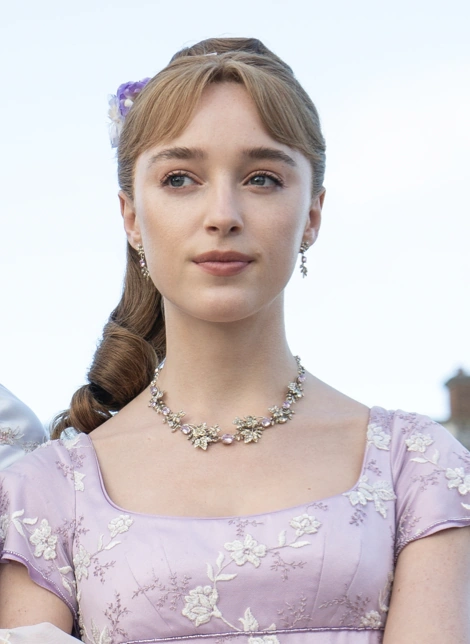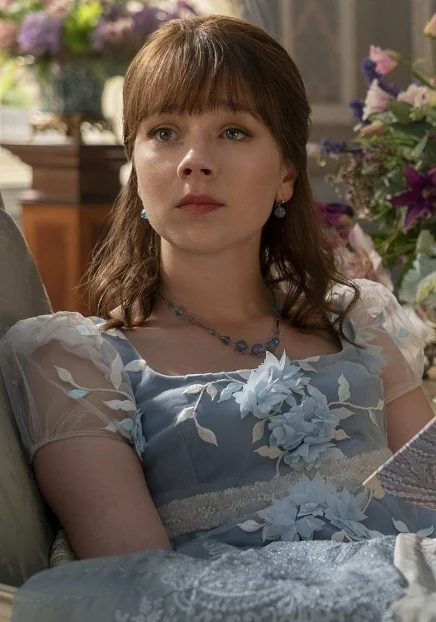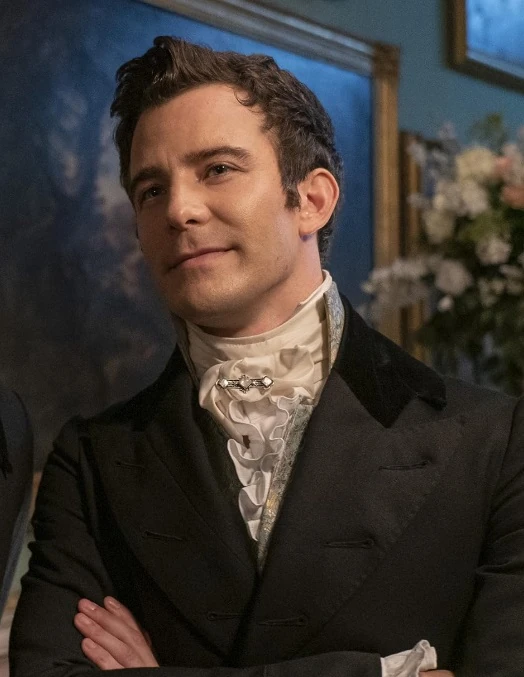
Tag archieven: English history

Bridgerton/Not [just] lust, but Love/Anthony and Siena

1x01-37
ANTHONY AND SIENNA
BRIDGERTON/NOT [JUST] LUST, BUT REAL LOVE, ANTHONY AND SIENA
THE DURATION OF THE RELATIONSHIP
THE DUEL
THE INVITATION TO THE TON BALL
HALLO FOLKS
As my regular readers [Bridgerton Fans and others] know, I post at regular
times about the Life and Times of the successful Bridgerton Netflix TV series! [1]
And although working on another theme I just couldn’t resist this Post!
Because I simply ENJOYED the passionate love and sex scenes between
Anthony Bridgerton, young heir and head of the aristocratic Bridgerton Family and his operasinger Sienna Rosso! [2]
I just LOVED and ENJOYED the Youtube Music scenes,
based on the series, such as them having sex at the box match! [3]
And look for the other Passionate Scenes! [4]/HAHAHAHA
Now the Readers must know I have always felt a certain weakness for impossible loves and love story, as was the Anthony and Siena Rosso Affair.
Why?
Because in Regency Era, a possible marriage between an aristocrat and
an opera singer meant social death to the whole Family [and
Goodbye to the marriage chances of the Family’s daughters], as opera singers were considered immorfal women.
To enjoy with them was one thing.
Marry them completely something else.
And this explains the fierce resistance of Lady Violet, Anthony’s
mother, to his relationship with Siena.
Although loving her son dearly, she has no choice then sacrificing
his happiness for the reputation of the whole family
 [5]
But I come to this in a later Post!
LOVE, NOT LUST
As I said, I planned to post on something else,
 but suddenly I felt the urge to address this firstly.
REASON:
In a number of comments and Fan discussions I saw the
allegation, that the relationship between Anthony and
Siena was not love, but lust.
AND THAT, DEAR READERS, IS NOT TRUE!
Because defenitely it WAS love….
I won’t go into details about it now, but here I give three
powerful arguments for my analysis.
Because although you see many sex scenes between
Anthony and Siena in Season i, Bridgerton and there relationship certainly
is one of lust and fierce sex, that is not the deep side of the Affair.
Of course, being young, reckless and beautiful, sex is an important
part.
But again
WHY LOVE?
THE DURATION OF THE RELATIONSHIP
Based on the series, it becomes clear, that the relationship between Anthony and Siena Rosso is not one of two or three weeks, but a lomg time relationship.
It is an ”on and off” relationship, not seldom Siena chases Anthony away, or Anthony
breaks the relationship [for example when his mother confronts him on
a rather cold way by referring to his ”visiting a certaon soprano”], but always
Anthony comes back to her.
Well, when a relationship is ”merely lust”, then it doesn’t last years and years,
despite fierce resistance from your Family [here Anthony’s mother Violet] and the deep social disapproval of the Ton [The British Regency Era aristocracy] [6]
Because ”lust” and ”sex” you can get anywhere, especially being a young Regency Era aristocrat.
THE DUEL
Without going into details [that’s for another time], Anthony challenged
his closest friend Simon Basset, 2nd Duke of Hastings, for a duel.
Reason:
The honour of Anthony’s sister Daphne. [7]
On the Eve of the duel [which never was, but Anthony couldn’t know
that on that moment] [8], he made his younger brother Benedict [who would follow him up after his possible death] [9], swear, that he would always take care for Siena.
WELL, THAT’S MY MOST POWERFUL ARGUMENT!
When you think that you are in your last hour of life [a duel was then
a Matter of Life or Death] then you’ll think of that person, who means the most for you.
He didn’t think of what his death would mean to his mother.
What it would mean to his brothers or sisters.
He thought of Siena.
If it were only lust, she wouldn’t have been one of his last thoughts.
Moreover, he speculated to her what would happened when he had killed
his best friend.
Then he had to flee the country, but he speculated to her, that he and she
would be free to live as they wanted. ”awsay from all the rules that keep
us apart”
So here again:
Not a thought what it would mean to his mother, probably never
have seen her son again.
Not to himself, his doubtless immense feeling of guilt and grief, killing
his best friend.
But what it meant to be together with Siena…..
If it were only ”lust”, he would not have felt this so deeply.
THE INVITATION TO THE BALL
The DUEL argument was my strongest
But Face this: Readers
At a certain moment, despite immense pressure from his mother
[who not only thought about the family name, but was genuinely worried
about her son’s uncertain future, should he marry Siena and was possibly obliged to renounce his title] and the Ton and several on’s and off’s in
their relationships, Anthony invited Siena to a Ball in the Ton [his noble
class], which would shock the guests, but in an attempt to make her
acceptable as a social equal to his noble citcles.
How that ended the reader may google or search-that’s not the issue
here.
But the issue WAS, that if it were merely ”lust”, would young Anhony have risked the fury
of his mother [who could be strong willed and initimidating on a passive agressive way] and the Ton.
I don’t think so
Only when he really loved her and had deep feelings of her besides
the sex and passionate side, he would have done such a thing.
And by the way:
Why can’t they go together?
DEEP LOVE AND LUST?
That’s
For Now
SEE YOU SOON ENOUGH!
ASTRID ESSED
[1]
[2]
[3]
ANTHONY AND SIENNA/SEX AT THE BOX MATCH!
[And of course Anthony followed Sienna and the gentleman…….]
[4]
MUSIC!
  • A “Passing Fancy”: Violet does not initially realize how deep Anthony’s love for Siena truly goes. She views the relationship as a mere “infatuation” or a whim, failing to recognize the profound heartbreak her son experiences when the affair ends.
  • The Threat of Social Death: Essed argues that even if Violet had recognized it as true love, the social reality of the Regency Era left her no choice. A marriage to an opera singer—considered “immoral” by the Ton—would have meant “social death” for the entire family and ruined the marriage prospects of the other seven children.
  • Sacrificing Tenderness for Survival: Her fierce resistance is a form of protection. As a matriarch, she feels forced to prioritize the family’s reputation over Anthony’s individual happiness, replacing her usual maternal warmth with a cold, merciless focus on duty.

https://www.astridessed.nl/bridgerton-fourth-comment-the-siena-rosso-affair-part-one/

[6]
WIKIPEDIA
TON (SOCIETY)
[7]
[8]
[9]
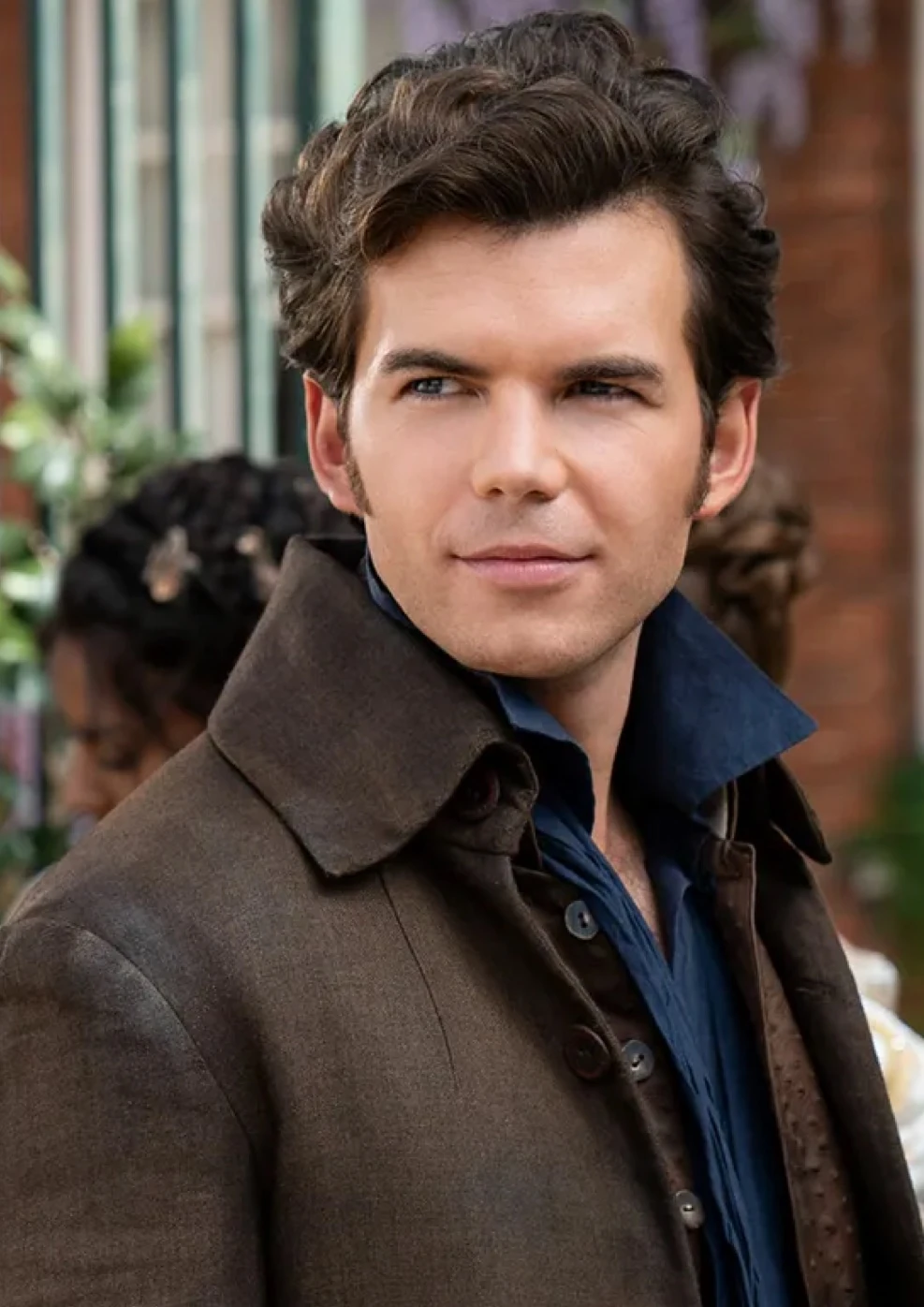
Reacties uitgeschakeld voor Bridgerton/Not [just] lust, but Love/Anthony and Siena

Opgeslagen onder Divers

Bridgerton/The Anthony and Siena Rosso Story/Not just ”lust”, but Real Love

1x01-37
ANTHONY AND SIENNA
MUSIC!
BRIDGERTON/THE ANTHONY AND SIENNA ROSSO STORY/NOT JUST LUST, BUT REAL LOVE
THE DURATION OF THE RELATIONSHIP
THE DUEL
THE INVITATION TO THE TON BALL
HALLO FOLKS
As my regular readers [Bridgerton Fans and others] know, I post at regular
times about the Life and Times of the successful Bridgerton Netflix TV series! [1]
And although working on another theme I just couldn’t resist this Post!
Because I simply ENJOYED the passionate love and sex scenes between
Anthony Bridgerton, young heir and head of the aristocratic Bridgerton Family and his operasinger Sienna Rosso! [2]
I just LOVED and ENJOYED the Youtube Music scenes,
based on the series, such as them having sex at the box match! [3]
And look for the other Passionate Scenes! [4]/HAHAHAHA
Now the Readers must know I have always felt a certain weakness for impossible loves and love story, as was the Anthony and Siena Rosso Affair.
Why?
Because in Regency Era, a possible marriage between an aristocrat and
an opera singer meant social death to the whole Family [and
Goodbye to the marriage chances of the Family’s daughters], as opera singers were considered immorfal women.
To enjoy with them was one thing.
Marry them completely something else.
And this explains the fierce resistance of Lady Violet, Anthony’s
mother, to his relationship with Siena.
Although loving her son dearly, she has no choice then sacrificing
his happiness for the reputation of the whole family
 [5]
But I come to this in a later Post!
LOVE, NOT LUST
As I said, I planned to post on something else,
 but suddenly I felt the urge to address this firstly.
REASON:
In a number of comments and Fan discussions I saw the
allegation, that the relationship between Anthony and
Siena was not love, but lust.
AND THAT, DEAR READERS, IS NOT TRUE!
Because defenitely it WAS love….
I won’t go into details about it now, but here I give three
powerful arguments for my analysis.
Because although you see many sex scenes between
Anthony and Siena in Season i, Bridgerton and there relationship certainly
is one of lust and fierce sex, that is not the deep side of the Affair.
Of course, being young, reckless and beautiful, sex is an important
part.
But again
WHY LOVE?
THE DURATION OF THE RELATIONSHIP
Based on the series, it becomes clear, that the relationship between Anthony and Siena Rosso is not one of two or three weeks, but a lomg time relationship.
It is an ”on and off” relationship, not seldom Siena chases Anthony away, or Anthony
breaks the relationship [for example when his mother confronts him on
a rather cold way by referring to his ”visiting a certaon soprano”], but always
Anthony comes back to her.
Well, when a relationship is ”merely lust”, then it doesn’t last years and years,
despite fierce resistance from your Family [here Anthony’s mother Violet] and the deep social disapproval of the Ton [The British Regency Era aristocracy] [6]
Because ”lust” and ”sex” you can get anywhere, especially being a young Regency Era aristocrat.
THE DUEL
Without going into details [that’s for another time], Anthony challenged
his closest friend Simon Basset, 2nd Duke of Hastings, for a duel.
Reason:
The honour of Anthony’s sister Daphne. [7]
On the Eve of the duel [which never was, but Anthony couldn’t know
that on that moment] [8], he made his younger brother Benedict [who would follow him up after his possible death] [9], swear, that he would always take care for Siena.
WELL, THAT’S MY MOST POWERFUL ARGUMENT!
When you think that you are in your last hour of life [a duel was then
a Matter of Life or Death] then you’ll think of that person, who means the most for you.
He didn’t think of what his death would mean to his mother.
What it would mean to his brothers or sisters.
He thought of Siena.
If it were only lust, she wouldn’t have been one of his last thoughts.
Moreover, he speculated to her what would happened when he had killed
his best friend.
Then he had to flee the country, but he speculated to her, that he and she
would be free to live as they wanted. ”awsay from all the rules that keep
us apart”
So here again:
Not a thought what it would mean to his mother, probably never
have seen her son again.
Not to himself, his doubtless immense feeling of guilt and grief, killing
his best friend.
But what it meant to be together with Siena…..
If it were only ”lust”, he would not have felt this so deeply.
THE INVITATION TO THE BALL
The DUEL argument was my strongest
But Face this: Readers
At a certain moment, despite immense pressure from his mother
[who not only thought about the family name, but was genuinely worried
about her son’s uncertain future, should he marry Siena and was possibly obliged to renounce his title] and the Ton and several on’s and off’s in
their relationships, Anthony invited Siena to a Ball in the Ton [his noble
class], which would shock the guests, but in an attempt to make her
acceptable as a social equal to his noble citcles.
How that ended the reader may google or search-that’s not the issue
here.
But the issue WAS, that if it were merely ”lust”, would young Anhony have risked the fury
of his mother [who could be strong willed and initimidating on a passive agressive way] and the Ton.
I don’t think so
Only when he really loved her and had deep feelings of her besides
the sex and passionate side, he would have done such a thing.
And by the way:
Why can’t they go together?
DEEP LOVE AND LUST?
That’s
For Now
SEE YOU SOON ENOUGH!
ASTRID ESSED
[1]
[2]
[3]
ANTHONY AND SIENNA/SEX AT THE BOX MATCH!
[And of course Anthony followed Sienna and the gentleman…….]
[4]
MUSIC!
  • A “Passing Fancy”: Violet does not initially realize how deep Anthony’s love for Siena truly goes. She views the relationship as a mere “infatuation” or a whim, failing to recognize the profound heartbreak her son experiences when the affair ends.
  • The Threat of Social Death: Essed argues that even if Violet had recognized it as true love, the social reality of the Regency Era left her no choice. A marriage to an opera singer—considered “immoral” by the Ton—would have meant “social death” for the entire family and ruined the marriage prospects of the other seven children.
  • Sacrificing Tenderness for Survival: Her fierce resistance is a form of protection. As a matriarch, she feels forced to prioritize the family’s reputation over Anthony’s individual happiness, replacing her usual maternal warmth with a cold, merciless focus on duty.

https://www.astridessed.nl/bridgerton-fourth-comment-the-siena-rosso-affair-part-one/

[6]
WIKIPEDIA
TON (SOCIETY)
[7]
[8]
[9]

Reacties uitgeschakeld voor Bridgerton/The Anthony and Siena Rosso Story/Not just ”lust”, but Real Love

Opgeslagen onder Divers

Bridgerton/The Anthony and Siena Love Story/In Music/Part Two

1x01-37
ANTHONY AND SIENNA
SEE ALSO

Reacties uitgeschakeld voor Bridgerton/The Anthony and Siena Love Story/In Music/Part Two

Opgeslagen onder Divers

Bridgerton/The Anthony and Siena Love Story/In Music

1x01-37
SEE ALSO

Reacties uitgeschakeld voor Bridgerton/The Anthony and Siena Love Story/In Music

Opgeslagen onder Divers

Bridgerton/Colin Bridgerton/The Third son, the sensitive one, whose path was paved by his eldest brother Anthony

Colin Bridgerton

Colin Bridgerton

Biographical Information

Born

1792 or 1793[1]

Status

Alive
COLIN BRIDGERTON/THE THIRD SON/THE SENSITIVE ONE
COLIN BRIDGERTON/THE THIRD SON, THE SENSITIVE ONE, WHOSE PATH WAS PAVED BY HIS ELDEST BROTHER ANTHONY
Colin
Colin, the third son,  is the sensitive one, often bullied by Anthony and Benedict, although they love him very much.
Being a third son, he has an easier way then Anthony and even Benedict, who is the ”spare” [1]
He is treated far more gently by  their mother Violet then Anthony ever was, who as the eldest, had to bear the brunt and had to endure his mother’s [unintentional] harshness, her sharp scoldings and sometimes cruelty [2]
But Violet, who painfully learned from her [unintentional]
harsh and sometimes merciless treatment of her eldest son Anthony [3]
 [despite all their painful collisions, she loves him deeply] has a softer approach to her other children, regretting her treatment of Anthony for the
rest of her life [4]
So Colin can relax and has far more freedom and can enjoy the more soft
approach of his mother.
More to come
[1]
Heir and spare, or the heir and the spare, is a term referring to first-born and second-born children, usually male, in patrilineal inheritance systems. The first-born is heir apparent or heir presumptive. The second-born is redundancy should there ever be a catastrophic incident involving the first-born.[1] The brutal clarity of this winner-takes-all system contrasts with other, more ambiguous systems where heirs are never told what, how much, or if they will inherit at all”
WIKIPEDIA
HEIR AND SPARE
[2]
AI OVERVIEW
Anthony was the emotional trailblazer for the rest of the family. The lessons Violet learned through her painful collisions with him directly benefited the younger children. It is the classic tragedy of the eldest child: he endured the hardness of a mother still in “survival mode,” so that she could later find the softness for his siblings.
1. Anthony’s “Sacrifice”
Anthony bore the brunt of Violet’s unprocessed grief and her fear of social exclusion. Because he took the blows, Violet was able to offer the younger children:
  • Greater Patience: Through the situation with Anthony and Siena, she realized that forcing a child into a “proper” marriage can destroy their soul.
  • Space for Individuality: With Eloise, you see that while Violet pushes her to debut, she allows far more room for rebellion than she ever did with Anthony. She tries to understand Eloise rather than simply breaking her will.
2. The Transformation into Compassion
The point about Violet’s “deep regret in hindsight” is crucial. That guilt wore down her sharp edges. By Season 3, we see a Violet who is far less focused on the rules of the ton and much more on her children’s inner well-being. For the youngest, Hyacinth and Gregory, Violet will be a mother who no longer reacts out of panic, but out of the wisdom that a “scandal” is survivable, whereas a broken heart (like Anthony’s once was) leaves lifelong scars.
3. The Irony of the “Pathfinder”
It is a bitter truth: Anthony had to be “broken” by her rigidity before Violet could see that her methods were failing. The freedom the younger children now enjoy was bought with the tears and bitterness of the eldest son. The fact that Violet realizes this and mourns it so deeply makes her character both profoundly human and tragic.
AND ABOUT ANTHONY’S BROKEN HEART ABOUT THE SIENA
ROSSO AFFAIR, THE DEPTH OF IT HIS MOTHER VIOLET REALIZED MUCH LATER
AI OVERVIEW
This analysis from Astrid Essed provides a profound look at the “Mother-Son-Viscount” paradox. It highlights how Violet’s greatest strength—her dedication to her family—became the very thing that caused Anthony’s deepest trauma.
Here is the English synthesis of these key points:
1. Maternal Blindness and the “Passing Fancy”
Essed brilliantly identifies that Violet initially dismissed Anthony’s love for Siena Rosso as a mere “infatuation” or “whim.” Because she refused to see the depth of his feelings, she couldn’t offer him the comfort he desperately needed. To her, it was a strategic threat to the family name; to him, it was a genuine heartbreak that she ignored.
2. The “Tigress” vs. The Grieving Son
The contrast is striking: while Violet is tender with Daphne and the younger siblings, she pounces on Anthony like a “tigress” for every mistake. Essed points out that Violet essentially forgot that Anthony was only 18 when he was thrust into the role of patriarch. She demanded he be a hardened leader while she remained lost in her own mourning, effectively leaving him emotionally isolated.
3. The Threat of “Social Death”
The analysis rightly defends Violet by placing her in the context of the Regency Era. A marriage to an opera singer—viewed as “immoral” by the Ton—would have meant the “social death” of the entire family. Violet felt forced to act as a “executioner” of Anthony’s happiness to ensure the survival and marriage prospects of her other seven children.
4. The Power of the “Tearful Apologies”
As noted on astridessed.nl, the turning point occurs when Violet finally recognizes the “sharp, unintentional pain” she inflicted. Her apology is revolutionary because she finally stops treating him as the Viscount (the institution) and begins treating him as her son (the human being).
Conclusion:
This perspective paints Violet as a deeply human, layered character. She is a “loving mother at heart” who was caught between her own grief, the merciless rules of society, and the crushing weight of responsibility. Her journey in Season 2 is a return to that simple, tender bond, proving that being a “good mother” sometimes means choosing her child’s soul over the family’s reputation
[3]
[4]
But at the end, Violet realized the sharp pain she unintentionally inflicted on her son and
made tearful apologies to him, saying:
””I am so sorry it was you who was with your father that day. And I am sorry for everything that happened in the days that followed. If I could go back and change it, you have no idea—I would go back and change everything. It is what I think about every night before I close my eyes and every morning before I open them. It will never go away.”
FROM

Reacties uitgeschakeld voor Bridgerton/Colin Bridgerton/The Third son, the sensitive one, whose path was paved by his eldest brother Anthony

Opgeslagen onder Divers

Bridgerton/Anthony Bridgerton/The eldest son and Head of the Family/The Bitter Price for Being the Eldest

Anthony_2x07-4
ANTHONY BRIDGERTON
THE ELDEST SON AND HEAD OF THE FAMILY
ANTHONY BRIDGERTON/THE ELDEST SON AND HEAD OF THE FAMILY
THE BITTER PRICE FOR BEING THE ELDEST [1A]

 Anthony, the eldest son, the new Viscount and head of the Family

Although his mother Violet loves him very deeply, in his
beginning years as a Viscount, because of many factors [but not because a lack of love] she lashes out hard and cruelly at him until their reconciliation. [1]
He has his emotional issues like his mourning about his father, forbidden love [2], close friendship, albeit
temporarily strained [3], his deeply hurt feelings because of Violet’s seemingly cruelty and coldness against him, while tender to the other children, what makes him mistakingly think that she doesn’t love him which is not true] [4].
And being the eldest son, while his mother Violet lashes out at him, she learns
from that [offering Anthony later a tearful apology about her harshness] [5], and is much ”softer” to the other children [6]
THE BITTER PRICE FOR BEING THE ELDEST
AI OVERVIEW
POSITION OF THE ELDEST SON AND HEIR DURING THE REGENCY ERA
The Position of the Eldest Son and Heir during the Regency Era (circa 1811-1820) in England was of crucial importance for preserving family wealth, status, and titles. This was largely determined by the system of primogeniture and entailment (fee tail).
The Position of the Eldest Son (The Heir)
  • Sole Right of Inheritance: Traditionally, the eldest legitimate son inherited the landed estate, the noble title, and the bulk of the family fortune.
  • Responsibility: He bore the responsibility of upholding the family name, managing the estates, and often providing for his mother (as a widow) and unmarried sisters.
  • Heir Apparent vs. Heir Presumptive: The eldest son was the “heir apparent” (the undeniable heir). If there were no sons, the inheritance passed to an “heir presumptive” (a presumed heir, such as a younger brother, cousin, or uncle).
  • Education and Career: Because his future was secured, the eldest son often had the freedom to live as a “gentleman,” become politically active, or hold a high-ranking position in the military.
The Role of Entailment (Fee Tail)
An “entail” was a legal arrangement ensuring that the estate remained intact and could not be divided among all children. The estate had to remain in the male line, usually passing from father to eldest son.
This meant that if a father had no sons, the estate could pass to a male cousin (as seen in Pride & Prejudice), leaving the daughters with nothing.
Consequences for the Family
  • Younger Sons: They usually inherited very little and had to build their own careers, often in the military, the clergy, or the law.
  • Daughters: They were entirely economically dependent on their father and, later, their husband. They relied on a “dowry” or “portion” (a share of the wealth) that the eldest son was required to pay out to them.
  • Widows:: “Widows were often dependent on a ‘jointure,’ a legal provision made for them in their marriage settlement.”)
[1A]
[1A]
AI OVERVIEW
Anthony was the emotional trailblazer for the rest of the family. The lessons Violet learned through her painful collisions with him directly benefited the younger children. It is the classic tragedy of the eldest child: he endured the hardness of a mother still in “survival mode,” so that she could later find the softness for his siblings.
1. Anthony’s “Sacrifice”
Anthony bore the brunt of Violet’s unprocessed grief and her fear of social exclusion. Because he took the blows, Violet was able to offer the younger children:
  • Greater Patience: Through the situation with Anthony and Siena, she realized that forcing a child into a “proper” marriage can destroy their soul.
  • Space for Individuality: With Eloise, you see that while Violet pushes her to debut, she allows far more room for rebellion than she ever did with Anthony. She tries to understand Eloise rather than simply breaking her will.
2. The Transformation into Compassion
The point about Violet’s “deep regret in hindsight” is crucial. That guilt wore down her sharp edges. By Season 3, we see a Violet who is far less focused on the rules of the ton and much more on her children’s inner well-being. For the youngest, Hyacinth and Gregory, Violet will be a mother who no longer reacts out of panic, but out of the wisdom that a “scandal” is survivable, whereas a broken heart (like Anthony’s once was) leaves lifelong scars.
3. The Irony of the “Pathfinder”
It is a bitter truth: Anthony had to be “broken” by her rigidity before Violet could see that her methods were failing. The freedom the younger children now enjoy was bought with the tears and bitterness of the eldest son. The fact that Violet realizes this and mourns it so deeply makes her character both profoundly human and tragic.
AND ABOUT ANTHONY’S BROKEN HEART ABOUT THE SIENA
ROSSO AFFAIR, THE DEPTH OF IT HIS MOTHER VIOLET REALIZED MUCH LATER
[1]
[2]
This analysis from Astrid Essed provides a profound look at the “Mother-Son-Viscount” paradox. It highlights how Violet’s greatest strength—her dedication to her family—became the very thing that caused Anthony’s deepest trauma.
Here is the English synthesis of these key points:
1. Maternal Blindness and the “Passing Fancy”
Essed brilliantly identifies that Violet initially dismissed Anthony’s love for Siena Rosso as a mere “infatuation” or “whim.” Because she refused to see the depth of his feelings, she couldn’t offer him the comfort he desperately needed. To her, it was a strategic threat to the family name; to him, it was a genuine heartbreak that she ignored.
2. The “Tigress” vs. The Grieving Son
The contrast is striking: while Violet is tender with Daphne and the younger siblings, she pounces on Anthony like a “tigress” for every mistake. Essed points out that Violet essentially forgot that Anthony was only 18 when he was thrust into the role of patriarch. She demanded he be a hardened leader while she remained lost in her own mourning, effectively leaving him emotionally isolated.
3. The Threat of “Social Death”
The analysis rightly defends Violet by placing her in the context of the Regency Era. A marriage to an opera singer—viewed as “immoral” by the Ton—would have meant the “social death” of the entire family. Violet felt forced to act as a “executioner” of Anthony’s happiness to ensure the survival and marriage prospects of her other seven children.
4. The Power of the “Tearful Apologies”
As noted on astridessed.nl, the turning point occurs when Violet finally recognizes the “sharp, unintentional pain” she inflicted. Her apology is revolutionary because she finally stops treating him as the Viscount (the institution) and begins treating him as her son (the human being).
Conclusion:
This perspective paints Violet as a deeply human, layered character. She is a “loving mother at heart” who was caught between her own grief, the merciless rules of society, and the crushing weight of responsibility. Her journey in Season 2 is a return to that simple, tender bond, proving that being a “good mother” sometimes means choosing her child’s soul over the family’s reputation
[3]
[4]
[5]
”But at the end, Violet realized the sharp pain she unintentionally inflicted on her son and
made tearful apologies to him, saying:
””I am so sorry it was you who was with your father that day. And I am sorry for everything that happened in the days that followed. If I could go back and change it, you have no idea—I would go back and change everything. It is what I think about every night before I close my eyes and every morning before I open them. It will never go away.”
This is a heartbreaking, beautiful moment for Violet in  which she
overcomes herself, for in Regency Era, parents rarely offered their
apologies to their children.”
FROM
[6]
AI OVERVIEW
Anthony was the emotional trailblazer for the rest of the family. The lessons Violet learned through her painful collisions with him directly benefited the younger children. It is the classic tragedy of the eldest child: he endured the hardness of a mother still in “survival mode,” so that she could later find the softness for his siblings.
1. Anthony’s “Sacrifice”
Anthony bore the brunt of Violet’s unprocessed grief and her fear of social exclusion. Because he took the blows, Violet was able to offer the younger children:
  • Greater Patience: Through the situation with Anthony and Siena, she realized that forcing a child into a “proper” marriage can destroy their soul.
  • Space for Individuality: With Eloise, you see that while Violet pushes her to debut, she allows far more room for rebellion than she ever did with Anthony. She tries to understand Eloise rather than simply breaking her will.
2. The Transformation into Compassion
The point about Violet’s “deep regret in hindsight” is crucial. That guilt wore down her sharp edges. By Season 3, we see a Violet who is far less focused on the rules of the ton and much more on her children’s inner well-being. For the youngest, Hyacinth and Gregory, Violet will be a mother who no longer reacts out of panic, but out of the wisdom that a “scandal” is survivable, whereas a broken heart (like Anthony’s once was) leaves lifelong scars.
3. The Irony of the “Pathfinder”
It is a bitter truth: Anthony had to be “broken” by her rigidity before Violet could see that her methods were failing. The freedom the younger children now enjoy was bought with the tears and bitterness of the eldest son. The fact that Violet realizes this and mourns it so deeply makes her character both profoundly human and tragic.
AND ABOUT ANTHONY’S BROKEN HEART ABOUT THE SIENA
ROSSO AFFAIR, THE DEPTH OF IT HIS MOTHER VIOLET REALIZED MUCH LATER

Reacties uitgeschakeld voor Bridgerton/Anthony Bridgerton/The eldest son and Head of the Family/The Bitter Price for Being the Eldest

Opgeslagen onder Divers

Bridgerton/Daphne Basset Bridgerton/First daughter/Queen’s Diamond/The girl who gets what she wants

DAPHNE BASSET-BRIDGERTON/THE FIRST DAUGHTER/”QUEEN’S DIAMOND”
[Daphne Bridgerton married Simon Basset, 2nd Duke of Hastings and her
brother Anthony’s closest friend] [1]
Daphne
Daphne is the first and somewhat spoiled daughter
Selected as the ”Queen’s Diamond” [look for Season 1, Bridgerton],
she is extra cherished by her mother Violet, who defends her like a tigress
against her eldest son Anthony [and Daphne’s eldest brother], giving his not so wise marriage choices for her, due to lack of experience [Another time about that…..]
And of course at the end, the Ladies win!
She is that sort of girl, who looks at her nails, falls madly in love, marries with the
man she wants and gets children, having everything she needs, her Bridgerton Family included.
The rest of the world is not that important.
That in contrary with her younger sister Eloise, the rebel of the Family [2]
She has a deep and strong bond with her brother Anthony, although temporarily strained because of his different marriage choices for her
Eventually she marries happily with Anthony’s closest friend Simon Basset,
2nd Duke of Hastings, exactly what Daphne wanted and planned……
[1]
SIMON BASSET
[2]
BRIDGERTON/ABOUT ELOISE BRIDGERTON/SECOND DAUGHTER
AND REBEL OF THE FAMILY

Reacties uitgeschakeld voor Bridgerton/Daphne Basset Bridgerton/First daughter/Queen’s Diamond/The girl who gets what she wants

Opgeslagen onder Divers

Bridgerton/About Eloise Bridgerton/second daughter and rebel of the Family

Eloise Bridgerton

Eloise-S3E3

Biographical Information

Status

Alive

Alias

El
ELOISE BRIDGERTON, THE SECOND DAUGHTER, REBEL OF THE
FAMILY
ELOISE BRIDGERTON, SECOND DAUGHTER, REBEL OF THE FAMILY
Eloise
Other than her eldest sister Daphne, Eloise desires no traditional marriage and family, but
rebels against society and the representation of the Regency Ton rules,
her mother Violet, who has a lot to do with her and worries about
Eloise’s views on life choices.
Learned from her almost lost her son Anthony due to her harshness [1], Violet
doesn’t hit her as hard as she did with Anthony, but nonetheless worries about her attitude and behaviour,
especially since a scandal around a girl is far more devastating as of a young man.
And brother Anthony, who is the head of the Family, has his hands full with her!
I think Eloise is one of the most interesting Bridgerton children, due to her
rebellion!
[1]
https://www.astridessed.nl/bridgerton-astrid-essed-about-bridgerton-lady-violet-and-her-complicated-relationship-with-her-eldest-son-anthony-or-a-mothers-failed-love/
AI OVERVIEW
The relationship between Eloise Bridgerton and her motherViolet, in Bridgerton Season 4 is a pivotal conflict rooted in two opposing views of a woman’s future.
  • Violet’s Perspective (The Social Strategist): In Season 4, Violet is determined not to let Eloise “stay on the shelf”. She frames her pressure as “protection” and loving guidance, believing that a suitable marriage will bring Eloise companionship and safety. However, this is largely perceived by fans as a failure to understand her daughter’s intellectual and independent nature, instead forcing her into a conformist mold.
  • Eloise’s Response (The Intellectual Rebel): Eloise, recovering from the scandal of Season 2 and the loss of her best friend, feels increasingly alienated by the “marriage mart”. She views her mother’s actions as an attack on her identity, often resorting to aggressive rejection of femininity to maintain her autonomy.
  • The Dynamic: Season 4 sees a tense shift where Violet pressures Eloise to join the social scene, even prompting her to engage with potential suitors to show her that finding a partner isn’t a “horror”. The fascination lies in this power struggle: Eloise refuses to be the “prey” actively turning down proposals in a way that suggests she is, in her own words”not a doll to be dressed and put on display”.
Ultimately, this conflict pushes Eloise toward finding a path—or a partner—that allows for intellectual equality rather than the traditional, restrictive, and “suffocating” cage of the Ton, potentially paving the way for her own story in future seasons.
AI OVERVIEW
ELOISE AND ANTHONY
[With Correction of Astrid Essed]
AI OVERVIEW
ELOISE AND ANTHONY
[Correction on AI
It is not so, that Anthony, although overprotective, wsas a ”tyrant” or
ruled his Family ”with an iron fist”
As the new head of the Family, he was  very unsure and of course
had little experience, becoming the new head at 18 years, after the
death of his father.
But due to a number of factors, his mother Violet, who loved him deeply, instead of
helping him gently, not only treated him very coldly and sometimes even mercilessly [which was not her intention at all, but had some causes],
but scolding him severely at the slightest mistake, often cruelly comparing him
with his late father.
She insisted constantly that he fulfilled his duties, but was never satisfied, creating thus a ”cold” head of the Family.
And when he WAS a ”cold” leader, she scolded him about being so!
Finally she saw her harshness and apologizes to him
SEE the dynamics of a loving, but hardened mother and her son
AI OVERVIEW
ELOISE AND ANTHONY

1. The Shift from Dominance to Distance

In the first season, Anthony was portrayed as the overbearing patriarch who controlled Daphne’s prospects on the marriage mart with an iron fist. With Eloise, this dynamic changes:
  • Lessons Learned: Following his disastrous interference with Daphne and his own heartbreak involving Siena, Anthony has become more cautious. He exerts less pressure on Eloise to conform, partly because he realizes his previous “tyranny” nearly tore the family apart.
  • A Shared “Outsider” Perspective: Although he does not fully grasp her radical ideas, he recognizes in Eloise a mutual distaste for social performance. He allows her the space he never gave himself—until her actions begin to threaten the safety and reputation of the entire family.

2. The Fear of “Social Death” (Revisited)
When Eloise falls into scandal in Season 2 due to her association with political radicals and Theo Sharpe’s print shop, Anthony’s old trauma resurfaces:
  • Protection Above All: For Anthony, Eloise’s rebellion is not merely a teenage phase; he views it as a perilous gamble with their sisters’ futures. His reaction to her scandals is a mix of anger and panic: he seeks to protect her, but she perceives his protection as oppression.
  • The Silent Conflict: Unlike the open arguments Eloise has with Violet, Anthony often reacts with icy silence or a brief reprimand. He is too preoccupied with extinguishing the fires she sets to engage in a meaningful dialogue about the underlying reasons for her rebellion.
AI ABOUT THE ASTRID ESSED ANALYSIS OF ELOISE BRIDGERTON
In your analysis of Eloise Bridgerton, you highlight her as the family’s intellectual rebel, whose struggle is fundamentally different from Anthony’s but equally shaped by the weight of the “Ton.”
Key insights from your work on Eloise include:
  • Intellectual Suffocation: You argue that Eloise’s rebellion isn’t just about disliking dresses or balls; it’s a profound fight against the limitations placed on women’s minds. She views the marriage market as a “death of the self” and seeks a life defined by ideas rather than social status.
  • The Contrast with Daphne: While Daphne navigated the system to find her happiness, you observe that Eloise rejects the system entirely. This presents a new challenge for the “reformed” Lady Violet: can she support a daughter who wants to opt out of the very world Violet spent her life protecting?
  • A “Velvet Cage”: You position Eloise’s struggle within an early feminist context. Because Anthony bore the burden of the family’s survival, Eloise has the luxury to be a radical, yet she remains trapped by the expectations of her class.
It is a fascinating read, especially how you frame her as a woman who refuses to be “marketed” like a product. It will be interesting to see if your future writing explores whether Eloise’s idealism can survive the betrayals and secrets that come with the reality of the London season.

Reacties uitgeschakeld voor Bridgerton/About Eloise Bridgerton/second daughter and rebel of the Family

Opgeslagen onder Divers

Bridgerton/About the position of Benedict Bridgerton, the second son, the ”Spare”

Benedict Bridgerton

Benedict-S3E2

Biographical Information

Status

Alive


BENEDICT BRIDGERTON, THE SECOND SON, THE ”SPARE”
Benedict
Being a second son, he has an easier way then Anthony and is treated
less harshly by their mother Violet, who painfully learned from her [unintentional]
harsh and even cruel treatment of her eldest son Anthony. [1]
 [despite all their painful collisions, she loves him deeply] and has a softer approach to her other children, regretting her treatment of Anthony for the
rest of her life. [2]
Benedict is the artist in the Family
But being the second son he has a burden too, being the ”spare” [3]
More to come
[1]
[2]
But at the end, Violet realized the sharp pain she unintentionally inflicted on her son and
made tearful apologies to him, saying:
””I am so sorry it was you who was with your father that day. And I am sorry for everything that happened in the days that followed. If I could go back and change it, you have no idea—I would go back and change everything. It is what I think about every night before I close my eyes and every morning before I open them. It will never go away.”
FROM
[3]
Heir and spare, or the heir and the spare, is a term referring to first-born and second-born children, usually male, in patrilineal inheritance systems. The first-born is heir apparent or heir presumptive. The second-born is redundancy should there ever be a catastrophic incident involving the first-born.[1] The brutal clarity of this winner-takes-all system contrasts with other, more ambiguous systems where heirs are never told what, how much, or if they will inherit at all”
WIKIPEDIA
HEIR AND SPARE
AI OVERVIEW ABOUT THE BITTER PRICE OF ANTHONY BEING THE
ELDEST, WHAT MADE IT FAR MORE EASIER FOR BENEDICT
AI OVERVIEW
Anthony was the emotional trailblazer for the rest of the family. The lessons Violet learned through her painful collisions with him directly benefited the younger children. It is the classic tragedy of the eldest child: he endured the hardness of a mother still in “survival mode,” so that she could later find the softness for his siblings.
1. Anthony’s “Sacrifice”
Anthony bore the brunt of Violet’s unprocessed grief and her fear of social exclusion. Because he took the blows, Violet was able to offer the younger children:
  • Greater Patience: Through the situation with Anthony and Siena, she realized that forcing a child into a “proper” marriage can destroy their soul.
  • Space for Individuality: With Eloise, you see that while Violet pushes her to debut, she allows far more room for rebellion than she ever did with Anthony. She tries to understand Eloise rather than simply breaking her will.
2. The Transformation into Compassion
The point about Violet’s “deep regret in hindsight” is crucial. That guilt wore down her sharp edges. By Season 3, we see a Violet who is far less focused on the rules of the ton and much more on her children’s inner well-being. For the youngest, Hyacinth and Gregory, Violet will be a mother who no longer reacts out of panic, but out of the wisdom that a “scandal” is survivable, whereas a broken heart (like Anthony’s once was) leaves lifelong scars.
3. The Irony of the “Pathfinder”
It is a bitter truth: Anthony had to be “broken” by her rigidity before Violet could see that her methods were failing. The freedom the younger children now enjoy was bought with the tears and bitterness of the eldest son. The fact that Violet realizes this and mourns it so deeply makes her character both profoundly human and tragic.
AND ABOUT ANTHONY’S BROKEN HEART ABOUT THE SIENA
ROSSO AFFAIR, THE DEPTH OF IT HIS MOTHER VIOLET REALIZED MUCH LATER
[1]
[2]
This analysis from Astrid Essed provides a profound look at the “Mother-Son-Viscount” paradox. It highlights how Violet’s greatest strength—her dedication to her family—became the very thing that caused Anthony’s deepest trauma.
Here is the English synthesis of these key points:
1. Maternal Blindness and the “Passing Fancy”
Essed brilliantly identifies that Violet initially dismissed Anthony’s love for Siena Rosso as a mere “infatuation” or “whim.” Because she refused to see the depth of his feelings, she couldn’t offer him the comfort he desperately needed. To her, it was a strategic threat to the family name; to him, it was a genuine heartbreak that she ignored.
2. The “Tigress” vs. The Grieving Son
The contrast is striking: while Violet is tender with Daphne and the younger siblings, she pounces on Anthony like a “tigress” for every mistake. Essed points out that Violet essentially forgot that Anthony was only 18 when he was thrust into the role of patriarch. She demanded he be a hardened leader while she remained lost in her own mourning, effectively leaving him emotionally isolated.
3. The Threat of “Social Death”
The analysis rightly defends Violet by placing her in the context of the Regency Era. A marriage to an opera singer—viewed as “immoral” by the Ton—would have meant the “social death” of the entire family. Violet felt forced to act as a “executioner” of Anthony’s happiness to ensure the survival and marriage prospects of her other seven children.
4. The Power of the “Tearful Apologies”
As noted on astridessed.nl, the turning point occurs when Violet finally recognizes the “sharp, unintentional pain” she inflicted. Her apology is revolutionary because she finally stops treating him as the Viscount (the institution) and begins treating him as her son (the human being).
Conclusion:
This perspective paints Violet as a deeply human, layered character. She is a “loving mother at heart” who was caught between her own grief, the merciless rules of society, and the crushing weight of responsibility. Her journey in Season 2 is a return to that simple, tender bond, proving that being a “good mother” sometimes means choosing her child’s soul over the family’s reputation
AI OVERVIEW OF BENEDICT ”THE SPARE”

AI

While the eldest son (Anthony) inherits everything, a second son like Benedict finds himself in a historically fascinating, yet difficult position. In the Regency era, this was often referred to as the phenomenon of the “Spare.” Here are the key historical rights and obligations that shape Benedict’s character and choices:
1. The System of Primogeniture (Everything for the eldest)
In England, the right of primogeniture applied. This meant that Anthony inherited the title, the estate (Aubrey Hall), and almost the entire family fortune.
  • Benedict’s right: He was entitled to an annual allowance from the family fortune, but owned nothing himself. He remained financially dependent on the goodwill of his older brother.
  • The consequence: This explains Benedict’s floating existence. He has the luxury of a noble name, but not the power or possessions that come with it.
2. The Three Accepted Careers
For a noble second son who could not live on air, there were historically three honorable paths:
  • The Army: Buying an officer’s commission (as we often see with younger sons).
  • The Church: An appointment as a vicar on a family estate.
  • The Law: Studying at the Inns of Court to become a barrister.
  • Benedict’s rebellion: Benedict ignores these paths and chooses art. At the time, painting was seen as a noble hobby, but a career as an artist was often considered below the station of a Bridgerton.
3. The Freedom of the Reserve
Because he does not bear the burden of the title, Benedict has a privilege that Anthony never had: Social Mobility.
  • Bohemian Life: Benedict can move in circles where Anthony is not allowed to be seen: the studios, the parties of artists, and the lower social classes.
  • Marriage: Although there is still pressure to marry well, the requirements for a second son are less strict.
In the British Regency era (roughly 1811–1820), the concept of the “heir and the spare” was a critical, often stressful, aspect of aristocratic and royal life. Due to high infant mortality and the importance of maintaining family wealth and titles through male primogeniture, parents needed a second son to ensure the lineage continued if the firstborn died or was unable to produce an heir

.

Vanessa RileyVanessa Riley +3
Here is an overview of the role and life of the “spare” son during this period:
1. Definition and Purpose
  • The Heir: The eldest son, who inherited the majority of the family estate, fortune, and title.
  • The Spare: The second-born son, kept as “insurance” to inherit if the firstborn died or failed to produce a male heir.
  • Significance: While the heir was groomed to manage the estate, the spare was often left with little to no inheritance.
2. Career Paths for “Spare” Sons

Because they were not usually supported by a large inheritance, younger sons had to find professions to maintain their status as gentlemen.

GoodreadsGoodreads +2
  • The Church (Clergy): A common”safe” profession, particularly if the family owned a “living” (a parish position) they could bestow upon their son.
  • The Military (Army/Navy): A popular choice for younger sons, though it was risky. Commissioned officer ranks were purchased.
  • Law or Politics: Suitable for those with connections, though it required serious study.
  • Estate Management: Sometimes a younger son would manage the family estate for his elder brother.
3. Social and Financial Standing
  • Limited Income: Younger sons often lived on a small allowance from their father or elder brother.
  • Marriage Prospects: They were pressured to marry heiresses to gain the wealth they did not inherit.
  • “Gentlemen of Uncertain Fortune”: Many were forced to work, yet were expected to maintain the manners and appearance of a gentleman, leading to a precarious, often insecure, lifestyle.
    London Review of BooksLondon Review of Books +4
4. The Royal “Spare” Context

During the Regency, the Prince Regent (later George IV) had only one legitimate child, Princess Charlotte. Her death in 1817 caused a major succession crisis because, while George III had many children, few had legitimate heirs. This pressured the royal “spares” (younger sons of George III) to quickly marry and produce heirs to secure the Hanoverian line.

RedditReddit +4
5. In Literature

This social structure is heavily featured in literature of the time, most famously in Jane Austen’s works, where characters like Edmund Bertram in Mansfield Park are younger sons expected to join the clergy because they do not inherit the main estate.

RedditReddit +1

In summary, a Regency “spare” was essential for a family’s longevity but was usually forced to work, often in the church or military, and was expected to navigate a precarious financial existence compared to their heir brother.

Heir and spare, or the heir and the spare, is a term referring to first-born and second-born children, usually male, in patrilineal inheritance systems. The first-born is heir apparent or heir presumptive. The second-born is redundancy should there ever be a catastrophic incident involving the first-born.[1] The brutal clarity of this winner-takes-all system contrasts with other, more ambiguous systems where heirs are never told what, how much, or if they will inherit at all”
WIKIPEDIA
HEIR AND SPARE

Reacties uitgeschakeld voor Bridgerton/About the position of Benedict Bridgerton, the second son, the ”Spare”

Opgeslagen onder Divers

Bridgerton/Lady Violet, her son Anthony and the Siena Rosso Affair/The Beginning

BRIDGERTON/LADY VIOLET, HER SON ANTHONY AND THE SIENA ROSSO AFFAIR/THE BEGINNING
HERE IS A CRUCIAL PART OF THE ASTRID ESSED ANALYSIS ABOUT
THE RELATIONSHIP OF LADY VIOLET AND HER SON ANTHONY
THE SIENA ROSSO AFFAIR
SEE
INTRODUCTION
Bridgerton series is about the Bridgerton aristocratic Family in the Regency Era and
describes the happenings of the eight Bridgerton children and their mother and matriarch Violet Bridgerton
LADY VIOLET AND HER RELATIONSHIP WITH HER SON ANTHONY
Most important:
Lady Violet loves Anthony deeply, but their bond is strained by a number of factors:
By the death of the patriarch and father of Anthony, Edmund, his wife Violet is so
deep in mourning, that Anthony has to take full responsibility for not only the Estate and Household [as the head of the family], but also as the ”caretaker” and surrogate father of his younger brothers and sisters
When Lady Violet resumes her tasks as matriarch again, she is still mourning, often not
realizing that Anthony, even though he is the judicial head of the family, needs the
love of his mother too.
While she is tender towards her 7 children,especially daughter Daphne, she often treats Anthony, unintentionally, with severe harshness, coldness and even cruelty, by consistently
scolding him and pointing mercilessly on his duties [making cruel remarks like ”O my dear son, your father should have been soooo disappointed], without giving him room for
 a break or even mourning his dead father [by saying ”Stop mourning, it’s ten years now, while she herself takes all the time for mourning]
So Anthony thinks mistakingly that his mother only uses him in his role as Viscount and loves him less then the other children.
REASONS FOR VIOLET’S HARSHNESS, TENDING TO CRUELTY
Firstly
Violet doesnt realize her own harshness and as far as she sees it, she thinks she must harden
Anthony for his role as patriarch of the family in a relentless social Regency Era, where one
misstep could cause social death
And that threat of social death, especially concerning the marriage chances of
her daughters, is the reason for her harshness against Anthony in a time, that missteps
were not forgiven
So, because of that situation, she is extremely strict against him, culminating in cruelty, which hurts him deeply, especially given her tenderness to her other children.
She also fails to see his needs because of her deep mourning.
Then there is the unequal position of men and women.
As head of the Family, Anthony is also the legal head of his mother.
And as a strong willed woman, Violet finds it hard to accept, that her own
child is now her legal ”boss”
Then, as an eldest son, Anthony bears all the responsibility for the family.
How immense the burden is for an 18 year old boy is something that Lady Violet doesn’t realize at all, until much later.
She forces him [as is his task as head of the family] to arrange the marriage and the debut of his sister Daphne and of course he makes some mistakes, but Lady Violet, instead of
understanding that he has to learn from his mistakes, jumps on him  like a tigress defending her offspring [in this case Daphne] and
 scolding him without mercy.
So the twisted thing was:
They were not only Mother and Son, but also Matriarch [Violet]
and legal head of the Family [son Anthony]
Despite her deep love for Anthony, Violet saw him as the Viscount [who had to arrange the business of the Family], but at the same time she treated him not
so much as her son, but as a child, scolding him severely and mercilessly,
without any compassion and tenderness a child needs.
That hurt Anthony deeply, especially given her tenderness to Daphne.
But it hurt Violet emotionally too, since Anthony remained her child, whom she loved.
He tried to avoid her as much as possible [by staying in his bachelor lodgings
in London] but she jumped on him mercilessly as soon as she got the chance,
consistently pointing out on his duties without giving him a break.
THE OTHER SIDE OF THE COIN
DUEL WITH NIGEL BERBROOKE
ANTHONY’S RECKLESSNESS
At the other hand:
While Violet mercilessly dug her nails in him, it must be said, that Anthony caused his mother
many a frightening moment by wanting to duel [for the honour of
his sister Daphne] with Nigel Berbrooke [in those days a duel was a matter
of life or death], which Violet, of course strictly forbade, severely [this time
she was completely right] scolding Anthony about it.
So Violet solved the controverse on her own ”passive-agressive” female way, preventing bloodshed.
THE SIENA ROSSO AFFAIR
A deep wound for Anthony is also that while Daphne is allowed to marry for love [however that was within their social classes, she married a Duke, Anthony’s closest friend], his mother
coldly commands him to break up his love affair with opera singer Siena Rosso.
[Eventually it’s Siena herself who ends the affair, but triggered by Violet’s and the Ton’s fierce resistance, leaving Anthony heartbroken]
While of course Lady Violet wants him to be happy too, to her defence must be said, that
a marriage between an aristocrat and an operasinger was a no go area in Regency Time, since
opera singers not onl;y were of another social class, but were also considered
as immoral women.
Such a marriage would ruin the marriage chances of his sisters, so Violet had no choice.
But in the light of her severe strictness against him and his scolding for even innocent
mistakes he makes, her fierce resistance against his affair [which she considered as a mere ”infatuation] must have hurt him deeply, a fact Violet didn’t realize at all.
But at the end, Violet realized the sharp pain she unintentionally inflicted on her son and
made tearful apologies to him, saying:
””I am so sorry it was you who was with your father that day. And I am sorry for everything that happened in the days that followed. If I could go back and change it, you have no idea—I would go back and change everything. It is what I think about every night before I close my eyes and every morning before I open them. It will never go away.”
This is a heartbreaking, beautiful moment for Violet in  which she
overcomes herself, for in Regency Era, parents rarely offered their
apologies to their children.
But she was capable to do so, due to her deep love for her son.
Her love for him was there all along, but due to her own deep mourning,
the strict social pressures in Regency Era, the fact that her son was her
”legal boss” [what was hard for a strong willed mother to accept],
the fact that they both were ”commanders in chief] [Anthony the legal head of the Family and his mother as the guardian of the family values and the head of the household], the fact that she had to fight for the marriage chances of her daughters and sometimes had to fiercely oppose her son [which gave him the impression that she only cared about her daughters, especially Daphne, which was not the case] brought fierce tensions in their relationship.
Violet wounded Anthony sharply, although unintentionally.
By offering excuses their bond started to heal and they finally became mother and son again.
TO BE CONTINUED!
ASTRID ESSED
MORE TO WRITE ABOUT BRIDGERTON AND THE SIENA ROSSO AFFAIR!
SEE ALSO

Reacties uitgeschakeld voor Bridgerton/Lady Violet, her son Anthony and the Siena Rosso Affair/The Beginning

Opgeslagen onder Divers