Tag archieven: Anthony Bridgerton

Letter to the Editor/Color blind casting in the Netflix series Bridgerton/Refreshing,Inspiring,Uplifting

1x01-5

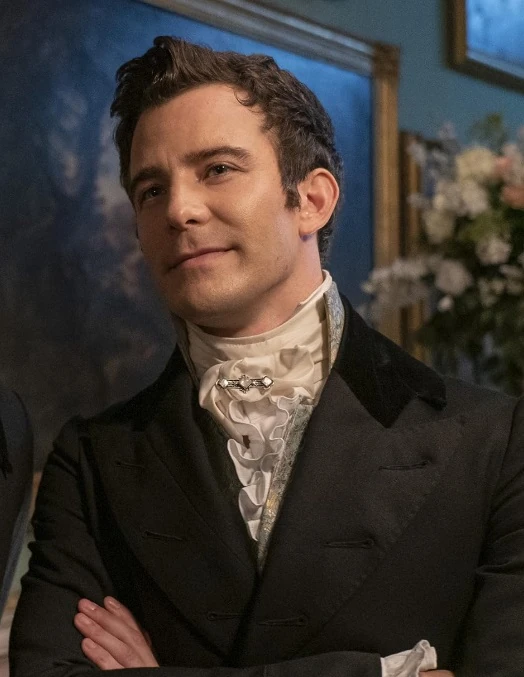
ANTHONY  BRIDGERTON AND HIS CLOSEST FRIEND SIMON BASSET,
2ND DUKE OF  HASTINGS
ANTHONY BRIDGERTON
SIMON BASSET, 2E HERTOG VAN HASTINGS
READERS,
Like you probably have read, I’ve already posted about the popular
Netflix TV series Bridgerton, which is now in its fourth Season! [1]
Hereby a Letter to the Editor about ”Bridgerton”, that I’ve sent to a number of internantional
papers.
Of course I don’t know, whether they will publish it, so here
my Letter to the Editor.
ENJOY!
ASTRID ESSED
[1]
THE FIRST
THE SECOND
THE THIRD
LETTER TO THE EDITOR

Letter to the Editor
Dear Editor,
This time it’s not about politics, but about a public debate, that is
conducted in all segments of society, especially the Woke movement.
This debate or discussion is related to politically inspired
subjects like history, [anti]racism, and other forms of inequality.
What I would like to raise here is the color blindness of the cast of the popular Netfflix series Bridgerton.
To be clear:
Color blindness i a film or TV series means that the actors are being cast
regardless ethnicity or color, eventhough that does not fit into historical
or cultural reality [like European fairy tales]
Bridgerton, based on the books of Julia Quinn, is a series centered about a noble
family in England during the Regency Era [1795-1837 or stricter 1811-1820]
and those series focuses on the lives of the eight Bridgerton children.
Where in the books they all are white [like the other characters], in the
Netflix series there is a ”black Nobility” next to the ”white nobility”
on equal level and a number Bridgerton Family members marry black
nobles.
So Simon Basset, the closest friend of
Anthony Bridgerton, is a ”black” Duke, the 2nd Duke of Hastings and marries Anthony Bridgerton’s sister Daphne.
Now from a historical perspective it doesn’t hold up at all.
Because although there lived rich black people in Regency Era England
-often children of plantation owners and their female slaves, who
were sent to England by their fathers and sometimes married into nobility
and there also was a limited black community in England, there was no
”Black Nobility” in Regency Era England.
And white and black people didn’t live together on base of equality
in a time that transatlantic slave trade and slavery flourished.
In thed Bridgerton series racism and discrimination were practically absent,
apart from a few incidents.
So one of the criticisms of color blindness is, that series as Bridgerton
don’t do justice to the historical reality and that the world is seen too
”overly optimistic” and ”rosy”[because of the absence of racism and discrimination]
But it wasn’t ll sunshine and roses:
In Bridgerton you see painfully the inequality of the social classes [the impossibility of a mariage between a nobleman and a woman of ”lower” social rank] and the serious oppression of women.
However:
Why I am in favour of the ”color blind cast” is that an opportunity is shaped
to picture black people and people of color in their full dignity, instead of
”always” as ”slaves”, ”oppressed” and ”victims”
That is refreshing, relaxing and positive promoting!
Because the course of history could have been different
with indeed an equal ”Black Nobility” next to  ”White Nobility”
That’s wh I think that series like Bridgerton must
be seen as a modern fairy tale and probably that’s the reason
people enjoy it that much.
Common human problems like impossible love affaires, mutual
relationships, strong family bonds, strong ”brotherly” friendships,
relations between parents and children, gossip, sensation, without
”color” and ”race” issues.
In these Times of political disturbance in the world, series as a Fairy Tale are so
refreshing!
Of course the battle against racism and inequality must be fougt,
but let’s do that in the streets and the political arena and continue
to enjoy Fairy Tales like Bridgerton!
Astrid Essed
Amsterdam
The Netherlands

Reacties uitgeschakeld voor Letter to the Editor/Color blind casting in the Netflix series Bridgerton/Refreshing,Inspiring,Uplifting

Opgeslagen onder Divers

Mail to BBC Scotland/Letter to the Editor/Color blind casting in Netflix series Bridgerton/Refreshing,Inspiring,Uplifting

1x01-5

ANTHONY  BRIDGERTON AND HIS CLOSEST FRIEND SIMON BASSET,
2ND DUKE OF  HASTINGS
ANTHONY BRIDGERTON
SIMON BASSET, 2E HERTOG VAN HASTINGS

To:  newsonlinescotland@bbc.co.uk · Tue, Feb 10 at 3:31 AM
Letter to the Editor
Dear Editor,
This time it’s not about politics, but about a public debate, that is
conducted in all segments of society, especially the Woke movement.
This debate or discussion is related to politically inspired
subjects like history, [anti]racism, and other forms of inequality.
What I would like to raise here is the color blindness of the cast of the popular Netfflix series Bridgerton.
To be clear:
Color blindness i a film or TV series means that the actors are being cast
regardless ethnicity or color, eventhough that does not fit into historical
or cultural reality [like European fairy tales]
Bridgerton, based on the books of Julia Quinn, is a series centered about a noble
family in England during the Regency Era [1795-1837 or stricter 1811-1820]
and those series focuses on the lives of the eight Bridgerton children.
Where in the books they all are white [like the other characters], in the
Netflix series there is a ”black Nobility” next to the ”white nobility”
on equal level and a number Bridgerton Family members marry black
nobles.
So Simon Basset, the closest friend of
Anthony Bridgerton, is a ”black” Duke, the 2nd Duke of Hastings and marries Anthony Bridgerton’s sister Daphne.
Now from a historical perspective it doesn’t hold up at all.
Because although there lived rich black people in Regency Era England
-often children of plantation owners and their female slaves, who
were sent to England by their fathers and sometimes married into nobility
and there also was a limited black community in England, there was no
”Black Nobility” in Regency Era England.
And white and black people didn’t live together on base of equality
in a time that transatlantic slave trade and slavery flourished.
In thed Bridgerton series racism and discrimination were practically absent,
apart from a few incidents.
So one of the criticisms of color blindness is, that series as Bridgerton
don’t do justice to the historical reality and that the world is seen too
”overly optimistic” and ”rosy”[because of the absence of racism and discrimination]
But it wasn’t ll sunshine and roses:
In Bridgerton you see painfully the inequality of the social classes [the impossibility of a mariage between a nobleman and a woman of ”lower” social rank] and the serious oppression of women.
However:
Why I am in favour of the ”color blind cast” is that an opportunity is shaped
to picture black people and people of color in their full dignity, instead of
”always” as ”slaves”, ”oppressed” and ”victims”
That is refreshing, relaxing and positive promoting!
Because the course of history could have been different
with indeed an equal ”Black Nobility” next to  ”White Nobility”
That’s wh I think that series like Bridgerton must
be seen as a modern fairy tale and probably that’s the reason
people enjoy it that much.
Common human problems like impossible love affaires, mutual
relationships, strong family bonds, strong ”brotherly” friendships,
relations between parents and children, gossip, sensation, without
”color” and ”race” issues.
In these Times of political disturbance in the world, series as a Fairy Tale are so
refreshing!
Of course the battle against racism and inequality must be fougt,
but let’s do that in the streets and the political arena and continue
to enjoy Fairy Tales like Bridgerton!
Astrid Essed
Amsterdam
The Netherlands

Reacties uitgeschakeld voor Mail to BBC Scotland/Letter to the Editor/Color blind casting in Netflix series Bridgerton/Refreshing,Inspiring,Uplifting

Opgeslagen onder Divers

Mail to the Guardian/Letter to the Editor/Color blind cast in Netflix series Bridgerton/Refreshing,Inspiring,Uplifting

1x01-5

ANTHONY  BRIDGERTON AND HIS CLOSEST FRIEND SIMON BASSET,
2ND DUKE OF  HASTINGS
ANTHONY BRIDGERTON
SIMON BASSET, 2E HERTOG VAN HASTINGS

To:  guardian.letters@theguardian.com · Mon, Feb 9 at 5:22 PM
Letter to the Editor
Dear Editor,
This time it’s not about politics, but about a public debate, that is
conducted in all segments of society, especially the Woke movement.
This debate or discussion is related to politically inspired
subjects like history, [anti]racism, and other forms of inequality.
What I would like to raise here is the color blindness of the cast of the popular Netfflix series Bridgerton.
To be clear:
Color blindness i a film or TV series means that the actors are being cast
regardless ethnicity or color, eventhough that does not fit into historical
or cultural reality [like European fairy tales]
Bridgerton, based on the books of Julia Quinn, is a series centered about a noble
family in England during the Regency Era [1795-1837 or stricter 1811-1820]
and those series focuses on the lives of the eight Bridgerton children.
Where in the books they all are white [like the other characters], in the
Netflix series there is a ”black Nobility” next to the ”white nobility”
on equal level and a number Bridgerton Family members marry black
nobles.
So Simon Basset, the closest friend of
Anthony Bridgerton, is a ”black” Duke, the 2nd Duke of Hastings and marries Anthony Bridgerton’s sister Daphne.
Now from a historical perspective it doesn’t hold up at all.
Because although there lived rich black people in Regency Era England
-often children of plantation owners and their female slaves, who
were sent to England by their fathers and sometimes married into nobility
and there also was a limited black community in England, there was no
”Black Nobility” in Regency Era England.
And white and black people didn’t live together on base of equality
in a time that transatlantic slave trade and slavery flourished.
In thed Bridgerton series racism and discrimination were practically absent,
apart from a few incidents.
So one of the criticisms of color blindness is, that series as Bridgerton
don’t do justice to the historical reality and that the world is seen too
”overly optimistic” and ”rosy”[because of the absence of racism and discrimination]
But it wasn’t  all sunshine and roses:
In Bridgerton you see painfully the inequality of the social classes [the impossibility of a mariage between a nobleman and a woman of ”lower” social rank] and the serious oppression of women.
However:
Why I am in favour of the ”color blind cast” is that an opportunity is shaped
to picture black people and people of color in their full dignity, instead of
”always” as ”slaves”, ”oppressed” and ”victims”
That is refreshing, relaxing and positive promoting!
Because the course of history could have been different
with indeed an equal ”Black Nobility” next to  ”White Nobility”
That’s wh I think that series like Bridgerton must
be seen as a modern fairy tale and probably that’s the reason
people enjoy it that much.
Common human problems like impossible love affaires, mutual
relationships, strong family bonds, strong ”brotherly” friendships,
relations between parents and children, gossip, sensation, without
”color” and ”race” issues.
In these Times of political disturbance in the world, series as a Fairy Tale are so
refreshing!
Of course the battle against racism and inequality must be fought,
but let’s do that in the streets and the political arena and continue
to enjoy Fairy Tales like Bridgerton!
Astrid Essed
Amsterdam
The Netherlands

Reacties uitgeschakeld voor Mail to the Guardian/Letter to the Editor/Color blind cast in Netflix series Bridgerton/Refreshing,Inspiring,Uplifting

Opgeslagen onder Divers

Ingezonden Stuk/”Kleurenblinde” cast in Netflix serie ”Bridgerton”/Inspirerend en verfrissend

1x01-5


ANTHONY  BRIDGERTON EN ZIJN BESTE VRIEND SIMON BASSET,
2E HERTOG VAN HASTINGS
 
 
ANTHONY BRIDGERTON
 
 
SIMON BASSET, 2E HERTOG VAN HASTINGS
INGEZONDEN STUK
”KLEURENBLINDE” CAST IN NETFLIX TV SERIE ”BRIDGERTON”/VERFRISSEND EN INSPIREREND
Lezers,
Zoals u waarschijnlijk gezien hebt, heb ik reeds een en ander gepost over
de succesvolle en populaire Nedtflix TV serie ” Bridgerton”, die nu aan zijn
Vierde Seizoen is [1]
Hierbij een Ingezonden Stuk, dat ik naar een aantal kranten heb toegezonden.
Of ze het publiceren weet ik natuurlijk niet, daarom voor u hier het Stuk
GENIET ERVAN
ASTRID ESSED
EERDERE POSTS OVER ”BRIDGERTON”
EERSTE
TWEEDE
DERDE
INGEZONDEN STUK
Ingezonden Stuk,
Geachte Redactie
Deze keer eens niet over politiek, maar over een aan politiek verwante maatschappelijke discussie, die onder andere speelt in de Woke Beweging
en is gerelateerd aan geschiedenis,[anti] racisme, discriminatie en
andere [on]gelijkheidsfactoren.
Wat ik aan de orde wil stellen is namelijk de kleurenblindheid van een TV serie cast, hier gerelateerd aan de populaire Netflix serie Bridgerton.
Voor de duidelijkheid: Kleurenblindheid in een film en/of TV serie betekent,
dat acteurs worden gecast ongeacht etniciteit of kleur, ook al zou dat niet
passen in de historische of algemeen sociaal geaccepteerde context [bijvoorbeeld ivm Europese Sprookjes]
Bridgerton, gebaseerd op de boeken van Julia Quinn, is een serie,
die draait om een belangrijke adellijke familie in Engeland, gedurende de Regency Tijd [ruim 1795-1837, stricter 1811-1820], waarin de geschiedenis van de  acht Bridgerton kinderen centraal staat.
Zijn ze [en ook de andere personages] in de boeken allemaal wit, in
de serie bestaat er naast de bestaande ”witte” adel, op gelijk niveau ook
een ”zwarte adel” en diverse leden van de familie Bridgerton trouwen
met zwarte adellijke personages.
Ook de beste vriend van een van de Bridgerton hoofdpersonen, Anthony
Bridgerton, is een ”zwarte” Hertog, namelijk Simon Basset, 2e Hertog
van Hastings, die trouwt met Anthony’s zuster Daphne.
Nu klopt dat historisch gezien van geen kanten.
Want hoewel er wel rijke zwarten in Engeland woonden, vaak kinderen
van plantagehouders [en hun slavinnen], die door hun vaders naar
Engeland waren gestuurd en ook wel incidenteel binnen de aristocratie
trouwden en er reeds een beperkte zwarte gemeenschap in Engeland was,
bestond er geen autonome ”zwarte adel” in Engeland.
Ook leefden ”witte mensen” en ”zwarte mensen” [voor zover in Engeland aanwezig’] zeker niet samen op gelijke voet in een tijd,
dat slavenhandel en slavernij nog volop de boventoon voerden.
Ook was, trouwens, in de Bridgerton serie, van racisme en discriminatie,
op enkele incidenten na, nauwelijks sprake.
Kritiek op die ”kleurenblindheid” is dan ook, dat het geen recht doet
aan de echte historische realiteit in de Regency tijd en dat de zaken
veel te ”rooskleurig” worden voorgesteld [vanwege de praktische
afwezigheid van racime/discriminatie]
Overigens kwamen wel de ongelijkheid van de standen [de onmogelijkheid
van een huwelijk tussen een aristocraat en een vrouw van ”lagere” sociale status] en de ernstige onderdrukking van vrouwen in de serie aan de orde.
Wat volgens mij echter juist pleit voor die ”kleurenblinde cast”-en daarom
ben ik er ook een enthousiast voorstander van-is dat hierdoor een
gelegenheid wordt geboden, zwarte mensen en mensen van kleur
in hun volle waardigheid neer te zetten, zonder altijd als ”slaven” en”onderdrukten’
Dat is verfrissend, relaxend en positieve promoting.
Want de geschiedenis had ook anders kunnen lopen met inderdaad een
”gelijkwaardige” ”zwarte adel” naast de bestaande witte adel.
Daarom denk ik, dat series als ”Bridgerton” vooral als modern
sprookje moeten worden gezien en ik denk, dat daarom
ook zoveel mensen ervan genieten.
Gewoon menselijke problemen als onmogelijke liefdes, onderlinge
relaties, sensatie en geroddel, relaties tussen vrienden, ouders
en kinderen, zonder dat ”kleur” per definitie een rol speelt.
Juist in deze politiek bedreigende tijden is een serie als Sprookje,
heel gezond en verfrissend!
Natuurlijk moet de strijd tegen racisme, discriminatie en welke vorm van
ongelijkheid ook, gevoerd worden.
Maar laten we die strijd op straat en in de politieke arena
voeren en blijven genieten van ”racisme vrije” Sprookjes als
Bridgerton
Astrid Essed
Amsterdam

Reacties uitgeschakeld voor Ingezonden Stuk/”Kleurenblinde” cast in Netflix serie ”Bridgerton”/Inspirerend en verfrissend

Opgeslagen onder Divers

Mail Astrid Essed aan Volkskrant/INGEZONDEN STUK/”Kleurenblinde” cast in Netflix serie Bridgerton/Verfrissend en Inspirerend

1x01-5


ANTHONY  BRIDGERTON EN ZIJN BESTE VRIEND SIMON BASSET,
2E HERTOG VAN HASTINGS
 
 
ANTHONY BRIDGERTON
 
 
SIMON BASSET, 2E HERTOG VAN HASTINGS

Ingezonden Stuk,
Geachte Redactie
Deze keer eens niet over politiek, maar over een aan politiek verwante maatschappelijke discussie, die onder andere speelt in de Woke Beweging
en is gerelateerd aan geschiedenis,[anti] racisme, discriminatie en
andere [on]gelijkheidsfactoren.
Wat ik aan de orde wil stellen is namelijk de kleurenblindheid van een TV serie cast, hier gerelateerd aan de populaire Netflix serie Bridgerton.
Voor de duidelijkheid: Kleurenblindheid in een film en/of TV serie betekent,
dat acteurs worden gecast ongeacht etniciteit of kleur, ook al zou dat niet
passen in de historische of algemeen sociaal geaccepteerde context [bijvoorbeeld ivm Europese Sprookjes]
Bridgerton, gebaseerd op de boeken van Julia Quinn, is een serie,
die draait om een belangrijke adellijke familie in Engeland, gedurende de Regency Tijd [ruim 1795-1837, stricter 1811-1820], waarin de geschiedenis van de  acht Bridgerton kinderen centraal staat.
Zijn ze [en ook de andere personages] in de boeken allemaal wit, in
de serie bestaat er naast de bestaande ”witte” adel, op gelijk niveau ook
een ”zwarte adel” en diverse leden van de familie Bridgerton trouwen
met zwarte adellijke personages.
Ook de beste vriend van een van de Bridgerton hoofdpersonen, Anthony
Bridgerton, is een ”zwarte” Hertog, namelijk Simon Basset, 2e Hertog
van Hastings, die trouwt met Anthony’s zuster Daphne.
Nu klopt dat historisch gezien van geen kanten.
Want hoewel er wel rijke zwarten in Engeland woonden, vaak kinderen
van plantagehouders [en hun slavinnen], die door hun vaders naar
Engeland waren gestuurd en ook wel incidenteel binnen de aristocratie
trouwden en er reeds een beperkte zwarte gemeenschap in Engeland was,
bestond er geen autonome ”zwarte adel” in Engeland.
Ook leefden ”witte mensen” en ”zwarte mensen” [voor zover in Engeland aanwezig’] zeker niet samen op gelijke voet in een tijd,
dat slavenhandel en slavernij nog volop de boventoon voerden.
Ook was, trouwens, in de Bridgerton serie, van racisme en discriminatie,
op enkele incidenten na, nauwelijks sprake.
Kritiek op die ”kleurenblindheid” is dan ook, dat het geen recht doet
aan de echte historische realiteit in de Regency tijd en dat de zaken
veel te ”rooskleurig” worden voorgesteld [vanwege de praktische
afwezigheid van racime/discriminatie]
Overigens kwamen wel de ongelijkheid van de standen [de onmogelijkheid
van een huwelijk tussen een aristocraat en een vrouw van ”lagere” sociale status] en de ernstige onderdrukking van vrouwen in de serie aan de orde.
Wat volgens mij echter juist pleit voor die ”kleurenblinde cast”-en daarom
ben ik er ook een enthousiast voorstander van-is dat hierdoor een
gelegenheid wordt geboden, zwarte mensen en mensen van kleur
in hun volle waardigheid neer te zetten, zonder altijd als ”slaven” en”onderdrukten’
Dat is verfrissend, relaxend en positieve promoting.
Want de geschiedenis had ook anders kunnen lopen met inderdaad een
”gelijkwaardige” ”zwarte adel” naast de bestaande witte adel.
Daarom denk ik, dat series als ”Bridgerton” vooral als modern
sprookje moeten worden gezien en ik denk, dat daarom
ook zoveel mensen ervan genieten.
Gewoon menselijke problemen als onmogelijke liefdes, onderlinge
relaties, sensatie en geroddel, relaties tussen vrienden, ouders
en kinderen, zonder dat ”kleur” per definitie een rol speelt.
Juist in deze politiek bedreigende tijden is een serie als Sprookje,
heel gezond en verfrissend!
Natuurlijk moet de strijd tegen racisme, discriminatie en welke vorm van
ongelijkheid ook, gevoerd worden.
Maar laten we die strijd op straat en in de politieke arena
voeren en blijven genieten van ”racisme vrije” Sprookjes als
Bridgerton
Astrid Essed
Amsterdam

Reacties uitgeschakeld voor Mail Astrid Essed aan Volkskrant/INGEZONDEN STUK/”Kleurenblinde” cast in Netflix serie Bridgerton/Verfrissend en Inspirerend

Opgeslagen onder Divers

Bridgerton Colorblind-casting/Relaxing, Inspiring, Uplifting/Third Comment of Astrid Essed

1x01-5

Share

More Info

1×01-5

See full size image

ANTHONY BRIDGERTON AND HIS CLOSE FRIEND SIMON BASSET,
DUKE OF HASTINGS
BRIDGERTON COLORBLIND-CASTING/RELAXING, INSPIRING, UPLIFTING!/THIRD COMMENT OF ASTRID ESSED
READERS!
You owe me a THANK YOU!/HAHAHAHA
For this is my THIRD Bridgerton post in a week, what was not planned by me!
But there is so much interesting to tell about these Netflix series, that
my writing about it ”comes with the job”’
My first Post was about the strained, complex, but loving relationship
between Lady Violet Bridgerton and her eldest son Anthony [1]
I expect to tell more about this, so keep following my posts!
My second Post [recently written] was about the reason I am so
much in favour to this Bridgerton story, based on the books, but with some
important, fascinating changes! [2]
There are some changes in the series [for example, in
the books the bond between Lady Violet and her son Anthony was less
strained and more loving [in the film she loves him dearly too, but also
scolds and critizes him sharply, sometimes even cruelly, stemming from
a number of causes, that have nothing to do with lack of love for him] [3]
However, the biggest difference between the books and the series is,
that while in the books, the characters are all British-white, in the series
black aristocrats mingle with white aristocrats and even intermarry.
So the ”black” Duke of Hastings, Simon Basset, is the very close friend
of Anthony Bridgerton [the Anthony who has that strained, but loving
relationship with his mother, Lady Violet] [4] and Simon marries,
out of love, with Anthony’s sister Daphne Bridgerton. [5]
Then there is a powerful black Lady, Lady Danbury, close friend of
Anthony’s mother Violet and that Lady is a favourite of Queen Charlotte,
who is also black in the series [some scholars say, she indeed had African descent] [6]
HISTORICAL REALITY
And I must confess, that when I first heard about Bridgerton I had my
doubts and I’ll explain why.
I learned that the series were about a noble Family in England in the Regency era [7] [so far, so good] and the cast was colorblind.
Which meant, that white and black nobles were part of the series on
equal stances.
I thought firstly:
What is that about?
In the Regency Time England, in which slavery and slavetrade flourished,
white and black aristocrats mingled and stood shoulder to shoulder?
That’s historically seen, nonsense.
And since I am an historian, I could know.
Of course there were already black people in England since the 16th century,
[8] but eventually they either left or mingled with the white British population.
And ”black aristocrats” even when they were in England in the Regency Time, were rare.
What happened was that there were a minority of rich black people
in England that time, mostly children of plantation owners and a black slave mother, who were sent to England by their fathers for education. [9]
SO FAR, SO GOOD
FAIRY TALE
But then I decided to step away from historical reality and look at the
storylines an sich, forgetting that black-white thing.
Because, so I thought:
What would it be beautiful if the history had gone another
way and indeed black and white aristocrats would have mingled with each
other in England, without the curse of racism?
Why the world should not be a Fairy Tale, at least for the time
watching the series?
And when you look at it from that perspective, the world, for a while,
is much more relaxed and then the Story an sich is relevant, not
the colour of people.
Would that not be a Relief in the real world?
Then let’s assume, for a moment, that it IS the real
world and black people regained their dignity again, which
was token from them by the nasty historical reality.
That was the moment, the Bridgerton Story, with a color blind cast,  began to fascinate me.
COLORBLIND CAST/IDEA
RELAXING AND MORE EXCITING
SHORTLY SAID:
That colorblind idea [in the Bridgrton books, all the personae are,
of course, white] [10], is relaxing and makes the series more
interesting and exciting.
STORYLINES
Since the story is not ”hindred” by race and color issues, it is not
only more entertaining and relaxing, but there is more
room to focus on the Story Itself
And the storylines are fascinating:
Themes are forbidden love, unresolved trauma’s, warm, loving
motherhood, the Cinderella theme, strong family bonds, warm and intense
male friendships [like Anthony and Simon Basset], scandals, social
prejudice, great Family Stories and yet, the racism thing passes also,
but on a more relaxed way.
You see all aspects of human life pass the review.
Because you know?
Although racism and unequality do exist and the fight against it must
continue, it sometimes can overshadow human relations and certainly
in TV series, for entertainment, it can be boring and disturbing.
Let we fight the fight against racism in the streets, not in TV series!
FINAL
Sometimes race issues distract from an otherwise beautiful story.
Constantly emphazising on race issues [I mean in TV series even
if for entertainment] is not only boring, it can even dehumanize black people in films and series, as if black
people must always be the victim.
Bridgerton offers the opportunity to depict black people
in all their dignity, humanity and on equal, sometimes higher
level than white people [for example Anthony’s close friend,
Simon Basset, is a Duke, while Anthony is a Viscount] [11]
COLORBLIND-CASTING IN BRIDGERTON?
RELAXING, INSPIRING, UPLIFTING!
Untill the next Post!
ASTRID ESSED
NOTES
NOTES 1 T/M 5
NOTE 6
NOTES 7 T/M 9
NOTE 10
NOTE 11

Reacties uitgeschakeld voor Bridgerton Colorblind-casting/Relaxing, Inspiring, Uplifting/Third Comment of Astrid Essed

Opgeslagen onder Divers

Astrid Essed about Bridgerton/Second Comment on the Netflix series Bridgerton/Astrid Essed is all in Favour of Bridgerton!

1x01-5

Share

More Info

1×01-5

See full size image

ANTHONY BRIDGERTON AND HIS CLOSE FRIEND SIMON BASSET,
DUKE OF HASTINGS
ASTRID ESSED ABOUT BRIDGERTON/SECOND COMMENT ON
THE NETFLIX SERIES BRIDGERTON/WHY ASTRID ESSED IS ALL
IN FAVOUR OF BRIDGERTON
Readers!
Here she is again!
Actually I would do this Post following week, but since I am
really excited over the Bridgerton series and I have much to say about  it,
I start tonight with my second comment!
Perhaps you remember my first comment in which I revealed something about the
storyline itself, the loving, but complex relationship between one of the main characters, Lady Violet Bridgerton and her eldest son Anthony [1]
A very fascinating part of the series, that relationship which I will
come back to in subsequent comments.
But in this Post, which will be short, I like to share with you why
this Story, Bridgerton, fascinates me.
COSTUME DRAMA’S
I have seen a lot of costume drama’s, some were interesting, others good,
others boring.
And some [like Pride and Prejudice] [2] I saw so many times, that I was
tired of it, although interesting.
So I didn’t look anymore.
HISTORICAL REALITY
And I must confess, that when I first heard about Bridgerton I had my
doubts and I’ll explain why.
I learned that the series were about a noble Family in England in the Regency era [3] [so far, so good] and the cast was colorblind.
Which meant, that white and black nobles were part of the series on
equal stances.
I thought firstly:
What is that about?
In the Regency Time England, in which slavery and slavetrade flourished,
white and black aristocrats mingled and stood shoulder to shoulder?
That’s historically seen, nonsense.
And since I am historian, I could know.
Of course there were already black people in England since the 16th century,
[4] but eventually they either left or mingled with the white British population.
And ”black aristocrats” even when they were in England in the Regency Time, were rare.
What happened was that there were a minority of rich black people
in England that time, mostly children of plantation owners and a black slave mother, who were sent to England by their fathers for education. [5]
SO FAR, SO GOOD
FAIRY TALE
But then I decided to step away from historical reality and look at the
storylines an sich, forgetting that black-white thing.
Because, so I thought:
What would it be beautiful if the history had gone another
way and indeed black and white aristocrats mingled with each
other in England, without the curse of racism?
Why the world should not be a Fairy Tale, at least for the time
watching the series?
And when you look at it from that perspective, the world, for a while,
is much more relaxed and then the Story an sich is relevant, not
the colour of people.
Would that not be a Relief in the real world?
Then let’s assume, for a moment, that it IS the real
world and black people regain thed dignity again, which
was token from them by the nasty historical reality.
That was the moment, the Bridgerton Story began to interest and even
fascinate me.
CHARACTERS
And then beautiful characters came to live.
Like Lady Danbury, an impressive black noblewoman [6]
Simon Basset, Duke of Hastings, Anthony Bridgerton’s best
and closest friend [7], who would marry Daphne Bridgerton, sister
of Anthony [the same Anthony who had a warm, but complicated
relationship with his mother, Lady Violet Bridgerton] [8]
And so more important black aristocrats and others.
And not to forget the historical figure Queen Charlotte, grandmother
of Queen Victora [9], who was black in the Bridgerton series, andwho by the way is the subject of a discussion, whether she was of African descent. [10]
COLORBLIND CAST/IDEA
RELAXING AND MORE EXCITING
SHORTLY SAID:
That colorblind idea [in the Bridgrton books, all the personae are,
of course, white] [11], is relaxing and makes the series more
interesting and exciting
STORYLINES
Since the story is not ”hindred” by race and color issues, it is not
only more entertaining and relaxing, but there is more
room to focus on the Story Itself
And the storylines are fascinating:
Themes are forbidden love, unresolved trauma’s, warm, loving
motherhood, the Cinderella theme, strong family bonds, warm and intense
male friendships [like Anthony and Simon Basset], scandals, social
prejudice, great Family Stories and yet, the racism thing passes also,
but on a more relaxed way.
You see all aspects of human life pass the review.
Because you know?
Although racism and unequality do exist and the fight against it must
continue, it sometimes can overshadow human relations and certainly
in TV series, for entertainment, it can be boring and disturbing.
Let we fight the fight against racism in the streets, not in TV series!
FINAL
Bridgerton is a strong and fascinating Story, with many aspects of
human life, you see the main characters eat, drink, cry, be happy or
unhappy, love, hate etc, just as if they were real.
I like it
I think it fascinating.
And I will post more about Bridgerton.
See you at the next Post
ASTRID ESSED
NOTES
NOTES 1 T/M 6
NOTES 7 AND 8
NOTES 9 T/M 11

Reacties uitgeschakeld voor Astrid Essed about Bridgerton/Second Comment on the Netflix series Bridgerton/Astrid Essed is all in Favour of Bridgerton!

Opgeslagen onder Divers

Bridgerton/My first Comment on the Netflix series Bridgerton/About the relationship of Lady Violet Bridgerton and her son Anthony

Violet-S3E4

LADY VIOLET BRIDGERTON
Anthony_2x07-4
ANTHONY BRIDGERTON
LADY VIOLET’S SON

BRIDGERTON/MY FIRST COMMENT ON THE NETFLIX SERIES BRIDGERTON/ABOUT THE RELATIONSHIP OF

LADY VIOLET BRIDGERTON AND HER ELDEST SON ANTHONY

[Readers, later I will explain more about this]

IN THE CLASHES WITH ANTHONY, LADY VIOLET BRIDGERTON DID NOT
SHOW HERSELF A WARM AND LOVING MOTHER, NOT EMOTIONALLY BEING PRESENT, WHEN HE NEEDED HER MOST
Lady Violet Bridgerton never realized, that Anthony was just a boy of 18 years,
when his father died, fresh from Eton and now having to carry all responsibilities
of a great noble Estate.
Instead of encouraging him, she constant scolded him, no friendly word and
comparing him with his father, which was unfair, since his father was the yearlong
Earl [Count?] of the Estate.
And….a good mother is tender to all her children, instead of seven and left the eldest
in the cold.

And take for example her different reaction regarding her daughter Daphne, marrying

Anthony’s best friend Simon, Duke of Hastings [apart from the duel drama from which
mother Violet, happily, was unaware], in comparison with her attitude regarding
Anthony”s love [otherwise a relationship, although on and off, doesn’t last at
least six years]for opera singer Siena Rosso.
And YES
I know and realize that in the Regency Time a marriage or openly relastionship
between a Viscount and an opera singer was not appropriate and was not accepted.
I realize Lady Violet couldn’t support that.
But at least she could have shown some compassion and comfort to her son,
who needed her as a mother too, instead of harsh disapproval and only
pointing out to his duties, for him to believe, that to his mother, only social
status weighted and that she didn’t see him as her son, but only as
the Head of the Household.
He was just a boy and needed his mother too.
Besides, it must have hurt her emotionally too, that she and her son always
clashed.
In some things she told him she was right, of course, but she didn’t criticize him
with love, always hateful and stern
VIOLET”S PERSPECTIVE
And don’t get me wrong.
I don”t say she did not love him, because watching the show I noticed that
she loved him deeply and warmly, also in Season 1.
But she didn’t show it.
Admitted:
She mourned her husband very much and thereafter she had a traumatic
childbirth, was so depressed [which she could help either] that she
couldn’t be there for Anthony and the other children, laying all the weight on
Anthony.
But she did not appreciate everything what he did, untill in Season 2
And I do understand the impossibility of their both positions.
Anthony now being the head of the Household [immediately after
her husband’s death she had to leave the marital bedroom, that now belonged
to Anthony as new Viscount and he had to make the medical decision at her
childbirth to ”choose” between the life of his mother and the unborn baby, which
was traumatic to her and also Anthony]
That shift of positions  gave them both an unnatural relationship from mother and just the eldest son to the Head of the Family and
she as indulger of his decisions or critic.
But she remains his mother and, showing him his duties [in which
she was right], not granting him HER moral and emotional
duty to give him motherly support, although I understand that sometimes
she had to be stern.
CONCLUSION:
Lady Violet loved Anthony deeply.
I don’t doubt that at all.
But while criticizing him [which was sometimes of course necessary]
she showed no warmth, valued ”the ton” and ”Family honor” which he
indeed had to preserve, above her natural love for him and when aware of
the Siena Rosso affair, she didn’t give him any comfort or warmth
[like ”I know it’s hard for you to end the relationship, but given the apparent
social ostracism for you and the Family you have no choice darling” or something
like that]
She couldn’t just use the excuse of being ”mortified by the scandal” or
”damaging the Family honor or the marrying chances of her daughters, although true.
When your child is grieving [and she must know he was, since she herself had seen
him watching Siena], you comfort your child, not just ”sacrificing his apparent
happiness to the happiness of the other seven”
Poor boy
He must felt so abandoned, if the person, who is supposed to love
you most, leaves you into the cold.
I understand her point of view too. Yet it is unforgivable and he should
have stood up against her.
”Mother, I need you too, and I am not just ”the Head of the Family’, who must
do my duties”
I am also your son.”
APOLOGIES
Therefore I am pleased, that she apologized in Season 2 [although not
for her emotional neglect of Anthony in the Siena Rosso affair] for
the heavy burden she put on him and not seeing his emotional
pain and isolation [after all he mourned for his father too and as she, had
watched him die]
Her very words touched me:
“I am sorry for everything that happened in the days that followed. If I could go back and change it, you have no idea. I would go back and change everything”
It was deeply moving, especially spoken in a historic Time, that
parents seldom apologized to their children.
CONCLUSION
Although failing for a time in her emotional approach of
Anthony, Lady Violet was at heart a warm and loving
mother, also to him, flawed by the strict demands of the Regency Time on social aspects, the different role of sons and daughters,
especially the ”Head of the Family” and her own intense grief
after her husband’s sudden death.
She had the courage, finally to acknowledge the pain she
unwillingly caused to her son, so preventing that she lost him
emotionally
SEE FUTURE POSTS ON MY BLOG
ASTRID ESSED

Reacties uitgeschakeld voor Bridgerton/My first Comment on the Netflix series Bridgerton/About the relationship of Lady Violet Bridgerton and her son Anthony

Opgeslagen onder Divers