
Benedict Bridgerton
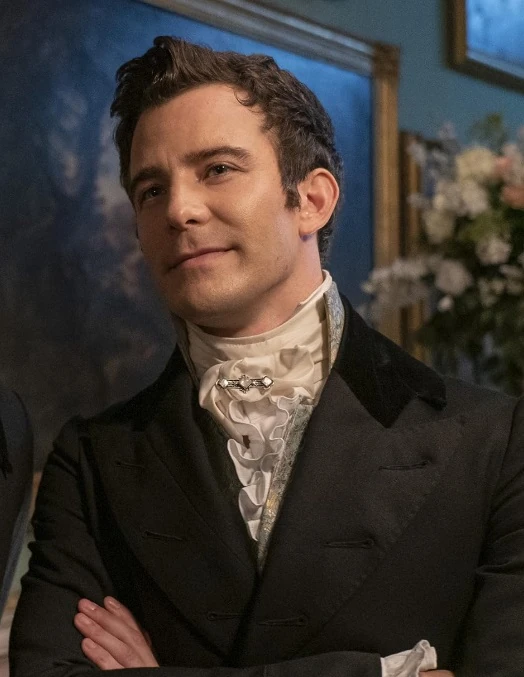
Biographical Information
Status
AI
In England, the right of primogeniture applied. This meant that Anthony inherited the title, the estate (Aubrey Hall), and almost the entire family fortune.
- Benedict’s right: He was entitled to an annual allowance from the family fortune, but owned nothing himself. He remained financially dependent on the goodwill of his older brother.
- The consequence: This explains Benedict’s floating existence. He has the luxury of a noble name, but not the power or possessions that come with it.
For a noble second son who could not live on air, there were historically three honorable paths:
- The Army: Buying an officer’s commission (as we often see with younger sons).
- The Church: An appointment as a vicar on a family estate.
- The Law: Studying at the Inns of Court to become a barrister.
- Benedict’s rebellion: Benedict ignores these paths and chooses art. At the time, painting was seen as a noble hobby, but a career as an artist was often considered below the station of a Bridgerton.
Because he does not bear the burden of the title, Benedict has a privilege that Anthony never had: Social Mobility.
- Bohemian Life: Benedict can move in circles where Anthony is not allowed to be seen: the studios, the parties of artists, and the lower social classes.
- Marriage: Although there is still pressure to marry well, the requirements for a second son are less strict.
.
- The Heir: The eldest son, who inherited the majority of the family estate, fortune, and title.
- The Spare: The second-born son, kept as “insurance” to inherit if the firstborn died or failed to produce a male heir.
- Significance: While the heir was groomed to manage the estate, the spare was often left with little to no inheritance.
Because they were not usually supported by a large inheritance, younger sons had to find professions to maintain their status as gentlemen.
- The Church (Clergy): A common”safe” profession, particularly if the family owned a “living” (a parish position) they could bestow upon their son.
- The Military (Army/Navy): A popular choice for younger sons, though it was risky. Commissioned officer ranks were purchased.
- Law or Politics: Suitable for those with connections, though it required serious study.
- Estate Management: Sometimes a younger son would manage the family estate for his elder brother.
- Limited Income: Younger sons often lived on a small allowance from their father or elder brother.
- Marriage Prospects: They were pressured to marry heiresses to gain the wealth they did not inherit.
- “Gentlemen of Uncertain Fortune”: Many were forced to work, yet were expected to maintain the manners and appearance of a gentleman, leading to a precarious, often insecure, lifestyle.
London Review of Books +4
During the Regency, the Prince Regent (later George IV) had only one legitimate child, Princess Charlotte. Her death in 1817 caused a major succession crisis because, while George III had many children, few had legitimate heirs. This pressured the royal “spares” (younger sons of George III) to quickly marry and produce heirs to secure the Hanoverian line.
This social structure is heavily featured in literature of the time, most famously in Jane Austen’s works, where characters like Edmund Bertram in Mansfield Park are younger sons expected to join the clergy because they do not inherit the main estate.
In summary, a Regency “spare” was essential for a family’s longevity but was usually forced to work, often in the church or military, and was expected to navigate a precarious financial existence compared to their heir brother.