”Hij moest zelf ook regelmatig voor de rechter verschijnen. In 2007 veroordeelde de rechter hem voor aanzetten tot racisme en steun aan een terroristische organisatie.”
Het nieuwe kabinet onder leiding van Benjamin Netanyahu is het meest rechtse Israëlische kabinet ooit. Om binnen zo’n kabinet nog eens op te vallen qua extremisme moet je het wel heel bont maken. Itamar Ben-Gvir (46), de nieuwe minister van Nationale Veiligheid, doet dat.
Ben-Gvir krijgt een van de belangrijkste posten in de nieuwe regering van Netanyahu. De extreem-rechtse politicus wordt minister van Nationale Veiligheid. Ben-Gvir doet regelmatig omstreden uitspraken over Palestijnen, is veroordeeld voor aanzetten tot racisme en wappert graag met z’n vuurwapen. Dat hij nu in zijn coalitie komt, tekent dat Netanyahu geen enkele grens meer kent om zijn knipperlichtrelatie met het Israëlische premierschap in stand te houden.
Netanyahu heeft Ben-Gvir hard nodig, zonder hem geen meerderheid. Voorheen was zijn partij Joodse Kracht een margepartij die de kiesdrempel nooit haalde, maar sinds de afgelopen verkiezingen heeft de partij zes van de 120 zetels in de Knesset. Dat leidde er zelfs toe dat Ben-Gvir eisen kon stellen over de invulling van zijn portefeuille.
De bevoegdheden van het ministerie van binnenlandse veiligheid worden sterk uitgebreid. De reguliere Israëlische politie viel al onder het ministerie, straks valt ook de grenspolitie die actief is op de bezette Westelijke Jordaanoever onder Ben-Gvirs gezag.
De grenspolitie is onder meer verantwoordelijk voor het ontruimen van door Israël illegaal geachte Joodse nederzettingen in bezette gebieden. Een deel van de kolonisten die daar woont is aanhanger van Ben Gvirs partij. Uittredend minister van Defensie Benny Gantz vreest dat Ben-Gvir de 2.000 agenten van de grenspolitie als zijn ‘privéleger’ kan inzetten, dat niet langer de illegale nederzettingen ontruimt en nog harder optreedt tegen Palestijnen.
Cadillac van Rabin
Ben-Gvir, de zoon van een Iraaks-Joodse vader en een Koerdisch Joodse moeder, groeide op tijdens de Eerste Intifada, de Palestijnse opstand die eindigde met de Oslo-akkoorden in 1993. Een jaar later richtte de Joodse terrorist Baruch Goldstein een bloedbad aan onder Palestijnen in een moskee in Hebron. 29 Palestijnen kwamen om.
Die daad werd vergoelijkt door de politieke partij Kach, waar Ben-Gvir actief bij was geworden. Daarom bestempelde Israël Kach als terroristische organisatie, en de partij werd verboden. Aan Ben-Gvirs extremisme kwam toen allerminst een eind.
In 1995 kreeg hij bekendheid toen hij het embleem van de Cadillac stal van toenmalig premier Rabin, de architect achter de Oslo-akkoorden. Triomfantelijk zwaaide hij daarmee op tv: ‘We hebben z’n auto, en we zullen hem ook krijgen.’ Een paar weken later werd Rabin vermoord. Zijn dienstplicht in het leger hoefde hij niet te vervullen. Of beter: mócht hij niet vervullen. Het leger achtte Ben-Gvir te extreem.
Verheerlijken van terrorisme
Ben-Gvir bouwde een carrière op als advocaat. Zijn clientèle bestond voornamelijk uit extremisten. Zo verdedigde hij de daders van brandstichting in een Palestijns huis op de Westelijke Jordaanoever. Daarbij kwamen drie bewoners om. Hij moest zelf ook regelmatig voor de rechter verschijnen. In 2007 veroordeelde de rechter hem voor aanzetten tot racisme en steun aan een terroristische organisatie. Hij had opgeroepen om Arabieren uit Israël te deporteren.
Inmiddels zegt hij te zijn veranderd. Een gematigder imago moet hem meer stemmen opleveren. Daarom verwijderde hij in 2019 een foto van terrorist Baruch Goldstein uit zijn woonkamer, in zijn huis in een nederzetting bij Hebron.
Alleen Arabieren die niet loyaal zijn aan de staat Israël, moeten wat hem betreft het land worden uitgezet. Als zijn aanhangers ‘dood aan de Arabieren’ scanderen, corrigeert hij hen: ‘Alleen dood aan de terroristen!’ Hij beweert niet meer achter de denkbeelden van de extremistische rabbijn Meir Kahane, de oprichter van Kach, te staan, maar tegelijkertijd woonde hij recentelijk wel een herdenking van Kahane bij.
Ben-Gvir schuwt ophef en relletjes niet. In oktober 2021 protesteerde hij tegen de behandeling van een Palestijnse gevangene in hongerstaking, die in een Israëlisch ziekenhuis lag. Bij het ziekenhuis raakte hij slaags met de Arabisch-Israëlische parlementariër Ayman Odeh.
Twee maanden later maakte hij ruzie met twee Arabische beveiligers om een parkeerplaats in Tel Aviv. Daarbij trok hij zijn vuurwapen. Datzelfde deed hij in oktober van dit jaar, bij onlusten tussen kolonisten en Palestijnen in de wijk Sheikh Jarrah in Oost-Jeruzalem. Ben-Gvir liep rond met een getrokken pistool en schreeuwde de Israëlische politie toe dat ze moesten schieten op Palestijnen die stenen gooien.
Kookprogramma
Zijn matiging is dus vooral voor de bühne, zoals ook bij andere extreem- en radicaal-rechtse politici die in het Westen aan de macht proberen te komen. Toch lijkt een deel van de Israëlische samenleving erin te geloven.
Nog maar twee jaar geleden wilde de zelf al bepaald niet gematigde politicus Naftali Bennett niks te maken hebben met Ben-Gvir, toen werd aangedrongen op een lijstverbinding. ‘Waarom niet? Dat is zo vanzelfsprekend, dat ik me er over verbaas dat ik dat uit moet leggen.’
Nu is Ben-Gvir genormaliseerd. Een dag na het trekken van zijn vuurwapen in Sheikh Jarrah was Ben-Gvir afgelopen oktober te gast op de Israëlische tv. Niet om scherp ondervraagd te worden. In een kookprogramma deelde hij zijn favoriete recept voor gevulde paprika’s.
EINDE VOLKSKRANT ARTIKEL
[20]
”Hij had opgeroepen om Arabieren uit Israël te deporteren.”
”Hij beweert niet meer achter de denkbeelden van de extremistische rabbijn Meir Kahane, de oprichter van Kach, te staan, maar tegelijkertijd woonde hij recentelijk wel een herdenking van Kahane bij.”
”Inmiddels zegt hij te zijn veranderd. Een gematigder imago moet hem meer stemmen opleveren. Daarom verwijderde hij in 2019 een foto van terrorist Baruch Goldstein uit zijn woonkamer, in zijn huis in een nederzetting bij Hebron.”
Inmiddels zegt hij te zijn veranderd. Een gematigder imago moet hem meer stemmen opleveren. Daarom verwijderde hij in 2019 een foto van terrorist Baruch Goldstein uit zijn woonkamer, in zijn huis in een nederzetting bij Hebron.
In oktober 2021 protesteerde hij tegen de behandeling van een Palestijnse gevangene in hongerstaking, die in een Israëlisch ziekenhuis lag. Bij het ziekenhuis raakte hij slaags met de Arabisch-Israëlische parlementariër Ayman Odeh
Daarbij trok hij zijn vuurwapen. Datzelfde deed hij in oktober van dit jaar, bij onlusten tussen kolonisten en Palestijnen in de wijk Sheikh Jarrah in Oost-Jeruzalem. Ben-Gvir liep rond met een getrokken pistool en schreeuwde de Israëlische politie toe dat ze moesten schieten op Palestijnen die stenen gooien.
One night I dreamed a dream. As I was walking along the beach with my Lord. Across the dark sky flashed scenes from my life. For each scene, I noticed two sets of footprints in the sand, One belonging to me and one to my Lord.
After the last scene of my life flashed before me, I looked back at the footprints in the sand. I noticed that at many times along the path of my life, especially at the very lowest and saddest times, there was only one set of footprints.
This really troubled me, so I asked the Lord about it. “Lord, you said once I decided to follow you, You’d walk with me all the way. But I noticed that during the saddest and most troublesome times of my life, there was only one set of footprints. I don’t understand why, when I needed You the most, You would leave me.”
He whispered, “My precious child, I love you and will never leave you Never, ever, during your trials and testings. When you saw only one set of footprints, It was then that I carried you.”
Reacties uitgeschakeld voor Footprints in the Sand
Ik droomde eens en zie ik liep aan ’t strand bij lage tij. Ik was daar niet alleen, want ook de Heer liep aan mijn zij. We liepen saam het leven door en lieten in het zand, een spoor van stappen, twee aan twee; De Heer’ liep aan mijn hand.
Ik stopte en keek achter mij en zag mijn levensloop, in tijden van geluk en vreugd van diepe smart en hoop. Maar als ik goed het spoor bekeek, zag ik langs heel de baan, daar waar het juist het moeilijkst was, maar één paar stappen staan…
Ik zei toen: “Heere, waarom dan toch?” Juist toen ik U nodig had, juist toen ik zelf geen uitkomst zag op het zwaarste deel van het pad… De Heere keek toen vol liefd’ mij aan en antwoorde op mijn vragen: “Mijn lieve kind, toen ‘t moeilijk was, toen heb ik jou gedragen”…
Reacties uitgeschakeld voor Voetstappen in het Zand
MISDADEN VAN DE ISRAELISCHE BEZETTINGVERWOESTING VAN GAZA
BEZETTINGSTERREUR foto Oda Hulsen Hebron 2 mei 2017/Verwijst naar foto van een Palestijnse jongen, die tegen de muur wordt gezet doorIsraelische soldaten, die hem toeriepen ”Where is your knife!”/Later vrijgelaten
NB Het is dus NIET de foto van een Palestijnse jongen, die bij de kraag wordt gegrepen
Foto van Oda Hulsen valt soms weg
BITTEREBIJPRODUCTEN VAN DE ISRAELISCHE BEZETTING:
ISRAELISCHE NEDERZETTINGEN IN BEZET PALESTIJNS GEBIED
[Mocht u in tijdnood zijn, lees dan de samenvatting onderin ”Tenslotte]
Uw berichtgeving dd 2 januari 2023
”Radicaalrechtse Israelische minister brengt ”provocerend”
bezoek aan Tempelberg”
Zie de tekst van uw berichtgeving onderaan, onder de noten
Geachte Redactie
Meestal begint men het Nieuwe Jaar met goede voornemens,
maar voor zover dat voornemen uw berichtgeving zou gelden,
heb ik daar te weinig van gemerkt.
Want direct aan het begin van het Nieuwe Jaar ging u al de
fout in met opnieuw een voorbeeld van incomplete en
tendentieuze berichtgeving.
In alle eerlijkheid moet echter gezegd worden, dat er ook
een aantal positieve kanten aan uw berichtgeving waren, waarmee ik zal starten.
De berichtgeving waarop ik doel is getiteld:
dd 2 januari anno Domini 2023, getiteld ” ‘Radicaalrechtse Israelische minister brengt ”provocerend”
bezoek aan Tempelberg” [1]
Zie tekst onder de noten
Door het gebruik van aanhalingstekens, gebrek aan achtergrondinformatie en een rare kwalificatie van Hamas, alsof het om een stelletje bendeleiders zou gaan, laat u wederom een partijdig en journalistiek weinig verheffend
Gezicht zien.
Maar eerst de positieve kant
HOOR EN WEDERHOOR EN INFORMATIE OVER OOST-JERUZALEM
In ieder geval noemt u de veroordeling van het bezoek van minister
Ben-Gvir door de Palestijnse Autoriteit [2] -dat is in het verleden
weleens anders geweest, toen alleen de Israelische versie bij u aan
het woord kwam-u noemt de Israelische verovering en annexatie van bezet Oost Jeruzalem en u vermeldt, dat Ben-Gvir is veroordeeld voor
het aanzetten tot racisme. [3]
Maar daar stopt mijn waardering.
WAAROM DIE AANHALINGSTEKENS?
In de eerste plaats die aanhalingstekens:
Waarom zet u eigenlijk die aanhalingstekens bij dat woord
”provocerend”, alsof het een kwestie van interpretatie is en het
evengoed een onschuldig bezoek zou zijn, als ging het
het hier om het bezoek van een doorsnee Joodse Israeli met de intentie
om bij de Klaagmuur [die ook op de Tempelberg ligt]
te bidden.
Van een onschuldig bezoek was echter geen sprake en dat weet u
heel goed, of hoort u althans te weten.
En dus ook te vermelden.
Maar alvorens in te gaan op de dubieuze achtergronden van
deze Tempelberg bezoekende minister, eerst het volgende:
OOST-JERUZALEM, BEZET GEBIED
Het begint er natuurlijk mee, dat Oost-Jeruzalem, zoals u zelf
terecht opmerkt, sinds 1967 bezet gebied is [4], evenals
de Westelijke Jordaanoever en Gaza [5] en dat die bezetting resulteerde in
onderdrukking, mensenrechtenschendingen en ander onrecht.
Ook is Oost-Jeruzalem, zoals u opmerkte, door Israel geannexeerd [6]
Dat is al een enorm kruidvat voor spanningen tussen de onderdrukker en
de onderdrukte Palestijnse bevolking, waarbij nog komt
de stichting van en voortdurende uitbreiding van de illegale
nederzettingen [7]
Dit ging en gaat gepaard met huisuitzettingen van Palestijnse families
en grof Israelisch geweld tegen Palestijnen, waarbij zelfs door Israelische
troepen de op de Tempelberg aanwezige Al-Aqsa Moskee werd bestormd! [8]
Het moge dus duidelijk zijn, dat een tegen deze achtergrond gebracht bezoek van een politicus aan de Tempelberg, die ook nog eens, terecht door u, redactie ”radicaal-rechts” genoemd wordt [9] [ik zelf zou eerder
zeggen ”extreem-rechts”], wel degelijk een provocatie is,
en dat het bijvoeglijk naamwoord ”provocerend” door u dus
niet tussen aanhalingstekens dient te worden geplaatst.
Bovendien zijn er over bezoeken aan de Tempelberg duidelijke
afspraken gemaakt, dat Joden [ik zeg liever ”Joodse Israeli’s]
de Tempelberg wel mogen bezoeken, maar er niet mogen bidden [10]
Nu mag je daarover denken hoe je wil, maar hoewel Ben-Gvir claimt,
dat hij wil, dat Joden ook mogen bidden op de Tempelberg [11],
heeft deze meneer zijn bezoek aan de Tempelberg bepaald niet gebracht
om daar in alle rust te kunnen bidden
En dat zal ik hieronder aantonen.
Lees verder
BEN-GVIR
Zoals u reeds vermeldde is minister Itamar Ben-Gvir [verder aangeduid
als Ben-Gvir] een radicaalrechtse minister en leider van de [hier zegt u het goed] uiterst rechtse partij Joodse Kracht. [12]
Deze Partij, ”Otzma Yehudit” of ”Otzma LeYisrael” staat voor een
Eenstatenoplossing, [EEN Israel, een annexatie van de Bezette Palestijnse Gebieden. [13]
Dus zonder de erkenning van de elementaire Palestijnse rechten op
een Staat.
Het zal niet verbazingwekkend zijn, dat dit een felle pro nederzettingen
partij is [14] en etnische zuiveringsfanaten.
Zo is zij voor de verdrijving van ”extremistische Arabieren” [15]
[Dergelijke lieden weigeren het woord Palestijnen te gebruiken]
En alsof dat nog niet genoeg is, zijn zij ook aanhangers van de
extreem-rechtse fascist, de overleden rabbijn Meir Kahane [16]
LIFE AND TIMES OF BEN-GVIR
HET TREKKEN VAN VUURWAPENS, HET TOEJUICHEN
VAN MISDADIGERS, ETC, ETC
Tot zover het Fraaie Gedachtegoed van Joodse Kracht.
Nu wat specifieker over voorman Ben-Gvir zelf:
Zo moest [zie Volkskrant berichtgeving] [17] deze Meneer regelmatig voor de rechter verschijnen en bepaald niet voor het stelen van een pakje melk.
In 2007 werd hij door de rechter veroordeeld voor aanzetten tot racisme
en het steunen van een terroristische organisatie [18]
Hij had opgeroepen, Arabieren uit Israel te deporteren [19]
Etnische zuiveringen dus
Nogmaals, bepaald niet het stelen van een pakje melk…..
Verder beweert hij, niet meer achter de denkbeelden van de extreem-rechtse fascist Kahane [20] te staan, maar toch woonde hij recentelijk nog
een herdenking van deze Kahane bij [21]
Ook had hij tot 2019 een foto van Baruch Goldstein
in zijn woonkamer hangen [22], de man, die in 1994 29 biddende
Palestijnen doodschoot en meer dan 125 verwondde. [23]
Sinds 2019 heeft Ben-Gvir weliseaat de foto van deze massamoordenaar
verwijderd [24], maar het zegt wel veel over hem, dat hij deze foto uberhaupt in
zijn living room had hangen!
MAAR WE ZIJN ER NOG NIET!
In oktober 2021 protesteerde hij tegen de behandeling van een Palestijnse gevangene in hongerstaking, die in een Israëlisch ziekenhuis lag. Bij het ziekenhuis raakte hij slaags met de Arabisch-Israëlische parlementariër Ayman Odeh. [25]
Ook trok deze Ben-Gvir een vuurwapen tijdens een
ruzie met twee Arabische beveiligers om een parkeerplaats in Tel Aviv [26]
En, trigger happy als de man blijkbaar is, deed hijdit ook in october 2022
bij onlusten tussen kolonisten en Palestijnen in de wijk Sheikh Jarrah in Oost-Jeruzalem. Ben-Gvir liep rond met een getrokken pistool en schreeuwde de Israëlische politie toe dat ze moesten schieten op Palestijnen die stenen gooien. [27]
Nog los van al deze opmerkelijke feiten, was hij duidelijk al langer actief in Oost-Jeruzalem en is
het dus meer dan duidelijk, dat zijn bezoek aan de
Tempelberg alleen maar als provocerend kan worden uitgelegd.
Niet dus ”provocerend”’tussen aanhalingstekens,
maar gewoon provocerend!
EN NOG IS HET NIET ALLES!
Want een Israelische soldaat, die in Huwara [gelegen in de bezette Westbank]
in koelen bloede een Palestijnse burger [gewond geraakt na een confrontatie
met kolonisten] executeerde [28], werd door Ben-Gvir geprezen en ”een held”
genoemd [29]
Meer zeg ik niet over deze Figuur, het lijkt mij nu wel duidelijk wie en wat hij is en waarvoor hij staat
Zelf woont hij overigens in een nederzetting [30], wat niet echt meer verbazing zal wekken.
HAMAS
Dan heb ik nog een appeltje met u te schillen over de eenzijdige en ongenuanceerde wijze waarop u Hamas afschildert.
Want u duidt Hamas aan als ”de militante groepering die het voor het zeggen heeft in de Gazastrook” [31]
Dit suggereert, alsof het zou bestaan uit een stelletje
bendeleiders, die via een coup of ander Geweld aan de macht zijn gekomen.
Niets is minder waar:
De politieke verzetsbeweging Hamas [32] is in
2006 aan de macht gekomen na door de EU geconstateerde vrije en eerlijke verkiezingen [33]
en heeft sindsdien ondanks alle Ellende van de voortdurende Israelische militaire aanvallen in Gaza, die tot enorm humanitair leed hebben geleid [34] EN ondanks
de wurgende Israelische Blokkade van Gaza, die de Gazaanse bevolking economisch en humanitair tot
op de dag van heden in de wurggreep houdt [35], toch maar Gaza, hoe goed en hoe kwaad het ook gaat, draaiende gehouden.
Hamas heeft klinieken en scholen gebouwd [36] en naast
de ”militante kant” [die trouwens geoorloofd is, zolang
het Israelische combatanten, militairen dus, betreft],
ook een sterke sociale kant en is in tegenstelling
tot de Palestijnse Autoriteit, veel minder corrupt te
noemen. [37]
Er is genoeg tegen Hamas af te aan te voeren [38], maar er zijn ook positieve zakente noemen en ik maak
er bezwaar tegen, dat u de Hamas regering in Gaza terugbrengt tot
een stelletje bendeleiders, zonder enige nuancering
Let daar dus de volgende keer op.
TENSLOTTE:
Ik heb bezwaar gemaakt tegen het feit, dat u het adjectief
[Latijn:bijvoeglijk naamwoord] ”provocerend” in uw titel, tussen aanhalingstekens gezet hebt, wat suggereert, dat of het bezoek van minister Ben-Gvir aan de Tempelberg al dan niet provocerend is, een kwestie van discussie is.
Dat is het NIET!
Een minister, die leider is van een partij, die openlijk
oproept tot deportatie van Arabieren, fel de illegale
[op gestolen bezet Palestijns land zittende] nederzettingen verdedigt en annexatie van bezet Palestijns
gebied voorstaat, is sowieso zowel internationaalrechtelijk
als humanitair onacceptabel en dus diens bezoek aan
Bezet Palestijns Gebied een provocatie.
Daarbij heeft hij persoonlijk tweemaal een vuurwapen
getrokken in een conflict met Palestijnen, eenmaal
in de wijk Sheikh Jarrah in Oost-Jeruzalem, waar meerdere malen Palestijnen zijn verdreven ten gunste van kolonisten, heeft hij een Israelische militair, die
een Palestijn heeft geexecuteerd, een ”held” genoemd EN dat hij tot 2019 in zijn woonkamer in zijn huis
[in een nederzetting] een foto van massamoordenaar
Baruch Goldstein, verantwoordelijk voor de dood
van 29 biddende Palestijnen [Zie de noten]
Ook heeft Ben-Gvir recentelijk nog een herdenking
bezocht van de fascistische rabbijn Meir Kahane.
Het is dus GOTSPE van u, dat u het woord ”provocerend” tussen aanhalingstekens hebt geplaatst, wat uw berichtgeving een onwaar en tendentieus karakter geeft.
Ook had u in uw berichtgeving over het bezoek van Ben-Gvir aan de Tempelberg duidelijker moeten maken,
wie Ben-Gvir is en welk Gedachtegoed hij vertegenwoordigt.
Uitleg hierboven
Ook uw kwalificatie van Hamas als ”de militante groepering die het voor het zeggen heeft in de Gazastrook” alsof het een stelletje bendeleiders zouden zijn en niet de in 2006 via vrije en eerlijke verkiezingen aan de macht gekomen niet-corrupte regering, die
op sociaal gebied veel heeft gepresteerd, vond ik weinig genuanceerd.
Verdere uitleg kunt u hierboven lezen.
Een oproep aan u om zich in dit Nieuwe Jaar in te zetten voor een eerlijkere, genuanceerder en objectievere
berichtgeving.
Vriendelijke groeten
Astrid Essed
Amsterdam
NOTEN
Voor uw gemak zijn de noten in links ondergebracht
De nieuwe radicaalrechtse Israëlische minister Itamar Ben-Gvir van Nationale Veiligheid heeft een onverwachts bezoek gebracht aan de Tempelberg in Oost-Jeruzalem. Hij liep ook langs de Al-Aqsa moskee, wat erg gevoelig ligt bij Palestijnen.
De Palestijnse Autoriteit veroordeelt het bezoek van “de extremistische minister” en ziet het als “ongekende provocatie en een gevaarlijke escalatie van het conflict”.
“De Tempelberg is open voor iedereen”, schreef Ben-Gvir bij een foto op Twitter waarop te zien is dat hij langs de moskee loopt. “Als Hamas denkt dat het me kan afschrikken door mij te bedreigen, moeten ze begrijpen dat tijden zijn veranderd. Er is een regering in Jeruzalem”, schreef hij verder.
Gisteren zei de minister, die leider is van de uiterst rechtse partij Joodse Kracht, nog dat hij zijn bezoek aan de Tempelberg zou uitstellen vanwege dreigementen van Hamas, de militante groepering die het voor het zeggen heeft in de Gazastrook. De oppositie waarschuwde Ben-Gvir dat zijn bezoek provocerend zou zijn en tot geweld zou kunnen leiden.
De Tempelberg is de op twee na heiligste plek van de islam. Hij staat onder beheer van een islamitische stichting, terwijl Israël verantwoordelijk is voor de veiligheid. Niet-moslims mogen er op bepaalde tijden komen, op voorwaarde dat ze daar niet bidden.
Ben-Gvir wil al langer dat joden meer toegang krijgen tot de Tempelberg. Door Palestijnen wordt dit gezien als een voorbode dat Israël de volledige controle over de locatie wil krijgen.
Zo willen uiterst rechtse Israëliërs dat er op de plek van de moskee een joodse tempel wordt gebouwd. De heuvel was ooit de plek van de twee joodse tempels, die beide verwoest werden, de laatste in 70 na Christus door de Romeinen. De joodse tempel was het centrum van het joodse geloof.
Rond de Al-Aqsa moskee loopt het vaker uit op geweld tussen Israëlische ordetroepen en Palestijnen. Een bezoek van de Israëlische premier Ariel Sharon in 2000 was de aanleiding voor de Tweede Intifada, een grootschalige Palestijnse opstand die vijf jaar duurde.
Oost-Jeruzalem
In Oost-Jeruzalem liggen belangrijke joodse, islamitische en christelijke heiligdommen. Israël veroverde dit deel van de stad in de Zesdaagse Oorlog van 1967, net als de Westelijke Jordaanoever en de Gazastrook. Israël annexeerde Oost-Jeruzalem in 1980 en ziet het stadsdeel als onderdeel van zijn hoofdstad, al wordt die claim door de meeste landen niet erkend. Oost-Jeruzalem ligt volgens die landen in bezet Palestijns gebied.
Veel Palestijnen zien Oost-Jeruzalem als hoofdstad van hun toekomstige onafhankelijke staat, maar het perspectief daarop wordt steeds kleiner. Serieuze vredesonderhandelingen tussen Israëlische en Palestijnse leiders zijn er al meer dan tien jaar niet meer geweest.
Sinds vorige week is Ben-Gvir lid van het nieuwe kabinet. Hij werd meermaals veroordeeld, onder meer voor aanzetten tot racisme. De nieuwe regering onder premier Netanyahu is de meest rechtse en religieus conservatieve regering in het 74-jarige bestaan van Israël.
De nieuwe regering wil joodse nederzettingen op de Westelijke Jordaanoever uitbreiden, subsidies verstrekken aan Netanyahu’s ultraorthodoxe bondgenoten en ingrijpende hervormingen doorvoeren in het rechtsstelsel. Volgens critici brengen die wijzigingen de democratie in het land in gevaar.
EINDE NOS ARTIKEL
[2]
De Palestijnse Autoriteit veroordeelt het bezoek van “de extremistische minister” en ziet het als “ongekende provocatie en een gevaarlijke escalatie van het conflict”.
NOS
RADICAALRECHTSE ISRAELICHE MINISTER BRENGT ”PROVOCEREND”
Het nieuwe kabinet onder leiding van Benjamin Netanyahu is het meest rechtse Israëlische kabinet ooit. Om binnen zo’n kabinet nog eens op te vallen qua extremisme moet je het wel heel bont maken. Itamar Ben-Gvir (46), de nieuwe minister van Nationale Veiligheid, doet dat.
Ben-Gvir krijgt een van de belangrijkste posten in de nieuwe regering van Netanyahu. De extreem-rechtse politicus wordt minister van Nationale Veiligheid. Ben-Gvir doet regelmatig omstreden uitspraken over Palestijnen, is veroordeeld voor aanzetten tot racisme en wappert graag met z’n vuurwapen. Dat hij nu in zijn coalitie komt, tekent dat Netanyahu geen enkele grens meer kent om zijn knipperlichtrelatie met het Israëlische premierschap in stand te houden.
Netanyahu heeft Ben-Gvir hard nodig, zonder hem geen meerderheid. Voorheen was zijn partij Joodse Kracht een margepartij die de kiesdrempel nooit haalde, maar sinds de afgelopen verkiezingen heeft de partij zes van de 120 zetels in de Knesset. Dat leidde er zelfs toe dat Ben-Gvir eisen kon stellen over de invulling van zijn portefeuille.
De bevoegdheden van het ministerie van binnenlandse veiligheid worden sterk uitgebreid. De reguliere Israëlische politie viel al onder het ministerie, straks valt ook de grenspolitie die actief is op de bezette Westelijke Jordaanoever onder Ben-Gvirs gezag.
De grenspolitie is onder meer verantwoordelijk voor het ontruimen van door Israël illegaal geachte Joodse nederzettingen in bezette gebieden. Een deel van de kolonisten die daar woont is aanhanger van Ben Gvirs partij. Uittredend minister van Defensie Benny Gantz vreest dat Ben-Gvir de 2.000 agenten van de grenspolitie als zijn ‘privéleger’ kan inzetten, dat niet langer de illegale nederzettingen ontruimt en nog harder optreedt tegen Palestijnen.
Cadillac van Rabin
Ben-Gvir, de zoon van een Iraaks-Joodse vader en een Koerdisch Joodse moeder, groeide op tijdens de Eerste Intifada, de Palestijnse opstand die eindigde met de Oslo-akkoorden in 1993. Een jaar later richtte de Joodse terrorist Baruch Goldstein een bloedbad aan onder Palestijnen in een moskee in Hebron. 29 Palestijnen kwamen om.
Die daad werd vergoelijkt door de politieke partij Kach, waar Ben-Gvir actief bij was geworden. Daarom bestempelde Israël Kach als terroristische organisatie, en de partij werd verboden. Aan Ben-Gvirs extremisme kwam toen allerminst een eind.
In 1995 kreeg hij bekendheid toen hij het embleem van de Cadillac stal van toenmalig premier Rabin, de architect achter de Oslo-akkoorden. Triomfantelijk zwaaide hij daarmee op tv: ‘We hebben z’n auto, en we zullen hem ook krijgen.’ Een paar weken later werd Rabin vermoord. Zijn dienstplicht in het leger hoefde hij niet te vervullen. Of beter: mócht hij niet vervullen. Het leger achtte Ben-Gvir te extreem.
Verheerlijken van terrorisme
Ben-Gvir bouwde een carrière op als advocaat. Zijn clientèle bestond voornamelijk uit extremisten. Zo verdedigde hij de daders van brandstichting in een Palestijns huis op de Westelijke Jordaanoever. Daarbij kwamen drie bewoners om. Hij moest zelf ook regelmatig voor de rechter verschijnen. In 2007 veroordeelde de rechter hem voor aanzetten tot racisme en steun aan een terroristische organisatie. Hij had opgeroepen om Arabieren uit Israël te deporteren.
Inmiddels zegt hij te zijn veranderd. Een gematigder imago moet hem meer stemmen opleveren. Daarom verwijderde hij in 2019 een foto van terrorist Baruch Goldstein uit zijn woonkamer, in zijn huis in een nederzetting bij Hebron.
Alleen Arabieren die niet loyaal zijn aan de staat Israël, moeten wat hem betreft het land worden uitgezet. Als zijn aanhangers ‘dood aan de Arabieren’ scanderen, corrigeert hij hen: ‘Alleen dood aan de terroristen!’ Hij beweert niet meer achter de denkbeelden van de extremistische rabbijn Meir Kahane, de oprichter van Kach, te staan, maar tegelijkertijd woonde hij recentelijk wel een herdenking van Kahane bij.
Ben-Gvir schuwt ophef en relletjes niet. In oktober 2021 protesteerde hij tegen de behandeling van een Palestijnse gevangene in hongerstaking, die in een Israëlisch ziekenhuis lag. Bij het ziekenhuis raakte hij slaags met de Arabisch-Israëlische parlementariër Ayman Odeh.
Twee maanden later maakte hij ruzie met twee Arabische beveiligers om een parkeerplaats in Tel Aviv. Daarbij trok hij zijn vuurwapen. Datzelfde deed hij in oktober van dit jaar, bij onlusten tussen kolonisten en Palestijnen in de wijk Sheikh Jarrah in Oost-Jeruzalem. Ben-Gvir liep rond met een getrokken pistool en schreeuwde de Israëlische politie toe dat ze moesten schieten op Palestijnen die stenen gooien.
Kookprogramma
Zijn matiging is dus vooral voor de bühne, zoals ook bij andere extreem- en radicaal-rechtse politici die in het Westen aan de macht proberen te komen. Toch lijkt een deel van de Israëlische samenleving erin te geloven.
Nog maar twee jaar geleden wilde de zelf al bepaald niet gematigde politicus Naftali Bennett niks te maken hebben met Ben-Gvir, toen werd aangedrongen op een lijstverbinding. ‘Waarom niet? Dat is zo vanzelfsprekend, dat ik me er over verbaas dat ik dat uit moet leggen.’
Nu is Ben-Gvir genormaliseerd. Een dag na het trekken van zijn vuurwapen in Sheikh Jarrah was Ben-Gvir afgelopen oktober te gast op de Israëlische tv. Niet om scherp ondervraagd te worden. In een kookprogramma deelde hij zijn favoriete recept voor gevulde paprika’s.
[4]
”
Oost-Jeruzalem
In Oost-Jeruzalem liggen belangrijke joodse, islamitische en christelijke heiligdommen. Israël veroverde dit deel van de stad in de Zesdaagse Oorlog van 1967, net als de Westelijke Jordaanoever en de Gazastrook.”
NOS
RADICAALRECHTSE ISRAELICHE MINISTER BRENGT ”PROVOCEREND”
”The Israeli government’s plan to remove troops and Jewish settlements from the Gaza Strip would not end Israel’s occupation of the territory. As an occupying power, Israel will retain responsibility for the welfare of Gaza’s civilian population.
Under the “disengagement” plan endorsed Tuesday by the Knesset, Israeli forces will keep control over Gaza’s borders, coastline and airspace, and will reserve the right to launch incursions at will. Israel will continue to wield overwhelming power over the territory’s economy and its access to trade.”
Israeli Government Still Holds Responsibility for Welfare of Civilians
The Israeli government’s plan to remove troops and Jewish settlements from the Gaza Strip would not end Israel’s occupation of the territory. As an occupying power, Israel will retain responsibility for the welfare of Gaza’s civilian population.
Under the “disengagement” plan endorsed Tuesday by the Knesset, Israeli forces will keep control over Gaza’s borders, coastline and airspace, and will reserve the right to launch incursions at will. Israel will continue to wield overwhelming power over the territory’s economy and its access to trade.
“The removal of settlers and most military forces will not end Israel’s control over Gaza,” said Sarah Leah Whitson, Executive Director of Human Rights Watch’s Middle East and North Africa Division. “Israel plans to reconfigure its occupation of the territory, but it will remain an occupying power with responsibility for the welfare of the civilian population.”
Under the plan, Israel is scheduled to remove settlers and military bases protecting the settlers from the Gaza Strip and four isolated West Bank Jewish settlements by the end of 2005. The Israeli military will remain deployed on Gaza’s southern border, and will reposition its forces to other areas just outside the territory.
In addition to controlling the borders, coastline and airspace, Israel will continue to control Gaza’s telecommunications, water, electricity and sewage networks, as well as the flow of people and goods into and out of the territory. Gaza will also continue to use Israeli currency.
A World Bank study on the economic effects of the plan determined that “disengagement” would ease restrictions on mobility inside Gaza. But the study also warned that the removal of troops and settlers would have little positive effect unless accompanied by an opening of Gaza’s borders. If the borders are sealed to labor and trade, the plan “would create worse hardship than is seen today.”
The plan also explicitly envisions continued home demolitions by the Israeli military to expand the “buffer zone” along the Gaza-Egypt border. According to a report released last week by Human Rights Watch, the Israeli military has illegally razed nearly 1,600 homes since 2000 to create this buffer zone, displacing some 16,000 Palestinians. Israeli officials have called for the buffer zone to be doubled, which would result in the destruction of one-third of the Rafah refugee camp.
In addition, the plan states that disengagement “will serve to dispel the claims regarding Israel’s responsibility for the Palestinians in the Gaza Strip.” A report by legal experts from the Israeli Justice Ministry, Foreign Ministry and the military made public on Sunday, however, reportedly acknowledges that disengagement “does not necessarily exempt Israel from responsibility in the evacuated territories.”
If Israel removes its troops from Gaza, the Palestinian National Authority will maintain responsibility for security within the territory—to the extent that Israel allows Palestinian police the authority and capacity. Palestinian security forces will still have a duty to protect civilians within Gaza and to prevent indiscriminate attacks on Israeli civilians.
“Under international law, the test for determining whether an occupation exists is effective control by a hostile army, not the positioning of troops,” Whitson said. “Whether the Israeli army is inside Gaza or redeployed around its periphery and restricting entrance and exit, it remains in control.”
Under international law, the duties of an occupying power are detailed in the Fourth Geneva Convention and The Hague Regulations. According to The Hague Regulations, a “territory is considered occupied when it is actually placed under the authority of the hostile army. The occupation extends only to the territory where such authority has been established and can be exercised.”
The “disengagement plan,” as adopted by the Israeli Cabinet on June 6, 2004, and endorsed by the Knesset on October 26, is available at:
”Israel’s Obligations to Gaza under International Law
Israeli authorities claim “broad powers and discretion to decide who may enter its territory” and that “a foreigner has no legal right to enter the State’s sovereign territory, including for the purposes of transit into the [West Bank] or aboard.” While international human rights law gives wide latitude to governments with regard to entry of foreigners, Israel has heightened obligations toward Gaza residents. Because of the continuing controls Israel exercises over the lives and welfare of Gaza’s inhabitants, Israel remains an occupying power under international humanitarian law, despite withdrawing its military forces and settlements from the territory in 2005”
(Gaza) – Israel’s sweeping restrictions on leaving Gaza deprive its more than two million residents of opportunities to better their lives, Human Rights Watch said today on the fifteenth anniversary of the 2007 closure. The closure has devastated the economy in Gaza, contributed to fragmentation of the Palestinian people, and forms part of Israeli authorities’ crimes against humanity of apartheid and persecution against millions of Palestinians.
Israel’s closure policy blocks most Gaza residents from going to the West Bank, preventing professionals, artists, athletes, students, and others from pursuing opportunities within Palestine and from traveling abroad via Israel, restricting their rights to work and an education. Restrictive Egyptian policies at its Rafah crossing with Gaza, including unnecessary delays and mistreatment of travelers, have exacerbated the closure’s harm to human rights.
“Israel, with Egypt’s help, has turned Gaza into an open-air prison,” said Omar Shakir, Israel and Palestine director at Human Rights Watch. “As many people around the world are once again traveling two years after the start of the Covid-19 pandemic, Gaza’s more than two million Palestinians remain under what amounts to a 15-year-old lockdown.”
Israel should end its generalized ban on travel for Gaza residents and permit free movement of people to and from Gaza, subject to, at most, individual screening and physical searches for security purposes.
Between February 2021 and March 2022, Human Rights Watch interviewed 20 Palestinians who sought to travel out of Gaza via either the Israeli-run Erez crossing or the Egyptian-administered Rafah crossing. Human Rights Watch wrote to Israeli and Egyptian authorities to solicit their perspectives on its findings, and separately to seek information about an Egyptian travel company that operates at the Rafah crossing but had received no responses at this writing.
Since 2007, Israeli authorities have, with narrow exceptions, banned Palestinians from leaving through Erez, the passenger crossing from Gaza into Israel, through which they can reach the West Bank and travel abroad via Jordan. Israel also prevents Palestinian authorities from operating an airport or seaport in Gaza. Israeli authorities also sharply restrict the entry and exit of goods.
They often justify the closure, which came after Hamas seized political control over Gaza from the Fatah-led Palestinian Authority in June 2007, on security grounds. Israeli authorities have said they want to minimize travel between Gaza and the West Bank to prevent the export of “a human terrorist network” from Gaza to the West Bank, which has a porous border with Israel and where hundreds of thousands of Israeli settlers live.
This policy has reduced travel to a fraction of what it was two decades ago, Human Rights Watch said. Israeli authorities have instituted a formal “policy of separation” between Gaza and the West Bank, despite international consensus that these two parts of the Occupied Palestinian Territory form a “single territorial unit.” Israel accepted that principle in the 1995 Oslo Accords, signed with the Palestine Liberation Organization. Israeli authorities restrict all travel between Gaza and the West Bank, even when the travel takes place via the circuitous route through Egypt and Jordan rather than through Israeli territory.
Due to these policies, Palestinian professionals, students, artists, and athletes living in Gaza have missed vital opportunities for advancement not available in Gaza. Human Rights Watch interviewed seven people who said that Israeli authorities did not respond to their requests for travel through Erez, and three others who said Israel rejected their permits, apparently for not fitting within Israeli’s narrow criteria.
Walaa Sada, 31, a filmmaker, said that she applied for permits to take part in film training in the West Bank in 2014 and 2018, after spending years convincing her family to allow her to travel alone, but Israeli authorities never responded to her applications. The hands-on nature of the training, requiring filming live scenes and working in studios, made remote participation impracticable and Sada ended up missing the sessions.
The “world narrowed” when she received these rejections, Sada said, making her feel “stuck in a small box.… For us in Gaza, the hands of the clock stopped. People all over the world can easily and quickly book flight and travel, while we … die waiting for our turn.”
The Egyptian authorities have exacerbated the closure’s impact by restricting movement out of Gaza and at times fully sealing its Rafah border crossing, Gaza’s only outlet aside from Erez to the outside world. Since May 2018, Egyptian authorities have been keeping Rafah open more regularly, making it, amid the sweeping Israeli restrictions, the primary outlet to the outside world for Gaza residents.
Palestinians, however, still face onerous obstacles traveling through Egypt, including having to wait weeks for permission to travel, unless they are willing to pay hundreds of dollars to travel companies with significant ties to Egyptian authorities to expedite their travel, denials of entry, and abuse by Egyptian authorities.
Sada said also received an opportunity to participate in a workshop on screenwriting in Tunisia in 2019, but that she could not afford the US$2000 it would cost her to pay for the service that would ensure that she could travel on time. Her turn to travel came up six weeks later, after the workshop had already been held.
As an occupying power that maintains significant control over many aspects of life in Gaza, Israel has obligations under international humanitarian law to ensure the welfare of the population there. Palestinians also have the right under international human rights law to freedom of movement, in particular within the occupied territory, a right that Israel can restrict under international law only in response to specific security threats.
Israel’s policy, though, presumptively denies free movement to people in Gaza, with narrow exceptions, irrespective of any individualized assessment of the security risk a person may pose. These restrictions on the right to freedom of movement do not meet the requirement of being strictly necessary and proportionate to achieve a lawful objective. Israel has had years and many opportunities to develop more narrowly tailored responses to security threats that minimize restrictions on rights.
Egypt’s legal obligations toward Gaza residents are more limited, as it is not an occupying power. However, as a state party to the Fourth Geneva Convention, it should ensure respect for the convention “in all circumstances,” including protections for civilians living under military occupation who are unable to travel due to unlawful restrictions imposed by the occupying power. The Egyptian authorities should also consider the impact of their border closure on the rights of Palestinians living in Gaza who are unable to travel in and out of Gaza through another route, including the right to leave a country.
Egyptian authorities should lift unreasonable obstacles that restrict Palestinians’ rights and allow transit via its territory, subject to security considerations, and ensure that their decisions are transparent and not arbitrary and take into consideration the human rights of those affected.
“The Gaza closure blocks talented, professional people, with much to give their society, from pursuing opportunities that people elsewhere take for granted,” Shakir said. “Barring Palestinians in Gaza from moving freely within their homeland stunts lives and underscores the cruel reality of apartheid and persecution for millions of Palestinians.”
Israel’s Obligations to Gaza under International Law
Israeli authorities claim “broad powers and discretion to decide who may enter its territory” and that “a foreigner has no legal right to enter the State’s sovereign territory, including for the purposes of transit into the [West Bank] or aboard.” While international human rights law gives wide latitude to governments with regard to entry of foreigners, Israel has heightened obligations toward Gaza residents. Because of the continuing controls Israel exercises over the lives and welfare of Gaza’s inhabitants, Israel remains an occupying power under international humanitarian law, despite withdrawing its military forces and settlements from the territory in 2005. Both the UN and the International Committee of the Red Cross, the guardians of international humanitarian law, have reached this determination. As the occupying power, Israel remains bound to provide residents of Gaza the rights and protections afforded to them by the law of occupation. Israeli authorities continue to control Gaza’s territorial waters and airspace, and the movement of people and goods, except at Gaza’s border with Egypt. Israel also controls the Palestinian population registry and the infrastructure upon which Gaza relies.
Israel has an obligation to respect the human rights of Palestinians living in Gaza, including their right to freedom of movement throughout the Occupied Palestinian Territory and abroad, which affects both the right to leave a country and the right to enter their own country. Israel is also obligated to respect Palestinians’ rights for which freedom of movement is a precondition, for example the rights to education, work, and health. The UNHuman Rights Committee has said that while states can restrict freedom of movement for security reasons or to protect public health, public order, and the rights of others, any such restrictions must be proportional and “the restrictions must not impair the essence of the right; the relation between the right and restriction, between norm and exception, must not be reversed.”
While the law of occupation permits occupying powers to impose security restrictions on civilians, it also requires them to restore public life for the occupied population. That obligation increases in a prolonged occupation, in which the occupier has more time and opportunity to develop more narrowly tailored responses to security threats that minimize restrictions on rights. In addition, the needs of the occupied population increase over time. Suspending virtually all freedom of movement for a short period interrupts temporarily normal public life, but long-term, indefinite suspension in Gaza has had a much more debilitating impact, fragmentating populations, fraying familial and social ties, compoundingdiscrimination against women, and blocking people from pursuing opportunities to improve their lives.
The impact is particularly damaging given the denial of freedom of movement to people who are confined to a sliver of the occupied territory, unable to interact in person with the majority of the occupied population that lives in the West Bank, including East Jerusalem, and its rich assortment of educational, cultural, religious, and commercial institutions.
After 55 years of occupation and 15 years of closure in Gaza with no end in sight, Israel should fully respect the human rights of Palestinians, using as a benchmark the rights it grants Israeli citizens. Israel should abandon an approach that bars movement absent exceptional individual humanitarian circumstances it defines, in favor of an approach that permits free movement absent exceptional individual security circumstances.
Israel’s Closure
Most Palestinians who grew up in Gaza under this closure have never left the 40-by-11 kilometer (25-by-7 mile) Gaza Strip. For the last 25 years, Israel has increasingly restricted the movement of Gaza residents. Since June 2007, when Hamas seized control over Gaza from the Fatah-led Palestinian Authority (PA), Gaza has been mostly closed.
Israeli authorities justify this closure on security grounds, in light of “Hamas’ rise to power in the Gaza Strip,” as they lay out in a December 2019 court filing. Authorities highlight in particular the risk that Hamas and armed Palestinian groups will recruit or coerce Gaza residents who have permits to travel via Erez “for the commission of terrorist acts and the transfer of operatives, knowledge, intelligence, funds or equipment for terrorist activists.” Their policy, though, amounts to a blanket denial with rare exceptions, rather than a generalized respect for the right of Palestinians to freedom of movement, to be denied only on the basis of individualized security reasons.
The Israeli army has since 2007 limited travel through the Erez crossing except in what it deems “exceptional humanitarian circumstances,” mainly encompassing those needing vital medical treatment outside Gaza and their companions, although the authorities also make exceptions for hundreds of businesspeople and laborers and some others. Israel has restricted movement even for those seeking to travel under these narrowexceptions, affecting their rights to health and life, among others, as Human Rights Watch and other groups have documented. Most Gaza residents do not fit within these exemptions to travel through Erez, even if it is to reach the West Bank.
Between January 2015 and December 2019, before the onset of Covid-19 restrictions, an average of about 373 Palestinians left Gaza via Erez each day, less than 1.5 percent of the daily average of 26,000 in September 2000, before the closure, according to the Israeli rights group Gisha. Israeli authorities tightened the closure further during the Covid-19 pandemic – between March 2020 and December 2021, an average of about 143 Palestinians left Gaza via Erez each day, according to Gisha.
Israeli authorities announced in March 2022 that they would authorize 20,000 permits for Palestinians in Gaza to work in Israel in construction and agriculture, though Gisha reports that the actual number of valid permits in this category stood at 9,424, as of May 22.
Israeli authorities have also for more than two decades sharply restricted the use by Palestinians of Gaza’s airspace and territorial waters. They blocked the reopening of the airport that Israeli forces made inoperable in January 2002, and prevented the Palestinian authorities from building a seaport, leaving Palestinians dependent on leaving Gaza by land to travel abroad. The few Palestinians permitted to cross at Erez are generally barred from traveling abroad via Israel’s international airport and must instead travel abroad via Jordan. Palestinians wishing to leave Gaza via Erez, either to the West Bank or abroad, submit requests through the Palestinian Civil Affairs Committee in Gaza, which forwards applications to Israeli authorities who decide on whether to grant a permit.
Separation Between Gaza and the West Bank
As part of the closure, Israeli authorities have sought to “differentiate” between their policy approaches to Gaza and the West Bank, such as imposing more sweeping restrictions on the movement of people and goods from Gaza to the West Bank, and promote separation between these two parts of the Occupied Palestinian Territory. The army’s “Procedure for Settlement in the Gaza Strip by Residents of Judea and Samaria,” published in 2018, states that “in 2006, a decision was made to introduce a policy of separation between the Judea and Samaria Area [the West Bank] and the Gaza Strip in light of Hamas’ rise to power in the Gaza Strip. The policy currently in effect is explicitly aimed at reducing travel between the areas.”
In each of the 11 cases Human Rights Watch reviewed of people seeking to reach the West Bank, including East Jerusalem, for professional and educational opportunities not available in Gaza, Israeli authorities did not respond to requests for permits or denied them, either for security reasons or because they did not conform to the closure policy. Human Rights Watch also reviewed permit applications on the website of the Palestinian Civil Affairs Committee, or screenshots of it, including the status of the permit applications, when they were sent on to the Israeli authorities and the response received, if any.
Raed Issa, a 42-year-old artist, said that the Israeli authorities did not respond to his application for a permit in early December 2015, to attend an exhibit of his art at a Ramallah art gallery between December 27 and January 16, 2016.
The “Beyond the Dream” exhibit sought to highlight the situation in Gaza after the 2014 war. Issa said that the Palestinian Civil Affairs committee continued to identify the status of his application as “sent and waiting for response” and he ended up having to attend the opening of the exhibit virtually. Issa felt that not being physically present hampered his ability to engage with audiences, and to network and promote his work, which he believes limited his reach and hurt sales of his artwork. He described feeling pained “that I am doing my own art exhibit in my homeland and not able to attend it, not able to move freely.”
Ashraf Sahweel, 47, chairman of the Board of Directors of the Gaza Center for Art and Culture, said that Gaza-based artists routinely do not hear back after applying for Israeli permits, forcing them to miss opportunities to attend exhibitions and other cultural events. A painter himself, he applied for seven permits between 2013 and 2022, but Israeli authorities either did not respond or denied each application, he said. Sahweel said that he has “given up hope on the possibility to travel via Erez.”
Palestinian athletes in Gaza face similar restrictions when seeking to compete with their counterparts in the West Bank, even though the Israeli army guidelines specifically identify “entry of sportspeople” as among the permissible exemptions to the closure. The guidelines, updated in February 2022, set out that “all Gaza Strip residents who are members of the national and local sports teams may enter Israel in transit to the Judea and Samaria area [West Bank] or abroad for official activities of the teams.”
Hilal al-Ghawash, 25, told Human Rights Watch that his football team, Khadamat Rafah, had a match in July 2019 with a rival West Bank team, the Balata Youth Center, in the finals of Palestine Club, with the winner entitled to represent Palestine in the Asian Cup. The Palestinian Football Federation applied for permits for the entire 22-person team and 13-person staff, but Israeli authorities, without explanation, granted permits to only 4 people, only one of whom was a player. The game was postponed as a result.
After Gisha appealed the decision in the Jerusalem District Court, Israeli authorities granted 11 people permits, including six players, saying the other 24 were denied on security grounds that were not specified. Al-Ghawash was among the players who did not receive a permit. The Jerusalem district court upheld the denials. With Khadamat Rafah prevented from reaching the West Bank, the Palestine Football Federation canceled the Palestine Cup finals match.
Al-Ghawash said that West Bank matches hold particular importance for Gaza football players, since they offer the opportunity to showcase their talents for West Bank clubs, which are widely considered superior to those in Gaza and pay better. Despite the cancellation, al-Ghawash said, the Balata Youth Center later that year offered him a contract to play for them. The Palestinian Football Federation again applied for a permit on al-Ghawash’s behalf, but he said he did not receive a response and was unable to join the team.
In 2021, al-Ghawash signed a contract with a different West Bank team, the Hilal al-Quds club. The Palestinian Football Federation again applied, but this time, the Israeli army denied the permit on unspecified security grounds. Al-Ghawash said he does not belong to any armed group or political movement and has no idea on what basis Israeli authorities denied him a permit.
Missing these opportunities has forced al-Ghawash to forgo not only higher pay, but also the chance to play for more competitive West Bank teams, which could have brought him closer to his goal of joining the Palestinian national team. “There’s a future in the West Bank, but, here in Gaza, there’s only a death sentence,” he said. “The closure devastates players’ future. Gaza is full of talented people, but it’s so difficult to leave.”
Palestinian students and professionals are frequently unable to obtain permits to study or train in the West Bank. In 2016, Augusta Victoria Hospital in East Jerusalem agreed to have 10 physics students from Al-Azhar University in Gaza come to the hospital for a six-month training program. Israeli authorities denied five students permits without providing a rationale, two of the students said.
The five other students initially received permits valid for only 14 days, and then encountered difficulties receiving subsequent permits. None were able to complete the full program, the two students said. One, Mahmoud Dabour, 28, said that when he applied for a second permit, he received no response. Two months later, he applied again and managed to get a permit valid for one week. He received one other permit, valid for 10 days, but then, when he returned and applied for the fifth time, Israeli authorities rejected his permit request without providing a reason. As a result, he could not finish the training program, and, without the certification participants receive upon completion, he said, he cannot apply for jobs or attend conferences or workshops abroad in the field.
Dabour said that the training cannot be offered in Gaza, since the necessary radiation material required expires too quickly for it to be functional after passing through the time-consuming Israeli inspections of materials entering the Gaza Strip. There are no functioning devices of the kind that students need for the training in Gaza, Dabour said.
One of the students whose permit was denied said, “I feel I studied for five years for nothing, that my life has stopped.” The student asked that his name be withheld for his security.
Two employees of Zimam, a Ramallah-based organization focused on youth empowerment and conflict resolution, said that the Israeli authorities repeatedly denied them permits to attend organizational training and strategy meetings. Atta al-Masri, the 31-year-old Gaza regional director, said he has applied four times for permits, but never received one. Israeli authorities did not respond the first three times and, the last time in 2021, denied him a permit on the grounds that it was “not in conformity” with the permissible exemptions to the closure. He has worked for Zimam since 2009, but only met his colleagues in person for the first time in Egypt in March 2022.
Ahed Abdullah, 29, Zimam’s youth programs coordinator in Gaza, said she applied twice for permits in 2021, but Israeli authorities denied both applications on grounds of “nonconformity:”
This is supposed to be my right. My simplest right. Why did they reject me? My colleagues who are outside Palestine managed to make it, while I am inside Palestine, I wasn’t able to go to the other part of Palestine … it’s only 2-3 hours from Gaza to Ramallah, why should I get the training online? Why am I deprived of being with my colleagues and doing activities with them instead of doing them in dull breakout rooms on Zoom?
Human Rights Watch has previously documented that the closure has prevented specialists in the use of assistive devices for people with disabilities from opportunities for hands-on training on the latest methods of evaluation, device maintenance, and rehabilitation. Human Rights Watch also documented restrictions on the movement of human rights workers. Gisha, the Israeli human rights group, has reported that Israel has blocked health workers in Gaza from attending training in the West Bank on how to operate new equipment and hampered the work of civil society organizations operating in Gaza.
Israeli authorities have also made it effectively impossible for Palestinians from Gaza to relocate to the West Bank. Because of Israeli restrictions, thousands of Gaza residents who arrived on temporary permits and now live in the West Bank are unable to gain legal residency. Although Israel claims that these restrictions are related to maintaining security, evidence Human Rights Watch collected suggests the main motivation is to control Palestinian demography across the West Bank, whose land Israel seeks to retain, in contrast to the Gaza Strip.
Egypt
With most Gaza residents unable to travel via Erez, the Egyptian-administered Rafah crossing has become Gaza’s primary outlet to the outside world, particularly in recent years. Egyptian authorities kept Rafah mostly closed for nearly five years following the July 2013 military coup in Egypt that toppled President Mohamed Morsy, whom the military accused of receiving support from Hamas. Egypt, though, eased restrictions in May 2018, amid the Great March of Return, the recurring Palestinian protests at the time near the fences separating Gaza and Israel.
Despite keeping Rafah open more regularly since May 2018, movement via Rafah is a fraction of what it was before the 2013 coup in Egypt. Whereas an average of 40,000 crossed monthly in both directions before the coup, the monthly average was 12,172 in 2019 and 15,077 in 2021, according to Gisha.
Human Rights Watch spoke with 16 Gaza residents who sought to travel via Rafah. Almost all said they opted for this route because of the near impossibility of receiving an Israeli permit to travel via Erez.
Gaza residents hoping to leave via Rafah are required to register in advance via a process the UN Office for the Coordination of Humanitarian Affairs (OCHA) has deemed “confusing” and “obscure.” Gaza residents can either register via the formal registration process administered by Gaza’s Interior Ministry or informally via what is known as tanseeq,or travel coordination with Egyptian authorities, paying travel companies or mediators for a place on a separate list coordinated by Egyptian authorities. Having two distinct lists of permitted travelers coordinated by different authorities has fueled “allegations of the payment of bribes in Gaza and in Egypt to ensure travel and a faster response,” according to OCHA.
The formal process often takes two to three months, except for those traveling for medical reasons, whose requests are processed faster, said Gaza residents who sought to leave Gaza via Rafah. Egyptian authorities have at times rejected those seeking to cross Rafah into Egypt on the grounds that they did not meet specific criteria for travel. The criteria lack transparency, but Gisha reported that they include having a referral for a medical appointment in Egypt or valid documents to enter a third country.
To avoid the wait and risk of denial, many choose instead the tanseeqroute. Several interviewees said that they paid large sums of money to Palestinian brokers or Gaza-based travel companies that work directly with Egyptian authorities to expedite people’s movement via Rafah. On social media, some of these companies advertise that they can assure travel within days to those who provide payment and a copy of their passport. The cost of tanseeq has fluctuated from several hundred US dollars to several thousand dollars over the last decade, based in part on how frequently Rafah is open.
In recent years, travel companies have offered an additional “VIP” tanseeq, which expedites travel without delays in transit between Rafah and Cairo, offers flexibility on travel date, and ensures better treatment by authorities. The cost was $700, as of January 2022.
The Cairo-based company offering the VIP tanseeq services, Hala Consulting and Tourism Services, has strong links with Egypt’s security establishment and is staffed largely by former Egyptian military officers, a human rights activist and a journalist who have investigated these issues told Human Rights Watch. This allows the company to reduce processing times and delays at checkpoints during the journey between Rafah and Cairo. The activist and journalist both asked that their names be withheld for security reasons.
The company is linked to prominent Egyptian businessman Ibrahim El-Argani, who has close ties with Egypt’s president, Abdel-Fattah al-Sisi. Ergany heads the Union of Sinai Tribes, which works hand-in-hand with the Egyptian military and intelligence agencies against militants operating in North Sinai. Ergany, one of Egypt’s few businessmen able to export products to Gaza from Egypt, owns the Sinai Sons company, which has an exclusive contract to handle all contracts related to Gaza reconstruction efforts. Human Rights Watch wrote to El-Argani to solicit his perspectives on these issues, but had received no response at this writing.
A 34-year-old computer engineer and entrepreneur said that he sought to travel in 2019 to Saudi Arabia to meet an investor to discuss a potential project to sell car parts online. He chose not to apply to travel via Erez, as he had applied for permits eight times between 2016 and 2018 and had either been rejected or not heard back.
He initially registered via the formal Ministry of Interior process and received approval to travel after three months. However, on the day assigned for his exit via Rafah, an Egyptian officer there said he found his reason for travel not sufficiently “convincing” and denied him passage. A few months later, he tried to travel again for the same purpose, this time opting for tanseeq and paying $400, and, this time, he successfully reached Saudi Arabia within a week of seeking to travel.
He said that he would like to go on vacation with his wife, but worries that Egyptian authorities will not consider vacation a sufficiently compelling reason for travel and that his only option will be to pay hundreds or thousands of dollars to do tanseeq.
A 73-year-old man sought to travel via Rafah in February 2021, with his 46-year-old daughter, to get knee replacement surgery in al-Sheikh Zayed hospital in Cairo. He said Gaza lacks the capacity to provide such an operation. The man and his daughter are relatives of a Human Rights Watch staff member. They applied via the Interior Ministry process and received approval in a little over a week.
After they waited for several hours in the Egyptian hall in Rafah on the day of travel, though, Egyptian authorities included the daughter’s name among the 70 names of people who were not allowed to cross that day, the daughter said. The father showed the border officials a doctor’s note indicating that he needed someone to travel with him given his medical situation, but the officer told him, “You either travel alone or go back with her to Gaza.” She said she returned to Gaza, alongside 70 other people, and her father later traveled on his own.
Five people who did manage to travel via Rafah said that they experienced poor conditions and poor treatment, including intrusive searches, by the Egyptian authorities, with several saying that they felt Egyptian authorities treated them like “criminals.” Several people said that Egyptian officers confiscated items from them during the journey, including an expensive camera and a mobile phone, without apparent reason.
Upon leaving Rafah, Palestinians are transported by bus to Cairo’s airport. The trip takes about seven hours, but several people said that the journey took up to three days between long periods of waiting on the bus, at checkpoints and amid other delays, often in extreme weather. Many of those who traveled via Rafah said that, during this journey, Egyptian authorities prevented passengers from using their phones.
The parents of a 7-year-old boy with autism and a rare brain disease said they sought to travel for medical treatment for him in August 2021, but Egyptian authorities only allowed the boy and his mother to enter. The mother said their journey back to Gaza took four days, mostly as a result of Rafah being closed. During this time, she said, they spent hours waiting at checkpoints, in extreme heat, with her son crying nonstop. She said she felt “humiliated” and treated like “an animal,” observing that she “would rather die than travel again through Rafah.”
A 33-year-old filmmaker, who traveled via Rafah to Morocco in late 2019 to attend a film screening, said the return from Cairo to Rafah took three days, much of it spent at checkpoints amid the cold winter in the Sinai desert.
A 34-year-old man said that he planned to travel in August 2019 via Rafah to the United Arab Emirates for a job interview as an Arabic teacher. He said, on his travel date, Egyptian authorities turned him back, saying they had met their quota of travelers. He crossed the next day, but said that, as it was a Thursday and with Rafah closed on Friday, Egyptian authorities made travelers spend two nights sleeping at Rafah, without providing food or access to a clean bathroom.
The journey to Cairo airport then took two days, during which he described going through checkpoints where officers made passengers “put their hands behind their backs while they searched their suitcases.” As a result of these delays totaling four days since his assigned travel date, he missed his job interview and found out that someone else was hired. He is currently unemployed in Gaza.
Given the uncertainty of crossing at Rafah, Gaza residents said that they often wait to book their flight out of Cairo until they arrive. Booking so late often means, beyond other obstacles, having to wait until they can find a reasonably priced and suitable flight, planning extra days for travel and spending extra money on changeable or last-minute tickets. Similar dynamics prevail with regard to travel abroad via Erez to Amman.
Human Rights Watch interviewed four men under the age of 40 with visas to third countries, whom Egyptian authorities allowed entry only for the purpose of transit. The authorities transported these men to Cairo airport and made them wait in what is referred to as the “deportation room” until their flight time. The men likened the room to a “prison cell,” with limited facilities and unsanitary conditions. All described a system in which bribes are required to be able to leave the room to book a plane ticket, get food, drinks, or a cigarette, and avoid abuse. One of the men described an officer taking him outside the room, asking him, “Won’t you give anything to Egypt?” and said that others in the room told him that he then proceeded to do the same with them
EINDE ARTIKEL
[6]
”In Oost-Jeruzalem liggen belangrijke joodse, islamitische en christelijke heiligdommen. Israël veroverde dit deel van de stad in de Zesdaagse Oorlog van 1967, net als de Westelijke Jordaanoever en de Gazastrook. Israël annexeerde Oost-Jeruzalem in 1980 en ziet het stadsdeel als onderdeel van zijn hoofdstad, al wordt die claim door de meeste landen niet erkend”
NOS
RADICAALRECHTSE ISRAELICHE MINISTER BRENGT ”PROVOCEREND”
DE ISRAELISCHE NEDERZETTINGEN ZIJN ILLEGAAL VOLGENS
HET INTERNATIONAAL RECHT
”The establishment of the settlements contravenes international humanitarian law (IHL), which states that an occupying power may not relocate its own citizens to the occupied territory or make permanent changes to that territory, unless these are needed for imperative military needs, in the narrow sense of the term, or undertaken for the benefit of the local population.”
”Individual or mass forcible transfers, as well as deportations of protected persons from occupied territory to the territory of the Occupying Power or to that of any other country, occupied or not, are prohibited, regardless of their motive.” ARTICLE 49, FOURTH GENEVA CONVENTION
De Staat, die een gebied bezet heeft, mag zich slechts beschouwen als beheerder en vruchtgebruiker der openbare gebouwen, onroerende eigendommen, bosschen en landbouwondernemingen, welke aan den vijandelijken Staat behooren en zich in de bezette landstreek bevinden. Hij moet het grondkapitaal dier eigendommen in zijn geheel laten en die overeenkomstig de regelen van het vruchtgebruik beheeren.”
IN HET ENGELS Art. 55. The occupying State shall be regarded only as administrator and usufructuary of public buildings, real estate, forests, and agricultural estates belonging to the hostile State, and situated in the occupied country. It must safeguard the capital of these properties, and administer them in accordance with the rules of usufruct.
CONVENTION RESPECTING THE LAWS AND CUSTOMS OF WARON LAND AND ITS ANNEX: REGULATIONS CONCERNINGTHE LAWS AND CUSTOMS OF WAR ON LAND
Israel’s policy of settling its civilians in occupied Palestinian territory and displacing the local population contravenes fundamental rules of international humanitarian law.
Article 49 of the Fourth Geneva Convention states: “The Occupying Power shall not deport or transfer parts of its own civilian population into the territory it occupies.” It also prohibits the “individual or mass forcible transfers, as well as deportations of protected persons from occupied territory”.
The situation in the OPT is primarily governed by two international legal regimes: international humanitarian law (including the rules of the law of occupation) and international human rights law. International criminal law is also relevant as some serious violations may constitute war crimes.
STATUS OF SETTLEMENTS UNDER INTERNATIONAL LAW
Israel’s policy of settling its civilians in occupied Palestinian territory and displacing the local population contravenes fundamental rules of international humanitarian law.
Article 49 of the Fourth Geneva Convention states: “The Occupying Power shall not deport or transfer parts of its own civilian population into the territory it occupies.” It also prohibits the “individual or mass forcible transfers, as well as deportations of protected persons from occupied territory”.
The extensive appropriation of land and the appropriation and destruction of property required to build and expand settlements also breach other rules of international humanitarian law. Under the Hague Regulations of 1907, the public property of the occupied population (such as lands, forests and agricultural estates) is subject to the laws of usufruct. This means that an occupying state is only allowed a very limited use of this property. This limitation is derived from the notion that occupation is temporary, the core idea of the law of occupation. In the words of the International Committee of the Red Cross, the occupying power “has a duty to ensure the protection, security, and welfare of the people living under occupation and to guarantee that they can live as normal a life as possible, in accordance with their own laws, culture, and traditions.”
The Hague Regulations prohibit the confiscation of private property. The Fourth Geneva Convention prohibits the destruction of private or state property, “except where such destruction is rendered absolutely necessary by military operations”.
As the occupier, Israel is therefore forbidden from using state land and natural resources for purposes other than military or security needs or for the benefit of the local population. The unlawful appropriation of property by an occupying power amounts to “pillage”, which is prohibited by both the Hague Regulations and Fourth Geneva Convention and is a war crime under the Rome Statute of the International Criminal Court and many national laws.
Israel’s building of settlements in the West Bank, including in East Jerusalem, does not respect any of these rules and exceptions. Transferring the occupying power’s civilians into the occupied territory is prohibited without exception. Furthermore, as explained earlier, the settlements and associated infrastructure are not temporary, do not benefit Palestinians and do not serve the legitimate security needs of the occupying power. Settlements entirely depend on the large-scale appropriation and/or destruction of Palestinian private and state property which are not militarily necessary. They are created with the sole purpose of permanently establishing Jewish Israelis on occupied land.
In addition to being violations of international humanitarian law, key acts required for the establishment of settlements amount to war crimes under the Rome Statute of the International Criminal Court. Under this body of law, the “extensive destruction and appropriation of property not justified by military necessity and carried out unlawfully and wantonly” and the “transfer, directly or indirectly, by the Occupying Power of parts of its own civilian population into the territory it occupies, or the deportation or transfer of all or parts of the population of the occupied territory within or outside this territory” constitute war crimes. As stated above, “pillage” is also a war crime under the Rome Statute.
Israel’s settlement policy also violates a special category of obligations entitled peremptory norms of international law (jus cogens) from which no derogation is permitted. The International Court of Justice (ICJ) affirmed that the rules of the Geneva Conventions constitute “intransgressible principles of international customary law”. Only a limited number of international norms acquire this status, which is a reflection of the seriousness and importance with which the international community views them. Breaches of these norms give rise to certain obligations on all other states, or “third states”, which are explained below.
SETTLEMENTS, DISCRIMINATION AND HUMAN RIGHTS VIOLATIONS
States have a duty to respect, protect and fulfil the human rights of people under their jurisdiction, including people living in territory that is outside national borders but under the effective control of the state. The ICJ confirmed that Israel is obliged to extend the application of the International Convention on Civil and Political Rights, the International Convention on Economic, Social and Cultural Rights and other treaties to which it is a state party to people in the OPT. Israel is a state party to numerous international human rights treaties and, as the occupying power, it has well defined obligations to respect, protect and fulfil the human rights of Palestinians.
However, as has been well documented for many years by the UN, Amnesty International and other NGOs, Israel’s settlement policy is one of the main driving forces behind the mass human rights violations resulting from the occupation. These include:
Violations of the right to life: Israeli soldiers, police and security guards have unlawfully killed and injured many Palestinian civilians in the OPT, including during protests against the confiscation of land and the construction of settlements. UN agencies and fact-finding missions have also expressed concern about violence perpetrated by a minority of Israeli settlers aimed at intimidating Palestinian populations.
Violations of the rights to liberty, security of the person and equal treatment before the law: Amnesty International has documented how Palestinians in the OPT are routinely subjected to arbitrary detention, including through administrative detention. Whereas settlers are subject to Israeli civil and criminal law, Palestinians are subject to a military court system which falls short of international standards for the fair conduct of trials and administration of justice.
Violations of the right to access an effective remedy for acts violating fundamental rights: Israel’s failure to adequately investigate and enforce the law for acts of violence against Palestinians, together with the multiple legal, financial and procedural barriers faced by Palestinians in accessing the court system, severely limit Palestinians’ ability to seek legal redress. The Israeli High Court of Justice has failed to rule on the legality of settlements, as it considered the settlements to be a political issue that that it is not competent to hear.
Violations of the rights to freedom of expression and peaceful assembly: Amnesty International has documented Israel’s use of military orders to prohibit peaceful protest and criminalize freedom of expression in the West Bank. Israeli forces have used tear gas, rubber bullets and occasionally live rounds to suppress peaceful protests.
Violations of the rights to equality and non-discrimination: Systematic discrimination against Palestinians is inherent in virtually all aspects of Israel’s administration of the OPT. Palestinians are also specifically targeted for a range of actions that constitute human rights violations. The Israeli government allows settlers to exploit land and natural resources that belong to Palestinians. Israel provides preferential treatment to Israeli businesses operating in the OPT while putting up barriers to, or simply blocking, Palestinian ones. Israeli citizens receive entitlements and Palestinians face restrictions on the grounds of nationality, ethnicity and religion, in contravention of international standards.
The Israeli authorities have created a discriminatory urban planning and zoning system. Within Area C, where most settlement construction is based, Israel has allocated 70% of the land to settlements and only 1% to Palestinians. In East Jerusalem, Israel has expropriated 35% of the city for the construction of settlements, while restricting Palestinians to construct on only 13% of the land. These figures clearly illustrate Israel’s use of regulatory measures to discriminate against Palestinian residents in Area C.
The UN has also pointed to discrimination against Palestinians in the way in which the criminal law is enforced. While prosecution rates for settler attacks against Palestinians are low, suggesting a lack of enforcement, most cases of violence against Israeli settlers are investigated and proceed to court.
Violations of the right to adequate housing: Since 1967, Israel has constructed tens of thousands of homes on Palestinian land to accommodate settlers while, at the same time, demolishing an estimated 50,000 Palestinian homes and other structures, such as farm buildings and water tanks. Israel also carries out demolitions as a form of collective punishment against the families of individuals accused of attacks on Israelis. In East Jerusalem, about 800 houses have been demolished since 2004 for lack of permits. Israel also confiscates houses inhabited by Palestinians in the city to allocate them to settlers. By forcibly evicting and/or demolishing their homes without providing adequate alternative accommodation, Israel has failed in its duty to respect the right to adequate housing of thousands of Palestinians.
Violations of the right to freedom of movement: Many restrictions on freedom of movement for Palestinian residents are directly linked to the settlements, including restrictions aimed at protecting the settlements and maintaining “buffer zones”. Restrictions include checkpoints, settler-only roads and physical impediments created by walls and gates.
Violations of the rights of the child: Every year, 500-700 Palestinian children from the occupied West Bank are prosecuted in Israeli juvenile military courts under Israeli military orders. They are often arrested in night raids and systematically ill-treated. Some of these children serve their sentences within Israel, in violation of the Fourth Geneva Convention. The UN has also documented that many children have been killed or injured in settler attacks.
Violations of the right to enjoyment of the highest attainable standard of physical and mental health: Restrictions on movement limit Palestinians’ access to health care. Specialists working with Palestinian populations have also documented a range of serious mental health conditions that stem from exposure to violence and abuse in the OPT.
Violations of the right to water: Most Palestinian communities in Area C are not connected to the water network and are prevented from repairing or constructing wells or water cisterns that hold rainwater. Water consumption in some Area C communities is reported by the UN to be 20% of the minimum recommended standard. Israel’s failure to ensure Palestinian residents have a sufficient supply of clean, safe water for drinking and other domestic uses constitutes a violation of its obligations to respect and fulfil the right to water.
Violations of the right to education: Palestinian students face numerous obstacles in accessing education, including forced displacement, demolitions, restrictions on movement and a shortage of school places. An independent fact-finding mission in 2012 noted an “upward trend” of cases of settler attacks on Palestinian schools and harassment of Palestinian children on their way to and from school. Such problems can result in children not attending school and in a deterioration in the quality of learning.
Violations of the right to earn a decent living through work: The expansion of settlements has reduced the amount of land available to Palestinians for herding and agriculture, increasing the dependency of rural communities on humanitarian assistance. Settler violence and the destruction of Palestinian-owned crops and olive trees have damaged the livelihoods of farmers. The UN has reported that in Hebron city centre, the Israeli military has forced 512 Palestinian businesses to close, while more than 1,000 others have shut down due to restricted access for customers and suppliers.
SUSTAINED INTERNATIONAL CONDEMNATION
Most states and international bodies have long recognized that Israeli settlements are illegal under international law. The European Union (EU) has clearly stated that: “settlement building anywhere in the occupied Palestinian Territory, including East Jerusalem, is illegal under international law, constitutes an obstacle to peace and threatens to make a two-state solution impossible.”
The settlements have been condemned as illegal in many UN Security Council and other UN resolutions. As early as 1980, UN Security Council Resolution 465 called on Israel “to dismantle the existing settlements and, in particular, to cease, on an urgent basis, the establishment, construction and planning of settlements in the Arab territories occupied since 1967, including Jerusalem.” The International Committee of the Red Cross and the Conference of High Contracting Parties to the Fourth Geneva Convention have reaffirmed that settlements violate international humanitarian law. The illegality of the settlements was recently reaffirmed by UN Security Council Resolution 2334, passed inDecember 2016, which reiterates the Security Council’s call on Israel to cease all settlement activities in the OPT. The serious human rights violations that stem from Israeli settlements have also been repeatedly raised and condemned by international bodies and experts.
EINDE INTERNATIONAALRECHTELIJKE POSITIE
NEDERZETTINGEN
DIRECT HIERONDER:
KOLONISATIE [NEDERZETTINGENBOUW] IN OOST-JERUZALEM
”Cruciaal hierin was de bezetting van Oost-Jeruzalem, samen met de Westoever en Gaza, door Israël in 1967. Die vormde het startschot van de Israëlische politiek om in Oost-Jeruzalem een ‘Joodse meerderheid’ tot stand te brengen. Sindsdien wordt het stadsdeel agressief gekoloniseerd. Israël heeft intussen ruim 225 duizend burgers naar Oost-Jeruzalem overgebracht (cijfers 2019).”
De verdrijving van Palestijnse inwoners, het permanente Israëlisch geweld en andere factoren hebben in Oost-Jeruzalem geleid tot een explosieve situatie, die zich inmiddels tot ver buiten de stad uitstrekt. Decennia van kolonisering hebben een rampzalige situatie opgeleverd.
De afgelopen dagen is in Oost-Jeruzalem de spanning geëscaleerd die zich afgelopen weken heeft opgebouwd tussen de Israëlische autoriteiten, politie, groepen rechtse nationalisten en kolonisten enerzijds, en de lokale Palestijnse bevolking anderzijds. Vrijdag-, zaterdag- en zondagavond, en ook al daarvoor, vonden harde botsingen plaats in de wijk Sheikh Jarrah, bij de Damascuspoort en in andere delen van de Oude Stad.
Op media zoals Middle East Eye, dat eigen verslaggevers ter plaatse heeft, is een aaneenschakeling te zien van video’s waarin zwaar bewapende Israëlische troepen grof geweld gebruiken tegen Palestijnen, die vanwege het einde van de vastenmaand Ramadan juist massaal bijeenkomen. Vrijdag bestormden Israëlische troepen zelfs de voor moslims heilige Al-Aqsa-moskee. Aan Palestijnse zijde werden circa 290 gewonden gemeld, van wie er ruim honderd in ziekenhuizen moesten worden opgenomen. Ook 18 Israëlische politieagenten raakten gewond. Die aantallen liepen zondagavond verder op.
Sheikh Jarrah
De belangrijkste aanleiding tot de onlusten ligt in de wijk Sheikh Jarrah, even ten noorden van de Oude Stad, waar vier Palestijnse families acuut op straat dreigen te worden gezet ten gunste van Israëlische kolonisten. In de wijk wacht in totaal 78 families dit lot. Simultaan vindt hetzelfde proces van huisuitzettingen plaats in andere wijken van Oost-Jeruzalem, waaronder Silwan. In een eerder artikel beschreven wij een aantal concrete voorbeelden, onder meer in Sheikh Jarrah.
De Palestijnse families in Sheikh Jarrah maken deel uit van (nazaten van) de circa 750 duizend Palestijnen die in 1947-48 door Joodse milities op de vlucht werden gejaagd of verdreven uit hun woonplaatsen binnen het huidige Israël. Nadat Israël hen het recht van terugkeer naar hun woonplaatsen en bezittingen ontzegde, werden 28 families in 1956 gehuisvest in het onder Jordaans gezag staande Palestijnse Oost-Jeruzalem, waar de VN-organisatie UNRWA de bouw van woningen faciliteerde op door Jordanië beschikbaar gesteld land. Het is deze, sindsdien toegenomen, gemeenschap die nu in Sheikh Jarrah uit haar huizen dreigt te worden gezet.
Joodse meerderheid
Cruciaal hierin was de bezetting van Oost-Jeruzalem, samen met de Westoever en Gaza, door Israël in 1967. Die vormde het startschot van de Israëlische politiek om in Oost-Jeruzalem een ‘Joodse meerderheid’ tot stand te brengen. Sindsdien wordt het stadsdeel agressief gekoloniseerd. Israël heeft intussen ruim 225 duizend burgers naar Oost-Jeruzalem overgebracht (cijfers 2019).
Daarnaast worden Palestijnse inwoners door Israël op alle denkbare manieren de stad uitgedreven: door het intrekken van vergunningen, landconfiscatie, huisuitzettingen, afbraak van woningen, en de aanleg van parken en archeologische zones op Palestijns land of tussen Palestijnse gemeenschappen, die zich daardoor niet kunnen uitbreiden. Per 2017 was ruim 14 duizend Palestijnen het inwonerschap van Oost-Jeruzalem ontnomen, en waren ruim tweeduizend Palestijnse woningen gesloopt. Het huidige aantal Palestijnse inwoners van Oost-Jeruzalem bedraagt circa 350 duizend.
De huisuitzettingen in Sheikh Jarrah, Silwan en andere wijken passen in deze praktijk van etnische zuivering, die tot doel heeft het Palestijnse deel van de bevolking van Jeruzalem te vervangen door Joods-Israëlische kolonisten. Daarover wordt niet geheimzinnig gedaan: in een video legt een woordvoerder van de Israëlische kolonisten in Sheikh Jarrah uit hoe dat proces in zijn werk gaat, en erkent hij volmondig dat dit neerkomt op verdrijving van de Palestijnen. Een andere video toont een kolonist die het stelen van een Palestijns huis legitimeert met de opmerking dat anders een ander dat wel zal doen.
Israëlisch ‘recht’
Daartoe wordt gebruik gemaakt van Israëlische wetgeving, die buiten de eigen grenzen wordt toegepast op bezet Palestijns gebied. Zaterdag werd Israël door de Hoge VN-Commissaris voor de Mensenrechten gewezen op de ondeugdelijkheid van die constructie, en gewaarschuwd dat op Oost-Jeruzalem het internationaal recht van toepassing is, waarbinnen de Israëlische kolonisering als mogelijke oorlogsmisdaad geldt, en acties als huisuitzettingen strikt verboden zijn. Als bezettingsmacht is Israël verantwoordelijk voor het welzijn van de lokale bevolking.
De door Israël gebruikte wetgeving is een amendement op de zogenoemde Absentee Property Law, waarmee Israël in 1950 al het land en de bezittingen confisqueerde van de ‘absente’ Palestijnse eigenaren – de 750 duizend verdreven en gevluchte Palestijnen die tegelijkertijd het recht van terugkeer werd onthouden. Dit nadat de bezittingen van 600 duizend Palestijnen al in 1948 in een nationale plundertocht door Joden geroofd waren, zoals verleden jaar na Israëlisch onderzoek kwam vast te staan.
Nadat Israël in 1967 Oost-Jeruzalem en de overige Palestijnse gebieden bezette, werd de Israëlische wet in 1970 uitgebreid met een amendement dat (uitsluitend) Joden het recht geeft om in bezet Oost-Jeruzalem land en onroerend goed op te eisen dat voor 1948 Joods bezit was. De wet wordt vervolgens afgedwongen door het Israëlische juridische systeem van toepassing te verklaren op bezet gebied, wat de Palestijnen kansloos maakt, zelfs al kunnen die hun eigendomsrecht aantonen.
Kapot geprocedeerd
Met toepassing van het amendement kende Israël het eigendom van het land waarop de bedreigde families in Sheikh Jarrah wonen in 1972 toe aan twee Joodse organisaties, die het in de jaren negentig doorverkochten aan de private kolonistenorganisatie Nahalat Shimon International, een in de VS geregistreerd bedrijf met onbekende geldschieters. Het bedrijf diende al in 2009 een plan in bij het Israëlische gemeentebestuur van Jeruzalem voor de vestiging van een nieuwe Joodse kolonie van tweehonderd woningen in Sheikh Jarrah, waarvoor tenminste vijfhonderd Palestijnen het veld dienen te ruimen.
De door de kolonisten van Nahalat Shimon gevolgde strategie loopt via de Israëlische rechter. De Palestijnse eigenaren worden jaren achtereen letterlijk kapot geprocedeerd, tot aan het Israëlische Hooggerechtshof toe. Dat gaf de vier bedreigde Palestijnse families op 2 mei jl. vier dagen de tijd om met de kolonisten tot een vergelijk te komen, wat door de Palestijnen rigoreus werd afgewezen. Daarop wees het hof vandaag aan voor een besluit, waarop het echter zondag terugkwam: de zaak is voorlopig uitgesteld.
Wereldwijde protesten
Reden voor het uitstel is dat de woede en frustratie onder de Palestijnen zich heeft verspreid over de Westoever, Gaza en steden binnen Israël zelf. In Haifa werd zondagavond massaal gedemonstreerd, waarbij door de politie geweld werd gebruikt en 18 arrestaties werden verricht. Ook in onder meer Nazareth en Ramallah werd gedemonstreerd.
Maar ook internationaal is de maat vol. Wereldwijd werden zondag protestacties gehouden, waaronder in Amsterdam, Londen, Berlijn en Chicago. Talloze landen, waaronder de VS en Israëls nieuwe Arabische vrienden Bahrein en de VAE, hebben Israël aangesproken op zijn politiek in Oost-Jeruzalem en de dreigende gevolgen. Deze maandag komt de VN-Veiligheidsraad bijeen op verzoek van onder meer Frankrijk, Ierland en Noorwegen.
Grote risico’s
Intussen neemt het risico op complete ontsporing toe. Juist deze maandag viert Israël ‘Jeruzalemdag’, ter ere van de ‘hereniging’ van West- en Oost-Jeruzalem in 1967. Het is gebruikelijk dat ‘s avonds een vlaggenparade plaatsvindt, waarbij duizenden nationalistische Israëli’s provocatief door het bezette Oost-Jeruzalem marcheren. Gezien de explosieve situatie, die bovendien samenvalt met het einde van de vastenmaand Ramadan, ligt een verbod van de parade voor de hand.
Van Israëlische politici en bestuurders valt zo’n verbod echter niet te verwachten, vervlochten als de meesten zijn met de kolonistenbeweging. Symbool van die cultuur is locoburgemeester Aryeh King van Jerusalem, die vrijdag aan de New York Times in alle openheid uitlegde dat de huisuitzettingen deel uitmaken van de strategie om ‘de vijand’ (de Palestijnen en andere niet-Joden) te vervangen door ‘Joden’.
De Israëlische regering heeft elke verantwoordelijkheid voor de huidige escalatie van de hand gewezen met de bizarre redenering dat rond de huisuitzettingen sprake is van een ‘privaat geschil’, dat door de Palestijnen wordt gebruikt om herrie te schoppen. Zondag paaide premier Netanyahu zijn rechtse bondgenoten met de belofte dat Israël zal doorgaan met het koloniseren van Oost-Jeruzalem.
‘Pogrom’ als voorproefje
Diezelfde houding leidde minder dan drie weken geleden tot een voorproefje van wat de Palestijnen vanavond mogelijk te wachten staat, toen de ultra rechts-nationalistische organisatie Lehava toestemming kreeg voor een massale demonstratie in Oost-Jeruzalem onder het motto ‘herstel van Joodse waardigheid’. Locoburgemeester King zette de toon met de oproep aan de politie om Palestijnse demonstranten die ‘s nachts op straat waren dood te schieten.
Aldus zette zich op 22 april een horde aan extremistische Israëli’s in beweging onder uitroepen als ‘Dood aan de Arabieren’ en ‘We branden je dorp af’. Ondanks pogingen van de Israëlische politie om hen tegen te houden, werden op talloze plaatsen Palestijnen aangevallen, huizen binnengedrongen, en keerde ook de politie zich met grof geweld tegen de Palestijnen. Gevolg: 105 gewonde Palestijnen, van wie er 22 moesten worden opgenomen, en twee gewonde Israëli’s. Vijftig personen werden gearresteerd, de meesten Palestijn. Diverse media berichtten over de Lehava-actie als een ‘pogrom’.
In de avonden daaraan voorafgaand liepen groepen Israëlische Joden ook al door het stadscentrum, ‘Dood aan de Arabieren’ scanderend, en Palestijnse voorbijgangers bekogelend met stenen en traangas. Een getuige zag een groep van zestig Joden die ‘op zoek waren naar Arabieren’ en willekeurige Palestijnen aanvielen. Binnen de groep werd met trots verteld dat ‘ze acht Arabieren hebben gegrepen’ en er ‘één bijna hebben vermoord’.
In deze traditie zal deze maandag dus een Israëlische vlaggenparade plaatsvinden door de Oude Stad, waarbij ook een bezoek aan de Al-Haram al-Sharif (Tempelberg) op het programma staat – de locatie van de Al-Aqsa-moskee, waar tienduizenden Palestijnen deze week de rituelen rond het einde van de Ramadan volbrengen. Vijf dagen later gedenken de Palestijnen de Nakba, de ‘Catastrofe’ waarbij in 1947-48 circa 750 duizend Palestijnen werden verdreven. Voor veel Palestijnen in Oost-Jeruzalem, waaronder in Sheikh Jarrah, gebeurt dat in het vooruitzicht van een nieuwe verdrijving. In alle opzichten reden om het ergste te vrezen.
Israel unlawfully annexed East Jerusalem to its territory. Since then, and despite its incursion upon their home, it has treated the Palestinian residents of the city as unwanted immigrants and worked systematically to drive them out of the area.
In June 1967, immediately upon occupying the West Bank and the Gaza Strip, Israel annexed some 70,000 dunams [1 dunam = 1,000 sq. meters] of West Bank land to the municipal boundaries of Jerusalem and applied Israeli law there, in breach of international law. The annexed territory greatly exceeded the size of Jerusalem under Jordanian rule (about 6,000 dunams), encompassing approximately 64,000 more dunams. The additional land belonged, in large part, to 28 Palestinian villages, and some of it lay within the municipal jurisdiction of Bethlehem and Beit Jala. The annexed area is currently home to at least 350,000 Palestinians and some 209,000 Israeli settlers.
The new municipal boundaries of Jerusalem were drawn largely in accordance with demographic concerns, chief among them to leave out densely populated Palestinian areas in order to ensure a Jewish majority in Jerusalem. In keeping with this logic, Israel included some lands belonging to villages near Jerusalem within the city’s municipal jurisdiction, yet left the owners outside it. This occurred, for example, with Beit Iksa and al-Birah to the north, and with sparsely populated areas within the municipal jurisdictions of Bethlehem and Beit Sahour to the south. In doing so, Israel divided Palestinian villages and neighborhoods, annexing only parts of them.
In June 1967, Israel held a census in the annexed area. Palestinians who happened to be absent at the time, lost their right to return to their home. Those who were present were given the status of “permanent resident” in Israel – a legal status accorded to foreign nationals wishing to reside in Israel. Yet unlike immigrants who freely choose to live in Israel and can return to their country of origin, the Palestinian residents of East Jerusalem have no other home, no legal status in any other country, and did not choose to live in Israel; it is the State of Israel that occupied and annexed the land on which they live.’
Permanent residency confers fewer rights than citizenship. It entitles the holder to live and work in Israel and to receive social benefits under the National Insurance Law, as well as health insurance. But, permanent residents cannot participate in national elections – either as voters or as candidates – and cannot run for the office of mayor, although they are entitled to vote in local elections and to run for city council.
Permanent residents are required to submit requests for ‘family reunification’ for spouses who are not residents themselves. Since 1967, Israel has maintained a strict policy on requests of East Jerusalem Palestinians for ‘reunification’ with spouses from other parts of the West Bank, from Gaza or from other countries. In July 2003, the Knesset passed a law barring these spouses from receiving permanent residency, other than extreme exceptions. The law effectively denies Palestinians from East Jerusalem, who are permanent residents of Israel the possibility of living in East Jerusalem with spouses from Gaza or from other parts of the West Bank, and denies their children permanent residency status.
Israeli policy in East Jerusalem is geared toward pressuring Palestinians to leave, thereby shaping a geographical and demographic reality that would thwart any future attempt to challenge Israeli sovereignty there. Palestinians who do leave East Jerusalem, due to this policy or for other reasons, risk losing their permanent residency and the attendant social benefits. Since 1967, Israel has revoked the permanent residency of some 14,500 Palestinians from East Jerusalem under such circumstances.
Israel’s attempts to shape the demographic reality of East Jerusalem are concentrated in several spheres:
Land expropriation and building restrictions
While the Jewish neighborhoods of Jerusalem and the settlement blocs on its outskirts enjoy massive development and substantial funding, Israel goes to great lengths to prevent development in Palestinian areas. As part of this policy, since 1967 the state has expropriated more than a third of the land annexed to Jerusalem – 24,500 dunams, most of it privately owned by Palestinians – and built 11 neighborhoods on them, earmarked for Jewish inhabitants only. Under international law, the status of these neighborhoods is the same as the Israeli settlements throughout the West Bank.
Immediately after the annexation, Israel cancelled all the Jordanian outline plans for the annexed areas but left those for the rest of the West Bank in place. This created a planning vacuum that took some time to fill. Only in the 1980s did the Jerusalem Municipality draw up outline plans for all Palestinian neighborhoods in East Jerusalem. The most striking feature of these plans was the designation of huge swathes of land as “open scenic areas” where development is forbidden. In 2014, after several amendments made to the plans over the years, these “scenic areas” made up about 30% of the land in Palestinian neighborhoods. Only some 15% of the land area in East Jerusalem (about 8.5% of Jerusalem’s municipal jurisdiction) is zoned for residential use by Palestinian residents, although Palestinians currently account for 40% of the city’s population.
Another measure Israel has employed to limit the amount of land available to Palestinians is declaring national parks where development is almost entirely forbidden. To date, four national parks have been declared in East Jerusalem, within the city’s municipal boundaries, including on privately owned Palestinian land or on land that lies within or adjacent to the built-up areas of Palestinian neighborhoods and villages. The Jerusalem Municipality is planning more parks in East Jerusalem.
The unusually high number of national parks in East Jerusalem, some of which contain nothing of archaeological or natural importance, indicates that – unlike other parks declared by Israel’s Nature and Parks Authority – the purpose of these parks is not conservation. Instead, they are an instrument for sealing off large expanses of land in East Jerusalem in order to further political goals such as ensuring Jewish-only contiguity from the Old City to the planned settlement area of E1, while increasing Jewish presence in East Jerusalem.
In any case, the municipality consistently avoids drawing up detailed urban building plans (UBPs) – a prerequisite for receiving building permits – for Palestinian neighborhoods. As a result, Palestinian communities in East Jerusalem suffer an extreme shortage of housing, public buildings (such as schools and medical clinics), infrastructure (including roads, pavements, and water and sewage systems), trade services and recreational facilities.
With no land reserves for development, the Palestinian population in East Jerusalem – which has grown more than fivefold since 1967 – remains confined within increasingly crowded neighborhoods. According to statistics gathered by the Jerusalem Institute for Policy Research, in 2015 population density in Palestinian neighborhoods within Jerusalem’s municipal boundaries was almost double that of Jewish neighborhoods: an average of 1.9 persons per room and 1 person per room, respectively.
Given this reality, Palestinians have no choice but to build without permits. The Jerusalem Municipality estimates that between 15,000 and 20,000 housing units were built without permits in Palestinian neighborhoods until 2004. An unknown number have been built since, including densely packed multi-story buildings east of the Separation Barrier. These structures are then issued demolition orders by the Israeli authorities, which wilfully ignore their role in forcing residents into this impossible bind. Thousands of Palestinians in East Jerusalem live under constant threat to their homes and businesses; in many cases, the authorities follow through on this threat or force residents to demolish the structures themselves. From 2004 to the end of December 2018, Israeli authorities demolished 803 housing units in East Jerusalem.
At the same time, various authorities encourage hundreds of settlers to take up residence in the midst of Palestinian neighborhoods, driving Palestinians out of their homes. Settlement pockets in East Jerusalem encircle the Holy Basin to the south (in Silwan and Ras al-‘Amud), east (in a-Tur and Abu Dis) and north (in Sheikh Jarrah), and some are strategically located along main routes leading to the Old City. Other pockets have been established within the Muslim and Christian quarters of the Old City. According to Israeli NGO Ir Amim, a total of approximately 2,800 settlers live within Palestinian neighborhoods in East Jerusalem. These settler enclaves have altered the neighborhoods in which they were established, making the lives of the Palestinian residents unbearable, the latter having to contend with legal proceedings aimed at driving them from their homes, invasion of their privacy, financial pressure and daily harassment by settlers. All these lead to violent confrontations between Palestinians and settlers. The incursion of settlers has also brought increased presence of police, Border Police and state-paid private security personnel who use violence against the Palestinian residents, threaten them and arrest teens, thus exacerbating the disruption of life in the neighborhood.
Cutting off East Jerusalem from the rest of the West Bank
Until 1967, Jerusalem under Jordanian rule was an economic, medical, cultural and religious hub for many residents of the West Bank, who continued to work, study and shop in the city after the Israeli annexation. However, in the early 1990s, during the first Intifada, Israel put up checkpoints deep within the West Bank, and since then has forbidden Palestinians from other parts of the West Bank to enter Jerusalem without a special permit. In addition, the Israel Police erected checkpoints at the entrances to several Palestinian neighborhoods in the city, curtailing residents’ movement. These restrictions weakened East Jerusalem’s position as a regional center.
In 2002, during the second Intifada, Israel began constructing the Separation Barrier in the area of Jerusalem, most of it in the form of a high concrete wall that in some parts passes right by Palestinian homes. The barrier was completed in 2016. Unlike the checkpoints that the military erected some ten years earlier deep within the West Bank, the barrier completely sealed East Jerusalem off from the rest of the West Bank, heightening its separation. This was the intentional result of building as much of the barrier as possible along the municipal boundaries that Israel declared around Jerusalem in 1967, in order to ensure control over the annexed land. However, until the barrier was built, these municipal boundaries were largely theoretical and had almost no effect on life in Jerusalem and its environs.
The barrier cut through a vibrant fabric of Palestinian communities with ties that cut across municipal lines, including trade, culture, education and health services. Tens of thousands of Palestinians with permanent resident status who had moved to East Jerusalem suburbs were left on the other side of the wall, cut off from the rest of the city. The construction of the barrier abruptly overturned their lives, forcing them to cross checkpoints every time they wish to enter the city, usually on a daily basis. As a result, many permanent residents moved back within city limits, driving up real estate prices and causing massive crowding. This severed East Jerusalem almost completely from the rest of the West Bank, and it lost its status as a regional hub for good.
The route of the Separation Barrier deviates from the municipal boundaries of Jerusalem in five locations, in keeping with the goal that governed the drawing of these boundaries in 1967 – to annex as much land and as few Palestinians as possible. This resulted in a winding route that adds up to some 202 kilometers in the area of Jerusalem.
Two areas were cut off from the city although they lie within the municipal boundaries: Kafr ‘Aqab to the north and Shu’fat Refugee Camp to the northeast, which are home to some 140,000 Palestinians, including an unknown number of West Bank residents. Residents of the neighborhoods in these areas pay municipal and other taxes, but both the Jerusalem Municipality and the various government ministries avoid entering them and ignore their needs. Consequently, these areas have become a no man’s land: The authorities do not provide basic municipal services such as waste removal, road maintenance and education, and there is a severe shortage of classrooms and day care facilities. The water and sewage systems fail to meet the population’s needs, yet the authorities do nothing to repair them. In addition, the residents suffer extreme restrictions on their movement due to the checkpoints separating them from the rest of the city.
In three other areas, the route of the barrier – including the existing sections, those under construction and those awaiting construction – effectively expands the city without formally changing its municipal boundaries. This choice of route has added open areas, as well as settlements and land adjacent to them, to the city. The added land mass amounts to about 65,000 dunams in the area of the Gush Etzion settlement bloc, to the south; some 60,000 dunams in the area of Ma’ale Adumim and nearby settlements to the east; and about 25,000 dunams in the area of Givat Ze’ev and nearby settlements to the north. The northern section has been completed. In the Gush Etzion area, only some 21% of the route (about 11 kilometers) have been built and another 14% (about 7 kilometers) are under construction. In the Ma’ale Adumim area, about 28% of the route (some 14 kilometers) are in various stages of construction.
Discrimination in budget allocation and municipal services
Palestinians in East Jerusalem are required to pay taxes like any other inhabitant of the city, but do not receive the same services that others do. The Jerusalem Municipality deliberately avoids significantly investing in infrastructure and services in the Palestinian neighborhoods – including roads, pavements, water and sewage systems, schools and cultural institutions. This policy affects almost every aspect of Palestinians’ lives in East Jerusalem. For example, Ir Amim estimates that as of 2017, there is a shortage of 2,557 classrooms in Palestinian neighborhoods, and about a third of the children do not complete twelve years of schooling. Only some 52% of the population in these neighborhoods has legal access to the water grid.
In addition, while Palestinians make up 40% of the Jerusalem population, the municipality runs only six family health centers in the Palestinian neighborhoods, as opposed to 27 centers in Jewish neighborhoods. The municipality also has only four social services offices in the Palestinian neighborhoods, as opposed to 19 in Jewish neighborhoods – although in the former, 76% of all residents and 83.4% of the children live below the poverty line.
EINDE ARTIKEL BTSELEM
Reacties uitgeschakeld voor Noot 7/NOS en Extreem-rechts in Israel
De verdrijving van Palestijnse inwoners, het permanente Israëlisch geweld en andere factoren hebben in Oost-Jeruzalem geleid tot een explosieve situatie, die zich inmiddels tot ver buiten de stad uitstrekt. Decennia van kolonisering hebben een rampzalige situatie opgeleverd.
De afgelopen dagen is in Oost-Jeruzalem de spanning geëscaleerd die zich afgelopen weken heeft opgebouwd tussen de Israëlische autoriteiten, politie, groepen rechtse nationalisten en kolonisten enerzijds, en de lokale Palestijnse bevolking anderzijds. Vrijdag-, zaterdag- en zondagavond, en ook al daarvoor, vonden harde botsingen plaats in de wijk Sheikh Jarrah, bij de Damascuspoort en in andere delen van de Oude Stad.
Op media zoals Middle East Eye, dat eigen verslaggevers ter plaatse heeft, is een aaneenschakeling te zien van video’s waarin zwaar bewapende Israëlische troepen grof geweld gebruiken tegen Palestijnen, die vanwege het einde van de vastenmaand Ramadan juist massaal bijeenkomen. Vrijdag bestormden Israëlische troepen zelfs de voor moslims heilige Al-Aqsa-moskee. Aan Palestijnse zijde werden circa 290 gewonden gemeld, van wie er ruim honderd in ziekenhuizen moesten worden opgenomen. Ook 18 Israëlische politieagenten raakten gewond. Die aantallen liepen zondagavond verder op.
Sheikh Jarrah
De belangrijkste aanleiding tot de onlusten ligt in de wijk Sheikh Jarrah, even ten noorden van de Oude Stad, waar vier Palestijnse families acuut op straat dreigen te worden gezet ten gunste van Israëlische kolonisten. In de wijk wacht in totaal 78 families dit lot. Simultaan vindt hetzelfde proces van huisuitzettingen plaats in andere wijken van Oost-Jeruzalem, waaronder Silwan. In een eerder artikel beschreven wij een aantal concrete voorbeelden, onder meer in Sheikh Jarrah.
De Palestijnse families in Sheikh Jarrah maken deel uit van (nazaten van) de circa 750 duizend Palestijnen die in 1947-48 door Joodse milities op de vlucht werden gejaagd of verdreven uit hun woonplaatsen binnen het huidige Israël. Nadat Israël hen het recht van terugkeer naar hun woonplaatsen en bezittingen ontzegde, werden 28 families in 1956 gehuisvest in het onder Jordaans gezag staande Palestijnse Oost-Jeruzalem, waar de VN-organisatie UNRWA de bouw van woningen faciliteerde op door Jordanië beschikbaar gesteld land. Het is deze, sindsdien toegenomen, gemeenschap die nu in Sheikh Jarrah uit haar huizen dreigt te worden gezet.
Joodse meerderheid
Cruciaal hierin was de bezetting van Oost-Jeruzalem, samen met de Westoever en Gaza, door Israël in 1967. Die vormde het startschot van de Israëlische politiek om in Oost-Jeruzalem een ‘Joodse meerderheid’ tot stand te brengen. Sindsdien wordt het stadsdeel agressief gekoloniseerd. Israël heeft intussen ruim 225 duizend burgers naar Oost-Jeruzalem overgebracht (cijfers 2019).
Daarnaast worden Palestijnse inwoners door Israël op alle denkbare manieren de stad uitgedreven: door het intrekken van vergunningen, landconfiscatie, huisuitzettingen, afbraak van woningen, en de aanleg van parken en archeologische zones op Palestijns land of tussen Palestijnse gemeenschappen, die zich daardoor niet kunnen uitbreiden. Per 2017 was ruim 14 duizend Palestijnen het inwonerschap van Oost-Jeruzalem ontnomen, en waren ruim tweeduizend Palestijnse woningen gesloopt. Het huidige aantal Palestijnse inwoners van Oost-Jeruzalem bedraagt circa 350 duizend.
De huisuitzettingen in Sheikh Jarrah, Silwan en andere wijken passen in deze praktijk van etnische zuivering, die tot doel heeft het Palestijnse deel van de bevolking van Jeruzalem te vervangen door Joods-Israëlische kolonisten. Daarover wordt niet geheimzinnig gedaan: in een video legt een woordvoerder van de Israëlische kolonisten in Sheikh Jarrah uit hoe dat proces in zijn werk gaat, en erkent hij volmondig dat dit neerkomt op verdrijving van de Palestijnen. Een andere video toont een kolonist die het stelen van een Palestijns huis legitimeert met de opmerking dat anders een ander dat wel zal doen.
Israëlisch ‘recht’
Daartoe wordt gebruik gemaakt van Israëlische wetgeving, die buiten de eigen grenzen wordt toegepast op bezet Palestijns gebied. Zaterdag werd Israël door de Hoge VN-Commissaris voor de Mensenrechten gewezen op de ondeugdelijkheid van die constructie, en gewaarschuwd dat op Oost-Jeruzalem het internationaal recht van toepassing is, waarbinnen de Israëlische kolonisering als mogelijke oorlogsmisdaad geldt, en acties als huisuitzettingen strikt verboden zijn. Als bezettingsmacht is Israël verantwoordelijk voor het welzijn van de lokale bevolking.
De door Israël gebruikte wetgeving is een amendement op de zogenoemde Absentee Property Law, waarmee Israël in 1950 al het land en de bezittingen confisqueerde van de ‘absente’ Palestijnse eigenaren – de 750 duizend verdreven en gevluchte Palestijnen die tegelijkertijd het recht van terugkeer werd onthouden. Dit nadat de bezittingen van 600 duizend Palestijnen al in 1948 in een nationale plundertocht door Joden geroofd waren, zoals verleden jaar na Israëlisch onderzoek kwam vast te staan.
Nadat Israël in 1967 Oost-Jeruzalem en de overige Palestijnse gebieden bezette, werd de Israëlische wet in 1970 uitgebreid met een amendement dat (uitsluitend) Joden het recht geeft om in bezet Oost-Jeruzalem land en onroerend goed op te eisen dat voor 1948 Joods bezit was. De wet wordt vervolgens afgedwongen door het Israëlische juridische systeem van toepassing te verklaren op bezet gebied, wat de Palestijnen kansloos maakt, zelfs al kunnen die hun eigendomsrecht aantonen.
Kapot geprocedeerd
Met toepassing van het amendement kende Israël het eigendom van het land waarop de bedreigde families in Sheikh Jarrah wonen in 1972 toe aan twee Joodse organisaties, die het in de jaren negentig doorverkochten aan de private kolonistenorganisatie Nahalat Shimon International, een in de VS geregistreerd bedrijf met onbekende geldschieters. Het bedrijf diende al in 2009 een plan in bij het Israëlische gemeentebestuur van Jeruzalem voor de vestiging van een nieuwe Joodse kolonie van tweehonderd woningen in Sheikh Jarrah, waarvoor tenminste vijfhonderd Palestijnen het veld dienen te ruimen.
De door de kolonisten van Nahalat Shimon gevolgde strategie loopt via de Israëlische rechter. De Palestijnse eigenaren worden jaren achtereen letterlijk kapot geprocedeerd, tot aan het Israëlische Hooggerechtshof toe. Dat gaf de vier bedreigde Palestijnse families op 2 mei jl. vier dagen de tijd om met de kolonisten tot een vergelijk te komen, wat door de Palestijnen rigoreus werd afgewezen. Daarop wees het hof vandaag aan voor een besluit, waarop het echter zondag terugkwam: de zaak is voorlopig uitgesteld.
Wereldwijde protesten
Reden voor het uitstel is dat de woede en frustratie onder de Palestijnen zich heeft verspreid over de Westoever, Gaza en steden binnen Israël zelf. In Haifa werd zondagavond massaal gedemonstreerd, waarbij door de politie geweld werd gebruikt en 18 arrestaties werden verricht. Ook in onder meer Nazareth en Ramallah werd gedemonstreerd.
Maar ook internationaal is de maat vol. Wereldwijd werden zondag protestacties gehouden, waaronder in Amsterdam, Londen, Berlijn en Chicago. Talloze landen, waaronder de VS en Israëls nieuwe Arabische vrienden Bahrein en de VAE, hebben Israël aangesproken op zijn politiek in Oost-Jeruzalem en de dreigende gevolgen. Deze maandag komt de VN-Veiligheidsraad bijeen op verzoek van onder meer Frankrijk, Ierland en Noorwegen.
Grote risico’s
Intussen neemt het risico op complete ontsporing toe. Juist deze maandag viert Israël ‘Jeruzalemdag’, ter ere van de ‘hereniging’ van West- en Oost-Jeruzalem in 1967. Het is gebruikelijk dat ‘s avonds een vlaggenparade plaatsvindt, waarbij duizenden nationalistische Israëli’s provocatief door het bezette Oost-Jeruzalem marcheren. Gezien de explosieve situatie, die bovendien samenvalt met het einde van de vastenmaand Ramadan, ligt een verbod van de parade voor de hand.
Van Israëlische politici en bestuurders valt zo’n verbod echter niet te verwachten, vervlochten als de meesten zijn met de kolonistenbeweging. Symbool van die cultuur is locoburgemeester Aryeh King van Jerusalem, die vrijdag aan de New York Times in alle openheid uitlegde dat de huisuitzettingen deel uitmaken van de strategie om ‘de vijand’ (de Palestijnen en andere niet-Joden) te vervangen door ‘Joden’.
De Israëlische regering heeft elke verantwoordelijkheid voor de huidige escalatie van de hand gewezen met de bizarre redenering dat rond de huisuitzettingen sprake is van een ‘privaat geschil’, dat door de Palestijnen wordt gebruikt om herrie te schoppen. Zondag paaide premier Netanyahu zijn rechtse bondgenoten met de belofte dat Israël zal doorgaan met het koloniseren van Oost-Jeruzalem.
‘Pogrom’ als voorproefje
Diezelfde houding leidde minder dan drie weken geleden tot een voorproefje van wat de Palestijnen vanavond mogelijk te wachten staat, toen de ultra rechts-nationalistische organisatie Lehava toestemming kreeg voor een massale demonstratie in Oost-Jeruzalem onder het motto ‘herstel van Joodse waardigheid’. Locoburgemeester King zette de toon met de oproep aan de politie om Palestijnse demonstranten die ‘s nachts op straat waren dood te schieten.
Aldus zette zich op 22 april een horde aan extremistische Israëli’s in beweging onder uitroepen als ‘Dood aan de Arabieren’ en ‘We branden je dorp af’. Ondanks pogingen van de Israëlische politie om hen tegen te houden, werden op talloze plaatsen Palestijnen aangevallen, huizen binnengedrongen, en keerde ook de politie zich met grof geweld tegen de Palestijnen. Gevolg: 105 gewonde Palestijnen, van wie er 22 moesten worden opgenomen, en twee gewonde Israëli’s. Vijftig personen werden gearresteerd, de meesten Palestijn. Diverse media berichtten over de Lehava-actie als een ‘pogrom’.
In de avonden daaraan voorafgaand liepen groepen Israëlische Joden ook al door het stadscentrum, ‘Dood aan de Arabieren’ scanderend, en Palestijnse voorbijgangers bekogelend met stenen en traangas. Een getuige zag een groep van zestig Joden die ‘op zoek waren naar Arabieren’ en willekeurige Palestijnen aanvielen. Binnen de groep werd met trots verteld dat ‘ze acht Arabieren hebben gegrepen’ en er ‘één bijna hebben vermoord’.
In deze traditie zal deze maandag dus een Israëlische vlaggenparade plaatsvinden door de Oude Stad, waarbij ook een bezoek aan de Al-Haram al-Sharif (Tempelberg) op het programma staat – de locatie van de Al-Aqsa-moskee, waar tienduizenden Palestijnen deze week de rituelen rond het einde van de Ramadan volbrengen. Vijf dagen later gedenken de Palestijnen de Nakba, de ‘Catastrofe’ waarbij in 1947-48 circa 750 duizend Palestijnen werden verdreven. Voor veel Palestijnen in Oost-Jeruzalem, waaronder in Sheikh Jarrah, gebeurt dat in het vooruitzicht van een nieuwe verdrijving. In alle opzichten reden om het ergste te vrezen.
The neighbourhood’s name refers to the physician of Islamic general Saladin, believed to have settled there when Muslim armies captured the city
Sheikh Jarrah, the Palestinian neighbourhood in occupied East Jerusalem facing imminent Israeli eviction, was once a breezy orchard lying less than a kilometre north of the ancient walls of Jerusalem’s Old City.
In the early 20th century, wealthy Palestinian families moved to build modern houses in the area, escaping the narrow streets and the hustle and bustle of their air-tight homes in the Old City.
The neighbourhood’s name refers to the personal physician of the Islamic general Saladin, who is believed to have settled there when Muslim armies captured the city from Christian crusaders in 1187.
Refugees from Palestine 1948
In 1956, 28 Palestinian families settled in the neighbourhood. Those families were part of a wider population of 750,000 forcibly expelled by Zionist militias during the 1948 war – known to Palestinians as the Nakba, or “catastrophe” – from the Arab towns and cities that became Israel.
East Jerusalem was administered by the Hashemite Kingdom of Jordan, which governed the West Bank. Jordan had built houses for the 28 Palestinian families in 1956 with the approval of the UN agency for Palestinian refugees, UNRWA.
In the 1960s, the families agreed a deal with the Jordanian government that would make them the owners of the land and houses, receiving official land deeds signed in their names after three years. In return, they would renounce their refugee status.
However, the deal was cut short as Israel captured and illegally occupied the West Bank and East Jerusalem in the 1967 Middle East war and Jordan lost control of the territories.
Currently, there are 38 Palestinian families living in Sheikh Jarrah, four of them facing imminent eviction, while three are expected to be removed on 1 August.
The rest are in different stages of court cases, going head-to-head with powerful Israeli settler groups in Israeli courts.
Jerusalem’s ‘Holy Basin’
Since Israel seized East Jerusalem in the 1967 war, Israeli settler organisations have claimed ownership of the land in Sheikh Jarrah and have filed multiple successful lawsuits to evict Palestinians from the neighbourhood.
Two settler groups filed lawsuits saying that Sephardic Jews owned the land in 1885, during Ottoman rule, which ended in 1917.
Israelis have made similar claims to owning Palestinian lands that lie less than a kilometre away from the Old City of Jerusalem.
Israel has a grand settlement strategy called the “Holy Basin,” which is a set of settler units and a string of parks themed after biblical places and figures around the Old City of Jerusalem. The plan requires the removal of Palestinian houses in the area.
In November, an Israeli court ratified the eviction of 87 Palestinians from the Batan al-Hawa area in Silwan, south of Al-Aqsa mosque, in favour of the Israeli settler group Ateret Cohanim.
This group, which aims to expand the presence of settlers inside Palestinian neighbourhoods of East Jerusalem and around and inside the Old City, had sued the residents of Batan al-Hawa, claiming that the land was owned by Yemeni Jews during the Ottoman period until 1938, when the British Mandate moved them due to political tensions.
Israeli law works in favour of settlers by allowing only Jews to claim property they claim they have owned prior to 1948 while denying the same right to Palestinians.
Owners turned tenants
On Sunday, Israel’s Supreme Court ordered that the Iskafi, Kurd, Jaanoi and Qassem families – consisting of 30 adults and 10 children – evacuate their homes by 6 May. These families have been shunted around the courts for almost four years.
The court gave the Hammad, Dagani and Daoudi families living in the same area until 1 August to evacuate.
In 1982, Israeli settler groups asked the court to evict 24 Palestinian families living in Shiekh Jarrah. In 1991, the families faced another twist when they accused their Israeli lawyer and legal representative of forging their signatures on documents in 1991 stating that the ownership of the lands belonged to the settlers.
Since then, Palestinian residents of Sheikh Jarrah had been treated as tenants in front of the Israel courts, facing removal orders to allow the way for settlers to take over their houses.
In 2005, the Israeli court dismissed Ottoman documents presented by Suleiman Darwish Hijazi, one of the residents of Sheikh Jarrah, as evidence of his ownership of the land.
In 2002, 43 Palestinians were evicted from the area and Israeli settlers took over their properties. In 2008, the al-Kurd family was removed, and in 2009, the Hanoun and Ghawi families were evicted and in 2017 the Shamasneh family was also removed from their home by Israeli settlers.
Palestinians had called for Jordan to release official papers and documents to prove their ownership. In April, Jordanian Minister of Foreign Affairs Ayman Safadi handed over documents proving Palestinian ownership of their properties in Sheikh Jarrah, in a bid to prevent a new mass eviction.
Last week, the Jordanian government ratified 14 agreement from the 1960s with Palestinian families in Shiekh Jarrah to strengthen their position against Israeli courts.
Since the beginning of 2020, Israeli courts have ordered the eviction of 13 Palestinian families in Sheikh Jarrah.
The area became a focal point of protest and sit in solidarity activities, drawing in Palestinian and anti-occupation Israeli and international activists.
EINDE ARTIKEL
BESTORMING AL AQSA MOSKEE
The ever present question is where do Palestinians go to vindicate their rights, to seek protection, or now even to worship? https://t.co/GZ0M2dqcpf
Nadat Israël de Tempelberg in 1967 in handen had gekregen, zijn duidelijke afspraken gemaakt: joden mogen de plek wel bezoeken, maar ze mogen er niet bidden. Extremistische Joden proberen dat toch te doen, en op Arabische sociale media wordt continu verkondigd dat Israël erop uit is de Al-Aqsa af te breken, en weer een joodse tempel te bouwen.
En daar zit de pijn van de wandeling, want Itamar Ben Gvir is een extremistische figuur die al jaren verkondigt dat joden wél op de Tempelberg moeten kunnen bidden, en vindt dat die nieuwe tempel er zou moeten komen.”
VOLKSKRANT
ISRAELISCHE MINISTER HOUDT POOT STIJF EN ZET SITUATIE
De Israëlische minister Ben Gvir werd al gewaarschuwd: ga niet naar de Tempelberg, straks vallen er doden. Dinsdag maakte hij toch een wandeling over de voor zowel joden als moslims heilige grond. Waarom ligt dat zo extreem gevoelig?
Het ene na het andere land stond dinsdag op om de korte wandeling van een Israëlische minister te veroordelen: de Verenigde Staten, Jordanië, Frankrijk, Saoedi-Arabië, en het Verenigd Koninkrijk (om er maar een paar te noemen) spreken allemaal van ‘een provocatie’. Ze vrezen voor escalatie.
Die vrees is terecht. Ondanks talloze waarschuwingen hield Itamar Ben Gvir zijn poot stijf, en trok hij dinsdagochtend naar de Tempelberg in Oost-Jeruzalem. Voor joden is dit de heiligste plaats op aarde omdat de belangrijkste joodse tempel hier ooit heeft gestaan. Maar het is ook de twee na heiligste plek van de islam: de locatie waarvandaan de profeet Mohammed in een droom naar de hemel steeg, en waar de Al Aqsa-moskee en andere heiligdommen zijn gebouwd.
Nu is er in het gebied geen tekort aan plaatsen die door zowel Joden als Palestijnen worden geclaimd, maar de Tempelberg ligt extra gevoelig. De Tweede Intifada bijvoorbeeld, een grootschalige Palestijnse opstand, begon in het jaar 2000 met een bezoek van de toenmalige Israëlische premier Ariel Sharon aan de Tempelberg. En toen het Israëlische leger tijdens de ramadan in 2021 vanwege rellen op de Tempelberg stond, stuurde terreurorganisatie Hamas raketten naar Jeruzalem ‘om de Al Aqsa te verdedigen’. Dit liep uit op een oorlog met Gaza, waar Hamas aan de macht is, en gigantische rellen in Israëlische steden waar zowel Joden als Arabieren wonen.
Duidelijke afspraken
Nadat Israël de Tempelberg in 1967 in handen had gekregen, zijn duidelijke afspraken gemaakt: joden mogen de plek wel bezoeken, maar ze mogen er niet bidden. Extremistische Joden proberen dat toch te doen, en op Arabische sociale media wordt continu verkondigd dat Israël erop uit is de Al-Aqsa af te breken, en weer een joodse tempel te bouwen.
En daar zit de pijn van de wandeling, want Itamar Ben Gvir is een extremistische figuur die al jaren verkondigt dat joden wél op de Tempelberg moeten kunnen bidden, en vindt dat die nieuwe tempel er zou moeten komen. Eerdere bezoeken van Ben Gvir hebben tot rellen geleid, maar de regering heeft altijd gesteld dat Israël niet van plan is de Al Aqsa aan te vallen. Sinds vorige week echter heeft Israël een nieuwe regering, en Ben Gvir maakt hier als minister deel van uit – wat het vertrouwen bij Palestijnen tot diep onder het nulpunt heeft doen dalen.
Toen Ben Gvir dit weekeinde aankondigde dat hij weer naar de Tempelberg wilde, vroegen meerdere partijen hem dit niet te doen. ‘Het is een bewuste provocatie’, waarschuwde bijvoorbeeld voormalig premier Yaïr Lapid. ‘Het brengt mensen in gevaar en kost mensenlevens.’ Hamas dreigde van tevoren al ‘met een explosie’ als Ben Gvir zijn wandeling zou doorzetten.
Maar zoals verwacht liet Ben Gvir zich door niemand iets dicteren, en liep hij dinsdagochtend een kwartier op de Tempelberg rond. ‘De Tempelberg is open voor iedereen’, twitterde hij, samen met een foto van zichzelf, met de gouden koepel van de Rotskoepelmoskee op de achtergrond.
De internationale kritiek is groot. Jordanië, dat formeel de bewaarder is van de heilige plaatsen, noemde het bezoek ‘een bestorming’ van de Tempelberg en riep op tot ‘internationale interventie. Ook andere Arabische landen stonden op hun achterste benen: de Verenigde Arabische Emiraten noemden het een ‘aanval’ en Qatar had het over ‘een daad van agressie tegenover miljoenen moslims’. Maar ook de Verenigde Staten noemden het ‘onacceptabel’, terwijl Frankrijk waarschuwde dat de status quo rondom de heilige plaatsen gehandhaafd moet blijven.
De Israëlische premier Netanyahu probeerde de boel te sussen en zegt dat zijn regering absoluut niet wil tornen aan afspraken uit het verleden. Het zal voor hem nog een grote uitdaging worden om Ben Gvir in toom te houden. ‘Geen enkele regering waarvan ik deel uitmaak, zal ooit buigen voor een walgelijke terreurorganisatie’, twitterde Ben Gvir dinsdag uitdagend vanaf de Tempelberg. ‘En als Hamas denkt dat ik terugschrik voor dreigementen, moet ze beseffen dat de tijden zijn veranderd. Er is een regering in Jeruzalem!’
EINDE ARTIKEL VOLKSKRANT
[11]
”Nadat Israël de Tempelberg in 1967 in handen had gekregen, zijn duidelijke afspraken gemaakt: joden mogen de plek wel bezoeken, maar ze mogen er niet bidden. Extremistische Joden proberen dat toch te doen, en op Arabische sociale media wordt continu verkondigd dat Israël erop uit is de Al-Aqsa af te breken, en weer een joodse tempel te bouwen.
En daar zit de pijn van de wandeling, want Itamar Ben Gvir is een extremistische figuur die al jaren verkondigt dat joden wél op de Tempelberg moeten kunnen bidden, en vindt dat die nieuwe tempel er zou moeten komen”
VOLKSKRANT
ISRAELISCHE MINISTER HOUDT POOT STIJF EN ZET SITUATIE
Er staat een lange rij bij de bioscoop in Jeruzalem, maar niet voor de film. Religieus geklede Joodse mannen verdringen elkaar bijna om lid te worden van de uiterst rechtse partij Joodse Kracht. In de grote bioscoopzaal is vanavond een toespraak van partijleider Itamar Ben-Gvir, en daar komen veel mensen op af.
Het loopt storm, zegt Sally Yagiv, die aan een lange tafel partijpasjes uitdeelt aan alle nieuwe leden. “Iedereen is benieuwd wat Itamar vanavond weer zal zeggen”, zegt ze. Veel partijleden lopen hier rond met zijn gezicht op hun T-shirt, met daaronder een van zijn bijnamen: “the Notorious IBG“, oftewel de beruchte Itamar Ben-Gvir. En daarmee is niets te veel gezegd.
De partijleider gold namelijk lange tijd voor vrijwel alle Israëliërs als een waanzinnige extremist. Hij had bijvoorbeeld een ingelijste foto in zijn woonkamer hangen van de Joodse terrorist Baruch Goldstein, die bij een aanslag 29 Palestijnen vermoordde. Ook werd hij meermaals veroordeeld, onder meer voor aanzetten tot racisme. Maar intussen maakt hij onderdeel uit van de politieke orde.
Sterker nog, als het rechtse blok van oud-premier Benjamin Netanyahu dinsdag een meerderheid haalt, zal Joodse Kracht waarschijnlijk toetreden tot de regering. Samen met het eveneens zeer conservatieve Religieus Zionisme, waar het een lijstverbinding mee heeft, staat de alliantie in de peilingen nu direct achter de twee grootste partijen.
Voor een groepje tegendemonstranten is het een schrikbeeld. “Dit is geen zionisme of jodendom, maar puur racisme”, zegt Anton Goodman. Hoewel Ben-Gvir zijn toon gematigd heeft, is hij nog steeds voorstander van deportatie van Arabische burgers “die tegen de staat Israël zijn”.
Maar daar is niets racistisch aan, zegt Mordechai Frisis, die al ruim tien jaar lid is van Joodse Kracht. “Wij willen dat Israël een trots Joods land is”, zegt hij. “Mensen met andere geloven, zoals Arabieren, zijn ook wel welkom, maar alleen als ze accepteren dat Joden hier de baas zijn.”
De opkomst van partijen als Joodse Kracht staat niet op zichzelf, want Israël schuift steeds verder op naar rechts, zegt onderzoeker Or Anabi van het Israëlische Instituut voor Democratie: “Vroeger beschouwde 40 procent van het land zich als rechts, nu is dat 62 procent. En onder jongeren is het zelfs 70 procent. Tegelijkertijd ziet slechts 11 procent zichzelf nog als links. Dat betekent een enorme verschuiving in de politiek.”
Gemiddeld zeven kinderen
Die verschuiving naar rechts heeft onder meer te maken met het kindercijfer, zegt Anabi. “De ultraorthodoxe gemeenschap is vrijwel in zijn geheel onderdeel van het rechtse blok. En ultraorthodoxe Joodse vrouwen krijgen wel zeven kinderen, terwijl seculiere vrouwen slechts twee of drie kinderen krijgen. Daardoor zal rechts de komende tijd waarschijnlijk blijven groeien.”
Maar dat is niet het hele verhaal, want Ben-Gvir scoort nu een stuk hoger dan anderhalf jaar geleden. In de tussentijd was er veel geweld tussen Joodse en Arabische burgers in steden met een gemengde bevolking, met name vorig jaar in mei. Daarna is de houding van Joodse Israëliërs tegenover Arabieren verslechterd, zegt onderzoeker Anabi: “Een meerderheid vindt nu dat beide bevolkingsgroepen gescheiden moeten leven. Van dat sentiment profiteert Ben-Gvir.”
Ook de toetreding van de Arabische partij Ra’am tot de regering heeft dat sentiment bevorderd. Doordat de Arabische partij zich bij het centrum-linkse blok voegde, ontstond een meerderheid tegen het rechtse blok van oud-premier Netanyahu. Ook dat is voor rechts een reden om tegen samenwerking met Arabieren te zijn, een positie die Ben-Gvir als geen ander belichaamt.
‘Dood aan terroristen’
Intussen is partijleider Itamar Ben-Gvir op het podium geklommen. “Dood aan de terroristen!” schreeuwt het publiek. Een paar mensen die “Dood aan de Arabieren” schreeuwen worden teruggefloten. “We haten Arabieren niet”, zegt Ben-Gvir corrigerend, “maar als iemand een molotovcocktail gooit, trappen we hem het land uit.”
Het maakt deel uit van de matiging van de toon van de partij. Maar dat betekent niet dat Ben-Gvir zijn stijl overboord gooit: deze maand trok hij nog een pistool bij een confrontatie met stenen gooiende Palestijnen. Voor Netanyahu’s Likud-partij is het geen reden om niet met Ben-Gvir in zee te gaan. En dus, mocht het rechtse blok een meerderheid halen, zou Ben-Gvir weleens minister kunnen worden in de volgende Israëlische regering.
Otzma Yehudit calls for a one-state solution, including the annexation of the West Bank and complete Israeli rule of the land between the Jordan River and the Mediterranean Sea.[38] The party is against the formation of a Palestinian state, and advocates cancellation of the Oslo accords, as well as for imposing Israeli sovereignty over the Temple Mount”
The party advocates for increased emphasis on the teaching of Jewish history in all elementary schools to “deepen Jewish identity in students”.[5] The party is against “freezing construction of Jewish settlements, releasing terrorists, or negotiating with the PA”
Joodse Kracht wordt gezien als de erfgenaam van de beruchte Kach-partij van de racistische rabbijn Meir Kahane, die in 1990 in New York werd vermoord. De partij werd in 1988 vanwege haar openlijke racisme uitgesloten van de verkiezingen. Maar dertig jaar later zijn de mores veranderd. De kopstukken van Joodse Kracht zijn voormalige volgelingen en politieke erfgenamen van Kahane.
Door de assimilatie van joden in de VS en elders in de wereld ‘heeft het joodse volk zes miljoen mensen verloren’, meent Israëls minister van Onderwijs Rafi Peretz. De ontwikkeling staat volgens hem gelijk aan een ‘tweede Holocaust’.
Peretz deed zijn uitspraak tijdens een kabinetszitting op 1 juli, schrijft de Israëlische journalist Barak Ravid. De afgelopen zeventig jaar ‘heeft het joodse volk zes miljoen mensen verloren’, stelde hij. Oorzaak daarvan is volgens hem het groeiende percentage joden in de Verenigde Staten en elders dat met niet-joden huwt. Het ‘verlies’ van de zes miljoen joden betekent zoveel als ‘een tweede Holocaust’, aldus de minister.
Ultrarechts en religieus
Peretz, voormalig opperrabijn van het leger, is leider van de Unie van Rechtse Partijen, een alliantie van drie ultrarechtse religieuze partijen die in sterke mate steunen op de extremistische kolonistenbeweging: Habayit Hayehudi (Het Joodse Huis), Ichud Leumi (Nationale Unie) en Otzma Yehudit (Joodse Kracht). De partijen bundelden eerder dit jaar de krachten, omdat zij vreesden bij de verkiezingen van 9 april jl. de kiesdrempel niet te zullen halen. Bij die verkiezingen behaalde de alliantie vijf zetels.
Joodse Kracht wordt gezien als de erfgenaam van de beruchte Kach-partij van de racistische rabbijn Meir Kahane, die in 1990 in New York werd vermoord. De partij werd in 1988 vanwege haar openlijke racisme uitgesloten van de verkiezingen. Maar dertig jaar later zijn de mores veranderd. De kopstukken van Joodse Kracht zijn voormalige volgelingen en politieke erfgenamen van Kahane.
De fusie tussen de partijen kwam tot stand op initiatief van premier Benjamin Netanyahu, die vreesde dat verdeeldheid op rechts hem een nieuw premierschap zou kosten. Netanyahu stelde de alliantie twee ministersposten in het vooruitzicht in een nieuw kabinet. Zijn poging een kabinet te vormen mislukte echter, maar afgelopen maand werd Rafi Peretz (Het Joodse Huis) benoemd tot interim-minister van Onderwijs, en Bezalel Smotrich (Nationale Unie) tot interim-minister van Transport. Mocht Netanyahu de verkiezingen van 17 september winnen, dan is de kans groot dat zij hun ministersposten behouden.
Groeiende kloof met diaspora
De uitspraak van Peretz is tekenend voor het toenemende rechts-orthodoxe klimaat in Israël en de groeiende kloof met grote delen van de joodse gemeenschap buiten het land. De afgelopen jaren is die kloof met name in de Verenigde Staten duidelijk zichtbaar geworden. Niet alleen op religieus, maar ook op politiek gebied is een groot deel van de joodse gemeenschap vervreemd geraakt van Israël.
Joden uit de diaspora die zich openlijk afzetten tegen de politiek van de Israëlische regering, en met name zij die sympathiseren met de BDS-beweging, komen Israël niet meer in of worden na aankomst onderworpen aan langdurige en vernederende ondervragingen. Een organisatie als het Amerikaanse Jewish Voice for Peace wordt in Israël in brede kring afgeschilderd als antisemitisch en anti-Israëlisch.
Kritische joodse organisaties in Europa is hetzelfde lot beschoren. Wij besteedden eerder veel aandacht aan de situatie in Duitsland, waar kritische joodse organisaties onder druk van de Israëlische regering en de zogenoemde internationale Israël-lobby zijn uitgesloten van subsidies, vergunningen voor demonstraties en het huren van accommodaties, en zelfs hun bankrekening zien opgeheven. Op grond van de destructieve IHRA-definitie van antisemitisme, die door diezelfde Israël-lobby op alle politieke niveaus wordt doorgedrukt, worden de denkbeelden en activiteiten van de organisaties als antisemitisch bestempeld.
Uitspraak Peretz antisemitisch
Ironisch genoeg is juist de uitspraak van Peretz volgens de IHRA-definitie antisemitisch. Het bagatelliseren van de Holocaust geldt daarin als een duidelijke indicatie voor antisemitisme. Maar uit de hoek van de Israël-lobby klinken ditmaal geen luidkeelse beschuldigingen.
Israëlische bewindslieden, premier Netanyahu niet uitgesloten, doen herhaaldelijk uitspraken die volgens de definitie antisemitisch zijn. Datzelfde geldt voor organisaties die deel uitmaken van de Israël-lobby. Een van hun stokpaardjes is de claim dat de illegale bezetting en kolonisering van Palestijns gebied niet een Israëlisch, maar een joods project is, gebaseerd op joodse rechten en belangen. Daarmee leggen zij de verantwoordelijkheid voor het illegale project, dat gepaard gaat met tal van mensenrechtenschendingen, bij de internationale joodse gemeenschap – een klassieke vorm van antisemitisme.
Het is illustratief voor het gooi- en smijtwerk waarmee Israëls politieke establishment en de Israël-lobby andersdenken te lijf gaan. In hun strijd tegen onwelgevallige opvattingen is niets heilig, en wordt het antisemitisme even gemakkelijk geëxploiteerd als de Holocaust.
EINDE ARTIKEL
”The party is considered to be Religious Zionist, Kahanist, ultra-nationalist, anti-Arab, and far-right,[3][4][5][33] and has also been described as racist,[34][35][36] though the party disputes this.



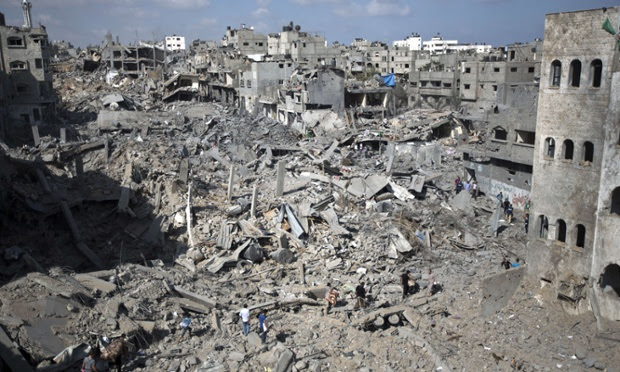
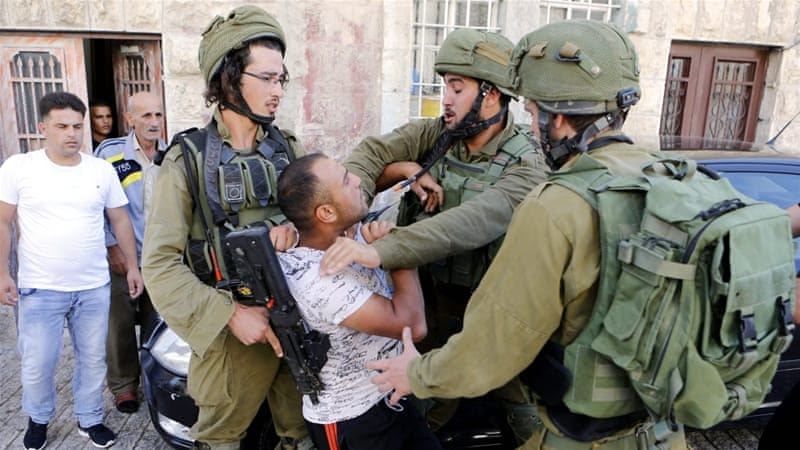

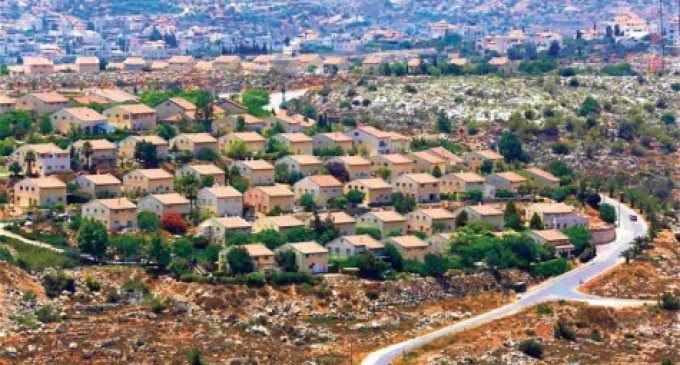
.jpg)