”Goed artikel, al ben ik het er nog steeds niet van overtuigd, dat BBB een
extreemrechtse partij is
NU HET ARTIKEL
De val van het kabinet heeft het parlementaire landschap ingrijpend veranderd. Het neoliberale beleid heeft rampen veroorzaakt en de schuldigen hebben de benen genomen. Maar zonder een principiële linkse oppositie zal dat alleen tot meer verrechtsing leiden.
Het parlementaire landschap is behoorlijk opgeschud sinds Mark Rutte zijn regering liet klappen. Het laatste kabinet stelde zich ten doel om de puinhopen die eerdere kabinetten-Rutte gecreëerd hadden voor een deel op te ruimen, maar vergrootte de problemen juist. Het is veelzeggend voor de stand van de parlementaire democratie dat Rutte de regering om partijpolitieke redenen liet vallen. Hetzelfde geldt voor het feit dat een groot deel van de politieke kopstukken uit de afgelopen periode het zinkende schip nu snel heeft verlaten.
De crisissfeer in de parlementaire politiek is veroorzaakt doordat de ene na de andere regering door kon gaan met het uitrollen van het neoliberale project. Dat leidde onder meer tot de fraudejacht op mensen met een klein inkomen of een migratieachtergrond, de totale afbraak van de publieke sector en een enorme woningnood. Een linkse oppositie ontbrak, terwijl extreemrechts steeds verder door kon breken. Extreemrechts werd ondertussen steeds meer gelegitimeerd, enerzijds door de opkomst van de ene na de andere nieuwe extreemrechtse partij, anderzijds doordat de VVD telkens dankbaar gebruikmaakte van de extreemrechtse oppositie om het beleid verder naar rechts te duwen.
Polarisatie
De val van het kabinet leidt tot een interessante polarisatie onder de middenpartijen. De VVD flirt nu openlijk met extreemrechts. Het CDA lijkt met Henri Bontenbal aan het roer juist op een meer sociaal-christelijke koers in te zetten, die duidelijker afstand houdt van extreemrechts. De partij zal proberen om het succes van Jan-Peter Balkenende te herhalen. Hij werd bij zijn aantreden als partijleider weliswaar bespot om zijn saaie voorkomen, maar won toch de verkiezingen met een paternalistisch verhaal over normen en waarden.
Dat het CDA de grootste wordt lijkt wel uitgesloten, maar de wat socialere koers zou best eens vruchten af kunnen werpen. Veel mensen hebben een afkeer van zowel de huidige politiek als van extreemrechts, maar links slaagt er niet goed in om daarvan te profiteren. Kiezers die een links alternatief voor de neoliberale status quo willen, konden eigenlijk alleen bij BIJ1 terecht. Kiezers die een wat linkser kabinet willen, stemden op D66. Die laatste partij zal harde klappen krijgen in de aankomende verkiezingen. ‘Strategische’ D66-stemmers die een vierde kabinet-Rutte wilden voorkomen kregen immers alles wat zij niet wilden.
Links
Daar zal GroenLinks-PvdA van profiteren. Tegelijkertijd is het maar zeer de vraag of de samenwerking van de twee partijen het blok op lange termijn zal versterken. De PvdA is gedecimeerd door haar aanhoudende steun voor het neoliberale project. GroenLinks is ook steeds minder geloofwaardig geworden door het steunen van rechts beleid. Het feit dat de nieuwe combinatie de neoliberale technocraat Frans Timmermans als lijsttrekker heeft gekozen onderstreept dat er niets is veranderd aan de neoliberale koers. Timmermans was eerder minister in hard neoliberale kabinetten, heeft zich altijd afgezet tegen socialistisch links en was jarenlang lid van de Europese Commissie – het meest ondemocratische orgaan in de Europese Unie en aanjager van het neoliberale project.
De linkse partijen buiten GroenLinks-PvdA zullen het grotendeels moeilijk gaan krijgen. De SP blijft met extreemrechts flirten door af te geven op arbeidsmigranten. Aan de linkerkant vervreemdt de partij kiezers van zich, terwijl zij aan de rechterkant kiezers verliest aan de partijen die zij probeert te imiteren. Met het vertrek van Renske Leijten loopt de partij daarbovenop risico om zetels te verliezen aan de partij van Pieter Omtzigt. BIJ1 zal het heel moeilijk krijgen om een zetel te behouden. Het verlies van Sylvana Simons als partijleider is een grote klap, temeer omdat het een symptoom is van een partijcrisis die voorlopig niet opgelost is. Het besluit om nu alles in te zetten op het behoud van een parlementszetel terwijl problemen in de partij niet verholpen zijn, lijkt een zeer riskante zet. Kiezers die op een partij met linkse principes willen stemmen zullen waarschijnlijk vooral bij de Partij voor de Dieren uitkomen.
Maatschappelijk verzet
Zo schuift het parlementaire spectrum als geheel verder op naar rechts. Een regering met deelname van extreemrechtse partijen als PVV, JA21 of BBB lijkt waarschijnlijker dan ooit. Maar het alternatief is een neoliberaal middenkabinet, waarin links zich voor de zoveelste keer medeplichtig zal gaan maken aan rechts beleid. Een beter vooruitzicht kan extreemrechts zich kortom niet wensen.
Voor radicaal links zou dit aanleiding moeten geven tot reflectie. Er is een grote behoefte aan een principieel activistisch links. Het gebrek daaraan jaagt de steeds verdere verrechtsing aan. Maar er zijn geen shortcuts. Een nieuw links zal vanuit de sociale strijd moeten ontstaan: uit het verzet tegen extreemrechts en de neoliberale afbraak, uit de vakbondsstrijd, uit de klimaatbeweging. Socialistische activisten zouden zich in moeten zetten om die bewegingen op een strijdbare, duurzame en activistische basis op te bouwen en dwarsverbanden te smeden. Op die manier bouwen we aan een serieuze collectieve tegenmacht die de basis kan leggen voor een nieuwe linkse politieke beweging. EINDE ARTIKEL
Reacties uitgeschakeld voor [Artikel Socialisme.nu]/Zonder linkse oppositie zal de crisis van de politiek zich slechts verdiepen
Ik zeg het onomwonden, ik beschouw de EU als een maffieuse organisatie, zeker waar het vluchtelingen betreft. De EU is zelfs erger. Want een Maffia-organisatie doet zich niet beter voor dan zij is. Terwijl de EU schermt met Verdragen [1] en zogenaamde Waarden [2], die zelfs het Papier waarop zij gedrukt zijn, niet waard zijn! Want wat voor ”Europese Waarden” [3] leeft de EU na bij het sluiten van de migratiedeal met Tunesie [4]?
Maar eerst naar een paar eerder door de EU gesloten ”Migratiedeals” en wat daarvan terecht is gekomen
EU-deal met Libië
In 2017 sloot Italië (met de EU als Speler op de achtergrond, die de deal grotendeels financierde [5]] een deal met Libië met als doel de migratiestroom via Libië terug te dringen. In feite was het een financiële en technische ondersteuning voor de Libische kustwacht, die als een soort Middellandse Zee Politieagent als taak had om bootjes met migranten op weg naar Europa tegen te houden. [6] Nou was dat sluiten van een deal met Libië al heel raar, onder andere, omdat het land op dat moment een ongeordende bende was, waar milities, die ook weer een link met mensensmokkel hadden [7] [en zo misbruik maakten van kwetsbare migranten, elkaar de tent uitvochten [8], waarbij ook nog eens twee verschillende regeringen met elkaar op de vuist waren (9)
And to add insult to injury had (waarschijnlijk nog) ”heeft] Libië ook nog eens slavenmarkten (10), iets wat Italië en de EU geweten moeten hebben [de deal kwam rond in de tijd van de bekendmaking van die slavenmarkten] [11]. En als de EU en Italië het tijdens het sluiten al niet wisten, dan hadden ze direct de deal moeten beëindigen, toen ze op de hoogte raakten! NIET gedaan…… EU waarden he, laat me niet lachen (12) En daarbij komt ook nog, dat in detentiecentra in Libië, waarheen de migranten, die door de EU/Libie deal zijn tegengehouden, teruggebracht worden, al jaren sprake is van folteringen, verkrachtingen, noem de ellende maar op! [13] Maar dat is nog niet alles. Want de EU investeerde [14] [en investeert nog steeds] [15] in de Libische kustwacht, die bootjes met migranten moet onderscheppen en ze terugbrengt naar Libië, waar ze dus terechtkomen in de hierboven genoemde folter-detentiekampen. Bij deze praktijken zijn ook allerlei Libische milities betrokken. [16] Ik citeer hier uit een schocking Verhaal van een man uit Gambia, die vastzat in zo’n folterkamer. ”They beat me with a rubber hose, becau se they want money to release me. They call the family while beating [you] so the family send money.”[17] En verder [uit Amnesty’s Statement]: ”After his family paid the ransom he was taken to Tripoli by an assigned driver who demanded further payment. “I had to stay with him until I pay the money back, otherwise he will sell me.” [18]
Een Partner voor de Bokkenwagen dus, Libie. En de EU, die dondersgoed op de hoogte is van de Libische praktijken [19], gaat er gewoon mee door [20] Zijn dat de ”EU Waarden” ? [21]
De EU-deal met Turkije
Wat de EU-Turkije deal betreft, die ongeveer diezelfde tijd gesloten werd [in 2016] [22], was het al evenzeer doffe ellende. Niet met slavenmarkten en folter-vluchtelingendetentie centra, maar met overvolle vluchtelingenkampen onder mensonwaardige omstandigheden. [23] Want wat behelsde die EU Turkije deal? Die Deal moest ervoor zorgen, dat vluchtelingen [van wie door de oorlog in Syrie grote aantallen naar Europa kwamen en er in Europa een politieke crisis ontstond] niet meer naar Europa kwamen. In ruil daarvoor kreeg Turkije van de EU miljarden euro’s om de omstandigheden van vluchtelingen in Turkije te verbeteren en zou Turkije de grenzen strenger bewaken. Vluchtelingen, die Europa toch bereikten, zouden na een korte procedure [die zou bepalen, of ze echt niet naar Turkije terug konden], teruggestuurd worden naar Turkije en voor iedere teruggestuurde vluchteling zou een vluchteling in een Turks vluchtelingenkamp worden opgenomen [24] Dat was dus de Deal: Vluchtelingenwerk legt uit, waarom dat alles misliep [25], nog afgezien van het feit, dat het het recht op asiel zwaar onder druk zette [26] Ook mensenrechtenorganisatie Amnesty International. liet zich in haar kritiek, 7 jaar na het sluiten van de Deal, niet onbetuigd! [27]
De Deal met Tunesie:
Het noemen van deze mislukte EU deals was nodig om te laten zien, hoe de EU in de praktijk met mensenrechten omgaat, ondanks alle schoonklinkende EU Waarden [28] Het Drama rond de EU deal met Tunesië is het volgende dieptepunt.
Net als met de Rampendeals met Libie en Turkije is weer het doel van de Deal met Tunesie: Het terugdringen van de migratiestroom [29] Waarbij als hoofdmotivatie: Migratie kost geld.
Zo’n EU deal om de ”migratiestroom tegen te houden” is een onding. Omdat het het fundamentele recht op asiel [dus ook het recht om asiel aan te vragen] ondergraaft. Een recht, dat zelf is verankerd in EU Verdragen [33]. Zogenaamd is de strijd tegen ”mensensmokkelaars” [34], in werkelijkheid tegen de vluchtelingen zelf. Want als dat niet zo is, waarom dan niet legale mogelijkheden aan de vluchtelingen geboden om Europa te bereiken [als ze dat dan perse willen, uit wetenschappelijk onderzoek blijkt, dat dat maar voor een kleine groep geldt] [35], zoals Amnesty International allang bepleit [36].
De inhoud
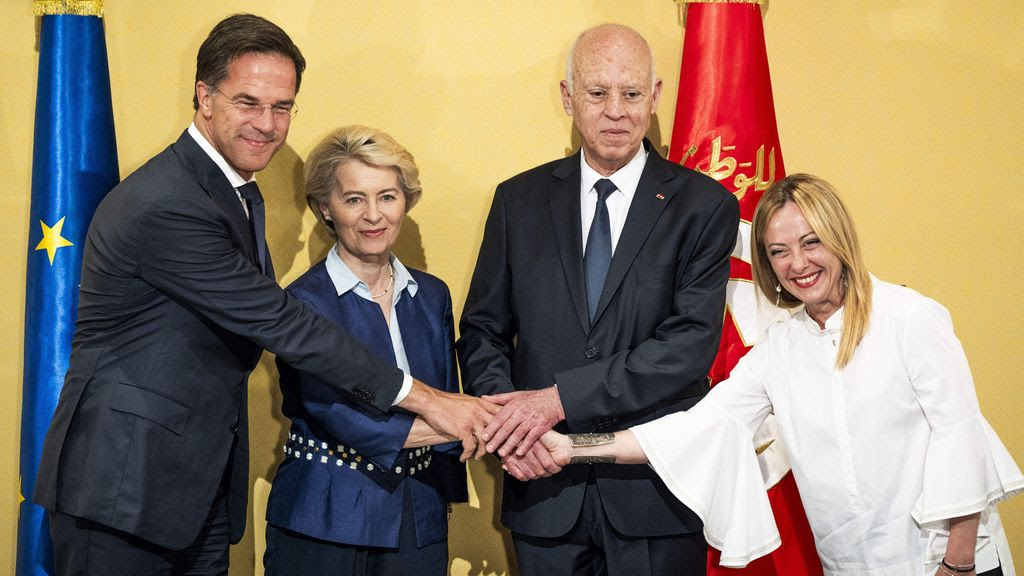
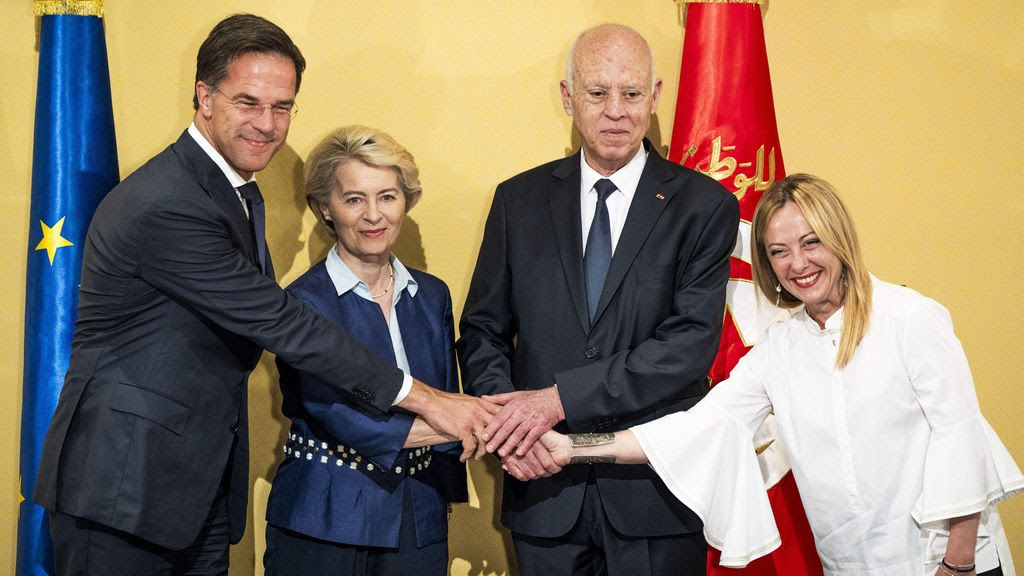
Globaal genomen komt het erop neer, dat in ruil voor bijna 1 miljard euro’s Tunesië zich ertoe verbindt, om de migrantenbootjes, die de oversteek naar Europa wagen, tegen te gaan. [39] Daarnaast verbindt de EU [onderhandelingspartners waren premier Rutte, de Italiaanse premier Meloni met een fascistische achtergrond [40] en Ursula von der Leyen, voorzitter van de Europese Commissie] zich ertoe, geld te steken in de Tunesische economie en duurzame energieprojecten. [41]
Natuurlijk is deze bijna miljard deal geen leuke gift aan Tunesië, alleen in ruil voor wat grensbewaking en tegenhouden van migrantenbootjes, dat begrijpt ieder weldenkend mens: In de eerste plaats is het een LENING, geen gift [43] In de tweede plaats is die bijna miljard lening gekoppeld aan het feit, of Tunesië een eventuele lening van het IMF loskrijgt [44]
Natuurlijk heeft de EU een fel voordeel bij die deal [anders sloten zij die niet], want niet alleen willen ze zo migranten tegenhouden, ze zijn fel op het financieel ondersteunen van de slecht draaiende Tunesische economie, omdat ze vrezen, dat als Tunesië omvalt, er een chaos ontstaat en er nog meer migranten richting Europa komen. [45]
Met wie is die deal gesloten en hoe zit het met de EU-waarden?
Volgens Rutte en zijn EU Brothers wordt bij iedere deal, die wordt gesloten ivm migratie, gekeken naar de internationale Verdragen [Ik citeer RTL Nieuws]: “Als we afspraken maken met landen binnen en buiten Europa, dan kijken we altijd of die afspraken in lijn zijn met internationale verdragen”, aldus Rutte.” [46] Welnu, laten we dan maar eens kijken, met wie die ”migratiedeal” gesloten is en met welke internationaleVerdragen de Deal al dan niet in lijn is. En let wel: EU Verdragen zijn ook internationale Verdragen en eerstens moet zo’n Deal ook daarmee in lijn zijn. Ik heb reeds opgemerkt, dat het sluiten van een deal met onverschillig welk Staatshoofd, met als oogmerk, migranten tegen te houden, in strijd is met het in het EU Handvest vastgelegde recht op asiel [wat natuurlijk inhoudt, dat je asiel ook moet kunnen aanvragen] [47]
Dat is dus de Eerste Schending van de EU Waarden. Maar er komen meer . Want de Deal is gesloten met een president, voor wie Mensenrechtenverdragen, EU Waarden en wat dies meer zij, minder waard zijn dan het papier waarop ze zijn gedrukt.
President Saied
De Tunesische president, waarmee de Onzalige Groep Rutte, Von der Leyen en Meloni de EU/Tunesie Deal hebben gesloten, is een Kwaaie hoor! Niet alleen heeft hij in snel tempo een groot aantal democratische rechten in Tunesie ontmanteld, de premier ontslagen, steeds meer macht naar zich toegetrokken en journalisten en andere critici monddood gemaakt en gearresteerd [48] Kijk eens met hoeveel EU Waarden DAT allemaal in strijd is! [49]
Alsof dat nog niet alles was, startte Saied een haatcampagne tegen Afrikaanse migranten [Tunesië was voor velen een doorvoerland geworden, al dan niet op weg naar Europa] [50], om de aandacht af te leiden van zijn dictatoriale wanbeleid en de slechte economische situatie in Tunesië [51]
Haatcampagne en ‘Omvolking’
”“The undeclared goal of the successive waves of illegal immigration is to consider Tunisia a purely African country that has no affiliation to the Arab and Islamic nations,” [52] Deel uit hatespeech president Saied
Het wordt niet alleen in het Westen uit de Kast gehaald, die racistisch-fascistische omvolkingstheorie, die inhoudt, dat volgens een ”vooropgezet plan” [of planning], de eigen, witte bevolking wordt vervangen door niet witte mensen, waarmee tegenwoordig vaak [niet altijd] Afrikaanse migranten-vluchtelingen worden bedoeld [53] . Voorbeeld in het Westen/in Nederland is FVD politicus Thierry Baudet, die niet wil, dat Europa ”Afrikaniseert” [54]
Fatale gevolgen
In februari hield president Saied dus een haatzaaiende, ophitsend-racistische toespraak, waarin beweerd werd, dat immigratie vanuit sub-Sahara Afrika erop gericht was om de ”demografische samenstelling” [55] van Tunesië te veranderen. Een typische ”omvolkings” toespraak dus [56] De gevolgen waren fataal, omdat er een ware geweldsgolf tegen Afrikaanse migranten uitbrak, waarbij mensen werden mishandeld, huizen en bezittingen werden vernield, er zelfs doden vielen en dat alles culmineerde in deportaties naar de grens met Libie [ook zo’n Parel der Mensenrechten, zie EU Libie deal] [57], waar mensen in de woestijn werden achtergelaten zonder eten, drinken en medische hulp. [58]
Deze mensonwaardige toestanden zijn uitgebreid gedocumenteerd tegen de hiertegen fel protesterende mensenrechten organisaties Amnesty International en Human Rights Watch [59] en uiteraard protesteerde de Afrikaanse Unie tegen de hatespeech van president Saied [60] Een Gezicht van de horrordeportaties naar de woestijn werden Matyla Dosso [30 jaar] en haar dochter Marie [6 jaar], die door het demonisch-racistische Tunesische beleid zijn omgekomen in de woestijn. Lees onder noot 61 hun dramatische Verhaal.
Terecht stelde Flor Didden, als beleidsmedewerker verbonden aan pro vluchtelingen organisatie 11.11.11 [actief in Belgie [62], dat de EU de Deal met Tunesie direct dient op te schorten. [63] Vind ik ook, sterker nog, er had nooit zo’n Deal moeten komen! [64] Maar hebben jullie gelezen of gehoord, dat de EU zich iets heeft aangetrokken van deze Woestijndoden? Ikke niet.
Epiloog
Nog afgezien van het feit, dat deals om vluchtelingen tegen te houden nooit gesloten zouden mogen worden [het tast het ook in het EU Handvest erkende recht op asiel aan, lees artikel 18], sluit de EU, met als voortrekkers [demissionair] premier Rutte en de Italiaanse premier Meloni met haar fascistische achtergrond, een deal met een bijna dictator als de Tunesische president Saied, die de bevolking ophitst tegen Afrikaanse vluchtelingen in een fascistische toespraak, daardoor pogroms initieert, Afrikaanse vluchtelingen zonder eten en drinken achterlaat in de woestijn, zijn eigen bevolking onderdrukt, alle vrijheden crusht….moet ik doorgaan?
De EU is erger dan de Maffia, want die doet zich niet beter voor. Maar de EU leeft de eigen Verdragen niet eens na en gaat in zee met politieke gangsters, die mensen laten sterven in de woestijn.
Het weer wordt gaandeweg een klein beetje zomers, de kalender zegt echter dat de herfst snel dichterbij komt. Dat zou ik uitstekend vinden, op een kwaadaardige stoorzender na: corona. Niet dat het virus ‘s zomers op non-actief is. Maar hoe meer we in grote aantallen naar binnen worden gejaagd door kouder en natter weer, hoe gunstiger voor de nieuwe coronagolf. Die is inmiddels op gang aan het komen, al krijgen we dat van hogerhand waarschijnlijk pas te horen als ze er een avondklok mee kunnen motiveren of zoiets. Niet dat een avondklok nou zo goed werkt tegen een virus. Maar lekker daadkrachtig staat het wel, zo’n foute repressieve maatregel, en overdag kun je dan de kinderen gewoon ongeventileerde scholen in jagen nietwaar? Hogerhand gaat ons dus niet redden. Laten we ons maar voorbereiden om zelf de dingen te doen die nodig zijn en die wel werken. De gevestigde instanties laten ons immers liever verrekken.
Nieuwe golf
Uit land na land krijgen we intussen berichten van oplopende besmettingscijfers. In de VS: ‘veel Covid-19 indicatoren, waaronder ziekenhuisopnames, bezoeken aan de eerste hulp, en positieve testuitslagen, gaan wederom omhoog’, aldus CNN op 28 juli 2023. ‘Ja, veel tekenen wijzen op een Covid-19 zomergolf, zij veel minder g hevig dan wat de afgelopen paar zomers tevoorschijn kwam’.(1) In Groot-Brittannië’, waar een onderzoek uitwijst ‘dat er 606.602 mensen met symptomatische Covid-19 waren op 4 juli, een aantal dat gestegen was tot 789.695 op 28 juli’, vertelt The Guardian.(2) Dat is geen explosie, maar een gestage toename is het wel. In Japan, waar op 19 juli al sprake was van een golf die al acht weken gaande was. ‘Het aantal nieuwe ziekenhuisopnames voor Covid-19 stijgt ook, en staat op 6096 in de week tot en met 9 juli, omhoog vanaf 5494 een week eerder en 4484 vier weken eerder’, aldus de Japan Times op 18 juli.
Het is niet aannemelijk dat zoiets Nederland overslaat, hoe goed het RIVM de corona-gegevens ook van de voorpagina van haar site heeft weten te verbannen.. Met een klein beetje zoeken vinden we weekcijfers, en die zijn niet heel leuk. ‘In week 30 (24-30 juli) steeg het landelijke gemiddelde aantal virusdeeltjes sterk met +50% ten opzichte van de week ervoor.’ In de eerste helft van week 31 (31 juli – 2 augustus) steeg het gemiddelde vooralsnog verder met +25%.’. Het aantal mensen met coronaklachten steeg licht, het aantal mensen dat in een ziekenhuis werd opgenomen steeg flink, met 39 procent.’ Het gaat vanaf een vrij laag niveau, maar het gaat overduidelijk en verontrustend omhoog.
Er is ook weer een nieuwe variant, of beter gezegd subvariant van Omicron, in omloop. Echt zieker word je er niet van, lees je her en der. Maar nieuwe variant betekent doorgaans nieuwe ellende, want eventueel eerder opgebouwde immuniteit wordt door zo’n gemuteerd virus makkelijker omzeild, zodat m besmettingen snel om zich heen kunnen grijpen. Intussen vindt het Wereld Gezondheidsorganisatie WHO die nieuwe coronaversie ernstig genoeg om te spreken van ‘variant of concern’. De variant heet EG.5 maar je mag ook Erin zeggen, begrijp ik.’gebaseerd op het beschikbare bewijsmateriaal wordt het risico voor de volksgezondheid dat door EG.5 wordt veroorzaakt, op mondiaal niveau geëvalueerd als laag op wereldwijd niveau’, aldus de WHO. Je wordt er niet zieker van dan van eerdere varianten, zo luidt de toelichting.(5)
Alsof dat geruststellend is. Alsof grote aantallen mensen die een klein beetje ziek worden niet ook flinke aantallen ernstig zieke mensen betekenen – want ook bij hele lage percentages ernstige zieken lopen de aantallen daarvan toch flink op als de totale aantallen erg hoog zijn. En alsof niet een flink percentage ook van de mensen die slechts lichte verschijnselen hebben, vervolgens niet lang ziek blijven vanwege long Covid en daarmee slachtoffer wordt van aanhoudende, vaak ernstige klachten.
De aantallen mensen die aan long Covid lijden, zijn volslagen verbijsterend. ‘Sinds 2020 hebben bijna 36 miljoen mensen langdurige gezondheidsproblemen opgelopen na besmet te zijn geraakt door Covid-19’, aldus wederom de WHO. ‘Een op de dertig Europeanen zou wel eens Long Covid kunnen hebben ontwikkeld in de eerste drie jaren van de pandemie’.(6) Dat bericht is van 27 juni 2023. Dan heb ik het nog helemaal niet gehad over hoe long Covid er in het globale zuiden in hakt, iets dat veel te weinig aandacht krijgt.(7)
Bijna 36 miljoen mensen met Long covid, alleen al in Europa dus. Met een nieuwe golf in opkomst komen daar weer zovele honderdduizenden bij. En wat ook steeds duidelijker wordt: hoe vaker je Covid hebt gehad, hoe kwetsbaarder je gezondheid wordt. Wie denkt dat je meer weerstand opbouwt door zich maar lekker te laten besmetten, droomt.
Wie denkt dat regeerders, ministers en officiële gezondheidsinstanties ons adequaat tegen de volgende golf gaan beschermen, droomt eveneens. Tot nu toe wordt in Nederland de nieuwe golf officieel zo ongeveer doodgezwegen. Het officiële beleid is dat de pandemie voorbij is, het virus is nu ‘endemisch’. Alsof dat geruststellend is! In veel delen van de wereld is malaria endemisch, hetgeen betekent dat zeer veel mensen jaarlijks ziek worden en een flink aantal er zelfs aan overlijdt. Je kunt de pandemie omdopen tot endemisch verschijnsel. Aan de ernst van Covid-19 verandert dat niets. Het is dodelijke gezondheids-PR.
Coronabestrijding op DIY-basis
Hoe ziet dat er uit, coronabestrijding op DIY-basis? Want dat is wat we nodig hebben: Dfo It Yourself, DIY. We zijn, zoals eigenlijk de hele pandemie alsmaar duidelijker is geworden, op onszelf aangewezen. En op elkaar! Je kunt de ander en jezelf beschermen, door gewoon dat mondkapje op te doen – FFP2 minstens, niet zo’n blauw flodderding – als je naar winkel of andere drukke binnenruimte gaat, en als je in trein, bus, metro of tram stapt. Ja, dat helpt, en hoe meer mensen dit doen, hoe veiliger het voor ons allemaal wordt. Laten we elkaar hier in aanmoedigen en ondersteunen, tegen de spottende blikken en de nare opmerkingen in.
Wat ook helpt is: thuisblijven, ook bij lichte corona-achtige klachten! Nee, dat vind je baas niet leuk. Jouw gezondheid en die van collega’s, klas- of studiegenoten en andere mensen waar je mee te maken hebt op je werk, op school of universiteit, is belangrijker! Laten we er ook een punt van maken elkaar hier in te steunen tegen vervelende bazen die mensen onder druk zetten om toch weer te komen opdagen. Waarom zouden we ons voor ondernemerswinst uitleveren aan een gevaarlijk virus?
Nee, dit is allemaal niet genoeg. Ja, het zijn druppels op een plaat die welbewust gloeiend wordt gelaten door de officiële instanties. Maar hoe meer druppels er op die plaat belanden, hoe hoger het tempo van al dat gedruppel, hoe minder die gaat gloeien.
Om meer gedaan te krijgen zijn twee dingen nodig:
1. Organiseer jezelf! Zodat we via promotie, maar ook via actie en pressie op directies en management en dergelijke het mondkapje per werkplek of school kunnen maken tot iets dat niet meer door enkelingen, maar door je meeste klasgenoten of collega’s, als vanzelfsprekend wordt gedragen. Een van staatswege opgelegde mondkapjesplicht is verkeerd en werkt averechts; een mondkapjesnorm die van onderop in instellingen wordt doorgevoerd is een heel andere zaak, en een grote solidaire stap vooruit.
Organiseer jezelf! Zodat we bijvoorbeeld druk op instellingen kunnen zetten om voor adequate luchtverversing te zorgen, zodat m binnenruimtes aanmerkelijk minder virus in de lucht zit. Zodat we campagne kunnen voeren voor het kosteloos beschikbaar maken van behoorlijke mondkapjes en van zelftests.
Organiseer jezelf! Zodat we de druk kunnen weerstaan om koste wat kost naar kantoor of fabriek te komen, en thuis kunnen werken om besmettingsrisico’s te voorkomen. Organiseer jezelf zodat je samen het werk helemaal stil kunt leggen als de besmettingen toenemen, en doorbetaling van loon kunt afdwingen ook. Ja, er zijn dingen die ‘vakbonden’ heten. Misschien lukt het om daarbinnen voor dit soort zaken aandacht te vinden en druk op te bouwen, Misschien is het nodig om iets nieuws op te bouwen waarmee we dit soort dingen op werkplekken gedaan kunnen krijgen. Hoe dan ook: organiseer je zelf, eigenhandig en samen.
Maar vooral en allereerst ook weer:
2. Sla alarm! Nee, corona is niet weg. Nee het is niet zomaar een griepje. Ja het is een ernstig gevaar voor ons allemaal. Vertel het aan wie het horen wil, en vooral ook aan wie het liever niet wil weten. Zodat mensen zich van het gevaar bewust worden. Zodat we er samen wat tegen kunnen gaan doen. Het is aan ons, van onderop. Hogerhand laat ons, zoals gebruikelijk, barsten.
Ten slotte. Bovenstaande artikel schrijf ik vrijwel tegen beter weten in. Ook nu zullen linkse en radicale mensen in hun persoonlijk leven redelijk voorzichtig en solidair blijven, al zou ik ook in onze eigen kringen graag weer wat vaker een mondkapje zien als we onderweg zijn in de trein of deelnemen aan een activiteit in een binnenruimte.
Maar zullen linkse en radicale mensen – wij samen –nu ook eens de initiatieven weten te nemen die hoognodig zijn om ons adequaat te weer te stellen tegen dat virus – en tegen een gevestigd bestel dat ons aan dat virus uitlevert? Ik maak me op dat gebied na bijna drie en een half jaar zeer weinig illusies. Prove me wrong! Hierboven heb ik suggesties gedaan waar we mee aan de slag zouden kunnen. Mocht als jij op zo’n anti-autoritaire en solidaire basis stappen willen helpen zetten: je weet me te vinden.
(4) RIVM, ‘Wekelijkse update coronavirus SARS CoV-2: 8 augustus 2023’, 8 augustus 2023, https://www.rivm.nl/coronavirus-covid-19/weekcijfers (gecheckt 10 augustus 2023; over een week staan onder dezelfde link dus andere cijfers, de weekberichten hebben geen afzonderlijke link).
De een zegt: ‘we’ willen minder arbeidsmigranten, want ondernemers buiten ze uit en misbruiken ze om ‘onze’ arbeiders onder druk te zetten om lagere lonen te accepteren uit angst voor concurrenten op de arbeidsmarkt. De ander zegt: ‘we’ hebben meer arbeidsmigranten nodig, want ‘we’ hebben ze nodig in ‘onze’ economie. Beiden standpunten kom je tegen. En de dragers van beide standpunten – soms Lilian geheten, soms ook Leo – noemen zich soms nog links ook.
Maar zullen we die arbeidsmigranten gewoon eens zien als gelijkwaardige mensen die gewoon een beter bestaan proberen te vinden en solidariteit verdienen – ongeacht hun nut voor ‘onze’ economie? Zullen we eens zien dat ‘wij’ ons allemaal omvat? Dus ook de arbeidsmigranten zelf, al die mensen in de brede onderkant van de maatschappij die we de arbeidersklasse zouden kunnen noemen, maar dan wel in de allerbreedste zin – betaald en onbetaald, met baan en zonder, van welke kleur en afkomst, gender en seksuele oriëntatie dan ook, al die mensen die door staat en kapitaal worden gebruikt als personeelslid, cliënt, klant en als burger vermomd onderdaan, maar nooit als mens?
Is het niet meer dan hoog tijd om in deze hele discussie arbeidsmigranten niet te zien als middel voor een doel – ondernemingswinst, het bestrijden van personeelstekorten in de zorg, zondebok om je op af te reageren in zware tijden – maar als medemensen wiens welzijn een doel op zich is? Als medemensen die geen objecten van beleid zijn maar autonoom subject? Niet als gespreksonderwerp of thema van politieke zorg, maar als medemensen? Niet als een mogelijk beangstigend, mogelijk nuttig ‘zij’ maar als gelijkwaardige deelnemers in dat grotere solidaire ‘wij’?
Peter Storm
Reacties uitgeschakeld voor [Artikel Peter Storm]/Arbeidsmigranten: een paar vragen
Reacties uitgeschakeld voor De Horror van de EU deal met Tunesie/Foto’s/Deel 2/De vrouw, die stierf in de woestijn, de Libische grenswacht, die hielp, verdreven vluchtelingen
Van in de woestijn gedumpte Afrikaanse migranten/vluchtelingen,
zonder eten en drinken, wat een moeder en haar dochter [6 jaar] het
leven hebben gekost
Zie de eerste foto, direct ONDER de foto van de verantwoordelijken
van al deze Ellende
Meer foto’s volgen
Laat ze tot u doordringen lezers, want dat is het resultaat van een
Beleid, dat mensenlevens niet telt
Alleen kosten en Baten
ECHTER!
Net als bij de opening van de Doos van Pandora [1] bleef er het
meest waardevolle over: DE HOOP
Want Tegenkrachten zijn er ook!
Zoals de Libische grenswacht, die een in de woestijn gedumpte Afrikaanse
vluchteling water gaf
Een demonstratie in Tunesie ten gunste van de vluchtelingen
En de Verklaring van de Tunisian Worker;s Party, die de
racistische speech van president Saied veroordeelde.
Die speech, weet u wel, lezers, die de aanleiding was tot een geweldsuitbarsting tegen Afrikaanse vluchtelingen en hun deportaties door de autoriteiten op
Ik laat dus ook foto’s zien van de TEGENkrachten van xenofobie en racisme
zien en onderin het bericht over een pro vluchtelingen demonstratie.
En geheel onderin, in geschreven tekst, de veroordeling van president Saied’s hate speech
door de Tunesische Arbeiderspartij!
Want juist deze Tegenkrachten verdienen OOK aandacht, in duistere Tijden
ASTRID ESSED
[1]
”Pandora klapte het deksel geschrokken dicht, met het gevolg dat de hoop niet kon ontsnappen. Vandaar dat onder de hevigste rampen die de mensen op aarde teisteren, de hoop nog alleen resteert. Hoop wordt soms voorgesteld als de vogel die uit het vat vloog toen deze voor een tweede keer werd geopend, als boodschap van troost voor de mensheid”
Demonstrators rally in capital after Kais Saied’s comments demanding ‘urgent measures’ against immigrants he claims bring ‘violence, crimes and unacceptable practices’
TUNIS, Tunisia — Hundreds of protesters in Tunisia’s capital took to the streets on Saturday to denounce racism and express solidarity toward migrants after the country’s increasingly authoritarian leader claimed there’s a plot to erase his country’s identity by bringing in sub-Saharan Africans.
People shouting “no to racism,” “solidarity with migrants” and “no to police crackdown” marched through central Tunis as part of the demonstration staged by Tunisia’s journalists’ union and several nongovernmental organizations.
President Kais Saied said earlier this week that “urgent measures” were needed to address the entry of irregular immigrants from sub-Saharan countries, “with their lot of violence, crimes and unacceptable practices.”
The spokesperson for the Tunisian Forum for Social and Economic Rights, Romdhane Ben Amor, deplored an increasing number of racist assaults against sub-Saharan migrants following Saied’s remarks.
“We noted attempts to drive some migrants out of their homes,” he told The Associated Press. “Others are being prevented from taking public transportation.”
Tunisian comedian Fatma Saidane denounced “deplorable actions” targeting some sub-Saharan people and called on people to show a civic-minded attitude.
“We must not assault or insult people who live on our soil, in the same way we don’t accept our compatriots to be ill-treated in Europe,” she said.
In recent days, about 100 sub-Saharan migrants have been detained for having illegally crossed the Tunisian border, according to Riadh Nouioui, the deputy prosecutor of Kasserine, a mountainous region close to Algeria. Other migrants enter the country from neighboring Libya.
Saied’s comments raised a storm on social media and drew condemnation from NGOs. Tunisia, once lauded as the only budding democracy in the Arab world, has recently also seen a crackdown on opposition politicians and activists.
EINDE
TUNISIAN WORKERS PARTY CONDEMNS PRESIDENT KAIS SAIED’S
Last week, Tunisian President Kais Saied blamed migrants from Sub-Saharan African countries for causing disturbances in Tunisia and being part of a “plot” to change the country’s demographics
The Tunisian Workers’ Party has condemned President Kais Saied’s speech last week in which he blamed migrants from Sub-Saharan Africa for trying to change the country’s demographics. The party accused him of using racism and hatred to divert the people’s attention from his failures in the economic and political spheres, and asked him to apologize.
On Saturday, February 25, hundreds of Tunisians took to the streets in capital Tunis denouncing Saied’s racist comments. The African Union (AU) also condemned his speech in a statement issued on Friday.
Saied had made the controversial comments during his speech at the Tunisian National Security Council on February 21. He had said that “the undeclared goal of the successive waves of illegal immigration is to consider Tunisia a purely African country that has no affiliation to the Arab and Islamic nations.”
Saied also accused political parties in the country of being involved in a “criminal arrangement” to change the “demographic composition of Tunisia” in return for large sums of money.
Arguing that such statements can cause real harm to the African population in the country, protestors on Saturday demanded that the president apologize for his comments.
Expressing solidarity with the migrants, some protesters also termed Saied’s statement fascist and claimed that “Tunisia is an African country,” Al-Jazeerareported.
The statement issued by the Workers’ Party said that Saied intends to stir up racist, primitive, and hateful feelings so that people forget the real reasons for their plight and the failures of his government.
Tunisia has been facing a protracted economic crisis and is trying to secure a loan from the IMF. The country is also witnessing a political crisis since July 2021 when Saied sacked the elected government and dissolved the parliament, suspending the constitution and ruling the country by decree. Saied’s government has since enacted a new constitution and held a national election, both of which saw negligible popular participation.
His government has also been accused of following a policy of persecution of all political opponents, with a large number of dissidents being arrested in the last few weeks.
The Workers’ Party claimed that Saied’s comments against Africans are similar to the tactics used by anti-immigration right-wing groups in Europe and elsewhere. Tunisians and Muslims in Europe also face racist slurs and are blamed for the problems in these countries. The party’s statement claimed that Saied’s speech legitimizes such right-wing statements, and endangers the thousands of Tunisian migrants living and working in different parts of the world.
The statement also accused the Tunisian government of participating in the anti-migration policies of European countries, which have led to harassment and oppression, and asked for the immediate termination of all such cooperation.
EINDE
Reacties uitgeschakeld voor De Horror van de EU Deal met Tunesie in Beeld/Foto’s/Maar ook de Hoop/De Tegenkrachten!
The European Union is founded on the following values:
Human dignity Human dignity is inviolable. It must be respected, protected and constitutes the real basis of fundamental rights.
…..
…..
”Human rightsHuman rights are protected by the EU Charter of Fundamental Rights. These cover the right to be free from discrimination on the basis of sex, racial or ethnic origin, religion or belief, disability, age or sexual orientation, the right to the protection of your personal data, and the right to get access to justice.”
Het recht op asiel is gegarandeerd met inachtneming van de voorschriften van het Verdrag van GenŁve van 28 juli 1951 en het Protocol van 31 januari 1967 betreffende de status van vluchtelingen, en overeenkomstig het Verdrag tot oprichting van de Europese Gemeenschap.
Bescherming bij verwijdering, uitzetting en uitlevering
1. Collectieve uitzetting is verboden.
2. Niemand mag worden verwijderd of uitgezet naar dan wel uitgeleverd aan een staat waarin een ernstig risico bestaat dat hij aan de doodstraf, aan folteringen of aan andere onmenselijke of vernederende behandelingen of bestraffingen wordt onderworpen.
Deelneming aan een organisatie die tot oogmerk heeft het plegen van misdrijven, wordt gestraft met gevangenisstraf van ten hoogste zes jaren of geldboete van de vijfde categorie.
Deelneming aan de voortzetting van de werkzaamheid van een organisatie die bij onherroepelijke rechterlijke beslissing verboden is verklaard of van rechtswege is verboden of ten aanzien waarvan een onherroepelijke verklaring als bedoeld in artikel 122, eerste lid, van Boek 10 Burgerlijk Wetboek is afgegeven, wordt gestraft met gevangenisstraf van ten hoogste een jaar of geldboete van de derde categorie.
Onder deelneming als omschreven in het eerste lid wordt mede begrepen het verlenen van geldelijke of andere stoffelijke steun aan alsmede het werven van gelden of personen ten behoeve van de daar omschreven organisatie.
Ik beschouw de EU als een Maffia-organisatie, zeker waar het vluchtelingen
betreft.
Maar neen, de EU is erger:
Want een Maffia-organisatie doet zich niet beter voor dan zij is.
Terwijl de EU schermt met Verdragen [1] en zogenaamde Waarden [2], die
zelfs het Papier waarop zij gedrukt zijn, niet waard zijn!
Want wat voor ”Europese Waarden” [3] leeft de EU na bij het sluiten
van wat we nu gaan bespreken:
Die EU Migratiedeal met Tunesie [4]
We zullen het zo zien.
Maar eerst naar een paar eerder door de EU gesloten
”Migratiedeals” en wat daarvan terecht is gekomen
EU DEAL MET LIBIE
Laten we het daar eens over hebben:
In 2017 sloot Italie [met de EU als Speler op de achtergrond, die de deal grotendeels
financierde [5]] een deal met
Libie met als doel de migratiestroom via Libie terug te dringen.
In feite was met een financiele en technische ondersteuning voor de Libische kustwacht,
die als een soort Middellandse Zee Politieagent als taak had om bootjes met migranten
op weg naar Europa [meestal Italie] tegen te houden. [6]
Nou was dat sluiten van een deal met Libie al heel raar, onder andere,
omdat het land op dat moment een ongeordende Bende was, waar
milities, die ook weer een link met mensensmokkel hadden [7] [en zo misbruik
maakten van kwetsbare migranten, elkaar de tent uitvochten [8], waarbij ook’nog eens
twee verschillende regeringen met elkaar op de vuist waren [9]
Een totale Chaos dus
LIBIE/SLAVENMARKTEN/FOLTERINGEN IN DETENTIEKAMPEN, EN ANDERE
ELLENDE
And to add insult to injury had [waarschijnlijk nog ”heeft] Libie ook
nog eens SLAVENMARKTEN [10], iets wat Italie [EU] geweten moet
hebben [de deal kwam rond in de tijd van de bekendmaking
van die slavenmarkten] [11]
En als de EU/Italie het tijdens het sluiten al niet wisten, dan hadden ze direct de
deal moeten beeindigen, toen ze op de hoogte raakten!
NIET gedaan……
EU waarden he [12], laat me niet lachen.
En daarbij komt ook nog, dat in detentiecentra in Libie, waarheen
de migranten, die door de EU/Libie deal zijn tegengehouden, teruggebracht worden,
al jaren sprake is van folteringen, verkrachtingen, noem de ellende
maar op! [13]
Maar dat is nog niet alles
Want de EU investeerde [14] [en investeert nog steeds] [15] in de Libische
kustwacht, die bootjes met migranten moet onderscheppen en ze terugbrengt
naar Libie, waar ze dus terechtkomen in de hierboven genoemde folter-detentiekampen.
Bij deze Praktijken zijn ook allerlei Libische milities betrokken. [16]
Ik citeer hier uit een schocking Verhaal van een man uit Gambia, die
vastzat in zo’n folterkamp:
[De man uit Gambia aan het woord]:
”They beat me with a rubber hose, because they want money to release me. They call the family while beating [you] so the family send money.”
[17]
En verder [uit Amnesty’s Statement]
”After his family paid the ransom he was taken to Tripoli by an assigned driver who demanded further payment. “I had to stay with him until I pay the money back, otherwise he will sell me.” [18]
Een Partner voor de Bokkenwagen dus, Libie
En de EU, die dondersgoed op de hoogte is van
de Libische praktijken [19], gaat er gewoon mee door [20]Zijn dat de ”EU Waarden” ? [21] DE EU-TURKIJE DEAL Wat de EU-Turkije deal betreft, die ongeveer diezelfdetijd gesloten werd [in 2016] [22], was het al evenzeer doffe ellende.Niet met slavenmarkten en folter-vluchtelingendetentiecentra, maar met overvolle vluchtelingenkampen ondermensonwaardige omstandigheden. [23]Want wat behelsde die EU Turkije deal?Die Deal moest ervoor zorgen, dat vluchtelingen[van wie door de oorlog in Syrie grote aantallen naarEuropa kwamen en er in Europa een politieke crisisontstond] niet meer naar Europa kwamen. In ruildaarvoor kreeg Turkije van de EU miljarden euro’s om de omstandigheden van vluchtelingen inTurkije te verbeteren en zou Turkije de grenzenstrenger bewaken.Vluchtelingen, die Europa toch bereikten, zouden naeen korte procedure [die zou bepalen, of ze echt nietnaar Turkije terug konden], teruggestuurd wordennaar Turkije en voor iedere teruggestuurde vluchteling zou eenvluchteling in een Turks vluchtelingenkamp wordenopgenomen [24]Dat was dus de Deal:
Vluchtelingenwerk legt uit, waarom dat alles misliep [25],nog afgezien van het feit, dat het het recht op asiel zwaaronder druk zette [26]Ook mensenrechtenorganisatie Amnesty Internationalliet zich in haar kritiek, 7 jaar na het sluiten van de Deal,niet onbetuigd! [27] Dat ging er allemaal aan voorafEn dan nu….. De EU Deal met Tunesie:
Het noemen van deze mislukte EU deals was nodig om telaten zien, hoe de EU in de praktijk met mensenrechtenomgaat, ondanks alle schoonklinkende EU Waarden [28]Het Drama rond de EU deal met Tunesie is, zoals u zultlezen, het volgende Dieptepunt.
EU DEAL MET TUNESIE Net als met de Rampendeals met Libie en Turkije isweer het doel van de Deal met Tunesie:Het terugdringen van de Migratiestroom [29]Waarbij als hoofdmotivatie:Migratie kost geld.Want net als bij het rampzalige sluiten van degrenzen voor Joden in de dertiger jaren [30],gaat het om het feit, dat migranten [om het maareens plat te zeggen] ”armoedzaaiers” zijn [ze komenimmers berooid in Europa aan].”Armoedzaaiers” tenminste, zo bekeken door de autoriteiten.Want kwamen zij met een zak Goud en Zilver,dan waren zij WEL welkom bij de authoriteiten!U gelooft mij niet?Lees noot 31 er dan maar op na.Natuurlijk spelen meer factoren een rol, zoalsracisme [zie verschil van behandelingvan de Oekraieners] [32], maar hoofdzaak is:Het kost geld EU DEAL MET TUNESIE/WAAROM IS EEN VLUCHTELINGENDEALUBERHAUPT EEN ONDING? In de eerste plaats:Nog los van de soort deal, die de EU sluit metbetreffende landen en hoe die uitpakt:Zo’n EU deal om de ”migratiestroom tegen te houden”is een onding.Waarom:Omdat het het fundamentele recht op asiel [dus ook hetrecht om asiel aan te vragen] ondergraaftEen recht, dat zelf is verankerd in EU Verdragen [33]Zogenaamd is de strijd tegen ”mensensmokkelaars” [34],in werkelijkheid tegen de vluchtelingen zelf.Want als dat niet zo is, waarom dan niet legale mogelijkheden aan de vluchtelingen geboden omEuropa te bereiken [als ze dat dan perse willen,uit wetenschappelijk onderzoek blijkt, dat dat maarvoor een kleine groep geldt] [35],zoals Amnesty International allang bepleit [36] Neen, we [ik althans niet] laten ons niet voor de gekhouden door niet eens zo schoonschijnende praatjesvan demissionair premier Rutte [37]Het brutaalste vind ik nog zijn verwijzing naar de”mensenrechten ivm de deal met Tunesie’s presidentSaied [38]Daarover straks meer NU NAAR DE INHOUD VAN DE EU TUNESIE DEAL Globaal geschreven komt het erop neer, dat in ruilvoor bijna 1 miljard euro’s Tunesie zich ertoe verbindt, om de migrantenbootjes, die de oversteek naarEuropa wagen, tegen te gaan. [39]Daarnaast verbindt de EU [onderhandelingspartnerswaren premier Rutte, de Italiaanse premier Meloni meteen fascistische achtergrond [40] en Ursula von der Leyen,voorzitter van de Europese Commissie] zich ertoe, geldte steken in de Tunesische economie en duurzame energieprojecten. [41]Lees meer over de EU/Tunesiedeal onder noot 42 Natuurlijk is deze bijna miljard deal geen Leuke Gift aanTunesie, alleen in ruil voorwat grensbewaking en tegenhouden vanmigrantenbootjes, dat begrijpt ieder weldenkend mens:In de eerste plaats is het een LENING, geen gift [43]In de tweede plaats is die bijna miljard lening gekoppeldaan het feit, of Tunesie een eventuele lening van het IMFloskrijgt [44] Natuurlijk heeft de EU een fel voordeel bij die deal[anders sloten zij die niet], want niet alleen willen zezo migranten tegenhouden, ze zijn fel op het financieelondersteunen van de slecht draaiende Tunesischeeconomie, omdat ze vrezen, dat als Tunesie omvalt,er een chaos ontstaat en er nog meer migrantenrichting Europa komen. [45]
MET WIE IS DIE DEAL EIGENLIJK GESLOTENAND WHAT ABOUT DE EU WAARDEN? Volgens Rutte en zijn EU Brothers wordt bij iedere deal,die wordt gesloten ivm migratie, gekeken naarde internationale Verdragen[Ik citeer RTL Nieuws]:
“Als we afspraken maken met landen binnen en buiten Europa, dan kijken we altijd of die afspraken in lijn zijn met internationale verdragen”, aldus Rutte.” [46]
Welnu, laten we dan maar eens kijken, met wie die
”migratiedeal” gesloten is en met welke internationale
Verdragen de Deal al dan niet in lijn is.
En let wel:
EU Verdragen zijn ook internationale Verdragen en
eerstens moet zo’n Deal ook daarmee in lijn zijn.
Ik heb reeds opgemerkt, dat het sluiten van een deal met
onverschillig welk Staatshoofd, met als oogmerk, migranten
tegen te houden, in strijd is met het in het EU Handvest
vastgelegde recht op asiel [wat natuurlijk inhoudt,
dat je asiel ook moet kunnen aanvragen] [47]
Dat is dus de Eerste Schending van de EU Waarden.
Maar er komen meer
Want de Deal is gesloten met een president, voor wieMensenrechtenverdragen, EU Waarden en wat dies meerzij, minder waard zijn dan het Papier waarop ze zijn gedrukt. PRESIDENT SAIED De Tunesische president, waarmee de Onzalige Groep Rutte, Von der Leyen en Meloni de EU/Tunesie Deal hebben gesloten, iseen Kwaaie hoor!Niet alleen heeft hij in snel tempo een groot aantaldemocratische rechten in Tunesie ontmanteld,de premier ontslagen, steeds meer macht naar zich toegetrokkenen journalisten en andere critici monddood gemaakt engearresteerd [48] Kijk eens met hoeveel EU Waarden DAT allemaalin strijd is! [49] HAATCAMPAGNE TEGEN AFRIKAANSE MIGRANTENMET FATALE GEVOLGEN Alsof dat nog niet alles was, startte Saied een haatcampagnetegen Afrikaanse migranten [Tunesie was voor velen eendoorvoerland geworden, al dan niet op weg naar Europa] [50],om de aandacht af te leiden van zijn dictatoriale wanbeleiden de slechte economische situatie in Tunesie [51] HAATCAMPAGNE TEGEN AFRIKAANSE MIGRANTEN/OMVOLKING ”
“The undeclared goal of the successive waves of illegal immigration is to consider Tunisia a purely African country that has no affiliation to the Arab and Islamic nations,” [52]
Deel uit hatespeech president Saied
Het wordt niet alleen in het Westen uit de Kast gehaald,die racistisch-fascistische omvolkingstheorie, die inhoudt,dat volgens een ”vooropgezet plan” [of planning], de eigen,witte bevolking wordt vervangen door niet witte mensen,waarmee tegenwoordig vaak [niet altijd] Afrikaanse migranten-vluchtelingen worden bedoeld [53]Voorbeeld in het Westen/in Nederland is FVD politicusThierry Baudet, die niet wil, dat Europa ”Afrikaniseert” [54]Welnu, in Tunesie kunnen ze er ook wat van. FATALE GEVOLGEN In februari anno Domini 2023 hield president Saied duseen haatzaaiende, ophitsend-racistische toespraak, waarinbeweerd werd, dat immigratie vanuit sub-Sahara Afrika eropgericht was om de ”demografische samenstelling” [55]van Tunesie te veranderen.Een typische ”omvolkings” toespraak dus [56]De gevolgen waren fataal, omdat er een ware geweldsgolftegen Afrikaanse migranten uitbrak, waarbij mensenwerden mishandeld, huizen en bezittingen werden vernield,er zelfs doden vielen en dat alles culmineerde in deportatiesnaar de grens met Libie [ook zo’n Parel der Mensenrechten, zie EU Libie deal] [57], waar mensen in de woestijnwerden achtergelaten zonder eten, drinken en medischehulp. [58] Deze mensonwaardige toestanden zijn uitgebreid gedocumenteerdtegen de hiertegen fel protesterende mensenrechtenorganisaties Amnesty International en Human Rights Watch [59]en uiteraard protesteerde de Afrikaanse Unie tegende hatespeech van president Saied [60]Een Gezicht van de horrordeportaties naar de woestijnwerden Matyla Dosso [30 jaar] en haar dochter Marie [6 jaar],die door het demonisch-racistische Tunesischebeleid zijn omgekomen in de woestijn.Lees onder noot 61 hun dramatische Verhaal. Terecht stelde Flor Didden, als beleidsmedewerker verbonden aan pro vluchtelingenorganisatie 11.11.11 [actief in Belgie [62], dat de EU de Dealmet Tunesie direct dient op te schorten. [63]Vind ik ook, sterker nog, er had nooit zo’n Dealmoeten komen! [64]Maar hebben jullie, Geachte Lezers, gelezen ofgehoord, dat de EU zich iets heeft aangetrokken vandeze Woestijndoden?Ikke niet. EPILOOG Nog afgezien van het feit, dat deals om vluchtelingentegen te houden nooit gesloten zouden mogen worden[het tast het ook in het EU Handvest erkende recht opasiel aan, lees artikel 18], sluit de EU, met als voortrekkers[demissionair] premier Rutte en de Italiaanse premierMeloni met haar fascistische achtergrond, een dealmet een bijna dictator als de Tunesische president Saied,die de bevolking ophitst tegen Afrikaanse vluchtelingenin een fascistische toespraak, daardoor pogromsinitieert, Afrikaanse vluchtelingen zonder eten en drinkenachterlaat in de woestijn, zijn eigen bevolking onderdrukt,alle vrijheden crusht….moet ik doorgaan? Ik schreef het al:De EU is erger dan de Maffia, want die doet zich nietbeter voor.Maar de EU leeft de eigen Verdragen niet eens na en gaatin zee met politieke gangsters, die mensen latensterven in de woestijn. Nederland anno 2023 ASTRID ESSED NOTEN NOTEN 1 T/M 41
”Met het Handvest van de grondrechten van de Europese Unie is voor het primaire EU-recht een waaier aan grondrechten voor burgers en ingezetenen van de EU neergelegd. Het Handvest is juridisch bindend geworden bij de inwerkingtreding van het Verdrag van Lissabon op 1 december 2009.”
FRA
EUROPEAN UNION AGENCY FOR FUNDAMENTAL
RIGHTS
HANDVEST VAN DE GRONDRECHTEN VAN DE
EUROPESE UNIE
https://fra.europa.eu/nl/eu-charter
Met het Handvest van de grondrechten van de Europese Unie is voor het primaire EU-recht een waaier aan grondrechten voor burgers en ingezetenen van de EU neergelegd. Het Handvest is juridisch bindend geworden bij de inwerkingtreding van het Verdrag van Lissabon op 1 december 2009.
Dit deel van de website omvat Charterpedia, een online tool met eenvoudig toegankelijke informatie over het Handvest en de bepalingen daarvan. Over alle artikelen van het Handvest wordt in Charterpedia officiële uitleg gegeven in het licht van Europese en nationale rechtspraak, en de daarmee verband houdende bepalingen in nationaal constitutioneel recht en internationaal recht. Charterpedia bevat ook officiële verwijzingen naar wetenschappelijke analysen en daarmee verband houdende publicaties van FRA.
Charterpedia is oorspronkelijk samengesteld door de Commissie burgerlijke vrijheden, justitie en binnenlandse zaken van het Europees Parlement. Sinds 2009 wordt deze door FRA bijgehouden en voortdurend uitgebreid.

 ANP
ANP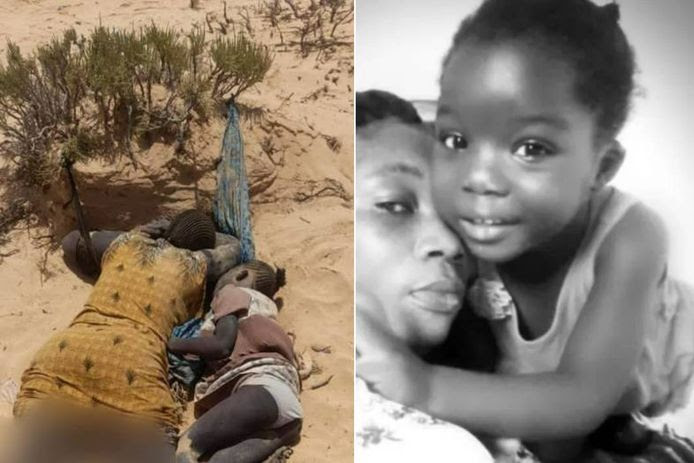

 ANP
ANP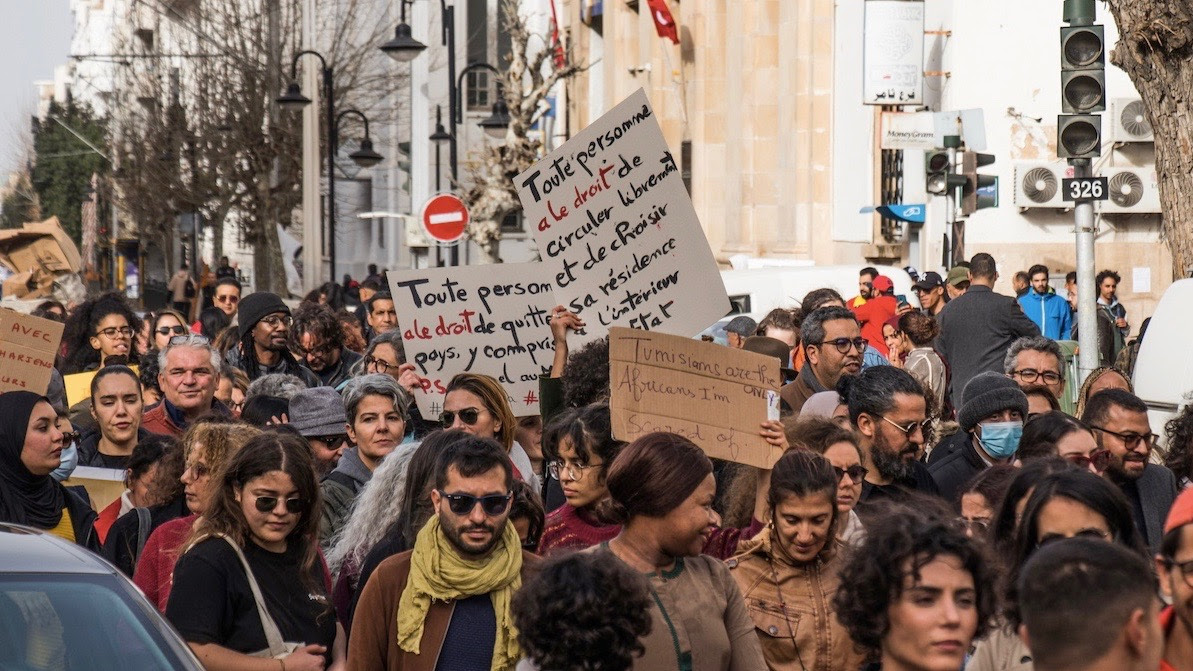
 Nieuwsuur