

LADY VIOLET BRIDGERTON

ANTHONY BRIDGERTON
LADY VIOLET’S SON

SIENA ROSSO

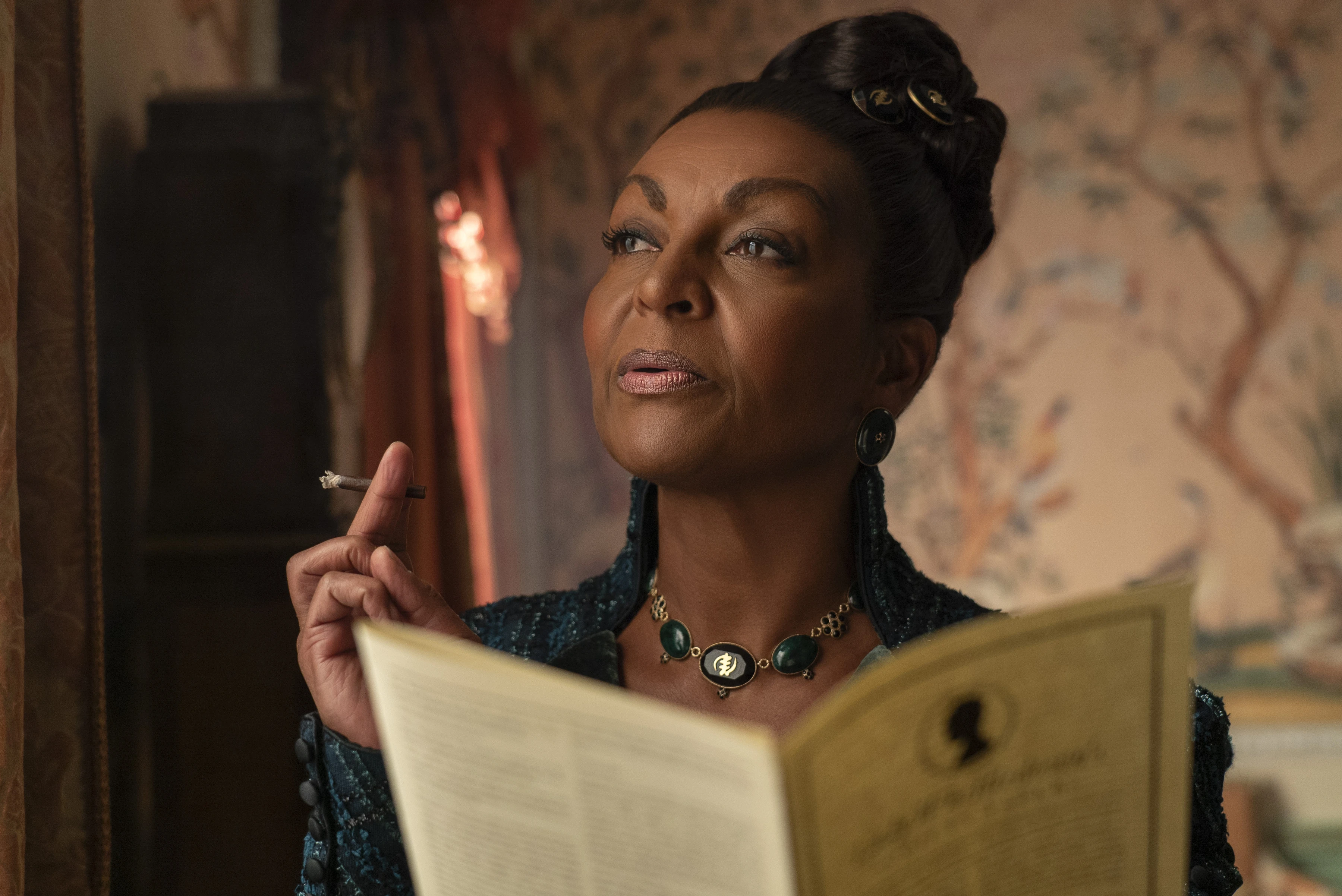
LADY DANBURY, CLOSE FRIEND OF LADY VIOLET
LADY VIOLET AND HER RELATIONSHIP WITH HER SON ANTHONY
UNRESOLVED MOURNING
[UNINTENTIONAL] FIGHT FOR POWER BETWEEN MOTHER AND SON/DOWAGER VISCOUNTESS AND NEW VISCOUNT
ANTHONY’S DEATH WISH [1A]
LADY VIOLET’S HARSH ATTITUDE, DUE TO SOCIAL NECESSITY, IN ANTHONY’S LOVE AFFAIR WITH SIENA ROSSO, LEADING TO DEEP HEARTACHE AND RESSENTIMENT
THE TRAGEDY OF THE ELDEST CHILD, BORING THE BRUNT
SEE ALSO ABOUT THE LOVE AFFAIR OF ANTHONY AND SIENA ROSSO
ADDITION:
In contrary with the underlying text [adjusted], a son didn’t become the judicial Head of his mother
when she became a widow
The confusion lays in the fact, that mostly the mother widow was financially dependent on her son and had no power whatsoever over the decisions her son made about the Estates and the financial management of the household
This led to tensions like between Anthony and his mother
THE TEXT HAS BEEN ADJUSTED
SEE ALSO
Writer and historian Astrid Essed states, that the relationship between Lady Violet and her eldest son Anthony is one of deep motherly, but strained love.
While Lady Violet is very tender with her other seven children, especially her eldest daughter Daphne, she is very stern and sometimes unintentional cruel against her son Anthony. This stems not from lack of love, but is due to Violet’s deep mourning after her husband’s death, which makes that she has no eye for Anthony’s personal emotional needs.
It stems also from the fact that as Head of the Family, Anthony is now managing the Family Estates, while his mother is financially subordinate.
And as a strong willed woman, Violet finds that hard to accept.
So she is
often unreasonably harsh to him, constantly pointing him on his duties and cruelly comparing him with his father, when he makes mistakes, saying that he would so disappointed in him.
She doesn’t punish him consciously for being her legal head, loving him dearly, it’s just
that apart from her mourning, she finds it hard to accept, that her son is also
her boss, since all the years she runned the Estate together with her husband.
But there is more:
Since Anthony has little experience as head of the Family [been 18 years
when he took over after his father’s death] Violet is terrified that he makes mistakes and in Regency Era, one single mistake could cost a
Family it’s reputation, leading to social death.
And being the Head of the Family, you are responsible for the rest.
Point is, that Anthony was so young then….
She also lashes out harshly to him for having an affair with opera singer
Siena Rosso, forcing him to break the relationship.
From her point of view understandable, since opera-singers were considered as ”immoral women” and a marriage between an aristocrat and an opera singer was considered as a no go area in Regency Era, leading to the social death of the whole Family [and Farewell to the marriage chances of Violet’s daughters] but for Anthony it was a severe blow, since he really loved Siena.
So the relationship between mother and son was very strained and even hostile, despite Violet’s deep love for her son.
This lasted until finally Violet realized her harsh stand against her son and the
heavy burden he had to carry, being Head of the Family at young age [18 years old]
Then, helped by the wise advise of her friend Lady Danbury, who points out,
that she is ”suffocating” Anthony with her unintenttional harshness, Lady Violet offers her tearful apologies to Anthony and their bond began to heal.
But the scars of the break-up of the Siena Rosso love affair [mainly caused
by Violet] remained,
since Violet never apologized for that….
ASTRID ESSED
[1A]
DO YOU WANT TO KNOW HOW LADY VIOLET’S HARSH TREATMENT
NEARLY DROVE ANTHONY TO HIS DEATH? [OF COURSE SHE HAD NO IDEA, BECAUSE SHE WOULD HAVE BEEN HORRIFIED AND HEARTBROKEN]
THEN WATCH MY WEBSITE WHEN POSTING ABOUT THE DUEL
[THAT NEVER WAS] BETWEEN ANTHONY AND HIS CLOSEST FRIEND SIMON, 2ND DUKE OF HASTINGS
SEE ALSO
SEE AI INFORMATION
AI ABOUT LADY DANBURY
The Mirror of Truth
Lady Danbury is the only person who dares to tell Violet that her “love” for Anthony has become stifling [1]. This blunt honesty shatters their social façade. Violet accepts this not as a personal attack, but as the necessary truth she can hear from no one else [5]. By holding up this mirror, Lady Danbury forces Violet to see that she wasn’t just guiding her son, but was inadvertently crushing him under the weight of her own unhealed trauma and rigid expectations.
Lady Danbury is the only person who dares to tell Violet that her “love” for Anthony has become stifling [1]. This blunt honesty shatters their social façade. Violet accepts this not as a personal attack, but as the necessary truth she can hear from no one else [5]. By holding up this mirror, Lady Danbury forces Violet to see that she wasn’t just guiding her son, but was inadvertently crushing him under the weight of her own unhealed trauma and rigid expectations.
AI
Writer and historian Astrid Essed offers a poignant analysis of the relationship between Lady Violet and her eldest son Anthony in Bridgerton, characterizing it as a form of “failed motherly love.”
According to Essed, their bond is defined by the following key elements:
- Unintentional Cruelty: While Violet is tender and nurturing toward her other seven children, she is often stern and even “unintentionally cruel” to Anthony. This stems from her deep mourning after her husband’s death, which blinded her to Anthony’s personal emotional needs as he stepped into his father’s shoes at only 18.
- The Power Struggle: Essed points out the friction caused by the social structure of the Regency Era. As the new Viscount, Anthony became the legal guardian of his siblings and his mother. For a strong-willed woman like Violet, it was difficult to accept her own child as her “boss,” leading her to lash out at him.
- The Weight of Comparison: Violet frequently used the memory of Edmund as a weapon, cruelly comparing Anthony to his father and telling him how disappointed Edmund would be. This created a hostile environment despite their underlying love.
- The Siena Rosso Affair: Violet’s harsh intervention in Anthony’s relationship with the opera singer was a “severe blow” to him. While Essed notes this was socially necessary to prevent the family’s “social death,” it deeply wounded Anthony, who truly loved Siena.
- The Reconciliation: The relationship only heals when Violet—prodded by the wise advice of Lady Danbury—realizes she has been “suffocating” her son. Her tearful apology marks the moment their bond shifts back from a legal conflict to a true mother-son relationship.