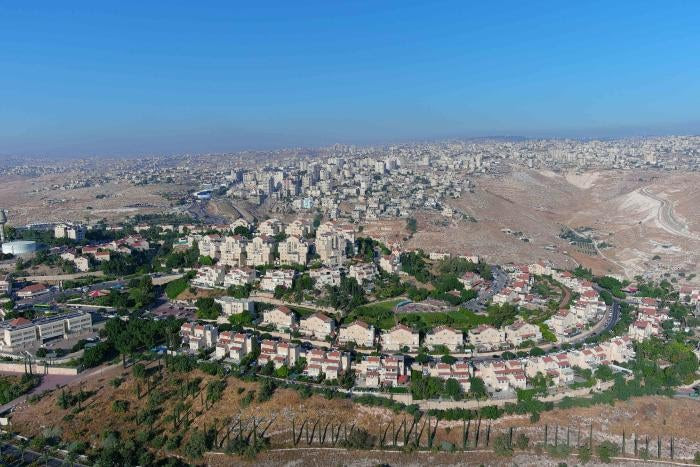
JERUSALEM Transportation Masterplan Team (JTMT) has awarded the TransJerusalem J-Net consortium, comprised of CAF and the construction firm Shapir, a €1.8bn contract to undertake an extension to the Jerusalem light rail network.
The Private-Public Partnership (PPP) includes the construction of 27km of new track, 53 new stations and various depots covering a 6.8km extension to the Red Line, and the new 20.6km Green Line. The Red Line is currently 13.8km long with 23 stations, and carries around 145,000 passengers daily.
The consortium will also design and supply 114 new Urbos LRVs for the Green Line, and the refurbishment of the 46 vehicles currently in service on the Red Line.
The contract includes the signalling, energy and communication systems, as well as the operation and maintenance of both lines for 15 and 25 years respectively, with the possibility of extending the term of operation.
CAF’s share of the contract is worth more than €500m, and includes the vehicle’s supply and refurbishment, signalling, energy and communication systems and project integration. CAF will also have a 50% stake in the Special Purpose Vehicle (SPV) company that will manage the operation and maintenance of both lines, which is expected to have a €1bn turnover.
Construction is expected begin later this year with the new extensions fully operational by 2025.
Shikun & Binui and Egged (Israel), CRRC (China), Comsa (Spain), Efatec (Portugal) and MPK (Poland) also submitted bids for the contract.
END OF THE ARTICLE
]URBAN TRANSPORT MAGAZINECAF-SAPHIR CONSORTIUM WINS JERUSALEM GREEN LINELIGHT RAIL TENDER
The transport authority JTMT (Jerusalem Transportation Masterplan Team) has chosen the TransJerusalem J-Net Ltd consortium, consisting in the CAF Group and the construction firm Saphir, for the Jerusalem light rail project. The project value is 1.8 billion EUR.
The so-called Green line is a PPP (Private-Public Partnership) scheme and includes the construction of 20.6 kilometres of new track, 53 stations and a depot. Jerusalem opened its’ first light rail line, the red line in 2011. The new Green line uses the current Red Line on a stretch of 6.8 km. The contract also includes the design and supply of 114 low-floor Urbos trams (which will be operated as double-tractions) for the new Green Line and the refurbishment of the 46 units which are currently in service on the existing Red Line.
114 Urbos trams and 25 years of operation
The project scope of the consortium will also include the supply of the signalling, energy and communication systems, as well as the operation and maintenance of both lines for 15 and 25 years respectively, with the possibility of extending the term of operation. The CAF Group’s scope of this project exceeds 500 million EUR. The Group will also have a 50% stake in the company that will manage the operation and maintenance of both lines. The project is expected to be implemented this year with the new network fully operative by 2025.
The future network
The tram’s Red Line currently extends along 13.8 km with 23 stations distributed on the route, was inaugurated in 2011 and providing transport to over 145,000 passengers on average per day. The Green lines is expected to have a ridership of 200,000 passengers per day. It will link the two campuses of the Hebrew University of Jerusalem and continue south via Pat junction to Gilo while using a common section with the Red line in the city centre until the terminus of the Tel Aviv – Jerusalem railway station which was inaugurated in 2018.
Of the eight entities that participated in the preliminary stages, only two consortiums submitted bids in the final stage. The other consortium consisted in the companies Shikun & Binui and Egged (Israel), CRRC (China), Comsa (Spain), Efatec (Portugal) and MPK (Poland). Siemens, Alstom and Bombardier are reported to have left the tender process at an earlier stage. The companies did not officially withdraw from the process due to political reasons. Nevertheless, the light rail development in Jerusalem has been criticized in the past as both lines run through the disputed area of East Jerusalem.
END OF THE ARTICLE
CAF
GET OFF ISRAEL APARTHEIDTRAIN
https://bdsmovement.net/boycott-caf
WHY?
Israel is only able to maintain its regime of occupation, colonisation and apartheid over the Palestinian people because of international complicity. Corporations play a key role in this.
The Jerusalem Light Rail (JLR) project is so blatantly illegal that other multinationals which had participated in the initial stages of bidding for the project, including Alstom, Siemens, Systra, Bombardier and Macquarie withdrew from the call for tenders, leaving just two consortiums bidding.
The French company Veolia was forced to pull out of the same illegal Israeli JLR project in 2015 after losing billions of dollars in international tenders due to sustained BDS campaigning in Europe, the US and several Arab countries.
The Israeli business publication Globes claimed, expectedly, that the other firms did not “officially withdraw from the process for political reasons” but admitted that “for most of the international transportation and infrastructure companies, Jerusalem is ‘outside the pale.’”
Corporate involvement in the crimes of Israel’s regime of occupation and apartheid is not only morally reprehensible and a legal liability. It can hurt business, too.
MILESTONES
2020
October:
In the Spanish state over 100 people have asked the public train company RENFE not to contract CAF, due to its involvement in the illegal Israeli Jerusalem Light Rail (JLR), in partnership with the Israeli company Shapir that is in the UN database of companies that enable and profit from Israel’s illegal settlement enterprise.
Eighteen human rights groups have asked the Spanish Minister of transport José Luis Abalos to exclude from public tenders CAF and all companies listed in the UN database, such as Alstom. Over thirty organisations in solidarity with Palestine sent a letter to Reyes Maroto the Spanish Minister of Industry and the publicly owned company RENFE. This letter was sent because the Minister had offered more public contracts to CAF in light of the company’s announcement of its plans to shut down one of its factories, Trenasa, causing 118 people to lose their jobs. This decision is incomprehensible seeing that the company ended 2019 with its highest record of earnings and its best record in sales. This and the fact that CAF is involved in an illegal Israeli project that serves settlements, which will expose the company to boycott campaigns globally, are clear evidence that CAF cares very little about its workers’ rights and about human rights in general.
In Oslo, Norway, the Palestine Committee and two railway unions received new trams from the Basque firm CAF with a protest. They’re asking Norway’s public sector not to work with CAF until it stops building Israel’s illegal Jerusalem Light Rail, entrenching apartheid.
Eight trade unions in Norway have joined the call to boycott CAF: Norwegian Union of Municipal and General Employees (National), Norwegian Union of Railway workers (National), National Union of Norwegian Locomotivemen (National), Fagforbundet- Helse, Sosial og Velferd, Oslo (Local), Norwegian Civil Service Union at OsloMet (Local), Lokomotivpersonalets forening Oslo (Local), Norwegian Federation of Trade Unions, local 850 (Local), and Oslo Sporveiers Arbeiderforening (Local).
CAF and Shapir are close to signing one of the largest project financing agreements ever agreed in Israel for the construction and operation of a network of lines in the illegal Jerusalem Light Rail project. The financing will be extended by a consortium of banks led by Bank Hapoalim, which like Shapir is included in the UN database of companies profiting from business in Israel’s illegal settlements.
END OF THE ARTICLE
” The Jerusalem light rail connects large Israeli settlement blocs in occupied East Jerusalem with the western part of the city, expropriating occupied Palestinian land and promoting increased territorial contiguity for settlements alongside growing territorial fragmentation for East Jerusalem’s Palestinian neighborhoods.”
EXECUTIVE SUMMARY WHO PROFITS.ORGFLASH REPORTTRACKING ANNEXATION:THE JERUSALEM LIGHT RAIL AND THE ISRAELIOCCUPATION
”Development of the light rail line is bringing prosperity and growth to the city’s real estate and business sectors, an upsurge in cultural and entertainment centers, and accessibility to the downtown area for residents of large neighborhoods, such as Pigat Ze’ev.”
”Israel’s policy of settling its civilians in occupied Palestinian territory and displacing the local population contravenes fundamental rules of international humanitarian law.
Article 49 of the Fourth Geneva Convention states: “The Occupying Power shall not deport or transfer parts of its own civilian population into the territory it occupies.” It also prohibits the “individual or mass forcible transfers, as well as deportations of protected persons from occupied territory”.
The extensive appropriation of land and the appropriation and destruction of property required to build and expand settlements also breach other rules of international humanitarian law. Under the Hague Regulations of 1907, the public property of the occupied population (such as lands, forests and agricultural estates) is subject to the laws of usufruct. This means that an occupying state is only allowed a very limited use of this property. This limitation is derived from the notion that occupation is temporary, the core idea of the law of occupation. In the words of the International Committee of the Red Cross, the occupying power “has a duty to ensure the protection, security, and welfare of the people living under occupation and to guarantee that they can live as normal a life as possible, in accordance with their own laws, culture, and traditions.”
Individual or mass forcible transfers, as well as deportations of protected persons from occupied territory to the territory of the Occupying Power or to that of any other country, occupied or not, are prohibited, regardless of their motive. Nevertheless, the Occupying Power may undertake total or partial evacuation of a given area if the security of the population or imperative military reasons so demand. Such evacuations may not involve the displacement of protected persons outside the bounds of the occupied territory except when for material reasons it is impossible to avoid such displacement. Persons thus evacuated shall be transferred back to their homes as soon as hostilities in the area in question have ceased. The Occupying Power undertaking such transfers or evacuations shall ensure, to the greatest practicable extent, that proper accommodation is provided to receive the protected persons, that the removals are effected in satisfactory conditions of hygiene, health, safety and nutrition, and that members of the same family are not separated. The Protecting Power shall be informed of any transfers and evacuations as soon as they have taken place. The Occupying Power shall not detain protected persons in an area particularly exposed to the dangers of war unless the security of the population or imperative military reasons so demand. The Occupying Power shall not deport or transfer parts of its own civilian population into the territory it occupies.
”Art. 55. The occupying State shall be regarded only as administrator and usufructuary of public buildings, real estate, forests, and agricultural estates belonging to the hostile State, and situated in the occupied country. It must safeguard the capital of these properties, and administer them in accordance with the rules of usufruct.
[QUESTION] 6 HOW CAN YOU ACCUSE ISRAEL OF APARTHEID WHEN ISRAELIVOTE IN NATIONAL ELECTIONS, HAVE PASSPORTS, MOVE FREELY,AND SERVE IN THE KNESSET? HUMAN RIGHTS WATCHQ & A: A TRESHOLD CROSSEDISRAELI AUTHORITIES AND THE CRIME OF APARTHEIDAND PERSECUTION
”We found the three elements of the crime of apartheid all come together in the OPT, pursuant to a single Israeli government policy. That policy is to maintain the domination of Jewish Israelis over Palestinians from the Jordan River to the Mediterranean Sea. In the OPT, that intent has been coupled with systematic oppression and inhumane acts committed against Palestinians living there.”
[QUESTION] 7ARE YOU SAYING THAT THERE IS APARTHEIDWITHIN THE GREEN LINE , THE INTERNATIONALLY RECOGNIZED BORDERS OFTHE STATE OF ISRAEL?OR ONLY IN THE WEST BANK AND GAZA? HUMAN RIGHTS WATCHQ & A: A TRESHOLD CROSSEDISRAELI AUTHORITIES AND THE CRIME OF APARTHEIDAND PERSECUTION
”The 213-page report, “A Threshold Crossed: Israeli Authorities and the Crimes of Apartheid and Persecution,” examines Israel’s treatment of Palestinians. It presents the present-day reality of a single authority, the Israeli government, ruling primarily over the area between the Jordan River and Mediterranean Sea, populated by two groups of roughly equal size, and methodologically privileging Jewish Israelis while repressing Palestinians, most severely in the occupied territory.”
HUMAN RIGHTS WATCHABUSIVE ISRAELI POLICIES CONSTITUTE CRIMES OFAPARTHEID, PERSECUTIONCRIMES AGAINST HUMANITY SHOULD TRIGGER ACTION TO END REPRESSION AGAINST PALESTINIANS
(Jerusalem) – Israeli authorities are committing the crimes against humanity of apartheid and persecution, Human Rights Watch said in a report released today. The finding is based on an overarching Israeli government policy to maintain the domination by Jewish Israelis over Palestinians and grave abuses committed against Palestinians living in the occupied territory, including East Jerusalem.
The 213-page report, “A Threshold Crossed: Israeli Authorities and the Crimes of Apartheid and Persecution,” examines Israel’s treatment of Palestinians. It presents the present-day reality of a single authority, the Israeli government, ruling primarily over the area between the Jordan River and Mediterranean Sea, populated by two groups of roughly equal size, and methodologically privileging Jewish Israelis while repressing Palestinians, most severely in the occupied territory.April 27, 2021
Israeli Authorities and the Crimes of Apartheid and Persecution
“Prominent voices have warned for years that apartheid lurks just around the corner if the trajectory of Israel’s rule over Palestinians does not change,” said Kenneth Roth, executive director of Human Rights Watch. “This detailed study shows that Israeli authorities have already turned that corner and today are committing the crimes against humanity of apartheid and persecution.”
The finding of apartheid and persecution does not change the legal status of the occupied territory, made up of the West Bank, including East Jerusalem, and Gaza, or the factual reality of occupation.
Originally coined in relation to South Africa, apartheid today is a universal legal term. The prohibition against particularly severe institutional discrimination and oppression or apartheid constitutes a core principle of international law. The 1973 International Convention on the Suppression and Punishment of the Crime of Apartheid and the 1998 Rome Statute to the International Criminal Court (ICC) define apartheid as a crime against humanity consisting of three primary elements:
An intent to maintain domination by one racial group over another.
A context of systematic oppression by the dominant group over the marginalized group.
Inhumane acts.
The reference to a racial group is understood today to address not only treatment on the basis of genetic traits but also treatment on the basis of descent and national or ethnic origin, as defined in the International Convention on the Elimination of all Forms of Racial Discrimination. Human Rights Watch applies this broader understanding of race.
The crime against humanity of persecution, as defined under the Rome Statute and customary international law, consists of severe deprivation of fundamental rights of a racial, ethnic, or other group with discriminatory intent.
Human Rights Watch found that the elements of the crimes come together in the occupied territory, as part of a single Israeli government policy. That policy is to maintain the domination by Jewish Israelis over Palestinians across Israel and the occupied territory. It is coupled in the occupied territory with systematic oppression and inhumane acts against Palestinians living there.
Drawing on years of human rights documentation, case studies, and a review of government planning documents, statements by officials, and other sources, Human Rights Watch compared policies and practices toward Palestinians in the occupied territory and Israel with those concerning Jewish Israelis living in the same areas. Human Rights Watch wrote to the Israeli government in July 2020, soliciting its perspectives on these issues, but has received no response.
Across Israel and the occupied territory, Israeli authorities have sought to maximize the land available for Jewish communities and to concentrate most Palestinians in dense population centers. The authorities have adopted policies to mitigate what they have openly described as a “demographic threat” from Palestinians. In Jerusalem, for example, the government’s plan for the municipality, including both the west and occupied east parts of the city, sets the goal of “maintaining a solid Jewish majority in the city” and even specifies the demographic ratios it hopes to maintain.
To maintain domination, Israeli authorities systematically discriminate against Palestinians. The institutional discrimination that Palestinian citizens of Israel face includes laws that allow hundreds of small Jewish towns to effectively exclude Palestinians and budgets that allocate only a fraction of resources to Palestinian schools as compared to those that serve Jewish Israeli children. In the occupied territory, the severity of the repression, including the imposition of draconian military rule on Palestinians while affording Jewish Israelis living in a segregated manner in the same territory their full rights under Israel’s rights-respecting civil law, amounts to the systematic oppression required for apartheid.
Israeli authorities have committed a range of abuses against Palestinians. Many of those in the occupied territory constitute severe abuses of fundamental rights and the inhumane acts again required for apartheid, including: sweeping movement restrictions in the form of the Gaza closure and a permit regime, confiscation of more than a third of the land in the West Bank, harsh conditions in parts of the West Bank that led to the forcible transfer of thousands of Palestinians out of their homes, denial of residency rights to hundreds of thousands of Palestinians and their relatives, and the suspension of basic civil rights to millions of Palestinians.
Many of the abuses at the core of the commission of these crimes, such as near-categorical denial of building permits to Palestinians and demolition of thousands of homes on the pretext of lacking permits, have no security justification. Others, such as Israel’s effective freeze on the population registry it manages in the occupied territory, which all but blocks family reunification for Palestinians living there and bars Gaza residents from living in the West Bank, use security as a pretext to further demographic goals. Even when security forms part of the motivation, it no more justifies apartheid and persecution than it would excessive force or torture, Human Rights Watch said.
“Denying millions of Palestinians their fundamental rights, without any legitimate security justification and solely because they are Palestinian and not Jewish, is not simply a matter of an abusive occupation,” Roth said. “These policies, which grant Jewish Israelis the same rights and privileges wherever they live and discriminate against Palestinians to varying degrees wherever they live, reflect a policy to privilege one people at the expense of another.”
Statements and actions by Israeli authorities in recent years, including the passage of a law with constitutional status in 2018 establishing Israel as the “nation-state of the Jewish people,” the growing body of laws that further privilege Israeli settlers in the West Bank and do not apply to Palestinians living in the same territory, as well as the massive expansion in recent years of settlements and accompanying infrastructure connecting settlements to Israel, have clarified their intent to maintain the domination by Jewish Israelis. The possibility that a future Israeli leader might someday forge a deal with Palestinians that dismantles the discriminatory system does not negate that reality today.
Israeli authorities should dismantle all forms of repression and discrimination that privilege Jewish Israelis at the expense of Palestinians, including with regards to freedom of movement, allocation of land and resources, access to water, electricity, and other services, and the granting of building permits.
The ICC Office of the Prosecutor should investigate and prosecute those credibly implicated in the crimes against humanity of apartheid and persecution. Countries should do so as well in accordance with their national laws under the principle of universal jurisdiction, and impose individual sanctions, including travel bans and asset freezes, on officials responsible for committing these crimes.
The findings of crimes against humanity should prompt the international community to reevaluate the nature of its engagement in Israel and Palestine and adopt an approach centered on human rights and accountability rather than solely on the stalled “peace process.” Countries should establish a UN commission of inquiry to investigate systematic discrimination and repression in Israel and Palestine and a UN global envoy for the crimes of persecution and apartheid with a mandate to mobilize international action to end persecution and apartheid worldwide.
Countries should condition arms sales and military and security assistance to Israel on Israeli authorities taking concrete and verifiable steps toward ending their commission of these crimes. Countries should vet agreements, cooperation schemes, and all forms of trade and dealing with Israel to screen for those directly contributing to committing the crimes, mitigate the human rights impacts and, where not possible, end activities and funding found to facilitate these serious crimes.
“While much of the world treats Israel’s half-century occupation as a temporary situation that a decades-long ‘peace process’ will soon cure, the oppression of Palestinians there has reached a threshold and a permanence that meets the definitions of the crimes of apartheid and persecution,” Roth said. “Those who strive for Israeli-Palestinian peace, whether a one or two-state solution or a confederation, should in the meantime recognize this reality for what it is and bring to bear the sorts of human rights tools needed to end it.”
”Israel has maintained military rule over some portion of the Palestinian population for all but six months of its 73-year history. It did so over the vast majority of Palestinians inside Israel from 1948 and until 1966. From 1967 until the present, it has militarily ruled over Palestinians in the OPT, excluding East Jerusalem. By contrast, it has since its founding governed all Jewish Israelis, including settlers in the OPT since the beginning of the occupation in 1967, under its more rights-respecting civil law.”
REPORT HUMAN RIGHTS WATCH: HUMAN RIGHTS WATCHA TRESHOLD CROSSEDISRAELI AUTHORITIES AND THE CRIME OF APARTHEID AND PERSECUTION
1. For the purpose of this Statute, “crime against humanity” means any of the following acts when committed as part of a widespread or systematic attack directed against any civilian population, with knowledge of the attack:
(a) Murder;
(b) Extermination;
(c) Enslavement;
(d) Deportation or forcible transfer of population;
(e) Imprisonment or other severe deprivation of physical liberty in violation of fundamental rules of international law;
(f) Torture;
(g) Rape, sexual slavery, enforced prostitution, forced pregnancy, enforced sterilization, or any other form of sexual violence of comparable gravity;
(h) Persecution against any identifiable group or collectivity on political, racial, national, ethnic, cultural, religious, gender as defined in paragraph 3, or other grounds that are universally recognized as impermissible under international law, in connection with any act referred to in this paragraph or any crime within the jurisdiction of the Court;
Forcible takeovers of homes, brutal suppression of demonstrators, places of worship under assault, identity-based communal violence, indiscriminate rocket attacks, children killed in strikes: what to make of the dizzying headlines out of Israel and Palestine in recent days?
Without doubt, the recent events in Gaza and Jerusalem have given rise to grave abuses. We are investigating and will take some time as we gather the facts. There are, though, some preliminary takeaways based on what we do know.
The escalation began over the move to take over several Palestinian homes in the Sheikh Jarrah neighborhood of East Jerusalem, which Israel has annexed but is occupied territory under international law. Israel planned to evict the Palestinian residents and transfer their longtime homes to Jewish settlers. Israeli courts allowed these moves under a 1970 Israeli law that facilitates the return of property to Jewish owners or their heirs, including Jewish associations acting on their behalf, that they claim to have owned in East Jerusalem prior to 1948, when Jordanian authorities assumed control until 1967.
The Palestinian families involved had earlier been displaced from inside what is today Israel. They are barred by law from reclaiming their land and homes, which the Israeli authorities confiscated, along with land belonging to many other displaced Palestinians, as “absentee property” in the aftermath of the events around the establishment of the state of Israel between 1947 and 1949. A final court ruling on the matter is expected soon.
This discriminatory treatment, with the exact opposite legal outcomes for claims of pre-1948 title to property based on whether the claimant is a Jewish Israeli or a Palestinian, underscores the reality of apartheid that Palestinians in East Jerusalem face. Nearly all Palestinians who live in East Jerusalem hold a conditional, revocable residency status, while Jewish Israelis in the same area are citizens with secure status. Palestinians live in densely populated enclaves that receive a fraction of the resources given to settlements and effectively cannot obtain building permits, while neighboring Israeli settlements built on expropriated Palestinian land flourish.
Israeli officials have intentionally created this discriminatory system under which Jewish Israelis thrive at the expense of Palestinians. The government’s plan for the Jerusalem municipality, including both the west and occupied east parts of the city, sets the goal of “maintaining a solid Jewish majority in the city” and even specifies the demographic ratios it hopes to maintain. This intent to dominate underlies Israel’s crimes against humanity of apartheid and persecution, which Human Rights Watch documented in a recent report.
To protest the planned Sheikh Jarrah evictions, Palestinians held demonstrations around East Jerusalem, some of which included incidents of rock-throwing. Israeli forces responded by firing teargas, stun grenades, and rubber-coated steel bullets, including inside al-Aqsa Mosque, injuring 1000 Palestinians, 735 by rubber bullets, between May 7 and May 10, according to the United Nations Office for the Coordination of Humanitarian Affairs (OCHA). At least 32 Israeli officers have also been injured, according to figures cited by OCHA.
These practices stem from a decades-long pattern of Israeli authorities using excessive and vastly disproportionate force to quell protests and disturbances by Palestinians, often resulting in serious injury and loss of life.
Protests later broke out both in the West Bank and inside Israel.
Seeking to take advantage of the opportunity to brandish their image as defenders of al-Aqsa Mosque, Hamas and Palestinian armed groups in Gaza fired rockets at Israeli population centers. Three people in Israel have been killed as a result, as of May 11. Such attacks, which are inherently indiscriminate and endanger the lives, homes, and properties of tens of thousands of Israeli civilians, are war crimes, as Human Rights Watch has extensivelydocumented over the years.
In response, Israeli forces launched airstrikes in the Gaza Strip. The Palestinian Health Ministry reported on May 11 that these strikes killed 30 Palestinians, including 10 children, though there are reports that some may have been killed in errant rocket attacks by Palestinian armed groups. The legality of each strike requires thorough investigations, but the use of explosive weapons with wide area effects in the densely populated Gaza Strip, where more than 2 million Palestinians live in a strip of territory that is 41 kilometers long and between 6 and 12 kilometers wide, and targeting at times of residential buildings is likely to harm civilians.
During armed hostilities over the last decade plus, Human Rights Watch has documented the regular use of excessive and vastly disproportionate force by Israeli authorities, at times deliberately targeting civilians or civilian infrastructure.
For years, this cycle of escalation has played on loop, at varying degrees of intensity. Even if the immediate crisis subsides, the vicious cycle will continue so long as impunity for serious abuses remains the norm and the international community fails to take the sort of measures to ensure accountability that a situation of this gravity warrants.
END OF THE ARTICLE
[7]
6. Basque company CAF is contracted to extend Israel’s Jerusalem Light Rail (JLR) tram service to illegal settlements. Settlements are defined as war crimes under the Rome Statute of the International Criminal Court. The JLR passes through Sheikh Jarrah where illegal settlers backed by the Israeli state, their military, and police forces, are attempting to ethnically cleanse Palestinian Sheikh Jarrah.
Use social media to demand #CAFGetOffIsraelsApartheidTrain
EAST JERUSALEM: WHAT IS HAPPENING AND HOW YOU CAN TAKE ACTION NOW
Watching apartheid Israel’s bloody crushing of popular Palestinian protests in Sheikh Jarrah and occupied Jerusalme calls us to action. We have proven before our collective power in the form of #BDS. Here are 9 actions you can take to fight Israeli impunity and #SaveSheikhJarrah.
Over the last number of weeks Palestinian protests to #SaveSheikhJarrah, in occupied East Jerusalem, have grown in size. They have been met with brutal repression by Israeli apartheid security forces, including police officers trained in Israel’s police training academy partially owned by G4S and Allied Universal.
Indigenous Palestinian residents of Sheikh Jarrah have fought lengthy legal battles in Israeli courts against eviction orders which would see them ethnically cleansed, forcefully evicted from their homes, and replaced with illegal Israeli settlers.
At the beginning of May, Israeli settlers submitted their response to the rightful claims of the residents of Sheikh Jarrah to the Israeli court, an apparatus of Israel’s apartheid regime.
The Palestinian families were then given time to reach an “agreement” with the settlers regarding the right to their homes. Sheikh Jarrah belongs to the Palestinian families. It is part of the occupied Palestinian territory, and therefore any Israeli settler presence in it amounts to a war crime under international law. Israel’s settlement enterprise is an integral part of its apartheid system against all Palestinians.
The Israeli court decision to give a period of time to “both sides” to seek a compromise and reach an agreement is colonial gaslighting. It is also a tactic used to exhaust the ongoing protests and public pressure to #SaveSheikhJarrah. More protests are scheduled to take place over the coming days, and residents vow to remain steadfast.
In Silwan, another East Jerusalem neighbourhood, extremist settlers backed by the Israeli state want to take over the homes of seven Palestinian families who are also fighting lengthy legal battles in Israeli courts.
In occupied Jerusalem, Israel keeps a 60:40 demographic ratio between Jews and Arabs. All ‘excess’ Palestinians are under threat of forced transfer.
In Jerusalem, the government’s plan for the municipality, including both the west and occupied east of the city, sets the goal of “maintaining a solid Jewish majority in the city” and a target demographic “ratio of 70% Jews and 30% Arabs”—later adjusted to a 60:40 ratio after authorities acknowledged that “this goal is not attainable” in light of “the demographic trend.”
Watching from afar Israel’s brutal violence against unarmed Palestinian protestors defending their homes and dignity can evoke feelings of anger mixed with powerlessness. We have proven before that collective action in the form of #BDS works best to express true and effective solidarity. Here are 9 actions you can take to fight Israeli impunity and #SaveSheikhJarrah
TAKE ACTION
First, use the power of social media to highlight what is happening. Use #SaveSheikhJarrah and #SaveSilwan in all of your social media posts. Share images and videos from activists who are facing social media censorship. Amplify the voices of the Palestinian residents of Sheikh Jarrah and Silwan.
Last week Human Rights Watch stated in their groundbreaking report what Palestinians have been saying for decades. Israel is an apartheid state. Now the global consensus is building. Israel’s regime of oppression, including its actions in Sheikh Jarrah, fits the UN definition of apartheid. We can work together to dismantle Israeli apartheid, as global solidarity and boycotts helped to end South African apartheid.Support our campaign and use #UNInvestigateApartheid on social media to add your voice to the global call.
Israeli security companies make millions of dollars in global exports every year by selling goods and services tested on Indigenous Palestinians, including those struggling against ethnic cleansing in occupied Jerusalem. AnyVision’s facial recognition system and NSO’s spying technology are among the most obvious examples of apartheid Israel’s tools of mass surveillance and repression. Israel tries them on Palestinians and exports them to dictatorships and far-right governments worldwide to support their crimes and human rights violations.Pressure your parliament/government to impose a #MilitaryEmbargo against Israel.
G4S and now Allied Universal own a 25% stake in Israel’s national police academy where Israeli police learn brutal & violent repression being used against residents and activists in Sheikh Jarrah and Silwan. Some of these militarized tactics end up being shared with U.S. and other police forces during joint training.Join our letter-writing campaign and urge Allied Universal executives to divest from Israeli apartheid.On social media use #StopG4S to demand they divest from Israeli apartheid.
Hewlett Packard Enterprise and Hewlett Packard (HPE and HP) play key roles in Israel’s regime of military occupation, settler-colonialism and apartheid against the Indigenous Palestinians. They provide computer systems to the Israeli army and maintain data centres through their servers for the Israeli police who are violently repressing peaceful protestors defending their homes in Sheikh Jarrah and Silwan.Sign the international pledge and use #BoycottHP on social media.
Basque company CAF is contracted to extend Israel’s Jerusalem Light Rail (JLR) tram service to illegal settlements. Settlements are defined as war crimes under the Rome Statute of the International Criminal Court. The JLR passes through Sheikh Jarrah where illegal settlers backed by the Israeli state, their military, and police forces, are attempting to ethnically cleanse Palestinian Sheikh Jarrah.Use social media to demand #CAFGetOffIsraelsApartheidTrain
German sportswear manufacturer PUMA sponsors the Israel Football Association, which includes teams and pitches in illegal Israeli settlements, including Givat HaMivtar, just north of Sheikh Jarrah in occupied East Jerusalem. Join the campaign launched by 200 Palestinian teams to #BoycottPuma.Share social media actions hijacking PUMA’s #OnlySeeGreat campaign with Palestinians #OnlySeeApartheid.
Boycott all products from Israel’s colonial settlements! Israeli produce like dates and avocados, many of which are produced by companies operating in settlements, can be found in local supermarkets. Demand your supermarket to stop stocking them.
International action can help stop Israel in its tracks. Email or call the elected officials in your country and urge them to adopt Human Rights Watch findings on Israeli apartheid and, crucially, its recommendations to condition all relations with Israel on dismantling its apartheid regime.
This Saturday June 5 is the annual shareholder meeting of CAF, a Basque company that is building the Jerusalem Light Rail (JLR), a tram line serving Israel’s illegal settlements in Jerusalem.
The JLR passes through occupied Jerusalem including the Palestinian neighbourhood of Sheikh Jarrah, which Israel wants to ethnically cleanse.
We need your help to pressure CAF shareholders: CAF must end its complicity with Israel’s violent occupation of Jerusalem.
Four Palestinian families are facing eviction from their Jerusalem homes in the Sheikh Jarrah neighborhood. Over the past few weeks, Israeli settlers, with the backing of lsrael’s military and police forces, have violently attacked Palestinians in Sheikh Jarrah and the rest of occupied Jerusalem.
This last wave of attacks is not new and is a core part of Israel’s systemic ethnic cleansing of Palestinians in Jerusalem- which is illegal under international law.
Palestinians in Sheikh Jarrah are resilient and defiant, and despite Israel’s brutal attacks, they will not give up their rights to their homes.
You can stand with them by pressuring CAF to abandon the project to build Israel’s colonial tramway.
Pressure works, and there is a precedent. Two weeks ago, the Norwegian Oil Fund divested from CAF’s partner in the Jerusalem Light Rail, the Israeli company Shapir, due to its complicity in human rights violations. The Norwegian Oil Fund is also a shareholder of CAF.
On Saturday, CAF shareholders have a choice to make: take the company out of Sheikh Jarrah, and occupied Jerusalem, or face losing lucrative contracts around the world through BDS action.
END OF ARTICLE
[8]
”Under the “disengagement” plan endorsed Tuesday by the Knesset, Israeli forces will keep control over Gaza’s borders, coastline and airspace, and will reserve the right to launch incursions at will. Israel will continue to wield overwhelming power over the territory’s economy and its access to trade.
“The removal of settlers and most military forces will not end Israel’s control over Gaza,” said Sarah Leah Whitson, Executive Director of Human Rights Watch’s Middle East and North Africa Division. “Israel plans to reconfigure its occupation of the territory, but it will remain an occupying power with responsibility for the welfare of the civilian population.”
Israeli Government Still Holds Responsibility for Welfare of Civilians
The Israeli government’s plan to remove troops and Jewish settlements from the Gaza Strip would not end Israel’s occupation of the territory. As an occupying power, Israel will retain responsibility for the welfare of Gaza’s civilian population.
Under the “disengagement” plan endorsed Tuesday by the Knesset, Israeli forces will keep control over Gaza’s borders, coastline and airspace, and will reserve the right to launch incursions at will. Israel will continue to wield overwhelming power over the territory’s economy and its access to trade.
“The removal of settlers and most military forces will not end Israel’s control over Gaza,” said Sarah Leah Whitson, Executive Director of Human Rights Watch’s Middle East and North Africa Division. “Israel plans to reconfigure its occupation of the territory, but it will remain an occupying power with responsibility for the welfare of the civilian population.”
Under the plan, Israel is scheduled to remove settlers and military bases protecting the settlers from the Gaza Strip and four isolated West Bank Jewish settlements by the end of 2005. The Israeli military will remain deployed on Gaza’s southern border, and will reposition its forces to other areas just outside the territory.
In addition to controlling the borders, coastline and airspace, Israel will continue to control Gaza’s telecommunications, water, electricity and sewage networks, as well as the flow of people and goods into and out of the territory. Gaza will also continue to use Israeli currency.
A World Bank study on the economic effects of the plan determined that “disengagement” would ease restrictions on mobility inside Gaza. But the study also warned that the removal of troops and settlers would have little positive effect unless accompanied by an opening of Gaza’s borders. If the borders are sealed to labor and trade, the plan “would create worse hardship than is seen today.”
The plan also explicitly envisions continued home demolitions by the Israeli military to expand the “buffer zone” along the Gaza-Egypt border. According to a report released last week by Human Rights Watch, the Israeli military has illegally razed nearly 1,600 homes since 2000 to create this buffer zone, displacing some 16,000 Palestinians. Israeli officials have called for the buffer zone to be doubled, which would result in the destruction of one-third of the Rafah refugee camp.
In addition, the plan states that disengagement “will serve to dispel the claims regarding Israel’s responsibility for the Palestinians in the Gaza Strip.” A report by legal experts from the Israeli Justice Ministry, Foreign Ministry and the military made public on Sunday, however, reportedly acknowledges that disengagement “does not necessarily exempt Israel from responsibility in the evacuated territories.”
If Israel removes its troops from Gaza, the Palestinian National Authority will maintain responsibility for security within the territory—to the extent that Israel allows Palestinian police the authority and capacity. Palestinian security forces will still have a duty to protect civilians within Gaza and to prevent indiscriminate attacks on Israeli civilians.
“Under international law, the test for determining whether an occupation exists is effective control by a hostile army, not the positioning of troops,” Whitson said. “Whether the Israeli army is inside Gaza or redeployed around its periphery and restricting entrance and exit, it remains in control.”
Under international law, the duties of an occupying power are detailed in the Fourth Geneva Convention and The Hague Regulations. According to The Hague Regulations, a “territory is considered occupied when it is actually placed under the authority of the hostile army. The occupation extends only to the territory where such authority has been established and can be exercised.”
Israeli forces have displayed a shocking disregard for the lives of Palestinian civilians by carrying out a number of airstrikes targeting residential buildings in some cases killing entire families – including children – and causing wanton destruction to civilian property, in attacks that may amount to war crimes or crimes against humanity, said Amnesty International today.
The organization has documented four deadly attacks by Israel launched on residential homes without prior warning and is calling for the International Criminal Court (ICC) to urgently investigate these attacks. The death toll in Gaza continues to climb with at least 198 Palestinians killed including 58 children and more than 1,220 injured. Ten people in Israel, including two children, have been killed and at least 27 injured by Palestinian attacks.
“There is a horrific pattern emerging of Israel launching air strikes in Gaza targeting residential buildings and family homes – in some cases entire families were buried beneath the rubble when the buildings they lived in collapsed. In the cases documented below, no prior warning was given to the civilian residents to allow them to escape. Under international humanitarian law, all parties must distinguish between military targets and civilian objects and direct their attacks only at military objectives. When carrying out attacks, parties must take all feasible precautions to minimize harm to civilians,” said Saleh Higazi, Deputy Director for the Middle East and North Africa.
“Although the Israeli military has given no explanation of what military objectives it was targeting in these attacks, it is hard to imagine how bombing residential buildings full of civilian families without warning could be considered proportionate under international humanitarian law. It is not possible to use large explosive weapons, like aircraft bombs that have a blast radius of many hundreds of meters, in populated areas without anticipating major civilian casualties.
“By carrying out these brazen deadly attacks on family homes without warning Israel has demonstrated a callous disregard for lives of Palestinian civilians who are already suffering the collective punishment of Israel’s illegal blockade on Gaza since 2007.”
The Israeli army claims that it only attacks military targets and has justified airstrikes on residential buildings on that basis. However, residents told Amnesty International that there were no fighters or military objectives in the vicinity at the time of the attacks documented.
“Deliberate attacks on civilians and civilian property and infrastructure are war crimes, as are disproportionate attacks. The International Criminal Court has an active investigation into the situation in Palestine and should urgently investigate these attacks as war crimes. States should also consider exercising universal jurisdiction over those who commit war crimes. Impunity only works to fuel the pattern of unlawful attacks and civilian bloodshed, which have we have repeatedly documented in previous Israeli military offensives on Gaza,” said Saleh Higazi.
At least 152 residential properties in Gaza have been destroyed since 11 May, according to the Gaza-based human rights organization, Al Mezan Center for Human Rights. According to the Palestinian Ministry of Public Works and Housing in Gaza, Israeli strikes have destroyed 94 buildings, comprising 461 housing and commercial units while 285 housing units have been severely damaged and rendered uninhabitable.
According to United Nations Office for the Coordination of Humanitarian Affairs (UNOCHA) more than 2,500 people have been made homeless due to the destruction of their homes and more than 38,000 people have been internally displaced and have sought shelter in 48 UNRWA schools across Gaza.
Indiscriminate rocket-fire by Palestinian armed groups towards civilian areas of Israel has also killed and injured civilians and damaged homes and other civilian properties. The rockets fired from Gaza into Israel are imprecise and their use violates international humanitarian law which prohibits the use of weapons that are by nature indiscriminate. These attacks should also be investigated by the ICC as war crimes.
Amnesty International has previously published evidence that the Israeli military had a deliberate policy of targeting family homes during the 2014 conflict.
Devastating attacks on family homes
In one of the heaviest episodes of bombardment since the latest fighting began, between 1am and 2am on 16 May Israel carried out airstrikes against residential buildings and streets in Gaza City. The attacks completely destroyed two residential buildings belonging to the Abu al-Ouf and al-Kolaq families – killing 30 people – 11 of them children.
Gaza’s Ministry of Labour building was also destroyed in the attacks. The attack blocked al-Wehda Street, one of the main roads leading to the main hospital in Gaza, al-Shifa.
The families residing in the four-storey al-Ouf building, which included residential apartments and shops, received no prior warning – they were buried beneath the rubble in the attack.
Yousef Yassin, a medic from al-Shifa Hospital, was one of the first to arrive on the scene of al-Ouf Building after the attack and helped pull survivors from the wreckage with the Red Crescent. He described the scene to Amnesty International as one of “great destruction”.
“I helped get out four dead [bodies], but there were many more. It was very hard. There was no warning, so people were inside their home sitting together, and this is a lively, bustling area,” he said.
Shortly before midnight on 14 May Israeli air strikes hit the three-storey building of the al-Atar family in Beit Lahia killing 28-year-old Lamya Hassan Mohammed Al-Atar her three children Islam, seven, Amira, six, and Mohammed an eight-month-old baby.
Lamya’s father, Hassan Al-Atar, a civil defence officer told Amnesty International he headed to the scene of the attack with an ambulance and rescue team after a relative called him with news of the attack. “He told me that our home had been bombed and [he was] stuck under the rubble [with his] wife and children,” he said.
“I arrived at the house, which is made up of three stories – 20 people live there – I tried to find people, but I could not. Then the rescue team arrived to help and we eventually found my daughter, a mother of three, with her children, one of whom was a baby, under one of the cement pillars of the house; all of them were dead. The other residents seem to have managed to escape from an opening after the bombing and got to the hospital. I was shocked,” he said.
Nader Mahmoud Mohammed Al-Thom, from al-Salatin neighbourhood in Beit Lahia, described how his home where he lives with eight others was attacked without any warning shortly after midnight on 15 May.
“There was no warning missile, no warning call, the house was bombed, and we were inside. Thank God that the civil defence and by sheer chance was close by and saved us from under the rubble, thank God no one died. We had injuries but not serious, when we got out I saw a fire at the gate of the house, then the ambulance took us to the hospital. I think this is when I lost consciousness. Thank God no one was badly hurt but we lost our house. We are now in the street; we do not know where to go what to do.”
His family sought shelter at an UNRWA school but the school they arrived at was closed when they arrived and they had to sleep outside in the school yard. His entire home was destroyed including his clothes, money and paperwork and all their belongings.
In addition to residential homes, Israeli attacks have damaged water and electricity infrastructure as well as medical facilities and halted the operations of the North Gaza Seawater Desalination plant, which supplies water to more than 250,000 people.
END OF THE ARTICLE
[9]
WIKIPEDIA
DIXI
https://en.wikipedia.org/wiki/Dixi
Reacties uitgeschakeld voor Notes t 1/m 9 at ”Letter to CAF about involvement in the illegal Israeli settlements”
THE WIND THAT SHAKES THE BARLEY/ONE OF ASTRID’S FAVORITE FILMS IN HONOUR OF THE BRAVE IRISH FREEDOMFIGHTERS, WHO GAVE THEIR LIFE FOR AN INDEPENDENT IRELANDAS LONG AS NORTHERN IRELAND IS OCCUPIED BY COLONIALGREAT BRITAIN, IT’S STILL ON…… https://en.wikipedia.org/wiki/The_Wind_That_Shakes_the_Barley_(film)
LISTEN!For my loyal readers I’ve made a composition of some of myfavorite films.Good movies, who made great impression on me for various reasons.Placed below in random order.
See and enjoy, because they are real classics. Perhaps I make a following up compilation of filmsBut in the meantime…..
LISTEN!For my loyal readers I’ve made a composition of some of myfavorite films.Good movies, who made great impression on me for various reasons.Placed below in random order.
See and enjoy, because they are real classics. Perhaps I make a following up compilation of filmsBut in the meantime…..
LISTEN!For my loyal readers I’ve made a composition of some of myfavorite films.Good movies, who made great impression on me for various reasons.Placed below in random order.
See and enjoy, because they are real classics. Perhaps I make a following up compilation of filmsBut in the meantime…..
Voor mijn trouwe lezers een samenstelling van een aantal van mijnFilm FavorietenMooie films, die om uiteenlopende redenen indruk op mij hebbengemaaktIn willekeurige volgorde Zie en genietZe zijn echt klassiekers
Misschien krijgen jullie nog meer films van mij doorMaar geniet voorlopig hiervan:
Kunnen we dat hier in Neederland ook, wat ze in Glasgow deden afgelopen donderdag,13 mei? [1] Enkele honderden mensen blokkeerden daar in Kenmure street, Pollokshields, een bus van ‘Immigration Enforcement’ waarin twee Indiase mannen waren opgesloten. De twee zouden worden weggevoerd met hun deportatie als doel. De immigratiedienst had daarvoor wel een bijzonder ongelukkige dag uitgekozen: die van de eerste dag van het Suikerfeest.
Het begon ermee dat iemand die bus zag staan en een bericht op Facebook plaatste. In zeer korte tijd verspreidde het nieuws van de inval en de arrestaties zich in de wijk. De eerste mensen die aan kwamen gingen voor de bus zitten. Een man ging er zelfs onder liggen, waardoor de bus niet meer kon wegrijden. Zelf zegt hij erover: “I was just buying time”. En dat lukte. Buurtbewoners stroomden toe.
De gebeurtenissen in Glasgow deden denken aan acties ondernomen in London in 2015. East Street market in Walworth, 21 juni [2]: Al vijf opeenvolgende dagen waren er razzia’s van de immigratiedienst geweest op een markt en de vijfde dag kwamen ze er niet meer mee weg. Terwijl ze met een arrestant in een busje waren gedoken, werden barricades opgeworpen om de bus blokkeren, de banden lek gesneden en de bus bekogeld met rot fruit en eieren van de markt. Ook daar kwamen toen heel veel mensen op af. Riot cops werden erbij gehaald om de immigratiedienst te ontzetten. Ze werden onthaald op flessen, stenen en wat er verder voor handen was. En ook daar slaagde de menigte erin de arrestant, plus een tweede die bij de actie was opgepakt, te bevrijden. Barricades hielden de Engelse ME op afstand. Victory!
Chapman Street, Shadwell, East London, 22 juli 2015 [3]: Ditmaal kwam de immigratiedienst vergezeld van pers even laten zien dat ze stevig optraden. Opnieuw ging het niet van een leien dakje. Autobanden werden lek gesneden, en de deportatie-officieren werden vanaf een hoog gebouw met eieren bekogeld. Smeris erbij en helaas volgens het bericht twee mensen opgepakt. Het verhaal vertelt niet hoe het met die twee arrestanten is afgelopen, maar de kern van het verhaal is: verzet is mogelijk, en het kan succesvol zijn. Het voert ook druk op. Het laat zien: je kunt niet zomaar even mensen komen oppakken om ze te deporteren.
Er zit natuurlijk heel wat tijd tussen deze verzetsdaden uit 2015 en die van afgelopen donderdag, maar ze hebben een ding gemeen: ze gebeuren in wijken met een hechte gemeenschap, waar mensen elkaar goed kennen en elkaar ook razendsnel waarschuwen. Als een kleine groep vast zorgt dat de bus niet weg kan, is er tijd om te mobiliseren. Dan heeft die immigratiedienst het nakijken. In 2015 ging het om invallen op een markt en in winkels, waar vermoed werd dat mensen ‘illegaal’ aan het werk waren. In Glasgow ging het om woninginvallen. Nu zijn ze daar in het VK ook nog zo aardig om in zeer herkenbare bussen aan te komen rijden waardoor iedereen meteen weet wat er aan de hand is: dit is geen gewone inval, dit is een ‘deportation raid’.
Terug naar Glasgow. Terwijl de menigte groeide, werd er politie bij geroepen. Op de beelden zie je de bus met daaromheen een dikke linie politie. Daaromheen zit en staat een menigte en roept: “Refugees are welcome here!” Dit ging niet alleen om de ruwe verstoring van het Suikerfeest. Dit is een gemeenschap die het niet pikt. Maar vooral ook: een gemeenschap die al lang en breed goed georganiseerd is rond en met vluchtelingen en ook actie onderneemt. Het is dus geen toeval. Mensen weten elkaar razendsnel te bereiken via chatdiensten en sociale media, waar groepen als het Anti Raids Network [4] en No Eviction Network [5] op zitten. [6]
Wat kunnen we hier nu van leren en overnemen in Neederland, polderland bij uitstek? Wat kunnen we hier doen, waar de IND of de DT&V niet met herkenbare busjes binnenvallen en de misdadige taak van de arrestaties bij de niet als zodanig herkenbare vreemdelingenpolitie wordt neergelegd? Wat kunnen we hier doen, in een land waar vluchtelingen zo onzichtbaar mogelijk worden gemaakt, waar afgewezen vluchtelingen vaak heel ver weg van alles en iedereen worden ‘opgevangen’ in de ‘vertreklocatie’ in Ter Apel of in een van de vele ‘gezinslocaties’ om vervolgens daar in het geniep met invallen te worden weggevoerd? [7] Afgelegen als het allemaal is, je bent er maar moeilijk op tijd bij. Toch is er maar een klein groepje voor nodig om tijd te winnen. En: het kan toch niet anders of zulke invallen vinden hier ook plaats in buurten waar veel migranten wonen en werken? En ja, ook daar zijn zij vaak onzichtbaar. Wie geen papieren heeft, kijkt wel uit. Maar wat maakt dan het verschil? In Glasgow en London slagen mensen er toch in zich te verenigen. Mensen kennen elkaar. Het is lokale organisatie. Communicatiekanalen opbouwen. In London zoeken ze zelfs uit waar en wanneer die razzia’s zoal plaatsvinden. [8] Dan weet je waar je op moet letten.
Full inzetten op het voorkomen en hinderen van invallen dus. En als het al gebeurd is, ze niet laten wegrijden met hun arrestanten. Verzet voorbereiden. Afspraken maken. Plannen. Laten we om ons heen kijken en zien of we dit in onze eigen buurt, gemeente, regio ook kunnen doen. En laten we landelijke netwerken opbouwen die ervaringen en informatie delen. Want: arrestaties voorkomen is deportaties voorkomen. Het is een kwestie van grenzen slechten, niet alleen die herkenbare om de staten heen, maar ook die tussen mensen. Als we dat kunnen, dan kan ‘Glasgow’ ook in Amsterdam, Den Haag, Rotterdam, Utrecht of willekeurig welke andere plaats en ja, misschien zelfs in het geïsoleerde Ter Apel of in een van de gezinslocaties.
ISRAELISCHE BOMBARDEMENTEN OP GAZA IN MEI 2021/TERREUR EN BEZETTING/BRIEF AAN DE LEDEN VAN DE COMMISSIE BUITENLANDSE ZAKEN VAN DE TWEEDE KAMER
MISDADEN VAN DE ISRAELISCHE BEZETTINGVERWOESTING VAN GAZA
BEZETTINGSTERREUR foto Oda Hulsen Hebron 2 mei 2017/Verwijst naar foto van een Palestijnse jongen, die tegen de muur wordt gezet doorIsraelische soldaten, die hem toeriepen ”Where is your knife!”/Later vrijgelaten
NB Het is dus NIET de foto van een Palestijnse jongen, die bij de kraag wordt gegrepen
De leden van de commissie-Buitenlandse Zaken van de Tweede Kamer Uw taakomschrijving:
De vaste commissie voor Buitenlandse Zaken behandelt de onderwerpen die te maken hebben met het beleid van de minister van Buitenlandse Zaken, behalve het interne beleid van de Europese Unie (EU). EU-onderwerpen worden namelijk behandeld door de commissie voor Europese Zaken. De commissie voor Buitenlandse Zaken overlegt regelmatig met de minister over actuele kwesties, zoals de situatie in conflictgebieden, mensenrechten en het uitzenden van Nederlandse militairen naar crisisgebieden. Ook behandelt de commissie de begroting van Buitenlandse Zaken, ontvangt ze internationale delegaties en gaat ze ieder jaar op werkbezoek naar het buitenland.
[Vooraf:Mocht u in tijdnood zijn, lees dan alleen het stukje onderin:OPROEP/EIS AAN U] Onderwerp:De voortdurende Israelische agressie tegen het Palestijnse volk Geachte dames en heren, [Een mail van gelijke strekking is tevens verzonden aan uw Tweede Kamer collegae, met uitzondering van drie fracties, die geen respect tonen voor het Internationaal Recht] Geachte dames en heren,
De walrus sprak:De tijd is daar Om over allerlei te praten”Een schoen, een schip, een kandelaar,Of koningen ook liegenEn of de zee soms koken kanEn een biggetje kan vliegen. Uit het Engels vertaald uit:
THE WALRUS AND THE CARPENTERLEWIS CARROLL: ALICE IN WONDERLAND
https://en.wikipedia.org/wiki/The_Walrus_and_the_Carpenter Zoals de Walrus sprak in het onvergetelijke ”Alice in Wonderland”[1] sprak ,zeg ik:”Het is tijd.”Het is hoog tijd om spijkers met koppen te slaan en als Commissie,binnen de mogelijkheden van uw taakomschrijving, ferm en fel stelling te nemen tegen de systematische Israelische onderdrukking en terreur jegens debezette Palestijnse bevolking!En daarmee bedoel ik niet alleen ”het uiten van bezorgdheid”, maar ook echt het Israelische onrecht benoemen en ernaar handelen!Want zoals ik al schreef:Het is niet van vandaag.Het is structureel! En het Kwaad schuilt in de bezetting.Daarover zo meerNu eerst dit: AANLEIDING: Natuurlijk kent u de aanleiding tot de huidige Ellende:Dreigende [misschien is het nu zelfs al wel gebeurd] huisuitzettingvan Palestijnse families in het bezette Oost-Jeruzalem [2] om plaatste maken voor een stel Israelische kolonisten [3], ondanks het feit, dat datillegaal is, omdat nederzettingen in bezet gebied en dus de bewoningdoor kolonisten aldaar, in strijd is met het Internationaal Recht. [4]Terecht verzetten de Palestijnen zich daartegen, de Israelische politie reageerde met grof geweld tegen de demonstranten en ook extreem-rechtse kolonisten vielen Palestijnse demonstranten aan [5], waarbij doorde Israelische politie zelfs de Al Aqsa Moskee werd bestormd! [6] ESCALATIE Zoals wel kon worden verwacht, escaleerde het geweld:Door Israelische bombardementen op Gaza vielen tientallen doden, waarbij onder andere een huis van een Hamas leider is getargeted en een gebouw is aangevallen, waarin internationale media waren gevestigd. [7]Om nog exacter te zijn over het aantal en u [hoewel u dat al dient te weten], een indruk te geven:Op het moment van schrijven zijn er volgens berichtgeving uit de mediaStuk voor stuk oorlogsmisdaden, omdat voornamelijk burgers en burgerdoelen zijn getarget en geraakt!Lees het Internationaal Humanitair Oorlogsrecht er maar op na. [8]De media melden 197 Palestijnse doden en meer dan duizend gewonden. [9]Ook zijn er tenminste twee Israelische vrouwen zijn gedood door raketten,die uit Gaza zijn afgevuurd. [10]Later hebben de Israelische autoriteiten melding gemaakt van 10 Israelische slachtoffers, [zie media] [11]Uiteraard even onacceptabel, omdat het om burgers gaat.Zie ook verklaring Amnesty International [12]Amnesty International heeft trouwens-en dat moet u bekend zijn, anders weet u het nu-in niet mis te verstane termen het Israelische geweld in bezet Oost-Jeruzalem veroordeeld. [13]Verder melden de media, dat zo’n 42 duizend Palestijnen op de vlucht zijn geslagen vanwege Israelische bombardementen! [14]Dat is niet niks, waarde Commissieleden.Dat is een humanitaire ramp! ISRAELISCHE AANVALLEN NIET NIEUW Waarom ik het ook zo belangrijk vind, dat u ingrijpt, is omdat deze Israelische aanvallen op Gaza en de keiharde onderdrukking van de Palestijnen in bezet Oost-Jeruzalem en de bezette Westbank bepaald niet nieuw zijn, zoals u hoort te weten:Neem alleen al de militaire aanval ”Protective Edge” uit 2014:In die specifieke Israelische militaire aanval op Gaza, heeft Israel zich schuldig gemaakt aan zware oorlogsmisdaden:In de aanval op Gaza in 2014 , zijn in twee maanden tijd meer dan 1400 Palestijnen gedood [voornamelijk burgers] [15] waaronder 526 kinderen [16], een VN school werd gebombardeerd [17], een ziekenhuis werd beschoten [18], moet ik doorgaan?Ik denk, dat dit wel een Beeld geeft.
ROOTS OF THE EVIL:BEZETTING EN ONDERDRUKKING Maar hoe bizar het ook klinkt, deze herhaalde Israelische terreur enoorlogsmisdaden zijn niet de wortel.Hoe gruwelijk ook, zij zijn de Kippendoder niet. Wat natuurlijk de bron van alle Kwaad is, is die nu al vanaf 1967 [reken zelf maar uit, hoe lang] durende Israelische bezetting is, die gebaard heeft:OnderdrukkingOorlogsmisdadenDe uithongeringsblokkade van Gaza [19] en misdaden tegen de menselijkheid, zoals de etnische zuiveringen van de Bedoeienen. [20]Landddiefstal en terreur, middels die illegale nederzettingenEn zo meer Zolang die bezetting doorgaat, zullen bestialiteiten als militaire aanvallen, die keer op keer mensenlevens als tol eisen, doorgaanLees meer onder noot 21U hoort het trouwens te weten OPROEP/EIS AAN U Ik heb u een uitgebreid overzicht gegeven van aan u reeds bekende en/of onbekende feiten.Maar wat u in ieder geval weet is de zoveelste tragedie, die zich hier en nuover het Palestijnse volk voltrekt.En daarom wordt het meer dan hoog tijd, dat u handelend optreedt enzich voor de volgende zaken inzet: Een onmiddellijk einde aan alle militaire agressie tegen bezet Gaza [22], de Palestijnse bewoners in bezet Oost-Jeruzalem en de bezette Westbank.Eisen, dat de Nederlandse regering Israel, zelfstandig of in EU verband,oproept om zich per direct uit de Bezette Palestijnse gebieden terug te trekken.Dat Israel stopt met uitbreiding van de nederzettingen en de reeds bestaande nederzettingen ontmantelt.Dat Israel per direct de Gaza Blokkade opheft. Ik verwacht geen moment, dat Israel daaraan gehoor geeft, daarom moet u, als parlement, aandringen op drukmiddelen, zoals het opschorten, danwel opzeggen van het EU Associatie Verdrag met Israel, dat immers eenmensenrechtenclausule heeft. [23]En zo zijn er meer drukmiddelen, nationaal en internationaal, die u kuntaanwenden.Van u als parlementsleden, die trouw hebben gezworen aan de Grondwet[of dat hebben beloofd], verwacht ik, dat u artikel 90 [de regering bevordert de Internationale Rechtsorde] [24] respecteert en uitvoert.
U mag niet toestaan, dat welk land dan ook zo grof de mensenrechtenmet voeten treedt.Doe uw best! Vriendelijke groeten Astrid EssedAmsterdam
Huisuitzettingen Vrijdagavond escaleerde opnieuw het geweld tussen Israëlische politie en Palestijnse demonstranten in Jeruzalem, vooral vanwege de dreigende huisuitzettingen van Palestijnse families in Oost-Jeruzalem.
Flits. Knal. Rennende en struikelende mensen, loeiende sirenes. Het is weer raak in Jeruzalem. Bij confrontaties tussen Palestijnen en de Israëlische politie bij de Al-Aqsamoskee in de oude stad en in de nabijgelegen wijk Sjeikh Jarrah zijn vrijdagavond zeker 205 Palestijnen en 17 Israëlische politieagenten gewond geraakt. De politie zette onder meer traangas, lawaaigranaten en rubberkogels in. Volgens de politie gooiden Palestijnse demonstranten met stenen en vuurwerk.
In de islamitische vastenmaand ramadan is het vaker onrustig in Jeruzalem, maar dit keer volgt escalatie op escalatie. Het begon met de afsluiting van de trappen naar de Damascuspoort, de belangrijkste ingang naar de oude stad. Die dienen in de ramadan als centraal plein voor de tienduizenden Palestijnen die naar de Al-Aqsamoskee komen om te bidden. Na protesten en geweld stelden de Israëlische autoriteiten de trappen weer open. Ook kwam de politie hardhandig tussenbeide toen ultrarechtse activisten een mars naar de oude stad organiseerden waarbij ze „dood aan de Arabieren” riepen en Palestijnen op straat aanvielen. De directe aanleiding voor de mars was een filmpje op sociale media van een Palestijnse jongen die een Joodse leeftijdgenoot een klap gaf.
Centraal in de recente onrust staat de dreigende huisuitzetting van vier Palestijnse families in de wijk Sjeikh Jarrah, vlakbij de oude binnenstad. Veertien families dreigen hun huizen te worden uitgezet, waarvan vier acuut. Jordanië, dat destijds het oostelijke deel van Jeruzalem beheerste, bouwde de huizen in 1956 samen met VN-organisatie UNRWA voor Palestijnse vluchtelingen. De inwoners van de wijk protesteren elke avond tegen de uitzettingen, daarbij gesteund door Joodse en Palestijnse activisten. Politieoptreden leidde de afgelopen week tot gewonden en arrestaties.
Stinkwater
Je weet dat je in de richting van Sjeikh Jarrah loopt dankzij de penetrante geur die hier al dagen hangt. De politie gebruikt stinkwater, een chemisch goedje dat niet uit kleren en huizen te krijgen is, tegen demonstranten.
Abed Fattah Eskafi (71) woont met dertien kinderen en kleinkinderen in het huis dat zijn familie destijds kreeg toegewezen, nadat ze in 1948 uit een wijk in West-Jeruzalem waren verdreven. Eskafi en zijn buren zijn al decennia in rechtszaken verwikkeld om hun huis te behouden. Sinds Israël in 1967 het oostelijke gedeelte van Jeruzalem heroverde en vervolgens annexeerde, eisen nationalistische Joodse organisaties de grond op omdat die vóór 1948 in bezit was van Joden. Volgens de Israëlische wet mogen Joodse Israëliërs die in de oorlog met de Arabische buurlanden zijn verdreven, hun bezit opeisen. Dat geldt echter niet voor de vele Palestijnen die hun grond en bezit kwijtraakten, zoals de Eskafi’s.
Ook hier wakkeren rechtse groeperingen het vuur met graagte aan. Donderdag zette een ultrarechts Knessetlid zijn tent op recht tegenover de nu bedreigde huizen, bij een huis waar al in 2009 Joodse bewoners in de plaats kwamen van Palestijnen. Het mondde uit in over en weer gesmijt met stoelen en stenen.
Vrijdag hebben zich tientallen Joodse activisten in hetzelfde huis verzameld. Zodra de schemering invalt, komen ze de straat op om luidkeels te bidden en zingen voor de sjabbat. Aan de overkant zitten de Palestijnse bewoners aan grote tafels voor de iftar, het breken van de vasten, dat eveneens met zonsondergang begint. Beide groepen proberen elkaar te overstemmen. Ertussen staan agenten van de Israëlische grenspolitie.
Volgens de VN-mensenrechtenraad zou uitzetting van de Palestijnse bewoners neerkomen op gedwongen verplaatsing, volgens mensenrechtenverdragen verboden. De Amerikaanse regering sprak vrijdag haar bezorgdheid uit over het escalerende geweld en ook over de dreigende uitzettingen in Sjeikh Jarrah.
‘Onroerendgoedkwestie’
De Palestijnse bewoners en hun medestanders zien de huisuitzettingen als deel van een grotere beweging om zoveel mogelijk Joodse Israëliërs te vestigen in Oost-Jeruzalem, dat de Palestijnen zien als de hoofdstad van een toekomstige Palestijnse staat. Israël beschouwt heel Jeruzalem als Israëls ondeelbare hoofdstad.
Palestijnse huizen in Oost-Jeruzalem worden met regelmaat gesloopt en in Palestijnse wijken betrekken steeds meer Joodse families Palestijnse huizen. „Ze willen geen Arabieren hier”, zegt Eskafi. „Ze verdrijven ons van hier, dan vanuit de volgende wijk, en ten slotte uit Al-Aqsa.” Israël ontkent dat. Het Israëlische ministerie van Buitenlandse Zaken stelde vrijdag dat de Palestijnen „een onroerend-goedkwestie tussen private partijen presenteren als een nationalistische kwestie, om geweld op te roepen.”
Veiligheidsdiensten en bewoners houden hun hart vast voor de komende dagen. Ook deze zaterdag zijn demonstraties aangekondigd in Israël en de Palestijnse gebieden. Volgens de militante beweging Hamas speelt de Israëlische premier Netanyahu „met vuur”.
Zondagavond en maandag is het Jeruzalemdag. Ultranationalistische Joden vieren dan dat de stad in 1967 werd ‘verenigd’ met een mars door de oude stad, waarbij ze nationalistische en anti-Arabische slogans roepen. De Israëlische politie adviseert Palestijnse winkeliers doorgaans hun zaak gesloten te houden om vernielingen te voorkomen, maar dit jaar valt het samen met één van de belangrijkste en drukste avonden van de ramadan.
Maandag bepaalt het Hooggerechtshof bovendien of de bewoners van Sjeikh Jarrah nog in beroep mogen tegen hun uitzetting.
EINDE NRC ARTIKEL[3]
”De belangrijkste aanleiding tot de onlusten ligt in de wijk Sheikh Jarrah, even ten noorden van de Oude Stad, waar vier Palestijnse families acuut op straat dreigen te worden gezet ten gunste van Israëlische kolonisten” THE RIGHTS FORUMESCALATIE IN OOST-JERUZALEM HOUDT GROTE RISICO’SIN10 MEI 2021
De verdrijving van Palestijnse inwoners, het permanente Israëlisch geweld en andere factoren hebben in Oost-Jeruzalem geleid tot een explosieve situatie, die zich inmiddels tot ver buiten de stad uitstrekt. Decennia van kolonisering hebben een rampzalige situatie opgeleverd.
De afgelopen dagen is in Oost-Jeruzalem de spanning geëscaleerd die zich afgelopen weken heeft opgebouwd tussen de Israëlische autoriteiten, politie, groepen rechtse nationalisten en kolonisten enerzijds, en de lokale Palestijnse bevolking anderzijds. Vrijdag-, zaterdag- en zondagavond, en ook al daarvoor, vonden harde botsingen plaats in de wijk Sheikh Jarrah, bij de Damascuspoort en in andere delen van de Oude Stad.
Op media zoals Middle East Eye, dat eigen verslaggevers ter plaatse heeft, is een aaneenschakeling te zien van video’s waarin zwaar bewapende Israëlische troepen grof geweld gebruiken tegen Palestijnen, die vanwege het einde van de vastenmaand Ramadan juist massaal bijeenkomen. Vrijdag bestormden Israëlische troepen zelfs de voor moslims heilige Al-Aqsa-moskee. Aan Palestijnse zijde werden circa 290 gewonden gemeld, van wie er ruim honderd in ziekenhuizen moesten worden opgenomen. Ook 18 Israëlische politieagenten raakten gewond. Die aantallen liepen zondagavond verder op.
Sheikh Jarrah
De belangrijkste aanleiding tot de onlusten ligt in de wijk Sheikh Jarrah, even ten noorden van de Oude Stad, waar vier Palestijnse families acuut op straat dreigen te worden gezet ten gunste van Israëlische kolonisten. In de wijk wacht in totaal 78 families dit lot. Simultaan vindt hetzelfde proces van huisuitzettingen plaats in andere wijken van Oost-Jeruzalem, waaronder Silwan. In een eerder artikel beschreven wij een aantal concrete voorbeelden, onder meer in Sheikh Jarrah.
De Palestijnse families in Sheikh Jarrah maken deel uit van (nazaten van) de circa 750 duizend Palestijnen die in 1947-48 door Joodse milities op de vlucht werden gejaagd of verdreven uit hun woonplaatsen binnen het huidige Israël. Nadat Israël hen het recht van terugkeer naar hun woonplaatsen en bezittingen ontzegde, werden 28 families in 1956 gehuisvest in het onder Jordaans gezag staande Palestijnse Oost-Jeruzalem, waar de VN-organisatie UNRWA de bouw van woningen faciliteerde op door Jordanië beschikbaar gesteld land. Het is deze, sindsdien toegenomen, gemeenschap die nu in Sheikh Jarrah uit haar huizen dreigt te worden gezet.
Joodse meerderheid
Cruciaal hierin was de bezetting van Oost-Jeruzalem, samen met de Westoever en Gaza, door Israël in 1967. Die vormde het startschot van de Israëlische politiek om in Oost-Jeruzalem een ‘Joodse meerderheid’ tot stand te brengen. Sindsdien wordt het stadsdeel agressief gekoloniseerd. Israël heeft intussen ruim 225 duizend burgers naar Oost-Jeruzalem overgebracht (cijfers 2019).
Daarnaast worden Palestijnse inwoners door Israël op alle denkbare manieren de stad uitgedreven: door het intrekken van vergunningen, landconfiscatie, huisuitzettingen, afbraak van woningen, en de aanleg van parken en archeologische zones op Palestijns land of tussen Palestijnse gemeenschappen, die zich daardoor niet kunnen uitbreiden. Per 2017 was ruim 14 duizend Palestijnen het inwonerschap van Oost-Jeruzalem ontnomen, en waren ruim tweeduizend Palestijnse woningen gesloopt. Het huidige aantal Palestijnse inwoners van Oost-Jeruzalem bedraagt circa 350 duizend.
De huisuitzettingen in Sheikh Jarrah, Silwan en andere wijken passen in deze praktijk van etnische zuivering, die tot doel heeft het Palestijnse deel van de bevolking van Jeruzalem te vervangen door Joods-Israëlische kolonisten. Daarover wordt niet geheimzinnig gedaan: in een video legt een woordvoerder van de Israëlische kolonisten in Sheikh Jarrah uit hoe dat proces in zijn werk gaat, en erkent hij volmondig dat dit neerkomt op verdrijving van de Palestijnen. Een andere video toont een kolonist die het stelen van een Palestijns huis legitimeert met de opmerking dat anders een ander dat wel zal doen.
Israëlisch ‘recht’
Daartoe wordt gebruik gemaakt van Israëlische wetgeving, die buiten de eigen grenzen wordt toegepast op bezet Palestijns gebied. Zaterdag werd Israël door de Hoge VN-Commissaris voor de Mensenrechten gewezen op de ondeugdelijkheid van die constructie, en gewaarschuwd dat op Oost-Jeruzalem het internationaal recht van toepassing is, waarbinnen de Israëlische kolonisering als mogelijke oorlogsmisdaad geldt, en acties als huisuitzettingen strikt verboden zijn. Als bezettingsmacht is Israël verantwoordelijk voor het welzijn van de lokale bevolking.
De door Israël gebruikte wetgeving is een amendement op de zogenoemde Absentee Property Law, waarmee Israël in 1950 al het land en de bezittingen confisqueerde van de ‘absente’ Palestijnse eigenaren – de 750 duizend verdreven en gevluchte Palestijnen die tegelijkertijd het recht van terugkeer werd onthouden. Dit nadat de bezittingen van 600 duizend Palestijnen al in 1948 in een nationale plundertocht door Joden geroofd waren, zoals verleden jaar na Israëlisch onderzoek kwam vast te staan.
Nadat Israël in 1967 Oost-Jeruzalem en de overige Palestijnse gebieden bezette, werd de Israëlische wet in 1970 uitgebreid met een amendement dat (uitsluitend) Joden het recht geeft om in bezet Oost-Jeruzalem land en onroerend goed op te eisen dat voor 1948 Joods bezit was. De wet wordt vervolgens afgedwongen door het Israëlische juridische systeem van toepassing te verklaren op bezet gebied, wat de Palestijnen kansloos maakt, zelfs al kunnen die hun eigendomsrecht aantonen.
Kapot geprocedeerd
Met toepassing van het amendement kende Israël het eigendom van het land waarop de bedreigde families in Sheikh Jarrah wonen in 1972 toe aan twee Joodse organisaties, die het in de jaren negentig doorverkochten aan de private kolonistenorganisatie Nahalat Shimon International, een in de VS geregistreerd bedrijf met onbekende geldschieters. Het bedrijf diende al in 2009 een plan in bij het Israëlische gemeentebestuur van Jeruzalem voor de vestiging van een nieuwe Joodse kolonie van tweehonderd woningen in Sheikh Jarrah, waarvoor tenminste vijfhonderd Palestijnen het veld dienen te ruimen.
De door de kolonisten van Nahalat Shimon gevolgde strategie loopt via de Israëlische rechter. De Palestijnse eigenaren worden jaren achtereen letterlijk kapot geprocedeerd, tot aan het Israëlische Hooggerechtshof toe. Dat gaf de vier bedreigde Palestijnse families op 2 mei jl. vier dagen de tijd om met de kolonisten tot een vergelijk te komen, wat door de Palestijnen rigoreus werd afgewezen. Daarop wees het hof vandaag aan voor een besluit, waarop het echter zondag terugkwam: de zaak is voorlopig uitgesteld.
Wereldwijde protesten
Reden voor het uitstel is dat de woede en frustratie onder de Palestijnen zich heeft verspreid over de Westoever, Gaza en steden binnen Israël zelf. In Haifa werd zondagavond massaal gedemonstreerd, waarbij door de politie geweld werd gebruikt en 18 arrestaties werden verricht. Ook in onder meer Nazareth en Ramallah werd gedemonstreerd.
Maar ook internationaal is de maat vol. Wereldwijd werden zondag protestacties gehouden, waaronder in Amsterdam, Londen, Berlijn en Chicago. Talloze landen, waaronder de VS en Israëls nieuwe Arabische vrienden Bahrein en de VAE, hebben Israël aangesproken op zijn politiek in Oost-Jeruzalem en de dreigende gevolgen. Deze maandag komt de VN-Veiligheidsraad bijeen op verzoek van onder meer Frankrijk, Ierland en Noorwegen.
Grote risico’s
Intussen neemt het risico op complete ontsporing toe. Juist deze maandag viert Israël ‘Jeruzalemdag’, ter ere van de ‘hereniging’ van West- en Oost-Jeruzalem in 1967. Het is gebruikelijk dat ‘s avonds een vlaggenparade plaatsvindt, waarbij duizenden nationalistische Israëli’s provocatief door het bezette Oost-Jeruzalem marcheren. Gezien de explosieve situatie, die bovendien samenvalt met het einde van de vastenmaand Ramadan, ligt een verbod van de parade voor de hand.
Van Israëlische politici en bestuurders valt zo’n verbod echter niet te verwachten, vervlochten als de meesten zijn met de kolonistenbeweging. Symbool van die cultuur is locoburgemeester Aryeh King van Jerusalem, die vrijdag aan de New York Times in alle openheid uitlegde dat de huisuitzettingen deel uitmaken van de strategie om ‘de vijand’ (de Palestijnen en andere niet-Joden) te vervangen door ‘Joden’.
De Israëlische regering heeft elke verantwoordelijkheid voor de huidige escalatie van de hand gewezen met de bizarre redenering dat rond de huisuitzettingen sprake is van een ‘privaat geschil’, dat door de Palestijnen wordt gebruikt om herrie te schoppen. Zondag paaide premier Netanyahu zijn rechtse bondgenoten met de belofte dat Israël zal doorgaan met het koloniseren van Oost-Jeruzalem.
‘Pogrom’ als voorproefje
Diezelfde houding leidde minder dan drie weken geleden tot een voorproefje van wat de Palestijnen vanavond mogelijk te wachten staat, toen de ultra rechts-nationalistische organisatie Lehava toestemming kreeg voor een massale demonstratie in Oost-Jeruzalem onder het motto ‘herstel van Joodse waardigheid’. Locoburgemeester King zette de toon met de oproep aan de politie om Palestijnse demonstranten die ‘s nachts op straat waren dood te schieten.
Aldus zette zich op 22 april een horde aan extremistische Israëli’s in beweging onder uitroepen als ‘Dood aan de Arabieren’ en ‘We branden je dorp af’. Ondanks pogingen van de Israëlische politie om hen tegen te houden, werden op talloze plaatsen Palestijnen aangevallen, huizen binnengedrongen, en keerde ook de politie zich met grof geweld tegen de Palestijnen. Gevolg: 105 gewonde Palestijnen, van wie er 22 moesten worden opgenomen, en twee gewonde Israëli’s. Vijftig personen werden gearresteerd, de meesten Palestijn. Diverse media berichtten over de Lehava-actie als een ‘pogrom’.
In de avonden daaraan voorafgaand liepen groepen Israëlische Joden ook al door het stadscentrum, ‘Dood aan de Arabieren’ scanderend, en Palestijnse voorbijgangers bekogelend met stenen en traangas. Een getuige zag een groep van zestig Joden die ‘op zoek waren naar Arabieren’ en willekeurige Palestijnen aanvielen. Binnen de groep werd met trots verteld dat ‘ze acht Arabieren hebben gegrepen’ en er ‘één bijna hebben vermoord’.
In deze traditie zal deze maandag dus een Israëlische vlaggenparade plaatsvinden door de Oude Stad, waarbij ook een bezoek aan de Al-Haram al-Sharif (Tempelberg) op het programma staat – de locatie van de Al-Aqsa-moskee, waar tienduizenden Palestijnen deze week de rituelen rond het einde van de Ramadan volbrengen. Vijf dagen later gedenken de Palestijnen de Nakba, de ‘Catastrofe’ waarbij in 1947-48 circa 750 duizend Palestijnen werden verdreven. Voor veel Palestijnen in Oost-Jeruzalem, waaronder in Sheikh Jarrah, gebeurt dat in het vooruitzicht van een nieuwe verdrijving. In alle opzichten reden om het ergste te vrezen. EINDE BERICHT EINDE BERICHT
[4]
ILLEGALITEIT VAN DE NEDERZETTINGEN
”The establishment of the settlements contravenes international humanitarian law (IHL), which states that an occupying power may not relocate its own citizens to the occupied territory or make permanent changes to that territory, unless these are needed for imperative military needs, in the narrow sense of the term, or undertaken for the benefit of the local population.”
”It is unlawful under the Fourth Geneva Convention for an occupying power to transfer parts of its own population into the territory it occupies. This means that international humanitarian law prohibits the establishment of settlements, as these are a form of population transfer into occupied territory”
When a territory is placed under the authority of a hostile army, the rules of international humanitarian law dealing with occupation apply. Occupation confers certain rights and obligations on the occupying power.
Prohibited actions include forcibly transferring protected persons from the occupied territories to the territory of the occupying power. It is unlawful under the Fourth Geneva Convention for an occupying power to transfer parts of its own population into the territory it occupies. This means that international humanitarian law prohibits the establishment of settlements, as these are a form of population transfer into occupied territory. Any measure designed to expand or consolidate settlements is also illegal. Confiscation of land to build or expand settlements is similarly prohibited.
ILLEGALITEIT NEDERZETTINGEN VOLGENS ARTIKEL 49, 4E CONVENTIE VAN GENEVE
”Individual or mass forcible transfers, as well as deportations of protected persons from occupied territory to the territory of the Occupying Power or to that of any other country, occupied or not, are prohibited, regardless of their motive.”
Targeted by Israeli security forces, the symbolic mosque was at the centre of much of Jerusalem’s long weekend of violence
Al-Aqsa Mosque, one of the three holiest sites in Islam, has long been an emblem of Palestinian resistance to Israeli occupation.
Al-Haram al-Sharif (the Noble Sanctuary), the complex in Jerusalem’s Old City that houses the mosque – which includes the Dome of the Rock and other Islamic shrines – is arguably the most significant symbol of Palestinian sovereignty.
Jerusalem has been on edge for weeks over Israel’s restrictions on Palestinian access to parts of the Old City during the Muslim holy month of Ramadan, and Israeli authorities’ attempted eviction of several Palestinian families in the Sheikh Jarrah neighbourhood to make way for Israeli settlers.
Al-Aqsa found itself at the centre of a long weekend of violence from Friday, that left hundreds of people injured and led to a series of deadly rocket exchanges between the Israel military and Hamas in Gaza.
By Tuesday night, Israeli security forces had raided the holy site four times in five days.
This is how the prayer, protest and violence at al-Aqsa unfolded.
In total, more than 70,000 congregated to take part in the final Friday prayers of the holy month, according to Sheikh Azzam al-Khatib, head of the Waqf Islamic affairs council.
Tensions between Israelis and Palestinians had reached boiling point in recent days, as events in Sheikh Jarrah continued to unfold. While Palestinians in the neighbourhood were resisting eviction orders that would force 40 Palestinians, including 10 children, out of their homes, supporters inside Israel, East Jerusalem and the occupied West Bank organised protests in solidarity with them and others facing imminent eviction.
After Friday prayers, Palestinians at the mosque began their own demonstration, raising both Palestinian and Hamas flags.
Israeli police had deployed large numbers of officers to the city of Jerusalem, especially in the Old City, and closed off the surrounding streets that led to the mosque. Those who came to take part in the prayers were met with iron barriers and forced to go through identity checks.
Israeli police violently dispersed the protesters around Jerusalem throughout the day, forcing many to retreat to the mosque and hide within the confines of the shrines inside the complex.
Later that evening, Israeli forces used tear gas, stun grenades and rubber-coated steel bullets to disperse worshippers at the mosque. Hundreds were injured and hospitalised, according to the Palestinian Red Crescent.
The Red Crescent said that many of the injuries reported were to the head and eyes. Israeli police said six officers were injured as tensions intensified throughout the night.
Videos showed worshippers trying to ignore the tear gas canisters exploding around them as they prayed. Some appeared to be struck directly, others were engulfed in smoke. All fled the armed Israeli security forces flooding the complex. The man who remained longest appeared to be hit by one of the men in uniform.
Palestinian civil society called for a day of anger on Saturday in response to the crackdown.
Saturday 8 May
Friday’s violence prompted protests by Palestinian citizens of Israel in towns throughout the country, including Jaffa and Nazareth, in a show of anger against the Sheikh Jarrah evictions and the storming of al-Aqsa.
Israeli forces carried out arrests and raids throughout occupied East Jerusalem and built up their presence in the city on Saturday. This created a tense atmosphere ahead of the 27th night of Ramadan, one of the month’s holiest nights, which typically draws large crowds of worshippers to al-Aqsa, completely filling its courtyards.
Israeli Police Commissioner Yaakov Shabtai said that the force was sending extra officers to Jerusalem in anticipation of more protests on Saturday night.
Despite the febrile atmosphere in the city, some 90,000 Palestinian worshippers flocked to al-Aqsa for prayers.
Many travelled long distances from the occupied West Bank or from Palestinian-majority towns inside Israel, but Israeli forces reportedly blocked buses bringing them to Jerusalem, forcing them to walk along highways. Some Palestinians in the city drove down to ferry the stranded worshippers to Al-Aqsa.
Mohammed Atiq, from the West Bank town of Jenin, said Friday’s raids on al-Aqsa did not deter him from making the journey.
“They began attempts to clear out al-Aqsa, attempts to ruin the night of worship,” he told Middle East Eye. “But the will of the worshippers is stronger than bullets.”
Suad Abu Eraim, from the town of Yatta in the southern West Bank, said she spent hours waiting at Israeli checkpoints before finally reaching Jerusalem.
“This is al-Aqsa mosque, this mosque is ours, we must stay tied to it,” she told MEE. “We must be present here, young or old, from every place.”
Though the prayers were conducted safely, Israeli forces quickly began cracking down on Palestinians trickling out of the Old City after the service, arresting many and wounding at least 90, according to medics.
Rubber-coated metal bullets, tear gas and smoke grenades were fired at Palestinians at the Damascus Gate, which was adorned with lights to mark Ramadan. Women with bloody faces were seen being led away by medics. A short distance away, Israeli forces and settlers tore up a protest camp in Sheikh Jarrah.
Sunday 9 May
Jerusalem remained on edge on Sunday following another night of violence, as solidarity protests took place in cities worldwide, including Amman, Berlin, Chicago, London and Istanbul.
Staff and volunteers in al-Aqsa washed down the mosque’s courtyards the morning after Laylat al-Qadr, while hundreds of Palestinians rallied under the Dome of the Rock after the dawn Fajr prayer.
The passage between the Dome of the Rock and al-Qibli Mosque was packed with people clapping and chanting: “In spirit, in blood, we sacrifice for you al-Aqsa.”
There were some confrontations with Israeli forces at the nearby Chain Gate, which many of the protesters had exited through, still chanting. Palestinians threw rocks while Israeli forces lobbed stun grenades into the mosque complex.
Compared to other days, Sunday was relatively quiet. But fears were growing about an event planned on Monday as part of Jerusalem Day, which marks Israel’s capture and subsequent occupation of East Jerusalem during the 1967 war.
Thousands of Israelis, many from the religious far-right, planned to enter the al-Aqsa complex and chant anti-Palestinian slogans as part of the Flag March.
But Israeli security officials feared that the march would only add fuel to the fire after a week of confrontations in the city, and lobbied politicians to either postpone the event or limit the number of attendees and shorten the route.
Monday 10 May
Half an hour before the Flag March was scheduled to begin, organisers called it off. Hundreds of Israelis gathered nonetheless, the vast majority of whom were right-wing religious nationalists. The crowds made their way into the plaza after a march through parts of Jerusalem’s Old City, under the protection of Israeli police.
But the main development on Monday morning was Israeli security forces again raiding Al-Aqsa, firing multiple projectiles into the ancient building.
According to the Palestinian Red Crescent, 305 Palestinians were injured and 228 others hospitalised – some in a field hospital set up near al-Aqsa – including four in a critical condition.
Ehab Jallad, a historical researcher from Jerusalem, was in the mosque when Israeli forces stormed in and attacked worshippers. He recounted his experience to MEE.
“We prayed Fajr [dawn prayers] at around 4am and watched the settlers as they continued marching in, carrying with them stones and whatever materials they could to form a barrier. Israeli forces were positioned in strategic locations, targeting worshippers in the area.
“While young people were preparing for their seminar at 8am, Israeli police started targeting us with snipers using rubber bullets. Some of the young people reacted with stone-throwing,” he added.
“I was near the Qibli Mosque when the police started attacking us. They were positioned in rows, and were targeting us with tear gas. They were aiming to drag people to the north side, and from there to the gate to evacuate the mosque.”
It was terrible,” Jallad told MEE. “Within minutes, it felt like the sky was falling down on us. I wanted to try and escape the rubber-coated bullets, so I hid, in order to be out of sight.
During the raid, videos emerged of calls blasting out over al-Aqsa’s tannoy, appealing for help for Palestinians trapped inside al-Aqsa’s al-Qibli Mosque. Footage from inside the Qibli mosque also showed vast plumes of tear gas.
A spokesperson for the Jerusalem emergency medical services said Israel was denying medics access to the mosque and had even confiscated some carts used to evacuate the wounded. Israelis also reportedly seized the mosque’s audio control room at one point, hampering the Palestinians’ ability to safely coordinate.
Speaking to Middle East Eye in Jerusalem, Palestinian activist Hanady Halawani said many had been wounded on Monday, and journalists covering the raid had also been targeted by Israeli forces.
She added that Israeli police stormed al-Aqsa’s Qibli shrine, located in the southern part of the complex, as people were praying.
“We have reached a new point now, and it’s very dangerous. The occupation has crossed all the red lines and all the feelings of Muslims. Al-Aqsa, Ramadan, women: there are no lines which have not been crossed,” Halawani said.
The director of Jerusalem’s Endowments Department also told Al Jazeera Arabic that Israeli forces had confiscated the keys to all entrances to al-Aqsa complex.
At some point during the raid, some of the stained glass windows at al-Aqsa were smashed by Israeli security forces.
Following the morning’s violence, the mosque was littered with rocks and shards of glass, and the carpets were stained.
However, despite the violence and unrest caused by the raid, Palestinians were quick to return to the mosque to start cleaning it again. With Israeli forces no longer in al-Aqsa Mosque’s complex, some Palestinians were able to return to the courtyard.
MEE correspondent Latifeh Abdellatif reported that only Palestinians above the age of 40 were allowed into the courtyard by Israeli police via the Lions’ Gate.
Israeli forces violently stormed al-Aqsa for the third time in four days on Monday evening. Tear gas was used to disperse crowds, sound grenades were aimed at people, and heavily armed police made their way into al-Aqsa, causing further damage to the interior of the buildings.
After hours of attacks against worshippers, trapping hundreds inside the mosque’s buildings, Israeli forces withdrew from the complex.
Tuesday 11 May
Much of the attention turned to Gaza on Tuesday, with Hamas and Israel exchanging rocket fire amid warnings of a “full-scale war”.
According to Gaza’s health ministry, the number of Palestinians killed by Israeli air strikes on the besieged enclave since Monday has increased to 36 civilians, including 12 children, while 220 people have been wounded.
In Israel, at least five civilians have been killed by missiles fired from Gaza in retaliation for the air strikes, according to Haaretz, including one teenager and her father.
On Tuesday evening, Israeli security forces again stormed al-Aqsa – the fourth time since Friday.
Media outlets and social media users shared footage of heavily armed Israeli officers running towards the mosque from two separate directions.
The Palestinian Red Crescent reported that Israeli forces blocked medics from entering the mosque, amid attacks on Palestinians inside.
“Blocking medical rescue teams from reaching the wounded is a blatant violation of international humanitarian law, which requires the occupying force to facilitate the mission of medics and provide healthcare to the sick and injured,” the Red Crescent said in a Facebook post.
In Gaza Stad zijn zondagochtend zeker 26 mensen omgekomen door Israëlische luchtaanvallen. Dat melden artsen aan persbureau Reuters. Het is daarmee een dieptepunt van de laatste geweldsopleving in de regio.
Volgens het gezondheidsministerie in Gaza zijn er tien vrouwen en acht kinderen onder slachtoffers. Behalve de 26 doden zijn er zeker vijftig mensen gewond geraakt.
Het huis van Hamasleider Yehya al-Sinwar werd in de nacht van zaterdag op zondag gebombardeerd. De woning is vernietigd, liet de top van het Israëlische leger weten. Het was de derde woning van leidende figuren in Hamas die met de grond gelijk werd gemaakt.
Rond middernacht ging zondagochtend het luchtalarm af in Tel Aviv vanwege inkomend raketvuur. Ongeveer tien mensen raakten gewond tijdens rennen naar schuilplaatsen, zeiden medici. Eerder op zaterdag hadden Palestijnse militanten al drie keer kort na elkaar raketten afgevuurd op het gebied rond Tel Aviv. In de naburige stad Ramat Gan kwam een man bij een raketinslag om het leven.
EU-overleg over Gaza
Ministers van buitenlandse zaken van EU-landen vergaderen dinsdag over het geweld in de Gazastrook. De Europese buitenlandchef Josep Borrell wil vergaderen vanwege het “onacceptabele aantal burgerslachtoffers”.
De ministers gaan bespreken hoe de EU het best een bijdrage kan leveren aan het beëindigen van het aanhoudende geweld. Internationale pogingen om te bemiddelen lijken tot dusver niets te hebben opgeleverd. De VN-veiligheidsraad komt later op zondag weer bijeen om de situatie te bespreken.
Opgelaaid geweld
De spanningen tussen Israël en de Palestijnen zijn opgelaaid door de dreigende uitzetting van gezinnen uit een Arabische wijk in Oost-Jeruzalem. Ze moeten zoals vaker in de bezette gebieden plaatsmaken voor Joodse kolonisten. Het leidde tot felle protesten bij de al-Aqsamoskee en beschietingen over en weer tussen strijders van onder meer de beweging Hamas in Gaza en de Israëlische strijdkrachten.
De Israëlische strijdkrachten zeggen dat militante Palestijnen in enkele dagen tijd zo’n 2900 raketten hebben afgevuurd op Israël. Dat reageerde met honderden luchtaanvallen op doelen in de Palestijnse enclave aan de kust.
De autoriteiten in de Gazastrook zeggen dat inmiddels al 174 doden zijn gevallen en 1200 mensen gewond zijn geraakt. Israël verwijt de Hamasbeweging bewust militaire doelen te plaatsen in dichtbevolkte gebieden. In Israël is melding gemaakt van zeker tien doden en honderden gewonden door de aanhoudende raketbeschietingen.
De Verenigde Naties zeggen dat zo’n 10.000 inwoners van de Gazastrook hun huizen bij de grens zijn ontvlucht omdat ze vrezen voor een Israëlisch grondoffensief. “Ze schuilen tijdens de coronapandemie in scholen, moskeeën en op andere plaatsen”, zei een VN-functionaris, die waarschuwde dat de vluchtelingen maar beperkt toegang hebben tot voedsel, water en medische diensten.
VN-chef ‘diep verontrust’ over aanval Israël op mediagebouw
VN-chef António Guterres is “ontzet” door de burgerslachtoffers in de Gazastrook en “diep verontrust” over de aanval van Israël op een gebouw waarin internationale media waren gevestigd, zei een woordvoerder in een zaterdag vrijgegeven verklaring.
Hij is ook “ontzet” door het “toenemende aantal burgerslachtoffers, waaronder de dood van tien leden van dezelfde familie, onder wie kinderen, als gevolg van een Israëlische luchtaanval gisteravond”, vervolgde Dujarric. “De secretaris-generaal herinnert alle partijen eraan dat elke willekeurige aanval op burger- en mediastructuren in strijd is met het internationaal recht en koste wat kost moet worden vermeden”, zei hij.
In Gaza-Stad is een pand waarin meerdere mediaorganisaties zijn ondergebracht, gebombardeerd door het Israëlische leger. Het pand van twaalf verdiepingen, waarin ook appartementen en kantoren zaten, is ingestort. Volgens het internationale persbureau AP werd de eigenaar van het pand een uur van tevoren door het Israëlische leger gewaarschuwd dat het gebouw bestookt zou worden.
Twee raketten raakten het gebouw kort na elkaar. Journalisten hadden vlak daarvoor tevergeefs gevraagd om spullen uit het complex te halen. Ze moesten toezien hoe het gebouw na de tweede inslag instortte
Voor zover bekend raakte niemand gewond. Volgens het Israëlische leger was het gebouw een legitiem militair doelwit omdat onder meer de inlichtingendienst van Hamas er actief was. Het leger stelt dat Hamas de mediaorganisaties gebruikte als menselijk schild.
In het gebouw hadden onder meer nieuwszender Al Jazeera en persbureau AP hun kantoren. Het aanwezige personeel ontvluchtte volgens ooggetuigen in paniek het pand. De inslag was live te zien op Al Jazeera.
Een verslaggever van persbureau AP schrijft op Twitter dat hij en zijn collega’s vanaf de 11e verdieping via de trap naar beneden zijn gerend, en vanaf een afstand de toren in de gaten hebben gehouden. AP noemt de raketaanval “een nieuwe stap van het Israëlische leger om de verslaggeving vanuit het gebied aan banden te leggen”.
Geschokte reacties
Van veel kanten is geschokt gereageerd op de aanval op het persgebouw. Onder meer Turkije heeft een veroordeling uitgesproken.
Het Witte Huis heeft Israël laten weten dat het land de veiligheid van journalisten moet garanderen. Dat is hun “grootste verantwoordelijkheid”, zo zegt de woordvoerder van het Witte Huis. President Biden heeft na de vernietiging van het flatgebouw met zowel de Israëlische premier Netanyahu als de Palestijnse leider Abbas gebeld.
Directeur Pruitt van AP zegt: “We konden maar net voorkomen dat er doden vielen. Door wat er vandaag is gebeurd, weet de wereld minder goed wat zich in Gaza afspeelt.”
Ook Al Jazeera wijst daarop. “Al Jazeera roept media en humanitaire organisaties op om gezamenlijk deze meedogenloze bombardementen af te wijzen. De directeur-generaal van Al Jazeera, Mostefa Souag, sprak van een oorlogsmisdaad.
Volgens persbureau Reuters zijn sinds maandag zeker 140 mensen om het leven gekomen in de Gazastrook, onder wie 39 kinderen. In Israël zijn tien mensen om het leven gekomen, onder wie twee kinderen.
Bombardementen
Bij Israëlische bombardementen kwamen vannacht en vandaag tot dusver 15 Palestijnen om het leven, zeggen medici tegen Reuters, onder wie een vrouw en vier van haar kinderen. Dat gebeurde bij een bombardement op een vluchtelingenkamp. Ook vijf anderen kwamen om het leven. Israël zegt dat het een appartement heeft geraakt dat door Hamas werd gebruikt.
Militanten van Hamas vuren al de hele dag raketten af op Israël. In een aantal Israëlische plaatsen en steden ging vandaag meerdere keren het luchtalarm af, berichten Israëlische media. In de plaats Ramat Gan, ten oosten van Tel Aviv, kwam een man om het leven toen zijn huis werd geraakt door scherven van een raket.
Na de aanval op het kantoor in Gaza-Stad heeft Hamas gedreigd met aanvallen op Tel Aviv. “De inwoners van Tel Aviv moeten zich voorbereiden op een reactie die de aarde zal doen schudden”, zegt een woordvoerder volgens lokale media.
Waarvoor velen vreesden is gebeurd. De Israëlische provocaties in Jeruzalem leidden maandagavond tot raketbeschietingen van Hamas op Israël en Israëlische bombardementen op de Gazastrook. In Gaza vielen 27 doden, onder wie negen kinderen. In Israël vonden twee vrouwen de dood. De beschietingen houden ook vandaag aan.
De vrees voor meer geweld die wij maandag in ons artikel over Jeruzalem uitspraken, werd nog diezelfde dag bewaarheid. In de vooravond schoot de militaire tak van Hamas na een ultimatum aan Israël vanuit de Gazastrook zeven raketten af. Israël antwoordde met bombardementen op de strook, waarna de wederzijdse beschietingen escaleerden. Ook vandaag houdt het geweld aan.
In Gaza vielen 27 doden, onder wie negen kinderen, en meer dan honderd gewonden. In Ashkelon vonden twee Israëlische vrouwen de dood. Daar en in andere plaatsen in Zuid-Israël raakten circa veertig Israëli’s gewond, van wie er één in kritieke toestand zou verkeren. In de Israëlische stad Lod werd tijdens een demonstratie een Palestijnse Israëli gedood door een Joodse inwoner.
Escalatie
Het ultimatum van de Al-Qassam-brigades, de militaire tak van Hamas, volgde op een nieuwe bestorming door Israëlische troepen van de Al-Aqsa-moskee in bezet Oost-Jeruzalem, en provocaties van Israëlische politici in de wijk Sheikh Jarrah in hetzelfde stadsdeel, waar 78 Palestijnse families hun woningen dreigen te worden uitgezet ten gunste van Israëlische kolonisten. In de namiddag dreigde Al-Qassam met vergelding als Israël niet voor zes uur ‘s avonds zijn troepen zou hebben teruggetrokken uit het gebied rond de Al-Aqsa-moskee en de wijk Sheikh Jarrah. Ook werd de vrijlating geëist van alle recent in Jeruzalem gearresteerde Palestijnen. Israël negeerde de eisen.
Even na zes uur maakten de brigades bekend vanuit de Gazastrook een aantal raketten te hebben afgeschoten in de richting van Jeruzalem. In de stad klonk het luchtalarm en werd het parlement kort ontruimd. Israëlische media maakten melding van zes raketten die de stad niet hadden bereikt en geen schade hadden aangericht. Een zevende werd onderschept door de Iron Dome-luchtafweer. Israël reageerde met bombardementen op Gaza. Het beschieten van Israëlische bevolkingscentra met raketten is een oorlogsmisdaad, zoals door mensenrechtenorganisaties als Human Rights Watch veelvuldig onderstreept, en hetzelfde geldt voor Israëlische bombardementen die niet op militaire doelen gericht zijn.
Het was de opmaat tot een nacht van wederzijdse beschietingen en bombardementen. Rond middernacht waren volgens het Israëlische leger 150 raketten op Israël afgeschoten door de Al-Qassam-brigades en Islamitische Jihad, die veelal door Iron Dome waren onderschept en nauwelijks schade aanrichtten. Eén Israëli raakte gewond toen zijn auto werd geraakt door een anti-tankraket. In de vroege dinsdagochtend werden raketten afgeschoten op de Israëlische stad Ashkelon en later ook op andere plaatsen, waaronder Ashdod. In beide steden zouden gebouwen zijn geraakt. Daar vielen ook de twee Israëlische doden en de meeste Israëlische gewonden.
Een woordvoerder van het Israëlische leger maakte vanochtend bekend dat Israël 130 aanvallen op militaire doelen in de Gazastrook had uitgevoerd met gevechtsvliegtuigen en -helikopters. Daarbij zouden 15 commandanten van Hamas en Islamitische Jihad zijn omgekomen. Volgens het ministerie van Gezondheid in Gaza en journalisten ter plaatse kwamen echter ook negen kinderen om het leven. Israël heeft de Gazastrook volledig afgesloten van de aanvoer van hulpgoederen.
Bestorming Al-Aqsa-moskee
De escalatie volgt op weken van Israëlische provocaties en geweld tegen Palestijnen in bezet Oost-Jeruzalem. De dreigende huisuitzettingen in Sheikh Jarrah en andere wijken en het geweld tegen Palestijnse demonstranten en tegen gelovigen in de Al-Aqsa-moskee kregen harde internationale kritiek.
Maandagochtend bestormden Israëlische troepen opnieuw met grof geweld het complex rond de Al-Aqsa-moskee. Daarbij raakten gelovigen, verzameld voor het ochtendgebed, ingesloten. Op beelden is te zien hoe de Israëlische politie traangas en schokgranaten op de duizenden bezoekers afschiet. Palestijnen schreeuwden om hulp via de luidsprekers op de minaret. Bij de bestorming raakten 305 Palestijnen gewond, van wie er 228 naar ziekenhuizen werden vervoerd.
In de middag bezochten de parlementsleden Itamar Ben-Gvir en Bezalel Smotrich van de partij Religieus Zionisme de wijk Sheikh Jarrah. Beiden zijn notoire ophitsers, die Palestijnen als minderwaardig aan Joden beschouwen en het liefst vandaag nog alle Palestijnen uit Jeruzalem zien vertrekken. Alleen al hun aanwezigheid is voldoende om de gemoederen te verhitten.
Elders in de stad maakten grote groepen religieus-nationalistische Israëli’s zich op voor de jaarlijkse ‘vlaggenparade’ door de Oude Stad van Oost-Jeruzalem ter gelegenheid van ‘Jeruzalemdag’, de viering van de Israëlische bezetting van Oost-Jeruzalem in 1967. De parade gaat altijd gepaard met provocaties en geweld, en gezien de explosieve situatie had afgelasting door de autoriteiten voor de hand gelegen. Pas op het laatste moment pasten die de geheel door veiligheidstroepen afgezette route enigszins aan. Halverwege de tocht werden de organisatoren door de politie opgeroepen de parade te ontbinden wegens het ultimatum van Al-Qassam. De meeste deelnemers zetten de tocht niettemin voort. Tot botsingen met Palestijnen kwam het dit keer niet.
‘s Avonds vielen Israëlische troepen opnieuw het complex rond de Al-Aqsa-moskee aan – de derde aanval na vrijdagavond en maandagochtend –, waarbij opnieuw zwaar geweld werd gebruikt. Naar verluidt raakten vijfhonderd gelovigen ingesloten in de Qibli-moskee op het terrein. Volgens de Palestijnse Rode Halve Maan raakten maandag in Jeruzalem in totaal 520 Palestijnen gewond, van wie er 333 in het ziekenhuis behandeld moesten worden.
Olie op het vuur
Dat Israël geenszins van plan is het geweld en de provocaties in Jeruzalem te staken maakten de autoriteiten gisteren in alle toonaarden duidelijk. Israëls hoofd van politie Kobi Shabtai liet weten dat de politie tot dusver uiterst ‘terughoudend’ had geopereerd, maar die houding nu liet varen: ‘De kinderhandschoenen gaan uit.’
Premier Benjamin Netanyahu maakte bekend dat de regering het optreden van de politie voluit steunt. Hij stelde het geweld in Jeruzalem voor als ‘een gevecht om het hart van Jeruzalem tussen [de krachten van] intolerantie en tolerantie, tussen gewelddadige wetsovertreders en law and order’. Het geweld van de veiligheidsdiensten is volgens hem bedoeld om ‘de rechten van iedereen te verzekeren’.
In een telefoongesprek met zijn Amerikaanse collega Jake Sullivan voer Israëls nationaal veiligheidsadviseur Meir Ben-Shabbat eenzelfde koers. Hij kapittelde Sullivan, die in voorzichtige bewoordingen bezorgdheid over het Israëlische optreden in Jeruzalem uitte. Die bezorgdheid is een ‘beloning voor de oproerkraaiers’, aldus Ben-Shabbat. Sullivan zou zich met zijn kritiek juist tot ‘degenen die tot het geweld hebben aangezet’ moeten wenden. Het Israëlische optreden was juist ‘verantwoord en gebaseerd op gezond verstand, ondanks de provocaties’.
Intussen gooide ook het Israëlische parlement olie op het vuur. Maandag gaf het ook bij tweede stemming goedkeuring aan een wetsvoorstel dat de ‘legalisering’ van zeventig zogenoemde ‘buitenposten’ op de bezette Westelijke Jordaanoever beoogt. Deze outposts zijn niet alleen onder internationaal recht, maar ook volgens de Israëlische wet illegaal. Wordt het voorstel wet – daarvoor is nog één stemronde nodig–, dan voegt Israël officieel zeventig kolonies (‘nederzettingen’) aan zijn totaal toe. Opmerkelijk is dat de buitenposten in het Israëlische spraakgebruik een naamsverandering hebben ondergaan: ze worden tegenwoordig aangeduid als ‘jonge nederzettingen’. Na hun ‘legalisering’ zullen ze zonder twijfel snel worden uitgebouwd tot ‘volwassen nederzettingen’.
Protesten waaieren uit
De protesten tegen het Israëlische optreden in Oost-Jeruzalem hebben inmiddels ook tal van steden in Israël bereikt. De afgelopen dagen vonden in meerdere steden demonstraties van Palestijnse Israëli’s plaats, en maandagavond gingen in onder meer Nazareth, Jaffa, Haifa, Umm al-Fahm, Ramla, Lod en Shaqib al-Salam grote aantallen Palestijnen de straat op. In veel steden leidde dat tot botsingen met de politie, waarbij gewonden vielen en 46 Palestijnse demonstranten zouden zijn gearresteerd. In Lod werd een Palestijnse Israëli door een Joodse inwoner gedood.
Ook op de door Israël bezette Westelijke Jordaanoever werd geprotesteerd, onder meer in Hebron, Bethlehem, Nablus, Tulkarm, Jenin, Qalqiliya en Tubas. Bij botsingen met Israëlische troepen vielen veel gewonden. Twee Palestijnen liepen schotwonden op.
Het heeft er alle schijn van dat Israël met zijn gewelddadige en provocerende optreden in Jeruzalem een brug heeft geslagen die de Palestijnen in Israël, Oost-Jeruzalem, Gaza en de Westoever met elkaar verbindt. Grenzen, muren en politieke verdeeldheid maken plaats voor solidariteit, gebaseerd op de discriminatie of zelfs onderdrukking die zij dagelijks ervaren en het grote historische onrecht en leed dat hen collectief is aangedaan.
EINDE BERICHT
[8] ”7 – Parties to a conflict shall at all times distinguish between the civilian population and combatants in order to
spare civilian population and property. Neither the civilian population as such nor civilian persons shall be the
object of attack. Attacks shall be directed solely against military objectives.”
BASIC RULES OF INTERNATIONAL HUMANITARIAN LAW IN ARMED
The seven fundamental rules which are the basis of the Geneva Conventions and the Additional Protocols.
1 – Persons hors de combat and those who do not take a direct part in hostilities are entitled to respect for their
lives and their moral and physical integrity. They shall in all circumstances be protected and treated humanely
without any adverse distinction.
2 – It is forbidden to kill or injure an enemy who surrenders or who is hors de combat .
3 – The wounded and sick shall be collected and cared for by the party to the conflict which has them in its power.
Protection also covers medical personnel, establishments, transports and equipment. The emblem of the red
cross or the red crescent is the sign of such protection and must be respected.
4 – Captured combatants and civilians under the authority of an adverse party are entitled to respect for their lives,dignity, personal rights and convictions. They shall be protected against all acts of violence and reprisals. They shall have the right to correspond with their families and to receive relief.
5 – Everyone shall be entitled to benefit from fundamental judicial guarantees. No one shall be held responsible for an act he has not committed. No one shall be subjected to physical or mental torture, corporal punishment or cruel or degrading treatment.
6 – Parties to a conflict and members of their armed forces do not have an unlimited choice of methods and means of warfare. It is prohibited to employ weapons or methods of warfare of a nature to cause unnecessary losses or excessive suffering.
7 – Parties to a conflict shall at all times distinguish between the civilian population and combatants in order to
spare civilian population and property. Neither the civilian population as such nor civilian persons shall be the
object of attack. Attacks shall be directed solely against military objectives.
Het Israëlische leger heeft vannacht opnieuw luchtaanvallen uitgevoerd op meerdere plekken in Gaza-Stad. In een korte verklaring spreekt het leger van “uitgebreide aanvallen” op “terroristische doelwitten” in de Gazastrook. Volgens Israël is daarbij 15 kilometer aan Hamas-tunnels vernietigd en negen woningen van vermoedelijke Hamas-commandanten.
Een vooraanstaande commandant van Islamitische Jihad is ook gedood bij een luchtaanval, meldt persbureau Reuters op basis van een bron binnen de groep en het Israëlische leger. Het leger houdt deze Abu Harbeed verantwoordelijk voor een reeks aanslagen met anti-tank-raketten.
Ook vanuit Gaza zijn vannacht raketten afgevuurd op Israëlische doelen. Volgens Israëlische media waren onder meer de zuidelijke steden Ashkelon en Beër Sjeva doelwit. Het is nog onduidelijk hoe groot de schade aan beide kanten is. Ook is er nog niets gemeld over slachtoffers.
Sponsfabriek
In Gaza-Stad is in ieder geval één gebouw zwaar beschadigd. Bewoners zeggen tegen persbureau AP dat ze tien minuten voor de aanval zijn gewaarschuwd door het Israëlische leger, waardoor iedereen tijdig naar buiten kon komen. Veel van de luchtaanvallen door Israël troffen volgens hen akkers in de buurt.
Ook een sponsfabriek in Gaza werd geraakt door een luchtaanval. De brandweer probeert de grote brand die daarna uitbrak al uren onder controle te krijgen.
Volgens persbureau AP waren afgelopen nacht ongeveer tien minuten explosies te horen, en waren de luchtaanvallen zwaarder dan die op Gaza van dit weekend. In de nacht van zaterdag op zondag vielen daarbij volgens Palestijnse gezondheidsautoriteiten zeker 42 doden.
‘Zo lang als nodig’
Premier Netanyahu van Israël had gisteravond al aangekondigd dat de militaire operatie van het Israëlische leger tegen Hamas-doelen in de Gazastrook voorlopig niet voorbij zou zijn. Hamas is de militante organisatie die sinds 2007 de macht heeft in Gaza. Netanyahu zei dat het Israëlische leger “zo lang als nodig” actie zal ondernemen om de rust te herstellen.
Zaterdagavond had de Israëlische premier zich in soortgelijke bewoordingen uitgelaten. Daarop reageerde Hamas-leider Ismail Haniyeh dat het verzet van Hamas niet is gebroken.
Staakt-het-vuren
Ondertussen neemt de internationale druk toe om tot een staakt-het-vuren te komen. Zo spraken de vijftien leden van de VN-Veiligheidsraad gisteren in een digitale bijeenkomst hun zorgen uit over het escalerende conflict tussen Israël en de Palestijnen.
De raad slaagde er echter opnieuw niet in om met een gezamenlijke verklaring over het geweld te komen. Tot nu toe heeft de Amerikaanse delegatie zo’n verklaring tegengehouden. De Amerikanen zouden vrezen dat een veroordeling van het geweld hun bemiddeling tussen de twee partijen zou bemoeilijken. Zaterdag landde de Amerikaanse topdiplomaat Hady Amr in Tel Aviv, met als doel de partijen om de tafel te krijgen.
President Biden zei gisteravond in een vooraf opgenomen video dat zijn regering met Israëliërs en Palestijnen werkt aan “blijvende rust”. Beide partijen verdienen het om in veiligheid en zekerheid te leven en in dezelfde mate te genieten van vrijheid, welvaart en democratie, zei hij.
“Israël heeft denk ik nog een paar dagen de tijd gekregen van Amerika om zijn lijstje van doelwitten af te werken”, zei correspondent Ankie Rechess in het NOS Radio 1 Journaal. “De internationale druk wordt ook opgevoerd op Israël, dus het lijkt eigenlijk dat er een bestand of een wapenstilstand aan zit te komen.”
“Het gevaarlijkste moment is nu, want voordat een bestand er is, wil iedereen nog even doorgaan met laten zien wie de overwinning heeft gehaald”, aldus Rechess. “Als er dan een of andere aanval komt, van welke zijde dan ook, die een hoop slachtoffers eist, dan zijn we weer terug bij af en dan gaat het geweld gewoon weer door.”
Zware gevechten
Het conflict tussen Israël en Palestijnse militanten in de Gazastrook laaide een week geleden op, met luchtaanvallen over en weer. Het zijn de zwaarste gevechten sinds de Gaza-oorlog van 2014.
Volgens het Palestijnse ministerie van Volksgezondheid zijn sinds maandag 197 Palestijnen om het leven gekomen, onder wie 58 kinderen. Ook zijn er zeker 1235 gewonden gevallen. Aan Israëlische zijde zijn de afgelopen week tot nu toe tien doden gevallen, onder wie twee kinderen, meldt persbureau Reuters.
EINDE BERICHT ”Het gezondheidsministerie van Gaza meldde zondag dat er 197 Palestijnen zijn omgekomen, onder wie 58 kinderen. ”
De Amerikaanse president Biden heeft zijn steun uitgesproken voor een wapenstilstand tussen Israël en Hamas. Biden liet dit de Israëlische premier Netanyahu maandag weten in een telefoongesprek. Het is voor het eerst dat Biden Israël zo duidelijk laat weten dat hij voorstander is van een staakt-het-vuren.
Biden staat onder druk, onder andere van progressieve partijgenoten in het Congres, om zich hard te maken voor een onmiddellijke wapenstilstand. In het gesprek met Netanyahu is hij echter niet zo ver gegaan. Ook heeft hij Israël niet opgeroepen om in te stemmen met een staakt-het-vuren.
Bij de luchtaanvallen over en weer tussen Israël en Gaza zijn inmiddels meer dan 200 mensen gedood. Het gezondheidsministerie van Gaza meldde zondag dat er 197 Palestijnen zijn omgekomen, onder wie 58 kinderen. Ook zijn er meer dan duizend gewonden gevallen. De Israëlische autoriteiten hebben een totaal van 10 Israëlische slachtoffers gemeld. Steeds meer partijen dringen aan op een staakt-het-vuren, maar een einde van het conflict lijkt vooralsnog niet in zicht.
Op maandag werden, voor de tweede keer in vijf dagen, raketten vanuit Libanon afgevuurd op het noorden van Israël. Volgens het Israëlische leger kwamen de zes raketten terecht in Zuid-Libanon. Israël bestookte het gebied van waaruit de raketten waren afgevuurd korte tijd met artillerie. Wie verantwoordelijk is voor de aanval, is nog onduidelijk.
Verwoesting onmiskenbaar
De verwoestende gevolgen van de Israëlische luchtaanvallen op de Gazastrook zijn na een week onmiskenbaar. Zeker 2.500 burgers zijn dakloos geworden, vele tienduizenden zijn hun huis ontvlucht. De burgemeester van Gaza-Stad, Yahya Sarraj, zei tegen Al Jazeera dat de wegen en infrastructuur ernstig zijn beschadigd, wat het steeds moeilijker maakt de slachtoffers te bereiken. ‘Als de aanvallen doorgaan, verwachten we dat de omstandigheden verslechteren.’
Zo’n 42 duizend Palestijnen in de Gazastrook zijn op de vlucht geslagen voor de aanhoudende Israëlische bombardementen. Dat meldt het UNRWA, de VN-organisatie die hulp biedt aan Palestijnse vluchtelingen in het Midden-Oosten. Inwoners verlaten hun huizen op zoek naar een veilige plaats in het arme en dichtbevolkte kustgebied, waar twee miljoen mensen wonen. De organisatie heeft vijftig scholen opengesteld om onderdak te bieden aan de vluchtelingen.
De bombardementen hebben ook het elektriciteitsnet beschadigd, waardoor grote delen van de Gazastrook zonder stroom zitten. Een woordvoerder van het elektriciteitsbedrijf zei tegen persbureau AP dat nu de toevoer van brandstof stilligt hij nog maar genoeg heeft om Gaza twee of drie dagen van stroom te voorzien. De inwoners beschikken gewoonlijk enkele uren per dag over elektriciteit.
Luchtaanvallen
Israël voerde in de nacht van zondag op maandag opnieuw een reeks bombardementen uit op verschillende locaties in Gaza-Stad. Volgens inwoners waren het de zwaarste luchtaanvallen tot nu toe. Het Israëlische leger meldt de woningen van negen Hamas-commandanten en 15 kilometer aan ondergrondse tunnels, die Hamas en andere militante groeperingen gebruiken, te hebben vernietigd. Bij de luchtaanvallen is een hooggeplaatste commandant, Hussam Abu Harbeed, van de militante groep Islamitische Jihad omgekomen. Het Israëlische leger hield hem verantwoordelijk voor een deel van de raketaanvallen op Israël.
Staakt-het-vuren
De wereldwijde roep om een staakt-het-vuren neemt toe. In een televisieoptreden zei de Egyptische minister van Buitenlandse Zaken maandag samen met internationale partners hard te werken aan een bestand. Hij benadrukte dat Egypte hoopt dat de Verenigde Staten zich zullen inzetten voor een politieke oplossing voor het conflict.
De VS blokkeerden maandag opnieuw, voor de derde keer, een voorstel voor een verklaring van de Veiligheidsraad van de VN, waarin ‘grote bezorgdheid’ zou worden geuit over het conflict en het toenemend aantal slachtoffers. Met deze stap van Washington, Israëls belangrijkste bondgenoot, is zo’n unanieme verklaring van alle vijftien leden van de Veiligheidsraad voorlopig van de baan.
De Amerikaanse regering keerde zich ook tegen oproepen van onder andere Democraten in het Congres voor een direct staakt-het-vuren tussen Israël en Hamas. President Bidens woordvoerder, en zijn nationale veiligheidsadviseur benadrukten dat Washington de voorkeur gaf aan ‘stille maar intensieve diplomatie’ om de strijd te beëindigen.
De Franse president Macron en de Egyptische president El-Sissi hebben elkaar maandag gesproken en hun gedeelde zorgen over het geweld geuit. Het Elysée bevestigde haar steun voor de Egyptische pogingen tot bemiddeling.
De Turkse president Erdogan belde paus Franciscus maandag met de vraag of hij wil helpen ‘de massamoord op Palestijnen in de Gazastrook te stoppen’. Erdogan wil een internationale coalitie vormen die Israël met sancties onder druk kan zetten. Paus Franciscus zei zondag dat het verlies van onschuldige levens in de Gazastrook ‘afgrijselijk en onaanvaardbaar’ is, en riep op tot een einde aan het geweld. De paus ontmoette maandag ook de Iraanse minister van Buitenlandse Zaken, die op werkbezoek was in Rome.
Twee Israëlische vrouwen zijn in de kuststad Ashkelon omgekomen door raketaanvallen vanuit de Gazastrook, melden de hulpdiensten. Het zijn de eerste dodelijke slachtoffers aan Israëlische kant sinds beide partijen elkaar bestoken. Aan Palestijnse zijde zouden al 26 mensen zijn omgekomen.
De Israëlische vrouwen overleden toen raketten hun huizen raakten. Het is vrij uitzonderlijk dat mensen in Israël overlijden door projectielen die door de Palestijnen worden afgeschoten. Een raketschild houdt veel raketten tegen, maar het verdedigingssysteem zou niet bestand zijn tegen het grote aantal raketten, mogelijk wel honderd. Ashkelon zou in een tijdsbestek van nog geen halfuur met zeventig raketten zijn bestookt.
Hamas zal worden geraakt op manieren die het niet verwachtIsraëlische premier Benjamin Netanyahu
Ook de stad Ashdod, 40 kilometer ten zuiden van Tel Aviv, is doelwit. In beide plaatsen zijn volgens de politie in totaal acht gebouwen geraakt, waaronder een lege school. Volgens media vielen er bij de aanvallen meer dan dertig gewonden. De militaire vleugel van Hamas, dat de Gazastrook bestuurt, heeft de verantwoordelijkheid opgeëist.
Palestijnse kinderen gedood
Het Israëlische leger heeft als vergelding zeker 140 keer doelen in de Gazastrook aangevallen en treft voorbereidingen de strook weer met grondtroepen binnen te vallen. Door luchtaanvallen op de Gazastrook zouden zeker 26 mensen zijn gedood, onder wie negen kinderen, en ruim 125 mensen gewond zijn geraakt.
Premier Benjamin Netanyahu kondigde na het nieuws over de dode vrouwen aan dat zowel de kracht als de frequentie van de Israëlische aanvallen tegen Hamas wordt verhoogd. “Sinds gisteren heeft het leger honderden aanvallen op Hamas en de Islamitische Jihad uitgevoerd in de Gazastrook en we gaan de kracht van onze aanvallen nog opdrijven”, zei Netanyahu in een video die door zijn diensten werd verspreid. Hij voegde eraan toe dat Hamas “een aframmeling zal krijgen waaraan het zich niet verwacht”.
De Palestijnse Hamas-beweging heeft dan weer gedreigd van Ashkelon “een hel” te maken als Israël doorgaat met aanvallen. De als terroristisch bestempelde beweging begon met de raketaanvallen in reactie op rellen in Jeruzalem, waar tientallen Palestijnen uit hun woning dreigen te worden gezet.
Ook België roept op om het geweld te stoppen. “Het geweld in Oost-Jeruzalem is onaanvaardbaar. België roept op tot respect voor de status quo van de heilige plaatsen, het internationaal recht en de mensenrechten. We veroordelen het afvuren van raketten vanuit Gaza en de Israëlische raids. We roepen op tot onmiddellijke de-escalatie”, schrijft minister van Buitenlandse Zaken Sophie Wilmès (MR) op Twitter.
Israeli forces and Palestinian armed groups in Gaza must not repeat violations of international humanitarian law that led to killing and maiming of civilians and destruction of homes and infrastructure in previous rounds of fighting, said Amnesty International today.
Since 10 May Palestinian armed groups have fired more than 1,500 rockets towards civilian areas in central Israel and towns near the Gaza border killing and injuring civilians. Israeli forces have carried out air strikes killing and injuring civilians in Gaza. They have also damaged or destroyed at least two residential buildings housing tens of Palestinian families and one office building in Gaza, in targeted attacks amounting to collective punishment of the Palestinian population. In total at least 53 people, including 14 children, in Gaza and seven people in Israel have been killed in the violence.
“The intensification of armed hostilities between Israel and Palestinian armed groups in Gaza raises fears of a further spike in civilian bloodshed and destruction of homes and infrastructure over the coming days. All sides in the conflict have an absolute obligation to protect civilians. They must remember that there is an active investigation before the International Criminal Court and must not assume they will enjoy past impunity for violations,” said Saleh Higazi, Deputy Director for the Middle East and North Africa at Amnesty International.
“This escalation is reminiscent of horrific hostilities from 2008, 2012, and 2014 where civilians bore the brunt of the suffering, with massive death and destruction in Gaza, which has been under an illegal blockade amounting to collective punishment since 2007.
“Both Israeli forces and Palestinian armed groups have carried out war crimes and other violations with impunity. Israel has a deplorable record of carrying out unlawful attacks in Gaza killing and injuring civilians including war crimes and crimes against humanity. Palestinian armed groups have also committed violations of international humanitarian law with impunity.”
Amnesty International has consistently condemned indiscriminate rocket fire by Palestinian armed groups.
“Firing rockets which cannot be accurately aimed into populated areas can amount to a war crime and endangers civilian lives on both sides of the Israel/ Gaza border,” said Saleh Higazi.
In Israel a 50-year-old Palestinian citizen of Israel and his 15-year-old daughter were killed in a suspected rocket attack in the unrecognized village Dohmosh outside the city of Lydda in central Israel. The community does not have access to shelters, and the alarm system of sirens warning of oncoming projectiles from Gaza does not function in these communities.
Collective punishment
In Gaza, Israeli forces carried out attacks on a number of residential buildings from the early hours of 11 May. One 13-storey high rise residential building – Hanadi Residential Tower – was completely destroyed and reduced to rubble. Civilians had been warned to evacuate the area before it was hit. Al-Jawhara office building was also severely damaged on and Al-Shurouq building was also destroyed and reduced to rubble on 12 May. Other buildings were partially damaged as specific apartments were targeted.
“Deliberate targeting of civilian objects and extensive, unjustified destruction of property are war crimes. Destroying entire multi-storey homes making tens of families homeless amounts to collective punishment of the Palestinian population and is a breach of international law,” said Saleh Higazi.
“Even if part of a building is being used for military purposes Israeli authorities have an obligation to choose means and methods of attack that would minimize risks posed to civilians and their property.”
An attack targeting an apartment on the top floor of the seven- storey “Tiba Apartments” building killed one woman and her son, a 19-year old with special needs, who lived on the floor below.
An attack on the 14-storey residential tower called “al-Jundi al-Majhoul” killed three Palestinian members of Islamic Jihad. One civilian resident in the building who was woken up by the attack said:
“The building was shaking crazily… When we got to the windows…we saw everyone looking at us and then people screaming ‘vacate the building immediately’ because it was hit… minutes afterwards I was outside, with people pulling me away from danger … which now feels funny to say, as we have no idea where a safe place would be to seek refuge in.
“So far [the building] hasn’t [ been destroyed], but the terror of the thought alone is enough. We haven’t slept a wink, the strikes have been non-stop. I have a two and a half year old daughter and this is her first war, I was terrified myself and did not know what to do to calm her,” she said, adding “what drives me crazy, is that they can easily just target precisely whoever they want as they’ve done with our building, and yet they choose to level entire buildings to the ground. What does that tell you? I’m sure not an entire building is a security threat.”
Amnesty International is calling on the international community, UN Security Council members – including the United States – to publicly denounce violations of humanitarian law and pressure all sides to the conflict to protect civilians. The United States needs to stop stalling and allow the UN Security Council to release a strong statement immediately.
UN Security Council members must take a strong and public stand and immediately impose a comprehensive arms embargo on Israel, Hamas and other Palestinian armed groups with the aim of preventing further serious violations of international humanitarian law and human rights by the parties to the conflict,” said Saleh Higazi.
“The international community must also press Israel to address root causes of the latest flare up in violence which include longstanding impunity for war crimes and other serious violations of international law as well as Israel’s ongoing illegal settlement expansion, the blockade of Gaza, and the forcible eviction and dispossession of Palestinians such as those in Sheikh Jarrah.”
De Israëlische veiligheidsdiensten hebben herhaaldelijk onaangekondigd en buitensporig geweld ingezet tegen Palestijnse demonstranten in het bezette Oost-Jeruzalem. Dit volgde op vier dagen vol geweld waarin 840 Palestijnen gewond raakten. Ook raakten volgens de Israëlische politie ten minste 21 Israëlische politieagenten en zeven Israëlische burgers gewond.
De Palestijnen demonstranten protesteren tegen gedwongen huisuitzettingen in de wijk Sheikh Jarrah. Amnesty International roept de Israëlische autoriteiten op onmiddellijk een einde te maken aan deze huisuitzettingen, en aan het voortdurende verdrijven van Palestijnen uit Oost-Jeruzalem.
Bij de laatste escalatie vuurden gewapende Palestijnse groepen raketten af op Israël. Daarbij raakte ten minste een Israëli gewond. Er zijn berichten dat bij wraakaanvallen door Israël op Gaza verschillende mensen omkwamen. Amnesty International roept alle partijen op om het internationale humanitaire recht te respecteren en alle mogelijke voorzorgsmaatregelen te treffen om burgerslachtoffers te voorkomen.
Grof en lichtzinnig geweld
‘Bewijs dat Amnesty International heeft verzameld, toont een angstaanjagend patroon van Israëlische troepen die de afgelopen dagen grof en lichtzinnig geweld gebruikten tegen grotendeels vreedzame Palestijnse demonstranten’, zegt Saleh Higazi van Amnesty International. ‘Sommige van de mensen die gewond raakten bij het geweld in Oost-Jeruzalem waren omstanders of mensen die aan Ramadan-gebeden meededen.
‘Dit recente geweld laat weer eens duidelijk zien hoe de illegale Israëlische campagne van uitbreiding van de Israëlische nederzettingen voortduurt, en dat er een toename is van gedwongen uitzettingen van Palestijnse bewoners – zoals in Sheikh Jarrah – om plaats te maken voor Israëlische kolonisten. Deze gedwongen uitzettingen maken deel uit van een voortdurend patroon in Sheikh Jarrah. Het zijn grove schendingen van het internationale recht en oorlogsmisdaden.’
Ooggetuigenverslagen en video’s en foto’s die Amnesty-onderzoekers maakten laten zien hoe de Israëlische troepen tijdens gewelddadige aanvallen op de al-Aqsa-moskee herhaaldelijk buitenproportioneel en onwettig geweld gebruikten om demonstranten uiteen te jagen. Ook voerden ze willekeurige aanvallen uit op vreedzame demonstranten in Sheikh Jarrah.
Onwettig gebruik van geweld
Sinds het begin van de Ramadan op 13 april liepen de spanningen in Oost-Jeruzalem op. Palestijnen protesteerden tegen de Israëlische beperkingen die hun toegang tot de hoofdingang tot de Oude Stad beperkten. Op 26 april trokken de Israëlische autoriteiten deze beperkingen weer in, als antwoord op de voortdurende demonstraties. Daarnaast zijn mensen kwaad over de aanstaande plannen om vier Palestijnse gezinnen uit Sheikh Jarrah uit hun huis te zetten om plaats te maken voor Israëlische kolonisten.
Op 7 mei bereikten de spanningen hun kookpunt, toen meer dan 170 Palestijnen gewond raakten bij een aanval van Israëlische troepen op de al-Aqsa-moskee in een poging biddende mensen en demonstranten uiteen te jagen. Daarbij schoten ze met 40mm kinetic impact projectiles (KIPs) en concussion granaten op het publiek, dat bijeen was gekomen voor het laatste vrijdaggebed van de Ramadan.
Een Palestijnse journalist die ter plekke was, beschrijft hoe Israëlische soldaten tekeer gingen en projectielen en traangas afvuurden. Hij vertelde ook hoe ze de kliniek bij de moskee bestormden en demonstranten sloegen. Hij zei tegen Amnesty: ‘Ik doe al 10 jaar verslag van gebeurtenissen in Jeruzalem… En ik ben nog nooit in mijn hele leven zo bang geweest. Iedereen was doelwit. Ik zou willen zeggen dat de beschietingen willekeurig waren, maar dat zou een leugen zijn. Ze wisten precies op wie en wat ze hun kogels en granaten richtten. De meeste mensen werden beschoten in hun bovenlichamen (ogen, gezicht, borst).’ De journalist werd zelf ook geraakt in zijn rug, terwijl hij zijn camera omhoog hield en probeerde het gebied te verlaten.
Als reactie gooiden demonstranten bij al-Aqsa stenen en staken ze vuren aan, terwijl de Israëlische strijdkrachten op paarden en in gevechtsuitrusting schoten met schokgranaten om hen af te schrikken.
Bestorming van 10 mei
Op 10 mei raakten meer dan 300 Palestijnse demonstranten gewond toen de Israëlische strijdkrachten voor de tweede keer in een paar dagen het gebied rond de al-Aqsa-moskee bestormden. Een woordvoerder van de Rode Halve Maan vertelde Amnesty dat het geweld had geleid tot de ziekenhuisopname van ten minste 250 Palestijnen. Zeven van hen verkeren in kritieke toestand.
Een ooggetuige vertelde hoe Israëlische soldaten ramen braken en traangas en schokgranaten afvuurden. De mensen in de gebouwen hadden moeite om nog te kunnen ademhalen.
Volgens een andere getuige ter plekke begonnen de Israëlische soldaten vanaf een dak traangas af te vuren, voordat meer troepen het al-Haram-plein bestormden vanuit de Magharbeh-toegangspoort. ‘Ze kwamen steeds dichterbij, en drukten mensen de al-Aqsa-moskee in. Ze sloten de deuren af met metalen kettingen… en braken vervolgens een raam om traangas naar de mensen binnen te gooien die letterlijk opgesloten zaten met weinig ruimte om te ademen of medische hulp te krijgen… Daarnaast begonnen ze ook nog rubberen kogels af te vuren op mensen die binnen aan het bidden waren’, zei hij.
Hij gaf ook aan gezien te hebben hoe Israëlische soldaten omstanders sloegen en auto’s stopten die gewonden wegbrachten. Ze namen foto’s van de gewonde mensen voordat ze verder mochten. Hij werd zelf in zijn borst geraakt toen hij naar een medische hulpverlener liep die zelf gewond was.
Sheihk Jarrah
De afgelopen week hielden Palestijnen in de Sheikh Jarrah-buurt iedere nacht demonstraties in reactie op de dreiging van aanstaande gedwongen huisuitzettingen. Amnesty documenteerde daarbij willekeurige arrestaties van vreedzame demonstranten, buitensporig geweld, het willekeurige gebruik van geluids- en schokgranaten en het willekeurig bespuiten van demonstranten en huizen met stinkwater (met de geur van stinkdieren) uit waterkanonnen.
Vier Palestijnse gezinnen uit de buurt lopen risico gedwongen hun huizen uit te worden gezet nadat een rechtbank in Jeruzalem hun beroep tegen een uitzettingsbevel afwees. Het kolonisten-bedrijf Nahalat Shimon International heeft verschillende rechtszaken aangespannen om de huizen van tientallen gezinnen in Sheikh Jarrah in beslag te nemen. Dit doen ze door discriminerend wetten te gebruiken, zoals de ‘Legale en Administratieve Zaken Wet’ en de ‘Wet over het Bezit van Afwezigen’ uit 1950. Op basis van deze wetten nemen ze Palestijns land of eigendom in beslag en dragen het over aan groepen kolonisten. Het gedwongen uitzetten van de bevolking die oner een bezetting leeft is verboden onder internationaal humanitaire recht en vormt een oorlogsmisdaad volgens het Statuut van Rome van het Internationale Strafhof.
Amnesty bij willekeurige aanval
Amnesty-onderzoekers zagen op 9 mei een willekeurige aanval van Israëlische troepen op een groep vreedzame demonstranten in Sheihk Jarrah. De Israëlische troepen kwamen aan kort voor iftar – de avondmaaltijd in de Ramadan. Na de maaltijd vormden een tiental vreedzame demonstranten een cirkel en begonnen ze leuzen te zingen tegen de plannen om Palestijnse gezinnen uit te zetten. De demonstranten waren ten minste tien meter verwijderd van de Israëlische soldaten, die dichtbij gestationeerd waren in het huis van een Israëlische kolonist. Kort daarna vielen de Israëlische troepen de demonstranten aan. Op paarden reden ze naar de menigte. Een man die hinkte van de pijn zei dat hij door de politiepaarden vertrapt was terwijl hij probeerde weg te rennen. Bewoners werden tegen de muren van hun huizen gedrukt en vijf mannen werden willekeurig gearresteerd.
De Israëlische soldaten begonnen de mensen te duwen en slaan – onder hen was een Amnesty-onderzoeker die de demonstratie aan het monitoren was. Rond 10 uur ’s avonds brachten ze waterkanonnen met stinkdierwater en geluidsgranaten en begonnen willekeurig te schieten op de demonstranten.
Arrestaties op 6 mei
Osama Dweik werd op 6 mei gearresteerd tijdens een nachtelijke demonstratie in Sheikh Jarrah, toen de Israëlische politie plotseling een groep demonstranten aanviel en hem meteen oppakte. Op het politiebureau zag hij hoe de politie vier Palestijnen die waren opgepakt bij opstanden bij de Damascus-poort en in Sheikh Jarrah trapten en sloegen met wapenstokken. Die nacht werden nog zeven andere mensen in Sheikh Jarrah opgepakt.
Geweld op 7 mei
Gil Hammerschlag, een Israëlische activist die op 7 mei demonstreerde tegen de gedwongen uitzettingen in Sheikh Jarrah, werd geduwd en getrapt door Israëlische soldaten die vanaf minder dan 10 meter afstand geluidsgranaten gooiden naar vreedzame demonstranten.
Op dezelfde dag werd een Palestijnse man van middelbare leeftijd in zijn dij geraakt door een schokgranaat. Een fotograaf die ook ter plekke was vertelde hoe Israëlische troepen, ook politie te paard, een vreedzame menigte aanviel nadat een van de demonstranten een waterfles naar hen had gegooid.
Boodschap van een bedreigde bewoner
Nabil el-Kurd is een van de bewoners die gedwongen zijn huis uitgezet kan worden in Sheikh Jarrah. Hij vertelde Amnesty International:
‘Sheikh Jarrah heeft een bericht voor de hele wereld, en voor de Amerikaanse regering, het parlement in het Verenigd Koninkrijk, het Franse parlement, het parlement van de EU, het Internationale Strafhof: wat er met ons gebeurt, is een oorlogsmisdaad. Het is niet slechts een uitzetting, maar een oorlogsmisdaad. Vergeet dat niet. Ik weet niet waarom de hele wereld toekijkt naar wat er gebeurt en Israël ermee weg laat komen. Het is tijd dat ze stoppen Israël te verwennen.’
Amnesty’s oproep
‘Amnesty-onderzoekers zagen afkeurenswaardig gedrag bij de veiligheidsdiensten in Sheikh Jarrah. Onder meer willekeurige aanvallen op vreedzame demonstranten die opkomen voor hun rechten en roepen om het respecteren van internationale wetgeving. De Israëlische autoriteiten de geplande huisuitzettingen onmiddellijk stoppen in plaats van de rechten van de bewoners van Sheikh Jarrah en activistennog verder te schenden’, zegt Saleh Higazi.
Amnesty International roept de internationale gemeenschap op om Israël ter verantwoording te roepen voor de systematische schendingen onder internationaal recht.
‘Israël mag niet doorgaan met deze razernij tegen Palestijnen die slechts hun bestaansrecht verdedigen en demonstreren tegen hun gedwongen uitzetting. Simpele uitingen van bezorgdheid over Israëls verontachtzaming van zijn verplichtingen onder internationaal recht zijn niet genoeg. Er moeten duidelijke en sterke afkeuringen komen van deze overduidelijke schendingen, zoals gedwongen uitzettingen, de uitbreiding van illegale nederzettingen en de wrede onderdrukking van mensen die demonstreren tegen deze ernstige schendingen.’
We roepen nu de leden van de VN-Veiligheidsraad op om een open sessie te organiseren, en de Speciale Coördinator voor het Vredesproces in het Midden-Oosten om de lidstaten te instrueren.
‘More than 1,400 Palestinians, mostly civilians, have been killed since Israel began its latest offensive in Gaza on 8 July. ” AMNESTY INTERNATIONALUSA: STOP ARMS TRANSFERS TO ISRAEL AMIDGROWING EVIDENCE OF WAR CRIMES IN GAZA31 JULY 2014
The US government must immediately end its ongoing deliveries of large quantities of arms to Israel, which are providing the tools to commit further serious violations of international law in Gaza, said Amnesty International, as it called for a total arms embargo on all parties to the conflict.
The call comes amid reports that the Pentagon has approved the immediate transfer of grenades and mortar rounds to the Israeli armed forces from a US arms stockpile pre-positioned in Israel, and follows a shipment of 4.3 tons of US-manufactured rocket motors, which arrived in the Israeli port of Haifa on 15 July.
These deliveries add to more than US$62 million worth of munitions, including guided missile parts and rocket launchers, artillery parts and small arms, already exported from the USA to Israel between January and May this year.
“The US government is adding fuel to the fire by continuing its supply of the type of arms being used by Israel’s armed forces to violate human rights. The US government must accept that by repeatedly shipping and paying for such arms on this scale they are exacerbating and further enabling grave abuses to be committed against civilians during the conflict in Gaza,” said Brian Wood, Head of Arms Control and Human Rights at Amnesty International.
Palestinian armed groups have continued to fire rockets indiscriminately into Israel, endangering civilians in flagrant violation of international law. Amnesty International has repeatedly called for an immediate end to such attacks, which amount to war crimes.
Last week the speaker of the Iranian parliament said Iran had provided arms manufacturing know-how to Hamas in Gaza. In November 2012 he said Iran had given both financial and military support to Hamas and the Commander of Iran’s Revolutionary Guards said missile technology has been supplied. Hamas fighters have admitted to firing Iranian-type Fajr 5 missiles towards Tel Aviv, but mostly fire shorter-range M25 or “Qassam” rockets.
The USA is by far the largest exporter of military equipment to Israel. According to data made public by the US government, its arms transfers to Israel from January to May 2014 included nearly $27million for “rocket launchers”, $9.3 million worth in “parts of guided missiles” and nearly $762,000 for “bombs, grenades and munitions of war”.
The news on 30 July that the USA had allowed the resupply of munitions to Israel came the same day the US government condemned the shelling of a UN school in Gaza which killed at least 20 people, including children and UN humanitarian workers.
“It is deeply cynical for the White House to condemn the deaths and injuries of Palestinians, including children, and humanitarian workers, when it knows full well that the Israeli military responsible for such attacks are armed to the teeth with weapons and equipment bankrolled by US taxpayers,” said Brian Wood.
Amnesty International is calling on the UN to immediately impose a comprehensive arms embargo on Israel, Hamas and Palestinian armed groups with the aim of preventing violations of international humanitarian law and human rights by all sides.
In the absence of a UN arms embargo, the organization is calling on all states to unilaterally suspend all transfers of military equipment, assistance and munitions to all parties to the conflict. They should not resume until violations committed in previous conflicts are properly investigated with those responsible brought to justice.
“As the leading arms exporter to Israel, the USA must lead the way and demonstrate its proclaimed respect for human rights and international humanitarian law by urgently suspending arms transfers to Israel and pushing for a UN arms embargo on all parties to the conflict. By failing to do so it is displaying a callous disregard for lives being lost in the conflict on all sides,” said Brian Wood.
More than 1,400 Palestinians, mostly civilians, have been killed since Israel began its latest offensive in Gaza on 8 July. At least 56 Israeli soldiers have died in the conflict, as well as three civilians in Israel, including a Thai national.
EINDE BERICHT
[16]
”1391, or 63%, of the 2,202 Palestinians killed by Israeli security forces in Operation “Protective Edge” did not take part in the hostilities. Of these, 526 – a quarter of all Palestinians killed in the operation – were children under eighteen years of age”
Israël heeft een staakt-het-vuren afgekondigd in de Gaza-strook. Het leger spreekt van een ‘humanitair bestand’ dat op maandag geldt van 7 tot 14 uur.
Het volgt op scherpe wereldwijde kritiek op de Israëlische beschieting van een VN-school in Gaza. De Verenigde Staten reageerden buitengewoon scherp op de tweede raketaanval in een week op een VN-school in de Gaza-strook. Een woordvoerder van het Amerikaanse ministerie van Buitenlandse Zaken zegt ‘geschokt’ te zijn door de ‘schandelijke beschieting van de VN-school’.
Diplomaten zijn verrast over de sterke bewoordingen die het Amerikaanse ministerie van Buitenlandse zaken gebruikt. Vooral de worden ‘geschokt’ en ‘schandelijk’ worden als opmerkelijk bestempeld. ‘De Verenigde Staten zijn geschokt door de schandelijke beschieting vandaag van een VN-school in Rafah, waar zo’n 3.000 ontheemde mensen hun toevlucht hadden gezocht en waarbij minstens tien Palestijnse burgers tragisch om het leven kwamen’, stelt Washington.
‘De locatie van de school was, zoals alle VN-gebouwen in Gaza, herhaaldelijk medegedeeld aan het Israëlische leger. We benadrukken nog maar eens dat Israel meer moet doen om zijn eigen normen te handhaven en burgerslachtoffers te vermijden. VN-gebouwen, en in het bijzonder die die burgers opvangen, moeten worden beschermd en mogen niet gebruikt worden als basis van waaruit aanvallen worden gelanceerd. De verdenking dat militanten in de buurt van de VN-gebouwen opereren rechtvaardigt geen aanvallen die het leven van zoveel onschuldige burgers in gevaar brengt’, klinkt het.
VN
Eerder op de dag had de secretaris-generaal van de Verenigde Naties, Ban Ki-moon, al zijn afschuw uitgesproken over de beschieting van de VN-school in Rafah waar zo’n 3.000 Palestijnse vluchtelingen verbleven. Zeker tien mensen werden gedood toen een raket insloeg bij de ingang van de school, aldus medische bronnen in Gaza.
Tientallen mensen raakten gewond. Veel Palestijnen hadden hun toevlucht gezocht tot de onderwijsinstelling die wordt gerund door de Verenigde Naties. Het Israëlische leger heeft nog niet gereageerd. Het is nog niet duidelijk wie verantwoordelijk is voor de raketinslag. Ongeveer 3.000 Palestijnen hadden hun toevlucht gezocht in de school.
De secretaris-generaal van de Verenigde Naties, Ban Ki-moon, noemt de aanval ‘een morele schande en een misdaad’. Volgens Ban is het Israëlische leger meerdere keren geïnformeerd over de locatie van de school.
Van Rompuy
De Europese Unie heeft het aanhoudende bloedvergieten in de Gazastrook zondag nog eens nadrukkelijk veroordeeld. Bij monde van de voorzitter van de Europese Raad, Herman Van Rompuy en de voorzitter van de Europese Commissie, José Manuel Barroso werd het ‘onmiddellijke einde’ van de militaire acties geeist. ‘Alleen een onderhandelde oplossing gebaseerd op twee staten die elkaar respecteren kan tot vrede leiden’, stelt Van Rompuy.
Het Israëlische leger heeft toegegeven te hebben gevuurd nabij de VN-school. ‘Het Israëlische leger viseerde drie terroristen op de motorfiets nabij de school in Rafah’, stelt het leger in een mededeling. ‘De Israëlische defensie onderzoekt de gevolgen van die inslag.’ De Israelische regering kondigde in de nacht van zondag op maandag een ‘humanitair bestand’ af dat maandag van 7 tot 14 uur zou gelden.
Het is de derde aanval op een VN-school in de Gaza-strook in tien dagen tijd. Op 24 juli werd een school in Beit Hanoun getroffen en afgelopen donderdag werd een school in Jabaliya geraakt. Bij die twee aanvallen kwamen meer dan dertig Palestijnen om het leven. De Verenigde Naties legden verantwoordelijkheid voor het drama in Jabaliya bij Israël.
250.000
In de Gazastrook schuilen circa 250.000 mensen in gebouwen van de VN voor het Israëlische geweld. Volgens Israël is er vanuit de buurt geschoten. Vertegenwoordigers van de VN vonden raketopslagplaatsen van Palestijnse strijders in drie schoolgebouwen.
De raketinslag op de school in Rafah volgt op de aankondiging door de Israëlische premier Benjamin Netanyahu zaterdagavond dat het Gaza-offensief voorlopig zal worden doorgezet. Het leger zal zijn operaties zolang voortzetten totdat het doel is bereikt: ‘de vrede naar Israël terugbrengen’, zei hij zaterdagavond in Tel Aviv.
Vernietigen
‘We zullen alle tunnels vernietigen’, voegde hij eraan toe. ‘Het leger wordt zolang ingezet tot alle werk is volbracht.’ En dat bleek ook meteen. Bij meerdere luchtaanvallen zijn volgens Palestijnse bronnen zondagmorgen zeven mensen om het leven gekomen. Vijftien Palestijnen raakten gewond. Palestijnen die aan de kust wonen, vertelden dat de Israëlische luchtmacht zware bombardementen heeft uitgevoerd in verschillende Palestijnse gebieden.
Na de vernietiging van de tunnels van de ‘radicaal-islamitische’ Hamas zal Israël de situatie opnieuw evalueren en bijkomende stappen ondernemen die nodig zijn voor de veiligheid.
EINDE BERICHT
[18]
”We explicitly and loudly condemned the direct shelling of the Al Aqsa hospital on July 21st that killed at least four people”
INTERNATIONAL RED CROSSNO WONDER GAZANS ARE ANGRY.THE RED CROSS CAN’T PROTECT THEM
No wonder Gazans are angry. The Red Cross can’t protect them
25-07-2014 Article
Three ICRC vehicles are leaving Shujaia. They have rescued 11 people from the rubble but the intense combat has forced them back. As they depart an angry crowd of Palestinians attacks the vehicles with stones and sticks. “You are useless,” the crowd shouts. “You must protect us.”
But we cannot. The anger is unpleasant and misplaced, but understandable. We do our utmost, risking the lives of our staff to rescue who we can, but we cannot end the conflict. As ever, humanitarian organisations are a sticking plaster, not the solution.
If your home in Gaza was being shelled, who would you call in desperation? On the night Israel’s ground offensive began intense fire struck north-east Gaza. The emergency services, including our partners at the Palestinian Red Crescent (PRCS), were overloaded. Many Gazans tried to telephone us. Our office switchboard couldn’t cope. In the dark violent hours of the night we could not send ambulances or restore the water supply or treat the injured dying of their wounds. Isolated and terrified, with nowhere to flee and no help in sight, the anger of Palestinian families grew.
Two nights later in Shujaia hundreds more families went through the same ordeal. Again ICRC staff and PRCS volunteers could do little. With no guarantees of safety it would have been folly to attempt a rescue. In the daylight a temporary ceasefire was agreed, at our request. It was quickly broken, but nevertheless several dozen injured were brought from their ruined homes to hospitals and hundreds took advantage of our presence on the spot to flee. It was little and late. No wonder the helpless families have accused us of callous disregard. When your one faint hope of help is snuffed out the intensity of disappointment is all the deeper.
Other accusations have been levelled.
We were charged with collaborating with the Israeli Defence Forces in the destruction of Wafa hospital. In truth, we sought to protect the hospital through our dialogue with both sides. When combat came perilously close we intervened to win time for a possible last-resort evacuation of gravely ill patients, many on life support.
We are upbraided for not taking sides and refusing to apportion blame. Given our strict political neutrality it is usual that we get criticised by all sides at different times. But the ICRC is not silent in the face of clear breaches of international law. We explicitly and loudly condemned the direct shelling of the Al Aqsa hospital on July 21st that killed at least four people. We clearly denounce the indiscriminate rocketing of Israel. We stated categorically that even in the midst of warfare, people must be able to receive medical care in safety.
We are horrified at the death toll. We have repeatedly called for both sides to protect and spare civilians. We have warned of the need to protect Gaza’s perilously fragile water supply – many residents of the densely populated area are now without water, at the height of the scorching hot Mediterranean summer. Today our priority is the civilians, in Beit Hanoun and many other places all over Gaza. We are calling on all sides, based on the humanitarian imperatives of the situation, to ensure that their combat operations be conducted in accordance with the fundamental principles of international laws protecting civilians. But will our pleas for restraint, and the constant efforts of nearly 140 staff and more than 400 PRCS teams to rescue civilians and restock hospitals, be enough to quell the anger of grieving families? We hope so but we understand that it might not.
We do ask one thing: understand the limits of our role and look to the politicians to end this deadly, miserable conflict.
Jacques de Maio
Head of Delegation ICRC Israel and Occupied Territories
EINDE BERICHT[19]
AMNESTY INTERNATIONALGAZA:LOOMING HUMANITARIAN CATASTROPHE HIGHLIGHTS NEEDTO LIFT ISRAEL’S TEN YEAR ILLEGAL BLOCKADE15 JUNE 2017
The Israeli authorities’ latest decision to slash the electricity supply to the Gaza Strip could have catastrophic humanitarian consequences for residents who have already endured a decade of suffering under Israel’s brutal blockade, Amnesty International has warned.
The latest round of power cuts announced by Israel on 11 June restricting the electricity supply to between two and three hours a day, will have a disastrous impact on Gaza’s battered infrastructure and cause a public health disaster. The move will also endanger thousands of lives including those of hospital patients with chronic conditions or in intensive care, including babies on life support.
“For 10 years the siege has unlawfully deprived Palestinians in Gaza of their most basic rights and necessities. Under the burden of the illegal blockade and three armed conflicts, the economy has sharply declined and humanitarian conditions have deteriorated severely. The latest power cuts risk turning an already dire situation into a full-blown humanitarian catastrophe,” said Magdalena Mughrabi, Deputy Regional Director for the Middle East and North Africa at Amnesty International.
The power cuts will have a severe impact on essential services such as healthcare, wastewater management and access to clean water for Gaza’s entire population.
“As the occupying power, Israel has obligations to ensure the basic needs of the civilian population are met. At the very least, Israel must not continue to cut off access to essential supplies. The Israeli authorities must immediately lift the illegal blockade and end their collective punishment of Gaza’s population,” said Magdalena Mughrabi.
“Ten years on, the international community can no longer turn a blind eye to the devastating suffering caused by Israel’s cruel and inhuman isolation of Gaza.”
This month marks 10 years since Israel began its land, sea and air blockade of Gaza. The blockade, combined with restrictions by Egypt has cut off virtually all access to the outside world for more than two million residents. Since then, unemployment rates have skyrocketed and many families have been forced into extreme poverty leaving approximately 80% of the population dependent on humanitarian aid.
Electricity cuts
For more than a decade Gaza has suffered a chronic electricity deficit. In 2013, Gaza’s sole power plant began to buy fuel exclusively from Israel after cheap Egyptian fuel was no longer available. The higher price of fuel forced the power plant to reduce capacity by half. The power plant has had to shut down repeatedly because it was unable to afford the fuel needed to keep it running.
Even before the latest power crisis this week, electricity supply was rationed to around eight hours a day. In the past two months, it was further slashed to four hours a day as a result of a dispute between Palestinian authorities in the West Bank and Hamas before the latest cuts announced this week.
Residents told Amnesty International the power cuts have affected all aspects of their daily lives. With many people in Gaza living in high rise apartment buildings, the lack of electricity means clean water cannot be pumped to their homes, leaving them reliant on expensive bottled water to cook, clean and shower. Residents are also unable to use the lifts to get in and out of their homes, causing particular hardship for the elderly and those with disabilities.
Mohammad Abu Rahma, a Gaza City resident, described how the power cuts have affected him and his wife and three children. The lack of electricity means they have no water and cannot do simple things like use a fridge to store food and in the evening there is no light for the children to study or read.
“Ever since the [blockade] on Gaza 10 years ago our life has been in crisis. This is not new. But what is happening now…it is a catastrophe… It is immoral that they make us live like this. Everyone in Gaza has been harmed by what is happening. There is no one that is spared,” he said.
“This has meant having to live in this intolerable heat without fans, let alone air conditioners, and that’s for those of us who luckily still have our homes after the last war. It’s like we’re suffocating.” Nour al-Sweiki, from Gaza City, told Amnesty International that families are struggling to squeeze all their domestic tasks into the three- hour window when the electricity comes on each day.
“People here live without rights… Everything is backwards. Nothing here progresses except for time. Poverty, unemployment, lack of water – everything is deteriorating,” she said.
Another Gaza resident, Sami Abd al-Rahman, also said he and his family, like most Gazans, have reorganized their lives around the few hours of electricity –getting up in the middle of the night to do simple things such as use the washing machine or take showers. He fears for the mental and emotional effects the continuing crisis is having on his children.
“The Israeli authorities must ensure the level of electricity is restored to meet and sustain basic humanitarian needs, including health, water and sanitation,” said Magdalena Mughrabi.
“The Palestinian authorities in the West Bank, Hamas and Israel must all ensure that their political disputes are not dealt with in a manner that tramples on the basic rights of Gazans.”
Wider impact of blockade
The situation in the Gaza Strip has become so untenable that in 2015 the UN warned it would become “uninhabitable” by 2020.
Under Israel’s illegal blockade, movement of people and goods is severely restricted and the majority of exports and imports, raw materials have been banned. Meanwhile, Egypt has imposed tight restrictions on the Rafah crossing, keeping it closed most of this time.
The destruction wrought by three armed conflicts between Israel and Palestinian armed groups in the Gaza Strip in the 10 years since the blockade was imposed has also had devastating consequences on essential infrastructure and the deterioration of Gaza’s economy. All sides have committed violations of international humanitarian law, including war crimes during these conflicts.
In each of these wars, Israel targeted civilian infrastructure, including electricity, water, sewage and sanitation plants as well as destroying tens of thousands of civilian properties, including homes, shops and factories. Israel has subsequently refused to allow into Gaza much of the construction materials needed to rebuild the civilian infrastructure.
“The wanton destruction of Gaza’s residential homes and infrastructure coupled with the economic deprivation means that daily existence for many Palestinians there is a living nightmare with no end in sight,” said Magdalena Mughrabi.
This week’s Gaza-Egypt border breach temporarily eased the humanitarian impact of Israel’s blockade, but Israel as the occupying power remains responsible for the well-being of Gaza’s 1.4 million residents, Human Rights Watch said today. Gazans remain almost completely dependent on Israel for fuel, electricity, medicine, food, and other essential commodities.
Human Rights Watch also called upon Palestinian armed groups in Gaza to stop their indiscriminate rocket attacks into populated areas in Israel in violation of international humanitarian law. The attacks have wounded 82 Israeli civilians in the past six months.
“Israel’s rightful self-defense against unlawful rocket attacks does not justify a blockade that denies civilians the food, fuel and medicine needed to survive, a policy amounting to collective punishment,” said Joe Stork, acting director of Human Rights Watch’s Middle East division. “Gazans can’t turn on the lights, get tap water, buy enough food, or earn a living without Israel’s consent.”
Some Israeli officials have suggested that the temporary breach in the Egypt-Gaza border means that Israel has relinquished all responsibility for Gaza. “We need to understand that when Gaza is open to the other side, we lose responsibility for it,” said Israeli Deputy Defense Minister Matan Vilnai on January 24, 2008. “So we want to disconnect from it.”
Israel withdrew its military forces and settlers from the Gaza Strip in 2005, but it still controls Gaza’s airspace, territorial waters, and land borders – with the exception this week of the Rafah border area with Egypt. Israel is Gaza’s primary supplier of electricity, which is essential for water availability and sewage treatment. In addition, Israel controls Gaza’s telecommunications network, its population registry, and its customs and tax revenues. Israeli security forces have frequently re-entered Gaza at will.
“The sudden opening of Gaza’s border with Egypt has changed, for the time being, only one of the many indices of Israel’s control over essential aspects of life in Gaza,” Stork said. “Israel remains responsible for the well-being of Gaza’s civilians.”
Aside from the fact that the irregular opening of Gaza’s border with Egypt may be temporary, any end to Israel’s legal responsibilities for the welfare of Gaza’s inhabitants would require an end to its effective control over the Gaza Strip, including its territorial waters and airspace, and its tax and customs revenues, Human Rights Watch said. It would also require a new infrastructure so Gaza’s residents can meet their requirements for fuel, electricity, cargo transshipment and the like through harbors, an airport, and over the 17-kilometer border with Egypt.
The border breach at Rafah began on January 23, after Hamas helped Palestinians break through sections of the wall and fence separating Gaza and Egypt, to the west of the official Rafah crossing, which remains closed. Tens of thousands of Palestinians – by some estimates hundreds of thousands – flooded into Egypt to acquire food, fuel, and essential supplies. Tens of thousands more entered Egypt the following day.
On January 25, Egyptian security forces attempted to control the entry of Palestinians from Gaza and re-seal the border, but Palestinians bulldozed a new opening. By the afternoon, the traffic was flowing unhindered again, with Palestinians driving into Egypt in their private cars.
Human Rights Watch on January 24 visited a makeshift market with Egyptian and Palestinian traders in the no-man’s land at the border, known as the Philadelphi Corridor. Palestinians bought cigarettes, cement, fuel, electrical supplies, generators, car parts, farm animals, and other goods in short supply in Gaza due to Israel’s drastic restrictions on imports dating back to June 2006.
Human Rights Watch observed four significant breaks in the border barriers. The largest of the breaches, near the former Israel Defense Forces post known as Salaheddin, was roughly 250 meters wide.
Egyptian border forces in riot gear have tried to maintain order on the Egyptian side. Additional Egyptian security forces manned checkpoints near the city of al-Arish, about 30 miles southwest of Rafah. The governor of northern Sinai, Gen. Ahmad `Abd al-Hamid, said Egypt would not allow Palestinians to travel beyond al-Arish.
On the Gaza side, Human Rights Watch saw uniformed Hamas-controlled security forces and members of the Qassam Brigades, the Hamas militia, in black uniforms and civilian clothes, randomly checking cars and individuals with goods purchased in Egypt. Members of the security forces told Human Rights Watch that they were primarily checking for illegal drugs.
Two Qassam Brigades members at the border told Human Rights Watch that they were not permitting arms to enter, but another said the restriction only applied to persons not known to be active in “the resistance.” The heavy traffic and lack of controls made it impossible for Hamas forces to check the vast majority of individuals and vehicles.
Hamas security forces also established checkpoints at key intersections inside Gaza, checking cars. Human Rights Watch observed them arresting one man, apparently for drug possession.
Since Hamas took over the Palestinian Authority in March 2006, following its electoral victory the previous January, and especially after Hamas captured Israeli corporal Gilad Shalit that June, Israel has made it exceedingly difficult for Palestinians to leave Gaza. Following Hamas’s violent seizure of power in Gaza from rival Fatah forces in June 2007, Israel has arbitrarily blocked, delayed and harassed people with emergency medical problems who need to leave Gaza for urgent care. Some Palestinian patients unable to reach hospitals in Israel or Egypt have died.
Approximately 6,000 people with foreign citizenship, permanent foreign residency, work permits, student visas, or university admissions abroad, have been trapped inside the territory and denied exit permits for unspecified “security reasons.”
It remains unclear how many of these people left Gaza for Egypt in recent days and whether they will be able to travel beyond al-Arish to Cairo.
The border breach occurred five days after Israel imposed a complete blockade on the entry of goods into Gaza in response to continued Palestinian rocket attacks. An earlier breach of the same border, at the time of Israel’s military withdrawal in September 2005, was quickly repaired.
Israeli officials have said they would not allow the blockade to cause a humanitarian crisis. “We will not hit food supplies for children or medicines for the needy,” Prime Minister Ehud Olmert said this week.
“Israeli leaders have been playing word games, claiming that each new turn of the screw would not create a humanitarian crisis,” Stork said. “But the ordinary people of Gaza – those with no connection to militants – have been living such a crisis for more than a year as the economy collapses, the lights go out, and the sewage overflows.”
Statements by Israeli officials this week appear to acknowledge that the blockade amounts to collective punishment. Olmert on January 24 said: “There is no justification for demanding we allow residents of Gaza to live normal lives while shells and rockets are fired from their streets and courtyards at Sderot and other communities in the south.”
Defense Ministry spokesman Shlomo Dror said that, “If Palestinians don’t stop the violence, I have a feeling the life of people in Gaza is not going to be easy.”
Israel slightly eased the blockade on January 23 after a wave of international criticism, agreeing to supply one week’s worth of fuel for Gaza’s sole electric power plant, but it limited supplies again soon after the border breach.
Approximately 60 percent of Gaza’s electricity is supplied commercially by an Israeli provider. Egypt supplies about 10 percent to southern Gaza, and Gaza’s sole power plant produces about 25 percent.
On the evening of January 20, the power plant had to stop production entirely due to the lack of industrial diesel fuel allowed in from Israel. Kanaan Obeid, deputy director of the Palestinian Energy Authority, told Human Rights Watch that the power plant had only enough fuel to last through January 27.
Israel’s calibrated restrictions on regular diesel, industrial diesel and benzene fuel began on October 28, 2007, in response to continued rocket attacks by Palestinian armed groups. In November, the Israeli Supreme Court approved the fuel cuts but ordered the state to halt proposed electricity cuts until it could prove that such cuts would not harm medical and other services essential to the civilian population.
Intended to pressure Hamas to take action against the armed groups, the fuel cuts have had a direct impact on the well-being of the civilian population. Gaza residents are suffering increasingly serious disruptions to their daily lives from power cuts.
According to the United Nations, the electricity shortage caused at least 40 percent of Gazans being denied access to running water and a breakdown in the sewage system. Thirty million liters of raw sewage was released into the sea per day, a UN report said. Forced to rely on generators, Gaza hospitals reduced their services.
The UN World Food Program reported shortages of meat, wheat flour and frozen food. Between January 14 and 20, the humanitarian and commercial foods entering Gaza totaled only 31 percent of basic food needs.
Israel’s decision to limit fuel, and potentially electricity, to Gaza in retaliation for rocket attacks violates a basic principle of international humanitarian law, which prohibits a government with effective control over a territory from attacking or withholding objects that are essential to the survival of the civilian population, Human Rights Watch said. It also violates Israel’s duty as the occupying power to safeguard the health and welfare of the population under occupation.
On January 27, the Israeli Supreme Court will hear an appeal from Israeli and Palestinian human rights groups, asserting that the electricity cuts amount to collective punishment in violation of international humanitarian law.
Egypt shares some of the blame for the humanitarian crisis in Gaza, having largely kept its border with Rafah closed during the Israeli blockade, Human Rights Watch said. In the future, it should take steps to facilitate the flow of people and goods, especially humanitarian aid and emergency medical cases, while controlling the flow of arms and material used to attack Israeli civilians.
“The past three days prove that Egypt can contribute to alleviating the humanitarian crisis in Gaza,” Stork said. EINDE BERICHT
[20] CRIMES AGAINST HUMANITY
Article 7 Crimes against humanity 1. For the purpose of this Statute, “crime against humanity” means any of the following acts when committed as part of a widespread or systematic attack directed against any civilian population, with knowledge of the attack: (a) Murder; (b) Extermination; (c) Enslavement; (d) Deportation or forcible transfer of population; (e) Imprisonment or other severe deprivation of physical liberty in violation of fundamental rules of international law; (f) Torture; (g) Rape, sexual slavery, enforced prostitution, forced pregnancy, enforced sterilization, or any other form of sexual violence of comparable gravity; (h) Persecution against any identifiable group or collectivity on political, racial, national, ethnic, cultural, religious, gender as defined in paragraph 3, or other grounds that are universally recognized as impermissible under international law, in connection with any act referred to in this paragraph or any crime within the jurisdiction of the Court; (i) Enforced disappearance of persons; (j) The crime of apartheid; (k) Other inhumane acts of a similar ch haracter intentionally causing great suffering, or serious injury to body or to mental or physical health.
The razing of a Bedouin village by Israeli police shows how far the state will go to achieve its aim of Judaising the Negev region
A menacing convoy of bulldozers was heading back to Be’er Sheva as I drove towards al-Arakib, a Bedouin village located not more than 10 minutes from the city. Once I entered the dirt road leading to the village I saw scores of vans with heavily armed policemen getting ready to leave. Their mission, it seems, had been accomplished.
The signs of destruction were immediately evident. I first noticed the chickens and geese running loose near a bulldozed house, and then saw another house and then another one, all of them in rubble. A few children were trying to find a shaded spot to hide from the scorching desert sun, while behind them a stream of black smoke rose from the burning hay. The sheep, goats and the cattle were nowhere to be seen – perhaps because the police had confiscated them.
Scores of Bedouin men were standing on a yellow hill, sharing their experiences from the early morning hours, while all around them uprooted olive trees lay on the ground. A whole village comprising between 40 and 45 houses had been completely razed in less than three hours.
I suddenly experienced deja vu: an image of myself walking in the rubbles of a destroyed village somewhere on the outskirts of the Lebanese city of Sidon emerged. It was over 25 years ago, during my service in the Israeli paratroopers. But in Lebanon the residents had all fled long before my platoon came, and we simply walked in the debris. There was something surreal about the experience, which prevented me from fully understanding its significance for several years. At the time, it felt like I was walking on the moon.
This time the impact of the destruction sank in immediately. Perhaps because the 300 people who resided in al-Arakib, including their children, were sitting in the rubble when I arrived, and their anguish was evident; or perhaps because the village is located only 10 minutes from my home in Be’er Sheva and I drive past it every time I go to Tel Aviv or Jerusalem; or perhaps because the Bedouins are Israeli citizens, and I suddenly understood how far the state is ready to go to accomplish its objective of Judaising the Negev region; what I witnessed was, after all, an act of ethnic cleansing.
They say the next intifada will be the Bedouin intifada. There are 155,000 Bedouins in the Negev, and more than half of them live in unrecognised villages without electricity or running water. I do not know what they might do, but by making 300 people homeless, 200 of them children, Israel is surely sowing dragon’s teeth for the future. EINDE BERICHT BBCISRAEL POLICE RAZE ”ILLEGAL” BEDOUIN VILLAGE IN NEGEV
Around 300 Bedouins living in Israel’s Negev desert have been made homeless after police raided their village and razed their homes.
Israeli activists said 1,500 police arrived in Al-Arakib village at dawn.
They destroyed 30 to 40 makeshift homes and uprooted hundreds of olive trees belonging to the villagers, they said.
Police spokesman Mickey Rosenfeld said the homes had been “illegally built” and were destroyed in line with a court ruling issued 11 years ago.
“Several hundred people were taken back to the Rahat area where they originally came from,” he told the AFP news agency, referring to a nearby Bedouin town in Israel’s arid south.
More than 150,000 Bedouin live in Israel, mostly in and around the Negev desert.
Around half live in villages that are not recognised by the state, and have no access to municipal services like water and electricity.
Many live in extreme poverty.
Land battle
At dawn on Tuesday, women and children in Al-Arakib watched as Land Administration bulldozers demolished their houses, Israeli press reports said.
Minor scuffles erupted as the villagers and around 150 rights activists tried to stop the police from carrying out the demolitions, said Chaya Noach, head of the Negev Coexistence Forum, a group fighting to protect the rights of the Bedouin in the Negev.
“We were stunned to witness the violent force being used,” Al-Arakib spokesman Awad Abu-Farikh told Israeli newspaper Yediot Ahronot following the razing.
“This operation is the first step in the uprooting of many villages. We shall return to our villages, build our homes and not leave this place.”
The authorities say all the homes are illegal, built without permission.
The Bedouin say they have lived in the area since before the foundation of the state of Israel.
They resist efforts to re-settle them in towns and villages, saying it goes against their traditional way of life.
A Land Administration official, Shlomo Tziser, told Yediot Ahronot the officers were implementing a final court order for the evacuation of the area.
“Today we shall evacuate them and should they return we’ll do it again,” he said.
EINDE BERICHT
”The 130-page report, “Off the Map: Land and Housing Rights Violations in Israel’s Unrecognized Bedouin Villages,” documents how discriminatory Israeli laws and practices force tens of thousands of Bedouin in the south of Israel to live in “unrecognized” shanty towns where they are under constant threat of seeing their homes demolished and their communities torn apart.”
Stop Demolishing Homes, Remedy Discriminatory Land Allocation
Israel should declare an immediate moratorium on demolitions of Bedouin homes and create an independent commission to investigate pervasive land and housing discrimination against its Bedouin citizens in the Negev, Human Rights Watch said in a new report released today.
The 130-page report, “Off the Map: Land and Housing Rights Violations in Israel’s Unrecognized Bedouin Villages,” documents how discriminatory Israeli laws and practices force tens of thousands of Bedouin in the south of Israel to live in “unrecognized” shanty towns where they are under constant threat of seeing their homes demolished and their communities torn apart.
Human Rights Watch based its findings on interviews conducted in 13 unrecognized Bedouin villages and three government-planned Bedouin townships in the Negev. It interviewed dozens of Bedouin residents, as well as activists, community organizations, nongovernmental organizations (NGOs), academics, and lawyers in Israel. Human Rights Watch submitted a detailed letter to the government in 2007 with preliminary findings and questions, and incorporated relevant information from the Ministry of Justice’s response into the report.
“Israeli policies have put the Bedouin in a lose-lose situation,” said Joe Stork, Middle East director at Human Rights Watch. “The state has forced them off the land they claimed as their own and into illegal shanty towns, cut off from basic necessities like water and electricity.”
Israel has demolished thousands of Negev Bedouin homes since the 1970s, and hundreds in 2007 alone. Authorities say that 45,000 existing Bedouin homes in approximately 39 “unrecognized” villages were built illegally and thus potential targets for demolition. Israeli officials contend that they are simply enforcing zoning and building codes. But Human Rights Watch found that officials systematically demolish Bedouin homes while often overlooking or retroactively legalizing unlawful construction by Jewish citizens.
While the Bedouin suffer an acute need for adequate housing and for new (or recognized) residential communities, the state instead is developing new homes and communities for Jewish citizens even though some of the more than 100 existing Jewish communities in the Negev sit half-empty. In theory, any citizen can apply to live in these Negev communities, but in practice selection committees screen applicants and accept people based on undefined notions of “suitability” that systematically exclude Bedouin.
“Israel is willing and able to build new Negev towns for Jewish Israelis seeking a rural way of life, but not for the people who have lived and worked this land for generations,” Stork said. “This is grossly unfair.”
Israeli officials insist that Bedouin can relocate to seven existing government-planned townships or a handful of newly recognized villages. Human Rights Watch found that the government-planned townships constitute seven of the eight poorest communities in Israel and are ill-equipped to handle any influx of residents. Most Bedouin reject the idea of relocating to the townships, with their deplorable infrastructure, high crime rates, scarce job opportunities, and insufficient land for traditional livelihoods such as herding and grazing. In addition, the state requires Bedouin who move to the townships to renounce their ancestral land claims – unthinkable for most Bedouin who have claims to land passed down from parent to child over generations.
The state controls 93 percent of the land in Israel, and a government agency, the Israel Land Administration (ILA), manages and allocates this land. No Israeli law requires the ILA to ensure fair and just distribution of land. Almost half its governing body are members of the Jewish National Fund, which has an explicit mandate to develop land for Jewish use only. Today, the Bedouin community comprises 25 percent of the population of the northern Negev, but controls less than 2 percent of the land there.
Authorities have allocated large tracts of land and public funds for family ranches or farms. The state connects these farms to national electric and water grids despite the fact that some lack proper planning permits and retroactively legalizes them rather than demolish them.
“The hypocrisy in the policy towards these large individual farms is not lost on the Bedouin,” said Stork. “The state’s claims that the Bedouin villages are too dispersed to receive state utilities don’t seem to matter when it comes to the farms.”
In October 2007, the Ministry of Housing appointed a commission headed by former state comptroller and retired Supreme Court Justice Eliezer Goldberg to examine the land-ownership dispute between the state and the Bedouin community in the Negev. The eight-member Goldberg Commission, which does not include a representative from the unrecognized Bedouin villages, began work in January 2008, proposing to publish its findings and recommendations within six months.
Human Rights Watch urged the commission to base its recommendations on Israel’s international human rights obligations prohibiting discrimination and guaranteeing rights to adequate and secure housing, and protection from forced evictions.
“One recommendation should be for a special commission that can conduct an impartial and comprehensive examination of the problem of the unrecognized villages,” Stork said. “Because the state itself is responsible for this systematic discrimination and denial of basic rights, an independent investigative body is needed.”
Many Bedouin told Human Rights Watch about the devastating impact of home demolitions on their families. The authorities typically demolished the homes without specific advanced warning, often leaving families with nothing more than a tent for shelter.
Testimonies
Sarah Kishkher of Um Mitnan told Human Rights Watch what this meant. “Everything used to be so clean and neat. We could keep the home organized – we had cupboards to fold the children’s clothes and keep them in. We could bathe the children whenever we wanted. Everything [in a tent] is in this sandy dirt. We can’t keep food for the baby in a fridge. We have lost everything.”
Some Bedouin have seen their homes destroyed more than once. Fatima al-Ghanami, a 60-year-old widow in Um Mitnan, suffers from diabetes. Officials demolished her home several years ago. Shortly after she rebuilt, she received another demolition warning order. “When I got the demolition order for the old house, I was sure they would never come. Now I know better. I know they’ll come and do it. … They might come tomorrow, they might come anytime. If they demolish this place, I have nowhere to go and no money left. I have no idea what I’ll do.”
Background
Some Bedouin villages pre-date the creation of the state of Israel in 1948, while others sprang up after Israel forcibly displaced the Bedouin from ancestral lands in the early days of the state. Israel passed laws in the 1950s and 1960s enabling the government to lay claim to large areas of the Negev where the Bedouin had formerly owned or used the land. Planning authorities ignored the existence of Bedouin villages when they created Israel’s first master plan in the late 1960s, embedding discrimination in policies that continue today, some 40 years later.
According to the United Nations committee responsible for interpreting the International Covenant on Economic, Social and Cultural Rights, which Israel ratified in 1991, governments can carry out forced evictions only in “the most exceptional circumstances,” and in accordance with international law. Even in exceptional circumstances, human rights principles require that the government must consult with the affected individuals or communities, identify a clear public interest requiring the eviction, ensure that those affected have a meaningful opportunity to challenge the eviction, and provide appropriate compensation and adequate alternative land and housing arrangements.
In almost all cases, Human Rights Watch found that the state met none of these criteria.
In the unrecognized villages of Um al-Hieran and Atir, near the Yatir forest, the state filed lawsuits to evacuate and expel the approximately 1,500 residents in April 2004. In September 2006, the state obtained approximately 40 judicial demolition orders against almost all the houses in Um al-Hieran, and in June 2007 the ILA demolished 25 of those homes. Um al-Hieran dates from 1956, when the government moved the residents from their land in the western Negev, around today’s Kibbutz Shoval. Now the government wants the land of Um al-Hieran to construct a larger Jewish settlement, Hiran. The government never informed Um al-Hieran’s residents of its plans or invited them to be a part of the new community before attempting to displace them forcibly again.
After planning officials distributed demolition warnings or orders on all the homes in the village of al-Sira in September 2006, village residents approached the authorities but found there were no alternatives envisaged for the community. Resident Khalil al-Amour told Human Rights Watch: “They always say ‘maybe’. Maybe you’ll get a neighborhood when [the township of] Rahat expands; maybe you can go to the [newly planned] township of Marit which does not even exist yet. We are invisible people to them, so perhaps we can live in invisible houses.” All the homes in the village now have demolition orders.
The Human Rights Watch report discusses examples of countries where governments have attempted to address indigenous land claims and provide redress where there have been historical injustices. New Zealand, Canada, and Australia, for instance, have established national processes, ranging from commissions to tribunals, and in some cases these have resulted in returning land which was owned or traditionally used by indigenous populations to their control.EINDE BERICHT
[21]
CIVIS MUNDI
ZWEEDSE FOTOGRAAF WINT WORLD PRESS PHOTO 2012.
MISDADEN ISRAELISCHE POLITIEK IN BEELD GEBRACHT
ASTRID ESSED
https://www.civismundi.nl/?p=artikel&aid=2024[22]
”Yes, Palestinians living in Gaza and East Jerusalem are fully entitled to respect of the rights they have under international human rights law, and the protections due to them as residents of occupied territory.”
”Despite dismantling its military government in the Gaza Strip and withdrawing its settler population from there in 2005, Israel continues to exercise significant control over the 2 million Palestinians living in Gaza and therefore continues to have obligations toward them under the law of occupation and must respect their rights.”Israel also has obligations under the law of occupation to Palestinians in East Jerusalem and must respect their rights and freedoms, despite its annexation of the territory in 1967 in a unilateral move that was not recognized by the international community and does not alter its status as occupied under international law.
HUMAN RIGHTS WATCH
4.ARE THE REPORT RECOMMENDATIONS APPLICABLE TO THE GAZA STRIP AND EAST JERUSALEM?
Yes, Palestinians living in Gaza and East Jerusalem are fully entitled to respect of the rights they have under international human rights law, and the protections due to them as residents of occupied territory.
Despite dismantling its military government in the Gaza Strip and withdrawing its settler population from there in 2005, Israel continues to exercise significant control over the 2 million Palestinians living in Gaza and therefore continues to have obligations toward them under the law of occupation and must respect their rights.
Israel also has obligations under the law of occupation to Palestinians in East Jerusalem and must respect their rights and freedoms, despite its annexation of the territory in 1967 in a unilateral move that was not recognized by the international community and does not alter its status as occupied under international law.
EINDE BERICHT
ORIGINELE BRON
HUMAN RIGHTS WATCH
Q & A: BORN WITHOUT CIVIL RIGHTS
ISRAEL’S USE OF DRACONIAN MILITARY ORDERS TO REPRESS PALESTINIANS IN
Relations between the Parties, as well as all the provisions of the Agreement itself, shall be based on respect for human rights and democratic principles, which guides their internal and international policy and constitutes an essential element of this Agreement.
EURO MEDITERRANEAN AGREEMENT
establishing an association between the European Communities and their Member States, of the one part, and the State of Israel, of the other part
ISRAELISCHE BOMBARDEMENTEN OP GAZA IN MEI 2021/TERREUR IN OOST-JERUZALEM EN DE WESTBANK/BRIEF AAN TWEEDE KAMERLEDEN/STOP ISRAELISCHE TERREUR!/STOP DE BEZETTING!
MISDADEN VAN DE ISRAELISCHE BEZETTINGVERWOESTING VAN GAZA
BEZETTINGSTERREUR foto Oda Hulsen Hebron 2 mei 2017/Verwijst naar foto van een Palestijnse jongen, die tegen de muur wordt gezet doorIsraelische soldaten, die hem toeriepen ”Where is your knife!”/Later vrijgelaten
NB Het is dus NIET de foto van een Palestijnse jongen, die bij de kraag wordt gegrepen
Naar aanleiding van de beestachtige Israelische aanval op Gaza [ik weet nog niet wat voor naam ze aan deze duivelse militaire operatie hebben gegeven]heb ik de Tweede Kamerleden van alle politieke partijen aangeschreven, behalvede [fascistische, PVV/Forum voor Democratie] en pro Israel partijen, de PVV, Forum voor Democratie en de SGP [Staatkundig Gereformeerde Partij] ZIE MIJN BRIEF, LEZERS!
BRIEF!
AAN DE LEDEN VAN DE TWEEDE KAMER Geachte dames en heren,
[Vooraf:Mocht u in tijdnood zijn, lees dan alleen het stukje onderin:OPROEP/EIS AAN U] Onderwerp:De voortdurende Israelische agressie tegen het Palestijnse volk Geachte dames en heren, [Een mail van gelijke strekking is tevens verzonden aan al uw Tweede Kamer collegae,met als uitzondering de fracties van de PVV, SGP en Forum voor Democratie]
De walrus sprak:De tijd is daar Om over allerlei te praten”Een schoen, een schip, een kandelaar,Of koningen ook liegenEn of de zee soms koken kanEn een biggetje kan vliegen. Uit het Engels vertaald uit:
THE WALRUS AND THE CARPENTERLEWIS CARROLL: ALICE IN WONDERLAND
https://en.wikipedia.org/wiki/The_Walrus_and_the_Carpenter Zoals de Walrus sprak in het onvergetelijke ”Alice in Wonderland”[1] sprak ,zeg ik:”Het is tijd.”Het is hoog tijd om spijkers met koppen te slaan en als Tweede Kamer,binnen de mogelijkheden, die u daartoe heeft, ferm en fel op te tredentegen de systematische Israelische onderdrukking en terreur jegens debezette Palestijnse bevolking!En daarmee bedoel ik niet alleen ”het uiten van bezorgdheid”, maar ook echt het Israelische onrecht benoemen en ernaar handelen!Want zoals ik al schreef:Het is niet van vandaag.Het is structureel! En het Kwaad schuilt in de bezetting.Daarover zo meerNu eerst dit: AANLEIDING: Natuurlijk kent u de aanleiding tot de huidige Ellende:Dreigende [misschien is het nu zelfs al wel gebeurd] huisuitzettingvan Palestijnse families in het bezette Oost-Jeruzalem [2] om plaatste maken voor een stel Israelische kolonisten [3], ondanks het feit, dat datillegaal is, omdat nederzettingen in bezet gebied en dus de bewoningdoor kolonisten aldaar, in strijd is met het Internationaal Recht. [4]Terecht verzetten de Palestijnen zich daartegen, de Israelische politie reageerde met grof geweld tegen de demonstranten en ook extreem-rechtse kolonisten vielen Palestijnse demonstranten aan [5], waarbij doorde Israelische politie zelfs de Al Aqsa Moskee werd bestormd! [6] ESCALATIE Zoals wel kon worden verwacht, escaleerde het geweld:Door Israelische bombardementen op Gaza vielen tientallen doden, waarbij onder andere een huis van een Hamas leider is getargeted en een gebouw is aangevallen, waarin internationale media waren gevestigd. [7]Om nog exacter te zijn over het aantal en u [hoewel u dat al dient te weten], een indruk te geven:Op het moment van schrijven zijn er volgens berichtgeving uit de mediaStuk voor stuk oorlogsmisdaden, omdat voornamelijk burgers en burgerdoelen zijn getarget en geraakt!Lees het Internationaal Humanitair Oorlogsrecht er maar op na. [8]De media melden 197 Palestijnse doden en meer dan duizend gewonden. [9]Ook zijn er tenminste twee Israelische vrouwen zijn gedood door raketten,die uit Gaza zijn afgevuurd. [10]Later hebben de Israelische autoriteiten melding gemaakt van 10 Israelische slachtoffers, [zie media] [11]Uiteraard even onacceptabel, omdat het om burgers gaat.Zie ook verklaring Amnesty International [12]Amnesty International heeft trouwens-en dat moet u bekend zijn, anders weet u het nu-in niet mis te verstane termen het Israelische geweld in bezet Oost-Jeruzalem veroordeeld. [13]Verder melden de media, dat zo’n 42 duizend Palestijnen op de vlucht zijn geslagen vanwege Israelische bombardementen! [14]Dat is niet niks, waarde Kamerleden.Dat is een humanitaire ramp! ISRAELISCHE AANVALLEN NIET NIEUW Waarom ik het ook zo belangrijk vind, dat u ingrijpt, is omdat deze Israelische aanvallen op Gaza en de keiharde onderdrukking van de Palestijnen in bezet Oost-Jeruzalem en de bezette Westbank bepaald niet nieuw zijn, zoals u hoort te weten:Neem alleen al de militaire aanval ”Protective Edge” uit 2014:In die specifieke Israelische militaire aanval op Gaza, heeft Israel zich schuldig gemaakt aan zware oorlogsmisdaden:In de aanval op Gaza in 2014 , zijn in twee maanden tijd meer dan 1400 Palestijnen gedood [voornamelijk burgers] [15] waaronder 526 kinderen [16], een VN school werd gebombardeerd [17], een ziekenhuis werd beschoten [18], moet ik doorgaan?Ik denk, dat dit wel een Beeld geeft.
ROOTS OF THE EVIL:BEZETTING EN ONDERDRUKKING Maar hoe bizar het ook klinkt, deze herhaalde Israelische terreur enoorlogsmisdaden zijn niet de wortel.Hoe gruwelijk ook, zij zijn de Kippendoder niet. Wat natuurlijk de bron van alle Kwaad is, is die nu al vanaf 1967 [reken zelf maar uit, hoe lang] durende Israelische bezetting is, die gebaard heeft:OnderdrukkingOorlogsmisdadenDe uithongeringsblokkade van Gaza [19] en misdaden tegen de menselijkheid, zoals de etnische zuiveringen van de Bedoeienen. [20]Landddiefstal en terreur, middels die illegale nederzettingenEn zo meer Zolang die bezetting doorgaat, zullen bestialiteiten als militaire aanvallen, die keer op keer mensenlevens als tol eisen, doorgaanLees meer onder noot 21U hoort het trouwens te weten OPROEP/EIS AAN U Ik heb u een uitgebreid overzicht gegeven van aan u reeds bekende en/of onbekende feiten.Maar wat u in ieder geval weet is de zoveelste tragedie, die zich hier en nuover het Palestijnse volk voltrekt.En daarom wordt het meer dan hoog tijd, dat u handelend optreedt enzich voor de volgende zaken inzet: Een onmiddellijk einde aan alle militaire agressie tegen bezet Gaza [22], de Palestijnse bewoners in bezet Oost-Jeruzalem en de bezette Westbank.Eisen, dat de Nederlandse regering Israel, zelfstandig of in EU verband,oproept om zich per direct uit de Bezette Palestijnse gebieden terug te trekken.Dat Israel stopt met uitbreiding van de nederzettingen en de reeds bestaande nederzettingen ontmantelt.Dat Israel per direct de Gaza Blokkade opheft. Ik verwacht geen moment, dat Israel daaraan gehoor geeft, daarom moet u, als parlement, aandringen op drukmiddelen, zoals het opschorten, danwel opzeggen van het EU Associatie Verdrag met Israel, dat immers eenmensenrechtenclausule heeft. [23]En zo zijn er meer drukmiddelen, nationaal en internationaal, die u kuntaanwenden.Van u als parlementsleden, die trouw hebben gezworen aan de Grondwet[of dat hebben beloofd], verwacht ik, dat u artikel 90 [de regering bevordert de Internationale Rechtsorde] [24] respecteert en uitvoert.
Nu zijn er fracties en partijen [dit is een algemene brief, zoals u begrepen hebt], die zich WEL consequent hebben ingezet voor de mensenrechten en het Internationaal Recht in dezen.Dat is mooi:Maar ook die roep ik op, zich nogmaals in te zetten voor bovenstaande doelen. U mag niet toestaan, dat welk land dan ook zo grof de mensenrechtenmet voeten treedt.Doe uw best! Vriendelijke groeten Astrid EssedAmsterdam
Huisuitzettingen Vrijdagavond escaleerde opnieuw het geweld tussen Israëlische politie en Palestijnse demonstranten in Jeruzalem, vooral vanwege de dreigende huisuitzettingen van Palestijnse families in Oost-Jeruzalem.
Flits. Knal. Rennende en struikelende mensen, loeiende sirenes. Het is weer raak in Jeruzalem. Bij confrontaties tussen Palestijnen en de Israëlische politie bij de Al-Aqsamoskee in de oude stad en in de nabijgelegen wijk Sjeikh Jarrah zijn vrijdagavond zeker 205 Palestijnen en 17 Israëlische politieagenten gewond geraakt. De politie zette onder meer traangas, lawaaigranaten en rubberkogels in. Volgens de politie gooiden Palestijnse demonstranten met stenen en vuurwerk.
In de islamitische vastenmaand ramadan is het vaker onrustig in Jeruzalem, maar dit keer volgt escalatie op escalatie. Het begon met de afsluiting van de trappen naar de Damascuspoort, de belangrijkste ingang naar de oude stad. Die dienen in de ramadan als centraal plein voor de tienduizenden Palestijnen die naar de Al-Aqsamoskee komen om te bidden. Na protesten en geweld stelden de Israëlische autoriteiten de trappen weer open. Ook kwam de politie hardhandig tussenbeide toen ultrarechtse activisten een mars naar de oude stad organiseerden waarbij ze „dood aan de Arabieren” riepen en Palestijnen op straat aanvielen. De directe aanleiding voor de mars was een filmpje op sociale media van een Palestijnse jongen die een Joodse leeftijdgenoot een klap gaf.
Centraal in de recente onrust staat de dreigende huisuitzetting van vier Palestijnse families in de wijk Sjeikh Jarrah, vlakbij de oude binnenstad. Veertien families dreigen hun huizen te worden uitgezet, waarvan vier acuut. Jordanië, dat destijds het oostelijke deel van Jeruzalem beheerste, bouwde de huizen in 1956 samen met VN-organisatie UNRWA voor Palestijnse vluchtelingen. De inwoners van de wijk protesteren elke avond tegen de uitzettingen, daarbij gesteund door Joodse en Palestijnse activisten. Politieoptreden leidde de afgelopen week tot gewonden en arrestaties.
Stinkwater
Je weet dat je in de richting van Sjeikh Jarrah loopt dankzij de penetrante geur die hier al dagen hangt. De politie gebruikt stinkwater, een chemisch goedje dat niet uit kleren en huizen te krijgen is, tegen demonstranten.
Abed Fattah Eskafi (71) woont met dertien kinderen en kleinkinderen in het huis dat zijn familie destijds kreeg toegewezen, nadat ze in 1948 uit een wijk in West-Jeruzalem waren verdreven. Eskafi en zijn buren zijn al decennia in rechtszaken verwikkeld om hun huis te behouden. Sinds Israël in 1967 het oostelijke gedeelte van Jeruzalem heroverde en vervolgens annexeerde, eisen nationalistische Joodse organisaties de grond op omdat die vóór 1948 in bezit was van Joden. Volgens de Israëlische wet mogen Joodse Israëliërs die in de oorlog met de Arabische buurlanden zijn verdreven, hun bezit opeisen. Dat geldt echter niet voor de vele Palestijnen die hun grond en bezit kwijtraakten, zoals de Eskafi’s.
Ook hier wakkeren rechtse groeperingen het vuur met graagte aan. Donderdag zette een ultrarechts Knessetlid zijn tent op recht tegenover de nu bedreigde huizen, bij een huis waar al in 2009 Joodse bewoners in de plaats kwamen van Palestijnen. Het mondde uit in over en weer gesmijt met stoelen en stenen.
Vrijdag hebben zich tientallen Joodse activisten in hetzelfde huis verzameld. Zodra de schemering invalt, komen ze de straat op om luidkeels te bidden en zingen voor de sjabbat. Aan de overkant zitten de Palestijnse bewoners aan grote tafels voor de iftar, het breken van de vasten, dat eveneens met zonsondergang begint. Beide groepen proberen elkaar te overstemmen. Ertussen staan agenten van de Israëlische grenspolitie.
Volgens de VN-mensenrechtenraad zou uitzetting van de Palestijnse bewoners neerkomen op gedwongen verplaatsing, volgens mensenrechtenverdragen verboden. De Amerikaanse regering sprak vrijdag haar bezorgdheid uit over het escalerende geweld en ook over de dreigende uitzettingen in Sjeikh Jarrah.
‘Onroerendgoedkwestie’
De Palestijnse bewoners en hun medestanders zien de huisuitzettingen als deel van een grotere beweging om zoveel mogelijk Joodse Israëliërs te vestigen in Oost-Jeruzalem, dat de Palestijnen zien als de hoofdstad van een toekomstige Palestijnse staat. Israël beschouwt heel Jeruzalem als Israëls ondeelbare hoofdstad.
Palestijnse huizen in Oost-Jeruzalem worden met regelmaat gesloopt en in Palestijnse wijken betrekken steeds meer Joodse families Palestijnse huizen. „Ze willen geen Arabieren hier”, zegt Eskafi. „Ze verdrijven ons van hier, dan vanuit de volgende wijk, en ten slotte uit Al-Aqsa.” Israël ontkent dat. Het Israëlische ministerie van Buitenlandse Zaken stelde vrijdag dat de Palestijnen „een onroerend-goedkwestie tussen private partijen presenteren als een nationalistische kwestie, om geweld op te roepen.”
Veiligheidsdiensten en bewoners houden hun hart vast voor de komende dagen. Ook deze zaterdag zijn demonstraties aangekondigd in Israël en de Palestijnse gebieden. Volgens de militante beweging Hamas speelt de Israëlische premier Netanyahu „met vuur”.
Zondagavond en maandag is het Jeruzalemdag. Ultranationalistische Joden vieren dan dat de stad in 1967 werd ‘verenigd’ met een mars door de oude stad, waarbij ze nationalistische en anti-Arabische slogans roepen. De Israëlische politie adviseert Palestijnse winkeliers doorgaans hun zaak gesloten te houden om vernielingen te voorkomen, maar dit jaar valt het samen met één van de belangrijkste en drukste avonden van de ramadan.
Maandag bepaalt het Hooggerechtshof bovendien of de bewoners van Sjeikh Jarrah nog in beroep mogen tegen hun uitzetting.
EINDE NRC ARTIKEL[3]
”De belangrijkste aanleiding tot de onlusten ligt in de wijk Sheikh Jarrah, even ten noorden van de Oude Stad, waar vier Palestijnse families acuut op straat dreigen te worden gezet ten gunste van Israëlische kolonisten” THE RIGHTS FORUMESCALATIE IN OOST-JERUZALEM HOUDT GROTE RISICO’SIN10 MEI 2021
De verdrijving van Palestijnse inwoners, het permanente Israëlisch geweld en andere factoren hebben in Oost-Jeruzalem geleid tot een explosieve situatie, die zich inmiddels tot ver buiten de stad uitstrekt. Decennia van kolonisering hebben een rampzalige situatie opgeleverd.
De afgelopen dagen is in Oost-Jeruzalem de spanning geëscaleerd die zich afgelopen weken heeft opgebouwd tussen de Israëlische autoriteiten, politie, groepen rechtse nationalisten en kolonisten enerzijds, en de lokale Palestijnse bevolking anderzijds. Vrijdag-, zaterdag- en zondagavond, en ook al daarvoor, vonden harde botsingen plaats in de wijk Sheikh Jarrah, bij de Damascuspoort en in andere delen van de Oude Stad.
Op media zoals Middle East Eye, dat eigen verslaggevers ter plaatse heeft, is een aaneenschakeling te zien van video’s waarin zwaar bewapende Israëlische troepen grof geweld gebruiken tegen Palestijnen, die vanwege het einde van de vastenmaand Ramadan juist massaal bijeenkomen. Vrijdag bestormden Israëlische troepen zelfs de voor moslims heilige Al-Aqsa-moskee. Aan Palestijnse zijde werden circa 290 gewonden gemeld, van wie er ruim honderd in ziekenhuizen moesten worden opgenomen. Ook 18 Israëlische politieagenten raakten gewond. Die aantallen liepen zondagavond verder op.
Sheikh Jarrah
De belangrijkste aanleiding tot de onlusten ligt in de wijk Sheikh Jarrah, even ten noorden van de Oude Stad, waar vier Palestijnse families acuut op straat dreigen te worden gezet ten gunste van Israëlische kolonisten. In de wijk wacht in totaal 78 families dit lot. Simultaan vindt hetzelfde proces van huisuitzettingen plaats in andere wijken van Oost-Jeruzalem, waaronder Silwan. In een eerder artikel beschreven wij een aantal concrete voorbeelden, onder meer in Sheikh Jarrah.
De Palestijnse families in Sheikh Jarrah maken deel uit van (nazaten van) de circa 750 duizend Palestijnen die in 1947-48 door Joodse milities op de vlucht werden gejaagd of verdreven uit hun woonplaatsen binnen het huidige Israël. Nadat Israël hen het recht van terugkeer naar hun woonplaatsen en bezittingen ontzegde, werden 28 families in 1956 gehuisvest in het onder Jordaans gezag staande Palestijnse Oost-Jeruzalem, waar de VN-organisatie UNRWA de bouw van woningen faciliteerde op door Jordanië beschikbaar gesteld land. Het is deze, sindsdien toegenomen, gemeenschap die nu in Sheikh Jarrah uit haar huizen dreigt te worden gezet.
Joodse meerderheid
Cruciaal hierin was de bezetting van Oost-Jeruzalem, samen met de Westoever en Gaza, door Israël in 1967. Die vormde het startschot van de Israëlische politiek om in Oost-Jeruzalem een ‘Joodse meerderheid’ tot stand te brengen. Sindsdien wordt het stadsdeel agressief gekoloniseerd. Israël heeft intussen ruim 225 duizend burgers naar Oost-Jeruzalem overgebracht (cijfers 2019).
Daarnaast worden Palestijnse inwoners door Israël op alle denkbare manieren de stad uitgedreven: door het intrekken van vergunningen, landconfiscatie, huisuitzettingen, afbraak van woningen, en de aanleg van parken en archeologische zones op Palestijns land of tussen Palestijnse gemeenschappen, die zich daardoor niet kunnen uitbreiden. Per 2017 was ruim 14 duizend Palestijnen het inwonerschap van Oost-Jeruzalem ontnomen, en waren ruim tweeduizend Palestijnse woningen gesloopt. Het huidige aantal Palestijnse inwoners van Oost-Jeruzalem bedraagt circa 350 duizend.
De huisuitzettingen in Sheikh Jarrah, Silwan en andere wijken passen in deze praktijk van etnische zuivering, die tot doel heeft het Palestijnse deel van de bevolking van Jeruzalem te vervangen door Joods-Israëlische kolonisten. Daarover wordt niet geheimzinnig gedaan: in een video legt een woordvoerder van de Israëlische kolonisten in Sheikh Jarrah uit hoe dat proces in zijn werk gaat, en erkent hij volmondig dat dit neerkomt op verdrijving van de Palestijnen. Een andere video toont een kolonist die het stelen van een Palestijns huis legitimeert met de opmerking dat anders een ander dat wel zal doen.
Israëlisch ‘recht’
Daartoe wordt gebruik gemaakt van Israëlische wetgeving, die buiten de eigen grenzen wordt toegepast op bezet Palestijns gebied. Zaterdag werd Israël door de Hoge VN-Commissaris voor de Mensenrechten gewezen op de ondeugdelijkheid van die constructie, en gewaarschuwd dat op Oost-Jeruzalem het internationaal recht van toepassing is, waarbinnen de Israëlische kolonisering als mogelijke oorlogsmisdaad geldt, en acties als huisuitzettingen strikt verboden zijn. Als bezettingsmacht is Israël verantwoordelijk voor het welzijn van de lokale bevolking.
De door Israël gebruikte wetgeving is een amendement op de zogenoemde Absentee Property Law, waarmee Israël in 1950 al het land en de bezittingen confisqueerde van de ‘absente’ Palestijnse eigenaren – de 750 duizend verdreven en gevluchte Palestijnen die tegelijkertijd het recht van terugkeer werd onthouden. Dit nadat de bezittingen van 600 duizend Palestijnen al in 1948 in een nationale plundertocht door Joden geroofd waren, zoals verleden jaar na Israëlisch onderzoek kwam vast te staan.
Nadat Israël in 1967 Oost-Jeruzalem en de overige Palestijnse gebieden bezette, werd de Israëlische wet in 1970 uitgebreid met een amendement dat (uitsluitend) Joden het recht geeft om in bezet Oost-Jeruzalem land en onroerend goed op te eisen dat voor 1948 Joods bezit was. De wet wordt vervolgens afgedwongen door het Israëlische juridische systeem van toepassing te verklaren op bezet gebied, wat de Palestijnen kansloos maakt, zelfs al kunnen die hun eigendomsrecht aantonen.
Kapot geprocedeerd
Met toepassing van het amendement kende Israël het eigendom van het land waarop de bedreigde families in Sheikh Jarrah wonen in 1972 toe aan twee Joodse organisaties, die het in de jaren negentig doorverkochten aan de private kolonistenorganisatie Nahalat Shimon International, een in de VS geregistreerd bedrijf met onbekende geldschieters. Het bedrijf diende al in 2009 een plan in bij het Israëlische gemeentebestuur van Jeruzalem voor de vestiging van een nieuwe Joodse kolonie van tweehonderd woningen in Sheikh Jarrah, waarvoor tenminste vijfhonderd Palestijnen het veld dienen te ruimen.
De door de kolonisten van Nahalat Shimon gevolgde strategie loopt via de Israëlische rechter. De Palestijnse eigenaren worden jaren achtereen letterlijk kapot geprocedeerd, tot aan het Israëlische Hooggerechtshof toe. Dat gaf de vier bedreigde Palestijnse families op 2 mei jl. vier dagen de tijd om met de kolonisten tot een vergelijk te komen, wat door de Palestijnen rigoreus werd afgewezen. Daarop wees het hof vandaag aan voor een besluit, waarop het echter zondag terugkwam: de zaak is voorlopig uitgesteld.
Wereldwijde protesten
Reden voor het uitstel is dat de woede en frustratie onder de Palestijnen zich heeft verspreid over de Westoever, Gaza en steden binnen Israël zelf. In Haifa werd zondagavond massaal gedemonstreerd, waarbij door de politie geweld werd gebruikt en 18 arrestaties werden verricht. Ook in onder meer Nazareth en Ramallah werd gedemonstreerd.
Maar ook internationaal is de maat vol. Wereldwijd werden zondag protestacties gehouden, waaronder in Amsterdam, Londen, Berlijn en Chicago. Talloze landen, waaronder de VS en Israëls nieuwe Arabische vrienden Bahrein en de VAE, hebben Israël aangesproken op zijn politiek in Oost-Jeruzalem en de dreigende gevolgen. Deze maandag komt de VN-Veiligheidsraad bijeen op verzoek van onder meer Frankrijk, Ierland en Noorwegen.
Grote risico’s
Intussen neemt het risico op complete ontsporing toe. Juist deze maandag viert Israël ‘Jeruzalemdag’, ter ere van de ‘hereniging’ van West- en Oost-Jeruzalem in 1967. Het is gebruikelijk dat ‘s avonds een vlaggenparade plaatsvindt, waarbij duizenden nationalistische Israëli’s provocatief door het bezette Oost-Jeruzalem marcheren. Gezien de explosieve situatie, die bovendien samenvalt met het einde van de vastenmaand Ramadan, ligt een verbod van de parade voor de hand.
Van Israëlische politici en bestuurders valt zo’n verbod echter niet te verwachten, vervlochten als de meesten zijn met de kolonistenbeweging. Symbool van die cultuur is locoburgemeester Aryeh King van Jerusalem, die vrijdag aan de New York Times in alle openheid uitlegde dat de huisuitzettingen deel uitmaken van de strategie om ‘de vijand’ (de Palestijnen en andere niet-Joden) te vervangen door ‘Joden’.
De Israëlische regering heeft elke verantwoordelijkheid voor de huidige escalatie van de hand gewezen met de bizarre redenering dat rond de huisuitzettingen sprake is van een ‘privaat geschil’, dat door de Palestijnen wordt gebruikt om herrie te schoppen. Zondag paaide premier Netanyahu zijn rechtse bondgenoten met de belofte dat Israël zal doorgaan met het koloniseren van Oost-Jeruzalem.
‘Pogrom’ als voorproefje
Diezelfde houding leidde minder dan drie weken geleden tot een voorproefje van wat de Palestijnen vanavond mogelijk te wachten staat, toen de ultra rechts-nationalistische organisatie Lehava toestemming kreeg voor een massale demonstratie in Oost-Jeruzalem onder het motto ‘herstel van Joodse waardigheid’. Locoburgemeester King zette de toon met de oproep aan de politie om Palestijnse demonstranten die ‘s nachts op straat waren dood te schieten.
Aldus zette zich op 22 april een horde aan extremistische Israëli’s in beweging onder uitroepen als ‘Dood aan de Arabieren’ en ‘We branden je dorp af’. Ondanks pogingen van de Israëlische politie om hen tegen te houden, werden op talloze plaatsen Palestijnen aangevallen, huizen binnengedrongen, en keerde ook de politie zich met grof geweld tegen de Palestijnen. Gevolg: 105 gewonde Palestijnen, van wie er 22 moesten worden opgenomen, en twee gewonde Israëli’s. Vijftig personen werden gearresteerd, de meesten Palestijn. Diverse media berichtten over de Lehava-actie als een ‘pogrom’.
In de avonden daaraan voorafgaand liepen groepen Israëlische Joden ook al door het stadscentrum, ‘Dood aan de Arabieren’ scanderend, en Palestijnse voorbijgangers bekogelend met stenen en traangas. Een getuige zag een groep van zestig Joden die ‘op zoek waren naar Arabieren’ en willekeurige Palestijnen aanvielen. Binnen de groep werd met trots verteld dat ‘ze acht Arabieren hebben gegrepen’ en er ‘één bijna hebben vermoord’.
In deze traditie zal deze maandag dus een Israëlische vlaggenparade plaatsvinden door de Oude Stad, waarbij ook een bezoek aan de Al-Haram al-Sharif (Tempelberg) op het programma staat – de locatie van de Al-Aqsa-moskee, waar tienduizenden Palestijnen deze week de rituelen rond het einde van de Ramadan volbrengen. Vijf dagen later gedenken de Palestijnen de Nakba, de ‘Catastrofe’ waarbij in 1947-48 circa 750 duizend Palestijnen werden verdreven. Voor veel Palestijnen in Oost-Jeruzalem, waaronder in Sheikh Jarrah, gebeurt dat in het vooruitzicht van een nieuwe verdrijving. In alle opzichten reden om het ergste te vrezen. EINDE BERICHT EINDE BERICHT
[4]
ILLEGALITEIT VAN DE NEDERZETTINGEN
”The establishment of the settlements contravenes international humanitarian law (IHL), which states that an occupying power may not relocate its own citizens to the occupied territory or make permanent changes to that territory, unless these are needed for imperative military needs, in the narrow sense of the term, or undertaken for the benefit of the local population.”
”It is unlawful under the Fourth Geneva Convention for an occupying power to transfer parts of its own population into the territory it occupies. This means that international humanitarian law prohibits the establishment of settlements, as these are a form of population transfer into occupied territory”
When a territory is placed under the authority of a hostile army, the rules of international humanitarian law dealing with occupation apply. Occupation confers certain rights and obligations on the occupying power.
Prohibited actions include forcibly transferring protected persons from the occupied territories to the territory of the occupying power. It is unlawful under the Fourth Geneva Convention for an occupying power to transfer parts of its own population into the territory it occupies. This means that international humanitarian law prohibits the establishment of settlements, as these are a form of population transfer into occupied territory. Any measure designed to expand or consolidate settlements is also illegal. Confiscation of land to build or expand settlements is similarly prohibited.
ILLEGALITEIT NEDERZETTINGEN VOLGENS ARTIKEL 49, 4E CONVENTIE VAN GENEVE
”Individual or mass forcible transfers, as well as deportations of protected persons from occupied territory to the territory of the Occupying Power or to that of any other country, occupied or not, are prohibited, regardless of their motive.”
Targeted by Israeli security forces, the symbolic mosque was at the centre of much of Jerusalem’s long weekend of violence
Al-Aqsa Mosque, one of the three holiest sites in Islam, has long been an emblem of Palestinian resistance to Israeli occupation.
Al-Haram al-Sharif (the Noble Sanctuary), the complex in Jerusalem’s Old City that houses the mosque – which includes the Dome of the Rock and other Islamic shrines – is arguably the most significant symbol of Palestinian sovereignty.
Jerusalem has been on edge for weeks over Israel’s restrictions on Palestinian access to parts of the Old City during the Muslim holy month of Ramadan, and Israeli authorities’ attempted eviction of several Palestinian families in the Sheikh Jarrah neighbourhood to make way for Israeli settlers.
Al-Aqsa found itself at the centre of a long weekend of violence from Friday, that left hundreds of people injured and led to a series of deadly rocket exchanges between the Israel military and Hamas in Gaza.
By Tuesday night, Israeli security forces had raided the holy site four times in five days.
This is how the prayer, protest and violence at al-Aqsa unfolded.
In total, more than 70,000 congregated to take part in the final Friday prayers of the holy month, according to Sheikh Azzam al-Khatib, head of the Waqf Islamic affairs council.
Tensions between Israelis and Palestinians had reached boiling point in recent days, as events in Sheikh Jarrah continued to unfold. While Palestinians in the neighbourhood were resisting eviction orders that would force 40 Palestinians, including 10 children, out of their homes, supporters inside Israel, East Jerusalem and the occupied West Bank organised protests in solidarity with them and others facing imminent eviction.
After Friday prayers, Palestinians at the mosque began their own demonstration, raising both Palestinian and Hamas flags.
Israeli police had deployed large numbers of officers to the city of Jerusalem, especially in the Old City, and closed off the surrounding streets that led to the mosque. Those who came to take part in the prayers were met with iron barriers and forced to go through identity checks.
Israeli police violently dispersed the protesters around Jerusalem throughout the day, forcing many to retreat to the mosque and hide within the confines of the shrines inside the complex.
Later that evening, Israeli forces used tear gas, stun grenades and rubber-coated steel bullets to disperse worshippers at the mosque. Hundreds were injured and hospitalised, according to the Palestinian Red Crescent.
The Red Crescent said that many of the injuries reported were to the head and eyes. Israeli police said six officers were injured as tensions intensified throughout the night.
Videos showed worshippers trying to ignore the tear gas canisters exploding around them as they prayed. Some appeared to be struck directly, others were engulfed in smoke. All fled the armed Israeli security forces flooding the complex. The man who remained longest appeared to be hit by one of the men in uniform.
Palestinian civil society called for a day of anger on Saturday in response to the crackdown.
Saturday 8 May
Friday’s violence prompted protests by Palestinian citizens of Israel in towns throughout the country, including Jaffa and Nazareth, in a show of anger against the Sheikh Jarrah evictions and the storming of al-Aqsa.
Israeli forces carried out arrests and raids throughout occupied East Jerusalem and built up their presence in the city on Saturday. This created a tense atmosphere ahead of the 27th night of Ramadan, one of the month’s holiest nights, which typically draws large crowds of worshippers to al-Aqsa, completely filling its courtyards.
Israeli Police Commissioner Yaakov Shabtai said that the force was sending extra officers to Jerusalem in anticipation of more protests on Saturday night.
Despite the febrile atmosphere in the city, some 90,000 Palestinian worshippers flocked to al-Aqsa for prayers.
Many travelled long distances from the occupied West Bank or from Palestinian-majority towns inside Israel, but Israeli forces reportedly blocked buses bringing them to Jerusalem, forcing them to walk along highways. Some Palestinians in the city drove down to ferry the stranded worshippers to Al-Aqsa.
Mohammed Atiq, from the West Bank town of Jenin, said Friday’s raids on al-Aqsa did not deter him from making the journey.
“They began attempts to clear out al-Aqsa, attempts to ruin the night of worship,” he told Middle East Eye. “But the will of the worshippers is stronger than bullets.”
Suad Abu Eraim, from the town of Yatta in the southern West Bank, said she spent hours waiting at Israeli checkpoints before finally reaching Jerusalem.
“This is al-Aqsa mosque, this mosque is ours, we must stay tied to it,” she told MEE. “We must be present here, young or old, from every place.”
Though the prayers were conducted safely, Israeli forces quickly began cracking down on Palestinians trickling out of the Old City after the service, arresting many and wounding at least 90, according to medics.
Rubber-coated metal bullets, tear gas and smoke grenades were fired at Palestinians at the Damascus Gate, which was adorned with lights to mark Ramadan. Women with bloody faces were seen being led away by medics. A short distance away, Israeli forces and settlers tore up a protest camp in Sheikh Jarrah.
Sunday 9 May
Jerusalem remained on edge on Sunday following another night of violence, as solidarity protests took place in cities worldwide, including Amman, Berlin, Chicago, London and Istanbul.
Staff and volunteers in al-Aqsa washed down the mosque’s courtyards the morning after Laylat al-Qadr, while hundreds of Palestinians rallied under the Dome of the Rock after the dawn Fajr prayer.
The passage between the Dome of the Rock and al-Qibli Mosque was packed with people clapping and chanting: “In spirit, in blood, we sacrifice for you al-Aqsa.”
There were some confrontations with Israeli forces at the nearby Chain Gate, which many of the protesters had exited through, still chanting. Palestinians threw rocks while Israeli forces lobbed stun grenades into the mosque complex.
Compared to other days, Sunday was relatively quiet. But fears were growing about an event planned on Monday as part of Jerusalem Day, which marks Israel’s capture and subsequent occupation of East Jerusalem during the 1967 war.
Thousands of Israelis, many from the religious far-right, planned to enter the al-Aqsa complex and chant anti-Palestinian slogans as part of the Flag March.
But Israeli security officials feared that the march would only add fuel to the fire after a week of confrontations in the city, and lobbied politicians to either postpone the event or limit the number of attendees and shorten the route.
Monday 10 May
Half an hour before the Flag March was scheduled to begin, organisers called it off. Hundreds of Israelis gathered nonetheless, the vast majority of whom were right-wing religious nationalists. The crowds made their way into the plaza after a march through parts of Jerusalem’s Old City, under the protection of Israeli police.
But the main development on Monday morning was Israeli security forces again raiding Al-Aqsa, firing multiple projectiles into the ancient building.
According to the Palestinian Red Crescent, 305 Palestinians were injured and 228 others hospitalised – some in a field hospital set up near al-Aqsa – including four in a critical condition.
Ehab Jallad, a historical researcher from Jerusalem, was in the mosque when Israeli forces stormed in and attacked worshippers. He recounted his experience to MEE.
“We prayed Fajr [dawn prayers] at around 4am and watched the settlers as they continued marching in, carrying with them stones and whatever materials they could to form a barrier. Israeli forces were positioned in strategic locations, targeting worshippers in the area.
“While young people were preparing for their seminar at 8am, Israeli police started targeting us with snipers using rubber bullets. Some of the young people reacted with stone-throwing,” he added.
“I was near the Qibli Mosque when the police started attacking us. They were positioned in rows, and were targeting us with tear gas. They were aiming to drag people to the north side, and from there to the gate to evacuate the mosque.”
It was terrible,” Jallad told MEE. “Within minutes, it felt like the sky was falling down on us. I wanted to try and escape the rubber-coated bullets, so I hid, in order to be out of sight.
During the raid, videos emerged of calls blasting out over al-Aqsa’s tannoy, appealing for help for Palestinians trapped inside al-Aqsa’s al-Qibli Mosque. Footage from inside the Qibli mosque also showed vast plumes of tear gas.
A spokesperson for the Jerusalem emergency medical services said Israel was denying medics access to the mosque and had even confiscated some carts used to evacuate the wounded. Israelis also reportedly seized the mosque’s audio control room at one point, hampering the Palestinians’ ability to safely coordinate.
Speaking to Middle East Eye in Jerusalem, Palestinian activist Hanady Halawani said many had been wounded on Monday, and journalists covering the raid had also been targeted by Israeli forces.
She added that Israeli police stormed al-Aqsa’s Qibli shrine, located in the southern part of the complex, as people were praying.
“We have reached a new point now, and it’s very dangerous. The occupation has crossed all the red lines and all the feelings of Muslims. Al-Aqsa, Ramadan, women: there are no lines which have not been crossed,” Halawani said.
The director of Jerusalem’s Endowments Department also told Al Jazeera Arabic that Israeli forces had confiscated the keys to all entrances to al-Aqsa complex.
At some point during the raid, some of the stained glass windows at al-Aqsa were smashed by Israeli security forces.
Following the morning’s violence, the mosque was littered with rocks and shards of glass, and the carpets were stained.
However, despite the violence and unrest caused by the raid, Palestinians were quick to return to the mosque to start cleaning it again. With Israeli forces no longer in al-Aqsa Mosque’s complex, some Palestinians were able to return to the courtyard.
MEE correspondent Latifeh Abdellatif reported that only Palestinians above the age of 40 were allowed into the courtyard by Israeli police via the Lions’ Gate.
Israeli forces violently stormed al-Aqsa for the third time in four days on Monday evening. Tear gas was used to disperse crowds, sound grenades were aimed at people, and heavily armed police made their way into al-Aqsa, causing further damage to the interior of the buildings.
After hours of attacks against worshippers, trapping hundreds inside the mosque’s buildings, Israeli forces withdrew from the complex.
Tuesday 11 May
Much of the attention turned to Gaza on Tuesday, with Hamas and Israel exchanging rocket fire amid warnings of a “full-scale war”.
According to Gaza’s health ministry, the number of Palestinians killed by Israeli air strikes on the besieged enclave since Monday has increased to 36 civilians, including 12 children, while 220 people have been wounded.
In Israel, at least five civilians have been killed by missiles fired from Gaza in retaliation for the air strikes, according to Haaretz, including one teenager and her father.
On Tuesday evening, Israeli security forces again stormed al-Aqsa – the fourth time since Friday.
Media outlets and social media users shared footage of heavily armed Israeli officers running towards the mosque from two separate directions.
The Palestinian Red Crescent reported that Israeli forces blocked medics from entering the mosque, amid attacks on Palestinians inside.
“Blocking medical rescue teams from reaching the wounded is a blatant violation of international humanitarian law, which requires the occupying force to facilitate the mission of medics and provide healthcare to the sick and injured,” the Red Crescent said in a Facebook post.
In Gaza Stad zijn zondagochtend zeker 26 mensen omgekomen door Israëlische luchtaanvallen. Dat melden artsen aan persbureau Reuters. Het is daarmee een dieptepunt van de laatste geweldsopleving in de regio.
Volgens het gezondheidsministerie in Gaza zijn er tien vrouwen en acht kinderen onder slachtoffers. Behalve de 26 doden zijn er zeker vijftig mensen gewond geraakt.
Het huis van Hamasleider Yehya al-Sinwar werd in de nacht van zaterdag op zondag gebombardeerd. De woning is vernietigd, liet de top van het Israëlische leger weten. Het was de derde woning van leidende figuren in Hamas die met de grond gelijk werd gemaakt.
Rond middernacht ging zondagochtend het luchtalarm af in Tel Aviv vanwege inkomend raketvuur. Ongeveer tien mensen raakten gewond tijdens rennen naar schuilplaatsen, zeiden medici. Eerder op zaterdag hadden Palestijnse militanten al drie keer kort na elkaar raketten afgevuurd op het gebied rond Tel Aviv. In de naburige stad Ramat Gan kwam een man bij een raketinslag om het leven.
EU-overleg over Gaza
Ministers van buitenlandse zaken van EU-landen vergaderen dinsdag over het geweld in de Gazastrook. De Europese buitenlandchef Josep Borrell wil vergaderen vanwege het “onacceptabele aantal burgerslachtoffers”.
De ministers gaan bespreken hoe de EU het best een bijdrage kan leveren aan het beëindigen van het aanhoudende geweld. Internationale pogingen om te bemiddelen lijken tot dusver niets te hebben opgeleverd. De VN-veiligheidsraad komt later op zondag weer bijeen om de situatie te bespreken.
Opgelaaid geweld
De spanningen tussen Israël en de Palestijnen zijn opgelaaid door de dreigende uitzetting van gezinnen uit een Arabische wijk in Oost-Jeruzalem. Ze moeten zoals vaker in de bezette gebieden plaatsmaken voor Joodse kolonisten. Het leidde tot felle protesten bij de al-Aqsamoskee en beschietingen over en weer tussen strijders van onder meer de beweging Hamas in Gaza en de Israëlische strijdkrachten.
De Israëlische strijdkrachten zeggen dat militante Palestijnen in enkele dagen tijd zo’n 2900 raketten hebben afgevuurd op Israël. Dat reageerde met honderden luchtaanvallen op doelen in de Palestijnse enclave aan de kust.
De autoriteiten in de Gazastrook zeggen dat inmiddels al 174 doden zijn gevallen en 1200 mensen gewond zijn geraakt. Israël verwijt de Hamasbeweging bewust militaire doelen te plaatsen in dichtbevolkte gebieden. In Israël is melding gemaakt van zeker tien doden en honderden gewonden door de aanhoudende raketbeschietingen.
De Verenigde Naties zeggen dat zo’n 10.000 inwoners van de Gazastrook hun huizen bij de grens zijn ontvlucht omdat ze vrezen voor een Israëlisch grondoffensief. “Ze schuilen tijdens de coronapandemie in scholen, moskeeën en op andere plaatsen”, zei een VN-functionaris, die waarschuwde dat de vluchtelingen maar beperkt toegang hebben tot voedsel, water en medische diensten.
VN-chef ‘diep verontrust’ over aanval Israël op mediagebouw
VN-chef António Guterres is “ontzet” door de burgerslachtoffers in de Gazastrook en “diep verontrust” over de aanval van Israël op een gebouw waarin internationale media waren gevestigd, zei een woordvoerder in een zaterdag vrijgegeven verklaring.
Hij is ook “ontzet” door het “toenemende aantal burgerslachtoffers, waaronder de dood van tien leden van dezelfde familie, onder wie kinderen, als gevolg van een Israëlische luchtaanval gisteravond”, vervolgde Dujarric. “De secretaris-generaal herinnert alle partijen eraan dat elke willekeurige aanval op burger- en mediastructuren in strijd is met het internationaal recht en koste wat kost moet worden vermeden”, zei hij.
In Gaza-Stad is een pand waarin meerdere mediaorganisaties zijn ondergebracht, gebombardeerd door het Israëlische leger. Het pand van twaalf verdiepingen, waarin ook appartementen en kantoren zaten, is ingestort. Volgens het internationale persbureau AP werd de eigenaar van het pand een uur van tevoren door het Israëlische leger gewaarschuwd dat het gebouw bestookt zou worden.
Twee raketten raakten het gebouw kort na elkaar. Journalisten hadden vlak daarvoor tevergeefs gevraagd om spullen uit het complex te halen. Ze moesten toezien hoe het gebouw na de tweede inslag instortte
Voor zover bekend raakte niemand gewond. Volgens het Israëlische leger was het gebouw een legitiem militair doelwit omdat onder meer de inlichtingendienst van Hamas er actief was. Het leger stelt dat Hamas de mediaorganisaties gebruikte als menselijk schild.
In het gebouw hadden onder meer nieuwszender Al Jazeera en persbureau AP hun kantoren. Het aanwezige personeel ontvluchtte volgens ooggetuigen in paniek het pand. De inslag was live te zien op Al Jazeera.
Een verslaggever van persbureau AP schrijft op Twitter dat hij en zijn collega’s vanaf de 11e verdieping via de trap naar beneden zijn gerend, en vanaf een afstand de toren in de gaten hebben gehouden. AP noemt de raketaanval “een nieuwe stap van het Israëlische leger om de verslaggeving vanuit het gebied aan banden te leggen”.
Geschokte reacties
Van veel kanten is geschokt gereageerd op de aanval op het persgebouw. Onder meer Turkije heeft een veroordeling uitgesproken.
Het Witte Huis heeft Israël laten weten dat het land de veiligheid van journalisten moet garanderen. Dat is hun “grootste verantwoordelijkheid”, zo zegt de woordvoerder van het Witte Huis. President Biden heeft na de vernietiging van het flatgebouw met zowel de Israëlische premier Netanyahu als de Palestijnse leider Abbas gebeld.
Directeur Pruitt van AP zegt: “We konden maar net voorkomen dat er doden vielen. Door wat er vandaag is gebeurd, weet de wereld minder goed wat zich in Gaza afspeelt.”
Ook Al Jazeera wijst daarop. “Al Jazeera roept media en humanitaire organisaties op om gezamenlijk deze meedogenloze bombardementen af te wijzen. De directeur-generaal van Al Jazeera, Mostefa Souag, sprak van een oorlogsmisdaad.
Volgens persbureau Reuters zijn sinds maandag zeker 140 mensen om het leven gekomen in de Gazastrook, onder wie 39 kinderen. In Israël zijn tien mensen om het leven gekomen, onder wie twee kinderen.
Bombardementen
Bij Israëlische bombardementen kwamen vannacht en vandaag tot dusver 15 Palestijnen om het leven, zeggen medici tegen Reuters, onder wie een vrouw en vier van haar kinderen. Dat gebeurde bij een bombardement op een vluchtelingenkamp. Ook vijf anderen kwamen om het leven. Israël zegt dat het een appartement heeft geraakt dat door Hamas werd gebruikt.
Militanten van Hamas vuren al de hele dag raketten af op Israël. In een aantal Israëlische plaatsen en steden ging vandaag meerdere keren het luchtalarm af, berichten Israëlische media. In de plaats Ramat Gan, ten oosten van Tel Aviv, kwam een man om het leven toen zijn huis werd geraakt door scherven van een raket.
Na de aanval op het kantoor in Gaza-Stad heeft Hamas gedreigd met aanvallen op Tel Aviv. “De inwoners van Tel Aviv moeten zich voorbereiden op een reactie die de aarde zal doen schudden”, zegt een woordvoerder volgens lokale media.
Waarvoor velen vreesden is gebeurd. De Israëlische provocaties in Jeruzalem leidden maandagavond tot raketbeschietingen van Hamas op Israël en Israëlische bombardementen op de Gazastrook. In Gaza vielen 27 doden, onder wie negen kinderen. In Israël vonden twee vrouwen de dood. De beschietingen houden ook vandaag aan.
De vrees voor meer geweld die wij maandag in ons artikel over Jeruzalem uitspraken, werd nog diezelfde dag bewaarheid. In de vooravond schoot de militaire tak van Hamas na een ultimatum aan Israël vanuit de Gazastrook zeven raketten af. Israël antwoordde met bombardementen op de strook, waarna de wederzijdse beschietingen escaleerden. Ook vandaag houdt het geweld aan.
In Gaza vielen 27 doden, onder wie negen kinderen, en meer dan honderd gewonden. In Ashkelon vonden twee Israëlische vrouwen de dood. Daar en in andere plaatsen in Zuid-Israël raakten circa veertig Israëli’s gewond, van wie er één in kritieke toestand zou verkeren. In de Israëlische stad Lod werd tijdens een demonstratie een Palestijnse Israëli gedood door een Joodse inwoner.
Escalatie
Het ultimatum van de Al-Qassam-brigades, de militaire tak van Hamas, volgde op een nieuwe bestorming door Israëlische troepen van de Al-Aqsa-moskee in bezet Oost-Jeruzalem, en provocaties van Israëlische politici in de wijk Sheikh Jarrah in hetzelfde stadsdeel, waar 78 Palestijnse families hun woningen dreigen te worden uitgezet ten gunste van Israëlische kolonisten. In de namiddag dreigde Al-Qassam met vergelding als Israël niet voor zes uur ‘s avonds zijn troepen zou hebben teruggetrokken uit het gebied rond de Al-Aqsa-moskee en de wijk Sheikh Jarrah. Ook werd de vrijlating geëist van alle recent in Jeruzalem gearresteerde Palestijnen. Israël negeerde de eisen.
Even na zes uur maakten de brigades bekend vanuit de Gazastrook een aantal raketten te hebben afgeschoten in de richting van Jeruzalem. In de stad klonk het luchtalarm en werd het parlement kort ontruimd. Israëlische media maakten melding van zes raketten die de stad niet hadden bereikt en geen schade hadden aangericht. Een zevende werd onderschept door de Iron Dome-luchtafweer. Israël reageerde met bombardementen op Gaza. Het beschieten van Israëlische bevolkingscentra met raketten is een oorlogsmisdaad, zoals door mensenrechtenorganisaties als Human Rights Watch veelvuldig onderstreept, en hetzelfde geldt voor Israëlische bombardementen die niet op militaire doelen gericht zijn.
Het was de opmaat tot een nacht van wederzijdse beschietingen en bombardementen. Rond middernacht waren volgens het Israëlische leger 150 raketten op Israël afgeschoten door de Al-Qassam-brigades en Islamitische Jihad, die veelal door Iron Dome waren onderschept en nauwelijks schade aanrichtten. Eén Israëli raakte gewond toen zijn auto werd geraakt door een anti-tankraket. In de vroege dinsdagochtend werden raketten afgeschoten op de Israëlische stad Ashkelon en later ook op andere plaatsen, waaronder Ashdod. In beide steden zouden gebouwen zijn geraakt. Daar vielen ook de twee Israëlische doden en de meeste Israëlische gewonden.
Een woordvoerder van het Israëlische leger maakte vanochtend bekend dat Israël 130 aanvallen op militaire doelen in de Gazastrook had uitgevoerd met gevechtsvliegtuigen en -helikopters. Daarbij zouden 15 commandanten van Hamas en Islamitische Jihad zijn omgekomen. Volgens het ministerie van Gezondheid in Gaza en journalisten ter plaatse kwamen echter ook negen kinderen om het leven. Israël heeft de Gazastrook volledig afgesloten van de aanvoer van hulpgoederen.
Bestorming Al-Aqsa-moskee
De escalatie volgt op weken van Israëlische provocaties en geweld tegen Palestijnen in bezet Oost-Jeruzalem. De dreigende huisuitzettingen in Sheikh Jarrah en andere wijken en het geweld tegen Palestijnse demonstranten en tegen gelovigen in de Al-Aqsa-moskee kregen harde internationale kritiek.
Maandagochtend bestormden Israëlische troepen opnieuw met grof geweld het complex rond de Al-Aqsa-moskee. Daarbij raakten gelovigen, verzameld voor het ochtendgebed, ingesloten. Op beelden is te zien hoe de Israëlische politie traangas en schokgranaten op de duizenden bezoekers afschiet. Palestijnen schreeuwden om hulp via de luidsprekers op de minaret. Bij de bestorming raakten 305 Palestijnen gewond, van wie er 228 naar ziekenhuizen werden vervoerd.
In de middag bezochten de parlementsleden Itamar Ben-Gvir en Bezalel Smotrich van de partij Religieus Zionisme de wijk Sheikh Jarrah. Beiden zijn notoire ophitsers, die Palestijnen als minderwaardig aan Joden beschouwen en het liefst vandaag nog alle Palestijnen uit Jeruzalem zien vertrekken. Alleen al hun aanwezigheid is voldoende om de gemoederen te verhitten.
Elders in de stad maakten grote groepen religieus-nationalistische Israëli’s zich op voor de jaarlijkse ‘vlaggenparade’ door de Oude Stad van Oost-Jeruzalem ter gelegenheid van ‘Jeruzalemdag’, de viering van de Israëlische bezetting van Oost-Jeruzalem in 1967. De parade gaat altijd gepaard met provocaties en geweld, en gezien de explosieve situatie had afgelasting door de autoriteiten voor de hand gelegen. Pas op het laatste moment pasten die de geheel door veiligheidstroepen afgezette route enigszins aan. Halverwege de tocht werden de organisatoren door de politie opgeroepen de parade te ontbinden wegens het ultimatum van Al-Qassam. De meeste deelnemers zetten de tocht niettemin voort. Tot botsingen met Palestijnen kwam het dit keer niet.
‘s Avonds vielen Israëlische troepen opnieuw het complex rond de Al-Aqsa-moskee aan – de derde aanval na vrijdagavond en maandagochtend –, waarbij opnieuw zwaar geweld werd gebruikt. Naar verluidt raakten vijfhonderd gelovigen ingesloten in de Qibli-moskee op het terrein. Volgens de Palestijnse Rode Halve Maan raakten maandag in Jeruzalem in totaal 520 Palestijnen gewond, van wie er 333 in het ziekenhuis behandeld moesten worden.
Olie op het vuur
Dat Israël geenszins van plan is het geweld en de provocaties in Jeruzalem te staken maakten de autoriteiten gisteren in alle toonaarden duidelijk. Israëls hoofd van politie Kobi Shabtai liet weten dat de politie tot dusver uiterst ‘terughoudend’ had geopereerd, maar die houding nu liet varen: ‘De kinderhandschoenen gaan uit.’
Premier Benjamin Netanyahu maakte bekend dat de regering het optreden van de politie voluit steunt. Hij stelde het geweld in Jeruzalem voor als ‘een gevecht om het hart van Jeruzalem tussen [de krachten van] intolerantie en tolerantie, tussen gewelddadige wetsovertreders en law and order’. Het geweld van de veiligheidsdiensten is volgens hem bedoeld om ‘de rechten van iedereen te verzekeren’.
In een telefoongesprek met zijn Amerikaanse collega Jake Sullivan voer Israëls nationaal veiligheidsadviseur Meir Ben-Shabbat eenzelfde koers. Hij kapittelde Sullivan, die in voorzichtige bewoordingen bezorgdheid over het Israëlische optreden in Jeruzalem uitte. Die bezorgdheid is een ‘beloning voor de oproerkraaiers’, aldus Ben-Shabbat. Sullivan zou zich met zijn kritiek juist tot ‘degenen die tot het geweld hebben aangezet’ moeten wenden. Het Israëlische optreden was juist ‘verantwoord en gebaseerd op gezond verstand, ondanks de provocaties’.
Intussen gooide ook het Israëlische parlement olie op het vuur. Maandag gaf het ook bij tweede stemming goedkeuring aan een wetsvoorstel dat de ‘legalisering’ van zeventig zogenoemde ‘buitenposten’ op de bezette Westelijke Jordaanoever beoogt. Deze outposts zijn niet alleen onder internationaal recht, maar ook volgens de Israëlische wet illegaal. Wordt het voorstel wet – daarvoor is nog één stemronde nodig–, dan voegt Israël officieel zeventig kolonies (‘nederzettingen’) aan zijn totaal toe. Opmerkelijk is dat de buitenposten in het Israëlische spraakgebruik een naamsverandering hebben ondergaan: ze worden tegenwoordig aangeduid als ‘jonge nederzettingen’. Na hun ‘legalisering’ zullen ze zonder twijfel snel worden uitgebouwd tot ‘volwassen nederzettingen’.
Protesten waaieren uit
De protesten tegen het Israëlische optreden in Oost-Jeruzalem hebben inmiddels ook tal van steden in Israël bereikt. De afgelopen dagen vonden in meerdere steden demonstraties van Palestijnse Israëli’s plaats, en maandagavond gingen in onder meer Nazareth, Jaffa, Haifa, Umm al-Fahm, Ramla, Lod en Shaqib al-Salam grote aantallen Palestijnen de straat op. In veel steden leidde dat tot botsingen met de politie, waarbij gewonden vielen en 46 Palestijnse demonstranten zouden zijn gearresteerd. In Lod werd een Palestijnse Israëli door een Joodse inwoner gedood.
Ook op de door Israël bezette Westelijke Jordaanoever werd geprotesteerd, onder meer in Hebron, Bethlehem, Nablus, Tulkarm, Jenin, Qalqiliya en Tubas. Bij botsingen met Israëlische troepen vielen veel gewonden. Twee Palestijnen liepen schotwonden op.
Het heeft er alle schijn van dat Israël met zijn gewelddadige en provocerende optreden in Jeruzalem een brug heeft geslagen die de Palestijnen in Israël, Oost-Jeruzalem, Gaza en de Westoever met elkaar verbindt. Grenzen, muren en politieke verdeeldheid maken plaats voor solidariteit, gebaseerd op de discriminatie of zelfs onderdrukking die zij dagelijks ervaren en het grote historische onrecht en leed dat hen collectief is aangedaan.
EINDE BERICHT
[8] ”7 – Parties to a conflict shall at all times distinguish between the civilian population and combatants in order to
spare civilian population and property. Neither the civilian population as such nor civilian persons shall be the
object of attack. Attacks shall be directed solely against military objectives.”
BASIC RULES OF INTERNATIONAL HUMANITARIAN LAW IN ARMED
The seven fundamental rules which are the basis of the Geneva Conventions and the Additional Protocols.
1 – Persons hors de combat and those who do not take a direct part in hostilities are entitled to respect for their
lives and their moral and physical integrity. They shall in all circumstances be protected and treated humanely
without any adverse distinction.
2 – It is forbidden to kill or injure an enemy who surrenders or who is hors de combat .
3 – The wounded and sick shall be collected and cared for by the party to the conflict which has them in its power.
Protection also covers medical personnel, establishments, transports and equipment. The emblem of the red
cross or the red crescent is the sign of such protection and must be respected.
4 – Captured combatants and civilians under the authority of an adverse party are entitled to respect for their lives,dignity, personal rights and convictions. They shall be protected against all acts of violence and reprisals. They shall have the right to correspond with their families and to receive relief.
5 – Everyone shall be entitled to benefit from fundamental judicial guarantees. No one shall be held responsible for an act he has not committed. No one shall be subjected to physical or mental torture, corporal punishment or cruel or degrading treatment.
6 – Parties to a conflict and members of their armed forces do not have an unlimited choice of methods and means of warfare. It is prohibited to employ weapons or methods of warfare of a nature to cause unnecessary losses or excessive suffering.
7 – Parties to a conflict shall at all times distinguish between the civilian population and combatants in order to
spare civilian population and property. Neither the civilian population as such nor civilian persons shall be the
object of attack. Attacks shall be directed solely against military objectives.
Het Israëlische leger heeft vannacht opnieuw luchtaanvallen uitgevoerd op meerdere plekken in Gaza-Stad. In een korte verklaring spreekt het leger van “uitgebreide aanvallen” op “terroristische doelwitten” in de Gazastrook. Volgens Israël is daarbij 15 kilometer aan Hamas-tunnels vernietigd en negen woningen van vermoedelijke Hamas-commandanten.
Een vooraanstaande commandant van Islamitische Jihad is ook gedood bij een luchtaanval, meldt persbureau Reuters op basis van een bron binnen de groep en het Israëlische leger. Het leger houdt deze Abu Harbeed verantwoordelijk voor een reeks aanslagen met anti-tank-raketten.
Ook vanuit Gaza zijn vannacht raketten afgevuurd op Israëlische doelen. Volgens Israëlische media waren onder meer de zuidelijke steden Ashkelon en Beër Sjeva doelwit. Het is nog onduidelijk hoe groot de schade aan beide kanten is. Ook is er nog niets gemeld over slachtoffers.
Sponsfabriek
In Gaza-Stad is in ieder geval één gebouw zwaar beschadigd. Bewoners zeggen tegen persbureau AP dat ze tien minuten voor de aanval zijn gewaarschuwd door het Israëlische leger, waardoor iedereen tijdig naar buiten kon komen. Veel van de luchtaanvallen door Israël troffen volgens hen akkers in de buurt.
Ook een sponsfabriek in Gaza werd geraakt door een luchtaanval. De brandweer probeert de grote brand die daarna uitbrak al uren onder controle te krijgen.
Volgens persbureau AP waren afgelopen nacht ongeveer tien minuten explosies te horen, en waren de luchtaanvallen zwaarder dan die op Gaza van dit weekend. In de nacht van zaterdag op zondag vielen daarbij volgens Palestijnse gezondheidsautoriteiten zeker 42 doden.
‘Zo lang als nodig’
Premier Netanyahu van Israël had gisteravond al aangekondigd dat de militaire operatie van het Israëlische leger tegen Hamas-doelen in de Gazastrook voorlopig niet voorbij zou zijn. Hamas is de militante organisatie die sinds 2007 de macht heeft in Gaza. Netanyahu zei dat het Israëlische leger “zo lang als nodig” actie zal ondernemen om de rust te herstellen.
Zaterdagavond had de Israëlische premier zich in soortgelijke bewoordingen uitgelaten. Daarop reageerde Hamas-leider Ismail Haniyeh dat het verzet van Hamas niet is gebroken.
Staakt-het-vuren
Ondertussen neemt de internationale druk toe om tot een staakt-het-vuren te komen. Zo spraken de vijftien leden van de VN-Veiligheidsraad gisteren in een digitale bijeenkomst hun zorgen uit over het escalerende conflict tussen Israël en de Palestijnen.
De raad slaagde er echter opnieuw niet in om met een gezamenlijke verklaring over het geweld te komen. Tot nu toe heeft de Amerikaanse delegatie zo’n verklaring tegengehouden. De Amerikanen zouden vrezen dat een veroordeling van het geweld hun bemiddeling tussen de twee partijen zou bemoeilijken. Zaterdag landde de Amerikaanse topdiplomaat Hady Amr in Tel Aviv, met als doel de partijen om de tafel te krijgen.
President Biden zei gisteravond in een vooraf opgenomen video dat zijn regering met Israëliërs en Palestijnen werkt aan “blijvende rust”. Beide partijen verdienen het om in veiligheid en zekerheid te leven en in dezelfde mate te genieten van vrijheid, welvaart en democratie, zei hij.
“Israël heeft denk ik nog een paar dagen de tijd gekregen van Amerika om zijn lijstje van doelwitten af te werken”, zei correspondent Ankie Rechess in het NOS Radio 1 Journaal. “De internationale druk wordt ook opgevoerd op Israël, dus het lijkt eigenlijk dat er een bestand of een wapenstilstand aan zit te komen.”
“Het gevaarlijkste moment is nu, want voordat een bestand er is, wil iedereen nog even doorgaan met laten zien wie de overwinning heeft gehaald”, aldus Rechess. “Als er dan een of andere aanval komt, van welke zijde dan ook, die een hoop slachtoffers eist, dan zijn we weer terug bij af en dan gaat het geweld gewoon weer door.”
Zware gevechten
Het conflict tussen Israël en Palestijnse militanten in de Gazastrook laaide een week geleden op, met luchtaanvallen over en weer. Het zijn de zwaarste gevechten sinds de Gaza-oorlog van 2014.
Volgens het Palestijnse ministerie van Volksgezondheid zijn sinds maandag 197 Palestijnen om het leven gekomen, onder wie 58 kinderen. Ook zijn er zeker 1235 gewonden gevallen. Aan Israëlische zijde zijn de afgelopen week tot nu toe tien doden gevallen, onder wie twee kinderen, meldt persbureau Reuters.
EINDE BERICHT ”Het gezondheidsministerie van Gaza meldde zondag dat er 197 Palestijnen zijn omgekomen, onder wie 58 kinderen. ”
De Amerikaanse president Biden heeft zijn steun uitgesproken voor een wapenstilstand tussen Israël en Hamas. Biden liet dit de Israëlische premier Netanyahu maandag weten in een telefoongesprek. Het is voor het eerst dat Biden Israël zo duidelijk laat weten dat hij voorstander is van een staakt-het-vuren.
Biden staat onder druk, onder andere van progressieve partijgenoten in het Congres, om zich hard te maken voor een onmiddellijke wapenstilstand. In het gesprek met Netanyahu is hij echter niet zo ver gegaan. Ook heeft hij Israël niet opgeroepen om in te stemmen met een staakt-het-vuren.
Bij de luchtaanvallen over en weer tussen Israël en Gaza zijn inmiddels meer dan 200 mensen gedood. Het gezondheidsministerie van Gaza meldde zondag dat er 197 Palestijnen zijn omgekomen, onder wie 58 kinderen. Ook zijn er meer dan duizend gewonden gevallen. De Israëlische autoriteiten hebben een totaal van 10 Israëlische slachtoffers gemeld. Steeds meer partijen dringen aan op een staakt-het-vuren, maar een einde van het conflict lijkt vooralsnog niet in zicht.
Op maandag werden, voor de tweede keer in vijf dagen, raketten vanuit Libanon afgevuurd op het noorden van Israël. Volgens het Israëlische leger kwamen de zes raketten terecht in Zuid-Libanon. Israël bestookte het gebied van waaruit de raketten waren afgevuurd korte tijd met artillerie. Wie verantwoordelijk is voor de aanval, is nog onduidelijk.
Verwoesting onmiskenbaar
De verwoestende gevolgen van de Israëlische luchtaanvallen op de Gazastrook zijn na een week onmiskenbaar. Zeker 2.500 burgers zijn dakloos geworden, vele tienduizenden zijn hun huis ontvlucht. De burgemeester van Gaza-Stad, Yahya Sarraj, zei tegen Al Jazeera dat de wegen en infrastructuur ernstig zijn beschadigd, wat het steeds moeilijker maakt de slachtoffers te bereiken. ‘Als de aanvallen doorgaan, verwachten we dat de omstandigheden verslechteren.’
Zo’n 42 duizend Palestijnen in de Gazastrook zijn op de vlucht geslagen voor de aanhoudende Israëlische bombardementen. Dat meldt het UNRWA, de VN-organisatie die hulp biedt aan Palestijnse vluchtelingen in het Midden-Oosten. Inwoners verlaten hun huizen op zoek naar een veilige plaats in het arme en dichtbevolkte kustgebied, waar twee miljoen mensen wonen. De organisatie heeft vijftig scholen opengesteld om onderdak te bieden aan de vluchtelingen.
De bombardementen hebben ook het elektriciteitsnet beschadigd, waardoor grote delen van de Gazastrook zonder stroom zitten. Een woordvoerder van het elektriciteitsbedrijf zei tegen persbureau AP dat nu de toevoer van brandstof stilligt hij nog maar genoeg heeft om Gaza twee of drie dagen van stroom te voorzien. De inwoners beschikken gewoonlijk enkele uren per dag over elektriciteit.
Luchtaanvallen
Israël voerde in de nacht van zondag op maandag opnieuw een reeks bombardementen uit op verschillende locaties in Gaza-Stad. Volgens inwoners waren het de zwaarste luchtaanvallen tot nu toe. Het Israëlische leger meldt de woningen van negen Hamas-commandanten en 15 kilometer aan ondergrondse tunnels, die Hamas en andere militante groeperingen gebruiken, te hebben vernietigd. Bij de luchtaanvallen is een hooggeplaatste commandant, Hussam Abu Harbeed, van de militante groep Islamitische Jihad omgekomen. Het Israëlische leger hield hem verantwoordelijk voor een deel van de raketaanvallen op Israël.
Staakt-het-vuren
De wereldwijde roep om een staakt-het-vuren neemt toe. In een televisieoptreden zei de Egyptische minister van Buitenlandse Zaken maandag samen met internationale partners hard te werken aan een bestand. Hij benadrukte dat Egypte hoopt dat de Verenigde Staten zich zullen inzetten voor een politieke oplossing voor het conflict.
De VS blokkeerden maandag opnieuw, voor de derde keer, een voorstel voor een verklaring van de Veiligheidsraad van de VN, waarin ‘grote bezorgdheid’ zou worden geuit over het conflict en het toenemend aantal slachtoffers. Met deze stap van Washington, Israëls belangrijkste bondgenoot, is zo’n unanieme verklaring van alle vijftien leden van de Veiligheidsraad voorlopig van de baan.
De Amerikaanse regering keerde zich ook tegen oproepen van onder andere Democraten in het Congres voor een direct staakt-het-vuren tussen Israël en Hamas. President Bidens woordvoerder, en zijn nationale veiligheidsadviseur benadrukten dat Washington de voorkeur gaf aan ‘stille maar intensieve diplomatie’ om de strijd te beëindigen.
De Franse president Macron en de Egyptische president El-Sissi hebben elkaar maandag gesproken en hun gedeelde zorgen over het geweld geuit. Het Elysée bevestigde haar steun voor de Egyptische pogingen tot bemiddeling.
De Turkse president Erdogan belde paus Franciscus maandag met de vraag of hij wil helpen ‘de massamoord op Palestijnen in de Gazastrook te stoppen’. Erdogan wil een internationale coalitie vormen die Israël met sancties onder druk kan zetten. Paus Franciscus zei zondag dat het verlies van onschuldige levens in de Gazastrook ‘afgrijselijk en onaanvaardbaar’ is, en riep op tot een einde aan het geweld. De paus ontmoette maandag ook de Iraanse minister van Buitenlandse Zaken, die op werkbezoek was in Rome.
Twee Israëlische vrouwen zijn in de kuststad Ashkelon omgekomen door raketaanvallen vanuit de Gazastrook, melden de hulpdiensten. Het zijn de eerste dodelijke slachtoffers aan Israëlische kant sinds beide partijen elkaar bestoken. Aan Palestijnse zijde zouden al 26 mensen zijn omgekomen.
De Israëlische vrouwen overleden toen raketten hun huizen raakten. Het is vrij uitzonderlijk dat mensen in Israël overlijden door projectielen die door de Palestijnen worden afgeschoten. Een raketschild houdt veel raketten tegen, maar het verdedigingssysteem zou niet bestand zijn tegen het grote aantal raketten, mogelijk wel honderd. Ashkelon zou in een tijdsbestek van nog geen halfuur met zeventig raketten zijn bestookt.
Hamas zal worden geraakt op manieren die het niet verwachtIsraëlische premier Benjamin Netanyahu
Ook de stad Ashdod, 40 kilometer ten zuiden van Tel Aviv, is doelwit. In beide plaatsen zijn volgens de politie in totaal acht gebouwen geraakt, waaronder een lege school. Volgens media vielen er bij de aanvallen meer dan dertig gewonden. De militaire vleugel van Hamas, dat de Gazastrook bestuurt, heeft de verantwoordelijkheid opgeëist.
Palestijnse kinderen gedood
Het Israëlische leger heeft als vergelding zeker 140 keer doelen in de Gazastrook aangevallen en treft voorbereidingen de strook weer met grondtroepen binnen te vallen. Door luchtaanvallen op de Gazastrook zouden zeker 26 mensen zijn gedood, onder wie negen kinderen, en ruim 125 mensen gewond zijn geraakt.
Premier Benjamin Netanyahu kondigde na het nieuws over de dode vrouwen aan dat zowel de kracht als de frequentie van de Israëlische aanvallen tegen Hamas wordt verhoogd. “Sinds gisteren heeft het leger honderden aanvallen op Hamas en de Islamitische Jihad uitgevoerd in de Gazastrook en we gaan de kracht van onze aanvallen nog opdrijven”, zei Netanyahu in een video die door zijn diensten werd verspreid. Hij voegde eraan toe dat Hamas “een aframmeling zal krijgen waaraan het zich niet verwacht”.
De Palestijnse Hamas-beweging heeft dan weer gedreigd van Ashkelon “een hel” te maken als Israël doorgaat met aanvallen. De als terroristisch bestempelde beweging begon met de raketaanvallen in reactie op rellen in Jeruzalem, waar tientallen Palestijnen uit hun woning dreigen te worden gezet.
Ook België roept op om het geweld te stoppen. “Het geweld in Oost-Jeruzalem is onaanvaardbaar. België roept op tot respect voor de status quo van de heilige plaatsen, het internationaal recht en de mensenrechten. We veroordelen het afvuren van raketten vanuit Gaza en de Israëlische raids. We roepen op tot onmiddellijke de-escalatie”, schrijft minister van Buitenlandse Zaken Sophie Wilmès (MR) op Twitter.
Israeli forces and Palestinian armed groups in Gaza must not repeat violations of international humanitarian law that led to killing and maiming of civilians and destruction of homes and infrastructure in previous rounds of fighting, said Amnesty International today.
Since 10 May Palestinian armed groups have fired more than 1,500 rockets towards civilian areas in central Israel and towns near the Gaza border killing and injuring civilians. Israeli forces have carried out air strikes killing and injuring civilians in Gaza. They have also damaged or destroyed at least two residential buildings housing tens of Palestinian families and one office building in Gaza, in targeted attacks amounting to collective punishment of the Palestinian population. In total at least 53 people, including 14 children, in Gaza and seven people in Israel have been killed in the violence.
“The intensification of armed hostilities between Israel and Palestinian armed groups in Gaza raises fears of a further spike in civilian bloodshed and destruction of homes and infrastructure over the coming days. All sides in the conflict have an absolute obligation to protect civilians. They must remember that there is an active investigation before the International Criminal Court and must not assume they will enjoy past impunity for violations,” said Saleh Higazi, Deputy Director for the Middle East and North Africa at Amnesty International.
“This escalation is reminiscent of horrific hostilities from 2008, 2012, and 2014 where civilians bore the brunt of the suffering, with massive death and destruction in Gaza, which has been under an illegal blockade amounting to collective punishment since 2007.
“Both Israeli forces and Palestinian armed groups have carried out war crimes and other violations with impunity. Israel has a deplorable record of carrying out unlawful attacks in Gaza killing and injuring civilians including war crimes and crimes against humanity. Palestinian armed groups have also committed violations of international humanitarian law with impunity.”
Amnesty International has consistently condemned indiscriminate rocket fire by Palestinian armed groups.
“Firing rockets which cannot be accurately aimed into populated areas can amount to a war crime and endangers civilian lives on both sides of the Israel/ Gaza border,” said Saleh Higazi.
In Israel a 50-year-old Palestinian citizen of Israel and his 15-year-old daughter were killed in a suspected rocket attack in the unrecognized village Dohmosh outside the city of Lydda in central Israel. The community does not have access to shelters, and the alarm system of sirens warning of oncoming projectiles from Gaza does not function in these communities.
Collective punishment
In Gaza, Israeli forces carried out attacks on a number of residential buildings from the early hours of 11 May. One 13-storey high rise residential building – Hanadi Residential Tower – was completely destroyed and reduced to rubble. Civilians had been warned to evacuate the area before it was hit. Al-Jawhara office building was also severely damaged on and Al-Shurouq building was also destroyed and reduced to rubble on 12 May. Other buildings were partially damaged as specific apartments were targeted.
“Deliberate targeting of civilian objects and extensive, unjustified destruction of property are war crimes. Destroying entire multi-storey homes making tens of families homeless amounts to collective punishment of the Palestinian population and is a breach of international law,” said Saleh Higazi.
“Even if part of a building is being used for military purposes Israeli authorities have an obligation to choose means and methods of attack that would minimize risks posed to civilians and their property.”
An attack targeting an apartment on the top floor of the seven- storey “Tiba Apartments” building killed one woman and her son, a 19-year old with special needs, who lived on the floor below.
An attack on the 14-storey residential tower called “al-Jundi al-Majhoul” killed three Palestinian members of Islamic Jihad. One civilian resident in the building who was woken up by the attack said:
“The building was shaking crazily… When we got to the windows…we saw everyone looking at us and then people screaming ‘vacate the building immediately’ because it was hit… minutes afterwards I was outside, with people pulling me away from danger … which now feels funny to say, as we have no idea where a safe place would be to seek refuge in.
“So far [the building] hasn’t [ been destroyed], but the terror of the thought alone is enough. We haven’t slept a wink, the strikes have been non-stop. I have a two and a half year old daughter and this is her first war, I was terrified myself and did not know what to do to calm her,” she said, adding “what drives me crazy, is that they can easily just target precisely whoever they want as they’ve done with our building, and yet they choose to level entire buildings to the ground. What does that tell you? I’m sure not an entire building is a security threat.”
Amnesty International is calling on the international community, UN Security Council members – including the United States – to publicly denounce violations of humanitarian law and pressure all sides to the conflict to protect civilians. The United States needs to stop stalling and allow the UN Security Council to release a strong statement immediately.
UN Security Council members must take a strong and public stand and immediately impose a comprehensive arms embargo on Israel, Hamas and other Palestinian armed groups with the aim of preventing further serious violations of international humanitarian law and human rights by the parties to the conflict,” said Saleh Higazi.
“The international community must also press Israel to address root causes of the latest flare up in violence which include longstanding impunity for war crimes and other serious violations of international law as well as Israel’s ongoing illegal settlement expansion, the blockade of Gaza, and the forcible eviction and dispossession of Palestinians such as those in Sheikh Jarrah.”
De Israëlische veiligheidsdiensten hebben herhaaldelijk onaangekondigd en buitensporig geweld ingezet tegen Palestijnse demonstranten in het bezette Oost-Jeruzalem. Dit volgde op vier dagen vol geweld waarin 840 Palestijnen gewond raakten. Ook raakten volgens de Israëlische politie ten minste 21 Israëlische politieagenten en zeven Israëlische burgers gewond.
De Palestijnen demonstranten protesteren tegen gedwongen huisuitzettingen in de wijk Sheikh Jarrah. Amnesty International roept de Israëlische autoriteiten op onmiddellijk een einde te maken aan deze huisuitzettingen, en aan het voortdurende verdrijven van Palestijnen uit Oost-Jeruzalem.
Bij de laatste escalatie vuurden gewapende Palestijnse groepen raketten af op Israël. Daarbij raakte ten minste een Israëli gewond. Er zijn berichten dat bij wraakaanvallen door Israël op Gaza verschillende mensen omkwamen. Amnesty International roept alle partijen op om het internationale humanitaire recht te respecteren en alle mogelijke voorzorgsmaatregelen te treffen om burgerslachtoffers te voorkomen.
Grof en lichtzinnig geweld
‘Bewijs dat Amnesty International heeft verzameld, toont een angstaanjagend patroon van Israëlische troepen die de afgelopen dagen grof en lichtzinnig geweld gebruikten tegen grotendeels vreedzame Palestijnse demonstranten’, zegt Saleh Higazi van Amnesty International. ‘Sommige van de mensen die gewond raakten bij het geweld in Oost-Jeruzalem waren omstanders of mensen die aan Ramadan-gebeden meededen.
‘Dit recente geweld laat weer eens duidelijk zien hoe de illegale Israëlische campagne van uitbreiding van de Israëlische nederzettingen voortduurt, en dat er een toename is van gedwongen uitzettingen van Palestijnse bewoners – zoals in Sheikh Jarrah – om plaats te maken voor Israëlische kolonisten. Deze gedwongen uitzettingen maken deel uit van een voortdurend patroon in Sheikh Jarrah. Het zijn grove schendingen van het internationale recht en oorlogsmisdaden.’
Ooggetuigenverslagen en video’s en foto’s die Amnesty-onderzoekers maakten laten zien hoe de Israëlische troepen tijdens gewelddadige aanvallen op de al-Aqsa-moskee herhaaldelijk buitenproportioneel en onwettig geweld gebruikten om demonstranten uiteen te jagen. Ook voerden ze willekeurige aanvallen uit op vreedzame demonstranten in Sheikh Jarrah.
Onwettig gebruik van geweld
Sinds het begin van de Ramadan op 13 april liepen de spanningen in Oost-Jeruzalem op. Palestijnen protesteerden tegen de Israëlische beperkingen die hun toegang tot de hoofdingang tot de Oude Stad beperkten. Op 26 april trokken de Israëlische autoriteiten deze beperkingen weer in, als antwoord op de voortdurende demonstraties. Daarnaast zijn mensen kwaad over de aanstaande plannen om vier Palestijnse gezinnen uit Sheikh Jarrah uit hun huis te zetten om plaats te maken voor Israëlische kolonisten.
Op 7 mei bereikten de spanningen hun kookpunt, toen meer dan 170 Palestijnen gewond raakten bij een aanval van Israëlische troepen op de al-Aqsa-moskee in een poging biddende mensen en demonstranten uiteen te jagen. Daarbij schoten ze met 40mm kinetic impact projectiles (KIPs) en concussion granaten op het publiek, dat bijeen was gekomen voor het laatste vrijdaggebed van de Ramadan.
Een Palestijnse journalist die ter plekke was, beschrijft hoe Israëlische soldaten tekeer gingen en projectielen en traangas afvuurden. Hij vertelde ook hoe ze de kliniek bij de moskee bestormden en demonstranten sloegen. Hij zei tegen Amnesty: ‘Ik doe al 10 jaar verslag van gebeurtenissen in Jeruzalem… En ik ben nog nooit in mijn hele leven zo bang geweest. Iedereen was doelwit. Ik zou willen zeggen dat de beschietingen willekeurig waren, maar dat zou een leugen zijn. Ze wisten precies op wie en wat ze hun kogels en granaten richtten. De meeste mensen werden beschoten in hun bovenlichamen (ogen, gezicht, borst).’ De journalist werd zelf ook geraakt in zijn rug, terwijl hij zijn camera omhoog hield en probeerde het gebied te verlaten.
Als reactie gooiden demonstranten bij al-Aqsa stenen en staken ze vuren aan, terwijl de Israëlische strijdkrachten op paarden en in gevechtsuitrusting schoten met schokgranaten om hen af te schrikken.
Bestorming van 10 mei
Op 10 mei raakten meer dan 300 Palestijnse demonstranten gewond toen de Israëlische strijdkrachten voor de tweede keer in een paar dagen het gebied rond de al-Aqsa-moskee bestormden. Een woordvoerder van de Rode Halve Maan vertelde Amnesty dat het geweld had geleid tot de ziekenhuisopname van ten minste 250 Palestijnen. Zeven van hen verkeren in kritieke toestand.
Een ooggetuige vertelde hoe Israëlische soldaten ramen braken en traangas en schokgranaten afvuurden. De mensen in de gebouwen hadden moeite om nog te kunnen ademhalen.
Volgens een andere getuige ter plekke begonnen de Israëlische soldaten vanaf een dak traangas af te vuren, voordat meer troepen het al-Haram-plein bestormden vanuit de Magharbeh-toegangspoort. ‘Ze kwamen steeds dichterbij, en drukten mensen de al-Aqsa-moskee in. Ze sloten de deuren af met metalen kettingen… en braken vervolgens een raam om traangas naar de mensen binnen te gooien die letterlijk opgesloten zaten met weinig ruimte om te ademen of medische hulp te krijgen… Daarnaast begonnen ze ook nog rubberen kogels af te vuren op mensen die binnen aan het bidden waren’, zei hij.
Hij gaf ook aan gezien te hebben hoe Israëlische soldaten omstanders sloegen en auto’s stopten die gewonden wegbrachten. Ze namen foto’s van de gewonde mensen voordat ze verder mochten. Hij werd zelf in zijn borst geraakt toen hij naar een medische hulpverlener liep die zelf gewond was.
Sheihk Jarrah
De afgelopen week hielden Palestijnen in de Sheikh Jarrah-buurt iedere nacht demonstraties in reactie op de dreiging van aanstaande gedwongen huisuitzettingen. Amnesty documenteerde daarbij willekeurige arrestaties van vreedzame demonstranten, buitensporig geweld, het willekeurige gebruik van geluids- en schokgranaten en het willekeurig bespuiten van demonstranten en huizen met stinkwater (met de geur van stinkdieren) uit waterkanonnen.
Vier Palestijnse gezinnen uit de buurt lopen risico gedwongen hun huizen uit te worden gezet nadat een rechtbank in Jeruzalem hun beroep tegen een uitzettingsbevel afwees. Het kolonisten-bedrijf Nahalat Shimon International heeft verschillende rechtszaken aangespannen om de huizen van tientallen gezinnen in Sheikh Jarrah in beslag te nemen. Dit doen ze door discriminerend wetten te gebruiken, zoals de ‘Legale en Administratieve Zaken Wet’ en de ‘Wet over het Bezit van Afwezigen’ uit 1950. Op basis van deze wetten nemen ze Palestijns land of eigendom in beslag en dragen het over aan groepen kolonisten. Het gedwongen uitzetten van de bevolking die oner een bezetting leeft is verboden onder internationaal humanitaire recht en vormt een oorlogsmisdaad volgens het Statuut van Rome van het Internationale Strafhof.
Amnesty bij willekeurige aanval
Amnesty-onderzoekers zagen op 9 mei een willekeurige aanval van Israëlische troepen op een groep vreedzame demonstranten in Sheihk Jarrah. De Israëlische troepen kwamen aan kort voor iftar – de avondmaaltijd in de Ramadan. Na de maaltijd vormden een tiental vreedzame demonstranten een cirkel en begonnen ze leuzen te zingen tegen de plannen om Palestijnse gezinnen uit te zetten. De demonstranten waren ten minste tien meter verwijderd van de Israëlische soldaten, die dichtbij gestationeerd waren in het huis van een Israëlische kolonist. Kort daarna vielen de Israëlische troepen de demonstranten aan. Op paarden reden ze naar de menigte. Een man die hinkte van de pijn zei dat hij door de politiepaarden vertrapt was terwijl hij probeerde weg te rennen. Bewoners werden tegen de muren van hun huizen gedrukt en vijf mannen werden willekeurig gearresteerd.
De Israëlische soldaten begonnen de mensen te duwen en slaan – onder hen was een Amnesty-onderzoeker die de demonstratie aan het monitoren was. Rond 10 uur ’s avonds brachten ze waterkanonnen met stinkdierwater en geluidsgranaten en begonnen willekeurig te schieten op de demonstranten.
Arrestaties op 6 mei
Osama Dweik werd op 6 mei gearresteerd tijdens een nachtelijke demonstratie in Sheikh Jarrah, toen de Israëlische politie plotseling een groep demonstranten aanviel en hem meteen oppakte. Op het politiebureau zag hij hoe de politie vier Palestijnen die waren opgepakt bij opstanden bij de Damascus-poort en in Sheikh Jarrah trapten en sloegen met wapenstokken. Die nacht werden nog zeven andere mensen in Sheikh Jarrah opgepakt.
Geweld op 7 mei
Gil Hammerschlag, een Israëlische activist die op 7 mei demonstreerde tegen de gedwongen uitzettingen in Sheikh Jarrah, werd geduwd en getrapt door Israëlische soldaten die vanaf minder dan 10 meter afstand geluidsgranaten gooiden naar vreedzame demonstranten.
Op dezelfde dag werd een Palestijnse man van middelbare leeftijd in zijn dij geraakt door een schokgranaat. Een fotograaf die ook ter plekke was vertelde hoe Israëlische troepen, ook politie te paard, een vreedzame menigte aanviel nadat een van de demonstranten een waterfles naar hen had gegooid.
Boodschap van een bedreigde bewoner
Nabil el-Kurd is een van de bewoners die gedwongen zijn huis uitgezet kan worden in Sheikh Jarrah. Hij vertelde Amnesty International:
‘Sheikh Jarrah heeft een bericht voor de hele wereld, en voor de Amerikaanse regering, het parlement in het Verenigd Koninkrijk, het Franse parlement, het parlement van de EU, het Internationale Strafhof: wat er met ons gebeurt, is een oorlogsmisdaad. Het is niet slechts een uitzetting, maar een oorlogsmisdaad. Vergeet dat niet. Ik weet niet waarom de hele wereld toekijkt naar wat er gebeurt en Israël ermee weg laat komen. Het is tijd dat ze stoppen Israël te verwennen.’
Amnesty’s oproep
‘Amnesty-onderzoekers zagen afkeurenswaardig gedrag bij de veiligheidsdiensten in Sheikh Jarrah. Onder meer willekeurige aanvallen op vreedzame demonstranten die opkomen voor hun rechten en roepen om het respecteren van internationale wetgeving. De Israëlische autoriteiten de geplande huisuitzettingen onmiddellijk stoppen in plaats van de rechten van de bewoners van Sheikh Jarrah en activistennog verder te schenden’, zegt Saleh Higazi.
Amnesty International roept de internationale gemeenschap op om Israël ter verantwoording te roepen voor de systematische schendingen onder internationaal recht.
‘Israël mag niet doorgaan met deze razernij tegen Palestijnen die slechts hun bestaansrecht verdedigen en demonstreren tegen hun gedwongen uitzetting. Simpele uitingen van bezorgdheid over Israëls verontachtzaming van zijn verplichtingen onder internationaal recht zijn niet genoeg. Er moeten duidelijke en sterke afkeuringen komen van deze overduidelijke schendingen, zoals gedwongen uitzettingen, de uitbreiding van illegale nederzettingen en de wrede onderdrukking van mensen die demonstreren tegen deze ernstige schendingen.’
We roepen nu de leden van de VN-Veiligheidsraad op om een open sessie te organiseren, en de Speciale Coördinator voor het Vredesproces in het Midden-Oosten om de lidstaten te instrueren.
‘More than 1,400 Palestinians, mostly civilians, have been killed since Israel began its latest offensive in Gaza on 8 July. ” AMNESTY INTERNATIONALUSA: STOP ARMS TRANSFERS TO ISRAEL AMIDGROWING EVIDENCE OF WAR CRIMES IN GAZA31 JULY 2014
The US government must immediately end its ongoing deliveries of large quantities of arms to Israel, which are providing the tools to commit further serious violations of international law in Gaza, said Amnesty International, as it called for a total arms embargo on all parties to the conflict.
The call comes amid reports that the Pentagon has approved the immediate transfer of grenades and mortar rounds to the Israeli armed forces from a US arms stockpile pre-positioned in Israel, and follows a shipment of 4.3 tons of US-manufactured rocket motors, which arrived in the Israeli port of Haifa on 15 July.
These deliveries add to more than US$62 million worth of munitions, including guided missile parts and rocket launchers, artillery parts and small arms, already exported from the USA to Israel between January and May this year.
“The US government is adding fuel to the fire by continuing its supply of the type of arms being used by Israel’s armed forces to violate human rights. The US government must accept that by repeatedly shipping and paying for such arms on this scale they are exacerbating and further enabling grave abuses to be committed against civilians during the conflict in Gaza,” said Brian Wood, Head of Arms Control and Human Rights at Amnesty International.
Palestinian armed groups have continued to fire rockets indiscriminately into Israel, endangering civilians in flagrant violation of international law. Amnesty International has repeatedly called for an immediate end to such attacks, which amount to war crimes.
Last week the speaker of the Iranian parliament said Iran had provided arms manufacturing know-how to Hamas in Gaza. In November 2012 he said Iran had given both financial and military support to Hamas and the Commander of Iran’s Revolutionary Guards said missile technology has been supplied. Hamas fighters have admitted to firing Iranian-type Fajr 5 missiles towards Tel Aviv, but mostly fire shorter-range M25 or “Qassam” rockets.
The USA is by far the largest exporter of military equipment to Israel. According to data made public by the US government, its arms transfers to Israel from January to May 2014 included nearly $27million for “rocket launchers”, $9.3 million worth in “parts of guided missiles” and nearly $762,000 for “bombs, grenades and munitions of war”.
The news on 30 July that the USA had allowed the resupply of munitions to Israel came the same day the US government condemned the shelling of a UN school in Gaza which killed at least 20 people, including children and UN humanitarian workers.
“It is deeply cynical for the White House to condemn the deaths and injuries of Palestinians, including children, and humanitarian workers, when it knows full well that the Israeli military responsible for such attacks are armed to the teeth with weapons and equipment bankrolled by US taxpayers,” said Brian Wood.
Amnesty International is calling on the UN to immediately impose a comprehensive arms embargo on Israel, Hamas and Palestinian armed groups with the aim of preventing violations of international humanitarian law and human rights by all sides.
In the absence of a UN arms embargo, the organization is calling on all states to unilaterally suspend all transfers of military equipment, assistance and munitions to all parties to the conflict. They should not resume until violations committed in previous conflicts are properly investigated with those responsible brought to justice.
“As the leading arms exporter to Israel, the USA must lead the way and demonstrate its proclaimed respect for human rights and international humanitarian law by urgently suspending arms transfers to Israel and pushing for a UN arms embargo on all parties to the conflict. By failing to do so it is displaying a callous disregard for lives being lost in the conflict on all sides,” said Brian Wood.
More than 1,400 Palestinians, mostly civilians, have been killed since Israel began its latest offensive in Gaza on 8 July. At least 56 Israeli soldiers have died in the conflict, as well as three civilians in Israel, including a Thai national.
EINDE BERICHT
[16]
”1391, or 63%, of the 2,202 Palestinians killed by Israeli security forces in Operation “Protective Edge” did not take part in the hostilities. Of these, 526 – a quarter of all Palestinians killed in the operation – were children under eighteen years of age”
Israël heeft een staakt-het-vuren afgekondigd in de Gaza-strook. Het leger spreekt van een ‘humanitair bestand’ dat op maandag geldt van 7 tot 14 uur.
Het volgt op scherpe wereldwijde kritiek op de Israëlische beschieting van een VN-school in Gaza. De Verenigde Staten reageerden buitengewoon scherp op de tweede raketaanval in een week op een VN-school in de Gaza-strook. Een woordvoerder van het Amerikaanse ministerie van Buitenlandse Zaken zegt ‘geschokt’ te zijn door de ‘schandelijke beschieting van de VN-school’.
Diplomaten zijn verrast over de sterke bewoordingen die het Amerikaanse ministerie van Buitenlandse zaken gebruikt. Vooral de worden ‘geschokt’ en ‘schandelijk’ worden als opmerkelijk bestempeld. ‘De Verenigde Staten zijn geschokt door de schandelijke beschieting vandaag van een VN-school in Rafah, waar zo’n 3.000 ontheemde mensen hun toevlucht hadden gezocht en waarbij minstens tien Palestijnse burgers tragisch om het leven kwamen’, stelt Washington.
‘De locatie van de school was, zoals alle VN-gebouwen in Gaza, herhaaldelijk medegedeeld aan het Israëlische leger. We benadrukken nog maar eens dat Israel meer moet doen om zijn eigen normen te handhaven en burgerslachtoffers te vermijden. VN-gebouwen, en in het bijzonder die die burgers opvangen, moeten worden beschermd en mogen niet gebruikt worden als basis van waaruit aanvallen worden gelanceerd. De verdenking dat militanten in de buurt van de VN-gebouwen opereren rechtvaardigt geen aanvallen die het leven van zoveel onschuldige burgers in gevaar brengt’, klinkt het.
VN
Eerder op de dag had de secretaris-generaal van de Verenigde Naties, Ban Ki-moon, al zijn afschuw uitgesproken over de beschieting van de VN-school in Rafah waar zo’n 3.000 Palestijnse vluchtelingen verbleven. Zeker tien mensen werden gedood toen een raket insloeg bij de ingang van de school, aldus medische bronnen in Gaza.
Tientallen mensen raakten gewond. Veel Palestijnen hadden hun toevlucht gezocht tot de onderwijsinstelling die wordt gerund door de Verenigde Naties. Het Israëlische leger heeft nog niet gereageerd. Het is nog niet duidelijk wie verantwoordelijk is voor de raketinslag. Ongeveer 3.000 Palestijnen hadden hun toevlucht gezocht in de school.
De secretaris-generaal van de Verenigde Naties, Ban Ki-moon, noemt de aanval ‘een morele schande en een misdaad’. Volgens Ban is het Israëlische leger meerdere keren geïnformeerd over de locatie van de school.
Van Rompuy
De Europese Unie heeft het aanhoudende bloedvergieten in de Gazastrook zondag nog eens nadrukkelijk veroordeeld. Bij monde van de voorzitter van de Europese Raad, Herman Van Rompuy en de voorzitter van de Europese Commissie, José Manuel Barroso werd het ‘onmiddellijke einde’ van de militaire acties geeist. ‘Alleen een onderhandelde oplossing gebaseerd op twee staten die elkaar respecteren kan tot vrede leiden’, stelt Van Rompuy.
Het Israëlische leger heeft toegegeven te hebben gevuurd nabij de VN-school. ‘Het Israëlische leger viseerde drie terroristen op de motorfiets nabij de school in Rafah’, stelt het leger in een mededeling. ‘De Israëlische defensie onderzoekt de gevolgen van die inslag.’ De Israelische regering kondigde in de nacht van zondag op maandag een ‘humanitair bestand’ af dat maandag van 7 tot 14 uur zou gelden.
Het is de derde aanval op een VN-school in de Gaza-strook in tien dagen tijd. Op 24 juli werd een school in Beit Hanoun getroffen en afgelopen donderdag werd een school in Jabaliya geraakt. Bij die twee aanvallen kwamen meer dan dertig Palestijnen om het leven. De Verenigde Naties legden verantwoordelijkheid voor het drama in Jabaliya bij Israël.
250.000
In de Gazastrook schuilen circa 250.000 mensen in gebouwen van de VN voor het Israëlische geweld. Volgens Israël is er vanuit de buurt geschoten. Vertegenwoordigers van de VN vonden raketopslagplaatsen van Palestijnse strijders in drie schoolgebouwen.
De raketinslag op de school in Rafah volgt op de aankondiging door de Israëlische premier Benjamin Netanyahu zaterdagavond dat het Gaza-offensief voorlopig zal worden doorgezet. Het leger zal zijn operaties zolang voortzetten totdat het doel is bereikt: ‘de vrede naar Israël terugbrengen’, zei hij zaterdagavond in Tel Aviv.
Vernietigen
‘We zullen alle tunnels vernietigen’, voegde hij eraan toe. ‘Het leger wordt zolang ingezet tot alle werk is volbracht.’ En dat bleek ook meteen. Bij meerdere luchtaanvallen zijn volgens Palestijnse bronnen zondagmorgen zeven mensen om het leven gekomen. Vijftien Palestijnen raakten gewond. Palestijnen die aan de kust wonen, vertelden dat de Israëlische luchtmacht zware bombardementen heeft uitgevoerd in verschillende Palestijnse gebieden.
Na de vernietiging van de tunnels van de ‘radicaal-islamitische’ Hamas zal Israël de situatie opnieuw evalueren en bijkomende stappen ondernemen die nodig zijn voor de veiligheid.
EINDE BERICHT
[18]
”We explicitly and loudly condemned the direct shelling of the Al Aqsa hospital on July 21st that killed at least four people”
INTERNATIONAL RED CROSSNO WONDER GAZANS ARE ANGRY.THE RED CROSS CAN’T PROTECT THEM
No wonder Gazans are angry. The Red Cross can’t protect them
25-07-2014 Article
Three ICRC vehicles are leaving Shujaia. They have rescued 11 people from the rubble but the intense combat has forced them back. As they depart an angry crowd of Palestinians attacks the vehicles with stones and sticks. “You are useless,” the crowd shouts. “You must protect us.”
But we cannot. The anger is unpleasant and misplaced, but understandable. We do our utmost, risking the lives of our staff to rescue who we can, but we cannot end the conflict. As ever, humanitarian organisations are a sticking plaster, not the solution.
If your home in Gaza was being shelled, who would you call in desperation? On the night Israel’s ground offensive began intense fire struck north-east Gaza. The emergency services, including our partners at the Palestinian Red Crescent (PRCS), were overloaded. Many Gazans tried to telephone us. Our office switchboard couldn’t cope. In the dark violent hours of the night we could not send ambulances or restore the water supply or treat the injured dying of their wounds. Isolated and terrified, with nowhere to flee and no help in sight, the anger of Palestinian families grew.
Two nights later in Shujaia hundreds more families went through the same ordeal. Again ICRC staff and PRCS volunteers could do little. With no guarantees of safety it would have been folly to attempt a rescue. In the daylight a temporary ceasefire was agreed, at our request. It was quickly broken, but nevertheless several dozen injured were brought from their ruined homes to hospitals and hundreds took advantage of our presence on the spot to flee. It was little and late. No wonder the helpless families have accused us of callous disregard. When your one faint hope of help is snuffed out the intensity of disappointment is all the deeper.
Other accusations have been levelled.
We were charged with collaborating with the Israeli Defence Forces in the destruction of Wafa hospital. In truth, we sought to protect the hospital through our dialogue with both sides. When combat came perilously close we intervened to win time for a possible last-resort evacuation of gravely ill patients, many on life support.
We are upbraided for not taking sides and refusing to apportion blame. Given our strict political neutrality it is usual that we get criticised by all sides at different times. But the ICRC is not silent in the face of clear breaches of international law. We explicitly and loudly condemned the direct shelling of the Al Aqsa hospital on July 21st that killed at least four people. We clearly denounce the indiscriminate rocketing of Israel. We stated categorically that even in the midst of warfare, people must be able to receive medical care in safety.
We are horrified at the death toll. We have repeatedly called for both sides to protect and spare civilians. We have warned of the need to protect Gaza’s perilously fragile water supply – many residents of the densely populated area are now without water, at the height of the scorching hot Mediterranean summer. Today our priority is the civilians, in Beit Hanoun and many other places all over Gaza. We are calling on all sides, based on the humanitarian imperatives of the situation, to ensure that their combat operations be conducted in accordance with the fundamental principles of international laws protecting civilians. But will our pleas for restraint, and the constant efforts of nearly 140 staff and more than 400 PRCS teams to rescue civilians and restock hospitals, be enough to quell the anger of grieving families? We hope so but we understand that it might not.
We do ask one thing: understand the limits of our role and look to the politicians to end this deadly, miserable conflict.
Jacques de Maio
Head of Delegation ICRC Israel and Occupied Territories
EINDE BERICHT[19]
AMNESTY INTERNATIONALGAZA:LOOMING HUMANITARIAN CATASTROPHE HIGHLIGHTS NEEDTO LIFT ISRAEL’S TEN YEAR ILLEGAL BLOCKADE15 JUNE 2017
The Israeli authorities’ latest decision to slash the electricity supply to the Gaza Strip could have catastrophic humanitarian consequences for residents who have already endured a decade of suffering under Israel’s brutal blockade, Amnesty International has warned.
The latest round of power cuts announced by Israel on 11 June restricting the electricity supply to between two and three hours a day, will have a disastrous impact on Gaza’s battered infrastructure and cause a public health disaster. The move will also endanger thousands of lives including those of hospital patients with chronic conditions or in intensive care, including babies on life support.
“For 10 years the siege has unlawfully deprived Palestinians in Gaza of their most basic rights and necessities. Under the burden of the illegal blockade and three armed conflicts, the economy has sharply declined and humanitarian conditions have deteriorated severely. The latest power cuts risk turning an already dire situation into a full-blown humanitarian catastrophe,” said Magdalena Mughrabi, Deputy Regional Director for the Middle East and North Africa at Amnesty International.
The power cuts will have a severe impact on essential services such as healthcare, wastewater management and access to clean water for Gaza’s entire population.
“As the occupying power, Israel has obligations to ensure the basic needs of the civilian population are met. At the very least, Israel must not continue to cut off access to essential supplies. The Israeli authorities must immediately lift the illegal blockade and end their collective punishment of Gaza’s population,” said Magdalena Mughrabi.
“Ten years on, the international community can no longer turn a blind eye to the devastating suffering caused by Israel’s cruel and inhuman isolation of Gaza.”
This month marks 10 years since Israel began its land, sea and air blockade of Gaza. The blockade, combined with restrictions by Egypt has cut off virtually all access to the outside world for more than two million residents. Since then, unemployment rates have skyrocketed and many families have been forced into extreme poverty leaving approximately 80% of the population dependent on humanitarian aid.
Electricity cuts
For more than a decade Gaza has suffered a chronic electricity deficit. In 2013, Gaza’s sole power plant began to buy fuel exclusively from Israel after cheap Egyptian fuel was no longer available. The higher price of fuel forced the power plant to reduce capacity by half. The power plant has had to shut down repeatedly because it was unable to afford the fuel needed to keep it running.
Even before the latest power crisis this week, electricity supply was rationed to around eight hours a day. In the past two months, it was further slashed to four hours a day as a result of a dispute between Palestinian authorities in the West Bank and Hamas before the latest cuts announced this week.
Residents told Amnesty International the power cuts have affected all aspects of their daily lives. With many people in Gaza living in high rise apartment buildings, the lack of electricity means clean water cannot be pumped to their homes, leaving them reliant on expensive bottled water to cook, clean and shower. Residents are also unable to use the lifts to get in and out of their homes, causing particular hardship for the elderly and those with disabilities.
Mohammad Abu Rahma, a Gaza City resident, described how the power cuts have affected him and his wife and three children. The lack of electricity means they have no water and cannot do simple things like use a fridge to store food and in the evening there is no light for the children to study or read.
“Ever since the [blockade] on Gaza 10 years ago our life has been in crisis. This is not new. But what is happening now…it is a catastrophe… It is immoral that they make us live like this. Everyone in Gaza has been harmed by what is happening. There is no one that is spared,” he said.
“This has meant having to live in this intolerable heat without fans, let alone air conditioners, and that’s for those of us who luckily still have our homes after the last war. It’s like we’re suffocating.” Nour al-Sweiki, from Gaza City, told Amnesty International that families are struggling to squeeze all their domestic tasks into the three- hour window when the electricity comes on each day.
“People here live without rights… Everything is backwards. Nothing here progresses except for time. Poverty, unemployment, lack of water – everything is deteriorating,” she said.
Another Gaza resident, Sami Abd al-Rahman, also said he and his family, like most Gazans, have reorganized their lives around the few hours of electricity –getting up in the middle of the night to do simple things such as use the washing machine or take showers. He fears for the mental and emotional effects the continuing crisis is having on his children.
“The Israeli authorities must ensure the level of electricity is restored to meet and sustain basic humanitarian needs, including health, water and sanitation,” said Magdalena Mughrabi.
“The Palestinian authorities in the West Bank, Hamas and Israel must all ensure that their political disputes are not dealt with in a manner that tramples on the basic rights of Gazans.”
Wider impact of blockade
The situation in the Gaza Strip has become so untenable that in 2015 the UN warned it would become “uninhabitable” by 2020.
Under Israel’s illegal blockade, movement of people and goods is severely restricted and the majority of exports and imports, raw materials have been banned. Meanwhile, Egypt has imposed tight restrictions on the Rafah crossing, keeping it closed most of this time.
The destruction wrought by three armed conflicts between Israel and Palestinian armed groups in the Gaza Strip in the 10 years since the blockade was imposed has also had devastating consequences on essential infrastructure and the deterioration of Gaza’s economy. All sides have committed violations of international humanitarian law, including war crimes during these conflicts.
In each of these wars, Israel targeted civilian infrastructure, including electricity, water, sewage and sanitation plants as well as destroying tens of thousands of civilian properties, including homes, shops and factories. Israel has subsequently refused to allow into Gaza much of the construction materials needed to rebuild the civilian infrastructure.
“The wanton destruction of Gaza’s residential homes and infrastructure coupled with the economic deprivation means that daily existence for many Palestinians there is a living nightmare with no end in sight,” said Magdalena Mughrabi.
This week’s Gaza-Egypt border breach temporarily eased the humanitarian impact of Israel’s blockade, but Israel as the occupying power remains responsible for the well-being of Gaza’s 1.4 million residents, Human Rights Watch said today. Gazans remain almost completely dependent on Israel for fuel, electricity, medicine, food, and other essential commodities.
Human Rights Watch also called upon Palestinian armed groups in Gaza to stop their indiscriminate rocket attacks into populated areas in Israel in violation of international humanitarian law. The attacks have wounded 82 Israeli civilians in the past six months.
“Israel’s rightful self-defense against unlawful rocket attacks does not justify a blockade that denies civilians the food, fuel and medicine needed to survive, a policy amounting to collective punishment,” said Joe Stork, acting director of Human Rights Watch’s Middle East division. “Gazans can’t turn on the lights, get tap water, buy enough food, or earn a living without Israel’s consent.”
Some Israeli officials have suggested that the temporary breach in the Egypt-Gaza border means that Israel has relinquished all responsibility for Gaza. “We need to understand that when Gaza is open to the other side, we lose responsibility for it,” said Israeli Deputy Defense Minister Matan Vilnai on January 24, 2008. “So we want to disconnect from it.”
Israel withdrew its military forces and settlers from the Gaza Strip in 2005, but it still controls Gaza’s airspace, territorial waters, and land borders – with the exception this week of the Rafah border area with Egypt. Israel is Gaza’s primary supplier of electricity, which is essential for water availability and sewage treatment. In addition, Israel controls Gaza’s telecommunications network, its population registry, and its customs and tax revenues. Israeli security forces have frequently re-entered Gaza at will.
“The sudden opening of Gaza’s border with Egypt has changed, for the time being, only one of the many indices of Israel’s control over essential aspects of life in Gaza,” Stork said. “Israel remains responsible for the well-being of Gaza’s civilians.”
Aside from the fact that the irregular opening of Gaza’s border with Egypt may be temporary, any end to Israel’s legal responsibilities for the welfare of Gaza’s inhabitants would require an end to its effective control over the Gaza Strip, including its territorial waters and airspace, and its tax and customs revenues, Human Rights Watch said. It would also require a new infrastructure so Gaza’s residents can meet their requirements for fuel, electricity, cargo transshipment and the like through harbors, an airport, and over the 17-kilometer border with Egypt.
The border breach at Rafah began on January 23, after Hamas helped Palestinians break through sections of the wall and fence separating Gaza and Egypt, to the west of the official Rafah crossing, which remains closed. Tens of thousands of Palestinians – by some estimates hundreds of thousands – flooded into Egypt to acquire food, fuel, and essential supplies. Tens of thousands more entered Egypt the following day.
On January 25, Egyptian security forces attempted to control the entry of Palestinians from Gaza and re-seal the border, but Palestinians bulldozed a new opening. By the afternoon, the traffic was flowing unhindered again, with Palestinians driving into Egypt in their private cars.
Human Rights Watch on January 24 visited a makeshift market with Egyptian and Palestinian traders in the no-man’s land at the border, known as the Philadelphi Corridor. Palestinians bought cigarettes, cement, fuel, electrical supplies, generators, car parts, farm animals, and other goods in short supply in Gaza due to Israel’s drastic restrictions on imports dating back to June 2006.
Human Rights Watch observed four significant breaks in the border barriers. The largest of the breaches, near the former Israel Defense Forces post known as Salaheddin, was roughly 250 meters wide.
Egyptian border forces in riot gear have tried to maintain order on the Egyptian side. Additional Egyptian security forces manned checkpoints near the city of al-Arish, about 30 miles southwest of Rafah. The governor of northern Sinai, Gen. Ahmad `Abd al-Hamid, said Egypt would not allow Palestinians to travel beyond al-Arish.
On the Gaza side, Human Rights Watch saw uniformed Hamas-controlled security forces and members of the Qassam Brigades, the Hamas militia, in black uniforms and civilian clothes, randomly checking cars and individuals with goods purchased in Egypt. Members of the security forces told Human Rights Watch that they were primarily checking for illegal drugs.
Two Qassam Brigades members at the border told Human Rights Watch that they were not permitting arms to enter, but another said the restriction only applied to persons not known to be active in “the resistance.” The heavy traffic and lack of controls made it impossible for Hamas forces to check the vast majority of individuals and vehicles.
Hamas security forces also established checkpoints at key intersections inside Gaza, checking cars. Human Rights Watch observed them arresting one man, apparently for drug possession.
Since Hamas took over the Palestinian Authority in March 2006, following its electoral victory the previous January, and especially after Hamas captured Israeli corporal Gilad Shalit that June, Israel has made it exceedingly difficult for Palestinians to leave Gaza. Following Hamas’s violent seizure of power in Gaza from rival Fatah forces in June 2007, Israel has arbitrarily blocked, delayed and harassed people with emergency medical problems who need to leave Gaza for urgent care. Some Palestinian patients unable to reach hospitals in Israel or Egypt have died.
Approximately 6,000 people with foreign citizenship, permanent foreign residency, work permits, student visas, or university admissions abroad, have been trapped inside the territory and denied exit permits for unspecified “security reasons.”
It remains unclear how many of these people left Gaza for Egypt in recent days and whether they will be able to travel beyond al-Arish to Cairo.
The border breach occurred five days after Israel imposed a complete blockade on the entry of goods into Gaza in response to continued Palestinian rocket attacks. An earlier breach of the same border, at the time of Israel’s military withdrawal in September 2005, was quickly repaired.
Israeli officials have said they would not allow the blockade to cause a humanitarian crisis. “We will not hit food supplies for children or medicines for the needy,” Prime Minister Ehud Olmert said this week.
“Israeli leaders have been playing word games, claiming that each new turn of the screw would not create a humanitarian crisis,” Stork said. “But the ordinary people of Gaza – those with no connection to militants – have been living such a crisis for more than a year as the economy collapses, the lights go out, and the sewage overflows.”
Statements by Israeli officials this week appear to acknowledge that the blockade amounts to collective punishment. Olmert on January 24 said: “There is no justification for demanding we allow residents of Gaza to live normal lives while shells and rockets are fired from their streets and courtyards at Sderot and other communities in the south.”
Defense Ministry spokesman Shlomo Dror said that, “If Palestinians don’t stop the violence, I have a feeling the life of people in Gaza is not going to be easy.”
Israel slightly eased the blockade on January 23 after a wave of international criticism, agreeing to supply one week’s worth of fuel for Gaza’s sole electric power plant, but it limited supplies again soon after the border breach.
Approximately 60 percent of Gaza’s electricity is supplied commercially by an Israeli provider. Egypt supplies about 10 percent to southern Gaza, and Gaza’s sole power plant produces about 25 percent.
On the evening of January 20, the power plant had to stop production entirely due to the lack of industrial diesel fuel allowed in from Israel. Kanaan Obeid, deputy director of the Palestinian Energy Authority, told Human Rights Watch that the power plant had only enough fuel to last through January 27.
Israel’s calibrated restrictions on regular diesel, industrial diesel and benzene fuel began on October 28, 2007, in response to continued rocket attacks by Palestinian armed groups. In November, the Israeli Supreme Court approved the fuel cuts but ordered the state to halt proposed electricity cuts until it could prove that such cuts would not harm medical and other services essential to the civilian population.
Intended to pressure Hamas to take action against the armed groups, the fuel cuts have had a direct impact on the well-being of the civilian population. Gaza residents are suffering increasingly serious disruptions to their daily lives from power cuts.
According to the United Nations, the electricity shortage caused at least 40 percent of Gazans being denied access to running water and a breakdown in the sewage system. Thirty million liters of raw sewage was released into the sea per day, a UN report said. Forced to rely on generators, Gaza hospitals reduced their services.
The UN World Food Program reported shortages of meat, wheat flour and frozen food. Between January 14 and 20, the humanitarian and commercial foods entering Gaza totaled only 31 percent of basic food needs.
Israel’s decision to limit fuel, and potentially electricity, to Gaza in retaliation for rocket attacks violates a basic principle of international humanitarian law, which prohibits a government with effective control over a territory from attacking or withholding objects that are essential to the survival of the civilian population, Human Rights Watch said. It also violates Israel’s duty as the occupying power to safeguard the health and welfare of the population under occupation.
On January 27, the Israeli Supreme Court will hear an appeal from Israeli and Palestinian human rights groups, asserting that the electricity cuts amount to collective punishment in violation of international humanitarian law.
Egypt shares some of the blame for the humanitarian crisis in Gaza, having largely kept its border with Rafah closed during the Israeli blockade, Human Rights Watch said. In the future, it should take steps to facilitate the flow of people and goods, especially humanitarian aid and emergency medical cases, while controlling the flow of arms and material used to attack Israeli civilians.
“The past three days prove that Egypt can contribute to alleviating the humanitarian crisis in Gaza,” Stork said. EINDE BERICHT
[20] CRIMES AGAINST HUMANITY
Article 7 Crimes against humanity 1. For the purpose of this Statute, “crime against humanity” means any of the following acts when committed as part of a widespread or systematic attack directed against any civilian population, with knowledge of the attack: (a) Murder; (b) Extermination; (c) Enslavement; (d) Deportation or forcible transfer of population; (e) Imprisonment or other severe deprivation of physical liberty in violation of fundamental rules of international law; (f) Torture; (g) Rape, sexual slavery, enforced prostitution, forced pregnancy, enforced sterilization, or any other form of sexual violence of comparable gravity; (h) Persecution against any identifiable group or collectivity on political, racial, national, ethnic, cultural, religious, gender as defined in paragraph 3, or other grounds that are universally recognized as impermissible under international law, in connection with any act referred to in this paragraph or any crime within the jurisdiction of the Court; (i) Enforced disappearance of persons; (j) The crime of apartheid; (k) Other inhumane acts of a similar ch haracter intentionally causing great suffering, or serious injury to body or to mental or physical health.
The razing of a Bedouin village by Israeli police shows how far the state will go to achieve its aim of Judaising the Negev region
A menacing convoy of bulldozers was heading back to Be’er Sheva as I drove towards al-Arakib, a Bedouin village located not more than 10 minutes from the city. Once I entered the dirt road leading to the village I saw scores of vans with heavily armed policemen getting ready to leave. Their mission, it seems, had been accomplished.
The signs of destruction were immediately evident. I first noticed the chickens and geese running loose near a bulldozed house, and then saw another house and then another one, all of them in rubble. A few children were trying to find a shaded spot to hide from the scorching desert sun, while behind them a stream of black smoke rose from the burning hay. The sheep, goats and the cattle were nowhere to be seen – perhaps because the police had confiscated them.
Scores of Bedouin men were standing on a yellow hill, sharing their experiences from the early morning hours, while all around them uprooted olive trees lay on the ground. A whole village comprising between 40 and 45 houses had been completely razed in less than three hours.
I suddenly experienced deja vu: an image of myself walking in the rubbles of a destroyed village somewhere on the outskirts of the Lebanese city of Sidon emerged. It was over 25 years ago, during my service in the Israeli paratroopers. But in Lebanon the residents had all fled long before my platoon came, and we simply walked in the debris. There was something surreal about the experience, which prevented me from fully understanding its significance for several years. At the time, it felt like I was walking on the moon.
This time the impact of the destruction sank in immediately. Perhaps because the 300 people who resided in al-Arakib, including their children, were sitting in the rubble when I arrived, and their anguish was evident; or perhaps because the village is located only 10 minutes from my home in Be’er Sheva and I drive past it every time I go to Tel Aviv or Jerusalem; or perhaps because the Bedouins are Israeli citizens, and I suddenly understood how far the state is ready to go to accomplish its objective of Judaising the Negev region; what I witnessed was, after all, an act of ethnic cleansing.
They say the next intifada will be the Bedouin intifada. There are 155,000 Bedouins in the Negev, and more than half of them live in unrecognised villages without electricity or running water. I do not know what they might do, but by making 300 people homeless, 200 of them children, Israel is surely sowing dragon’s teeth for the future. EINDE BERICHT BBCISRAEL POLICE RAZE ”ILLEGAL” BEDOUIN VILLAGE IN NEGEV
Around 300 Bedouins living in Israel’s Negev desert have been made homeless after police raided their village and razed their homes.
Israeli activists said 1,500 police arrived in Al-Arakib village at dawn.
They destroyed 30 to 40 makeshift homes and uprooted hundreds of olive trees belonging to the villagers, they said.
Police spokesman Mickey Rosenfeld said the homes had been “illegally built” and were destroyed in line with a court ruling issued 11 years ago.
“Several hundred people were taken back to the Rahat area where they originally came from,” he told the AFP news agency, referring to a nearby Bedouin town in Israel’s arid south.
More than 150,000 Bedouin live in Israel, mostly in and around the Negev desert.
Around half live in villages that are not recognised by the state, and have no access to municipal services like water and electricity.
Many live in extreme poverty.
Land battle
At dawn on Tuesday, women and children in Al-Arakib watched as Land Administration bulldozers demolished their houses, Israeli press reports said.
Minor scuffles erupted as the villagers and around 150 rights activists tried to stop the police from carrying out the demolitions, said Chaya Noach, head of the Negev Coexistence Forum, a group fighting to protect the rights of the Bedouin in the Negev.
“We were stunned to witness the violent force being used,” Al-Arakib spokesman Awad Abu-Farikh told Israeli newspaper Yediot Ahronot following the razing.
“This operation is the first step in the uprooting of many villages. We shall return to our villages, build our homes and not leave this place.”
The authorities say all the homes are illegal, built without permission.
The Bedouin say they have lived in the area since before the foundation of the state of Israel.
They resist efforts to re-settle them in towns and villages, saying it goes against their traditional way of life.
A Land Administration official, Shlomo Tziser, told Yediot Ahronot the officers were implementing a final court order for the evacuation of the area.
“Today we shall evacuate them and should they return we’ll do it again,” he said.
EINDE BERICHT
”The 130-page report, “Off the Map: Land and Housing Rights Violations in Israel’s Unrecognized Bedouin Villages,” documents how discriminatory Israeli laws and practices force tens of thousands of Bedouin in the south of Israel to live in “unrecognized” shanty towns where they are under constant threat of seeing their homes demolished and their communities torn apart.”
Stop Demolishing Homes, Remedy Discriminatory Land Allocation
Israel should declare an immediate moratorium on demolitions of Bedouin homes and create an independent commission to investigate pervasive land and housing discrimination against its Bedouin citizens in the Negev, Human Rights Watch said in a new report released today.
The 130-page report, “Off the Map: Land and Housing Rights Violations in Israel’s Unrecognized Bedouin Villages,” documents how discriminatory Israeli laws and practices force tens of thousands of Bedouin in the south of Israel to live in “unrecognized” shanty towns where they are under constant threat of seeing their homes demolished and their communities torn apart.
Human Rights Watch based its findings on interviews conducted in 13 unrecognized Bedouin villages and three government-planned Bedouin townships in the Negev. It interviewed dozens of Bedouin residents, as well as activists, community organizations, nongovernmental organizations (NGOs), academics, and lawyers in Israel. Human Rights Watch submitted a detailed letter to the government in 2007 with preliminary findings and questions, and incorporated relevant information from the Ministry of Justice’s response into the report.
“Israeli policies have put the Bedouin in a lose-lose situation,” said Joe Stork, Middle East director at Human Rights Watch. “The state has forced them off the land they claimed as their own and into illegal shanty towns, cut off from basic necessities like water and electricity.”
Israel has demolished thousands of Negev Bedouin homes since the 1970s, and hundreds in 2007 alone. Authorities say that 45,000 existing Bedouin homes in approximately 39 “unrecognized” villages were built illegally and thus potential targets for demolition. Israeli officials contend that they are simply enforcing zoning and building codes. But Human Rights Watch found that officials systematically demolish Bedouin homes while often overlooking or retroactively legalizing unlawful construction by Jewish citizens.
While the Bedouin suffer an acute need for adequate housing and for new (or recognized) residential communities, the state instead is developing new homes and communities for Jewish citizens even though some of the more than 100 existing Jewish communities in the Negev sit half-empty. In theory, any citizen can apply to live in these Negev communities, but in practice selection committees screen applicants and accept people based on undefined notions of “suitability” that systematically exclude Bedouin.
“Israel is willing and able to build new Negev towns for Jewish Israelis seeking a rural way of life, but not for the people who have lived and worked this land for generations,” Stork said. “This is grossly unfair.”
Israeli officials insist that Bedouin can relocate to seven existing government-planned townships or a handful of newly recognized villages. Human Rights Watch found that the government-planned townships constitute seven of the eight poorest communities in Israel and are ill-equipped to handle any influx of residents. Most Bedouin reject the idea of relocating to the townships, with their deplorable infrastructure, high crime rates, scarce job opportunities, and insufficient land for traditional livelihoods such as herding and grazing. In addition, the state requires Bedouin who move to the townships to renounce their ancestral land claims – unthinkable for most Bedouin who have claims to land passed down from parent to child over generations.
The state controls 93 percent of the land in Israel, and a government agency, the Israel Land Administration (ILA), manages and allocates this land. No Israeli law requires the ILA to ensure fair and just distribution of land. Almost half its governing body are members of the Jewish National Fund, which has an explicit mandate to develop land for Jewish use only. Today, the Bedouin community comprises 25 percent of the population of the northern Negev, but controls less than 2 percent of the land there.
Authorities have allocated large tracts of land and public funds for family ranches or farms. The state connects these farms to national electric and water grids despite the fact that some lack proper planning permits and retroactively legalizes them rather than demolish them.
“The hypocrisy in the policy towards these large individual farms is not lost on the Bedouin,” said Stork. “The state’s claims that the Bedouin villages are too dispersed to receive state utilities don’t seem to matter when it comes to the farms.”
In October 2007, the Ministry of Housing appointed a commission headed by former state comptroller and retired Supreme Court Justice Eliezer Goldberg to examine the land-ownership dispute between the state and the Bedouin community in the Negev. The eight-member Goldberg Commission, which does not include a representative from the unrecognized Bedouin villages, began work in January 2008, proposing to publish its findings and recommendations within six months.
Human Rights Watch urged the commission to base its recommendations on Israel’s international human rights obligations prohibiting discrimination and guaranteeing rights to adequate and secure housing, and protection from forced evictions.
“One recommendation should be for a special commission that can conduct an impartial and comprehensive examination of the problem of the unrecognized villages,” Stork said. “Because the state itself is responsible for this systematic discrimination and denial of basic rights, an independent investigative body is needed.”
Many Bedouin told Human Rights Watch about the devastating impact of home demolitions on their families. The authorities typically demolished the homes without specific advanced warning, often leaving families with nothing more than a tent for shelter.
Testimonies
Sarah Kishkher of Um Mitnan told Human Rights Watch what this meant. “Everything used to be so clean and neat. We could keep the home organized – we had cupboards to fold the children’s clothes and keep them in. We could bathe the children whenever we wanted. Everything [in a tent] is in this sandy dirt. We can’t keep food for the baby in a fridge. We have lost everything.”
Some Bedouin have seen their homes destroyed more than once. Fatima al-Ghanami, a 60-year-old widow in Um Mitnan, suffers from diabetes. Officials demolished her home several years ago. Shortly after she rebuilt, she received another demolition warning order. “When I got the demolition order for the old house, I was sure they would never come. Now I know better. I know they’ll come and do it. … They might come tomorrow, they might come anytime. If they demolish this place, I have nowhere to go and no money left. I have no idea what I’ll do.”
Background
Some Bedouin villages pre-date the creation of the state of Israel in 1948, while others sprang up after Israel forcibly displaced the Bedouin from ancestral lands in the early days of the state. Israel passed laws in the 1950s and 1960s enabling the government to lay claim to large areas of the Negev where the Bedouin had formerly owned or used the land. Planning authorities ignored the existence of Bedouin villages when they created Israel’s first master plan in the late 1960s, embedding discrimination in policies that continue today, some 40 years later.
According to the United Nations committee responsible for interpreting the International Covenant on Economic, Social and Cultural Rights, which Israel ratified in 1991, governments can carry out forced evictions only in “the most exceptional circumstances,” and in accordance with international law. Even in exceptional circumstances, human rights principles require that the government must consult with the affected individuals or communities, identify a clear public interest requiring the eviction, ensure that those affected have a meaningful opportunity to challenge the eviction, and provide appropriate compensation and adequate alternative land and housing arrangements.
In almost all cases, Human Rights Watch found that the state met none of these criteria.
In the unrecognized villages of Um al-Hieran and Atir, near the Yatir forest, the state filed lawsuits to evacuate and expel the approximately 1,500 residents in April 2004. In September 2006, the state obtained approximately 40 judicial demolition orders against almost all the houses in Um al-Hieran, and in June 2007 the ILA demolished 25 of those homes. Um al-Hieran dates from 1956, when the government moved the residents from their land in the western Negev, around today’s Kibbutz Shoval. Now the government wants the land of Um al-Hieran to construct a larger Jewish settlement, Hiran. The government never informed Um al-Hieran’s residents of its plans or invited them to be a part of the new community before attempting to displace them forcibly again.
After planning officials distributed demolition warnings or orders on all the homes in the village of al-Sira in September 2006, village residents approached the authorities but found there were no alternatives envisaged for the community. Resident Khalil al-Amour told Human Rights Watch: “They always say ‘maybe’. Maybe you’ll get a neighborhood when [the township of] Rahat expands; maybe you can go to the [newly planned] township of Marit which does not even exist yet. We are invisible people to them, so perhaps we can live in invisible houses.” All the homes in the village now have demolition orders.
The Human Rights Watch report discusses examples of countries where governments have attempted to address indigenous land claims and provide redress where there have been historical injustices. New Zealand, Canada, and Australia, for instance, have established national processes, ranging from commissions to tribunals, and in some cases these have resulted in returning land which was owned or traditionally used by indigenous populations to their control.EINDE BERICHT
[21]
CIVIS MUNDI
ZWEEDSE FOTOGRAAF WINT WORLD PRESS PHOTO 2012.
MISDADEN ISRAELISCHE POLITIEK IN BEELD GEBRACHT
ASTRID ESSED
https://www.civismundi.nl/?p=artikel&aid=2024[22]
”Yes, Palestinians living in Gaza and East Jerusalem are fully entitled to respect of the rights they have under international human rights law, and the protections due to them as residents of occupied territory.”
”Despite dismantling its military government in the Gaza Strip and withdrawing its settler population from there in 2005, Israel continues to exercise significant control over the 2 million Palestinians living in Gaza and therefore continues to have obligations toward them under the law of occupation and must respect their rights.”Israel also has obligations under the law of occupation to Palestinians in East Jerusalem and must respect their rights and freedoms, despite its annexation of the territory in 1967 in a unilateral move that was not recognized by the international community and does not alter its status as occupied under international law.
HUMAN RIGHTS WATCH
4.ARE THE REPORT RECOMMENDATIONS APPLICABLE TO THE GAZA STRIP AND EAST JERUSALEM?
Yes, Palestinians living in Gaza and East Jerusalem are fully entitled to respect of the rights they have under international human rights law, and the protections due to them as residents of occupied territory.
Despite dismantling its military government in the Gaza Strip and withdrawing its settler population from there in 2005, Israel continues to exercise significant control over the 2 million Palestinians living in Gaza and therefore continues to have obligations toward them under the law of occupation and must respect their rights.
Israel also has obligations under the law of occupation to Palestinians in East Jerusalem and must respect their rights and freedoms, despite its annexation of the territory in 1967 in a unilateral move that was not recognized by the international community and does not alter its status as occupied under international law.
EINDE BERICHT
ORIGINELE BRON
HUMAN RIGHTS WATCH
Q & A: BORN WITHOUT CIVIL RIGHTS
ISRAEL’S USE OF DRACONIAN MILITARY ORDERS TO REPRESS PALESTINIANS IN
Relations between the Parties, as well as all the provisions of the Agreement itself, shall be based on respect for human rights and democratic principles, which guides their internal and international policy and constitutes an essential element of this Agreement.
EURO MEDITERRANEAN AGREEMENT
establishing an association between the European Communities and their Member States, of the one part, and the State of Israel, of the other part
Reacties uitgeschakeld voor Israelische bombardementen op Gaza in mei 2021/Terreur in Oost-Jeruzalem en de West Bank/Brief aan Tweede Kamerleden/Stop Israelische terreur!/Stop de bezetting!
Huisuitzettingen Vrijdagavond escaleerde opnieuw het geweld tussen Israëlische politie en Palestijnse demonstranten in Jeruzalem, vooral vanwege de dreigende huisuitzettingen van Palestijnse families in Oost-Jeruzalem.
Flits. Knal. Rennende en struikelende mensen, loeiende sirenes. Het is weer raak in Jeruzalem. Bij confrontaties tussen Palestijnen en de Israëlische politie bij de Al-Aqsamoskee in de oude stad en in de nabijgelegen wijk Sjeikh Jarrah zijn vrijdagavond zeker 205 Palestijnen en 17 Israëlische politieagenten gewond geraakt. De politie zette onder meer traangas, lawaaigranaten en rubberkogels in. Volgens de politie gooiden Palestijnse demonstranten met stenen en vuurwerk.
In de islamitische vastenmaand ramadan is het vaker onrustig in Jeruzalem, maar dit keer volgt escalatie op escalatie. Het begon met de afsluiting van de trappen naar de Damascuspoort, de belangrijkste ingang naar de oude stad. Die dienen in de ramadan als centraal plein voor de tienduizenden Palestijnen die naar de Al-Aqsamoskee komen om te bidden. Na protesten en geweld stelden de Israëlische autoriteiten de trappen weer open. Ook kwam de politie hardhandig tussenbeide toen ultrarechtse activisten een mars naar de oude stad organiseerden waarbij ze „dood aan de Arabieren” riepen en Palestijnen op straat aanvielen. De directe aanleiding voor de mars was een filmpje op sociale media van een Palestijnse jongen die een Joodse leeftijdgenoot een klap gaf.
Centraal in de recente onrust staat de dreigende huisuitzetting van vier Palestijnse families in de wijk Sjeikh Jarrah, vlakbij de oude binnenstad. Veertien families dreigen hun huizen te worden uitgezet, waarvan vier acuut. Jordanië, dat destijds het oostelijke deel van Jeruzalem beheerste, bouwde de huizen in 1956 samen met VN-organisatie UNRWA voor Palestijnse vluchtelingen. De inwoners van de wijk protesteren elke avond tegen de uitzettingen, daarbij gesteund door Joodse en Palestijnse activisten. Politieoptreden leidde de afgelopen week tot gewonden en arrestaties.
Stinkwater
Je weet dat je in de richting van Sjeikh Jarrah loopt dankzij de penetrante geur die hier al dagen hangt. De politie gebruikt stinkwater, een chemisch goedje dat niet uit kleren en huizen te krijgen is, tegen demonstranten.
Abed Fattah Eskafi (71) woont met dertien kinderen en kleinkinderen in het huis dat zijn familie destijds kreeg toegewezen, nadat ze in 1948 uit een wijk in West-Jeruzalem waren verdreven. Eskafi en zijn buren zijn al decennia in rechtszaken verwikkeld om hun huis te behouden. Sinds Israël in 1967 het oostelijke gedeelte van Jeruzalem heroverde en vervolgens annexeerde, eisen nationalistische Joodse organisaties de grond op omdat die vóór 1948 in bezit was van Joden. Volgens de Israëlische wet mogen Joodse Israëliërs die in de oorlog met de Arabische buurlanden zijn verdreven, hun bezit opeisen. Dat geldt echter niet voor de vele Palestijnen die hun grond en bezit kwijtraakten, zoals de Eskafi’s.
Ook hier wakkeren rechtse groeperingen het vuur met graagte aan. Donderdag zette een ultrarechts Knessetlid zijn tent op recht tegenover de nu bedreigde huizen, bij een huis waar al in 2009 Joodse bewoners in de plaats kwamen van Palestijnen. Het mondde uit in over en weer gesmijt met stoelen en stenen.
Vrijdag hebben zich tientallen Joodse activisten in hetzelfde huis verzameld. Zodra de schemering invalt, komen ze de straat op om luidkeels te bidden en zingen voor de sjabbat. Aan de overkant zitten de Palestijnse bewoners aan grote tafels voor de iftar, het breken van de vasten, dat eveneens met zonsondergang begint. Beide groepen proberen elkaar te overstemmen. Ertussen staan agenten van de Israëlische grenspolitie.
Volgens de VN-mensenrechtenraad zou uitzetting van de Palestijnse bewoners neerkomen op gedwongen verplaatsing, volgens mensenrechtenverdragen verboden. De Amerikaanse regering sprak vrijdag haar bezorgdheid uit over het escalerende geweld en ook over de dreigende uitzettingen in Sjeikh Jarrah.
‘Onroerendgoedkwestie’
De Palestijnse bewoners en hun medestanders zien de huisuitzettingen als deel van een grotere beweging om zoveel mogelijk Joodse Israëliërs te vestigen in Oost-Jeruzalem, dat de Palestijnen zien als de hoofdstad van een toekomstige Palestijnse staat. Israël beschouwt heel Jeruzalem als Israëls ondeelbare hoofdstad.
Palestijnse huizen in Oost-Jeruzalem worden met regelmaat gesloopt en in Palestijnse wijken betrekken steeds meer Joodse families Palestijnse huizen. „Ze willen geen Arabieren hier”, zegt Eskafi. „Ze verdrijven ons van hier, dan vanuit de volgende wijk, en ten slotte uit Al-Aqsa.” Israël ontkent dat. Het Israëlische ministerie van Buitenlandse Zaken stelde vrijdag dat de Palestijnen „een onroerend-goedkwestie tussen private partijen presenteren als een nationalistische kwestie, om geweld op te roepen.”
Veiligheidsdiensten en bewoners houden hun hart vast voor de komende dagen. Ook deze zaterdag zijn demonstraties aangekondigd in Israël en de Palestijnse gebieden. Volgens de militante beweging Hamas speelt de Israëlische premier Netanyahu „met vuur”.
Zondagavond en maandag is het Jeruzalemdag. Ultranationalistische Joden vieren dan dat de stad in 1967 werd ‘verenigd’ met een mars door de oude stad, waarbij ze nationalistische en anti-Arabische slogans roepen. De Israëlische politie adviseert Palestijnse winkeliers doorgaans hun zaak gesloten te houden om vernielingen te voorkomen, maar dit jaar valt het samen met één van de belangrijkste en drukste avonden van de ramadan.
Maandag bepaalt het Hooggerechtshof bovendien of de bewoners van Sjeikh Jarrah nog in beroep mogen tegen hun uitzetting.
EINDE NRC ARTIKEL[3]
”De belangrijkste aanleiding tot de onlusten ligt in de wijk Sheikh Jarrah, even ten noorden van de Oude Stad, waar vier Palestijnse families acuut op straat dreigen te worden gezet ten gunste van Israëlische kolonisten” THE RIGHTS FORUMESCALATIE IN OOST-JERUZALEM HOUDT GROTE RISICO’SIN10 MEI 2021
De verdrijving van Palestijnse inwoners, het permanente Israëlisch geweld en andere factoren hebben in Oost-Jeruzalem geleid tot een explosieve situatie, die zich inmiddels tot ver buiten de stad uitstrekt. Decennia van kolonisering hebben een rampzalige situatie opgeleverd.
De afgelopen dagen is in Oost-Jeruzalem de spanning geëscaleerd die zich afgelopen weken heeft opgebouwd tussen de Israëlische autoriteiten, politie, groepen rechtse nationalisten en kolonisten enerzijds, en de lokale Palestijnse bevolking anderzijds. Vrijdag-, zaterdag- en zondagavond, en ook al daarvoor, vonden harde botsingen plaats in de wijk Sheikh Jarrah, bij de Damascuspoort en in andere delen van de Oude Stad.
Op media zoals Middle East Eye, dat eigen verslaggevers ter plaatse heeft, is een aaneenschakeling te zien van video’s waarin zwaar bewapende Israëlische troepen grof geweld gebruiken tegen Palestijnen, die vanwege het einde van de vastenmaand Ramadan juist massaal bijeenkomen. Vrijdag bestormden Israëlische troepen zelfs de voor moslims heilige Al-Aqsa-moskee. Aan Palestijnse zijde werden circa 290 gewonden gemeld, van wie er ruim honderd in ziekenhuizen moesten worden opgenomen. Ook 18 Israëlische politieagenten raakten gewond. Die aantallen liepen zondagavond verder op.
Sheikh Jarrah
De belangrijkste aanleiding tot de onlusten ligt in de wijk Sheikh Jarrah, even ten noorden van de Oude Stad, waar vier Palestijnse families acuut op straat dreigen te worden gezet ten gunste van Israëlische kolonisten. In de wijk wacht in totaal 78 families dit lot. Simultaan vindt hetzelfde proces van huisuitzettingen plaats in andere wijken van Oost-Jeruzalem, waaronder Silwan. In een eerder artikel beschreven wij een aantal concrete voorbeelden, onder meer in Sheikh Jarrah.
De Palestijnse families in Sheikh Jarrah maken deel uit van (nazaten van) de circa 750 duizend Palestijnen die in 1947-48 door Joodse milities op de vlucht werden gejaagd of verdreven uit hun woonplaatsen binnen het huidige Israël. Nadat Israël hen het recht van terugkeer naar hun woonplaatsen en bezittingen ontzegde, werden 28 families in 1956 gehuisvest in het onder Jordaans gezag staande Palestijnse Oost-Jeruzalem, waar de VN-organisatie UNRWA de bouw van woningen faciliteerde op door Jordanië beschikbaar gesteld land. Het is deze, sindsdien toegenomen, gemeenschap die nu in Sheikh Jarrah uit haar huizen dreigt te worden gezet.
Joodse meerderheid
Cruciaal hierin was de bezetting van Oost-Jeruzalem, samen met de Westoever en Gaza, door Israël in 1967. Die vormde het startschot van de Israëlische politiek om in Oost-Jeruzalem een ‘Joodse meerderheid’ tot stand te brengen. Sindsdien wordt het stadsdeel agressief gekoloniseerd. Israël heeft intussen ruim 225 duizend burgers naar Oost-Jeruzalem overgebracht (cijfers 2019).
Daarnaast worden Palestijnse inwoners door Israël op alle denkbare manieren de stad uitgedreven: door het intrekken van vergunningen, landconfiscatie, huisuitzettingen, afbraak van woningen, en de aanleg van parken en archeologische zones op Palestijns land of tussen Palestijnse gemeenschappen, die zich daardoor niet kunnen uitbreiden. Per 2017 was ruim 14 duizend Palestijnen het inwonerschap van Oost-Jeruzalem ontnomen, en waren ruim tweeduizend Palestijnse woningen gesloopt. Het huidige aantal Palestijnse inwoners van Oost-Jeruzalem bedraagt circa 350 duizend.
De huisuitzettingen in Sheikh Jarrah, Silwan en andere wijken passen in deze praktijk van etnische zuivering, die tot doel heeft het Palestijnse deel van de bevolking van Jeruzalem te vervangen door Joods-Israëlische kolonisten. Daarover wordt niet geheimzinnig gedaan: in een video legt een woordvoerder van de Israëlische kolonisten in Sheikh Jarrah uit hoe dat proces in zijn werk gaat, en erkent hij volmondig dat dit neerkomt op verdrijving van de Palestijnen. Een andere video toont een kolonist die het stelen van een Palestijns huis legitimeert met de opmerking dat anders een ander dat wel zal doen.
Israëlisch ‘recht’
Daartoe wordt gebruik gemaakt van Israëlische wetgeving, die buiten de eigen grenzen wordt toegepast op bezet Palestijns gebied. Zaterdag werd Israël door de Hoge VN-Commissaris voor de Mensenrechten gewezen op de ondeugdelijkheid van die constructie, en gewaarschuwd dat op Oost-Jeruzalem het internationaal recht van toepassing is, waarbinnen de Israëlische kolonisering als mogelijke oorlogsmisdaad geldt, en acties als huisuitzettingen strikt verboden zijn. Als bezettingsmacht is Israël verantwoordelijk voor het welzijn van de lokale bevolking.
De door Israël gebruikte wetgeving is een amendement op de zogenoemde Absentee Property Law, waarmee Israël in 1950 al het land en de bezittingen confisqueerde van de ‘absente’ Palestijnse eigenaren – de 750 duizend verdreven en gevluchte Palestijnen die tegelijkertijd het recht van terugkeer werd onthouden. Dit nadat de bezittingen van 600 duizend Palestijnen al in 1948 in een nationale plundertocht door Joden geroofd waren, zoals verleden jaar na Israëlisch onderzoek kwam vast te staan.
Nadat Israël in 1967 Oost-Jeruzalem en de overige Palestijnse gebieden bezette, werd de Israëlische wet in 1970 uitgebreid met een amendement dat (uitsluitend) Joden het recht geeft om in bezet Oost-Jeruzalem land en onroerend goed op te eisen dat voor 1948 Joods bezit was. De wet wordt vervolgens afgedwongen door het Israëlische juridische systeem van toepassing te verklaren op bezet gebied, wat de Palestijnen kansloos maakt, zelfs al kunnen die hun eigendomsrecht aantonen.
Kapot geprocedeerd
Met toepassing van het amendement kende Israël het eigendom van het land waarop de bedreigde families in Sheikh Jarrah wonen in 1972 toe aan twee Joodse organisaties, die het in de jaren negentig doorverkochten aan de private kolonistenorganisatie Nahalat Shimon International, een in de VS geregistreerd bedrijf met onbekende geldschieters. Het bedrijf diende al in 2009 een plan in bij het Israëlische gemeentebestuur van Jeruzalem voor de vestiging van een nieuwe Joodse kolonie van tweehonderd woningen in Sheikh Jarrah, waarvoor tenminste vijfhonderd Palestijnen het veld dienen te ruimen.
De door de kolonisten van Nahalat Shimon gevolgde strategie loopt via de Israëlische rechter. De Palestijnse eigenaren worden jaren achtereen letterlijk kapot geprocedeerd, tot aan het Israëlische Hooggerechtshof toe. Dat gaf de vier bedreigde Palestijnse families op 2 mei jl. vier dagen de tijd om met de kolonisten tot een vergelijk te komen, wat door de Palestijnen rigoreus werd afgewezen. Daarop wees het hof vandaag aan voor een besluit, waarop het echter zondag terugkwam: de zaak is voorlopig uitgesteld.
Wereldwijde protesten
Reden voor het uitstel is dat de woede en frustratie onder de Palestijnen zich heeft verspreid over de Westoever, Gaza en steden binnen Israël zelf. In Haifa werd zondagavond massaal gedemonstreerd, waarbij door de politie geweld werd gebruikt en 18 arrestaties werden verricht. Ook in onder meer Nazareth en Ramallah werd gedemonstreerd.
Maar ook internationaal is de maat vol. Wereldwijd werden zondag protestacties gehouden, waaronder in Amsterdam, Londen, Berlijn en Chicago. Talloze landen, waaronder de VS en Israëls nieuwe Arabische vrienden Bahrein en de VAE, hebben Israël aangesproken op zijn politiek in Oost-Jeruzalem en de dreigende gevolgen. Deze maandag komt de VN-Veiligheidsraad bijeen op verzoek van onder meer Frankrijk, Ierland en Noorwegen.
Grote risico’s
Intussen neemt het risico op complete ontsporing toe. Juist deze maandag viert Israël ‘Jeruzalemdag’, ter ere van de ‘hereniging’ van West- en Oost-Jeruzalem in 1967. Het is gebruikelijk dat ‘s avonds een vlaggenparade plaatsvindt, waarbij duizenden nationalistische Israëli’s provocatief door het bezette Oost-Jeruzalem marcheren. Gezien de explosieve situatie, die bovendien samenvalt met het einde van de vastenmaand Ramadan, ligt een verbod van de parade voor de hand.
Van Israëlische politici en bestuurders valt zo’n verbod echter niet te verwachten, vervlochten als de meesten zijn met de kolonistenbeweging. Symbool van die cultuur is locoburgemeester Aryeh King van Jerusalem, die vrijdag aan de New York Times in alle openheid uitlegde dat de huisuitzettingen deel uitmaken van de strategie om ‘de vijand’ (de Palestijnen en andere niet-Joden) te vervangen door ‘Joden’.
De Israëlische regering heeft elke verantwoordelijkheid voor de huidige escalatie van de hand gewezen met de bizarre redenering dat rond de huisuitzettingen sprake is van een ‘privaat geschil’, dat door de Palestijnen wordt gebruikt om herrie te schoppen. Zondag paaide premier Netanyahu zijn rechtse bondgenoten met de belofte dat Israël zal doorgaan met het koloniseren van Oost-Jeruzalem.
‘Pogrom’ als voorproefje
Diezelfde houding leidde minder dan drie weken geleden tot een voorproefje van wat de Palestijnen vanavond mogelijk te wachten staat, toen de ultra rechts-nationalistische organisatie Lehava toestemming kreeg voor een massale demonstratie in Oost-Jeruzalem onder het motto ‘herstel van Joodse waardigheid’. Locoburgemeester King zette de toon met de oproep aan de politie om Palestijnse demonstranten die ‘s nachts op straat waren dood te schieten.
Aldus zette zich op 22 april een horde aan extremistische Israëli’s in beweging onder uitroepen als ‘Dood aan de Arabieren’ en ‘We branden je dorp af’. Ondanks pogingen van de Israëlische politie om hen tegen te houden, werden op talloze plaatsen Palestijnen aangevallen, huizen binnengedrongen, en keerde ook de politie zich met grof geweld tegen de Palestijnen. Gevolg: 105 gewonde Palestijnen, van wie er 22 moesten worden opgenomen, en twee gewonde Israëli’s. Vijftig personen werden gearresteerd, de meesten Palestijn. Diverse media berichtten over de Lehava-actie als een ‘pogrom’.
In de avonden daaraan voorafgaand liepen groepen Israëlische Joden ook al door het stadscentrum, ‘Dood aan de Arabieren’ scanderend, en Palestijnse voorbijgangers bekogelend met stenen en traangas. Een getuige zag een groep van zestig Joden die ‘op zoek waren naar Arabieren’ en willekeurige Palestijnen aanvielen. Binnen de groep werd met trots verteld dat ‘ze acht Arabieren hebben gegrepen’ en er ‘één bijna hebben vermoord’.
In deze traditie zal deze maandag dus een Israëlische vlaggenparade plaatsvinden door de Oude Stad, waarbij ook een bezoek aan de Al-Haram al-Sharif (Tempelberg) op het programma staat – de locatie van de Al-Aqsa-moskee, waar tienduizenden Palestijnen deze week de rituelen rond het einde van de Ramadan volbrengen. Vijf dagen later gedenken de Palestijnen de Nakba, de ‘Catastrofe’ waarbij in 1947-48 circa 750 duizend Palestijnen werden verdreven. Voor veel Palestijnen in Oost-Jeruzalem, waaronder in Sheikh Jarrah, gebeurt dat in het vooruitzicht van een nieuwe verdrijving. In alle opzichten reden om het ergste te vrezen. EINDE BERICHT EINDE BERICHT
[4]
ILLEGALITEIT VAN DE NEDERZETTINGEN
”The establishment of the settlements contravenes international humanitarian law (IHL), which states that an occupying power may not relocate its own citizens to the occupied territory or make permanent changes to that territory, unless these are needed for imperative military needs, in the narrow sense of the term, or undertaken for the benefit of the local population.”
”It is unlawful under the Fourth Geneva Convention for an occupying power to transfer parts of its own population into the territory it occupies. This means that international humanitarian law prohibits the establishment of settlements, as these are a form of population transfer into occupied territory”
When a territory is placed under the authority of a hostile army, the rules of international humanitarian law dealing with occupation apply. Occupation confers certain rights and obligations on the occupying power.
Prohibited actions include forcibly transferring protected persons from the occupied territories to the territory of the occupying power. It is unlawful under the Fourth Geneva Convention for an occupying power to transfer parts of its own population into the territory it occupies. This means that international humanitarian law prohibits the establishment of settlements, as these are a form of population transfer into occupied territory. Any measure designed to expand or consolidate settlements is also illegal. Confiscation of land to build or expand settlements is similarly prohibited.
ILLEGALITEIT NEDERZETTINGEN VOLGENS ARTIKEL 49, 4E CONVENTIE VAN GENEVE
”Individual or mass forcible transfers, as well as deportations of protected persons from occupied territory to the territory of the Occupying Power or to that of any other country, occupied or not, are prohibited, regardless of their motive.”
Targeted by Israeli security forces, the symbolic mosque was at the centre of much of Jerusalem’s long weekend of violence
Al-Aqsa Mosque, one of the three holiest sites in Islam, has long been an emblem of Palestinian resistance to Israeli occupation.
Al-Haram al-Sharif (the Noble Sanctuary), the complex in Jerusalem’s Old City that houses the mosque – which includes the Dome of the Rock and other Islamic shrines – is arguably the most significant symbol of Palestinian sovereignty.
Jerusalem has been on edge for weeks over Israel’s restrictions on Palestinian access to parts of the Old City during the Muslim holy month of Ramadan, and Israeli authorities’ attempted eviction of several Palestinian families in the Sheikh Jarrah neighbourhood to make way for Israeli settlers.
Al-Aqsa found itself at the centre of a long weekend of violence from Friday, that left hundreds of people injured and led to a series of deadly rocket exchanges between the Israel military and Hamas in Gaza.
By Tuesday night, Israeli security forces had raided the holy site four times in five days.
This is how the prayer, protest and violence at al-Aqsa unfolded.
In total, more than 70,000 congregated to take part in the final Friday prayers of the holy month, according to Sheikh Azzam al-Khatib, head of the Waqf Islamic affairs council.
Tensions between Israelis and Palestinians had reached boiling point in recent days, as events in Sheikh Jarrah continued to unfold. While Palestinians in the neighbourhood were resisting eviction orders that would force 40 Palestinians, including 10 children, out of their homes, supporters inside Israel, East Jerusalem and the occupied West Bank organised protests in solidarity with them and others facing imminent eviction.
After Friday prayers, Palestinians at the mosque began their own demonstration, raising both Palestinian and Hamas flags.
Israeli police had deployed large numbers of officers to the city of Jerusalem, especially in the Old City, and closed off the surrounding streets that led to the mosque. Those who came to take part in the prayers were met with iron barriers and forced to go through identity checks.
Israeli police violently dispersed the protesters around Jerusalem throughout the day, forcing many to retreat to the mosque and hide within the confines of the shrines inside the complex.
Later that evening, Israeli forces used tear gas, stun grenades and rubber-coated steel bullets to disperse worshippers at the mosque. Hundreds were injured and hospitalised, according to the Palestinian Red Crescent.
The Red Crescent said that many of the injuries reported were to the head and eyes. Israeli police said six officers were injured as tensions intensified throughout the night.
Videos showed worshippers trying to ignore the tear gas canisters exploding around them as they prayed. Some appeared to be struck directly, others were engulfed in smoke. All fled the armed Israeli security forces flooding the complex. The man who remained longest appeared to be hit by one of the men in uniform.
Palestinian civil society called for a day of anger on Saturday in response to the crackdown.
Saturday 8 May
Friday’s violence prompted protests by Palestinian citizens of Israel in towns throughout the country, including Jaffa and Nazareth, in a show of anger against the Sheikh Jarrah evictions and the storming of al-Aqsa.
Israeli forces carried out arrests and raids throughout occupied East Jerusalem and built up their presence in the city on Saturday. This created a tense atmosphere ahead of the 27th night of Ramadan, one of the month’s holiest nights, which typically draws large crowds of worshippers to al-Aqsa, completely filling its courtyards.
Israeli Police Commissioner Yaakov Shabtai said that the force was sending extra officers to Jerusalem in anticipation of more protests on Saturday night.
Despite the febrile atmosphere in the city, some 90,000 Palestinian worshippers flocked to al-Aqsa for prayers.
Many travelled long distances from the occupied West Bank or from Palestinian-majority towns inside Israel, but Israeli forces reportedly blocked buses bringing them to Jerusalem, forcing them to walk along highways. Some Palestinians in the city drove down to ferry the stranded worshippers to Al-Aqsa.
Mohammed Atiq, from the West Bank town of Jenin, said Friday’s raids on al-Aqsa did not deter him from making the journey.
“They began attempts to clear out al-Aqsa, attempts to ruin the night of worship,” he told Middle East Eye. “But the will of the worshippers is stronger than bullets.”
Suad Abu Eraim, from the town of Yatta in the southern West Bank, said she spent hours waiting at Israeli checkpoints before finally reaching Jerusalem.
“This is al-Aqsa mosque, this mosque is ours, we must stay tied to it,” she told MEE. “We must be present here, young or old, from every place.”
Though the prayers were conducted safely, Israeli forces quickly began cracking down on Palestinians trickling out of the Old City after the service, arresting many and wounding at least 90, according to medics.
Rubber-coated metal bullets, tear gas and smoke grenades were fired at Palestinians at the Damascus Gate, which was adorned with lights to mark Ramadan. Women with bloody faces were seen being led away by medics. A short distance away, Israeli forces and settlers tore up a protest camp in Sheikh Jarrah.
Sunday 9 May
Jerusalem remained on edge on Sunday following another night of violence, as solidarity protests took place in cities worldwide, including Amman, Berlin, Chicago, London and Istanbul.
Staff and volunteers in al-Aqsa washed down the mosque’s courtyards the morning after Laylat al-Qadr, while hundreds of Palestinians rallied under the Dome of the Rock after the dawn Fajr prayer.
The passage between the Dome of the Rock and al-Qibli Mosque was packed with people clapping and chanting: “In spirit, in blood, we sacrifice for you al-Aqsa.”
There were some confrontations with Israeli forces at the nearby Chain Gate, which many of the protesters had exited through, still chanting. Palestinians threw rocks while Israeli forces lobbed stun grenades into the mosque complex.
Compared to other days, Sunday was relatively quiet. But fears were growing about an event planned on Monday as part of Jerusalem Day, which marks Israel’s capture and subsequent occupation of East Jerusalem during the 1967 war.
Thousands of Israelis, many from the religious far-right, planned to enter the al-Aqsa complex and chant anti-Palestinian slogans as part of the Flag March.
But Israeli security officials feared that the march would only add fuel to the fire after a week of confrontations in the city, and lobbied politicians to either postpone the event or limit the number of attendees and shorten the route.
Monday 10 May
Half an hour before the Flag March was scheduled to begin, organisers called it off. Hundreds of Israelis gathered nonetheless, the vast majority of whom were right-wing religious nationalists. The crowds made their way into the plaza after a march through parts of Jerusalem’s Old City, under the protection of Israeli police.
But the main development on Monday morning was Israeli security forces again raiding Al-Aqsa, firing multiple projectiles into the ancient building.
According to the Palestinian Red Crescent, 305 Palestinians were injured and 228 others hospitalised – some in a field hospital set up near al-Aqsa – including four in a critical condition.
Ehab Jallad, a historical researcher from Jerusalem, was in the mosque when Israeli forces stormed in and attacked worshippers. He recounted his experience to MEE.
“We prayed Fajr [dawn prayers] at around 4am and watched the settlers as they continued marching in, carrying with them stones and whatever materials they could to form a barrier. Israeli forces were positioned in strategic locations, targeting worshippers in the area.
“While young people were preparing for their seminar at 8am, Israeli police started targeting us with snipers using rubber bullets. Some of the young people reacted with stone-throwing,” he added.
“I was near the Qibli Mosque when the police started attacking us. They were positioned in rows, and were targeting us with tear gas. They were aiming to drag people to the north side, and from there to the gate to evacuate the mosque.”
It was terrible,” Jallad told MEE. “Within minutes, it felt like the sky was falling down on us. I wanted to try and escape the rubber-coated bullets, so I hid, in order to be out of sight.
During the raid, videos emerged of calls blasting out over al-Aqsa’s tannoy, appealing for help for Palestinians trapped inside al-Aqsa’s al-Qibli Mosque. Footage from inside the Qibli mosque also showed vast plumes of tear gas.
A spokesperson for the Jerusalem emergency medical services said Israel was denying medics access to the mosque and had even confiscated some carts used to evacuate the wounded. Israelis also reportedly seized the mosque’s audio control room at one point, hampering the Palestinians’ ability to safely coordinate.
Speaking to Middle East Eye in Jerusalem, Palestinian activist Hanady Halawani said many had been wounded on Monday, and journalists covering the raid had also been targeted by Israeli forces.
She added that Israeli police stormed al-Aqsa’s Qibli shrine, located in the southern part of the complex, as people were praying.
“We have reached a new point now, and it’s very dangerous. The occupation has crossed all the red lines and all the feelings of Muslims. Al-Aqsa, Ramadan, women: there are no lines which have not been crossed,” Halawani said.
The director of Jerusalem’s Endowments Department also told Al Jazeera Arabic that Israeli forces had confiscated the keys to all entrances to al-Aqsa complex.
At some point during the raid, some of the stained glass windows at al-Aqsa were smashed by Israeli security forces.
Following the morning’s violence, the mosque was littered with rocks and shards of glass, and the carpets were stained.
However, despite the violence and unrest caused by the raid, Palestinians were quick to return to the mosque to start cleaning it again. With Israeli forces no longer in al-Aqsa Mosque’s complex, some Palestinians were able to return to the courtyard.
MEE correspondent Latifeh Abdellatif reported that only Palestinians above the age of 40 were allowed into the courtyard by Israeli police via the Lions’ Gate.
Israeli forces violently stormed al-Aqsa for the third time in four days on Monday evening. Tear gas was used to disperse crowds, sound grenades were aimed at people, and heavily armed police made their way into al-Aqsa, causing further damage to the interior of the buildings.
After hours of attacks against worshippers, trapping hundreds inside the mosque’s buildings, Israeli forces withdrew from the complex.
Tuesday 11 May
Much of the attention turned to Gaza on Tuesday, with Hamas and Israel exchanging rocket fire amid warnings of a “full-scale war”.
According to Gaza’s health ministry, the number of Palestinians killed by Israeli air strikes on the besieged enclave since Monday has increased to 36 civilians, including 12 children, while 220 people have been wounded.
In Israel, at least five civilians have been killed by missiles fired from Gaza in retaliation for the air strikes, according to Haaretz, including one teenager and her father.
On Tuesday evening, Israeli security forces again stormed al-Aqsa – the fourth time since Friday.
Media outlets and social media users shared footage of heavily armed Israeli officers running towards the mosque from two separate directions.
The Palestinian Red Crescent reported that Israeli forces blocked medics from entering the mosque, amid attacks on Palestinians inside.
“Blocking medical rescue teams from reaching the wounded is a blatant violation of international humanitarian law, which requires the occupying force to facilitate the mission of medics and provide healthcare to the sick and injured,” the Red Crescent said in a Facebook post.
In Gaza Stad zijn zondagochtend zeker 26 mensen omgekomen door Israëlische luchtaanvallen. Dat melden artsen aan persbureau Reuters. Het is daarmee een dieptepunt van de laatste geweldsopleving in de regio.
Volgens het gezondheidsministerie in Gaza zijn er tien vrouwen en acht kinderen onder slachtoffers. Behalve de 26 doden zijn er zeker vijftig mensen gewond geraakt.
Het huis van Hamasleider Yehya al-Sinwar werd in de nacht van zaterdag op zondag gebombardeerd. De woning is vernietigd, liet de top van het Israëlische leger weten. Het was de derde woning van leidende figuren in Hamas die met de grond gelijk werd gemaakt.
Rond middernacht ging zondagochtend het luchtalarm af in Tel Aviv vanwege inkomend raketvuur. Ongeveer tien mensen raakten gewond tijdens rennen naar schuilplaatsen, zeiden medici. Eerder op zaterdag hadden Palestijnse militanten al drie keer kort na elkaar raketten afgevuurd op het gebied rond Tel Aviv. In de naburige stad Ramat Gan kwam een man bij een raketinslag om het leven.
EU-overleg over Gaza
Ministers van buitenlandse zaken van EU-landen vergaderen dinsdag over het geweld in de Gazastrook. De Europese buitenlandchef Josep Borrell wil vergaderen vanwege het “onacceptabele aantal burgerslachtoffers”.
De ministers gaan bespreken hoe de EU het best een bijdrage kan leveren aan het beëindigen van het aanhoudende geweld. Internationale pogingen om te bemiddelen lijken tot dusver niets te hebben opgeleverd. De VN-veiligheidsraad komt later op zondag weer bijeen om de situatie te bespreken.
Opgelaaid geweld
De spanningen tussen Israël en de Palestijnen zijn opgelaaid door de dreigende uitzetting van gezinnen uit een Arabische wijk in Oost-Jeruzalem. Ze moeten zoals vaker in de bezette gebieden plaatsmaken voor Joodse kolonisten. Het leidde tot felle protesten bij de al-Aqsamoskee en beschietingen over en weer tussen strijders van onder meer de beweging Hamas in Gaza en de Israëlische strijdkrachten.
De Israëlische strijdkrachten zeggen dat militante Palestijnen in enkele dagen tijd zo’n 2900 raketten hebben afgevuurd op Israël. Dat reageerde met honderden luchtaanvallen op doelen in de Palestijnse enclave aan de kust.
De autoriteiten in de Gazastrook zeggen dat inmiddels al 174 doden zijn gevallen en 1200 mensen gewond zijn geraakt. Israël verwijt de Hamasbeweging bewust militaire doelen te plaatsen in dichtbevolkte gebieden. In Israël is melding gemaakt van zeker tien doden en honderden gewonden door de aanhoudende raketbeschietingen.
De Verenigde Naties zeggen dat zo’n 10.000 inwoners van de Gazastrook hun huizen bij de grens zijn ontvlucht omdat ze vrezen voor een Israëlisch grondoffensief. “Ze schuilen tijdens de coronapandemie in scholen, moskeeën en op andere plaatsen”, zei een VN-functionaris, die waarschuwde dat de vluchtelingen maar beperkt toegang hebben tot voedsel, water en medische diensten.
VN-chef ‘diep verontrust’ over aanval Israël op mediagebouw
VN-chef António Guterres is “ontzet” door de burgerslachtoffers in de Gazastrook en “diep verontrust” over de aanval van Israël op een gebouw waarin internationale media waren gevestigd, zei een woordvoerder in een zaterdag vrijgegeven verklaring.
Hij is ook “ontzet” door het “toenemende aantal burgerslachtoffers, waaronder de dood van tien leden van dezelfde familie, onder wie kinderen, als gevolg van een Israëlische luchtaanval gisteravond”, vervolgde Dujarric. “De secretaris-generaal herinnert alle partijen eraan dat elke willekeurige aanval op burger- en mediastructuren in strijd is met het internationaal recht en koste wat kost moet worden vermeden”, zei hij.
In Gaza-Stad is een pand waarin meerdere mediaorganisaties zijn ondergebracht, gebombardeerd door het Israëlische leger. Het pand van twaalf verdiepingen, waarin ook appartementen en kantoren zaten, is ingestort. Volgens het internationale persbureau AP werd de eigenaar van het pand een uur van tevoren door het Israëlische leger gewaarschuwd dat het gebouw bestookt zou worden.
Twee raketten raakten het gebouw kort na elkaar. Journalisten hadden vlak daarvoor tevergeefs gevraagd om spullen uit het complex te halen. Ze moesten toezien hoe het gebouw na de tweede inslag instortte
Voor zover bekend raakte niemand gewond. Volgens het Israëlische leger was het gebouw een legitiem militair doelwit omdat onder meer de inlichtingendienst van Hamas er actief was. Het leger stelt dat Hamas de mediaorganisaties gebruikte als menselijk schild.
In het gebouw hadden onder meer nieuwszender Al Jazeera en persbureau AP hun kantoren. Het aanwezige personeel ontvluchtte volgens ooggetuigen in paniek het pand. De inslag was live te zien op Al Jazeera.
Een verslaggever van persbureau AP schrijft op Twitter dat hij en zijn collega’s vanaf de 11e verdieping via de trap naar beneden zijn gerend, en vanaf een afstand de toren in de gaten hebben gehouden. AP noemt de raketaanval “een nieuwe stap van het Israëlische leger om de verslaggeving vanuit het gebied aan banden te leggen”.
Geschokte reacties
Van veel kanten is geschokt gereageerd op de aanval op het persgebouw. Onder meer Turkije heeft een veroordeling uitgesproken.
Het Witte Huis heeft Israël laten weten dat het land de veiligheid van journalisten moet garanderen. Dat is hun “grootste verantwoordelijkheid”, zo zegt de woordvoerder van het Witte Huis. President Biden heeft na de vernietiging van het flatgebouw met zowel de Israëlische premier Netanyahu als de Palestijnse leider Abbas gebeld.
Directeur Pruitt van AP zegt: “We konden maar net voorkomen dat er doden vielen. Door wat er vandaag is gebeurd, weet de wereld minder goed wat zich in Gaza afspeelt.”
Ook Al Jazeera wijst daarop. “Al Jazeera roept media en humanitaire organisaties op om gezamenlijk deze meedogenloze bombardementen af te wijzen. De directeur-generaal van Al Jazeera, Mostefa Souag, sprak van een oorlogsmisdaad.
Volgens persbureau Reuters zijn sinds maandag zeker 140 mensen om het leven gekomen in de Gazastrook, onder wie 39 kinderen. In Israël zijn tien mensen om het leven gekomen, onder wie twee kinderen.
Bombardementen
Bij Israëlische bombardementen kwamen vannacht en vandaag tot dusver 15 Palestijnen om het leven, zeggen medici tegen Reuters, onder wie een vrouw en vier van haar kinderen. Dat gebeurde bij een bombardement op een vluchtelingenkamp. Ook vijf anderen kwamen om het leven. Israël zegt dat het een appartement heeft geraakt dat door Hamas werd gebruikt.
Militanten van Hamas vuren al de hele dag raketten af op Israël. In een aantal Israëlische plaatsen en steden ging vandaag meerdere keren het luchtalarm af, berichten Israëlische media. In de plaats Ramat Gan, ten oosten van Tel Aviv, kwam een man om het leven toen zijn huis werd geraakt door scherven van een raket.
Na de aanval op het kantoor in Gaza-Stad heeft Hamas gedreigd met aanvallen op Tel Aviv. “De inwoners van Tel Aviv moeten zich voorbereiden op een reactie die de aarde zal doen schudden”, zegt een woordvoerder volgens lokale media.
Waarvoor velen vreesden is gebeurd. De Israëlische provocaties in Jeruzalem leidden maandagavond tot raketbeschietingen van Hamas op Israël en Israëlische bombardementen op de Gazastrook. In Gaza vielen 27 doden, onder wie negen kinderen. In Israël vonden twee vrouwen de dood. De beschietingen houden ook vandaag aan.
De vrees voor meer geweld die wij maandag in ons artikel over Jeruzalem uitspraken, werd nog diezelfde dag bewaarheid. In de vooravond schoot de militaire tak van Hamas na een ultimatum aan Israël vanuit de Gazastrook zeven raketten af. Israël antwoordde met bombardementen op de strook, waarna de wederzijdse beschietingen escaleerden. Ook vandaag houdt het geweld aan.
In Gaza vielen 27 doden, onder wie negen kinderen, en meer dan honderd gewonden. In Ashkelon vonden twee Israëlische vrouwen de dood. Daar en in andere plaatsen in Zuid-Israël raakten circa veertig Israëli’s gewond, van wie er één in kritieke toestand zou verkeren. In de Israëlische stad Lod werd tijdens een demonstratie een Palestijnse Israëli gedood door een Joodse inwoner.
Escalatie
Het ultimatum van de Al-Qassam-brigades, de militaire tak van Hamas, volgde op een nieuwe bestorming door Israëlische troepen van de Al-Aqsa-moskee in bezet Oost-Jeruzalem, en provocaties van Israëlische politici in de wijk Sheikh Jarrah in hetzelfde stadsdeel, waar 78 Palestijnse families hun woningen dreigen te worden uitgezet ten gunste van Israëlische kolonisten. In de namiddag dreigde Al-Qassam met vergelding als Israël niet voor zes uur ‘s avonds zijn troepen zou hebben teruggetrokken uit het gebied rond de Al-Aqsa-moskee en de wijk Sheikh Jarrah. Ook werd de vrijlating geëist van alle recent in Jeruzalem gearresteerde Palestijnen. Israël negeerde de eisen.
Even na zes uur maakten de brigades bekend vanuit de Gazastrook een aantal raketten te hebben afgeschoten in de richting van Jeruzalem. In de stad klonk het luchtalarm en werd het parlement kort ontruimd. Israëlische media maakten melding van zes raketten die de stad niet hadden bereikt en geen schade hadden aangericht. Een zevende werd onderschept door de Iron Dome-luchtafweer. Israël reageerde met bombardementen op Gaza. Het beschieten van Israëlische bevolkingscentra met raketten is een oorlogsmisdaad, zoals door mensenrechtenorganisaties als Human Rights Watch veelvuldig onderstreept, en hetzelfde geldt voor Israëlische bombardementen die niet op militaire doelen gericht zijn.
Het was de opmaat tot een nacht van wederzijdse beschietingen en bombardementen. Rond middernacht waren volgens het Israëlische leger 150 raketten op Israël afgeschoten door de Al-Qassam-brigades en Islamitische Jihad, die veelal door Iron Dome waren onderschept en nauwelijks schade aanrichtten. Eén Israëli raakte gewond toen zijn auto werd geraakt door een anti-tankraket. In de vroege dinsdagochtend werden raketten afgeschoten op de Israëlische stad Ashkelon en later ook op andere plaatsen, waaronder Ashdod. In beide steden zouden gebouwen zijn geraakt. Daar vielen ook de twee Israëlische doden en de meeste Israëlische gewonden.
Een woordvoerder van het Israëlische leger maakte vanochtend bekend dat Israël 130 aanvallen op militaire doelen in de Gazastrook had uitgevoerd met gevechtsvliegtuigen en -helikopters. Daarbij zouden 15 commandanten van Hamas en Islamitische Jihad zijn omgekomen. Volgens het ministerie van Gezondheid in Gaza en journalisten ter plaatse kwamen echter ook negen kinderen om het leven. Israël heeft de Gazastrook volledig afgesloten van de aanvoer van hulpgoederen.
Bestorming Al-Aqsa-moskee
De escalatie volgt op weken van Israëlische provocaties en geweld tegen Palestijnen in bezet Oost-Jeruzalem. De dreigende huisuitzettingen in Sheikh Jarrah en andere wijken en het geweld tegen Palestijnse demonstranten en tegen gelovigen in de Al-Aqsa-moskee kregen harde internationale kritiek.
Maandagochtend bestormden Israëlische troepen opnieuw met grof geweld het complex rond de Al-Aqsa-moskee. Daarbij raakten gelovigen, verzameld voor het ochtendgebed, ingesloten. Op beelden is te zien hoe de Israëlische politie traangas en schokgranaten op de duizenden bezoekers afschiet. Palestijnen schreeuwden om hulp via de luidsprekers op de minaret. Bij de bestorming raakten 305 Palestijnen gewond, van wie er 228 naar ziekenhuizen werden vervoerd.
In de middag bezochten de parlementsleden Itamar Ben-Gvir en Bezalel Smotrich van de partij Religieus Zionisme de wijk Sheikh Jarrah. Beiden zijn notoire ophitsers, die Palestijnen als minderwaardig aan Joden beschouwen en het liefst vandaag nog alle Palestijnen uit Jeruzalem zien vertrekken. Alleen al hun aanwezigheid is voldoende om de gemoederen te verhitten.
Elders in de stad maakten grote groepen religieus-nationalistische Israëli’s zich op voor de jaarlijkse ‘vlaggenparade’ door de Oude Stad van Oost-Jeruzalem ter gelegenheid van ‘Jeruzalemdag’, de viering van de Israëlische bezetting van Oost-Jeruzalem in 1967. De parade gaat altijd gepaard met provocaties en geweld, en gezien de explosieve situatie had afgelasting door de autoriteiten voor de hand gelegen. Pas op het laatste moment pasten die de geheel door veiligheidstroepen afgezette route enigszins aan. Halverwege de tocht werden de organisatoren door de politie opgeroepen de parade te ontbinden wegens het ultimatum van Al-Qassam. De meeste deelnemers zetten de tocht niettemin voort. Tot botsingen met Palestijnen kwam het dit keer niet.
‘s Avonds vielen Israëlische troepen opnieuw het complex rond de Al-Aqsa-moskee aan – de derde aanval na vrijdagavond en maandagochtend –, waarbij opnieuw zwaar geweld werd gebruikt. Naar verluidt raakten vijfhonderd gelovigen ingesloten in de Qibli-moskee op het terrein. Volgens de Palestijnse Rode Halve Maan raakten maandag in Jeruzalem in totaal 520 Palestijnen gewond, van wie er 333 in het ziekenhuis behandeld moesten worden.
Olie op het vuur
Dat Israël geenszins van plan is het geweld en de provocaties in Jeruzalem te staken maakten de autoriteiten gisteren in alle toonaarden duidelijk. Israëls hoofd van politie Kobi Shabtai liet weten dat de politie tot dusver uiterst ‘terughoudend’ had geopereerd, maar die houding nu liet varen: ‘De kinderhandschoenen gaan uit.’
Premier Benjamin Netanyahu maakte bekend dat de regering het optreden van de politie voluit steunt. Hij stelde het geweld in Jeruzalem voor als ‘een gevecht om het hart van Jeruzalem tussen [de krachten van] intolerantie en tolerantie, tussen gewelddadige wetsovertreders en law and order’. Het geweld van de veiligheidsdiensten is volgens hem bedoeld om ‘de rechten van iedereen te verzekeren’.
In een telefoongesprek met zijn Amerikaanse collega Jake Sullivan voer Israëls nationaal veiligheidsadviseur Meir Ben-Shabbat eenzelfde koers. Hij kapittelde Sullivan, die in voorzichtige bewoordingen bezorgdheid over het Israëlische optreden in Jeruzalem uitte. Die bezorgdheid is een ‘beloning voor de oproerkraaiers’, aldus Ben-Shabbat. Sullivan zou zich met zijn kritiek juist tot ‘degenen die tot het geweld hebben aangezet’ moeten wenden. Het Israëlische optreden was juist ‘verantwoord en gebaseerd op gezond verstand, ondanks de provocaties’.
Intussen gooide ook het Israëlische parlement olie op het vuur. Maandag gaf het ook bij tweede stemming goedkeuring aan een wetsvoorstel dat de ‘legalisering’ van zeventig zogenoemde ‘buitenposten’ op de bezette Westelijke Jordaanoever beoogt. Deze outposts zijn niet alleen onder internationaal recht, maar ook volgens de Israëlische wet illegaal. Wordt het voorstel wet – daarvoor is nog één stemronde nodig–, dan voegt Israël officieel zeventig kolonies (‘nederzettingen’) aan zijn totaal toe. Opmerkelijk is dat de buitenposten in het Israëlische spraakgebruik een naamsverandering hebben ondergaan: ze worden tegenwoordig aangeduid als ‘jonge nederzettingen’. Na hun ‘legalisering’ zullen ze zonder twijfel snel worden uitgebouwd tot ‘volwassen nederzettingen’.
Protesten waaieren uit
De protesten tegen het Israëlische optreden in Oost-Jeruzalem hebben inmiddels ook tal van steden in Israël bereikt. De afgelopen dagen vonden in meerdere steden demonstraties van Palestijnse Israëli’s plaats, en maandagavond gingen in onder meer Nazareth, Jaffa, Haifa, Umm al-Fahm, Ramla, Lod en Shaqib al-Salam grote aantallen Palestijnen de straat op. In veel steden leidde dat tot botsingen met de politie, waarbij gewonden vielen en 46 Palestijnse demonstranten zouden zijn gearresteerd. In Lod werd een Palestijnse Israëli door een Joodse inwoner gedood.
Ook op de door Israël bezette Westelijke Jordaanoever werd geprotesteerd, onder meer in Hebron, Bethlehem, Nablus, Tulkarm, Jenin, Qalqiliya en Tubas. Bij botsingen met Israëlische troepen vielen veel gewonden. Twee Palestijnen liepen schotwonden op.
Het heeft er alle schijn van dat Israël met zijn gewelddadige en provocerende optreden in Jeruzalem een brug heeft geslagen die de Palestijnen in Israël, Oost-Jeruzalem, Gaza en de Westoever met elkaar verbindt. Grenzen, muren en politieke verdeeldheid maken plaats voor solidariteit, gebaseerd op de discriminatie of zelfs onderdrukking die zij dagelijks ervaren en het grote historische onrecht en leed dat hen collectief is aangedaan.
EINDE BERICHT
[8] ”7 – Parties to a conflict shall at all times distinguish between the civilian population and combatants in order to
spare civilian population and property. Neither the civilian population as such nor civilian persons shall be the
object of attack. Attacks shall be directed solely against military objectives.”
BASIC RULES OF INTERNATIONAL HUMANITARIAN LAW IN ARMED
The seven fundamental rules which are the basis of the Geneva Conventions and the Additional Protocols.
1 – Persons hors de combat and those who do not take a direct part in hostilities are entitled to respect for their
lives and their moral and physical integrity. They shall in all circumstances be protected and treated humanely
without any adverse distinction.
2 – It is forbidden to kill or injure an enemy who surrenders or who is hors de combat .
3 – The wounded and sick shall be collected and cared for by the party to the conflict which has them in its power.
Protection also covers medical personnel, establishments, transports and equipment. The emblem of the red
cross or the red crescent is the sign of such protection and must be respected.
4 – Captured combatants and civilians under the authority of an adverse party are entitled to respect for their lives,dignity, personal rights and convictions. They shall be protected against all acts of violence and reprisals. They shall have the right to correspond with their families and to receive relief.
5 – Everyone shall be entitled to benefit from fundamental judicial guarantees. No one shall be held responsible for an act he has not committed. No one shall be subjected to physical or mental torture, corporal punishment or cruel or degrading treatment.
6 – Parties to a conflict and members of their armed forces do not have an unlimited choice of methods and means of warfare. It is prohibited to employ weapons or methods of warfare of a nature to cause unnecessary losses or excessive suffering.
7 – Parties to a conflict shall at all times distinguish between the civilian population and combatants in order to
spare civilian population and property. Neither the civilian population as such nor civilian persons shall be the
object of attack. Attacks shall be directed solely against military objectives.
Het Israëlische leger heeft vannacht opnieuw luchtaanvallen uitgevoerd op meerdere plekken in Gaza-Stad. In een korte verklaring spreekt het leger van “uitgebreide aanvallen” op “terroristische doelwitten” in de Gazastrook. Volgens Israël is daarbij 15 kilometer aan Hamas-tunnels vernietigd en negen woningen van vermoedelijke Hamas-commandanten.
Een vooraanstaande commandant van Islamitische Jihad is ook gedood bij een luchtaanval, meldt persbureau Reuters op basis van een bron binnen de groep en het Israëlische leger. Het leger houdt deze Abu Harbeed verantwoordelijk voor een reeks aanslagen met anti-tank-raketten.
Ook vanuit Gaza zijn vannacht raketten afgevuurd op Israëlische doelen. Volgens Israëlische media waren onder meer de zuidelijke steden Ashkelon en Beër Sjeva doelwit. Het is nog onduidelijk hoe groot de schade aan beide kanten is. Ook is er nog niets gemeld over slachtoffers.
Sponsfabriek
In Gaza-Stad is in ieder geval één gebouw zwaar beschadigd. Bewoners zeggen tegen persbureau AP dat ze tien minuten voor de aanval zijn gewaarschuwd door het Israëlische leger, waardoor iedereen tijdig naar buiten kon komen. Veel van de luchtaanvallen door Israël troffen volgens hen akkers in de buurt.
Ook een sponsfabriek in Gaza werd geraakt door een luchtaanval. De brandweer probeert de grote brand die daarna uitbrak al uren onder controle te krijgen.
Volgens persbureau AP waren afgelopen nacht ongeveer tien minuten explosies te horen, en waren de luchtaanvallen zwaarder dan die op Gaza van dit weekend. In de nacht van zaterdag op zondag vielen daarbij volgens Palestijnse gezondheidsautoriteiten zeker 42 doden.
‘Zo lang als nodig’
Premier Netanyahu van Israël had gisteravond al aangekondigd dat de militaire operatie van het Israëlische leger tegen Hamas-doelen in de Gazastrook voorlopig niet voorbij zou zijn. Hamas is de militante organisatie die sinds 2007 de macht heeft in Gaza. Netanyahu zei dat het Israëlische leger “zo lang als nodig” actie zal ondernemen om de rust te herstellen.
Zaterdagavond had de Israëlische premier zich in soortgelijke bewoordingen uitgelaten. Daarop reageerde Hamas-leider Ismail Haniyeh dat het verzet van Hamas niet is gebroken.
Staakt-het-vuren
Ondertussen neemt de internationale druk toe om tot een staakt-het-vuren te komen. Zo spraken de vijftien leden van de VN-Veiligheidsraad gisteren in een digitale bijeenkomst hun zorgen uit over het escalerende conflict tussen Israël en de Palestijnen.
De raad slaagde er echter opnieuw niet in om met een gezamenlijke verklaring over het geweld te komen. Tot nu toe heeft de Amerikaanse delegatie zo’n verklaring tegengehouden. De Amerikanen zouden vrezen dat een veroordeling van het geweld hun bemiddeling tussen de twee partijen zou bemoeilijken. Zaterdag landde de Amerikaanse topdiplomaat Hady Amr in Tel Aviv, met als doel de partijen om de tafel te krijgen.
President Biden zei gisteravond in een vooraf opgenomen video dat zijn regering met Israëliërs en Palestijnen werkt aan “blijvende rust”. Beide partijen verdienen het om in veiligheid en zekerheid te leven en in dezelfde mate te genieten van vrijheid, welvaart en democratie, zei hij.
“Israël heeft denk ik nog een paar dagen de tijd gekregen van Amerika om zijn lijstje van doelwitten af te werken”, zei correspondent Ankie Rechess in het NOS Radio 1 Journaal. “De internationale druk wordt ook opgevoerd op Israël, dus het lijkt eigenlijk dat er een bestand of een wapenstilstand aan zit te komen.”
“Het gevaarlijkste moment is nu, want voordat een bestand er is, wil iedereen nog even doorgaan met laten zien wie de overwinning heeft gehaald”, aldus Rechess. “Als er dan een of andere aanval komt, van welke zijde dan ook, die een hoop slachtoffers eist, dan zijn we weer terug bij af en dan gaat het geweld gewoon weer door.”
Zware gevechten
Het conflict tussen Israël en Palestijnse militanten in de Gazastrook laaide een week geleden op, met luchtaanvallen over en weer. Het zijn de zwaarste gevechten sinds de Gaza-oorlog van 2014.
Volgens het Palestijnse ministerie van Volksgezondheid zijn sinds maandag 197 Palestijnen om het leven gekomen, onder wie 58 kinderen. Ook zijn er zeker 1235 gewonden gevallen. Aan Israëlische zijde zijn de afgelopen week tot nu toe tien doden gevallen, onder wie twee kinderen, meldt persbureau Reuters.
EINDE BERICHT ”Het gezondheidsministerie van Gaza meldde zondag dat er 197 Palestijnen zijn omgekomen, onder wie 58 kinderen. ”
De Amerikaanse president Biden heeft zijn steun uitgesproken voor een wapenstilstand tussen Israël en Hamas. Biden liet dit de Israëlische premier Netanyahu maandag weten in een telefoongesprek. Het is voor het eerst dat Biden Israël zo duidelijk laat weten dat hij voorstander is van een staakt-het-vuren.
Biden staat onder druk, onder andere van progressieve partijgenoten in het Congres, om zich hard te maken voor een onmiddellijke wapenstilstand. In het gesprek met Netanyahu is hij echter niet zo ver gegaan. Ook heeft hij Israël niet opgeroepen om in te stemmen met een staakt-het-vuren.
Bij de luchtaanvallen over en weer tussen Israël en Gaza zijn inmiddels meer dan 200 mensen gedood. Het gezondheidsministerie van Gaza meldde zondag dat er 197 Palestijnen zijn omgekomen, onder wie 58 kinderen. Ook zijn er meer dan duizend gewonden gevallen. De Israëlische autoriteiten hebben een totaal van 10 Israëlische slachtoffers gemeld. Steeds meer partijen dringen aan op een staakt-het-vuren, maar een einde van het conflict lijkt vooralsnog niet in zicht.
Op maandag werden, voor de tweede keer in vijf dagen, raketten vanuit Libanon afgevuurd op het noorden van Israël. Volgens het Israëlische leger kwamen de zes raketten terecht in Zuid-Libanon. Israël bestookte het gebied van waaruit de raketten waren afgevuurd korte tijd met artillerie. Wie verantwoordelijk is voor de aanval, is nog onduidelijk.
Verwoesting onmiskenbaar
De verwoestende gevolgen van de Israëlische luchtaanvallen op de Gazastrook zijn na een week onmiskenbaar. Zeker 2.500 burgers zijn dakloos geworden, vele tienduizenden zijn hun huis ontvlucht. De burgemeester van Gaza-Stad, Yahya Sarraj, zei tegen Al Jazeera dat de wegen en infrastructuur ernstig zijn beschadigd, wat het steeds moeilijker maakt de slachtoffers te bereiken. ‘Als de aanvallen doorgaan, verwachten we dat de omstandigheden verslechteren.’
Zo’n 42 duizend Palestijnen in de Gazastrook zijn op de vlucht geslagen voor de aanhoudende Israëlische bombardementen. Dat meldt het UNRWA, de VN-organisatie die hulp biedt aan Palestijnse vluchtelingen in het Midden-Oosten. Inwoners verlaten hun huizen op zoek naar een veilige plaats in het arme en dichtbevolkte kustgebied, waar twee miljoen mensen wonen. De organisatie heeft vijftig scholen opengesteld om onderdak te bieden aan de vluchtelingen.
De bombardementen hebben ook het elektriciteitsnet beschadigd, waardoor grote delen van de Gazastrook zonder stroom zitten. Een woordvoerder van het elektriciteitsbedrijf zei tegen persbureau AP dat nu de toevoer van brandstof stilligt hij nog maar genoeg heeft om Gaza twee of drie dagen van stroom te voorzien. De inwoners beschikken gewoonlijk enkele uren per dag over elektriciteit.
Luchtaanvallen
Israël voerde in de nacht van zondag op maandag opnieuw een reeks bombardementen uit op verschillende locaties in Gaza-Stad. Volgens inwoners waren het de zwaarste luchtaanvallen tot nu toe. Het Israëlische leger meldt de woningen van negen Hamas-commandanten en 15 kilometer aan ondergrondse tunnels, die Hamas en andere militante groeperingen gebruiken, te hebben vernietigd. Bij de luchtaanvallen is een hooggeplaatste commandant, Hussam Abu Harbeed, van de militante groep Islamitische Jihad omgekomen. Het Israëlische leger hield hem verantwoordelijk voor een deel van de raketaanvallen op Israël.
Staakt-het-vuren
De wereldwijde roep om een staakt-het-vuren neemt toe. In een televisieoptreden zei de Egyptische minister van Buitenlandse Zaken maandag samen met internationale partners hard te werken aan een bestand. Hij benadrukte dat Egypte hoopt dat de Verenigde Staten zich zullen inzetten voor een politieke oplossing voor het conflict.
De VS blokkeerden maandag opnieuw, voor de derde keer, een voorstel voor een verklaring van de Veiligheidsraad van de VN, waarin ‘grote bezorgdheid’ zou worden geuit over het conflict en het toenemend aantal slachtoffers. Met deze stap van Washington, Israëls belangrijkste bondgenoot, is zo’n unanieme verklaring van alle vijftien leden van de Veiligheidsraad voorlopig van de baan.
De Amerikaanse regering keerde zich ook tegen oproepen van onder andere Democraten in het Congres voor een direct staakt-het-vuren tussen Israël en Hamas. President Bidens woordvoerder, en zijn nationale veiligheidsadviseur benadrukten dat Washington de voorkeur gaf aan ‘stille maar intensieve diplomatie’ om de strijd te beëindigen.
De Franse president Macron en de Egyptische president El-Sissi hebben elkaar maandag gesproken en hun gedeelde zorgen over het geweld geuit. Het Elysée bevestigde haar steun voor de Egyptische pogingen tot bemiddeling.
De Turkse president Erdogan belde paus Franciscus maandag met de vraag of hij wil helpen ‘de massamoord op Palestijnen in de Gazastrook te stoppen’. Erdogan wil een internationale coalitie vormen die Israël met sancties onder druk kan zetten. Paus Franciscus zei zondag dat het verlies van onschuldige levens in de Gazastrook ‘afgrijselijk en onaanvaardbaar’ is, en riep op tot een einde aan het geweld. De paus ontmoette maandag ook de Iraanse minister van Buitenlandse Zaken, die op werkbezoek was in Rome.
Twee Israëlische vrouwen zijn in de kuststad Ashkelon omgekomen door raketaanvallen vanuit de Gazastrook, melden de hulpdiensten. Het zijn de eerste dodelijke slachtoffers aan Israëlische kant sinds beide partijen elkaar bestoken. Aan Palestijnse zijde zouden al 26 mensen zijn omgekomen.
De Israëlische vrouwen overleden toen raketten hun huizen raakten. Het is vrij uitzonderlijk dat mensen in Israël overlijden door projectielen die door de Palestijnen worden afgeschoten. Een raketschild houdt veel raketten tegen, maar het verdedigingssysteem zou niet bestand zijn tegen het grote aantal raketten, mogelijk wel honderd. Ashkelon zou in een tijdsbestek van nog geen halfuur met zeventig raketten zijn bestookt.
Hamas zal worden geraakt op manieren die het niet verwachtIsraëlische premier Benjamin Netanyahu
Ook de stad Ashdod, 40 kilometer ten zuiden van Tel Aviv, is doelwit. In beide plaatsen zijn volgens de politie in totaal acht gebouwen geraakt, waaronder een lege school. Volgens media vielen er bij de aanvallen meer dan dertig gewonden. De militaire vleugel van Hamas, dat de Gazastrook bestuurt, heeft de verantwoordelijkheid opgeëist.
Palestijnse kinderen gedood
Het Israëlische leger heeft als vergelding zeker 140 keer doelen in de Gazastrook aangevallen en treft voorbereidingen de strook weer met grondtroepen binnen te vallen. Door luchtaanvallen op de Gazastrook zouden zeker 26 mensen zijn gedood, onder wie negen kinderen, en ruim 125 mensen gewond zijn geraakt.
Premier Benjamin Netanyahu kondigde na het nieuws over de dode vrouwen aan dat zowel de kracht als de frequentie van de Israëlische aanvallen tegen Hamas wordt verhoogd. “Sinds gisteren heeft het leger honderden aanvallen op Hamas en de Islamitische Jihad uitgevoerd in de Gazastrook en we gaan de kracht van onze aanvallen nog opdrijven”, zei Netanyahu in een video die door zijn diensten werd verspreid. Hij voegde eraan toe dat Hamas “een aframmeling zal krijgen waaraan het zich niet verwacht”.
De Palestijnse Hamas-beweging heeft dan weer gedreigd van Ashkelon “een hel” te maken als Israël doorgaat met aanvallen. De als terroristisch bestempelde beweging begon met de raketaanvallen in reactie op rellen in Jeruzalem, waar tientallen Palestijnen uit hun woning dreigen te worden gezet.
Ook België roept op om het geweld te stoppen. “Het geweld in Oost-Jeruzalem is onaanvaardbaar. België roept op tot respect voor de status quo van de heilige plaatsen, het internationaal recht en de mensenrechten. We veroordelen het afvuren van raketten vanuit Gaza en de Israëlische raids. We roepen op tot onmiddellijke de-escalatie”, schrijft minister van Buitenlandse Zaken Sophie Wilmès (MR) op Twitter.
Israeli forces and Palestinian armed groups in Gaza must not repeat violations of international humanitarian law that led to killing and maiming of civilians and destruction of homes and infrastructure in previous rounds of fighting, said Amnesty International today.
Since 10 May Palestinian armed groups have fired more than 1,500 rockets towards civilian areas in central Israel and towns near the Gaza border killing and injuring civilians. Israeli forces have carried out air strikes killing and injuring civilians in Gaza. They have also damaged or destroyed at least two residential buildings housing tens of Palestinian families and one office building in Gaza, in targeted attacks amounting to collective punishment of the Palestinian population. In total at least 53 people, including 14 children, in Gaza and seven people in Israel have been killed in the violence.
“The intensification of armed hostilities between Israel and Palestinian armed groups in Gaza raises fears of a further spike in civilian bloodshed and destruction of homes and infrastructure over the coming days. All sides in the conflict have an absolute obligation to protect civilians. They must remember that there is an active investigation before the International Criminal Court and must not assume they will enjoy past impunity for violations,” said Saleh Higazi, Deputy Director for the Middle East and North Africa at Amnesty International.
“This escalation is reminiscent of horrific hostilities from 2008, 2012, and 2014 where civilians bore the brunt of the suffering, with massive death and destruction in Gaza, which has been under an illegal blockade amounting to collective punishment since 2007.
“Both Israeli forces and Palestinian armed groups have carried out war crimes and other violations with impunity. Israel has a deplorable record of carrying out unlawful attacks in Gaza killing and injuring civilians including war crimes and crimes against humanity. Palestinian armed groups have also committed violations of international humanitarian law with impunity.”
Amnesty International has consistently condemned indiscriminate rocket fire by Palestinian armed groups.
“Firing rockets which cannot be accurately aimed into populated areas can amount to a war crime and endangers civilian lives on both sides of the Israel/ Gaza border,” said Saleh Higazi.
In Israel a 50-year-old Palestinian citizen of Israel and his 15-year-old daughter were killed in a suspected rocket attack in the unrecognized village Dohmosh outside the city of Lydda in central Israel. The community does not have access to shelters, and the alarm system of sirens warning of oncoming projectiles from Gaza does not function in these communities.
Collective punishment
In Gaza, Israeli forces carried out attacks on a number of residential buildings from the early hours of 11 May. One 13-storey high rise residential building – Hanadi Residential Tower – was completely destroyed and reduced to rubble. Civilians had been warned to evacuate the area before it was hit. Al-Jawhara office building was also severely damaged on and Al-Shurouq building was also destroyed and reduced to rubble on 12 May. Other buildings were partially damaged as specific apartments were targeted.
“Deliberate targeting of civilian objects and extensive, unjustified destruction of property are war crimes. Destroying entire multi-storey homes making tens of families homeless amounts to collective punishment of the Palestinian population and is a breach of international law,” said Saleh Higazi.
“Even if part of a building is being used for military purposes Israeli authorities have an obligation to choose means and methods of attack that would minimize risks posed to civilians and their property.”
An attack targeting an apartment on the top floor of the seven- storey “Tiba Apartments” building killed one woman and her son, a 19-year old with special needs, who lived on the floor below.
An attack on the 14-storey residential tower called “al-Jundi al-Majhoul” killed three Palestinian members of Islamic Jihad. One civilian resident in the building who was woken up by the attack said:
“The building was shaking crazily… When we got to the windows…we saw everyone looking at us and then people screaming ‘vacate the building immediately’ because it was hit… minutes afterwards I was outside, with people pulling me away from danger … which now feels funny to say, as we have no idea where a safe place would be to seek refuge in.
“So far [the building] hasn’t [ been destroyed], but the terror of the thought alone is enough. We haven’t slept a wink, the strikes have been non-stop. I have a two and a half year old daughter and this is her first war, I was terrified myself and did not know what to do to calm her,” she said, adding “what drives me crazy, is that they can easily just target precisely whoever they want as they’ve done with our building, and yet they choose to level entire buildings to the ground. What does that tell you? I’m sure not an entire building is a security threat.”
Amnesty International is calling on the international community, UN Security Council members – including the United States – to publicly denounce violations of humanitarian law and pressure all sides to the conflict to protect civilians. The United States needs to stop stalling and allow the UN Security Council to release a strong statement immediately.
UN Security Council members must take a strong and public stand and immediately impose a comprehensive arms embargo on Israel, Hamas and other Palestinian armed groups with the aim of preventing further serious violations of international humanitarian law and human rights by the parties to the conflict,” said Saleh Higazi.
“The international community must also press Israel to address root causes of the latest flare up in violence which include longstanding impunity for war crimes and other serious violations of international law as well as Israel’s ongoing illegal settlement expansion, the blockade of Gaza, and the forcible eviction and dispossession of Palestinians such as those in Sheikh Jarrah.”
De Israëlische veiligheidsdiensten hebben herhaaldelijk onaangekondigd en buitensporig geweld ingezet tegen Palestijnse demonstranten in het bezette Oost-Jeruzalem. Dit volgde op vier dagen vol geweld waarin 840 Palestijnen gewond raakten. Ook raakten volgens de Israëlische politie ten minste 21 Israëlische politieagenten en zeven Israëlische burgers gewond.
De Palestijnen demonstranten protesteren tegen gedwongen huisuitzettingen in de wijk Sheikh Jarrah. Amnesty International roept de Israëlische autoriteiten op onmiddellijk een einde te maken aan deze huisuitzettingen, en aan het voortdurende verdrijven van Palestijnen uit Oost-Jeruzalem.
Bij de laatste escalatie vuurden gewapende Palestijnse groepen raketten af op Israël. Daarbij raakte ten minste een Israëli gewond. Er zijn berichten dat bij wraakaanvallen door Israël op Gaza verschillende mensen omkwamen. Amnesty International roept alle partijen op om het internationale humanitaire recht te respecteren en alle mogelijke voorzorgsmaatregelen te treffen om burgerslachtoffers te voorkomen.
Grof en lichtzinnig geweld
‘Bewijs dat Amnesty International heeft verzameld, toont een angstaanjagend patroon van Israëlische troepen die de afgelopen dagen grof en lichtzinnig geweld gebruikten tegen grotendeels vreedzame Palestijnse demonstranten’, zegt Saleh Higazi van Amnesty International. ‘Sommige van de mensen die gewond raakten bij het geweld in Oost-Jeruzalem waren omstanders of mensen die aan Ramadan-gebeden meededen.
‘Dit recente geweld laat weer eens duidelijk zien hoe de illegale Israëlische campagne van uitbreiding van de Israëlische nederzettingen voortduurt, en dat er een toename is van gedwongen uitzettingen van Palestijnse bewoners – zoals in Sheikh Jarrah – om plaats te maken voor Israëlische kolonisten. Deze gedwongen uitzettingen maken deel uit van een voortdurend patroon in Sheikh Jarrah. Het zijn grove schendingen van het internationale recht en oorlogsmisdaden.’
Ooggetuigenverslagen en video’s en foto’s die Amnesty-onderzoekers maakten laten zien hoe de Israëlische troepen tijdens gewelddadige aanvallen op de al-Aqsa-moskee herhaaldelijk buitenproportioneel en onwettig geweld gebruikten om demonstranten uiteen te jagen. Ook voerden ze willekeurige aanvallen uit op vreedzame demonstranten in Sheikh Jarrah.
Onwettig gebruik van geweld
Sinds het begin van de Ramadan op 13 april liepen de spanningen in Oost-Jeruzalem op. Palestijnen protesteerden tegen de Israëlische beperkingen die hun toegang tot de hoofdingang tot de Oude Stad beperkten. Op 26 april trokken de Israëlische autoriteiten deze beperkingen weer in, als antwoord op de voortdurende demonstraties. Daarnaast zijn mensen kwaad over de aanstaande plannen om vier Palestijnse gezinnen uit Sheikh Jarrah uit hun huis te zetten om plaats te maken voor Israëlische kolonisten.
Op 7 mei bereikten de spanningen hun kookpunt, toen meer dan 170 Palestijnen gewond raakten bij een aanval van Israëlische troepen op de al-Aqsa-moskee in een poging biddende mensen en demonstranten uiteen te jagen. Daarbij schoten ze met 40mm kinetic impact projectiles (KIPs) en concussion granaten op het publiek, dat bijeen was gekomen voor het laatste vrijdaggebed van de Ramadan.
Een Palestijnse journalist die ter plekke was, beschrijft hoe Israëlische soldaten tekeer gingen en projectielen en traangas afvuurden. Hij vertelde ook hoe ze de kliniek bij de moskee bestormden en demonstranten sloegen. Hij zei tegen Amnesty: ‘Ik doe al 10 jaar verslag van gebeurtenissen in Jeruzalem… En ik ben nog nooit in mijn hele leven zo bang geweest. Iedereen was doelwit. Ik zou willen zeggen dat de beschietingen willekeurig waren, maar dat zou een leugen zijn. Ze wisten precies op wie en wat ze hun kogels en granaten richtten. De meeste mensen werden beschoten in hun bovenlichamen (ogen, gezicht, borst).’ De journalist werd zelf ook geraakt in zijn rug, terwijl hij zijn camera omhoog hield en probeerde het gebied te verlaten.
Als reactie gooiden demonstranten bij al-Aqsa stenen en staken ze vuren aan, terwijl de Israëlische strijdkrachten op paarden en in gevechtsuitrusting schoten met schokgranaten om hen af te schrikken.
Bestorming van 10 mei
Op 10 mei raakten meer dan 300 Palestijnse demonstranten gewond toen de Israëlische strijdkrachten voor de tweede keer in een paar dagen het gebied rond de al-Aqsa-moskee bestormden. Een woordvoerder van de Rode Halve Maan vertelde Amnesty dat het geweld had geleid tot de ziekenhuisopname van ten minste 250 Palestijnen. Zeven van hen verkeren in kritieke toestand.
Een ooggetuige vertelde hoe Israëlische soldaten ramen braken en traangas en schokgranaten afvuurden. De mensen in de gebouwen hadden moeite om nog te kunnen ademhalen.
Volgens een andere getuige ter plekke begonnen de Israëlische soldaten vanaf een dak traangas af te vuren, voordat meer troepen het al-Haram-plein bestormden vanuit de Magharbeh-toegangspoort. ‘Ze kwamen steeds dichterbij, en drukten mensen de al-Aqsa-moskee in. Ze sloten de deuren af met metalen kettingen… en braken vervolgens een raam om traangas naar de mensen binnen te gooien die letterlijk opgesloten zaten met weinig ruimte om te ademen of medische hulp te krijgen… Daarnaast begonnen ze ook nog rubberen kogels af te vuren op mensen die binnen aan het bidden waren’, zei hij.
Hij gaf ook aan gezien te hebben hoe Israëlische soldaten omstanders sloegen en auto’s stopten die gewonden wegbrachten. Ze namen foto’s van de gewonde mensen voordat ze verder mochten. Hij werd zelf in zijn borst geraakt toen hij naar een medische hulpverlener liep die zelf gewond was.
Sheihk Jarrah
De afgelopen week hielden Palestijnen in de Sheikh Jarrah-buurt iedere nacht demonstraties in reactie op de dreiging van aanstaande gedwongen huisuitzettingen. Amnesty documenteerde daarbij willekeurige arrestaties van vreedzame demonstranten, buitensporig geweld, het willekeurige gebruik van geluids- en schokgranaten en het willekeurig bespuiten van demonstranten en huizen met stinkwater (met de geur van stinkdieren) uit waterkanonnen.
Vier Palestijnse gezinnen uit de buurt lopen risico gedwongen hun huizen uit te worden gezet nadat een rechtbank in Jeruzalem hun beroep tegen een uitzettingsbevel afwees. Het kolonisten-bedrijf Nahalat Shimon International heeft verschillende rechtszaken aangespannen om de huizen van tientallen gezinnen in Sheikh Jarrah in beslag te nemen. Dit doen ze door discriminerend wetten te gebruiken, zoals de ‘Legale en Administratieve Zaken Wet’ en de ‘Wet over het Bezit van Afwezigen’ uit 1950. Op basis van deze wetten nemen ze Palestijns land of eigendom in beslag en dragen het over aan groepen kolonisten. Het gedwongen uitzetten van de bevolking die oner een bezetting leeft is verboden onder internationaal humanitaire recht en vormt een oorlogsmisdaad volgens het Statuut van Rome van het Internationale Strafhof.
Amnesty bij willekeurige aanval
Amnesty-onderzoekers zagen op 9 mei een willekeurige aanval van Israëlische troepen op een groep vreedzame demonstranten in Sheihk Jarrah. De Israëlische troepen kwamen aan kort voor iftar – de avondmaaltijd in de Ramadan. Na de maaltijd vormden een tiental vreedzame demonstranten een cirkel en begonnen ze leuzen te zingen tegen de plannen om Palestijnse gezinnen uit te zetten. De demonstranten waren ten minste tien meter verwijderd van de Israëlische soldaten, die dichtbij gestationeerd waren in het huis van een Israëlische kolonist. Kort daarna vielen de Israëlische troepen de demonstranten aan. Op paarden reden ze naar de menigte. Een man die hinkte van de pijn zei dat hij door de politiepaarden vertrapt was terwijl hij probeerde weg te rennen. Bewoners werden tegen de muren van hun huizen gedrukt en vijf mannen werden willekeurig gearresteerd.
De Israëlische soldaten begonnen de mensen te duwen en slaan – onder hen was een Amnesty-onderzoeker die de demonstratie aan het monitoren was. Rond 10 uur ’s avonds brachten ze waterkanonnen met stinkdierwater en geluidsgranaten en begonnen willekeurig te schieten op de demonstranten.
Arrestaties op 6 mei
Osama Dweik werd op 6 mei gearresteerd tijdens een nachtelijke demonstratie in Sheikh Jarrah, toen de Israëlische politie plotseling een groep demonstranten aanviel en hem meteen oppakte. Op het politiebureau zag hij hoe de politie vier Palestijnen die waren opgepakt bij opstanden bij de Damascus-poort en in Sheikh Jarrah trapten en sloegen met wapenstokken. Die nacht werden nog zeven andere mensen in Sheikh Jarrah opgepakt.
Geweld op 7 mei
Gil Hammerschlag, een Israëlische activist die op 7 mei demonstreerde tegen de gedwongen uitzettingen in Sheikh Jarrah, werd geduwd en getrapt door Israëlische soldaten die vanaf minder dan 10 meter afstand geluidsgranaten gooiden naar vreedzame demonstranten.
Op dezelfde dag werd een Palestijnse man van middelbare leeftijd in zijn dij geraakt door een schokgranaat. Een fotograaf die ook ter plekke was vertelde hoe Israëlische troepen, ook politie te paard, een vreedzame menigte aanviel nadat een van de demonstranten een waterfles naar hen had gegooid.
Boodschap van een bedreigde bewoner
Nabil el-Kurd is een van de bewoners die gedwongen zijn huis uitgezet kan worden in Sheikh Jarrah. Hij vertelde Amnesty International:
‘Sheikh Jarrah heeft een bericht voor de hele wereld, en voor de Amerikaanse regering, het parlement in het Verenigd Koninkrijk, het Franse parlement, het parlement van de EU, het Internationale Strafhof: wat er met ons gebeurt, is een oorlogsmisdaad. Het is niet slechts een uitzetting, maar een oorlogsmisdaad. Vergeet dat niet. Ik weet niet waarom de hele wereld toekijkt naar wat er gebeurt en Israël ermee weg laat komen. Het is tijd dat ze stoppen Israël te verwennen.’
Amnesty’s oproep
‘Amnesty-onderzoekers zagen afkeurenswaardig gedrag bij de veiligheidsdiensten in Sheikh Jarrah. Onder meer willekeurige aanvallen op vreedzame demonstranten die opkomen voor hun rechten en roepen om het respecteren van internationale wetgeving. De Israëlische autoriteiten de geplande huisuitzettingen onmiddellijk stoppen in plaats van de rechten van de bewoners van Sheikh Jarrah en activistennog verder te schenden’, zegt Saleh Higazi.
Amnesty International roept de internationale gemeenschap op om Israël ter verantwoording te roepen voor de systematische schendingen onder internationaal recht.
‘Israël mag niet doorgaan met deze razernij tegen Palestijnen die slechts hun bestaansrecht verdedigen en demonstreren tegen hun gedwongen uitzetting. Simpele uitingen van bezorgdheid over Israëls verontachtzaming van zijn verplichtingen onder internationaal recht zijn niet genoeg. Er moeten duidelijke en sterke afkeuringen komen van deze overduidelijke schendingen, zoals gedwongen uitzettingen, de uitbreiding van illegale nederzettingen en de wrede onderdrukking van mensen die demonstreren tegen deze ernstige schendingen.’
We roepen nu de leden van de VN-Veiligheidsraad op om een open sessie te organiseren, en de Speciale Coördinator voor het Vredesproces in het Midden-Oosten om de lidstaten te instrueren.
‘More than 1,400 Palestinians, mostly civilians, have been killed since Israel began its latest offensive in Gaza on 8 July. ” AMNESTY INTERNATIONALUSA: STOP ARMS TRANSFERS TO ISRAEL AMIDGROWING EVIDENCE OF WAR CRIMES IN GAZA31 JULY 2014
The US government must immediately end its ongoing deliveries of large quantities of arms to Israel, which are providing the tools to commit further serious violations of international law in Gaza, said Amnesty International, as it called for a total arms embargo on all parties to the conflict.
The call comes amid reports that the Pentagon has approved the immediate transfer of grenades and mortar rounds to the Israeli armed forces from a US arms stockpile pre-positioned in Israel, and follows a shipment of 4.3 tons of US-manufactured rocket motors, which arrived in the Israeli port of Haifa on 15 July.
These deliveries add to more than US$62 million worth of munitions, including guided missile parts and rocket launchers, artillery parts and small arms, already exported from the USA to Israel between January and May this year.
“The US government is adding fuel to the fire by continuing its supply of the type of arms being used by Israel’s armed forces to violate human rights. The US government must accept that by repeatedly shipping and paying for such arms on this scale they are exacerbating and further enabling grave abuses to be committed against civilians during the conflict in Gaza,” said Brian Wood, Head of Arms Control and Human Rights at Amnesty International.
Palestinian armed groups have continued to fire rockets indiscriminately into Israel, endangering civilians in flagrant violation of international law. Amnesty International has repeatedly called for an immediate end to such attacks, which amount to war crimes.
Last week the speaker of the Iranian parliament said Iran had provided arms manufacturing know-how to Hamas in Gaza. In November 2012 he said Iran had given both financial and military support to Hamas and the Commander of Iran’s Revolutionary Guards said missile technology has been supplied. Hamas fighters have admitted to firing Iranian-type Fajr 5 missiles towards Tel Aviv, but mostly fire shorter-range M25 or “Qassam” rockets.
The USA is by far the largest exporter of military equipment to Israel. According to data made public by the US government, its arms transfers to Israel from January to May 2014 included nearly $27million for “rocket launchers”, $9.3 million worth in “parts of guided missiles” and nearly $762,000 for “bombs, grenades and munitions of war”.
The news on 30 July that the USA had allowed the resupply of munitions to Israel came the same day the US government condemned the shelling of a UN school in Gaza which killed at least 20 people, including children and UN humanitarian workers.
“It is deeply cynical for the White House to condemn the deaths and injuries of Palestinians, including children, and humanitarian workers, when it knows full well that the Israeli military responsible for such attacks are armed to the teeth with weapons and equipment bankrolled by US taxpayers,” said Brian Wood.
Amnesty International is calling on the UN to immediately impose a comprehensive arms embargo on Israel, Hamas and Palestinian armed groups with the aim of preventing violations of international humanitarian law and human rights by all sides.
In the absence of a UN arms embargo, the organization is calling on all states to unilaterally suspend all transfers of military equipment, assistance and munitions to all parties to the conflict. They should not resume until violations committed in previous conflicts are properly investigated with those responsible brought to justice.
“As the leading arms exporter to Israel, the USA must lead the way and demonstrate its proclaimed respect for human rights and international humanitarian law by urgently suspending arms transfers to Israel and pushing for a UN arms embargo on all parties to the conflict. By failing to do so it is displaying a callous disregard for lives being lost in the conflict on all sides,” said Brian Wood.
More than 1,400 Palestinians, mostly civilians, have been killed since Israel began its latest offensive in Gaza on 8 July. At least 56 Israeli soldiers have died in the conflict, as well as three civilians in Israel, including a Thai national.
EINDE BERICHT
[16]
”1391, or 63%, of the 2,202 Palestinians killed by Israeli security forces in Operation “Protective Edge” did not take part in the hostilities. Of these, 526 – a quarter of all Palestinians killed in the operation – were children under eighteen years of age”
Israël heeft een staakt-het-vuren afgekondigd in de Gaza-strook. Het leger spreekt van een ‘humanitair bestand’ dat op maandag geldt van 7 tot 14 uur.
Het volgt op scherpe wereldwijde kritiek op de Israëlische beschieting van een VN-school in Gaza. De Verenigde Staten reageerden buitengewoon scherp op de tweede raketaanval in een week op een VN-school in de Gaza-strook. Een woordvoerder van het Amerikaanse ministerie van Buitenlandse Zaken zegt ‘geschokt’ te zijn door de ‘schandelijke beschieting van de VN-school’.
Diplomaten zijn verrast over de sterke bewoordingen die het Amerikaanse ministerie van Buitenlandse zaken gebruikt. Vooral de worden ‘geschokt’ en ‘schandelijk’ worden als opmerkelijk bestempeld. ‘De Verenigde Staten zijn geschokt door de schandelijke beschieting vandaag van een VN-school in Rafah, waar zo’n 3.000 ontheemde mensen hun toevlucht hadden gezocht en waarbij minstens tien Palestijnse burgers tragisch om het leven kwamen’, stelt Washington.
‘De locatie van de school was, zoals alle VN-gebouwen in Gaza, herhaaldelijk medegedeeld aan het Israëlische leger. We benadrukken nog maar eens dat Israel meer moet doen om zijn eigen normen te handhaven en burgerslachtoffers te vermijden. VN-gebouwen, en in het bijzonder die die burgers opvangen, moeten worden beschermd en mogen niet gebruikt worden als basis van waaruit aanvallen worden gelanceerd. De verdenking dat militanten in de buurt van de VN-gebouwen opereren rechtvaardigt geen aanvallen die het leven van zoveel onschuldige burgers in gevaar brengt’, klinkt het.
VN
Eerder op de dag had de secretaris-generaal van de Verenigde Naties, Ban Ki-moon, al zijn afschuw uitgesproken over de beschieting van de VN-school in Rafah waar zo’n 3.000 Palestijnse vluchtelingen verbleven. Zeker tien mensen werden gedood toen een raket insloeg bij de ingang van de school, aldus medische bronnen in Gaza.
Tientallen mensen raakten gewond. Veel Palestijnen hadden hun toevlucht gezocht tot de onderwijsinstelling die wordt gerund door de Verenigde Naties. Het Israëlische leger heeft nog niet gereageerd. Het is nog niet duidelijk wie verantwoordelijk is voor de raketinslag. Ongeveer 3.000 Palestijnen hadden hun toevlucht gezocht in de school.
De secretaris-generaal van de Verenigde Naties, Ban Ki-moon, noemt de aanval ‘een morele schande en een misdaad’. Volgens Ban is het Israëlische leger meerdere keren geïnformeerd over de locatie van de school.
Van Rompuy
De Europese Unie heeft het aanhoudende bloedvergieten in de Gazastrook zondag nog eens nadrukkelijk veroordeeld. Bij monde van de voorzitter van de Europese Raad, Herman Van Rompuy en de voorzitter van de Europese Commissie, José Manuel Barroso werd het ‘onmiddellijke einde’ van de militaire acties geeist. ‘Alleen een onderhandelde oplossing gebaseerd op twee staten die elkaar respecteren kan tot vrede leiden’, stelt Van Rompuy.
Het Israëlische leger heeft toegegeven te hebben gevuurd nabij de VN-school. ‘Het Israëlische leger viseerde drie terroristen op de motorfiets nabij de school in Rafah’, stelt het leger in een mededeling. ‘De Israëlische defensie onderzoekt de gevolgen van die inslag.’ De Israelische regering kondigde in de nacht van zondag op maandag een ‘humanitair bestand’ af dat maandag van 7 tot 14 uur zou gelden.
Het is de derde aanval op een VN-school in de Gaza-strook in tien dagen tijd. Op 24 juli werd een school in Beit Hanoun getroffen en afgelopen donderdag werd een school in Jabaliya geraakt. Bij die twee aanvallen kwamen meer dan dertig Palestijnen om het leven. De Verenigde Naties legden verantwoordelijkheid voor het drama in Jabaliya bij Israël.
250.000
In de Gazastrook schuilen circa 250.000 mensen in gebouwen van de VN voor het Israëlische geweld. Volgens Israël is er vanuit de buurt geschoten. Vertegenwoordigers van de VN vonden raketopslagplaatsen van Palestijnse strijders in drie schoolgebouwen.
De raketinslag op de school in Rafah volgt op de aankondiging door de Israëlische premier Benjamin Netanyahu zaterdagavond dat het Gaza-offensief voorlopig zal worden doorgezet. Het leger zal zijn operaties zolang voortzetten totdat het doel is bereikt: ‘de vrede naar Israël terugbrengen’, zei hij zaterdagavond in Tel Aviv.
Vernietigen
‘We zullen alle tunnels vernietigen’, voegde hij eraan toe. ‘Het leger wordt zolang ingezet tot alle werk is volbracht.’ En dat bleek ook meteen. Bij meerdere luchtaanvallen zijn volgens Palestijnse bronnen zondagmorgen zeven mensen om het leven gekomen. Vijftien Palestijnen raakten gewond. Palestijnen die aan de kust wonen, vertelden dat de Israëlische luchtmacht zware bombardementen heeft uitgevoerd in verschillende Palestijnse gebieden.
Na de vernietiging van de tunnels van de ‘radicaal-islamitische’ Hamas zal Israël de situatie opnieuw evalueren en bijkomende stappen ondernemen die nodig zijn voor de veiligheid.
EINDE BERICHT
[18]
”We explicitly and loudly condemned the direct shelling of the Al Aqsa hospital on July 21st that killed at least four people”
INTERNATIONAL RED CROSSNO WONDER GAZANS ARE ANGRY.THE RED CROSS CAN’T PROTECT THEM
No wonder Gazans are angry. The Red Cross can’t protect them
25-07-2014 Article
Three ICRC vehicles are leaving Shujaia. They have rescued 11 people from the rubble but the intense combat has forced them back. As they depart an angry crowd of Palestinians attacks the vehicles with stones and sticks. “You are useless,” the crowd shouts. “You must protect us.”
But we cannot. The anger is unpleasant and misplaced, but understandable. We do our utmost, risking the lives of our staff to rescue who we can, but we cannot end the conflict. As ever, humanitarian organisations are a sticking plaster, not the solution.
If your home in Gaza was being shelled, who would you call in desperation? On the night Israel’s ground offensive began intense fire struck north-east Gaza. The emergency services, including our partners at the Palestinian Red Crescent (PRCS), were overloaded. Many Gazans tried to telephone us. Our office switchboard couldn’t cope. In the dark violent hours of the night we could not send ambulances or restore the water supply or treat the injured dying of their wounds. Isolated and terrified, with nowhere to flee and no help in sight, the anger of Palestinian families grew.
Two nights later in Shujaia hundreds more families went through the same ordeal. Again ICRC staff and PRCS volunteers could do little. With no guarantees of safety it would have been folly to attempt a rescue. In the daylight a temporary ceasefire was agreed, at our request. It was quickly broken, but nevertheless several dozen injured were brought from their ruined homes to hospitals and hundreds took advantage of our presence on the spot to flee. It was little and late. No wonder the helpless families have accused us of callous disregard. When your one faint hope of help is snuffed out the intensity of disappointment is all the deeper.
Other accusations have been levelled.
We were charged with collaborating with the Israeli Defence Forces in the destruction of Wafa hospital. In truth, we sought to protect the hospital through our dialogue with both sides. When combat came perilously close we intervened to win time for a possible last-resort evacuation of gravely ill patients, many on life support.
We are upbraided for not taking sides and refusing to apportion blame. Given our strict political neutrality it is usual that we get criticised by all sides at different times. But the ICRC is not silent in the face of clear breaches of international law. We explicitly and loudly condemned the direct shelling of the Al Aqsa hospital on July 21st that killed at least four people. We clearly denounce the indiscriminate rocketing of Israel. We stated categorically that even in the midst of warfare, people must be able to receive medical care in safety.
We are horrified at the death toll. We have repeatedly called for both sides to protect and spare civilians. We have warned of the need to protect Gaza’s perilously fragile water supply – many residents of the densely populated area are now without water, at the height of the scorching hot Mediterranean summer. Today our priority is the civilians, in Beit Hanoun and many other places all over Gaza. We are calling on all sides, based on the humanitarian imperatives of the situation, to ensure that their combat operations be conducted in accordance with the fundamental principles of international laws protecting civilians. But will our pleas for restraint, and the constant efforts of nearly 140 staff and more than 400 PRCS teams to rescue civilians and restock hospitals, be enough to quell the anger of grieving families? We hope so but we understand that it might not.
We do ask one thing: understand the limits of our role and look to the politicians to end this deadly, miserable conflict.
Jacques de Maio
Head of Delegation ICRC Israel and Occupied Territories
EINDE BERICHT[19]
AMNESTY INTERNATIONALGAZA:LOOMING HUMANITARIAN CATASTROPHE HIGHLIGHTS NEEDTO LIFT ISRAEL’S TEN YEAR ILLEGAL BLOCKADE15 JUNE 2017
The Israeli authorities’ latest decision to slash the electricity supply to the Gaza Strip could have catastrophic humanitarian consequences for residents who have already endured a decade of suffering under Israel’s brutal blockade, Amnesty International has warned.
The latest round of power cuts announced by Israel on 11 June restricting the electricity supply to between two and three hours a day, will have a disastrous impact on Gaza’s battered infrastructure and cause a public health disaster. The move will also endanger thousands of lives including those of hospital patients with chronic conditions or in intensive care, including babies on life support.
“For 10 years the siege has unlawfully deprived Palestinians in Gaza of their most basic rights and necessities. Under the burden of the illegal blockade and three armed conflicts, the economy has sharply declined and humanitarian conditions have deteriorated severely. The latest power cuts risk turning an already dire situation into a full-blown humanitarian catastrophe,” said Magdalena Mughrabi, Deputy Regional Director for the Middle East and North Africa at Amnesty International.
The power cuts will have a severe impact on essential services such as healthcare, wastewater management and access to clean water for Gaza’s entire population.
“As the occupying power, Israel has obligations to ensure the basic needs of the civilian population are met. At the very least, Israel must not continue to cut off access to essential supplies. The Israeli authorities must immediately lift the illegal blockade and end their collective punishment of Gaza’s population,” said Magdalena Mughrabi.
“Ten years on, the international community can no longer turn a blind eye to the devastating suffering caused by Israel’s cruel and inhuman isolation of Gaza.”
This month marks 10 years since Israel began its land, sea and air blockade of Gaza. The blockade, combined with restrictions by Egypt has cut off virtually all access to the outside world for more than two million residents. Since then, unemployment rates have skyrocketed and many families have been forced into extreme poverty leaving approximately 80% of the population dependent on humanitarian aid.
Electricity cuts
For more than a decade Gaza has suffered a chronic electricity deficit. In 2013, Gaza’s sole power plant began to buy fuel exclusively from Israel after cheap Egyptian fuel was no longer available. The higher price of fuel forced the power plant to reduce capacity by half. The power plant has had to shut down repeatedly because it was unable to afford the fuel needed to keep it running.
Even before the latest power crisis this week, electricity supply was rationed to around eight hours a day. In the past two months, it was further slashed to four hours a day as a result of a dispute between Palestinian authorities in the West Bank and Hamas before the latest cuts announced this week.
Residents told Amnesty International the power cuts have affected all aspects of their daily lives. With many people in Gaza living in high rise apartment buildings, the lack of electricity means clean water cannot be pumped to their homes, leaving them reliant on expensive bottled water to cook, clean and shower. Residents are also unable to use the lifts to get in and out of their homes, causing particular hardship for the elderly and those with disabilities.
Mohammad Abu Rahma, a Gaza City resident, described how the power cuts have affected him and his wife and three children. The lack of electricity means they have no water and cannot do simple things like use a fridge to store food and in the evening there is no light for the children to study or read.
“Ever since the [blockade] on Gaza 10 years ago our life has been in crisis. This is not new. But what is happening now…it is a catastrophe… It is immoral that they make us live like this. Everyone in Gaza has been harmed by what is happening. There is no one that is spared,” he said.
“This has meant having to live in this intolerable heat without fans, let alone air conditioners, and that’s for those of us who luckily still have our homes after the last war. It’s like we’re suffocating.” Nour al-Sweiki, from Gaza City, told Amnesty International that families are struggling to squeeze all their domestic tasks into the three- hour window when the electricity comes on each day.
“People here live without rights… Everything is backwards. Nothing here progresses except for time. Poverty, unemployment, lack of water – everything is deteriorating,” she said.
Another Gaza resident, Sami Abd al-Rahman, also said he and his family, like most Gazans, have reorganized their lives around the few hours of electricity –getting up in the middle of the night to do simple things such as use the washing machine or take showers. He fears for the mental and emotional effects the continuing crisis is having on his children.
“The Israeli authorities must ensure the level of electricity is restored to meet and sustain basic humanitarian needs, including health, water and sanitation,” said Magdalena Mughrabi.
“The Palestinian authorities in the West Bank, Hamas and Israel must all ensure that their political disputes are not dealt with in a manner that tramples on the basic rights of Gazans.”
Wider impact of blockade
The situation in the Gaza Strip has become so untenable that in 2015 the UN warned it would become “uninhabitable” by 2020.
Under Israel’s illegal blockade, movement of people and goods is severely restricted and the majority of exports and imports, raw materials have been banned. Meanwhile, Egypt has imposed tight restrictions on the Rafah crossing, keeping it closed most of this time.
The destruction wrought by three armed conflicts between Israel and Palestinian armed groups in the Gaza Strip in the 10 years since the blockade was imposed has also had devastating consequences on essential infrastructure and the deterioration of Gaza’s economy. All sides have committed violations of international humanitarian law, including war crimes during these conflicts.
In each of these wars, Israel targeted civilian infrastructure, including electricity, water, sewage and sanitation plants as well as destroying tens of thousands of civilian properties, including homes, shops and factories. Israel has subsequently refused to allow into Gaza much of the construction materials needed to rebuild the civilian infrastructure.
“The wanton destruction of Gaza’s residential homes and infrastructure coupled with the economic deprivation means that daily existence for many Palestinians there is a living nightmare with no end in sight,” said Magdalena Mughrabi.
This week’s Gaza-Egypt border breach temporarily eased the humanitarian impact of Israel’s blockade, but Israel as the occupying power remains responsible for the well-being of Gaza’s 1.4 million residents, Human Rights Watch said today. Gazans remain almost completely dependent on Israel for fuel, electricity, medicine, food, and other essential commodities.
Human Rights Watch also called upon Palestinian armed groups in Gaza to stop their indiscriminate rocket attacks into populated areas in Israel in violation of international humanitarian law. The attacks have wounded 82 Israeli civilians in the past six months.
“Israel’s rightful self-defense against unlawful rocket attacks does not justify a blockade that denies civilians the food, fuel and medicine needed to survive, a policy amounting to collective punishment,” said Joe Stork, acting director of Human Rights Watch’s Middle East division. “Gazans can’t turn on the lights, get tap water, buy enough food, or earn a living without Israel’s consent.”
Some Israeli officials have suggested that the temporary breach in the Egypt-Gaza border means that Israel has relinquished all responsibility for Gaza. “We need to understand that when Gaza is open to the other side, we lose responsibility for it,” said Israeli Deputy Defense Minister Matan Vilnai on January 24, 2008. “So we want to disconnect from it.”
Israel withdrew its military forces and settlers from the Gaza Strip in 2005, but it still controls Gaza’s airspace, territorial waters, and land borders – with the exception this week of the Rafah border area with Egypt. Israel is Gaza’s primary supplier of electricity, which is essential for water availability and sewage treatment. In addition, Israel controls Gaza’s telecommunications network, its population registry, and its customs and tax revenues. Israeli security forces have frequently re-entered Gaza at will.
“The sudden opening of Gaza’s border with Egypt has changed, for the time being, only one of the many indices of Israel’s control over essential aspects of life in Gaza,” Stork said. “Israel remains responsible for the well-being of Gaza’s civilians.”
Aside from the fact that the irregular opening of Gaza’s border with Egypt may be temporary, any end to Israel’s legal responsibilities for the welfare of Gaza’s inhabitants would require an end to its effective control over the Gaza Strip, including its territorial waters and airspace, and its tax and customs revenues, Human Rights Watch said. It would also require a new infrastructure so Gaza’s residents can meet their requirements for fuel, electricity, cargo transshipment and the like through harbors, an airport, and over the 17-kilometer border with Egypt.
The border breach at Rafah began on January 23, after Hamas helped Palestinians break through sections of the wall and fence separating Gaza and Egypt, to the west of the official Rafah crossing, which remains closed. Tens of thousands of Palestinians – by some estimates hundreds of thousands – flooded into Egypt to acquire food, fuel, and essential supplies. Tens of thousands more entered Egypt the following day.
On January 25, Egyptian security forces attempted to control the entry of Palestinians from Gaza and re-seal the border, but Palestinians bulldozed a new opening. By the afternoon, the traffic was flowing unhindered again, with Palestinians driving into Egypt in their private cars.
Human Rights Watch on January 24 visited a makeshift market with Egyptian and Palestinian traders in the no-man’s land at the border, known as the Philadelphi Corridor. Palestinians bought cigarettes, cement, fuel, electrical supplies, generators, car parts, farm animals, and other goods in short supply in Gaza due to Israel’s drastic restrictions on imports dating back to June 2006.
Human Rights Watch observed four significant breaks in the border barriers. The largest of the breaches, near the former Israel Defense Forces post known as Salaheddin, was roughly 250 meters wide.
Egyptian border forces in riot gear have tried to maintain order on the Egyptian side. Additional Egyptian security forces manned checkpoints near the city of al-Arish, about 30 miles southwest of Rafah. The governor of northern Sinai, Gen. Ahmad `Abd al-Hamid, said Egypt would not allow Palestinians to travel beyond al-Arish.
On the Gaza side, Human Rights Watch saw uniformed Hamas-controlled security forces and members of the Qassam Brigades, the Hamas militia, in black uniforms and civilian clothes, randomly checking cars and individuals with goods purchased in Egypt. Members of the security forces told Human Rights Watch that they were primarily checking for illegal drugs.
Two Qassam Brigades members at the border told Human Rights Watch that they were not permitting arms to enter, but another said the restriction only applied to persons not known to be active in “the resistance.” The heavy traffic and lack of controls made it impossible for Hamas forces to check the vast majority of individuals and vehicles.
Hamas security forces also established checkpoints at key intersections inside Gaza, checking cars. Human Rights Watch observed them arresting one man, apparently for drug possession.
Since Hamas took over the Palestinian Authority in March 2006, following its electoral victory the previous January, and especially after Hamas captured Israeli corporal Gilad Shalit that June, Israel has made it exceedingly difficult for Palestinians to leave Gaza. Following Hamas’s violent seizure of power in Gaza from rival Fatah forces in June 2007, Israel has arbitrarily blocked, delayed and harassed people with emergency medical problems who need to leave Gaza for urgent care. Some Palestinian patients unable to reach hospitals in Israel or Egypt have died.
Approximately 6,000 people with foreign citizenship, permanent foreign residency, work permits, student visas, or university admissions abroad, have been trapped inside the territory and denied exit permits for unspecified “security reasons.”
It remains unclear how many of these people left Gaza for Egypt in recent days and whether they will be able to travel beyond al-Arish to Cairo.
The border breach occurred five days after Israel imposed a complete blockade on the entry of goods into Gaza in response to continued Palestinian rocket attacks. An earlier breach of the same border, at the time of Israel’s military withdrawal in September 2005, was quickly repaired.
Israeli officials have said they would not allow the blockade to cause a humanitarian crisis. “We will not hit food supplies for children or medicines for the needy,” Prime Minister Ehud Olmert said this week.
“Israeli leaders have been playing word games, claiming that each new turn of the screw would not create a humanitarian crisis,” Stork said. “But the ordinary people of Gaza – those with no connection to militants – have been living such a crisis for more than a year as the economy collapses, the lights go out, and the sewage overflows.”
Statements by Israeli officials this week appear to acknowledge that the blockade amounts to collective punishment. Olmert on January 24 said: “There is no justification for demanding we allow residents of Gaza to live normal lives while shells and rockets are fired from their streets and courtyards at Sderot and other communities in the south.”
Defense Ministry spokesman Shlomo Dror said that, “If Palestinians don’t stop the violence, I have a feeling the life of people in Gaza is not going to be easy.”
Israel slightly eased the blockade on January 23 after a wave of international criticism, agreeing to supply one week’s worth of fuel for Gaza’s sole electric power plant, but it limited supplies again soon after the border breach.
Approximately 60 percent of Gaza’s electricity is supplied commercially by an Israeli provider. Egypt supplies about 10 percent to southern Gaza, and Gaza’s sole power plant produces about 25 percent.
On the evening of January 20, the power plant had to stop production entirely due to the lack of industrial diesel fuel allowed in from Israel. Kanaan Obeid, deputy director of the Palestinian Energy Authority, told Human Rights Watch that the power plant had only enough fuel to last through January 27.
Israel’s calibrated restrictions on regular diesel, industrial diesel and benzene fuel began on October 28, 2007, in response to continued rocket attacks by Palestinian armed groups. In November, the Israeli Supreme Court approved the fuel cuts but ordered the state to halt proposed electricity cuts until it could prove that such cuts would not harm medical and other services essential to the civilian population.
Intended to pressure Hamas to take action against the armed groups, the fuel cuts have had a direct impact on the well-being of the civilian population. Gaza residents are suffering increasingly serious disruptions to their daily lives from power cuts.
According to the United Nations, the electricity shortage caused at least 40 percent of Gazans being denied access to running water and a breakdown in the sewage system. Thirty million liters of raw sewage was released into the sea per day, a UN report said. Forced to rely on generators, Gaza hospitals reduced their services.
The UN World Food Program reported shortages of meat, wheat flour and frozen food. Between January 14 and 20, the humanitarian and commercial foods entering Gaza totaled only 31 percent of basic food needs.
Israel’s decision to limit fuel, and potentially electricity, to Gaza in retaliation for rocket attacks violates a basic principle of international humanitarian law, which prohibits a government with effective control over a territory from attacking or withholding objects that are essential to the survival of the civilian population, Human Rights Watch said. It also violates Israel’s duty as the occupying power to safeguard the health and welfare of the population under occupation.
On January 27, the Israeli Supreme Court will hear an appeal from Israeli and Palestinian human rights groups, asserting that the electricity cuts amount to collective punishment in violation of international humanitarian law.
Egypt shares some of the blame for the humanitarian crisis in Gaza, having largely kept its border with Rafah closed during the Israeli blockade, Human Rights Watch said. In the future, it should take steps to facilitate the flow of people and goods, especially humanitarian aid and emergency medical cases, while controlling the flow of arms and material used to attack Israeli civilians.
“The past three days prove that Egypt can contribute to alleviating the humanitarian crisis in Gaza,” Stork said. EINDE BERICHT
[20] CRIMES AGAINST HUMANITY
Article 7 Crimes against humanity 1. For the purpose of this Statute, “crime against humanity” means any of the following acts when committed as part of a widespread or systematic attack directed against any civilian population, with knowledge of the attack: (a) Murder; (b) Extermination; (c) Enslavement; (d) Deportation or forcible transfer of population; (e) Imprisonment or other severe deprivation of physical liberty in violation of fundamental rules of international law; (f) Torture; (g) Rape, sexual slavery, enforced prostitution, forced pregnancy, enforced sterilization, or any other form of sexual violence of comparable gravity; (h) Persecution against any identifiable group or collectivity on political, racial, national, ethnic, cultural, religious, gender as defined in paragraph 3, or other grounds that are universally recognized as impermissible under international law, in connection with any act referred to in this paragraph or any crime within the jurisdiction of the Court; (i) Enforced disappearance of persons; (j) The crime of apartheid; (k) Other inhumane acts of a similar ch haracter intentionally causing great suffering, or serious injury to body or to mental or physical health.
The razing of a Bedouin village by Israeli police shows how far the state will go to achieve its aim of Judaising the Negev region
A menacing convoy of bulldozers was heading back to Be’er Sheva as I drove towards al-Arakib, a Bedouin village located not more than 10 minutes from the city. Once I entered the dirt road leading to the village I saw scores of vans with heavily armed policemen getting ready to leave. Their mission, it seems, had been accomplished.
The signs of destruction were immediately evident. I first noticed the chickens and geese running loose near a bulldozed house, and then saw another house and then another one, all of them in rubble. A few children were trying to find a shaded spot to hide from the scorching desert sun, while behind them a stream of black smoke rose from the burning hay. The sheep, goats and the cattle were nowhere to be seen – perhaps because the police had confiscated them.
Scores of Bedouin men were standing on a yellow hill, sharing their experiences from the early morning hours, while all around them uprooted olive trees lay on the ground. A whole village comprising between 40 and 45 houses had been completely razed in less than three hours.
I suddenly experienced deja vu: an image of myself walking in the rubbles of a destroyed village somewhere on the outskirts of the Lebanese city of Sidon emerged. It was over 25 years ago, during my service in the Israeli paratroopers. But in Lebanon the residents had all fled long before my platoon came, and we simply walked in the debris. There was something surreal about the experience, which prevented me from fully understanding its significance for several years. At the time, it felt like I was walking on the moon.
This time the impact of the destruction sank in immediately. Perhaps because the 300 people who resided in al-Arakib, including their children, were sitting in the rubble when I arrived, and their anguish was evident; or perhaps because the village is located only 10 minutes from my home in Be’er Sheva and I drive past it every time I go to Tel Aviv or Jerusalem; or perhaps because the Bedouins are Israeli citizens, and I suddenly understood how far the state is ready to go to accomplish its objective of Judaising the Negev region; what I witnessed was, after all, an act of ethnic cleansing.
They say the next intifada will be the Bedouin intifada. There are 155,000 Bedouins in the Negev, and more than half of them live in unrecognised villages without electricity or running water. I do not know what they might do, but by making 300 people homeless, 200 of them children, Israel is surely sowing dragon’s teeth for the future. EINDE BERICHT BBCISRAEL POLICE RAZE ”ILLEGAL” BEDOUIN VILLAGE IN NEGEV
Around 300 Bedouins living in Israel’s Negev desert have been made homeless after police raided their village and razed their homes.
Israeli activists said 1,500 police arrived in Al-Arakib village at dawn.
They destroyed 30 to 40 makeshift homes and uprooted hundreds of olive trees belonging to the villagers, they said.
Police spokesman Mickey Rosenfeld said the homes had been “illegally built” and were destroyed in line with a court ruling issued 11 years ago.
“Several hundred people were taken back to the Rahat area where they originally came from,” he told the AFP news agency, referring to a nearby Bedouin town in Israel’s arid south.
More than 150,000 Bedouin live in Israel, mostly in and around the Negev desert.
Around half live in villages that are not recognised by the state, and have no access to municipal services like water and electricity.
Many live in extreme poverty.
Land battle
At dawn on Tuesday, women and children in Al-Arakib watched as Land Administration bulldozers demolished their houses, Israeli press reports said.
Minor scuffles erupted as the villagers and around 150 rights activists tried to stop the police from carrying out the demolitions, said Chaya Noach, head of the Negev Coexistence Forum, a group fighting to protect the rights of the Bedouin in the Negev.
“We were stunned to witness the violent force being used,” Al-Arakib spokesman Awad Abu-Farikh told Israeli newspaper Yediot Ahronot following the razing.
“This operation is the first step in the uprooting of many villages. We shall return to our villages, build our homes and not leave this place.”
The authorities say all the homes are illegal, built without permission.
The Bedouin say they have lived in the area since before the foundation of the state of Israel.
They resist efforts to re-settle them in towns and villages, saying it goes against their traditional way of life.
A Land Administration official, Shlomo Tziser, told Yediot Ahronot the officers were implementing a final court order for the evacuation of the area.
“Today we shall evacuate them and should they return we’ll do it again,” he said.
EINDE BERICHT
”The 130-page report, “Off the Map: Land and Housing Rights Violations in Israel’s Unrecognized Bedouin Villages,” documents how discriminatory Israeli laws and practices force tens of thousands of Bedouin in the south of Israel to live in “unrecognized” shanty towns where they are under constant threat of seeing their homes demolished and their communities torn apart.”
Stop Demolishing Homes, Remedy Discriminatory Land Allocation
Israel should declare an immediate moratorium on demolitions of Bedouin homes and create an independent commission to investigate pervasive land and housing discrimination against its Bedouin citizens in the Negev, Human Rights Watch said in a new report released today.
The 130-page report, “Off the Map: Land and Housing Rights Violations in Israel’s Unrecognized Bedouin Villages,” documents how discriminatory Israeli laws and practices force tens of thousands of Bedouin in the south of Israel to live in “unrecognized” shanty towns where they are under constant threat of seeing their homes demolished and their communities torn apart.
Human Rights Watch based its findings on interviews conducted in 13 unrecognized Bedouin villages and three government-planned Bedouin townships in the Negev. It interviewed dozens of Bedouin residents, as well as activists, community organizations, nongovernmental organizations (NGOs), academics, and lawyers in Israel. Human Rights Watch submitted a detailed letter to the government in 2007 with preliminary findings and questions, and incorporated relevant information from the Ministry of Justice’s response into the report.
“Israeli policies have put the Bedouin in a lose-lose situation,” said Joe Stork, Middle East director at Human Rights Watch. “The state has forced them off the land they claimed as their own and into illegal shanty towns, cut off from basic necessities like water and electricity.”
Israel has demolished thousands of Negev Bedouin homes since the 1970s, and hundreds in 2007 alone. Authorities say that 45,000 existing Bedouin homes in approximately 39 “unrecognized” villages were built illegally and thus potential targets for demolition. Israeli officials contend that they are simply enforcing zoning and building codes. But Human Rights Watch found that officials systematically demolish Bedouin homes while often overlooking or retroactively legalizing unlawful construction by Jewish citizens.
While the Bedouin suffer an acute need for adequate housing and for new (or recognized) residential communities, the state instead is developing new homes and communities for Jewish citizens even though some of the more than 100 existing Jewish communities in the Negev sit half-empty. In theory, any citizen can apply to live in these Negev communities, but in practice selection committees screen applicants and accept people based on undefined notions of “suitability” that systematically exclude Bedouin.
“Israel is willing and able to build new Negev towns for Jewish Israelis seeking a rural way of life, but not for the people who have lived and worked this land for generations,” Stork said. “This is grossly unfair.”
Israeli officials insist that Bedouin can relocate to seven existing government-planned townships or a handful of newly recognized villages. Human Rights Watch found that the government-planned townships constitute seven of the eight poorest communities in Israel and are ill-equipped to handle any influx of residents. Most Bedouin reject the idea of relocating to the townships, with their deplorable infrastructure, high crime rates, scarce job opportunities, and insufficient land for traditional livelihoods such as herding and grazing. In addition, the state requires Bedouin who move to the townships to renounce their ancestral land claims – unthinkable for most Bedouin who have claims to land passed down from parent to child over generations.
The state controls 93 percent of the land in Israel, and a government agency, the Israel Land Administration (ILA), manages and allocates this land. No Israeli law requires the ILA to ensure fair and just distribution of land. Almost half its governing body are members of the Jewish National Fund, which has an explicit mandate to develop land for Jewish use only. Today, the Bedouin community comprises 25 percent of the population of the northern Negev, but controls less than 2 percent of the land there.
Authorities have allocated large tracts of land and public funds for family ranches or farms. The state connects these farms to national electric and water grids despite the fact that some lack proper planning permits and retroactively legalizes them rather than demolish them.
“The hypocrisy in the policy towards these large individual farms is not lost on the Bedouin,” said Stork. “The state’s claims that the Bedouin villages are too dispersed to receive state utilities don’t seem to matter when it comes to the farms.”
In October 2007, the Ministry of Housing appointed a commission headed by former state comptroller and retired Supreme Court Justice Eliezer Goldberg to examine the land-ownership dispute between the state and the Bedouin community in the Negev. The eight-member Goldberg Commission, which does not include a representative from the unrecognized Bedouin villages, began work in January 2008, proposing to publish its findings and recommendations within six months.
Human Rights Watch urged the commission to base its recommendations on Israel’s international human rights obligations prohibiting discrimination and guaranteeing rights to adequate and secure housing, and protection from forced evictions.
“One recommendation should be for a special commission that can conduct an impartial and comprehensive examination of the problem of the unrecognized villages,” Stork said. “Because the state itself is responsible for this systematic discrimination and denial of basic rights, an independent investigative body is needed.”
Many Bedouin told Human Rights Watch about the devastating impact of home demolitions on their families. The authorities typically demolished the homes without specific advanced warning, often leaving families with nothing more than a tent for shelter.
Testimonies
Sarah Kishkher of Um Mitnan told Human Rights Watch what this meant. “Everything used to be so clean and neat. We could keep the home organized – we had cupboards to fold the children’s clothes and keep them in. We could bathe the children whenever we wanted. Everything [in a tent] is in this sandy dirt. We can’t keep food for the baby in a fridge. We have lost everything.”
Some Bedouin have seen their homes destroyed more than once. Fatima al-Ghanami, a 60-year-old widow in Um Mitnan, suffers from diabetes. Officials demolished her home several years ago. Shortly after she rebuilt, she received another demolition warning order. “When I got the demolition order for the old house, I was sure they would never come. Now I know better. I know they’ll come and do it. … They might come tomorrow, they might come anytime. If they demolish this place, I have nowhere to go and no money left. I have no idea what I’ll do.”
Background
Some Bedouin villages pre-date the creation of the state of Israel in 1948, while others sprang up after Israel forcibly displaced the Bedouin from ancestral lands in the early days of the state. Israel passed laws in the 1950s and 1960s enabling the government to lay claim to large areas of the Negev where the Bedouin had formerly owned or used the land. Planning authorities ignored the existence of Bedouin villages when they created Israel’s first master plan in the late 1960s, embedding discrimination in policies that continue today, some 40 years later.
According to the United Nations committee responsible for interpreting the International Covenant on Economic, Social and Cultural Rights, which Israel ratified in 1991, governments can carry out forced evictions only in “the most exceptional circumstances,” and in accordance with international law. Even in exceptional circumstances, human rights principles require that the government must consult with the affected individuals or communities, identify a clear public interest requiring the eviction, ensure that those affected have a meaningful opportunity to challenge the eviction, and provide appropriate compensation and adequate alternative land and housing arrangements.
In almost all cases, Human Rights Watch found that the state met none of these criteria.
In the unrecognized villages of Um al-Hieran and Atir, near the Yatir forest, the state filed lawsuits to evacuate and expel the approximately 1,500 residents in April 2004. In September 2006, the state obtained approximately 40 judicial demolition orders against almost all the houses in Um al-Hieran, and in June 2007 the ILA demolished 25 of those homes. Um al-Hieran dates from 1956, when the government moved the residents from their land in the western Negev, around today’s Kibbutz Shoval. Now the government wants the land of Um al-Hieran to construct a larger Jewish settlement, Hiran. The government never informed Um al-Hieran’s residents of its plans or invited them to be a part of the new community before attempting to displace them forcibly again.
After planning officials distributed demolition warnings or orders on all the homes in the village of al-Sira in September 2006, village residents approached the authorities but found there were no alternatives envisaged for the community. Resident Khalil al-Amour told Human Rights Watch: “They always say ‘maybe’. Maybe you’ll get a neighborhood when [the township of] Rahat expands; maybe you can go to the [newly planned] township of Marit which does not even exist yet. We are invisible people to them, so perhaps we can live in invisible houses.” All the homes in the village now have demolition orders.
The Human Rights Watch report discusses examples of countries where governments have attempted to address indigenous land claims and provide redress where there have been historical injustices. New Zealand, Canada, and Australia, for instance, have established national processes, ranging from commissions to tribunals, and in some cases these have resulted in returning land which was owned or traditionally used by indigenous populations to their control.EINDE BERICHT
[21]
CIVIS MUNDI
ZWEEDSE FOTOGRAAF WINT WORLD PRESS PHOTO 2012.
MISDADEN ISRAELISCHE POLITIEK IN BEELD GEBRACHT
ASTRID ESSED
https://www.civismundi.nl/?p=artikel&aid=2024[22]
”Yes, Palestinians living in Gaza and East Jerusalem are fully entitled to respect of the rights they have under international human rights law, and the protections due to them as residents of occupied territory.”
”Despite dismantling its military government in the Gaza Strip and withdrawing its settler population from there in 2005, Israel continues to exercise significant control over the 2 million Palestinians living in Gaza and therefore continues to have obligations toward them under the law of occupation and must respect their rights.”Israel also has obligations under the law of occupation to Palestinians in East Jerusalem and must respect their rights and freedoms, despite its annexation of the territory in 1967 in a unilateral move that was not recognized by the international community and does not alter its status as occupied under international law.
HUMAN RIGHTS WATCH
4.ARE THE REPORT RECOMMENDATIONS APPLICABLE TO THE GAZA STRIP AND EAST JERUSALEM?
Yes, Palestinians living in Gaza and East Jerusalem are fully entitled to respect of the rights they have under international human rights law, and the protections due to them as residents of occupied territory.
Despite dismantling its military government in the Gaza Strip and withdrawing its settler population from there in 2005, Israel continues to exercise significant control over the 2 million Palestinians living in Gaza and therefore continues to have obligations toward them under the law of occupation and must respect their rights.
Israel also has obligations under the law of occupation to Palestinians in East Jerusalem and must respect their rights and freedoms, despite its annexation of the territory in 1967 in a unilateral move that was not recognized by the international community and does not alter its status as occupied under international law.
EINDE BERICHT
ORIGINELE BRON
HUMAN RIGHTS WATCH
Q & A: BORN WITHOUT CIVIL RIGHTS
ISRAEL’S USE OF DRACONIAN MILITARY ORDERS TO REPRESS PALESTINIANS IN
Relations between the Parties, as well as all the provisions of the Agreement itself, shall be based on respect for human rights and democratic principles, which guides their internal and international policy and constitutes an essential element of this Agreement.
EURO MEDITERRANEAN AGREEMENT
establishing an association between the European Communities and their Member States, of the one part, and the State of Israel, of the other part





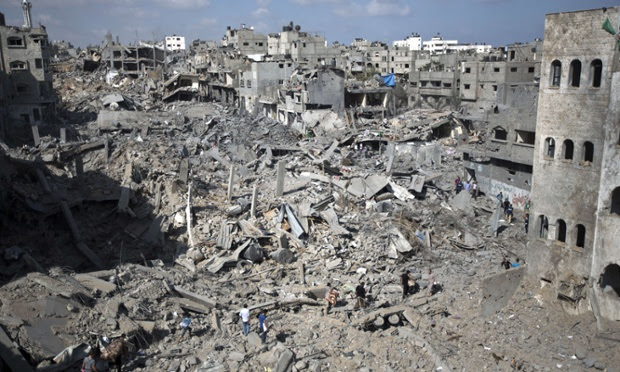
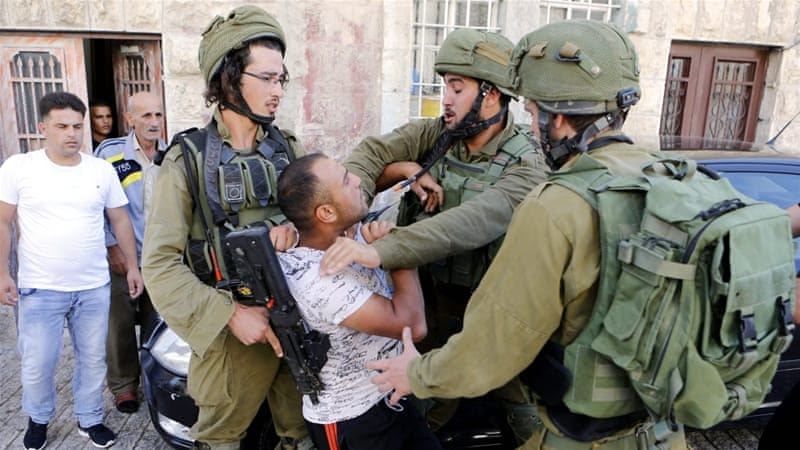

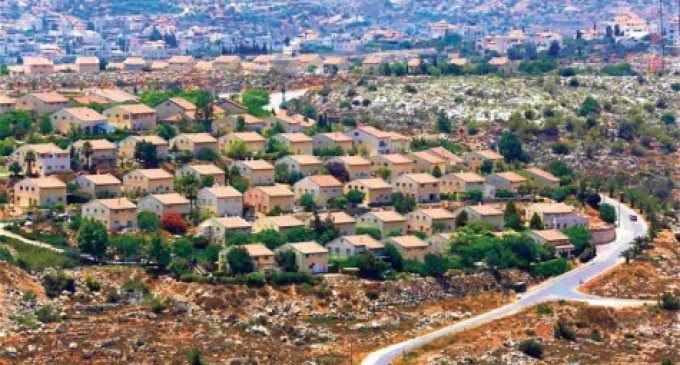
.jpg)